Goodreads helps you follow your favorite authors. Be the first to learn about new releases!
Start by following Greg Toppo.

Showing 1-5 of 5
“said Paul Howard-Jones, the British neuroscientist who leads the University of Bristol’s NeuroEducational Research Network, games will become central to schools. “I think in thirty years’ time, we will marvel that we ever tried to deliver a curriculum without gaming.”
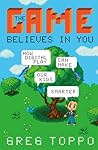
― The Game Believes in You: How Digital Play Can Make Our Kids Smarter
― The Game Believes in You: How Digital Play Can Make Our Kids Smarter
“If you look at the vast majority of the games—and there are hundreds and hundreds and hundreds of them—you don’t learn much, but you practice what you’ve already learned.” They reminded him of the first early motion pictures. When people first started making movies, they essentially just filmed stage plays because that’s what they knew how to do. “But then they realized that making a movie meant something very different from doing a play on the stage.”
― The Game Believes in You: How Digital Play Can Make Our Kids Smarter
― The Game Believes in You: How Digital Play Can Make Our Kids Smarter
“If video games had been around in 350 BC, Euclid would have made a video game,”Devlin told me. The thirteen books of Euclid’s Elements would have been the supplemental material, a PDF file that you could read if you wanted to. “People think I’m joking—I absolutely mean that. Euclid would not have written a textbook, he would have designed a video game.” Peek at any of his proofs, Devlin said, and you’ll quickly find that the great Greek mathematician, often called the father of geometry, is asking the reader to do things. “He says, ‘Draw this arc,’ ‘Drop this perpendicular.’ ‘Bisect that line.’ These are actions, and actions are what you get in video games.”
― The Game Believes in You: How Digital Play Can Make Our Kids Smarter
― The Game Believes in You: How Digital Play Can Make Our Kids Smarter
“Though it has become a naturalized part of music-making since the first one was built in 1710, the pianoforte (its name means “soft-loud”) was a technical marvel for its time, a machine that changed music in ways that are hard to imagine. Computer pioneer Alan Kay once observed that any technological advance is “technology only for people who are born before it was invented,” and in the case of the piano, this applies to no one alive today. Seymour Papert, the MIT researcher, concluded, “That’s why we don’t argue about whether the piano is corrupting music with technology.”
― The Game Believes in You: How Digital Play Can Make Our Kids Smarter
― The Game Believes in You: How Digital Play Can Make Our Kids Smarter
“Over the past few millennia, we’ve co-opted brain circuits already in use to scan the world for food or danger, in a sense fooling ourselves into paying attention to the inert little symbols on the page. Brain scans have shown that areas once used exclusively for scanning the horizon—for recognizing animal tracks, ripe berries, and snakes in trees—became the region that allowed us to quickly recognize letters and words. We’ve trained our brain to read by modifying the structures we once used to sense danger and movement and odd shapes in the grass. Dehaene and other researchers have found that most of our letter shapes are actually transpositions of key shapes from nature to which we’ve learned pay attention: a “Y” resembles the crook of tree branches, a “T” (on its side) the shape formed whenever one object masks another—imagine a telephone pole breaking the line of the horizon. “T-detector” neurons help us determine which object is in front, Dehaene wrote. “We did not invent most of our letter shapes: they lay dormant in our brain for millions of years, and were merely rediscovered when our species invented writing and the alphabet.”
― The Game Believes in You: How Digital Play Can Make Our Kids Smarter
― The Game Believes in You: How Digital Play Can Make Our Kids Smarter