Goodreads helps you follow your favorite authors. Be the first to learn about new releases!
Start by following Ray Monk.

Showing 1-20 of 20
“To do the job which you’ve got really well; so well that you don’t lose your self-respect doing it’:”
― Ludwig Wittgenstein: The Duty of Genius
― Ludwig Wittgenstein: The Duty of Genius
“Wittgenstein dislikes all ornamentation that is not part of the construction, and never find anything simple enough.”
― Ludwig Wittgenstein: The Duty of Genius
― Ludwig Wittgenstein: The Duty of Genius
“Wittgenstein's language has the singularly rare quality of being both colloquial and painstakingly precise.”
― Ludwig Wittgenstein: The Duty of Genius
― Ludwig Wittgenstein: The Duty of Genius
“Instead of teaching doctrines and developing theories, Wittgenstein came to think, a philosopher should demonstrate a technique, a method of achieving clarity.”
― Ludwig Wittgenstein: The Duty of Genius
― Ludwig Wittgenstein: The Duty of Genius
“But how did you become devoted to the King who had done all this?’ Sudarshana asks. When did this change of feeling take place? ‘I couldn’t tell you’, comes the reply: I don’t know myself. A day came when all the rebel in me knew itself beaten, and then my whole nature bowed down in humble resignation in the dust. And then I saw … I saw that he was as incomparable in beauty as he was in terror. I was saved, I was rescued.”
― Ludwig Wittgenstein: The Duty of Genius
― Ludwig Wittgenstein: The Duty of Genius
“What can be said at all can be said clearly; and whereof one cannot speak thereof one must be silent.”
― Ludwig Wittgenstein: The Duty of Genius
― Ludwig Wittgenstein: The Duty of Genius
“the imagination to see, the strength to achieve, and an absolutely incorruptible moral integrity’.”
― Inside The Centre: The Life of J. Robert Oppenheimer
― Inside The Centre: The Life of J. Robert Oppenheimer
“Wittgenstein was very much against women's suffrage for no particular reason except that 'all women he knows are such idiots'.”
― Ludwig Wittgenstein: The Duty of Genius
― Ludwig Wittgenstein: The Duty of Genius
“Logic is not a science that discovers truths; it is just a collection of tautologies.”
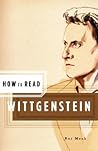
― How To Read Wittgenstein
― How To Read Wittgenstein
“the importance of preserving the integrity of a non-scientific form of understanding, the kind of understanding characteristic of the arts and the kind of understanding that Goethe, Spengler and Wittgenstein sought to protect from the encroachment of science and scientism.”
― How To Read Wittgenstein
― How To Read Wittgenstein
“meaningful propositions are limited to picturing states of affairs in the world, and value,”
― How To Read Wittgenstein
― How To Read Wittgenstein
“is an indication of the impact Oppenheimer made on Edsall that the title he chose was one suggested to him by Oppenheimer: The Gad-Fly. This was an allusion to Socrates’s description of himself in Plato’s Apology as a gadfly whose role in society was “to sting people, and whip them into a fury, all in the service of truth.” Eagerly embracing this image, Edsall, in his editorial for the first issue, published in December 1922, announced:”
― Robert Oppenheimer: A Life Inside the Center
― Robert Oppenheimer: A Life Inside the Center
“Propositions can only say how things are, not what they are.”
― How To Read Wittgenstein
― How To Read Wittgenstein
“Everything in the world can be pictured, but a picture cannot represent its own pictorial form; this has to be shown rather than said.”
― How To Read Wittgenstein
― How To Read Wittgenstein
“Tautologies, according to Wittgenstein, are senseless, because, as they do not picture the world, they lack sense.”
― How To Read Wittgenstein
― How To Read Wittgenstein
“Our civilization is characterized by the word ‘progress’. Progress is its form rather than making progress being one of its features. Typically it constructs. It is occupied with building an ever more complicated structure. And even clarity is sought only as a means to this end, not as an end in itself. For me on the contrary clarity, perspicuity are valuable in themselves.”
― How To Read Wittgenstein
― How To Read Wittgenstein
“Wittgenstein calls tautologies and contradictions ‘pseudo-propositions’; they are not real propositions, because real propositions can be either true or false.”
― How To Read Wittgenstein
― How To Read Wittgenstein
“It is perhaps indicative of how hard it was in Harvard during the 1920s for a Jew—even a Jew as wealthy, as American and as un-Jewish as Oppenheimer—to mix with gentiles that his closest friend at the college was someone”
― Robert Oppenheimer: A Life Inside the Center
― Robert Oppenheimer: A Life Inside the Center
“Harold F. Cherniss, who was a doctoral student in classics at Berkeley when he met Oppenheimer in 1929, remarked: “The more intimately I was acquainted with him, the less I knew about him.” Oppenheimer, Cherniss thought, “wanted friends very much,” but “he didn’t know how to make friends.” Oppenheimer may not”
― Robert Oppenheimer: A Life Inside the Center
― Robert Oppenheimer: A Life Inside the Center
“Dirac was not impressed by Oppenheimer’s knowledge of and interest in literature. On the contrary, he rather disapproved of it. Once he remarked to Oppenheimer: “I don’t see how you can work on physics and write poetry at the same time. In science, you want to say something nobody knew before, in words everyone can understand. In poetry, you are bound to say something that everybody knows already in words that nobody can understand.”
― Robert Oppenheimer: A Life Inside the Center
― Robert Oppenheimer: A Life Inside the Center