Goodreads helps you follow your favorite authors. Be the first to learn about new releases!
Start by following Mark Mathabane.

Showing 1-10 of 10
“Voracious reading was like an anesthesia, numbing me to the harsh life around me.”
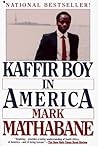
― Kaffir Boy: An Autobiography
― Kaffir Boy: An Autobiography
“I think my mother's and Granny's storytelling had had the same effect upon me when a child, as the reading of books: my mind was stimulated, my creativity encouraged.”
― Kaffir Boy: An Autobiography
― Kaffir Boy: An Autobiography
“Let us not rest until we are free to live in dignity in the land of our birth.”
― Kaffir Boy: An Autobiography
― Kaffir Boy: An Autobiography
“Marjory Gengler (white American) to Mark Mathabane (black South African) in the late 1970s--
Marjory: Why don't blacks fight to change the system [apartheid] that so dehumanizes them?
Mark's Response, from his memoirs: I told her [Marjory] about the sophistication of apartheid machinery, the battery of Draconian laws used to buttress it, the abject poverty in which a majority of blacks were sunk, leaving them with little energy and will to agitate for their rights. I told her about the indoctrination that took place in black schools under the guise of Bantu Education, the self-hatred that resulted from being constantly told that you are less than human and being treated that way. I told her of the anger and hatred pent-up inside millions of blacks, destroying their minds.
I would have gone on to tell Marjory about the suffering of wives without husbands and children without fathers in impoverished tribal reserves, about the high infant mortality rate among blacks in a country that exported food, and which in 1987 gave the world its first heart transplant. I would have told them about the ragged black boys and girls of seven, eight and nine years who constantly left their homes because of hunger and a disintegrating family life and were making it on their own; by begging along the thoroughfares of Johannesburg; by sleeping in scrapped cars, gutters and in abandoned buildings; by bathing in the diseased Jukskei River; and by eating out of trash cans, sucking festering sores and stealing rotting produce from the Indian traders on First Avenue.
I would have told her about how these orphans of the streets, some of them my friends--their physical, intellectual and emotional growth dwarfed and stunted--had grown up to become prostitutes, unwed mothers and tsotsis, littering the ghetto streets with illegitimate children and corpses. I would have told her all this, but I didn't; I feared she would not believe me; I feared upsetting her.”
―
Marjory: Why don't blacks fight to change the system [apartheid] that so dehumanizes them?
Mark's Response, from his memoirs: I told her [Marjory] about the sophistication of apartheid machinery, the battery of Draconian laws used to buttress it, the abject poverty in which a majority of blacks were sunk, leaving them with little energy and will to agitate for their rights. I told her about the indoctrination that took place in black schools under the guise of Bantu Education, the self-hatred that resulted from being constantly told that you are less than human and being treated that way. I told her of the anger and hatred pent-up inside millions of blacks, destroying their minds.
I would have gone on to tell Marjory about the suffering of wives without husbands and children without fathers in impoverished tribal reserves, about the high infant mortality rate among blacks in a country that exported food, and which in 1987 gave the world its first heart transplant. I would have told them about the ragged black boys and girls of seven, eight and nine years who constantly left their homes because of hunger and a disintegrating family life and were making it on their own; by begging along the thoroughfares of Johannesburg; by sleeping in scrapped cars, gutters and in abandoned buildings; by bathing in the diseased Jukskei River; and by eating out of trash cans, sucking festering sores and stealing rotting produce from the Indian traders on First Avenue.
I would have told her about how these orphans of the streets, some of them my friends--their physical, intellectual and emotional growth dwarfed and stunted--had grown up to become prostitutes, unwed mothers and tsotsis, littering the ghetto streets with illegitimate children and corpses. I would have told her all this, but I didn't; I feared she would not believe me; I feared upsetting her.”
―
“There is a death far worse than physical death, and that is the death of the mind and soul, when, despite toiling night and day, under sweltering heat, torrential rain, blistering winds, you still cannot make enough to clothe, shelter and feed your loved ones, suffering miles away, forcibly separated from you.”
― Kaffir Boy: An Autobiography
― Kaffir Boy: An Autobiography
“Throughout all the years that I lived in South Africa, people were to call me a fool for refusing to live life the way they did and by doing the things they did. Little did they realise that in our world, the black world, one could only survive if one played the fool, and bided his time. ”
― Kaffir Boy: The True Story of a Black Youth's Coming of Age in Apartheid South Africa
― Kaffir Boy: The True Story of a Black Youth's Coming of Age in Apartheid South Africa
“Don’t be afraid now. They’re still in the next neighbourhood. I was in the outhouse when the alarm came.” “When the alarm came” meant people leaping over fences in a mad dash to escape the police.”
― Kaffir Boy: The True Story of a Black Youth's Coming of Age in Apartheid South Africa
― Kaffir Boy: The True Story of a Black Youth's Coming of Age in Apartheid South Africa
“Gradually, I came to accept hunger as a constant companion. But this new hunger was different. It filled me with hatred, confusion, helplessness, hopelessness, anxiety, loneliness, selfishness and a cynical attitude toward people.”
― Kaffir Boy: The True Story of a Black Youth's Coming of Age in Apartheid South Africa
― Kaffir Boy: The True Story of a Black Youth's Coming of Age in Apartheid South Africa
“Learn as much as you can, while the opportunity is still there.”
― Kaffir Boy: An Autobiography
― Kaffir Boy: An Autobiography
“Learn as much as you can, while the opportunity is still there”
― Kaffir Boy: The True Story of a Black Youth's Coming of Age in Apartheid South Africa by Mark Mathabane (6-Apr-2006) Paperback
― Kaffir Boy: The True Story of a Black Youth's Coming of Age in Apartheid South Africa by Mark Mathabane (6-Apr-2006) Paperback