Goodreads helps you follow your favorite authors. Be the first to learn about new releases!
Start by following Mark H. Lytle.

Showing 1-5 of 5
“She believed that the arrogance of humankind created a deadly irony: in their determination to control nature, human beings posed a growing threat to all life on earth, including their own.”
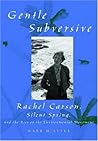
― The Gentle Subversive: Rachel Carson, Silent Spring, and the Rise of the Environmental Movement
― The Gentle Subversive: Rachel Carson, Silent Spring, and the Rise of the Environmental Movement
“We still talk in terms of conquest,” she observed. “We still haven’t become mature enough to think of ourselves as only a tiny part of a vast and incredible universe.” Without hesitating, she delivered her final blow: “I think we’re challenged as mankind has never been challenged before, to prove our maturity and our mastery, not of nature, but of ourselves.”
― The Gentle Subversive: Rachel Carson, Silent Spring, and the Rise of the Environmental Movement
― The Gentle Subversive: Rachel Carson, Silent Spring, and the Rise of the Environmental Movement
“She could not be silent even if the men of science, many of them smug experts in white lab coats who promised “better living through chemistry,” dismissed her warnings as feminine hysteria.”
― The Gentle Subversive: Rachel Carson, Silent Spring, and the Rise of the Environmental Movement
― The Gentle Subversive: Rachel Carson, Silent Spring, and the Rise of the Environmental Movement
“Carson was persuaded that many experts either failed to recognize or chose to ignore the potential hazards of pesticides. She was convinced that the weight of her scientific evidence would defeat the skeptics among them. And once the public had the necessary information, citizens could make informed decisions about what Carson believed was a matter of life and death.”
― The Gentle Subversive: Rachel Carson, Silent Spring, and the Rise of the Environmental Movement
― The Gentle Subversive: Rachel Carson, Silent Spring, and the Rise of the Environmental Movement
“Government entomologists and chemical company publicists freely employed metaphors that compared insects and Communists. At Columbia University in 1946, former British prime minister Winston Churchill suggested that Communists should study termites in order to see what their future had in store. Unintentionally clarifying the threatening metaphor, the president of the American Economic Entomologists entitled his 1947 speech “Totalitarian Insects.”
― The Gentle Subversive: Rachel Carson, Silent Spring, and the Rise of the Environmental Movement
― The Gentle Subversive: Rachel Carson, Silent Spring, and the Rise of the Environmental Movement