Goodreads helps you follow your favorite authors. Be the first to learn about new releases!
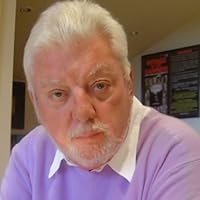
Start by following Gordon Thomas.
Showing 1-30 of 97
“In San Francisco, two people actually saw the earthquake. Jesse Cook, the police sergeant on duty in the produce market, saw it a moment after he became aware of panic among the horses all around him. Years later Cook recalled: “There was a deep rumble, deep and terrible, and then I could see it actually coming up Washington Street. The whole street was undulating. It was as if the waves of the ocean were coming towards me, billowing as they came.”
― The San Francisco Earthquake
― The San Francisco Earthquake
“On the average, one thousand people settle on or near the San Andreas Fault each day. Nowhere in the United States is the density of population greater than in San Francisco and its environs. Nowhere is disregard of the danger more apparent.”
― The San Francisco Earthquake: A Minute-by-Minute Account of the 1906 Disaster
― The San Francisco Earthquake: A Minute-by-Minute Account of the 1906 Disaster
“The rubble of the 1906 disaster was pushed into the Bay; buildings were built on it. Those buildings will be among the most vulnerable when the next earthquake comes.”
― The San Francisco Earthquake: A Minute-by-Minute Account of the 1906 Disaster
― The San Francisco Earthquake: A Minute-by-Minute Account of the 1906 Disaster
“There were, to be sure, several on-the-spot executions of looters the first day”—surely a curious denial of the constitutional right to be judged innocent until convicted. Others, conceding that what was done was illegal, have tried to rationalize the killings as no more than what might be expected of hard-pressed soldiers doing a thankless job. But the citizens of San Francisco were under equal stress, and their panic might have caused them to do many things which would have appeared criminal under normal circumstances. Perhaps they deserve understanding more than the soldiers. There has also been a determined attempt to reduce the actual number of killings to a mere handful—and to maintain that in any case, the deaths were those of villains nobody would miss.”
― The San Francisco Earthquake: A Minute-by-Minute Account of the 1906 Disaster
― The San Francisco Earthquake: A Minute-by-Minute Account of the 1906 Disaster
“Finally, in March 1909, a new civic administration permitted publication of The Citizens’ Health Committee Report on Eradicating Plague from San Francisco. Only a handful of people ever knew of the report’s existence. “Instead of being confronted by a united authority with intelligent plans for defense, it [the plague] found divided forces among which the question of its presence became the subject of factional dispute. There was often popular hostility to the work of the sanitarians, and war among the City, State, and Federal health authorities.” The”
― The San Francisco Earthquake: A Minute-by-Minute Account of the 1906 Disaster
― The San Francisco Earthquake: A Minute-by-Minute Account of the 1906 Disaster
“When Kwame Nkrumah, the pro-Chinese ruler of Ghana, was on a state visit to Beijing, Mossad orchestrated the uprising that led to both Nkrumah’s overthrow and the destruction of the CSIS infrastructure in the country.”
― Gideon's Spies: The Inside Story of Israel’s Legendary Secret Service
― Gideon's Spies: The Inside Story of Israel’s Legendary Secret Service
“bolt upright in bed, clutching at his nightshirt with both hands. To Hertz, the singer was in many ways a figure as pitiable as any he had ever portrayed on stage. The earthquake seemed to have visibly shrunk Caruso, “as if the cataclysmic terror had singled him out to obliterate his glory of the previous night; as if Providence had evil designs on him personally.”
― The San Francisco Earthquake: A Minute-by-Minute Account of the 1906 Disaster
― The San Francisco Earthquake: A Minute-by-Minute Account of the 1906 Disaster
“Gottlieb told the meeting he was convinced that “successful brainwashing” was rooted in the use of drugs: LSD, mescaline, cocaine, or even nicotine. He did not yet know which one — “but it had to be something like that.” He reminded them that all over the United States in research centers — Boston Psychiatric; the University of Illinois Medical School, Mount Sinai and Columbia University in New York, the University of Oklahoma, the Addiction Research Center at Lexington, Kentucky, the University of Chicago and the University of Rochester, among others — researchers were running projects funded by the CIA to try to prove his theory.”
― Secrets & Lies: A History of CIA Mind Control & germ Warfare
― Secrets & Lies: A History of CIA Mind Control & germ Warfare
“Those millions of sales represented a loss in share value on the New York Exchange alone of some $10 billion. That was twice the amount of currency in circulation in the entire country at the time. Eventually, the total lost in the financial pandemic would be put at a staggering $50 billion—all stemming from a virus that proved fatal on October 29, 1929: the day the bubble burst.”
― The Day the Bubble Burst: A Social History of the Wall Street Crash of 1929
― The Day the Bubble Burst: A Social History of the Wall Street Crash of 1929
“It’s in that locker!” Campbell shouted. Opening the locker, he saw a mass of flames inside. Quickly, he slammed shut the door, blistering his hands in the process. Both men turned and ran from the room to raise the alarm. As they ran, they passed a fire extinguisher placed on the wall near the writing-room door. It was the first mistake by members of a crew poorly trained in fire drills, rescue operations, or virtually any crisis. If Campbell and Ryan had turned that extinguisher on the fire at once it might have made a critical difference. Three vital minutes passed before Clarence Hackney arrived with his fire extinguisher. He yanked open the locker door and a wall of flame rushed out. Hackney backed off and emptied his extinguisher into it, but it was a waste of time—a dozen extinguishers could not have contained the inferno now raging around the locker.”
― Shipwreck: The Strange Fate of the Morro Castle
― Shipwreck: The Strange Fate of the Morro Castle
“At 5:29:45, everything happened at once. But it was too fast for the watchers to distinguish: no human eye can separate millionths of a second; no human brain can record such a fraction of time. No one, therefore, saw the actual first flash of cosmic fire. What they saw was its dazzling reflection on surrounding hills. It was, in the words of the observer from The New York Times:”
― Enola Gay: Mission to Hiroshima
― Enola Gay: Mission to Hiroshima
“In Washington, the Hoover Board of Inquiry found that negligence on the part of the two officers had caused the ship’s destruction. In its summary, the board dismissed the possibility of arson: “Considerable testimony to the effect that explosions disconnected gas lines, infers this to be the cause. But in running down possibilities of malicious acts, nothing definite was revealed.”
― Shipwreck: The Strange Fate of the Morro Castle
― Shipwreck: The Strange Fate of the Morro Castle
“At exactly 8:45 P.M., George Alagna tuned the receiver in the radio shack to the six-hundred-meter frequency, the distress wave band for ships at sea. The mandatory three-minute period of silent “listening out” is an international watch kept by all ships at sea. For three minutes at precisely fifteen minutes past and fifteen minutes before each hour, every marine radio operator on duty stops transmitting and tunes to the emergency channel, listening for even the weakest distress signal. Junior Operator George Maki watched carefully as Alagna fine-tuned the instruments. Maki himself sometimes found it difficult to locate the frequency; on several occasions Chief Radio Officer Rogers had noticed Maki’s hesitation, and he used each occasion to give Maki a tongue-lashing. Ever since Rogers had assumed command of the wireless room, his hostility toward Maki had increased. The chief radio officer made special note of each of Maki’s faults: he was slow on direction finding, decoding meteorological bulletins, and switching smoothly across the transmitting and receiving wave bands. Maki knew his career as a radioman would be terminated abruptly if Rogers made a report to the Radiomarine Corporation. Rogers chose not to file any official complaint; instead, he kept Maki on as a personal whipping boy, somebody he could verbally castigate whenever he wanted to.”
― Shipwreck: The Strange Fate of the Morro Castle
― Shipwreck: The Strange Fate of the Morro Castle
“In his first note on the case, Dulles had written: “I had met Olson on several occasions. He was the last person I expected to commit suicide. This was the makings of a serious problem.”
― Secrets & Lies: A History of CIA Mind Control & germ Warfare
― Secrets & Lies: A History of CIA Mind Control & germ Warfare
“By Christmas 1934, over three hundred claims totaling $1,-250,000 had been filed against the Ward Line by survivors and relatives of the dead. The Ward Line asked the federal court to limit the total of any single claim to $20,000 and offered $250,000 as a full and final settlement. Lawyers for the line based their case on the “limited liability” law that had been on the statute books since 1851. The 1851 law was clear that in the event of disaster, “only by proving the owners to have possessed knowledge of the unseaworthiness of the vessel or the inadequacy of the crew before sailing,” could passengers collect.”
― Shipwreck: The Strange Fate of the Morro Castle
― Shipwreck: The Strange Fate of the Morro Castle
“George White Rogers’ interview with Captain Wilmott exceeded Rogers’ wildest hopes. He had planned it with care in order to achieve just the right balance of distaste and distress in relating the story. It was a simple one: for weeks, he told Wilmott, he had suspected that George Alagna was quite capable of stirring up trouble. But he would never have suspected the trouble would reach the proportions it had. Now he even had proof: the discovery of the two bottles of dangerous acids. Captain Wilmott was so shaken by the revelation that he accepted without question the chief radio officer’s statement that he had thrown the bottles over the side immediately on discovering them. The story of the bottles reinforced Robert Wilmott’s fears tenfold. “I think the man is crazy!” he ranted to Rogers. “We have always had trouble with that man! In New York he went down the gangway and started a riot when the passengers were getting off because he wanted to get off the ship without having his crew pass stamped by the immigration authorities”
― Shipwreck: The Strange Fate of the Morro Castle
― Shipwreck: The Strange Fate of the Morro Castle
“Military hospitals had reported that some anaesthetics had made patients speak while under their influence. This had led to a number of attempts to use cannabis as a truth drug. The point Dulles made was that now cannabis was widely regarded as respectable, and that in time the pioneer work of Dr. Cameron would be similarly looked upon,” Buckley told the author.”
― Secrets & Lies: A History of CIA Mind Control & germ Warfare
― Secrets & Lies: A History of CIA Mind Control & germ Warfare
“The Coast Guard patrol boat watched the City of Savannah steaming off toward New York. The Cahoone’s captain believed this, coupled with the general view of the situation, conveyed the impression that all passengers had been rescued. It was an unhappy mistake. Another followed. The Cahoone called up the Monarch of Bermuda. The Cahoone’s log recorded: “Monarch of Bermuda so busy handling press radio traffic that we cannot break in with a call.” The Monarch of Bermuda later denied the charge; its radio operators insisted they were only transmitting names of survivors and dead. Next the Cahoone approached the Morro Castle. The patrol boat’s log documents another curious incident: “Held verbal conversation with the crew of the Morro Castle, grouped on forecastle deck. When asked if they wanted to be taken off, some member of the crew, apparently an officer, replied they were going to stand by for a tow to port.” The official Coast Guard report on the Cahoone’s role makes equally strange reading: “Had the Morro Castle or the Monarch of Bermuda given the Cahoone any information that lifeboats had gone ashore or that passengers had jumped over the side, the Cahoone could have gone inshore to search, and possibly some lives might have been saved by that vessel.” (Author’s italics) In all, the Cahoone spent ninety minutes floundering around the Morro Castlebefore going off to search for swimmers. In the end it recovered two bodies.”
― Shipwreck: The Strange Fate of the Morro Castle
― Shipwreck: The Strange Fate of the Morro Castle
“Pender was shocked to see that the two other night watchmen, who should have been on deck, had been drafted to help with cabin service. The Morro Castle was now protected by only four men: Fourth Officer Howard Hansen, the officer of the watch; a helmsman; the bow lookout; and night watchman Pender. Pender regarded this as the most flagrant breach yet of the rules governing safety at sea.
Another violation of those rules kept First Officer William Warms awake in the early hours of Thursday morning. His previous uneasiness had crystallized around one thing: the lack of boat drills on the Morro Castle.”
― Shipwreck: The Strange Fate of the Morro Castle
Another violation of those rules kept First Officer William Warms awake in the early hours of Thursday morning. His previous uneasiness had crystallized around one thing: the lack of boat drills on the Morro Castle.”
― Shipwreck: The Strange Fate of the Morro Castle
“The circle between Madison Avenue and Wall Street was complete; they were inexorably linked, in a relationship developed in ten short years, during which the ad men had created an ambience invaluable to the continuing popularity of stock speculation. The limitless, desirable, and expensive goods coming onto the market—often products of companies quoted on the Stock Exchange—could only be sold by determined advertising campaigns. If those campaigns failed, the market would slump. To maintain his place in consumer society, a man was told he needed a car, radio, icebox, and refrigerator; his wife required a washing machine, automatic furnace, and one of the modish pastel-hued toilets. To complete their domestic bliss they would have the latest in bathrooms: a shrine of stunning magnificence, containing, among other items, “a dental lavatory of vitreous china, twice fired.” To buy it would cost the average American six months’ salary. But paying was no problem; there were the installment plans. It was also part of the advertising philosophy that it was no longer enough to buy a car, radio, or refrigerator. People must have the latest model—junking the old one, even though it was still useful. Failure to do so would cause factories to close from the Atlantic to the Pacific, ending what some newspapers called “the golden era.” To protect it, they told their readers, was the patriotic duty of every American; one way to express that was, “to buy until it hurts.”
― The Day the Bubble Burst: A Social History of the Wall Street Crash of 1929
― The Day the Bubble Burst: A Social History of the Wall Street Crash of 1929
“The seamen who dumped gun and powder barrel into the hiding place Hackney had found carried the apparatus past the wireless room. When Chief Radio Officer George Rogers stopped them to ask what they were doing, they told him the purpose of their mission. He expressed interest, saying he never knew the space existed.”
― Shipwreck: The Strange Fate of the Morro Castle
― Shipwreck: The Strange Fate of the Morro Castle
“Chief Engineer Eban Abbott was about to dress for dinner when the engine room called. Assistant Engineer Antonio Bujia reported that one of the battery of fire boilers had a fuel blockage.”
― Shipwreck: The Strange Fate of the Morro Castle
― Shipwreck: The Strange Fate of the Morro Castle
“At 2:51 A.M. student engineer Tripp wrote in his log: “Night watchman Foersch reported to captain that he had just seen and smelled smoke coming out of one of the small ventilators on the port after side of the fiddley.” The fiddley was a galvanized-iron duct supplying fresh air to the first-class writing room on B deck, among other rooms.”
― Shipwreck: The Strange Fate of the Morro Castle
― Shipwreck: The Strange Fate of the Morro Castle
“The Morro Castle traveled 3.1 miles head on into the storm at a speed of 18.8 knots for over ten minutes. In that time, the wind, gusting at over 20 knots, had acted as a giant bellows, fanning and speeding the flames the length of the ship.”
― Shipwreck: The Strange Fate of the Morro Castle
― Shipwreck: The Strange Fate of the Morro Castle
“Robert Wilmott, ponderously firm and earnest, lacked imagination. To the passengers aboard the Morro Castle, however, he was a public-relations press release come true, a dream of what a liner captain should be. He epitomized the advertised enchanted world of a sea cruise, in which there is no death or danger, where the seams between reality and magic are always caulked.”
― Shipwreck: The Strange Fate of the Morro Castle
― Shipwreck: The Strange Fate of the Morro Castle
“Regulations governing the sending of distress signals at sea are strict: no SOS can be sent without the express order of the captain. But the rules also allow an operator some leeway. It would have been proper for Rogers to have sent a message such as “Fire on Morro Castle off New Jersey. Awaiting orders from bridge.” Such a message would have alerted the outside world. No one could later have criticized such a course of action, confirming the Luckenbach’s sighting a serious fire through ten miles of rain. While it was not a formal SOS, it would nevertheless have been a standby call for help. And the time to send it was now. At 3:15 a.m. the mandatory “listening-out” period for all radio operators at sea began. Instead of a distress signal, Rogers sent: “Standby. DE KGOV.” KGOV was the call sign of the Morro Castle.”
― Shipwreck: The Strange Fate of the Morro Castle
― Shipwreck: The Strange Fate of the Morro Castle
“On December 3, 1934, the grand jury handed out indictments. Accused of willful negligence were Acting Captain William Warms, Chief Engineer Eban Abbott, and Ward Line vice-president Henry E. Cabaud. In the preamble to the charges against Warms, the indictment declared: “Members of the crew were without discipline and did not know what to do, and the passengers were left to help themselves; the passengers in large numbers were pushed into the water or jumped in the water or perished in the fire.” Warms was accused specifically of failing to observe the law in ten matters:
1. To divide the sailors in equal watches. 2. To keep himself advised of the extent of the fire. 3. To maneuver, slow down, or stop the vessel. 4. To have the passengers aroused. 5. To provide the passengers with life preservers. 6. To take steps for the protection of lives. 7. To organize the crew to fight the fire properly. 8. To send distress signals promptly. 9. To see that the passengers were put in lifeboats and that the lifeboats were lowered. 10. To control and direct the crew in the lifeboats after the lifeboats had been lowered.”
― Shipwreck: The Strange Fate of the Morro Castle
1. To divide the sailors in equal watches. 2. To keep himself advised of the extent of the fire. 3. To maneuver, slow down, or stop the vessel. 4. To have the passengers aroused. 5. To provide the passengers with life preservers. 6. To take steps for the protection of lives. 7. To organize the crew to fight the fire properly. 8. To send distress signals promptly. 9. To see that the passengers were put in lifeboats and that the lifeboats were lowered. 10. To control and direct the crew in the lifeboats after the lifeboats had been lowered.”
― Shipwreck: The Strange Fate of the Morro Castle
“Doyle was puzzled by the instructions and by the fact that they carried no signature. He looked again at the label. It had been typed on the standard office machine of the radio department. This also puzzled him. He turned toward the door, intending to ask Rogers for a comment. Rogers had disappeared. Doyle shrugged and turned back to the heater. For a moment he toyed with the heater, then plugged it into the workbench’s double-outlet plug. He flicked the switch on the outlet plug. The resulting explosion broke windows in the workshop, and shook the main police headquarters building over two hundred feet away. It was a miracle that Doyle escaped death. His left hand, left leg, and right foot were smashed. His left eardrum was fractured. He was rushed to Bayonne Hospital, where he underwent an emergency operation. The next day Rogers visited Vincent Doyle in the hospital, and asked through his tears: “How can I get the guy who did this to you?” Two weeks later Rogers was charged with the attempted murder of Vincent Doyle.”
― Shipwreck: The Strange Fate of the Morro Castle
― Shipwreck: The Strange Fate of the Morro Castle
“Coming up the stairway was Antonio Bujia. Eban Abbott peered at him. “What are you doing? Where are you going?” “To the bridge. I called you through the telephone and speaking tube and got no answer. Everything is running good. But we cannot stay down there much longer.” The two men looked at each other. Wisps of smoke were drifting around the staircase. “Go back and stand by. I’ll go to the bridge,” said Abbott. With those few words he changed his whole future; he would regret them all his life. Shocked and disoriented though Abbott still was by Captain Wilmott’s death, he had been moving, albeit slowly and in a roundabout way, down toward the engine room. If he had been challenged about his movements, he could defend himself by pointing out that, as chief engineer, it was also his job to ascertain the extent of the fire so that he could organize the water supplies accordingly. But Bujia had brought Abbott head on with the reality of the situation: the engine room, in his assistant’s estimation, had shortly to be abandoned. There was only one course of action open to Eban Abbott. It was to go down to check out the situation himself. Abbott was charged with the responsibility to ensure that the men in the engine room performed their duties fully in operating the fire pumps, lights, and power to steer the ship through the growing crisis. He abandoned this responsibility when he ordered Bujia back down below and rapidly climbed to the safety of the open deck.”
― Shipwreck: The Strange Fate of the Morro Castle
― Shipwreck: The Strange Fate of the Morro Castle
“Richard Whitney wrote his own requiem for the Crash. “A thing compounded of both wisdom and folly, of both heroism and fright, of stubborn persistence and impatient irresolution, of tragically shattered hopes and ambitions and of incongruous and unique episodes not without at times a certain humorous aspect.”
― The Day the Bubble Burst: A Social History of the Wall Street Crash of 1929
― The Day the Bubble Burst: A Social History of the Wall Street Crash of 1929