Goodreads helps you follow your favorite authors. Be the first to learn about new releases!
Start by following Ed Offley.

Showing 1-11 of 11
“Vice Admiral Charles Lockwood, who had commanded the U.S. submarine campaign against Japan during World War II, later recalled his astonishment at hearing Abelson's briefing: "If I live to be a hundred, I shall never forget that meeting on March 28, 1946, in a large Bureau of Ships conference room, its walls lined with blackboards, which in turn were covered with diagrams, blueprints, figures and equations which Phil used to illustrate various points as he read from his document, the first ever submitted anywhere on nuclear-powered subs. It sounded like something out of Jules Verne's Twenty Thousand Leagues Under the Sea."7”
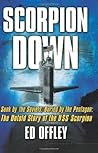
― Scorpion Down: Sunk by the Soviets, Buried by the Pentagon: The Untold Story of the USS Scorpion
― Scorpion Down: Sunk by the Soviets, Buried by the Pentagon: The Untold Story of the USS Scorpion
“The new boats created unprecedented career opportunities for those already in the elite nuclear submarine force and gave migraines to personnel specialists who had to find trained crewmen. During the Scorpion's first seven years, the navy constructed and commissioned twenty-five nuclear attack submarines and thirty-nine Polaris missile boats. Each Polaris submarine had two crews of seventeen officers and 128 enlisted men. The math was brutal: The navy had to recruit and train 103 additional submarine crews during the eighty-four-month period that the shipyards were cranking out Polaris missile submarines and nuclear attack boats.”
― Scorpion Down: Sunk by the Soviets, Buried by the Pentagon: The Untold Story of the USS Scorpion
― Scorpion Down: Sunk by the Soviets, Buried by the Pentagon: The Untold Story of the USS Scorpion
“Meanwhile, U.S. Navy officials were grappling with their own problems. The American fleet that vanquished Imperial Japan and helped storm the shores of Fortress Europe did not exist anymore. From a wartime high of 3.3 million men and women, the U.S. Navy roster plummeted to 491,663 by December 1946.8”
― Scorpion Down: Sunk by the Soviets, Buried by the Pentagon: The Untold Story of the USS Scorpion
― Scorpion Down: Sunk by the Soviets, Buried by the Pentagon: The Untold Story of the USS Scorpion
“Vizeadmiral Karl Donitz, now the commander of Germany's submarine force, quickly dispatched five U-boats across the Atlantic to attack merchant shipping along the U.S. East Coast. His intention in Operation Paukenschlag (Drumbeat) was to have all five launch a simultaneous attack on shipping-from Nova Scotia to Cape Hatteras-on the morning of January 13, 1942. The U.S. Atlantic Fleet was as unprepared for the onslaught of the second Battle of the Atlantic as it had been in 1918. Unlike 1918, this time the results would be devastating. In the first six months of 1942, German torpedoes, mines, and U-boat deck gun shells sank nearly 400 American and allied merchant ships in U.S. waters from Maine to Panama. During that campaign, only nine U-boats went down.”
― Scorpion Down: Sunk by the Soviets, Buried by the Pentagon: The Untold Story of the USS Scorpion
― Scorpion Down: Sunk by the Soviets, Buried by the Pentagon: The Untold Story of the USS Scorpion
“BUT IT WAS ALL A LIE. A few senior U.S. Navy officials knew the truth. Searchers had located the Scorpion on June 9, four days after the navy had pronounced it "presumed lost." The entire focused-operations search involving the Mizar and the other research ships was an elaborate, time-consuming and expensive cover-up. Just as navy officials had known about the Scorpion sinking within hours of the actual event-and not five days later when it failed to reach port-the senior admirals dispatched the Mizar to the search area knowing exactly where to look for it. Rather than a frustrating detective hunt that had taken five months from beginning to end, the navy survey ships had steamed to the search area with the latitude-longitude coordinates of the wreckage already in hand. The entire affair was again cloaked in the tightest security classification possible. That was because the Russians had told them where to look.”
― Scorpion Down: Sunk by the Soviets, Buried by the Pentagon: The Untold Story of the USS Scorpion
― Scorpion Down: Sunk by the Soviets, Buried by the Pentagon: The Untold Story of the USS Scorpion
“Neither Hugh Bremner nor the other 217 officers and enlisted men knew at the time that their ship was about to assume a crucial role in a highly classified search for the USS Scorpion. Three days before the navy would announce the Scorpion as missing on Memorial Day 1968, the Compass Island had received crash orders to get underway to hunt for the submarine. And it was the crew of the Compass Island that, only two weeks later, would find the wreckage of the Scorpion two miles down on the Atlantic seabed. This secret discovery in early June 1968, nearly five months before the navy officially announced that the survey ship USNS Mizar had located the wreckage on October 28, does more than expose the official navy account of the search as a coverup. The secret voyage of the Compass Island-obscured by a navy disinformation campaign, then overlooked by journalists, and finally concealed by a process of deliberate records falsification-provides a key to unlocking the truth of what really happened to the submarine and its ninety-nine men.”
― Scorpion Down: Sunk by the Soviets, Buried by the Pentagon: The Untold Story of the USS Scorpion
― Scorpion Down: Sunk by the Soviets, Buried by the Pentagon: The Untold Story of the USS Scorpion
“The plan was as simple as it was unattainable: All they had to do was to slip out of Sayda Bay and after entering the Barents Sea, submerge, poke their air-breathing snorkels above the surface, and trudge down to Cuba on diesel power at a submerged speed of nine knots. Without the Americans noticing.”
― Scorpion Down: Sunk by the Soviets, Buried by the Pentagon: The Untold Story of the USS Scorpion
― Scorpion Down: Sunk by the Soviets, Buried by the Pentagon: The Untold Story of the USS Scorpion
“The Scorpion would sometimes engage in a little psychological warfare along with the combat drills: "If you're in an exercise ... [the captain] would say, `Don't exceed fifteen knots or a fifteen-degree down-angle.' The destroyers would get to feeling cocky because they would find you and run you around. Then the admiral on the carrier would start feeling his oats and say to us, `Okay, let her rip,' then pheeewsh-we'd just vanish. The place we'd hide most of the time was right under the carrier. Its propulsion plant is so noisy and so huge that you get yourself under the carrier and ride along there.”
― Scorpion Down: Sunk by the Soviets, Buried by the Pentagon: The Untold Story of the USS Scorpion
― Scorpion Down: Sunk by the Soviets, Buried by the Pentagon: The Untold Story of the USS Scorpion
“In the end, the U.S. admirals consoled the grief-stricken families of the Scorpion crew while promoting a false cover story on how the submarine was lost. Their Soviet counterparts did even less for the families of the men of the K-129, merely announcing weeks after the loss that the submarine and its crew were gone. The men who were lost, the ninety-nine men of the Scorpion and the ninety-eight men of the K-129, gave their lives in the service of their country. In return, their military leaders robbed the families of a full accounting of how their men had perished. The men of the USS Scorpion fell in combat.”
― Scorpion Down: Sunk by the Soviets, Buried by the Pentagon: The Untold Story of the USS Scorpion
― Scorpion Down: Sunk by the Soviets, Buried by the Pentagon: The Untold Story of the USS Scorpion
“The torpedo-accident theory had survived only the length of time that passes between reading a headline and wrapping it around a fish.”
― Scorpion Down: Sunk by the Soviets, Buried by the Pentagon: The Untold Story of the USS Scorpion
― Scorpion Down: Sunk by the Soviets, Buried by the Pentagon: The Untold Story of the USS Scorpion
“One indicator was the sudden emergence of an aggressive submarine tactic called Crazy Ivan, where a Soviet submarine skipper, suspecting he was being tailgated, would make an unexpected hard turn to port or starboard, and in doing so, force the American follower to slam on the brakes. Apart from the fun of spiking a Sturgeon-class skipper's blood pressure, there was a concrete objective to the ploy. This maneuver forced the American submarine commander to reveal his own presence by the unavoidable scream of reverse-drive engine turbines as the trailing U.S. submarine desperately tried to avoid a collision by ordering all back full. That noise signal showed up just fine on Soviet sonar.”
― Scorpion Down: Sunk by the Soviets, Buried by the Pentagon: The Untold Story of the USS Scorpion
― Scorpion Down: Sunk by the Soviets, Buried by the Pentagon: The Untold Story of the USS Scorpion