Goodreads helps you follow your favorite authors. Be the first to learn about new releases!
Start by following Rachel Chrastil.

Showing 1-2 of 2
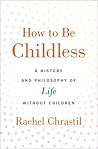
“Before the 1900s, a high fertility rate provided no guarantee that a child would live long enough to support her parents. In a preindustrial, pre-demographic transition society with high fertility (say six children per couple) and high mortality (in which a child had only a one in three chance of outliving his father), the likelihood that a father would die without a living heir is at least one in six. In Britain between 1330 and 1729, 27 percent of all married men and 23 percent of all married women died without surviving children.”
― HOW TO BE CHILDLESS
― HOW TO BE CHILDLESS
“By the late Middle Ages, as couples married at an older age and set up their own separate households, parents no longer counted on their children for care in their old age. To ensure that they would be cared for, many aged adults wrote up contracts, including with their children, in medieval England. Whether or not they had grown children, widows often paid others to care for them. A study of rural England between 1599 and 1796 found that only 49 percent of men and 37 percent of women aged sixty-five and older lived with a child. The urban figures were a tad higher.”
― HOW TO BE CHILDLESS
― HOW TO BE CHILDLESS