Goodreads helps you follow your favorite authors. Be the first to learn about new releases!
Start by following Stuart Murray.

Showing 1-9 of 9
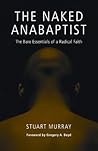
“As followers, we do not claim to have arrived at the destination, nor need we distinguish ourselves from others who are at different stages of the journey. Belonging, believing, and behaving can all be interpreted as aspects of following. Churches that are committed to following Jesus can then welcome fellow travelers unreservedly and unconditionally. But their ethos is one of following, learning, changing, growing, and moving forward.”
― The Naked Anabaptist: The Bare Essentials of a Radical Faith
― The Naked Anabaptist: The Bare Essentials of a Radical Faith
“Perhaps, then, one of the first steps in "learning how to make peace" and "finding nonviolent alternatives" is to develop peace churches that nurture unconventional reflexes and free our imaginations to explore creative possibilities.”
― The Naked Anabaptist: The Bare Essentials of a Radical Faith
― The Naked Anabaptist: The Bare Essentials of a Radical Faith
“We believe that the Christendom era has bequeathed a form of Christianity that has marginalized, spiritualized, domesticated, and emasculated Jesus. The teaching of Jesus is watered down, privatized, and explained away. Jesus is worshipped as a remote kingly figure or a romanticized personal savior. In”
― The Naked Anabaptist: The Bare Essentials of a Radical Faith
― The Naked Anabaptist: The Bare Essentials of a Radical Faith
“Over time, however, the Christendom shift involved150: • The adoption of Christianity as the official religion of city, state, or empire. • Movement of the church from the margins to the center of society. • The creation and progressive development of a Christian culture or civilization. • The assumption that all citizens (except Jews) were Christian by birth. • The development of a “sacral society,” corpus Christianum, where there was no freedom of religion and political power was divinely authenticated. • The definition of “orthodoxy” as the belief all shared, determined by powerful church leaders with state support. • Imposition, by legislation and custom, of a supposedly Christian morality on the entire society (though normally Old Testament morality was applied). • Infant baptism as the symbol of obligatory incorporation into Christian society. • The defense of Christianity by legal sanctions to restrain heresy, immorality, and schism. • A hierarchical ecclesiastical system, based on a diocesan and parish arrangement, analogous to the state hierarchy and buttressed by state support. • A generic distinction between clergy and laity, and relegation of laity to a largely passive role. • Two-tier ethics, with higher standards of discipleship (“ evangelical counsels”) expected of clergy and those in religious orders. • Sunday as an official holiday and obligatory church attendance, with penalties for noncompliance. • The requirement of oaths of allegiance and oaths in law courts to encourage truth-telling. • The construction of massive and ornate church buildings and the formation of huge congregations. • Increased wealth for the church and obligatory tithes to fund the system. • Division of the globe into “Christendom” and “heathendom” and wars waged in the name of Christ and the church. • Use of political and military force to impose Christianity, regardless of personal conviction. • Reliance on the Old Testament, rather than the New, to justify these changes.”
― Post-Christendom: Church and Mission in a Strange New World
― Post-Christendom: Church and Mission in a Strange New World
“Until about 170, the churches were predominantly pacifist for several reasons: there was no universal conscription, so Christians were not obliged to participate; Jesus’ teaching seemed to preclude participation in war; loving and killing their enemies appeared incompatible; military oaths of allegiance were pagan, conflicting with Christians’ primary allegiance to Christ; few soldiers were converted, so the question of whether they could continue in the army arose infrequently; and the church’s self-identity was a peaceful fellowship of those who followed the Prince of Peace. As a powerless and marginal community whose views were not sought on political or military matters, they could not assess the justice of proposed campaigns. Their writings indicate they understood themselves as those who no longer used violence but were learning the disciplines of peacemaking.”
― Post-Christendom: Church and Mission in a Strange New World
― Post-Christendom: Church and Mission in a Strange New World
“The perspective from which this book is written is different. It celebrates the end of Christendom and the distorting influence of power, wealth, and status on the Christian story. It grieves the violence, corruption, folly, and arrogance of Christendom. It rejoices that all who choose to become followers of Jesus today do so freely without pressure or inducements. It revels in a context where the Christian story is becoming unknown and can be rediscovered (by Christians and others). It welcomes the freedom to look afresh at many issues seen for so long only through the lens of Christendom. It anticipates new and liberating discoveries as Christians explore what it means to be a church on the margins that operates as a movement rather than an institution. And it trusts that history will turn out how God intends with or without Christians attempting to control it.”
― Post-Christendom: Church and Mission in a Strange New World
― Post-Christendom: Church and Mission in a Strange New World
“Post-Christendom is the culture that emerges as the Christian faith loses coherence within a society that has been definitively shaped by the Christian story and as the institutions that have been developed to express Christian convictions decline in influence.”
― Post-Christendom: Church and Mission in a Strange New World
― Post-Christendom: Church and Mission in a Strange New World
“Peter Brown concludes: Constantine’s “conversion” was a very “Roman” conversion . . . Worship of the Christian God had brought prosperity upon himself and would bring prosperity upon the empire . . . He was over 40 and an experienced politician when he finally declared himself a Christian. He had had time to take the measure of the new religion and the difficulties which emperors had experienced in suppressing it. He decided that Christianity was a religion fit for a new empire. 66”
― Post-Christendom: Church and Mission in a Strange New World
― Post-Christendom: Church and Mission in a Strange New World
“I am sometimes asked how I would act if someone broke into my house and threatened someone I loved (a familiar challenge to pacifists). My response is that there are some things I know I would not do. I would not shoot them, because I have no gun.”
― The Naked Anabaptist: The Bare Essentials of a Radical Faith
― The Naked Anabaptist: The Bare Essentials of a Radical Faith