Goodreads helps you follow your favorite authors. Be the first to learn about new releases!
Start by following Jess Row.

Showing 1-30 of 43
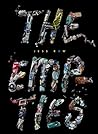
“Country’s friggin’ dying, man, you have to triage the motherfucker.”
― The Empties
― The Empties
“In the first couple of weeks there were big piles of trash outside every house. All the stuff you couldn’t find another use for and couldn’t compost. Yogurt cups, torn trash bags, dirty diapers, hair-spray cans, paper towels. Sometimes you’d see a pile that was as high as your waist. Nathan said it was a purge, a cleanse. But you could just as well say that who we were went out with the empties. We will never get our selves back.”
― The Empties
― The Empties
“What I was pointing to was that, yeah, blackness is a fiction; whiteness is a fiction. When we live according to these categories, we’re living within a fiction. Of course, it’s a fiction with very real consequences.”
―
―
“It was one of the great pleasures of the age, to be safe and warm and dry - showered, deodorized, professionally clothed in espadrilles and a linen jacket, latte steaming up the radio display, taking in the world's troubles three minutes at a time. That was luxury.”
― The Best American Science Fiction and Fantasy 2015
― The Best American Science Fiction and Fantasy 2015
“It's possible, when you've been married for twenty-five or thirty years, when your children have grown up and moved away, to keep coming back across the tail ends of conversations you started in a different decade, and to realize that whole areas of existence have lain dormant all that time, like seeds in an envelope. There's nothing unusual about that.”
―
―
“If it had a name, he says, what would that change, exactly? Would it be more acceptable to you? Would it be a thing people do? Would it have a category unto itself?”
―
―
“Though Marcus' essay extends over 13 pages of small text, at its core is a very simple premise: Contemporary American fiction has lost its innovative edge and its interest in language as art, and Jonathan Franzen is largely, if not exclusively, to blame.”
―
―
“In my study, there are stacks of papers to grade, books I should have read & reviewed months ago, but I have no concentration: the time slips through my fingers like water.”
― The Train to Lo Wu
― The Train to Lo Wu
“How is it possible to describe the ways American whiteness needs American blackness? It’s such a fraught question, so simultaneously obvious and grievous, that it’s hard to know where to begin. Enslaved Africans were commodified as labor, as the economic engine that created American capitalism as it is known today; in his recent book The Half Has Never Been Told, Edward Baptist documents how the slave trade was intrinsic to the market economy that transformed luxuries into necessities and created patterns of consumption that still exist today. As enslaved people and as free laborers, or servants, African Americans were also intimately intertwined with the lives of many white families, especially (but of course not only) in the South, as personal servants and caregivers, nurses, nannies. African and African American women, throughout the entire history and prehistory of the United States, have been subjected to the sexual needs of white men, which is why so many white and black Americans are actually related, as family.”
― White Flights: Race, Fiction, and the American Imagination
― White Flights: Race, Fiction, and the American Imagination
“So put it this way: the kind of seeing I’m interested in is the kind that measures the cost of my perceptions. What am I being asked not to see? What kind of seer, or artist, or person am I being asked not to be? The awkwardness of the syntax implies the torsion of the thought. It feels “unnatural.” Or, you could say, it’s a new muscle being tested.”
― White Flights: Race, Fiction, and the American Imagination
― White Flights: Race, Fiction, and the American Imagination
“In The Psychic Life of Power, Butler writes, “Power not only acts on a subject but, in a transitive sense, enacts the subject into being.”
― White Flights: Race, Fiction, and the American Imagination
― White Flights: Race, Fiction, and the American Imagination
“What is the social function of tenderness? To do what a person can’t do privately, I want to say. So that we’re not trapped within a family resemblance. Justice makes love manifest in public what it can’t do in private.”
― White Flights: Race, Fiction, and the American Imagination
― White Flights: Race, Fiction, and the American Imagination
“Racial classification is a reductive process: any way of simplifying the world, making it artificial, involves first taking things away. Severing connections and bonds: practicing symbolic, as well as actual, violence. One of the results of this symbolic violence is to make interesting lives, layered histories, and complex identifications disappear. In other words: by flattening life, racism makes it feel boring, exhausting, embarrassing. This is what happened to me, when I tried to write the story of my great-grandparents: I stopped because I was afraid it would be pointless. I had nothing to build on and nothing to go on.”
― White Flights: Race, Fiction, and the American Imagination
― White Flights: Race, Fiction, and the American Imagination
“I’m no longer clear about where the imagination ends and politics begins, or what it means to do political analysis apart from the imagined worlds of individual subjects. I can only say this much: whenever I travel by plane I feel reduced to a passport and a credit card. This is a perverse reversal of Agamben’s most famous concept, the idea of the dehumanized noncitizen, reduced to “bare life.” I go from duty-free shop to duty-free shop, a profit center in transit, a purchasing agent. I’m reminded that I’m participating in climate change on a massive scale; that the capital I accumulate and invest—my retirement account in TIAA, invested in arms manufacturers, and energy companies, despite years of customer protests—takes part in transactions I never authorized, to say nothing of my taxes, which have paid for KBR-Halliburton’s kidnapping of Nepalis to work in the Green Zone during the Gulf War, extraordinary renditions and drone strikes, deportations and private prisons and the world’s largest nuclear stockpile.”
― White Flights: Race, Fiction, and the American Imagination
― White Flights: Race, Fiction, and the American Imagination
“Were I a black man, it occurs to me, working or not, in this city, I would have a dry-cleaning bill.”
―
―
“The central difficulty in our understanding of ourselves and of society is that we cannot mark out the limits of the possible. The possible … is not a well-defined, closed set of transmutations within which actual historical experience has developed as a subset. The possible is just what we can do next, getting there from here. However, so long as we make a living connection between our ideas about how we got here and our ideas about how we can get to the next place, we do not need to stare at what exists and to represent that stare as insight. We can imagine what exists as the resting place and the starting point that it always really is.”
― White Flights: Race, Fiction, and the American Imagination
― White Flights: Race, Fiction, and the American Imagination
“reconciliation is not a single event in time but a process that never actually ends; it’s not something that comes from one person but an exchange, an interplay, that happens between people, in stages, as long as memory persists.”
― White Flights: Race, Fiction, and the American Imagination
― White Flights: Race, Fiction, and the American Imagination
“you cut away the parts of the story body you’re most ashamed of, the parts you want no one to see.”
― White Flights: Race, Fiction, and the American Imagination
― White Flights: Race, Fiction, and the American Imagination
“But there’s an even more fundamental way to answer this question: whiteness needs blackness to confirm that it is white.”
― White Flights: Race, Fiction, and the American Imagination
― White Flights: Race, Fiction, and the American Imagination
“Does it, does it—I'm flailing here—does it have a name? What you've done?
If it had a name, he says, what would that change, exactly? Would it be more acceptable to you? Would it be a thing people do? Would it have a category unto itself?”
―
If it had a name, he says, what would that change, exactly? Would it be more acceptable to you? Would it be a thing people do? Would it have a category unto itself?”
―
“negation) but living death (a state of affirmation), being not a noncitizen but a citizen of the necropolis, which makes you a necropolitan. Which means (among other things) getting used to death—administered, systematic, programmatic death, random and predictable—as a condition of life, and getting along with life in spite of it. In”
― White Flights: Race, Fiction, and the American Imagination
― White Flights: Race, Fiction, and the American Imagination
“Every language on the apocalypse is also apocalyptic,” says Derrida, “and cannot be excluded from its object.” I want to resist this idea, in the following small way: fictions, consciously fictional narratives, end without ending everything around them. Fiction reminds the reader that the end is not really the end. (“‘Strophe’ … is not only the Greek word for ‘turn,’” Sonya Posmentier writes in Cultivation and Catastrophe, “but also for the poetic unit of a stanza…. Catastrophe, then, is always involved with art making. It contains … the making of form in the first place.”) I’m looking for, and hoping for, a literature that resists death, that resists the identification of “death” and “ending.” Our lives end in death, but the world and the culture do not have to die. One does not require the other. Time does not have to pull incessantly in the direction of oblivion.”
― White Flights: Race, Fiction, and the American Imagination
― White Flights: Race, Fiction, and the American Imagination
“This is what creates the theodicy, the racecraft, of American writing: the belief that because white writers can most easily pretend to possess disinterest, abstraction, and generality, that quality is necessarily and naturally white.”
― White Flights: Race, Fiction, and the American Imagination
― White Flights: Race, Fiction, and the American Imagination
“Worried about getting a life? Forget that. Get a lifestyle.”
― Your Face in Mine
― Your Face in Mine
“But [Ben Marcus] can't resist the urge to re-enact the great prizefights of the past--Kerouac vs. Capote, Barth vs. Gardner--as if what we really need, in 2005, is two white male writers fighting over something that can't be circumscribed, much less owned. Isn't it time we allowed the scorched-earth rhetoric of avant-gardes and ancien régimes to drift, like the tissue-thin sheets of an old aerogramme, into the dustbin of history?”
―
―
“As a man, a heterosexual man, I experience speaking—writing—and being heard—being “received”—with the phallus. I experience being silenced, being deprived of the right to speak, with castration. How many metaphysical systems—or antimetaphysical critiques—are rooted in the symbolic castration of the opponent, the denial of his (it’s always a “his”) right to speak?”
― White Flights: Race, Fiction, and the American Imagination
― White Flights: Race, Fiction, and the American Imagination
“These cultural forms—coolness, the hipster, and emo, the white blues—have a history and a prehistory derived from African American culture; they are black cultural forms turned white. In this way they follow the long trajectory of conscious and unconscious appropriation Kevin Young traces in The Grey Album: “In the face of alienation and anomie the mask, modern and often racial, becomes necessary,”
― White Flights: Race, Fiction, and the American Imagination
― White Flights: Race, Fiction, and the American Imagination
“I can go on making art simply by noticing. I can still be transformed by the obvious.”
― White Flights: Race, Fiction, and the American Imagination
― White Flights: Race, Fiction, and the American Imagination
“The term “white flight,” when used by demographers and political scientists, refers to the abandonment by whites of a downtown area, an urban core, for surrounding communities—garden suburbs, inner-ring postwar suburbs, planned and gated subdivisions, formerly rural “exurbs.” To me it has at least three crucial additional meanings. It describes my father’s effort to escape the violent and explicitly racist atmosphere of his childhood and both my parents’ responses to the riots of the late sixties—which is to say the effort of a generation of white Americans to escape scenes and situations of racialized violence, whether on Native American land, in the South, in cities like Washington and Detroit and Baltimore and Newark. It implies the abandonment of the ideals of integration, coexistence, brotherhood, racial harmony that my parents’ generation cherished in their early adulthood. But it also represents a flight toward a kind of perverse ideal, represented by the world in which I grew up: an overwhelmingly white world that tried to become colorblind, somehow innocent, but ultimately dissolved and sublimated and assimilated racial self-consciousness and culpability until it was no longer recognizable as itself.”
― White Flights: Race, Fiction, and the American Imagination
― White Flights: Race, Fiction, and the American Imagination
“An epiphany is supposed to be immobilizing and transforming. It’s supposed to point to the impoverishment or debasement or bad faith of the subject and give a direction for the future. This is an inherently faulty idea on any number of levels, but nonetheless an extremely potent one: the belief that change not only shapes the future but also obliterates the past.”
― White Flights: Race, Fiction, and the American Imagination
― White Flights: Race, Fiction, and the American Imagination