Goodreads helps you follow your favorite authors. Be the first to learn about new releases!
Start by following Doug Stanton.

Showing 1-20 of 20
“Where does a man go when there are no more corners to turn, when he's running out of hope, out of luck, out of time?”
― In Harm's Way: The Sinking of the USS Indianapolis and the Extraordinary Story of Its Survivors
― In Harm's Way: The Sinking of the USS Indianapolis and the Extraordinary Story of Its Survivors
“This was Special Forces’ rule number one: let men experience failure so they never fail again. And by failing, they will learn how to be successful soldiers.”
― Horse Soldiers: The Extraordinary Story of a Band of US Soldiers Who Rode to Victory in Afghanistan
― Horse Soldiers: The Extraordinary Story of a Band of US Soldiers Who Rode to Victory in Afghanistan
“Later, Dean would see Atta’s fighters show up carrying AK-47s, and there with them would be their sons, carrying spare magazines. Behind the sons walked even younger sons, carrying nothing. Dean understood that in this kind of fighting, the sons who carried nothing would pick up either a gun or a magazine if the fathers or brothers were killed. The look on the faces of the kids seemed to indicate to Dean that they expected to die.”
― Horse Soldiers: The Extraordinary Story of a Band of US Soldiers Who Rode to Victory in Afghanistan
― Horse Soldiers: The Extraordinary Story of a Band of US Soldiers Who Rode to Victory in Afghanistan
“They’d been afloat now without food, water, shelter, or sleep for over forty hours. Of the 1,196 crew13 members who’d set sail from Guam three days earlier, probably no more than 600 were still alive. In the previous twenty-four hours alone, at least 200 had likely slipped beneath the waves or been victims of shark attack. Since the sinking, each boy had been floating through the hours asking himself the same hard question: Will I live, or do I quit?”
― In Harm's Way
― In Harm's Way
“McCoy, drained and hollow-eyed, couldn't take his eyes off the life vest belonging to the boy who'd slipped away from the group during the night. The empty vest spooked McCoy. All its straps were still tightly tied-it looked like some trick that Houdini might've played. Then McCoy peered into the water and got another shock: the boy was floating below him, spread-eagled, about fifteen feet below the surface. He lay motionless until a current caught him; then it was as if he were flying in the depths. Jesus, McCoy thought, Mother of God. He started saying the rosary over and over. McCoy had never been overly religious; his mom was the spiritual one in the family. But now he began the process of what he'd later call his purification; he'd started asking God to forgive him of his sins. He was resolved to live but he was getting ready to die.”
― In Harm's Way: The Sinking of the USS Indianapolis and the Extraordinary Story of Its Survivors
― In Harm's Way: The Sinking of the USS Indianapolis and the Extraordinary Story of Its Survivors
“Other objects found in shark stomachs include a suit of armor, a barrel of nails, a roll of tar paper, coal, raincoats, shoes, plastic bags, goats, sheep, lizards, snakes, chicken, reindeer, and monkeys.”
― In Harm's Way: The Sinking of the USS Indianapolis and the Extraordinary Story of Its Survivors
― In Harm's Way: The Sinking of the USS Indianapolis and the Extraordinary Story of Its Survivors
“Looking over to his left, he watches a rocket-propelled grenade race in and blow up one of the M-60 machine-gun positions. Just then he also sees a lone, tall figure, an American, charge the position, fire, and retake the gun. Even in the dark, amid the explosions, he can recognize the silhouette of the gunner as Michael Bradshaw. Stan is filled with joy that Bradshaw has rushed to the position to counter the enemy’s attack; his decision to do this may help save them. Stan knows Bradshaw must be scared, but in the din he can’t hear if he’s screaming or yelling or swearing; silence. He’s a flickering image amid hundreds of explosions.”
― The Odyssey of Echo Company: The 1968 Tet Offensive and the Epic Battle to Survive the Vietnam War
― The Odyssey of Echo Company: The 1968 Tet Offensive and the Epic Battle to Survive the Vietnam War
“The sharks had, in fact, remained a constant presence throughout the men's ordeal, even during the daylight hours. Not long after [navy pilot] Gwinn showed up, a massive shark attack--involving an estimated thirty fish--had, in about fifteen minutes, taken some sixty boys perched on a floater net.”
― In Harm's Way: The Sinking of the USS Indianapolis and the Extraordinary Story of Its Survivors
― In Harm's Way: The Sinking of the USS Indianapolis and the Extraordinary Story of Its Survivors
“Together, they wanted to return the Middle East to the fourteenth century, into a golden age ruled by Islamic law.”
― Horse Soldiers: The Extraordinary Story of a Band of US Soldiers Who Rode to Victory in Afghanistan
― Horse Soldiers: The Extraordinary Story of a Band of US Soldiers Who Rode to Victory in Afghanistan
“For the survivors, the disaster of the Indy is their My Lai massacre or Watergate, a touchstone moment of historic disappointment: the navy put them in harm's way, hundreds of men died violently, and then the government refused to acknowledge its culpability.
What's amazing, however, is that these men, unlike contemporary generations who've been disappointed by bad government, are not bitter. Somehow, a majority brushed aside their feelings of rancor and went on to help build the booming postwar American economy of the fifties.”
― In Harm's Way: The Sinking of the USS Indianapolis and the Extraordinary Story of Its Survivors
What's amazing, however, is that these men, unlike contemporary generations who've been disappointed by bad government, are not bitter. Somehow, a majority brushed aside their feelings of rancor and went on to help build the booming postwar American economy of the fifties.”
― In Harm's Way: The Sinking of the USS Indianapolis and the Extraordinary Story of Its Survivors
“Before their hurried flight from the city two weeks earlier, the Taliban had left the weapons and smeared feces on the walls and windows. Every photograph, every painting, every rosebush had been torn up, smashed, stomped, ruined. Nothing beautiful had been left behind.”
― Horse Soldiers: The Extraordinary Story of a Band of US Soldiers Who Rode to Victory in Afghanistan
― Horse Soldiers: The Extraordinary Story of a Band of US Soldiers Who Rode to Victory in Afghanistan
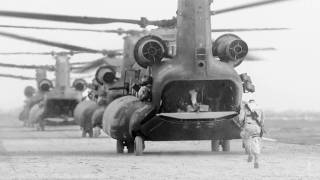
“On a training mission, he’d watched as Nightstalker pilots cut their own landing zone using the rotors of the helicopter as giant hedge clippers. They’d been landing in a pine forest and he marveled as the helo dropped into the hole of its own making—pine”
― Horse Soldiers: The Extraordinary Story of a Band of US Soldiers Who Rode to Victory in Afghanistan
― Horse Soldiers: The Extraordinary Story of a Band of US Soldiers Who Rode to Victory in Afghanistan
“On November 5, to kick off the final, coordinated assault on Baluch, Stu Mansfield, positioned with Atta at the warlord’s mountaintop compound, ordered the drop of a bomb called a BLU-82, which Mansfield called “the Motherfucker of All Bombs.” A few minutes after dawn, barreling toward earth was the largest non-nuclear explosive device in the United States’ arsenal.”
― Horse Soldiers: The Extraordinary Story of a Band of US Soldiers Who Rode to Victory in Afghanistan
― Horse Soldiers: The Extraordinary Story of a Band of US Soldiers Who Rode to Victory in Afghanistan
“(Ali was horrified and enraged when in March of 2001 the Taliban dynamited the stone Buddhas that had stood watch over the town for centuries. What man had the right to write the future by blowing up the past?)”
― Horse Soldiers: The Extraordinary Story of a Band of US Soldiers Who Rode to Victory in Afghanistan
― Horse Soldiers: The Extraordinary Story of a Band of US Soldiers Who Rode to Victory in Afghanistan
“. . . the sun set . . . with guillotine-like speed this close to the equator.”
― In Harm's Way: The Sinking of the USS Indianapolis and the Extraordinary Story of Its Survivors
― In Harm's Way: The Sinking of the USS Indianapolis and the Extraordinary Story of Its Survivors
“In this way, the story recounted here is also a flag raised against the brute visage of fundamentalism, in all its forms, here and abroad. The book is, I hope, an account of religious and cultural hubris and misanthropy. What struck me during my research was learning the degree to which violence had often been a third or fourth choice in resolving conflict. Indeed, some men in this book never fired their weapon, even when doing so would have put an “end” to a problem. Instead, the crisis of a particular moment was fixed by crouching in the dirt with a stick, opposite the “opponent,” and scratching out a solution.”
― Horse Soldiers: The Extraordinary Story of a Band of US Soldiers Who Rode to Victory in Afghanistan
― Horse Soldiers: The Extraordinary Story of a Band of US Soldiers Who Rode to Victory in Afghanistan
“Accurate data on shark attacks on World War II servicemen may never be known since medical records did not note them. In fact, the navy was sufficiently concerned about loss of morale that it discouraged public mention of the menace.”
― In Harm's Way: The Sinking of the USS Indianapolis and the Extraordinary Story of Its Survivors
― In Harm's Way: The Sinking of the USS Indianapolis and the Extraordinary Story of Its Survivors
“a decision can be legally correct and still be unjust.”
― In Harm's Way: The Sinking of the USS Indianapolis and the Extraordinary Story of Its Survivors
― In Harm's Way: The Sinking of the USS Indianapolis and the Extraordinary Story of Its Survivors
“Taliban dynamited the stone Buddhas that had stood watch over the town for centuries. What man had the right to write the future by blowing up the past?) With”
― Horse Soldiers: The Extraordinary Story of a Band of US Soldiers Who Rode to Victory in Afghanistan
― Horse Soldiers: The Extraordinary Story of a Band of US Soldiers Who Rode to Victory in Afghanistan
“Wars, as the earlier military thinker Carl von Clausewitz pointed out, are not fought to kill people; they are fought to effect political change. They are violent, expensive, and represent one of the universe’s great rifts in the social contract.”
― Horse Soldiers: The Extraordinary Story of a Band of US Soldiers Who Rode to Victory in Afghanistan
― Horse Soldiers: The Extraordinary Story of a Band of US Soldiers Who Rode to Victory in Afghanistan