Goodreads helps you follow your favorite authors. Be the first to learn about new releases!
Start by following Working Class History.

Showing 1-2 of 2
“The uplifting rhetoric on Martin Luther King Jr. Day typically reaches as far as his “I have a dream” speech at the huge demonstration in Washington in August 1963. But King did not terminate his activities then. He went on to become a prominent critic of the Vietnam War and to organize and support struggles for housing, workers’ rights, and other popular needs in the North. He was assassinated in 1968 while supporting a garbage workers’ strike,5 the day after he had delivered another memorable speech that is barely known. He was organizing a poor people’s movement and another march on Washington to demand human and civil rights for all Americans, including Aboriginal and white Americans. None of this was tolerable to establishment liberalism. He was bitterly condemned for supposedly losing his way. It’s fine to condemn racist Alabama sheriffs—but “not in my backyard.” His major commitments are omitted from the schools and the media.”
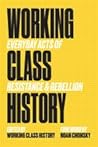
― Working Class History: Everyday Acts of Resistance & Rebellion
― Working Class History: Everyday Acts of Resistance & Rebellion
“Each January since 1947, the Bulletin of Atomic Scientists sets the minute hand of its Doomsday Clock at a certain distance from midnight—which means terminal disaster. Once, in 1953, it was set at two minutes to midnight, after the US and then the USSR exploded thermonuclear weapons, demonstrating that human intelligence had developed the means to destroy everything. It did not reach that grim setting again until Donald Trump had been in office for a year.”
― Working Class History: Everyday Acts of Resistance & Rebellion
― Working Class History: Everyday Acts of Resistance & Rebellion