Goodreads helps you follow your favorite authors. Be the first to learn about new releases!
Start by following Ryan Hackney.

Showing 1-28 of 28
“And if you can’t go to heaven, May you at least die in Ireland.”
― The Myths, Legends, and Lore of Ireland
― The Myths, Legends, and Lore of Ireland
“You can’t swing a cat in Ireland without hitting a saint.”
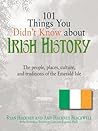
― 101 Things You Didn't Know About Irish History: The People, Places, Culture, and Tradition of the Emerald Isle
― 101 Things You Didn't Know About Irish History: The People, Places, Culture, and Tradition of the Emerald Isle
“Another fever appeared at the same time, the relapsing fever called yellow fever because its victims became jaundiced. This fever also came from lice. A victim would suffer from a high fever for several days, seem to recover, and then relapse a week later. Many people died from this fever as well. Scurvy”
― The Myths, Legends, and Lore of Ireland
― The Myths, Legends, and Lore of Ireland
“The Irish mingled their Christianity with folk beliefs in fairies and changelings.”
― 101 Things You Didn't Know About Irish History: The People, Places, Culture, and Tradition of the Emerald Isle
― 101 Things You Didn't Know About Irish History: The People, Places, Culture, and Tradition of the Emerald Isle
“in 1935 the Irish government created the Irish Folklore Commission. In the following decades, Irish-speaking collectors scoured the countryside to record stories of saints, heroes, and spirits. Currently, more than a million and a half pages of folklore reside in the commission’s collection which, since 1971, has been continued on by the Folklore Department at University College Dublin.”
― The Myths, Legends, and Lore of Ireland
― The Myths, Legends, and Lore of Ireland
“In the mid-nineteenth century, Jeremiah Curtin, an Irish-American who had learned Irish, traveled throughout the Irish-speaking enclaves in Connacht and discovered hundreds of previously unrecorded stories. He recorded them in their original language and greatly advanced the study of Irish folklore.”
― The Myths, Legends, and Lore of Ireland
― The Myths, Legends, and Lore of Ireland
“Vowels Irish marks long vowels with an accent; short vowels have no accent. Here are the main vowel sounds:”
― The Myths, Legends, and Lore of Ireland
― The Myths, Legends, and Lore of Ireland
“The first volume of Irish folktales was Fairy Legends and Traditions of the South of Ireland, published in 1825 by Thomas Croker from Cork.”
― The Myths, Legends, and Lore of Ireland
― The Myths, Legends, and Lore of Ireland
“Cattle and metal treasure were the main forms of wealth in ancient Ireland—metal because it was rare, and cattle because they were useful. Cattle provided milk to drink and to make into cheese, and hide and meat after they were dead. If a king demanded tribute from his subjects, it would probably be in the form of cattle—in fact, a wealthy farmer was called a bóiare, or “lord of cows.” In the famous poem Táin Bó Cuailnge, a major war starts because Queen Mebd discovers that her husband has one more bull than she does. Celtic chieftains spent quite a bit of their energy stealing cattle from one another. They even had a special word for this activity, táin. (Cattle raiding wasn’t just an amusement for the ancient Irish; modern Irish people were stealing one another’s cattle well into the twentieth century.)”
― 101 Things You Didn't Know About Irish History: The People, Places, Culture, and Tradition of the Emerald Isle
― 101 Things You Didn't Know About Irish History: The People, Places, Culture, and Tradition of the Emerald Isle
“Scurvy became a problem. This disease comes from a deficiency of vitamin C, and it causes the victim’s connective tissue to break down. The Irish called scurvy black leg, because it made the blood vessels under the skin burst, giving a victim’s limbs a black appearance. The cure for scurvy is fresh food — meat, vegetables, or fruit — none of which was available to the poor in Ireland. There”
― The Myths, Legends, and Lore of Ireland
― The Myths, Legends, and Lore of Ireland
“Irish demographics reveal two startling facts: There are around 70 million people worldwide who claim Irish descent, and Ireland today has barely half the population that it had 160 years ago, a decline unmatched in the modern world. These facts are explained and connected by the undeniable social reality of nineteenth-century Ireland—emigration.”
― 101 Things You Didn't Know About Irish History: The People, Places, Culture, and Tradition of the Emerald Isle
― 101 Things You Didn't Know About Irish History: The People, Places, Culture, and Tradition of the Emerald Isle
“The west and southwest of Ireland bore the brunt of the famine. Those areas, including Mayo, Sligo, Roscommon, Galway, Clare, and Cork, were the poorest regions of the island, and the most dependent on subsistence farming. Not coincidentally, these were also the areas that Catholic Irish had been sent to during the Protestant plantation.”
― The Myths, Legends, and Lore of Ireland
― The Myths, Legends, and Lore of Ireland
“Douglas Hyde’s Beside the Fire, William Butler Yeats’s The Celtic Twilight, Lady Augusta Gregory’s Visions and Beliefs of the West of Ireland, and Standish O’Grady’s collections not only established Irish folklore as one of the great oral literature traditions of Western civilization, but also provided an immense source of pride for the growing Irish Nationalist movement.”
― The Myths, Legends, and Lore of Ireland
― The Myths, Legends, and Lore of Ireland
“The mid-nineteenth century was the heyday of laissezfaire economics, which taught that the free market would solve all problems and that the government should never intervene. Unfortunately, that approach led to tragedy for the Irish population. Politicians”
― The Myths, Legends, and Lore of Ireland
― The Myths, Legends, and Lore of Ireland
“The worst part of the potato blight was that it didn’t go away. After the 1845 crops failed, people counted on the potatoes of 1846 to pull them through, but those potatoes rotted away, too. For some reason the crop of 1847 survived, but not enough fields of potatoes had been planted to produce enough food for everyone who needed it. And in 1848 the blight reappeared with a vengeance.”
― The Myths, Legends, and Lore of Ireland
― The Myths, Legends, and Lore of Ireland
“One of the most important functions of monasteries was as schools. Monastic schools were well attended (mostly by boys). Some of the students were treated as foster children by the monks, living in the care of another family until they were ready to return to their homes and adult responsibilities. Many noble warrior fathers seem to have thought that their sons would be safer in a monastery than at home. Students had to find and prepare food for the monks and help out with the business of running the monastery. But most of their time was spent studying and working.”
― 101 Things You Didn't Know About Irish History: The People, Places, Culture, and Tradition of the Emerald Isle
― 101 Things You Didn't Know About Irish History: The People, Places, Culture, and Tradition of the Emerald Isle
“Goodnight: Oíche mhaith (ee-ha ho) Cheers (literally “health”): Sláinte (slan-chuh)”
― The Myths, Legends, and Lore of Ireland
― The Myths, Legends, and Lore of Ireland
“Potatoes came to Europe from the New World in the early sixteenth century. Sir Francis Drake is thought to have introduced the potato to England, and shortly afterward Sir Walter Raleigh tried planting them on his Irish estates.”
― The Myths, Legends, and Lore of Ireland
― The Myths, Legends, and Lore of Ireland
“Ireland was a different place after the famine. The population was drastically reduced—an island of 8.2 million people in 1841 was reduced to 6 million in 1851. At least 1 million of those people had died. The rest fled the country, hoping for a new life in another land.”
― 101 Things You Didn't Know About Irish History: The People, Places, Culture, and Tradition of the Emerald Isle
― 101 Things You Didn't Know About Irish History: The People, Places, Culture, and Tradition of the Emerald Isle
“The malnourished Irish were very vulnerable to diseases. In fact, more people died from illness than from actual starvation.”
― The Myths, Legends, and Lore of Ireland
― The Myths, Legends, and Lore of Ireland
“Leave the table hungry. Leave the bed sleepy. Leave the table thirsty. Here”
― The Myths, Legends, and Lore of Ireland
― The Myths, Legends, and Lore of Ireland
“Interestingly, some of the worst anti-Irish discrimination came from the Scotch-Irish, who wanted to make clear that they were a different group from the impoverished newcomers.”
― 101 Things You Didn't Know About Irish History: The People, Places, Culture, and Tradition of the Emerald Isle
― 101 Things You Didn't Know About Irish History: The People, Places, Culture, and Tradition of the Emerald Isle
“They called the time an Gorta Mór, which means “the Great Hunger,” or an Droch Shaol, “the Bad Times.”
― The Myths, Legends, and Lore of Ireland
― The Myths, Legends, and Lore of Ireland
“Most of the first voluntary Irish immigrants came from Ulster in the north of Ireland. These immigrants were generally, although not exclusively, Protestants. They were known as “Scotch-Irish” or “Scots Irish,”
― 101 Things You Didn't Know About Irish History: The People, Places, Culture, and Tradition of the Emerald Isle
― 101 Things You Didn't Know About Irish History: The People, Places, Culture, and Tradition of the Emerald Isle
“It’s no use carrying an umbrella if your shoes are leaking. If”
― The Myths, Legends, and Lore of Ireland
― The Myths, Legends, and Lore of Ireland
“Cholera was always a problem in unsanitary, crowded conditions; it broke out in workhouses throughout the famine years.”
― The Myths, Legends, and Lore of Ireland
― The Myths, Legends, and Lore of Ireland
“Typhus appeared in the winter of 1846. The Irish called it the black fever because it made victims’ faces swollen and dark. It was incredibly contagious, spread by lice, which were everywhere. Many people lived in one-room cottages, humans and animals all huddled together, and there was no way to avoid lice jumping from person to person. The typhus bacteria also traveled in louse feces, which formed an invisible dust in the air. Anyone who touched an infected person, or even an infected person’s clothes, could become the disease’s next victim. Typhus was the supreme killer of the famine; in the winter of 1847, thousands of people died of it every week. Another”
― The Myths, Legends, and Lore of Ireland
― The Myths, Legends, and Lore of Ireland
“Bean sídhe (banshee)—a female spirit associated with the ancestors of old Irish families, who wails terribly whenever someone in the family dies.”
― 101 Things You Didn't Know About Irish History: The People, Places, Culture, and Tradition of the Emerald Isle
― 101 Things You Didn't Know About Irish History: The People, Places, Culture, and Tradition of the Emerald Isle