Goodreads helps you follow your favorite authors. Be the first to learn about new releases!
Start by following David Brazier.
Showing 1-5 of 5
“A boddhisattva is someone who is on the way to becoming a buddha. All of us become boddhisattvas as soon as we start to take our Zen work seriously and the work we do contributes to creating a world in which all good actions become more efficacious.”
―
―
“The challenge for us is to realise our unity with all life, and even with the inanimate world around us. The seas with their currents, the atmosphere and the continents of the earth are all in motion, stirring with their own kinds of life. Our malaise as a civilised people comes in large measure from our ability to distance ourselves from nature and from one another. A real therapy is one with a vision, not only of the individual person, but also of how the whole planet is to be healed.”
―
―
“Modern society tends to operate in ways that isolate us in our littleness. We are encouraged to be consumers and economic units. We are assailed by advertising which carries the constant message that individual indulgence is all that matters. All this serves to weaken our spirit and put our world at risk. As our society becomes more and more spiritually impoverished, it is like a forest drying out in the heat of summer. The danger of a forest fire grows.
(…)
If the story we are living is not important, then our life will peter into apathy and we will be defenceless against tyranny and oppression.
(…)
There will always be bad big stories waiting to sweep us away. Indeed, we are already involved in them. By being consumer citizens we collude with all manner of ill: factory farming, armaments production, environmental damage, wars to protect oil supplies, third world debt, to name but a few. It is important to do better than this, to find a more noble story.
(…)
The Buddha enabled many people to see possibilities for their lives that they had not perceived before they met him. That is the function of a sage. He was able to speak the other person's language and to see their life in terms of the bigger picture how new meaning could be injected into the person's little story so that it began to serve the great story of peace and compassion in the world. He was an inspirer.”
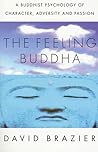
― The Feeling Buddha: A Buddhist Psychology of Character, Adversity and Passion
(…)
If the story we are living is not important, then our life will peter into apathy and we will be defenceless against tyranny and oppression.
(…)
There will always be bad big stories waiting to sweep us away. Indeed, we are already involved in them. By being consumer citizens we collude with all manner of ill: factory farming, armaments production, environmental damage, wars to protect oil supplies, third world debt, to name but a few. It is important to do better than this, to find a more noble story.
(…)
The Buddha enabled many people to see possibilities for their lives that they had not perceived before they met him. That is the function of a sage. He was able to speak the other person's language and to see their life in terms of the bigger picture how new meaning could be injected into the person's little story so that it began to serve the great story of peace and compassion in the world. He was an inspirer.”
― The Feeling Buddha: A Buddhist Psychology of Character, Adversity and Passion
“Attachment and aversion are two short term strategies. There is a third. Some people reach for the bottle. It may be a bottle of alcohol or a bottle of pills, but the effect is much the same. Quite a large proportion of the population find it difficult to bear even one day without the effect of alcohol. Much of the agricultural land in the world is devoted exclusively to the production of alcohol — and this while others starve. Yet alcohol does much physical damage to our bodies and leads to socially destructive behaviour. Of course, oblivion is not sought solely through drinking. Many other drugs are used many of them nowadays prescribed by doctors. Oblivion is an accepted 'solution' for many people. The ultimate oblivion-seeking behaviour is suicide. Where hateful behaviour can do massive damage in a short time and greedy behaviour has a slow undermining effect upon our lives, behaviour based on the desire for oblivion does both. We suffer in the short run and we suffer in the long run. This is the most extreme form of escapism. The attempt to destroy suffering in this way, however, destroys us.”
― The Feeling Buddha: A Buddhist Psychology of Character, Adversity and Passion
― The Feeling Buddha: A Buddhist Psychology of Character, Adversity and Passion
“Later Siddhartha was to recount how the most crucial incident of his childhood occurred when he was nine. In the spring he was taken to the ploughing festival. This was a very important day for the Shakya people who were agriculturalists. On this day, the ploughing season began. The king, Siddhartha's father, would ceremonially cut the first furrow with a special plough. It was the occasion for a great spring festival and everybody was celebrating. Siddhartha was taken along by his nurse maids to watch his father perform the all important symbolic act of making the first cut in the ground.
As Siddhartha watched, what this sensitive child saw was the beautiful earth being cut open: cut open in order that the people might grow crops and so live; cut open just as, perhaps, he knew that his mother had been cut open to give him life. He saw insects turned up by the plough, ejected from their homes. He saw worms cut into pieces. He saw the birds descend and eat the little creatures squirming on the broken soil. He saw that in this cutting there was much suffering. He felt the suffering himself. He felt a great urge to remove himself from this painful spectacle. He slipped away from his nurse maids and went to sit under a tree. Later they came looking for him and found that he had gone into a deep state of concentration. As he reflected upon what he had witnessed he was unaware of their approach or of them observing him. This was the first time, he entered into the kind of intense rapture we call samadhi.
So Siddhartha grew up with a deep concern about the meaning of suffering in his heart. He knew that he was alive because his mother had died. He knew that people were only able to feed at the expense of the cutting of the earth. He felt the unavoidability of much suffering acutely. He went out from the palace and he saw people who were sick and he learned how nobody is immune to sickness. He saw how people grow old and how nobody is able to avert doing so if they live long.
And if they do not live, then they die and this too is an affliction, both for the person who dies and for those who grieve. Siddhartha was certainly sensitive enough to grieve. The great mass of suffering in the world seemed to weigh upon him.”
― The Feeling Buddha by David Brazier (24-May-2001) Paperback
As Siddhartha watched, what this sensitive child saw was the beautiful earth being cut open: cut open in order that the people might grow crops and so live; cut open just as, perhaps, he knew that his mother had been cut open to give him life. He saw insects turned up by the plough, ejected from their homes. He saw worms cut into pieces. He saw the birds descend and eat the little creatures squirming on the broken soil. He saw that in this cutting there was much suffering. He felt the suffering himself. He felt a great urge to remove himself from this painful spectacle. He slipped away from his nurse maids and went to sit under a tree. Later they came looking for him and found that he had gone into a deep state of concentration. As he reflected upon what he had witnessed he was unaware of their approach or of them observing him. This was the first time, he entered into the kind of intense rapture we call samadhi.
So Siddhartha grew up with a deep concern about the meaning of suffering in his heart. He knew that he was alive because his mother had died. He knew that people were only able to feed at the expense of the cutting of the earth. He felt the unavoidability of much suffering acutely. He went out from the palace and he saw people who were sick and he learned how nobody is immune to sickness. He saw how people grow old and how nobody is able to avert doing so if they live long.
And if they do not live, then they die and this too is an affliction, both for the person who dies and for those who grieve. Siddhartha was certainly sensitive enough to grieve. The great mass of suffering in the world seemed to weigh upon him.”
― The Feeling Buddha by David Brazier (24-May-2001) Paperback