

What do you think?
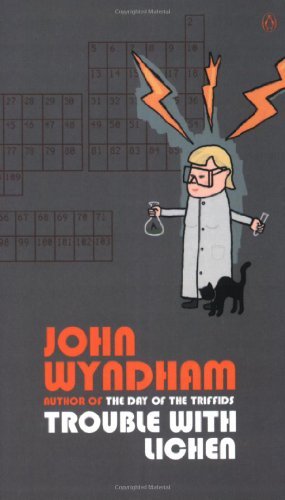
Trouble with Lichen
"Trouble with Lichen" by John Wyndham is a captivating work of speculative fiction that delves into the complexities of human nature, scientific ethics, and societal change. Set in a near-future England, the novel follows the groundbreaking discovery of a lichen species with extraordinary properties. This lichen dramatically slows down the aging process, granting its users extended youth and vitality. At the heart of the story is Diana Brackley, a brilliant and ambitious biochemist who stumbles upon this miraculous lichen. As she grapples with the moral implications of her discovery, she becomes embroiled in a web of intrigue, power struggles, and ethical dilemmas. The narrative skillfully weaves together elements of scientific discovery, corporate greed, and personal ambition, offering a thought-provoking exploration of the consequences of tampering with nature. Through Wyndham's masterful storytelling, "Trouble with Lichen" raises profound questions about the pursuit of scientific progress and its impact on humanity. As Diana navigates the treacherous waters of scientific innovation and societal expectations, readers are compelled to reflect on the timeless themes of mortality, identity, and the quest for immortality. Rich in suspense and social commentary, this novel continues to captivate audiences with its timeless relevance and thought-provoking narrative.
208 pages, Paperback
First published January 1, 1960
About the author
John Wyndham
364 books2,078 followersJohn Wyndham Parkes Lucas Beynon Harris was the son of a barrister. After trying a number of careers, including farming, law, commercial art and advertising, he started writing short stories in 1925. After serving in the civil Service and the Army during the war, he went back to writing. Adopting the name John Wyndham, he started writing a form of science fiction that he called 'logical fantasy'. As well as The Day of the Triffids, he wrote The Kraken Wakes, The Chrysalids, The Midwich Cuckoos (filmed as Village of the Damned) and The Seeds of Time.
Ratings & Reviews
Friends & Following
Create a free account to discover what your friends think of this book!
Community Reviews
Displaying 1 - 30 of 598 reviews

March 18, 2017
ان جيلنا لا يعبأ بالتعاسة التي سيسببها..✒
اللعنة على اطفال اطفالنا مادمنا نحن على ما يرام ..و لكن اذا استطعنا ان نحيا حياة طويلة كي نقلق من اجل انفسنا؟
اننا نخطو نصف خطوة نحو الحكمة و بعدها نشيخ..نحتاج الى الوقت كي نكتسب الحكمة و نستعملها..و الا سنموت جوعا"ا
هذا هي قصص الخيال العلمي التي تروق لى⚪
.. ذلك النوع الطموح الفلسفي العاقل الذي ميز فترة منتصف القرن العشرين
فكرة لامعة عن منتج "الانتيجيرون" المأخوذ من نبات "الحزاز" لا يمنحك الخلود بالطبع و لكن يطيل عمر الخلايا بشكل يمنحك وقتا اطول
تبهرك الرواية رغم بطء أحداثها و كثرة تفاصيلها و طابعها البريطاني البارد .. و
لكن تظل تتأمل في تلك العالمة النابهة "اقدر جدا اختيار مخترعة" ديانا العبقريةالتي تهرب اللاليء الثمينة داخل لاليء مزيفة"مجازا"..فقد وضعت منتجها العبقري في إطار تلك المنتجات التي يتوقع منها الناس النصب دوما. .
و للرواية ترجمة جيدة بين روايات عالمية الخاصة بدكتور احمد خالد توفيق تحت اسم..الحزاز
اللعنة على اطفال اطفالنا مادمنا نحن على ما يرام ..و لكن اذا استطعنا ان نحيا حياة طويلة كي نقلق من اجل انفسنا؟
اننا نخطو نصف خطوة نحو الحكمة و بعدها نشيخ..نحتاج الى الوقت كي نكتسب الحكمة و نستعملها..و الا سنموت جوعا"ا
هذا هي قصص الخيال العلمي التي تروق لى⚪
.. ذلك النوع الطموح الفلسفي العاقل الذي ميز فترة منتصف القرن العشرين
فكرة لامعة عن منتج "الانتيجيرون" المأخوذ من نبات "الحزاز" لا يمنحك الخلود بالطبع و لكن يطيل عمر الخلايا بشكل يمنحك وقتا اطول
تبهرك الرواية رغم بطء أحداثها و كثرة تفاصيلها و طابعها البريطاني البارد .. و
لكن تظل تتأمل في تلك العالمة النابهة "اقدر جدا اختيار مخترعة" ديانا العبقريةالتي تهرب اللاليء الثمينة داخل لاليء مزيفة"مجازا"..فقد وضعت منتجها العبقري في إطار تلك المنتجات التي يتوقع منها الناس النصب دوما. .
و للرواية ترجمة جيدة بين روايات عالمية الخاصة بدكتور احمد خالد توفيق تحت اسم..الحزاز

March 19, 2023
4.0 Stars
This is such an underhyped science fiction gem. I would never have guessed the author was male because this was an incredibly feminist story with a strong, driven female protagonist who felt very honest and fully realized. I particularly enjoyed how this story explored the wider ramifications of extending life, pointing out considerations I never considered. The narrative is very slow paced at time I did want a little more movement. However I would still absolutely recommend this short sci fi story.
This is such an underhyped science fiction gem. I would never have guessed the author was male because this was an incredibly feminist story with a strong, driven female protagonist who felt very honest and fully realized. I particularly enjoyed how this story explored the wider ramifications of extending life, pointing out considerations I never considered. The narrative is very slow paced at time I did want a little more movement. However I would still absolutely recommend this short sci fi story.

July 7, 2018
For the past few years I have peppered my reading with rereads from my youth. It has been even more rewarding than I anticipated. So far, my rereads have all been books I enjoyed when I first read them. But this time I decided to reread a book I did not enjoy at all.
Why would I do such a silly thing with my limited reading time? Well, let’s say it was an experiment. The only things I remembered about Trouble with Lichen, besides the general premise and a few random details, were that I didn’t like it, didn’t understand it, and couldn’t wait for it to be over.
It was mainly the fact that I didn’t fully understand it that made me curious to reread it. As a child, I was an above average reader, but naturally my reading skills continued to develop through adulthood as well, so the way I read now is obviously superior to the way I read decades ago. I wanted to see if I would like the book now that I could fully understand it.
As it turns out, I am in agreement with my younger self about how tedious this novel is. If this had not been an experiment, I would have abandoned it after the first chapter or two. But I wanted to carry out the experiment, so I persevered. Once my younger self’s taste was vindicated, I focused on putting my finger on why it was so boring to me both then and now.
I know one of the factors in my earlier dislike of the novel was that I was expecting something quite different from what I got. That of course is not a factor in my current dislike. I have learned not to evaluate a book based on what I thought it would be rather than what it actually is. This is a lesson I try to impart to my students (and anyone else who wanders past my soapbox while I’m pontificating).
If I order minestrone for dessert because I think it sounds like the name of a pastry, I’m going to be disappointed. But I shouldn’t pronounce it a bad dessert. It’s not the soup’s fault that I was expecting pastry. It might be a perfectly delicious soup that I would have enjoyed as an appetizer had I known what it was. And so it is with books.
My younger self’s lack of understanding was likely due to an inability to let go of my expectations. But even if I had let go of those expectations, there was still the other factor in my dislike: the novel itself. Reading it with an open mind this time, I felt that the writing style was painfully didactic.
“After an hour and a half, and a good luncheon, Francis, quite restored, led them back to his study to continue his disquisition” (57).
At least the characters being subjected to this disquisition got a good luncheon. I got nothing. I think I at least deserve some avocado toast (and maybe a cup of minestrone) for having put up with this book.
As much as this novel was a chore to finish, I will give Wyndham credit for two things. I do like the premise of the story. I think it was poorly executed, but I can see what drew me to the book in the first place. I also appreciate his feminist message, although it was heavy-handed and downright preachy at times.
And what of my experiment? Unfortunately, rereading this did not help me connect with my younger self the way some of my other rereads did. I thought that perhaps even if I disliked the book the second time around, the experience of rereading it would stir up something meaningful like a memory or an insight, even a vague one. But it didn’t really do anything.
Nevertheless, no experiment is ever really a failure because even without producing the desired results, something is learned and what I learned from this reread is that even though I have grown up and my reading skills have grown with me, I’m still that same girl who was fascinated by the idea of a longevity drug and the philosophical implications of such a discovery.
Why would I do such a silly thing with my limited reading time? Well, let’s say it was an experiment. The only things I remembered about Trouble with Lichen, besides the general premise and a few random details, were that I didn’t like it, didn’t understand it, and couldn’t wait for it to be over.
It was mainly the fact that I didn’t fully understand it that made me curious to reread it. As a child, I was an above average reader, but naturally my reading skills continued to develop through adulthood as well, so the way I read now is obviously superior to the way I read decades ago. I wanted to see if I would like the book now that I could fully understand it.
As it turns out, I am in agreement with my younger self about how tedious this novel is. If this had not been an experiment, I would have abandoned it after the first chapter or two. But I wanted to carry out the experiment, so I persevered. Once my younger self’s taste was vindicated, I focused on putting my finger on why it was so boring to me both then and now.
I know one of the factors in my earlier dislike of the novel was that I was expecting something quite different from what I got. That of course is not a factor in my current dislike. I have learned not to evaluate a book based on what I thought it would be rather than what it actually is. This is a lesson I try to impart to my students (and anyone else who wanders past my soapbox while I’m pontificating).
If I order minestrone for dessert because I think it sounds like the name of a pastry, I’m going to be disappointed. But I shouldn’t pronounce it a bad dessert. It’s not the soup’s fault that I was expecting pastry. It might be a perfectly delicious soup that I would have enjoyed as an appetizer had I known what it was. And so it is with books.
My younger self’s lack of understanding was likely due to an inability to let go of my expectations. But even if I had let go of those expectations, there was still the other factor in my dislike: the novel itself. Reading it with an open mind this time, I felt that the writing style was painfully didactic.
“After an hour and a half, and a good luncheon, Francis, quite restored, led them back to his study to continue his disquisition” (57).
At least the characters being subjected to this disquisition got a good luncheon. I got nothing. I think I at least deserve some avocado toast (and maybe a cup of minestrone) for having put up with this book.
As much as this novel was a chore to finish, I will give Wyndham credit for two things. I do like the premise of the story. I think it was poorly executed, but I can see what drew me to the book in the first place. I also appreciate his feminist message, although it was heavy-handed and downright preachy at times.
And what of my experiment? Unfortunately, rereading this did not help me connect with my younger self the way some of my other rereads did. I thought that perhaps even if I disliked the book the second time around, the experience of rereading it would stir up something meaningful like a memory or an insight, even a vague one. But it didn’t really do anything.
Nevertheless, no experiment is ever really a failure because even without producing the desired results, something is learned and what I learned from this reread is that even though I have grown up and my reading skills have grown with me, I’m still that same girl who was fascinated by the idea of a longevity drug and the philosophical implications of such a discovery.

May 12, 2023
Young female biochemist goes to work for top research company and before too long she has made an earth shattering discovery – this Chinese lichen will slow down your metabolism and enable you to live for 200 plus years! Well… now what? She doesn't know that the boss knows, but the boss doesn’t know she knows what he knows. She leaves the company and starts up a beauty salon in London catering for the wives of the rich and influential. Because she has a Plan.
As some years tick by they begin to flock to her establishment because word gets round that damn, this stuff seems to actually work..! So this is her plan : she thinks that if the anti-ageing treatment is announced to the world at large there will be rioting, chaos and general mayhem because not everyone can get it (not enough lichen) and because some powerful elements in society will be dead against it. So what she will do is secretly give the lichen treatment to all these wives of the great and the good so that when she makes the big announcement that semi-immortality has been discovered and the uproar/backlash begins, the secret cabal of wives will find ways of ensuring their husbands support the idea of lichen for all and she will be able to lead first England then the whole human race into its next phase.
Sounds great.
John Wyndham wrote 7 novels, I have read 6 so far. This is the only one not rated 3 stars. This novel gets all tangled up like someone falling on the floor whilst wildly trying to put their pyjama trousers on. He has a very solid sf idea and he wants to use it to spotlight how women’s lives in particular are crippled and bent out of shape under society’s current rules, and this is all good, but the whole thing seems to be played for laughs….I should say for smirks…and his ghastly elbow-in-ribcage old-fashioned unfunny comic writing will just grind the teeth of modern readers.
Still, 5 three star novels out of 6 – I’m not complaining!
As some years tick by they begin to flock to her establishment because word gets round that damn, this stuff seems to actually work..! So this is her plan : she thinks that if the anti-ageing treatment is announced to the world at large there will be rioting, chaos and general mayhem because not everyone can get it (not enough lichen) and because some powerful elements in society will be dead against it. So what she will do is secretly give the lichen treatment to all these wives of the great and the good so that when she makes the big announcement that semi-immortality has been discovered and the uproar/backlash begins, the secret cabal of wives will find ways of ensuring their husbands support the idea of lichen for all and she will be able to lead first England then the whole human race into its next phase.
Sounds great.
John Wyndham wrote 7 novels, I have read 6 so far. This is the only one not rated 3 stars. This novel gets all tangled up like someone falling on the floor whilst wildly trying to put their pyjama trousers on. He has a very solid sf idea and he wants to use it to spotlight how women’s lives in particular are crippled and bent out of shape under society’s current rules, and this is all good, but the whole thing seems to be played for laughs….I should say for smirks…and his ghastly elbow-in-ribcage old-fashioned unfunny comic writing will just grind the teeth of modern readers.
Still, 5 three star novels out of 6 – I’m not complaining!

June 8, 2022
Of all the John Wyndham books I have read recently, this one was my favourite. Something about it appealed to me in a way that I hadn't expected. As ever the idea was brilliant, but I also loved the characters, the dynamics of the relationships, the ending that was so well done.
Vanessa Kirby is not an actress I am familiar with, but her narration was excellent. I loved her voice and could have listened to her for hours more!
Vanessa Kirby is not an actress I am familiar with, but her narration was excellent. I loved her voice and could have listened to her for hours more!
January 13, 2013
3.5
I'm fast becoming a fan of Wyndham's works. This is a lot more thought provoking than Day of the Triffids, though I will confess to enjoying it far less. Though it comes across a little preachy at times, Trouble With Lichens is nonetheless interesting, funny (at times), relevant and thought provoking, and I can honestly confess that I did not see that end coming.
I'm fast becoming a fan of Wyndham's works. This is a lot more thought provoking than Day of the Triffids, though I will confess to enjoying it far less. Though it comes across a little preachy at times, Trouble With Lichens is nonetheless interesting, funny (at times), relevant and thought provoking, and I can honestly confess that I did not see that end coming.

September 4, 2012
Trouble with Lichen didn't strike me as quite as readable as Wyndham's other books, but the prominence of female characters/concerns was a welcome surprise. The plot is a bit different to Wyndham's other books, too. You might be excused, knowing Wyndham's other books, for thinking that this is a book about lichen taking over the world, but this isn't one of his post-apocalyptic efforts.
If you've enjoyed Wyndham's other stuff, this is a bit different, but equally enjoyable, I think. The science isn't too stunningly out of date or anything like that; Wyndham's writing is perhaps a little more stilted here than I remember it being in other books, but I enjoyed his hold on characters and relationships more.
If you've enjoyed Wyndham's other stuff, this is a bit different, but equally enjoyable, I think. The science isn't too stunningly out of date or anything like that; Wyndham's writing is perhaps a little more stilted here than I remember it being in other books, but I enjoyed his hold on characters and relationships more.

December 4, 2018
A book ahead of its time. Very strong female character with Diana. A biochemist who discovers the elixir of life. A lichen which extends one’s life by a few hundred years. The book is a satire and funny in places especially the newspapers and their fake news.
The premise of the plot is novel but lacks a bit of punch in the delivery. However, it is thought provoking and I think close to the mark of what might happen if anyone discovered a drug to extend life. Of course the lichen is rare so the race is to find an alternative.
The premise of the plot is novel but lacks a bit of punch in the delivery. However, it is thought provoking and I think close to the mark of what might happen if anyone discovered a drug to extend life. Of course the lichen is rare so the race is to find an alternative.

September 1, 2008
I read several Wyndham novels when I was 12 or 13 - this was one of them. My recollection of those novels was that they were enjoyable but tended to have poor endings, as if Wyndham had said what he wanted, got bored and just stopped. The exception was The Day of the Triffids which had a satisfactory ending. So how would I respond to re-reading Trouble with Lichen?
First I found it a good deal more sophisticated than memory had led me to believe: The book is a feminist tract, following the career of a strong, intelligent, visionary biochemist who uses the discovery of a lichen with anti-aging properties to start a revolution in the prospects for women not seen since the movement for universal suffrage.
Second I found it technically distinctive: The narrative is fast-paced and driven largely by dialogue and fabricated quotations from newspapers and BBC broadcasts. Characters (often un-named) are left to discuss the evolving events as representatives of an entire social class or profession or sex, reminding me of the general passages in The Grapes of Wrath (such as the salesman who can't get enough jalopies to shift on to migrating Oakies). Telephone conversations between characters replace descriptions of action. That said, Wyndham does describe some of the most dramatic action directly.
Thirdly, the ending, though abrupt, was fairly satisfactory, after all: Many SF writers would be more interested in describing the social consequences of a drug that can extend the expectation of life tremndously but that is not Wyndham is after - he wants to suggest that women are not merely ornaments or baby factories and the beginning of a social revolution gives him plenty of space to do so. He did indeed say what he wanted, then stop, but the resolution is fitting and pleasing.
First I found it a good deal more sophisticated than memory had led me to believe: The book is a feminist tract, following the career of a strong, intelligent, visionary biochemist who uses the discovery of a lichen with anti-aging properties to start a revolution in the prospects for women not seen since the movement for universal suffrage.
Second I found it technically distinctive: The narrative is fast-paced and driven largely by dialogue and fabricated quotations from newspapers and BBC broadcasts. Characters (often un-named) are left to discuss the evolving events as representatives of an entire social class or profession or sex, reminding me of the general passages in The Grapes of Wrath (such as the salesman who can't get enough jalopies to shift on to migrating Oakies). Telephone conversations between characters replace descriptions of action. That said, Wyndham does describe some of the most dramatic action directly.
Thirdly, the ending, though abrupt, was fairly satisfactory, after all: Many SF writers would be more interested in describing the social consequences of a drug that can extend the expectation of life tremndously but that is not Wyndham is after - he wants to suggest that women are not merely ornaments or baby factories and the beginning of a social revolution gives him plenty of space to do so. He did indeed say what he wanted, then stop, but the resolution is fitting and pleasing.

May 28, 2019
Finished this one a little while ago and I enjoyed the questions it asked and the ramifications explored in a world where people really could live forever if they were lucky.
I've enjoyed all the books by Wyndham I've read and I recommend him for a cosy sci fi story. 3.5*s
I've enjoyed all the books by Wyndham I've read and I recommend him for a cosy sci fi story. 3.5*s

May 15, 2017
By 1960, British sci-fi author John Wyndham was popularly known as the creator of what Brian W. Aldiss would later call "cosy catastrophes," largely by dint of a quartet of highly successful novels from the previous decade. "The Day of the Triffids" ('51) had dealt with walking, malevolent plants and a world gone blind following a meteor storm; "The Kraken Wakes" ('53) had told of an alien invasion from the oceanic depths; "The Chrysalids" ('55) had described a postapocalyptic world, and the puritanical society that had arisen in its wake; while "The Midwich Cuckoos" ('57) had treated of a group of youngsters with alien-enhanced abilities. His 1960 offering, "Trouble with Lichen," however, dealt not so much with cataclysms and inimical life-forms from the stars, but rather, with the societal upheaval that ensues after the announcement of the discovery of a life-prolongation substance. The book was initially released as a hardcover by the British publishing firm Michael Joseph; I was fortunate enough to have recently acquired the American, 35-cent Ballantine paperback from that same year of release. As it turns out, the book is another unqualified success for Wyndham, if a tad drier than those other four titles just mentioned. A very British affair, it still holds great appeal for an international audience, and aside from a few passing references, feels not a bit dated, despite being 57 years old as of this writing.
In the book, the reader encounters a young woman, mainly via flashback, named Diana Brackley, whose funeral we witness in the opening pages. We later learn that Diana was a Cambridge graduate and a gifted biochemist, who had begun working at the chemical manufacturing plant established by one Professor Francis Saxover. After eight months on the job, Diana had noticed the strange effect that a spot of experimental lichen had shown in a saucer of milk. Independently of one another, and doing separate investigations in private, Diana and Saxover had each discovered a startling fact: This strain of lichen, which only grows in one small area of Manchuria, has the ability to slow the metabolic rate in an organism, and to retard the aging process! It is estimated that, depending on the purity and strength of administered doses, an age of 200 – 300 years could easily be reached by those people treated with it! The reactions of the two scientists are quite different, although both deem it wisest to keep this bombshell news from the general public. Francis treats himself and (secretly) his immediate family with the lichen, while Diana quits her job, opens up a high-toned beauty shop in London's posh Mayfair district, and treats herself and (secretly) several hundred wealthy, influential and well-connected women, whose aid she will probably need when the secret of the "antigerone" (as she calls her discovery) is eventually revealed. And after a nice run of 14 years, that secret does indeed come to light, resulting in society-shattering repercussions....
The astute reader will notice that Wyndham did not name his book "THE Trouble with Lichen" (as might normally have been expected); such a title would of course have suggested a single solitary problem. And the troubles that the big reveal of the antigerone's existence causes are indeed manifold. One would think that such a discovery--the Fountain of Youth, the alchemist's Elixir of Life, realized at last--would be hailed as a modern-day miracle blessing by the world's populace, but as the author shows us, such might not necessarily be the case. Thus, there are troubled discussions of what might happen to the institution of marriage, when faced with a "till death do us part" vow that could last for three centuries. (We see this dilemma most starkly through the eyes of Francis' daughter, Zephanie, and her fiancé Richard.) At one point, Diana even wonders if the concept of "wife" might not soon be outmoded, to be replaced by the more practical "companion." Diana later ponders whether or not the current school system will be sufficient to prepare a child for a 300-year span. And what of the life insurance companies, which might soon be paying out annuities for many hundreds of years? And eventually, of course, the Church puts its two cents (or rather, pence) in, declaring it an abomination for the scientists to give mankind more than the "three score years and ten" spoken of in the "9th Psalm." And then the morticians start making noise about being put out of business, and the Russians declare that they have discovered the magical lichen first, and the Chinese move to seize the Manchurian wonder drug for themselves, and the conservative British papers start wailing about the unemployment and starvation guaranteed to follow, and...as you can see, there surely are more troubles than anyone could have imagined, following the announcement of the miracle substance, and Wyndham takes the time, in his densely written, compact book, to explore many of the ramifications.
Modern-day readers of "Trouble with Lichen," especially women readers, may be gratified to observe how nicely feminist the author was here, in his penultimate published novel. Diana is shown to be not only beautiful, but something of a genius; always hatching long-range plans for the future, and always with Plans B and C up her well-tailored sleeve. Through her, Wyndham gave the reader some then-novel ideas on a woman’s place in society. Thus:
"...being just a woman and nothing else does strike me as one of the dead-end jobs. You can't get any promotion in it--not unless you take it up as a courtesan...."
And this:
"The greatest enemies of women aren't men at all, they are women: silly women, lazy women, and smug women. Smug women are the worst; their profession is being women, and they just hate any women who make any other kind of professional success...."
And this:
"What I don't like about us is our readiness to be conditioned--the easy way we can be made to be willing to be nothing better than squaws and second-class citizens, and taught to go through life as appendages instead of as people in our own right...."
For such enlightened statements as these, "Trouble with Lichen" is worthy of any modern reader's approbation.
The book, of course, is hardly a perfect affair. As I mentioned, it is a bit dry, essentially humorless and, unavoidably, a bit dated in some instances (for example, the reference to the British newspaper "The Chronicle," which folded in 1960, and to the Russian newspaper "Izvestia," which ceased publishing in 1991). Much of the dialogue feels overwritten, especially that between Diana and Saxover, but I suppose that two bona fide geniuses just might be expected to converse in such a manner. Several plot points--such as the matter of Saxover's daughter-in-law stealing the antigerone secret--just peter out, never to be heard of again. And the book really is awfully talky; this reader could have done with a few more exciting sequences, such as the one in which Zephanie (is that really a name, by the way?) and her fiancé are kidnapped and coerced to spill information regarding her father's discovery. But basically, "Trouble with Lichen" is a novel of ideas, and of the effects on society of one of the greatest scientific discoveries of the age. Fortunately, Wyndham keeps his story moving at a brisk clip, and even reserves for his readers a wonderful surprise ending of sorts. And in this year of 2017, in which the very notions of science, facts and research are being denigrated and pooh-poohed by so many, how nice to come across a book with this telling statement about the matter...and from the British prime minister, no less:
"...if you turn your face away from Science, she will land you a mule’s kick on your backside."
Love it!
(By the way, this review originally appeared on the FanLit website at http://www.fantasyliterature.com/ ... a most ideal destination for all fans of John Wyndham....)
In the book, the reader encounters a young woman, mainly via flashback, named Diana Brackley, whose funeral we witness in the opening pages. We later learn that Diana was a Cambridge graduate and a gifted biochemist, who had begun working at the chemical manufacturing plant established by one Professor Francis Saxover. After eight months on the job, Diana had noticed the strange effect that a spot of experimental lichen had shown in a saucer of milk. Independently of one another, and doing separate investigations in private, Diana and Saxover had each discovered a startling fact: This strain of lichen, which only grows in one small area of Manchuria, has the ability to slow the metabolic rate in an organism, and to retard the aging process! It is estimated that, depending on the purity and strength of administered doses, an age of 200 – 300 years could easily be reached by those people treated with it! The reactions of the two scientists are quite different, although both deem it wisest to keep this bombshell news from the general public. Francis treats himself and (secretly) his immediate family with the lichen, while Diana quits her job, opens up a high-toned beauty shop in London's posh Mayfair district, and treats herself and (secretly) several hundred wealthy, influential and well-connected women, whose aid she will probably need when the secret of the "antigerone" (as she calls her discovery) is eventually revealed. And after a nice run of 14 years, that secret does indeed come to light, resulting in society-shattering repercussions....
The astute reader will notice that Wyndham did not name his book "THE Trouble with Lichen" (as might normally have been expected); such a title would of course have suggested a single solitary problem. And the troubles that the big reveal of the antigerone's existence causes are indeed manifold. One would think that such a discovery--the Fountain of Youth, the alchemist's Elixir of Life, realized at last--would be hailed as a modern-day miracle blessing by the world's populace, but as the author shows us, such might not necessarily be the case. Thus, there are troubled discussions of what might happen to the institution of marriage, when faced with a "till death do us part" vow that could last for three centuries. (We see this dilemma most starkly through the eyes of Francis' daughter, Zephanie, and her fiancé Richard.) At one point, Diana even wonders if the concept of "wife" might not soon be outmoded, to be replaced by the more practical "companion." Diana later ponders whether or not the current school system will be sufficient to prepare a child for a 300-year span. And what of the life insurance companies, which might soon be paying out annuities for many hundreds of years? And eventually, of course, the Church puts its two cents (or rather, pence) in, declaring it an abomination for the scientists to give mankind more than the "three score years and ten" spoken of in the "9th Psalm." And then the morticians start making noise about being put out of business, and the Russians declare that they have discovered the magical lichen first, and the Chinese move to seize the Manchurian wonder drug for themselves, and the conservative British papers start wailing about the unemployment and starvation guaranteed to follow, and...as you can see, there surely are more troubles than anyone could have imagined, following the announcement of the miracle substance, and Wyndham takes the time, in his densely written, compact book, to explore many of the ramifications.
Modern-day readers of "Trouble with Lichen," especially women readers, may be gratified to observe how nicely feminist the author was here, in his penultimate published novel. Diana is shown to be not only beautiful, but something of a genius; always hatching long-range plans for the future, and always with Plans B and C up her well-tailored sleeve. Through her, Wyndham gave the reader some then-novel ideas on a woman’s place in society. Thus:
"...being just a woman and nothing else does strike me as one of the dead-end jobs. You can't get any promotion in it--not unless you take it up as a courtesan...."
And this:
"The greatest enemies of women aren't men at all, they are women: silly women, lazy women, and smug women. Smug women are the worst; their profession is being women, and they just hate any women who make any other kind of professional success...."
And this:
"What I don't like about us is our readiness to be conditioned--the easy way we can be made to be willing to be nothing better than squaws and second-class citizens, and taught to go through life as appendages instead of as people in our own right...."
For such enlightened statements as these, "Trouble with Lichen" is worthy of any modern reader's approbation.
The book, of course, is hardly a perfect affair. As I mentioned, it is a bit dry, essentially humorless and, unavoidably, a bit dated in some instances (for example, the reference to the British newspaper "The Chronicle," which folded in 1960, and to the Russian newspaper "Izvestia," which ceased publishing in 1991). Much of the dialogue feels overwritten, especially that between Diana and Saxover, but I suppose that two bona fide geniuses just might be expected to converse in such a manner. Several plot points--such as the matter of Saxover's daughter-in-law stealing the antigerone secret--just peter out, never to be heard of again. And the book really is awfully talky; this reader could have done with a few more exciting sequences, such as the one in which Zephanie (is that really a name, by the way?) and her fiancé are kidnapped and coerced to spill information regarding her father's discovery. But basically, "Trouble with Lichen" is a novel of ideas, and of the effects on society of one of the greatest scientific discoveries of the age. Fortunately, Wyndham keeps his story moving at a brisk clip, and even reserves for his readers a wonderful surprise ending of sorts. And in this year of 2017, in which the very notions of science, facts and research are being denigrated and pooh-poohed by so many, how nice to come across a book with this telling statement about the matter...and from the British prime minister, no less:
"...if you turn your face away from Science, she will land you a mule’s kick on your backside."
Love it!
(By the way, this review originally appeared on the FanLit website at http://www.fantasyliterature.com/ ... a most ideal destination for all fans of John Wyndham....)

June 5, 2021
I have to admit it has been some time since I have read any John Wyndham and I have to say it was a welcome return although I did not find it as easy a read as say Kraken Awakes or the more famous Day of the Triffids.
However it was a clever and interesting book and although some of the language and attitudes are showing their age, the subject matter was approached in a sensible way and in some ways rather realistic.
However what struck me was the fact that the book explored gender roles and attitudes as much as the implications of the afore mentioned lichen. For a book written in the 60s by what appears a rather conservative man this is far from the truth considering he was influenced by the intellectual and political mixture of pacifists, socialists and communists. (am sure there are Wyndham biographers who can explain it better)
As a result you have a clever and thought provoking book which may not have aged as well as some but still is worth reading.
However it was a clever and interesting book and although some of the language and attitudes are showing their age, the subject matter was approached in a sensible way and in some ways rather realistic.
However what struck me was the fact that the book explored gender roles and attitudes as much as the implications of the afore mentioned lichen. For a book written in the 60s by what appears a rather conservative man this is far from the truth considering he was influenced by the intellectual and political mixture of pacifists, socialists and communists. (am sure there are Wyndham biographers who can explain it better)
As a result you have a clever and thought provoking book which may not have aged as well as some but still is worth reading.

May 16, 2012
‘Who wants to live forever?’ Freddie Mercury once asked, well it turns out John Wyndham asked the same question years earlier, and the answer isn’t what you expect.
Of course the knee-jerk position is to say Yes, of course I want to live for 200 years (as the rare form of lichen discovered in this book would allow you to do), but Wyndham takes the opposite view. When I gathered what the gist of this book was going to be, I assumed the rest of the narrative would be concerned with various governments and wealthy individuals killing each other to gain the secret of this plant’s life-extending properties, but no. Wyndham looks at the whole situation with much more insight.
For example, if you were in a job you hate, barely scraping by on the wages you make, would you want to stay in that job for 150+ years? And what about your children? How are they going make a living if the previous generation don’t vacate their jobs? What if you have a painful and debilitating disease? This lichen doesn’t heal all illness; it just slows your metabolism slightly so you live 3-4 times longer. You can still get sick. You can still get hit by a bus. And what about overpopulation and food resources? How are you going to feed and house all these people if everyone lives two centuries? The author addresses these and many more social concerns of extended life for the masses.
My one qualm, and it is a minor one, is the title of the book, which put me off for a while. It’s not very dramatic, considering the huge subject it tackles. Perhaps it’s just that Wyndham was part of that modest generation who invented British understatement. You can imagine someone similar saying: ‘This Hitler chap is causing a bit of trouble,’ during World War II.
Once again Wyndham has delivered a highly intelligent novel with a compelling theme and addresses it in an interesting and unique way.
Of course the knee-jerk position is to say Yes, of course I want to live for 200 years (as the rare form of lichen discovered in this book would allow you to do), but Wyndham takes the opposite view. When I gathered what the gist of this book was going to be, I assumed the rest of the narrative would be concerned with various governments and wealthy individuals killing each other to gain the secret of this plant’s life-extending properties, but no. Wyndham looks at the whole situation with much more insight.
For example, if you were in a job you hate, barely scraping by on the wages you make, would you want to stay in that job for 150+ years? And what about your children? How are they going make a living if the previous generation don’t vacate their jobs? What if you have a painful and debilitating disease? This lichen doesn’t heal all illness; it just slows your metabolism slightly so you live 3-4 times longer. You can still get sick. You can still get hit by a bus. And what about overpopulation and food resources? How are you going to feed and house all these people if everyone lives two centuries? The author addresses these and many more social concerns of extended life for the masses.
My one qualm, and it is a minor one, is the title of the book, which put me off for a while. It’s not very dramatic, considering the huge subject it tackles. Perhaps it’s just that Wyndham was part of that modest generation who invented British understatement. You can imagine someone similar saying: ‘This Hitler chap is causing a bit of trouble,’ during World War II.
Once again Wyndham has delivered a highly intelligent novel with a compelling theme and addresses it in an interesting and unique way.

January 9, 2010
It's the 50s, and she tells people she's going to be a scientist. She meets with a variety of negative reactions, including "Huh?", "Why would a pretty girl like you want to do that?" and "You'll grow out of it when you meet the right man."
But the one that really annoys her, and which they keep saying behind her back, is "What does it matter, as long as she's happy?" She grits her teeth and decides she'll damn well show them. And she does.
But the one that really annoys her, and which they keep saying behind her back, is "What does it matter, as long as she's happy?" She grits her teeth and decides she'll damn well show them. And she does.

March 9, 2022
3.5 stars

Read
June 10, 2024النهاردا ذكرى ميلاد دكتور أحمد خالد توفيق.. أول من مسكت له كتاب وهو اللي حببني في القراءة، وهتفضل دايمًا سلاسله - رواياته - قصصه - مقالاته - ترجماته ليها مكانة خاصة عندي.. مفيش مرة أقرأ له إلا وأطلع بحاجة، مش بيسيبك ترجع بايديك فاضية أبدًا، لازم هتطلع بمعلومة أو ابتسامة أو خاطرة أو وصف لشعور غامض أو موقف بتمر بيه..
من فترة طويلة بدأت أقرأ في السلسلة دي.. روايات عالمية للجيب.. وحقيقي كل مرة بنبهر بعبقرية الفكرة وحجم المجهود اللي بذله فيها.. عناوين كتير لأدباء من كل مكان، يمكن ماكنتش هسمع عنهم ولا هتيجيلي الفرصة إني أقرأ لهم غير من خلال السلسلة دي.. كل عدد بيبدأ بفقرة تعريفية عن الكاتب وبقية أعماله.. والترجمة سلسة وجميلة، مع إعداد للرواية عشان تناسب نظام سلاسل الجيب.. مشروع عظيم وأعتقد إنه مخدش حقه في الانتشار..
دكتور أحمد كان عنده موهبة وخفة دم وذكاء وتواضع وثقافة حقيقية.. وربنا رازقه محبة كبيرة في قلوب كل اللي عرفوه.. مابتيجيش سيرته إلا بالخير والكل بيترحموا عليه ويدعوا له..
كل سنة وأنت طيب يا دكتور.. كل سنة وأنت معانا بكتاباتك وأثرك الطيب اللي مش هيغيب.
من فترة طويلة بدأت أقرأ في السلسلة دي.. روايات عالمية للجيب.. وحقيقي كل مرة بنبهر بعبقرية الفكرة وحجم المجهود اللي بذله فيها.. عناوين كتير لأدباء من كل مكان، يمكن ماكنتش هسمع عنهم ولا هتيجيلي الفرصة إني أقرأ لهم غير من خلال السلسلة دي.. كل عدد بيبدأ بفقرة تعريفية عن الكاتب وبقية أعماله.. والترجمة سلسة وجميلة، مع إعداد للرواية عشان تناسب نظام سلاسل الجيب.. مشروع عظيم وأعتقد إنه مخدش حقه في الانتشار..
دكتور أحمد كان عنده موهبة وخفة دم وذكاء وتواضع وثقافة حقيقية.. وربنا رازقه محبة كبيرة في قلوب كل اللي عرفوه.. مابتيجيش سيرته إلا بالخير والكل بيترحموا عليه ويدعوا له..
كل سنة وأنت طيب يا دكتور.. كل سنة وأنت معانا بكتاباتك وأثرك الطيب اللي مش هيغيب.

November 2, 2025
This novel is somewhat different from Wyndham's other works and probably, for some people at least, less exciting than tales like The Day of the Triffids. It is based largely on ethics and the social repercussions of scientific progress. The idea of overtaking Methuselah in age or Abraham's wife in the ability to have children in one's dotage may at first seem attractive but Wyndham's interpretation of the consequences of discovering (and using) this bizarre lichen makes us think twice about living for a couple of centuries.

May 13, 2011
This John Wyndham book, did not really contain anything that made me feel awesome (or even great or wonderful, for that matter), and as a result after loving his books like The Day of the Triffids, The Chrysalids and The Midwich Cuckoos, having read through the years, this one was very much near to boring, and even skippable I should say, much like how Chocky was just prior to this about four years ago. In fact Chocky was slightly better than this!
However, still, the idea of not ageing, being the main theme of the book, is put through well enough with its socio-political implications. But more could have been crept in. Barely a paragraph was observed with religious thoughts, and some more of it could have become interesting. Eventually I ended up thinking it was an alright-of-a-read, and was happy that it was only 200 pages long!
However, still, the idea of not ageing, being the main theme of the book, is put through well enough with its socio-political implications. But more could have been crept in. Barely a paragraph was observed with religious thoughts, and some more of it could have become interesting. Eventually I ended up thinking it was an alright-of-a-read, and was happy that it was only 200 pages long!

August 30, 2012
A less well-known novel from Wyndham. Once more, we see how the author experiments with one idea, introducing it, and then extrapolating how people will react, from the personal to public spheres. The ‘idea’ here is what would happen if someone found a means to lengthen people’s life expectancies drastically, prolonging their youths.
It is a quieter, more cerebral, or rather psychological, story. Wyndham doesn’t just give us the expected reactions but also some radical ones that would change the fabric of our societies. There are a couple of threatening scenes which did shock me but there are not the meaningful ones. No, it is the whole dissection of the matter that shines here and how people decide to act.
Is the result readable? Emphatically yes. It won’t be to everyone’s taste but in my opinion Wyndham wrote a quietly compelling and very thought-provoking story.
P.S.: I keep thinking about this book. That deserves to be pushed to 5*

January 24, 2017
This was AMAZING! I love John Wyndham, but my problem with him was that his books always came across as sexist and racist. Though this book is still massively problematic in Wyndham's understanding of feminism, it's at least an understanding and frankly it's a pretty good one! He seems to have a good understanding of the binary between the public and domestic spheres and how that works in gender, and frankly, it was just well-written and exciting!
My new dream is to find a lichen that starts a feminist revolution. This book is beautiful.
My new dream is to find a lichen that starts a feminist revolution. This book is beautiful.

August 23, 2026
هل من الممكن ان يستطيع العلماء اكتشاف اكسير الحياة ومقاومة الشيخوخة
ماذا سيحدث اذا انتشر مثل هذا الخبر وكيف سيكون رد فعل الصحافة والاعلام والناس والحكومات المختلفة عليه
كيف سيتصارعون عليه وهل من الاساس سيتقبلون وجوده
هذه الرواية تبحث كل هذا ومدى صراع القوى حول هذا الموضوع فى سياق متسارع شيق
رواية جيدة سعدت بقضاء وقت ممتع فى قراءتها ورغم انها كتبت فى الستينات الا انها تصلح للوقت الحاضر ايضا او على الاقل فكرتها الاساسية تصلح
رحم الله دكتور احمد خالد توفيق الذى ترجم تلك الرواية وقدمها لنا بتلك الترجمة المتميزة
ماذا سيحدث اذا انتشر مثل هذا الخبر وكيف سيكون رد فعل الصحافة والاعلام والناس والحكومات المختلفة عليه
كيف سيتصارعون عليه وهل من الاساس سيتقبلون وجوده
هذه الرواية تبحث كل هذا ومدى صراع القوى حول هذا الموضوع فى سياق متسارع شيق
رواية جيدة سعدت بقضاء وقت ممتع فى قراءتها ورغم انها كتبت فى الستينات الا انها تصلح للوقت الحاضر ايضا او على الاقل فكرتها الاساسية تصلح
رحم الله دكتور احمد خالد توفيق الذى ترجم تلك الرواية وقدمها لنا بتلك الترجمة المتميزة

January 5, 2011
When I first saw the title of this book, I thought it would be about how lichen would somehow become a danger to mankind, pose a threat that might wipe us all out. But it's not like that at all. Rather lichen offers mankind the solution to one of it's oldest problems, but the two people who discover it fear the social ramifications of it getting out.
I'm not even going to talk about the nature of the benefits this lichen offers to mankind because it's not revealed until about 25% of the way through the book. Though if you happen to glance at the back cover, you'll learn about it right away. But I'm doing my review for people who like to leave as much as a surprise as possible and don't read the backs of books (a very hazardous practice indeed).
This is not a post-apocalyptic story, nor is it even apocalyptic, although it explores the trials and tribulations, moral dilemmas and philosophical discourses of the two main protagonists who semi-independently discover a rare strain of lichen that has the most unusual properties. Both realise that the effects on society could be earth shattering but both envisage different problems. First they wrestle with keeping the secret and when that proves no longer possible, they try to manage what happens.
It is certainly an interesting premise and quite well written (in Wyndham's usual English, middle class way). But I wonder whether this would have been best condensed to a short story? At only around 200 pages it could hardly be described as long but it still felt drawn out at times. Not the best of his books I've read but still worth reading.
I'm not even going to talk about the nature of the benefits this lichen offers to mankind because it's not revealed until about 25% of the way through the book. Though if you happen to glance at the back cover, you'll learn about it right away. But I'm doing my review for people who like to leave as much as a surprise as possible and don't read the backs of books (a very hazardous practice indeed).
This is not a post-apocalyptic story, nor is it even apocalyptic, although it explores the trials and tribulations, moral dilemmas and philosophical discourses of the two main protagonists who semi-independently discover a rare strain of lichen that has the most unusual properties. Both realise that the effects on society could be earth shattering but both envisage different problems. First they wrestle with keeping the secret and when that proves no longer possible, they try to manage what happens.
It is certainly an interesting premise and quite well written (in Wyndham's usual English, middle class way). But I wonder whether this would have been best condensed to a short story? At only around 200 pages it could hardly be described as long but it still felt drawn out at times. Not the best of his books I've read but still worth reading.

January 10, 2026
I was expecting a cozy-horror / apocalypse novel involving rampaging lichen, or perhaps disease causing lichen. "Trouble with Lichen" is none of that. It's an interesting, intelligent, speculative fiction novel that examines gender roles, the response to disruptive and transformative technology, the potential social impact, and ethical dilemmas that arise from the discovery of the unusual property of a rare lichen to retard the aging process, giving humans the potential to live to around 200+ years. The narrative is told from the perspective of two biochemists Francis Saxover and Diana Brackley, who have differing views on the implications of their discovery. Francis wants to keep it secret, while Diana sees this as an opportunity for women to escape traditional roles by secretly providing the anti-aging agent to elite women, sparking a feminist revolution, societal upheaval, corporate greed, and ethical debates about life extension and inequality. As each scientist wrestles with the implications and practicalities of exploiting the discovery, the world comes ever closer to learning the truth. A rather "civilized" and thought provoking novel exploring the potential consequences of extended human lifespan. The ending was unexpected and a pleasing surprise.
Note: Vanessa Kirby's narration of the audiobook was lovely.
Note: Vanessa Kirby's narration of the audiobook was lovely.

February 3, 2022
A very British book of science, discovery, and ramifications. While many Wyndham plots have made it into movies, this one strangely has not. I read it as a 2021 reading by Vanessa Kirby, who did a great job.
The two scientists are male (head of a research house) and female (his employee), and circumstances lead them to investigate the new discovery separately. They each ponder the implications on society, and this leads to their main difference - one echoed by the earlier movements to earn women the right to vote (in fact the main female character is descended from a suffragette). The implications go as far as catastrophe, a topic that shows up in many other Wyndam novels. This form of time travel is one that has always been quite interesting to me.
There was a religious reaction towards the end that echoes fundamentalists today, this was unfortunately swept under the rug. The novel also assumes a knowledge of the British Parliamentary party system, but the plot politics are left unresolved in the text. Other reviews have described the novel as dated or slow - but it was published more than 60 years ago. I would call it ahead of its time, and in fact I think it would make a fantastic film set in the modern day.
The two scientists are male (head of a research house) and female (his employee), and circumstances lead them to investigate the new discovery separately. They each ponder the implications on society, and this leads to their main difference - one echoed by the earlier movements to earn women the right to vote (in fact the main female character is descended from a suffragette). The implications go as far as catastrophe, a topic that shows up in many other Wyndam novels. This form of time travel is one that has always been quite interesting to me.
There was a religious reaction towards the end that echoes fundamentalists today, this was unfortunately swept under the rug. The novel also assumes a knowledge of the British Parliamentary party system, but the plot politics are left unresolved in the text. Other reviews have described the novel as dated or slow - but it was published more than 60 years ago. I would call it ahead of its time, and in fact I think it would make a fantastic film set in the modern day.

December 24, 2017
" ماذا لو عشنا اعواما فوق اعوام من الترف والثراء اهذا حقا لنا بان نظلم اجيالا اخري .. ان تعيش ثلاثة اعمار عمرك .. اين يجد ابنائك العمل ... ماذا لو خلق هذا جيلين من العاطلين .... اللعنة على اطفال اطفالنا مادمنا نحن بخير"
قصص الخيال العلمي دائما ما تجذبني نحوها فلا قدرة لي علي تركها
ماذا تعرف عن الكيمياء الحيوية؟؟
الانتيجيرون المستخلص من الحزاز ..الذي يقضي ع الشيخوخة ويطيل العمر الي مائتي عام .. ما السر ف هذا الرقم؟؟
ديانا الكيميائية التي فاقت التوقعات .. وكما وصفت .. تهرب اللالئ الثمينة بداخل لالئ مزيفة .. الناس لايومنون بمعاهد التجميل دائما ما تتميز باللاشئ . النصب من ثماتهم ولكنهم معها وجدوا نتائج حقيقية بفضل الانتيجيرون!!!!
ان طال العلم وبلغ اقصي اقاصيه فلن يمنحك مراد الخلود ف النهاية .. فالموت ينتظر الاشارة لتنتهي رحلتك الدنيوية
قصص الخيال العلمي دائما ما تجذبني نحوها فلا قدرة لي علي تركها
ماذا تعرف عن الكيمياء الحيوية؟؟
الانتيجيرون المستخلص من الحزاز ..الذي يقضي ع الشيخوخة ويطيل العمر الي مائتي عام .. ما السر ف هذا الرقم؟؟
ديانا الكيميائية التي فاقت التوقعات .. وكما وصفت .. تهرب اللالئ الثمينة بداخل لالئ مزيفة .. الناس لايومنون بمعاهد التجميل دائما ما تتميز باللاشئ . النصب من ثماتهم ولكنهم معها وجدوا نتائج حقيقية بفضل الانتيجيرون!!!!
ان طال العلم وبلغ اقصي اقاصيه فلن يمنحك مراد الخلود ف النهاية .. فالموت ينتظر الاشارة لتنتهي رحلتك الدنيوية

September 24, 2024
A cake with 500 candles…
Bright young biochemist Diana Brackley works at Darr House, a research facility owned by Francis Saxover. They are together when they accidentally spot a strange effect of a rare lichen. They carry out parallel but separate investigations, which reveal that the lichen has properties which slow the ageing process at a cellular level, meaning that people could live for anything up to 500 years. While this seems like great news, there’s a catch – the lichen only grows at one spot on Earth, and only in small quantities. Diana and Francis react differently to the discovery, and through them Wyndham explores some of the possible effects on society of such a discovery.
One of the main themes Wyndham looks at is how the lives of women would be affected if their youth wasn’t entirely eaten up by the role of motherhood. It’s a brave attempt by a ’50s man to consider aspects of feminism, but oh dear, it can be tooth-grindingly painful in places. We start with Francis and his wife discussing whether they should hire a pretty young female scientist, or if it will prove to be too distracting for the men. Diana, however, is cool and rather aloof, so they decide she shouldn’t be too much of a temptress. Diana is the feminist, a woman who wants to work in her chosen field but whom her parents and society see as having reached the age when she must marry and procreate, as that is the natural function of women. When she cottons on to what the lichen can do, she realises this would extend the child-bearing years of women for decades, even hundreds of years, allowing them to have a full career before or after breeding. All good, but the other benefits Wyndham envisages for women include that they’ll remain attractive for longer, thus lowering the divorce rate! (I wonder… if women remained attractive for three hundred years or so, don’t you think they might want a bit of variety in that time? Personally, I find most men pall after the first six months or so… 😉 )
Francis, on the other hand, takes a more pessimistic view. The rarity of the lichen means that only a few thousand people could have access, and he realises that means it will all go to the already rich and powerful. He decides to suppress publication of his findings until he has found a way to synthesise the drug. Diana, however, has found her own way of distributing the drug secretly to a few chosen women, and it is this that leads to the leak that forces the information out into the open…
I wish I’d liked Diana. As I said, it’s a brave attempt by Wyndham to create a strong feminist character, but unfortunately she comes over not just as cold and manipulative, but also as completely unethical both in how she effectively steals the discovery from Darr House, and then in how she uses the drug on people without them being aware of what it’s doing to them. Wyndham tries to gloss over that a bit by explaining her reasoning, but her reasoning seemed so warped to me that this didn’t help. Not that Francis is much better – suppressing the information only means that other scientists can’t help with the process of synthesising the drug, something Francis is signally failing to achieve on his own. The maverick mad scientist aspect that works well in earlier sci-fi feels outdated in the 1950s, when science had become a more collegiate affair. Both Francis and Diana seem to feel that making the discovery gives them the right to determine how it should be used.
However, to a large extent the whole story is merely a vehicle for Wyndham to mull over the impact on society of a sudden mass extension of longevity, and he does this very well. The first euphoria soon gives way to fears. There’s the one already mentioned, about limited access. But also those in the drudgery of physical labour suddenly see themselves as having to work for hundreds of years with retirement so far in the distance it’s almost unachievable. And if they have to stay in their jobs for all that time, where will their children find jobs? The religions split (don’t they always?) - is it immoral to extend life beyond the Biblical three score years and ten, or is it immoral not to take advantage of this presumably God-given medicine? Undertakers are worried that their business will be adversely affected and want government assurances of subsidies until people start dying again. And what will people do with all this extra time? Diana seems convinced of the utopian idea that everyone, especially women, will find a career they love or a creative path to pursue. Francis isn’t so sure. He worries about male/female relations – if it’s not all about a rush to have your family while you’re young enough to see them through to adulthood, then women and men will have to find ways to actually spend child-free time together, to be companions – a thought he seems to find quite hard to deal with.
These questions are interesting to ponder, and Wyndham uses lots of ways to raise them – newspaper articles, political speeches, overheard conversations of the “man in the street”, discussions between various characters. The intellectual exercise bit is more effective than the human story which is all rather trite. However, I felt that Wyndham didn’t bring many startling insights to the table, and he put people in boxes too much – workers, rich men, wives, etc. - treating each as if they are monolithic groups. The ending is a complete cop-out, a way of avoiding answering any of the questions raised. It was interesting, though, to see how some of the questions he raised speculatively have now become real issues, particularly with regard to workers’ rights and the retirement age, and the impact of female participation in the workforce on the birthrate. But overall this wasn’t my favourite Wyndham by quite a long way – the execution didn’t match the ambition.
Bright young biochemist Diana Brackley works at Darr House, a research facility owned by Francis Saxover. They are together when they accidentally spot a strange effect of a rare lichen. They carry out parallel but separate investigations, which reveal that the lichen has properties which slow the ageing process at a cellular level, meaning that people could live for anything up to 500 years. While this seems like great news, there’s a catch – the lichen only grows at one spot on Earth, and only in small quantities. Diana and Francis react differently to the discovery, and through them Wyndham explores some of the possible effects on society of such a discovery.
One of the main themes Wyndham looks at is how the lives of women would be affected if their youth wasn’t entirely eaten up by the role of motherhood. It’s a brave attempt by a ’50s man to consider aspects of feminism, but oh dear, it can be tooth-grindingly painful in places. We start with Francis and his wife discussing whether they should hire a pretty young female scientist, or if it will prove to be too distracting for the men. Diana, however, is cool and rather aloof, so they decide she shouldn’t be too much of a temptress. Diana is the feminist, a woman who wants to work in her chosen field but whom her parents and society see as having reached the age when she must marry and procreate, as that is the natural function of women. When she cottons on to what the lichen can do, she realises this would extend the child-bearing years of women for decades, even hundreds of years, allowing them to have a full career before or after breeding. All good, but the other benefits Wyndham envisages for women include that they’ll remain attractive for longer, thus lowering the divorce rate! (I wonder… if women remained attractive for three hundred years or so, don’t you think they might want a bit of variety in that time? Personally, I find most men pall after the first six months or so… 😉 )
Francis, on the other hand, takes a more pessimistic view. The rarity of the lichen means that only a few thousand people could have access, and he realises that means it will all go to the already rich and powerful. He decides to suppress publication of his findings until he has found a way to synthesise the drug. Diana, however, has found her own way of distributing the drug secretly to a few chosen women, and it is this that leads to the leak that forces the information out into the open…
I wish I’d liked Diana. As I said, it’s a brave attempt by Wyndham to create a strong feminist character, but unfortunately she comes over not just as cold and manipulative, but also as completely unethical both in how she effectively steals the discovery from Darr House, and then in how she uses the drug on people without them being aware of what it’s doing to them. Wyndham tries to gloss over that a bit by explaining her reasoning, but her reasoning seemed so warped to me that this didn’t help. Not that Francis is much better – suppressing the information only means that other scientists can’t help with the process of synthesising the drug, something Francis is signally failing to achieve on his own. The maverick mad scientist aspect that works well in earlier sci-fi feels outdated in the 1950s, when science had become a more collegiate affair. Both Francis and Diana seem to feel that making the discovery gives them the right to determine how it should be used.
However, to a large extent the whole story is merely a vehicle for Wyndham to mull over the impact on society of a sudden mass extension of longevity, and he does this very well. The first euphoria soon gives way to fears. There’s the one already mentioned, about limited access. But also those in the drudgery of physical labour suddenly see themselves as having to work for hundreds of years with retirement so far in the distance it’s almost unachievable. And if they have to stay in their jobs for all that time, where will their children find jobs? The religions split (don’t they always?) - is it immoral to extend life beyond the Biblical three score years and ten, or is it immoral not to take advantage of this presumably God-given medicine? Undertakers are worried that their business will be adversely affected and want government assurances of subsidies until people start dying again. And what will people do with all this extra time? Diana seems convinced of the utopian idea that everyone, especially women, will find a career they love or a creative path to pursue. Francis isn’t so sure. He worries about male/female relations – if it’s not all about a rush to have your family while you’re young enough to see them through to adulthood, then women and men will have to find ways to actually spend child-free time together, to be companions – a thought he seems to find quite hard to deal with.
These questions are interesting to ponder, and Wyndham uses lots of ways to raise them – newspaper articles, political speeches, overheard conversations of the “man in the street”, discussions between various characters. The intellectual exercise bit is more effective than the human story which is all rather trite. However, I felt that Wyndham didn’t bring many startling insights to the table, and he put people in boxes too much – workers, rich men, wives, etc. - treating each as if they are monolithic groups. The ending is a complete cop-out, a way of avoiding answering any of the questions raised. It was interesting, though, to see how some of the questions he raised speculatively have now become real issues, particularly with regard to workers’ rights and the retirement age, and the impact of female participation in the workforce on the birthrate. But overall this wasn’t my favourite Wyndham by quite a long way – the execution didn’t match the ambition.

February 21, 2026
‘There’s more in that girl that she is allowing to meet the eye. She has a way of smiling at the wrong things. Should be surprising, sooner or later.’Significantly, the cat that turned its nose up at the saucer of milk was called Felicia, from the Latin root meaning happy or lucky. But was it really lucky happenstance that both Diana Brackley and Francis Saxover individually decided to secretly investigate the properties of the lichen that had stopped the milk from going sour?
John Wyndham’s speculative fiction title from 1960 was rather different from what I’d expected after enjoying his action-packed dystopian thrillers, though the po-faced humour was familiar from his 1954 short story collection Jizzle. Superficially a sorcerer’s apprentice type of narrative, it definitely had the whiff of a narrative with the genie let out of the bottle: once a discovery is made you can’t undo it.
What I wasn’t expecting though was the hint of a proto-feminist message which, though presenting as a little laboured and muddled several decades later, ran counter to much of the SF penned by male authors of that period and even later. Though not quite perfect The Trouble with Lichen still has much to challenge and enlighten us in the 21st century as a novel of ideas.
“The days of our years are threescore years and ten; and if by reason of strength they be fourscore years, yet is their strength labour and sorrow; for it is soon cut off, and we fly away.”What if the measure of our lives is not the traditional seventy or eighty years but two or three times that: what are the implications, socially, politically, morally, globally? What if the key to longevity might be a particular lichen, formed by the symbiotic association between fungus, algae and perhaps cyanobacteria, found only in Manchuria? And how would, how should, the discoverer of this key respond: should they suppress that knowledge or exploit it?
— Psalm 90, verse 10.
These are the questions that suffuse this entertaining and thought-provoking speculative novel, the germ of which is the notion that, according to eminent biochemist Francis Saxover, ‘Once an idea has been planted no one can tell when and where it will stop growing. The only safe way of controlling it is not to plant it, not to give it a chance to germinate…’ Unfortunately for him his protégée Diana Brackley has strong views of her responsibilities as a scientist: the suppression of knowledge is tantamount to a sin:
The seeker after knowledge did not seek for himself; he was under a special Commandment: to deliver to all men whatever he might be privileged to learn.Wyndham melds what could have been merely a dry consideration about ethics with a wide-ranging satire highlighting the importance of female emancipation, particularly pertinent to postwar Britain but no less relevant today. The approach of his proactive but flawed human protagonist Diana is to give key women the opportunity to go way beyond the social roles traditionally allocated to their gender of childbearing and homemakers: she achieves this first by opening a prestigious London beauty spa catering for women who want to retain their youthful looks, the treatment to include the surreptitious application of what she regards as ‘lichenin’.
That she herself managed to go against societal expectations by succeeding well as a biochemist (I see I’m not the only person to note that Britain’s first female PM was also a biochemist) makes her especially keen to ensure other women will have the time as well as the opportunity to use their skills, and also perhaps to fulfil their ambitions to be more than just housewives and mothers – which is where the lichen extract comes in.
Diana knows that the path won’t be smooth: suffragettes, she believes, didn’t realise that ‘the greatest enemies of women aren’t men at all, they are women: silly women, lazy women, and smug women. Smug women are the worst; their profession is being women, and they just hate any women who make any other kind of profession a success.’ So she goes about her grand designs under the guise of salon treatments, knowing that when her clients realise they’re not immediately fighting a losing battle against ageing they can finally put their minds to filling roles and achieving projects which, in postwar Britain at least, were routinely assumed to be the province of males.
There is enough scientific terminology used here to suggest that this lichenin extract (now called Antigerone) is plausible as a catalyst affecting human metabolic rates; but, should the reader remain unconvinced, then Wyndham cunningly distracts us with scattergun satire: the British press, the Establishment, the man on the Clapham omnibus, trade unions and financial institutions all get pilloried mercilessly. But in general our focus is on people – on Diana and her unambitious family, and on Francis and his children; and while not all loose threads are neatly tied up (and, despite some shocks along the way, the ending is a little too pat for my taste) it’s easy to see where our sympathies are expected to lie.
The Trouble with Lichen is an enjoyable romp, then, but one which raises serious issues about longevity which, several decades later, we’ve yet to get to proper grips with.

May 25, 2023
I had seen the films of ‘Day of the Triffids’ and ‘The Midwich Cuckoos’ (= ‘Village of the Damned’) plus the TV series and sequel film (‘Children of the Damned’) of the latter, but I had never actually read any books by John Wyndham before, and in particular had not even heard of ‘Trouble with Lichen’ before I saw it on sale on Amazon. I am so glad I bought it.
Although it was written in 1960, it is not dated in the slightest. The search for ways to prolong one’s life is just as prevalent today as then, and the desire (particularly, but not exclusively, in women) to maintain their youthful physical beauty well into adulthood is even more pronounced today.
The story involves two scientists who discover a lichen, which can slow down the aging process considerably. They work independently to develop the drug, and keep their findings secret – even from each other, though they had identified the lichen together.
Francis Saxover, the senior scientist, keeps his discovery under wraps, because he fears the social upheaval and inequalities that could be exasperated by the new drug. Diana Brackley, initially his junior and a staunch feminist, sees the drug as an opportunity to give women more time to concentrate on their own development and true emacipation:
So, Francis treats only himself, and his children, and Diane starts up an exclusive wellness clinic for the rich wives of influential men. Neither of them informs their ‘patients’ of what they are being given, and why. Diane justifies her role by saying that all her women paid to look youthful – and unlike all other beauty clinics – hers actually delivered.
Although I sympathise with Diane’s cause, I do find her a bit naïve. Some of the women she takes into her confidence do use their extra time to make a difference. But, I feel that by far the majority will do nothing positive with their extended life span. In general, we live longer now that we did 50 years ago. We are no wiser, no more philanthropic, all our efforts seem to go into making our own private lives more comfortable and finding more ways to kill or subdue our perceived enemies. And a strategy involving only women will not work long term.
I think Francis’s pessimism is more warranted. The supply of lichen is very restricted. Who gets to decide who gets the drug? Will it be only the super-rich? Only the influential? What happens to those left behind? Can you imagine the riots in France when the pension age gets raised to 100, when they are having difficulty accepting 64?! How do you decide a pension age if some will be healthy and active at 200, and some run out of puff at the more traditional pension age of 67. And what about those with dementia or long-standing health issues? Long life is not always a boon. What about the young, having to wait an eternity before getting a position/accommodation/meaningful life? We already have overpopulation and a strain on natural resources – will not lichen just tip the balance and destroy the world before our civilisation has time to adapt? Can you imagine the future if men like Trump or Putin had a lifespan of hundreds of years? Lichen does not make you immortal, just slows aging.
This book poses so many questions, and not a lot of answers. It is extremely well written, and keeps you engaged and interested throughout. The ideas stay with you well after you have read the last page.
I wonder now, why I waited so long to read anything by John Wyndham. Now, I have much to catch up on. Highly recommended
Although it was written in 1960, it is not dated in the slightest. The search for ways to prolong one’s life is just as prevalent today as then, and the desire (particularly, but not exclusively, in women) to maintain their youthful physical beauty well into adulthood is even more pronounced today.
The story involves two scientists who discover a lichen, which can slow down the aging process considerably. They work independently to develop the drug, and keep their findings secret – even from each other, though they had identified the lichen together.
Francis Saxover, the senior scientist, keeps his discovery under wraps, because he fears the social upheaval and inequalities that could be exasperated by the new drug. Diana Brackley, initially his junior and a staunch feminist, sees the drug as an opportunity to give women more time to concentrate on their own development and true emacipation:
“Tell a woman: “woman’s place is in the home”, or “get thee to thy kitchen” and she doesn’t like it; but call it “being a good housewife”, which means exactly the same thing, and she’ll drudge along, glowing with pride.”
“A change of technique from coercion to diddle, and a generation of granddaughters who don’t even know they’re being diddled – and probably wouldn’t care more if they did. Our deadliest susceptibility is conformity, and our deadliest virtue is putting up with things as they are. So watch for the diddles, darling. You can’t be too careful about them in a world where the symbol of the joy of living can be a baked bean.’”
“My great-aunt, and other people’s great-aunts, won all the rights that women need ages ago. All that’s been lacking since then is the social courage to use them. My great-aunt and the rest thought that by technically defeating male privilege they’d scored a great victory. What they didn’t realize is that the greatest enemies of women aren’t men at all, they are women: silly women, lazy women, and smug women. Smug women are the worst; their profession is being women, and they just hate any women who make any other kind of profession a success. It sets up an inferiority-superiority thing in them.’”
So, Francis treats only himself, and his children, and Diane starts up an exclusive wellness clinic for the rich wives of influential men. Neither of them informs their ‘patients’ of what they are being given, and why. Diane justifies her role by saying that all her women paid to look youthful – and unlike all other beauty clinics – hers actually delivered.
Although I sympathise with Diane’s cause, I do find her a bit naïve. Some of the women she takes into her confidence do use their extra time to make a difference. But, I feel that by far the majority will do nothing positive with their extended life span. In general, we live longer now that we did 50 years ago. We are no wiser, no more philanthropic, all our efforts seem to go into making our own private lives more comfortable and finding more ways to kill or subdue our perceived enemies. And a strategy involving only women will not work long term.
I think Francis’s pessimism is more warranted. The supply of lichen is very restricted. Who gets to decide who gets the drug? Will it be only the super-rich? Only the influential? What happens to those left behind? Can you imagine the riots in France when the pension age gets raised to 100, when they are having difficulty accepting 64?! How do you decide a pension age if some will be healthy and active at 200, and some run out of puff at the more traditional pension age of 67. And what about those with dementia or long-standing health issues? Long life is not always a boon. What about the young, having to wait an eternity before getting a position/accommodation/meaningful life? We already have overpopulation and a strain on natural resources – will not lichen just tip the balance and destroy the world before our civilisation has time to adapt? Can you imagine the future if men like Trump or Putin had a lifespan of hundreds of years? Lichen does not make you immortal, just slows aging.
This book poses so many questions, and not a lot of answers. It is extremely well written, and keeps you engaged and interested throughout. The ideas stay with you well after you have read the last page.
I wonder now, why I waited so long to read anything by John Wyndham. Now, I have much to catch up on. Highly recommended

April 16, 2025
So, so interesting! I don't want to leave any spoilers, so I'm not going to go into the story -- but this one will really make you think! What if.... ?! ;)

May 7, 2026
John Wyndham is probably best known for his novel The Day of the Triffids, and although I haven't read that book, Trouble with Lichen came onto my radar a few years. Unfortunately I can't remember how that happened, but the impetus no longer matters since it's a wonderful quick read filled with distinctly British humor and mannerisms.
Given that Wyndham was a male writer working primarily in the 1950's, his protagonist Diana Brackley is a remarkably strong female character: intelligent, strong-willed, and a highly capable scientist. Her discovery of a lichen biochemical agent that slows the human aging process could have been developed into some sort of utopian narrative, but Wyndham is much more interested in exploring how such a discovery might authentically play out in a world where financial and political elites are quick to exercise their many unearned privileges.
As a side note, I can't help but acknowledge that Wyndham's explication of the complications of deriving a commercially desirable byproduct from a lichen is entirely convincing. Years ago I was on the verge of pursuing a doctorate in lichenology, and I'm genuinely impressed with the scientific validity of the author's scenario, given that lichen biology is a fairly niche subject!
Given that Wyndham was a male writer working primarily in the 1950's, his protagonist Diana Brackley is a remarkably strong female character: intelligent, strong-willed, and a highly capable scientist. Her discovery of a lichen biochemical agent that slows the human aging process could have been developed into some sort of utopian narrative, but Wyndham is much more interested in exploring how such a discovery might authentically play out in a world where financial and political elites are quick to exercise their many unearned privileges.
As a side note, I can't help but acknowledge that Wyndham's explication of the complications of deriving a commercially desirable byproduct from a lichen is entirely convincing. Years ago I was on the verge of pursuing a doctorate in lichenology, and I'm genuinely impressed with the scientific validity of the author's scenario, given that lichen biology is a fairly niche subject!
Displaying 1 - 30 of 598 reviews