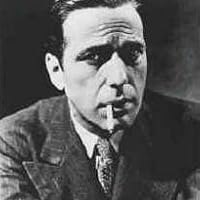
Ernest Bramah (1868-1942) was an English author of considerable repute in his day. In total Bramah published 21 books and numerous short stories and features. His humorous works were ranked with Jerome K Jerome, and W. W. Jacobs; his detective stories with Conan Doyle; his politico-science fiction with H. G. Wells and his supernatural stories with Algernon Blackwood. George Orwell acknowledged that Bramah's book What Might Have Been (1907) influenced his seminal Nineteen Eighty-Four (1948). Bramah, the creator of the immortal Kai Lung and Max Carrados, was a recluse who refused to allow his public even the slightest glimpse of his private life - secrecy perhaps only matched by E. W. Hornung, the creator of Raffles, and today, J.D. Salinger. We now know that Bramah, whose real name was Smith, was a man of erudition and prescience with a unique style of writing that has never been copied. Among his most famous works are: Four Max Carrados Detective Stories (1914), Kai Lung's Golden Hours (1922), The Mirror of Kong Ho (1905) and The Wallet of Kai Lung (1900).
Bramah was a reclusive soul, who shared few details of his private life with his reading public. His full name was Ernest Bramah Smith. It is known that he dropped out of Manchester Grammar School at the age of 16, after displaying poor aptitude as a student and thereafter went into farming, and began writing vignettes for the local newspaper. Bramah's father was a wealthy man who rose from factory hand to a very wealthy man in a short time, and who supported his son in his various career attempts.
Bramah went to Fleet Street after the farming failure and became a secretary to Jerome K. Jerome, rising to a position as editor of one of Jerome's magazines. At some point, he appears to have married Mattie.
More importantly, after being rejected by 8 publishers, the Wallet of Kai Lung was published in 1900, and to date, remains in print. Bramah wrote in different areas, including political science fiction, and mystery. He died at the age of 74. See http://www.ernestbramah.com for more information.
This shouldn't work. You shouldn't be able to make a collection of stories with forgettable plots, a vaguely defined setting, and non-existent characterization be interesting. Because to do that, you'd have to make it compelling purely on the level of the individual sentence, and that is a ridiculous goal.
Ernest Bramah accomplishes that goal, and it is a joy to watch him do it.
This book contains many hilarious laugh-out-loud passages, but is also somewhat difficult to read due to the sentence structure and the 'stilted' language. I found it highly enjoyable, but this is not an easy read; you need to concentrate to make sense of the often very long and roundabout sentences.
I have added a couple of sample quotes from the book below:
"Yin journeyed towards the centre of the island where the rock stood, at every step passing the bones of innumerable ones who had come on a similar quest to his, and perished. Many of these had left behind them inscriptions on wood or bone testifying their deliberate opinion of the sacred rock, the island, their protecting deities, and the entire train of circumstances, which had resulted in their being in such a condition. These were for the most part of a maledictory and unencouraging nature [...] [a] practical-minded person had written: "Retreat with all haste to your vessel, and escape while there is yet time. Should you, by chance, again reach land through this warning, do not neglect, out of an emotion of gratitude, to burn an appropriate amount of sacrifice paper for the lessening of the torments of the spirit of Li-Kao," to which an unscrupulous one, who was plainly desirous of sharing in the benefit of the requested sacrifice, without suffering the exertion of inscribing a warning after the amiable manner of Li-Kao, had added the words, "and that of Huan Sin.""
"In his conscientious desire to administer a pure and beneficent rule, he not infrequently made himself a very prominent object for public disregard, especially by his attempts to introduce untried things, when from time to time such matters arose within his mind and seemed to promise agreeable and remunerative results. In this manner it came about that the streets of Fow Hou were covered with large flat stones, to the great inconvenience of those persons who had, from a very remote period, been in the habit of passing the night on the soft clay which at all seasons of the year afforded a pleasant and efficient resting-place. Nevertheless, in certain matters his engaging efforts were attended by an obvious success. Having noticed that misfortunes and losses are much less keenly felt when they immediately follow in the steps of an earlier evil, the benevolent and humane-minded Chan Hung devised an ingenious method of lightening the burden of a necessary taxation by arranging that those persons who were the most heavily involved should be made the victims of an attack and robbery on the night before the matter became due."
I found nice and quite cheap copies of all the Kai lung books at a second hand book shop last month. As someone whose interested in all things Chinese, and western interpretations of China, I thought I had to get them all. This book was originally written in 1900 and for it's time is quite remarkable. It is totally the opposite of the Sax Rohmer books. Here while often humourous the author seems to genuienly like Chinese culture. Currently it's debated if he ever went to China before writing the novels, there are quite a few details he gets wrong in his stories (like someone sitting for the regular exams getting a military posting). But the details he does get right are so much more than I was expecting, random Correct Chinese words thrown in untranslated, Buddhist dieties, actual places, immortality, etc etc. (the village where the storyteller tells his story is called Wu whei (wu wei meaning without action and being the fundemental principle of Taoism something little understood by most Europeans in 19002).
It is written in quite a ridiculous style of paradoy of the self-effacing percieved Chinese style. At times this can be a bit confussing but other times it's very funny. The book is made up of short stories told by a Chinese storyteller.There were stories about a man who accidently turned himself into gold (the longest and probably the best in the collection) a man who goes to murder the village mandarian as he's evil only to have it turn out to be his father, a man who goes through misfortune after misfortune but ends up in charge of the examinations, another man whose very misfortunate and gets chosen to participate in a ritual where the Emperor ploughs (an actual ritual I was quite surprised that Bramah had known about). The closest thing I can think of for these books is the Van Gulik books, but rather than mysteries we have comedy and social satire. (One story he transposes Shakespeare to China and has his storyteller try and discredit that the Chinese Shakespeare actually wrote his sayings by saying they came from an earlier dynasty - though this is the only instance of anything so European that I realised).
I'm looking forward to reading the rest of the books in this series and glad I found them.
Like a fortune cookie, this book has a vaguely Far Eastern flavor, but its origins are in the West. Readers seeking authenticity should look elsewhere. Before you go, however, please consider that inauthenticity has not detracted from the lasting popularity of the fortune cookie...or Bramah's stories set in an imagined China.
The experience of reading these loosely interrelated stories was a bit like reading Candide, Gulliver's Travels, or some other picaresque satire, but Bramah's satire is less overtly political than that of Voltaire or Jonathan Swift. Bramah limits his most frequent targets to governmental bureaucracy and human avarice, which still leaves him with plenty of material.
The chief pleasure of this book is not satire or story, but style. Bramah's flowery Mandarin-inspired English is really the most fantastic element of the stories. I found I needed to be particularly alert to counteract the soporific effect of his convoluted sentences, and that quality alone has earned the book a place on my bedside bookshelf where I hope it will help me fight insomnia for years to come.
DNF. Made it about halfway through the book - 100 pages has never felt so long. Written by a man born in the 19th century that by all accounts never even left England, let alone saw the China he was writing about, I was prepared for the orientalism. What I was not prepared was for the absurdly over-formal dialogue would become a bludgeon after pages of the stuff.
Conjunto de relatos ambientados en China narrados por el cuentacuentos Kai Lung. Ya no me suelen gustar los libros de relatos y si a ello le sumamos una narración no muy viva es el acabose.
Se supone que mezcla el humor, cierta moraleja (o proverbio, refrán) que aporta conocimiento y enseñanzas y que está escrito como si fuesen cuentos tradicionales. Poquísimo interés le he encontrado salvo algún punto de humor burocrático.
I feel this one could be an acquired taste, or at least appeal to a minority of readers. It’s a set of stories, mostly comic, set in a fantasy version of imperial China and written in a highly elaborate, circumlocutory style. That, for some readers, seems to be the equivalent of saying it’s in code, and I do understand why, but it shouldn’t present too many problems and is most of the charm. Not something I would choose to read in large doses but a delight taken piecemeal.
In small doses that style, with its overdone courtesies and its sheer wordiness has two, maybe three, obvious effects. It imposes a sense of distance, so that the jokes take a bit longer to sink in, gaining by the delay; it generates a dissonance between style and content, so that, for example, blood-curdling threats are expressed with exquisite politeness; and it gives the whole thing the mannered unreality of a Willow pattern plate. Willow pattern isn’t genuine Chinese and neither is this.
One of the later stories, The Vengeance of Tung Fel, seems a little out of place, not merely because it lacks an introduction, but because it’s deadly serious. Then, too, I have the ineradicable conviction that, shorn of its chinoiserie trimmings, I have read this story somewhere else. But where? Is it myth? Legend? A play somewhere? The thing is nagging and scratching at the back of my brain, but… No. I cannot remember. I’d be grateful if anyone could remind me.
On balance I think I read The Wallet of Kai Lung too quickly – it all got a bit much after a while – and it deserves more than the three stars I’m choosing to give it. A high three, therefore.
I am both a confirmed Sinophile and a rabid lexiphanicist (i.e., I take unholy glee in big words) but I found this book to be a disappointment. Bramah does an incredible send-up of genteel Edwardian perceptions of Old Cathay, but a parody of a counterfeit just doesn't float my boat. Yes, Bramah's depiction of the florid circumlocutions of Chinese courtesy is nothing short of brilliant. But after the first 30 pages of florid circumlocutions I found them to be maddeningly in the way of the flow of the story. As much as I enjoy loquacious grandiloquence, story must come first.
I found this on Project Gutenberg and read it because Peter Wimsey loved it. It's definitely amusing, and surprisingly free of racism for it's time period. I find that a little goes a long way though, and I would definitely take this one story at a time.
Meh. Really leans into faux-historical-Chinese storytelling in a way that's a bit offputting, especially compared to the Judge Dee mysteries which are nearly as old but seem much more fresh and relevant.
I'm surprised that I didn't like this very much. I've read detective stories by Bramah and enjoyed them, so it could be the genre that caused my somewhat negative reaction to this book.
I found nice and quite cheap copies of all the Kai lung books at a second hand book shop last month. As someone whose interested in all things Chinese, and western interpretations of China, I thought I had to get them all. This book was originally written in 1900 and for it's time is quite remarkable. It is totally the opposite of the Sax Rohmer books. Here while often humourous the author seems to genuienly like Chinese culture. Currently it's debated if he ever went to China before writing the novels, there are quite a few details he gets wrong in his stories (like someone sitting for the regular exams getting a military posting). But the details he does get right are so much more than I was expecting, random Correct Chinese words thrown in untranslated, Buddhist dieties, actual places, immortality, etc etc. (the village where the storyteller tells his story is called Wu whei (wu wei meaning without action and being the fundemental principle of Taoism something little understood by most Europeans in 19002). It is written in quite a ridiculous style of paradoy of the self-effacing percieved Chinese style. At times this can be a bit confussing but other times it's very funny. The book is made up of short stories told by a Chinese storyteller.There were stories about a man who accidently turned himself into gold (the longest and probably the best in the collection) a man who goes to murder the village mandarian as he's evil only to have it turn out to be his father, a man who goes through misfortune after misfortune but ends up in charge of the examinations, another man whose very misfortunate and gets chosen to participate in a ritual where the Emperor ploughs (an actual ritual I was quite surprised that Bramah had known about). The closest thing I can think of for these books is the Van Gulik books, but rather than mysteries we have comedy and social satire. (One story he transposes Shakespeare to China and has his storyteller try and discredit that the Chinese Shakespeare actually wrote his sayings by saying they came from an earlier dynasty - though this is the only instance of anything so European that I realised). I'm looking forward to reading the rest of the books in this series and glad I found them.
Most of the stories in this book have a very Wodehouse-ian or even fairy tale feel to them. They often involve a young man (who is often not the smartest tool in the shed) of modest means who falls in love with a wealthy girl and the humorous adventures (often involving outwitting the girl’s repressive guardian or the inept bureaucrats who run society) encountered on the path to romance. By themselves, the plots and structures of the stories are unobjectionable.
The problem with this book is that it’s a bad racist take on Imperial Chinese society of an undetermined time period. In an effort at parody, it’s written in a stilted and overly exaggerated fashion, as though it’s a poor translation of a Chinese text. For example, the characters never use a personal pronoun when talking about themselves, often referring to themselves as “the miserable and debased one performing the before stated action”. Similarly, when talking about newspapers they’re referred to as “printed leaves” and comedic performances are “gravity-relieving”. And perhaps that would be ok, if the stories weren’t so fundamentally British in their form and structure — there’s even a satirical version of Marc Antony’s “friends, Romans, countrymen” speech in one of the stores. In many ways reading it put me in mind of Mickey Rooney’s character in “A Breakfast at Tiffany’s”.
It’s very much a product of its time and does not really hold up beyond it’s era.
A sequence of short stories which are meant to seem as if translated from Japanese. Most of the tales focus on the poor but noble triumphing over the rich but corrupt. The later tales seem to hold a bit more humour than the earlier stuff and i really felt it improved as it went. I only read part of this and listened to the rest from Libravox. Heres a little sample of the kind of writing your in for: 'A sedan-chair! A sedan-chair! This person will unhesitatingly exchange his entire and well-regulated Empire for such an article' I assume everyone will recognise this disguised shakespeare quote which is attributed to a famous japanese writer in one of the stories :lol . I actually wonder whether the entire book was written in normal english then parsed into this faux japanese afterward. Because its supposed to be japanese everyone is very polite which means a great deal of passive aggressive dialogue which i found quite entertaining. Overall probably a lot easier to listen to than read, i quite liked it especially the latter third.
Initially Bramah's style is so dense and obscure as to be repellant. However once settled his tales are original and engrossing. With some of the most palpable irony ever put to paper and a heavy dose of the bizarre he gives a blatantly ahistorical China a queer and unreal charm that twists with each page
I wanted to like this more. I really enjoyed the Max Carrados stories from the same author, and the writing is recognisably similar. Each sentence is about four times as long as it needs to be, which in this case sort of gives the benefit of reading like an overly literal translation (though not so sure what it accomplished in Max Carrados??). I think the main difference between Max Carrados and Kai Lung, or at least these Kai Lung stories, is that the Max Carrados stories have a clear direction; each sets up a mystery, then resolves it (not necessarily spectacularly). Whereas these stories give no clear purpose to begin with, then tend to meander a lot. There is nothing fundamentally wrong with this, but combined with Ernest Bramah's way of writing, I found myself barely following the plot of most of these. I'm not sure how big a factor it was to my personal enjoyment, but the Chinese aspect of this is more than a little messy, cultural sensitivity wise. It embraces what Bramah perceives as the Spirit of China, and is all done in pretty good faith, I think, but I don't think anyone British (or equally Western) would do this sort of pastiche nowadays (anyone that would consider attempting something like it would be very unlikely to carry it out in good faith I think). I feel this factor worked as a little bit of a deterrent to me getting too into the stories, though I wasn't really so close to getting too into them anyway. I did really like Kai Lung as a character though, and the tiny parts where he's actually in it were my favourite bits (I didn't realise beforehand - he's a storyteller who generally narrates the otherwise unconnected stories, and is only explicitly mentioned in the first couple of sentences). I will probably read the other Kai Lung stories at a later date.
Amusingly told tales, some fantastical but most not, set in a version of China that is part what Westerners of the time imagined China to be like and part sly satire. A number of the "wise traditional sayings" are cliched English phrases like "having a skeleton in the closet" paraphrased into the overly formal and elaborate diction that is used throughout, and quotations from a famous Chinese writer are similarly paraphrased Shakespeare, which leads me to suspect that a lot of the satire is actually about England, not China at all. In other words, this book's relationship to China is approximately that of Gilbert and Sullivan's Mikado to Japan, though the pastiche is a touch more sophisticated and the names are not obvious jokes.
The framing device for all but a couple of the stories is that they're being told by the professional storyteller Kai Lung, and parts of the frame are amusing too. The stories vary, but are mostly about deserving people ending up on top against conniving and corrupt rivals. Some of these are young men, others are middle-aged men; I don't recall a story with a female protagonist, and the women, while occasionally contributing intelligently to the resolution, are mostly prizes to be won or obstacles to overcome.
That overly formal diction is a bit of a trial at times, and some of the longer sentences take some parsing. I enjoyed it enough that I would read others in the series, but I'm not going to rush out and do it straight away.
A strange collection of Victorian chinoiserie fantasy stories originally published in 1900. Bramah’s long-winded, periphrastic style won’t find many 21st century fans, and his wit is as dry as Sahara sand. I can’t imagine that large numbers of Victorians found Bramah’s imaginary Chinese world entertaining, but maybe I’m wrong. The book was reprinted in several editions in the 1920s and Bramah wrote several other collections of stories featuring the itinerant Chinese storyteller Kai Lung. If there’s anything good to have come of it all, it’s that the Kai Lung stories may have inspired Barry Hughart’s wonderful, prize-winning fantasy novels about the adventures of Li Kao and Number Ten Ox in the 1980s.
This book is in the public domain and can be downloaded free of charge in ebook format from Project Gutenberg.
This collection of short stories had a few bright moments but overall, I found it slow and hard to get through (with a lot of re-reading involved to try to understand what the author was trying to convey). The first story was brilliant but the rest of the stories were just more of the same and the shine came off...
I first had a go at the Kai Lung books because I liked their cover designs on my parents' bookshelves. I wasn't impressed. Then I got to reading Dorothy L Sayers' works, and I noted that she WAS very impressed. Impressed enough to quote from them repeatedly. So I thought I must have missed something, and went back.
Nope. I still wasn't impressed. I slogged my way through them, in case they improved within. Still nothing. I could see this sort of thing done well. I think of Lem's Cyberiad, for example. I just didn't like the way it was done in the Kai Lung books. A matter of personal taste, perhaps?
I picked this up a long time ago and finally got around to reading it recently, after seeing a recommendation of it from Charles Vess in "Rags and Bones". (Actually the recommendation was for " Kai Lung's Golden Hours", but I had this one so I thought I'd read it instead.) And...it was OK. Really a slog to get through. A bit of Bramah's faux-Chinese writing style goes a LONG way, and 252 pages of it felt like 500. I know some people really speak highly of the Kai Lung stories. I don't see it myself but they weren't horrible so...3 stars I guess. But I won't be reading another one.
This one defeated me; 30% and I jumped ship. The prose proved to be too dense, getting in the way of the story. This may be just because of the time in which it was written, however I have happily read Conan Doyle, who was a contempory of the author, so I don't think that is a complete excuse. Having said that, the tales are certainly imaginative and evoke an interesting vision of China (although quite how accurate a vision is another matter).
So, two stars because it couldn't keep me interested enough to wade through, but there were glimpses of what other people see in it.
I would recommend this to people who enjoy Jack Vance's sense of humor: characters who use a difficult, baroque speaking style to mask their cupidity. Not a light read, it frequently takes two or three attempts at a sentence to understand what a character really means.
There is one story, The Vengeance of Tung Fel, which has a promising set-up but seems to end suddenly and without a final resolution. I wish somebody would explain the meaning of the final sentence.