Jump to ratings and reviews
Rate this book

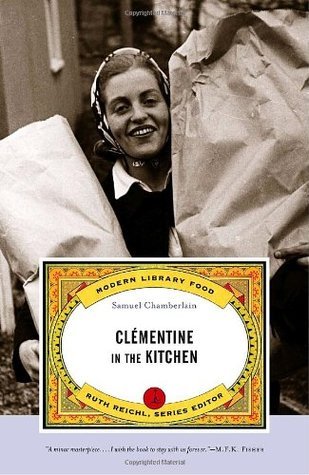
Clementine in the Kitchen: Modern Library Foods

Rate this book
The Chamberlain family spent a dozen blissful years in pre World War II France, with their beloved cook, Clementine, learning the gustatory pleasures of snail hunting in their backyard and bottling their own wine. When war rumblings sent them scurrying Stateside, Clementine refused to be left behind and made a new home for herself in Marblehead, Massachusetts, where she introduced the initially suspicious Yankees to the pleasures of la cuisine de bonne femme. First published in 1943, Clementine in the Kitchen is a charming portrait of a family of gastronomic adventurers, and a mouth-watering collection of more than 170 traditional French recipes. This Modern Library Food series edition includes a new Introduction by Jeffrey Steingarten, food critic for Vogue and author of The Man Who Ate Everything, winner of the Julia Child Book Award.

288 pages, Paperback

First published October 1, 1943

17 people are currently reading
1012 people want to read

About the author

Samuel V. Chamberlain

6 books5 followers
Samuel V. Chamberlain (1895-1975) was an author, illustrator photographer and artist who occasionally wrote under the pseudonym Phineas Beck. His works include books on historical architecture, interiors, fashion illustration, and cookbooks.

Ratings & Reviews

What do you think?
Rate this book

Friends & Following

Create a free account to discover what your friends think of this book!

Community Reviews

5 stars
168 (35%)
4 stars
186 (39%)
3 stars
92 (19%)
2 stars
16 (3%)
1 star
6 (1%)
Displaying 1 - 30 of 66 reviews
Profile Image for Carol Bakker.
1,540 reviews137 followers
December 2, 2022
A delightful book for Francophiles and foodies.
In time, I came to understand that for people who really love it, food is a lens through which to view the world. ... If you choose to pay attention, cooking is an important cultural artifact, an expression of time, place, and personality. — Ruth Reichl, in the introduction
I would think that anyone who enjoys Julia Child would eat this book up. There is much untranslated French (<- the only use I can make of my four years of French studies) and the recipes adhere to the vagueness that I've found in French cookbooks.

Reading this during Thanksgiving made me gurgle with laughter. The author is expressing how their New England family is really more French than American.
We would rather talk about a good sauce béarnaise than football, finance, or infidelity. We will run a mile from ham and pineapple, jelly and lamb, sweet potatoes and marshmallows, but will warm right up to sweetbreads and peas, snails and Burgundy, radishes and butter.
Ah, sweetbreads. Another name for offal! And sweetmeats are cake, cookies, and candy! Go figure!

Clémentine, the Cordon Bleu trained cook, is the star. Her bewilderment at American supermarkets is funny.

A huge bonus are the author's illustrations. I'm talking about drypoint engravings and drawings, not the vignettes (cartoon character-ish) of Clémentine. I loved them so much that I searched for places you can see them. Chamberlain's Art will go to an auction site.
Another possibility is at archive.org where you can borrow the book for an hour at a time. Archive.org
Profile Image for Theresa.
1,417 reviews25 followers
July 28, 2025
This book will be a treasured volume on my kitchen book shelf, not so much for the recipes (the last 100 pages is all recipes), but for the food and family memoir and illustrations that precede them.

This is a personal memoir of food writer Samuel Chamberlin and his family who were expats living in Europe, primarily in France, for more than a decade before being forced to leave when Chamberlain's employer closed the Paris office in June 1939 as the NY bosses saw a German invastion as inevitable. It also tells of the family's assimmilation into the US, settling in Marblehead, MA. Most of all, it's a memoir of their Burgundian cordon bleu cook Clementine, both in France and in the US.

While the historical events are mentioned, and the author's own emotions and reaction alluded to, the real history here is of food and an homage to Clementine herself and her great gifts as a cook. It's also rich on setting, detail of meals, importance of french food to the entire family, and the adjustments they all had to make on returning to the US. It's written with wit, humor and love.

This was first published serially in the newly started Gourmet Magazine in the early 1940s with the first book form publication in 1943. It remained in print until the mid-1980s. Thanks to Ruth Reichl and the Modern Library, it has found new life, including the recipes being updated in 1987 by Chamberlain's eldest daughter. These recipes are classic french cuisine from the 1930s mostly, very traditional with tons of butter, cream, egg yolks being used, but for all that richness, mostly quite simple. The Tomato with Vinaigrette salad is on my menu for tonight - just a slightly different version of what I usually indulge in when tomatoes are fresh off the vine in season.

The author provides a real sense of setting - you are in the house, the kitchen, the villages, or sitting at the table with those meals. It has so many illustrations by Chamberlin who was a graphic artist and phtographer possibly even more well know for his art that his writing. This is also a book where you want to read the Introduction before starting it; it's written by Ruth Reichl, and tells about her own love of this book, about the goals of the Modern Library Food Line that she is editing, and fills you in on just who the author was.
Profile Image for Joyce.
430 reviews15 followers
July 18, 2018
Pulled this off the shelf for Clark and decided to reread it myself.

An American family living in Senlis, France, quickly repatriates in 1939, bringing their Burgundien cook Clementine with them to Marblehead, Mass.

It's a charming story of cultural adaptation: the family to French cuisine (even the 15-year-old daughter enjoys tete de veau) and later, Clementine to the American way of life. In describing Clementine's reaction to supermarkets (brand new in 1940), we get a fascinating glimpse of the beginnings of the American food system. The family is shocked at the amount of packaging that surrounds American food compared to France. They are not uniformly disapproving about our produce (can't get parsnips in France) and even our cheese - they approve of 'store' cheese’.

It's a bit of a period piece but quite enjoyable. It includes some classic recipes and pencil drawings of their neighborhoods.
Profile Image for Eden.
2,208 reviews
April 9, 2020
2020 bk 129. An old favorite. Published originally during WWII it is the story of an American family in France and their cook. Clementine was not just an ordinary cook, she was a cordon bleu, from Burgandy and an essential part of their lives. She was so essential, that when the family was recalled to the U.S. in 1939, they went through the paperwork and expense to bring her home with them. Settling in a town to the north of Boston, the book describes their introduction of Clementine (and their young son) to life, food, and grocery shopping in the United States. The book is part delightful tale and mostly Clementine's recipe collection. The collection range from the droll to the delights of basic French cooking. I do not like yellow squash - I like it when prepared as Clementine fixes it. Excellent read.
450 reviews11 followers
January 10, 2020
I love this story and the cooking... it is a biography for the foodie who also loves history and family.
Profile Image for Sarah.
299 reviews1 follower
October 3, 2025
A cute little book that will make you hungry. Don't worry, there are recipes in the back
Profile Image for Catherine.
1,067 reviews17 followers
January 5, 2015
Written under the alias Phineas Beck, this memoir by Samuel Chamberlain begins when he was working in Paris in the 1930s, and his family hired Le Cordon Bleu-trained chef Clementine to cook for them. When France became threatened by Nazi invasion, they returned to the U.S., bringing Clementine with them.

The writing is light and humorous, with anecdotes such as the great escape engineered by a batch of snails destined to become escargot simmered in cognac. The author’s illustrations are perfectly suited to the text, and the book wraps up with over 60 pages of the family’s favorite recipes from Clementine.

This book has been republished with an introduction by Ruth Reichl. I understand the latest edition is edited down from the 1950s version I read.
Profile Image for Pippin.
233 reviews6 followers
June 9, 2011
A fascinating view into American and French cuisine circa 1940. Clementine is a delight and she is at the center of this story - rightly so. I was amazed that so many of the current attitudes to food were already in place before the second world war: supermarkets, pre-packaged food, color advertising, in store music, and on and on. Contrast that with the markets in france at the same time and two cultures approaches to food stand in stark relief.
Profile Image for Kelley.
594 reviews16 followers
January 24, 2021
This is the Beck’s story, their family’s years of living and eating in France, but it’s aptly named, because it’s really about Clementine, their French cook, and her story is the part I really loved.

The Becks lived in France for about 12 years, for their father’s work, leaving when the build up to World War II forced them back to the States. (I think the father wrote the book originally and the adult children later revised it, but I’m not quite clear on that; the changes in names confused me.)

The early chapters focus on their French home and village and how Clementine came into their life. She opened the doors to the best produce at the local market (“too often the beauty of American ‘store’ fruit is only skin deep”) as well as the best ways to prepare that produce. (Freshness “is the answer, combined with the fact that they were probably cooked in prodigal quantities of pure butter.”)

When Mr. Beck’s company calls him home, the family immediately begins to grieve the impending departure from France, but especially from Clementine. But the littlest Beck, his father writes, has more imagination than the rest: “Why don’t you come to America with us?” he asks. And she says yes.

There are jarring lines mixed in among all the raving about truffles and beef and wine, like one about their road trip to board their ship for America, “which, in a few months, would lie at the bottom of the ocean.” They eat well when they arrive in New England, but sometimes with melancholy spirits thinking of people back in France living on rations in bomb-scarred homes.

The book is so light otherwise, these feel misplaced. But I understand the attempt to place their happy experiences within the broader historical context. (Even some of the recipes at the end are acknowledged to be for reading only, “inexcusable on moral and economic grounds” while the world groaned under agony of war.)

Clementine’s story comes into focus Stateside. Seeing her explore new tastes – her first hotdog and beer from a paper cup, for example – and find ways to bring French tastes to an American table was the best part of the book for me. The whole group had Sunday dinner at Mr. Beck’s employer’s home shortly after arriving.

Clementine “asked us afterward with a worried look if all Americans boiled their vegetables in water and then threw the water away (together with most of the taste). We looked worried, too, and admitted that most of them did, along with their English cousins.”

Beck describes how they all adjusted to an entirely new cheese plate and found comfort in fish fresh from the Atlantic. He shares many of Clementine’s recipes through the book (and more than a hundred at the end). He doesn’t make French cooking sound like the inflated affair you might sometimes imagine, but simple and flavorful and rich.

“Clementine’s cooking is loyal and simple, flattering the taste before it flatters the eye.”

My one beef with the book is how much French is left untranslated. The recipes, of course, are readable, but menus and quotes and jokes – lots of them, all throughout – are given only in French. I looked up a few, but it was too many to keep up.

This is my second read from the Modern Library Food series. (The first was Supper of the Lamb.) I’m glad these older books are being given a second chance at life.
Profile Image for Amy.
77 reviews1 follower
August 4, 2024
A delightful set of vignettes about life experiences in kitchens, shops, and establishments in France and the U.S. with the wonderfully skilled French chef, Clémentine, and a French-speaking, once-expat American family. As the tales are from the time leading into WWII, some of the recollections of life in France and the personalities of the people of Senlis were tremendously moving. I particularly valued the descriptions of M. Léon Gébaud and his restaurant/café, chez Léon, both of which suffered greatly when Germany invaded France on June 1940.

The recipe collection is also lovely to peruse. They lack precision as often happens with people who just know what to do, which reminds me of many recipes I have from my mother and grandmother. I have tried one recipe with some of the abundant zucchini from our garden, but I look forward to trying others as well.
1,213 reviews3 followers
August 23, 2018
I find myself caught in the middle of a double standard- I hate novels in which nothing happens, but if it's nonfiction then I'm alright with it, as long as there is enough charm.
Clementine in the Kitchen is an almost memoir about an American family and their beloved French Chef, Clementine. The Becks are fun loving and eager to taste everything, and Clementine herself is talented, patient, and has a hidden adventurous side that takes her across an ocean.
Its not really about anything, not even about the recipies contained within, but it's so charming that it almost doesn't matter.
Profile Image for Melinda.
1,158 reviews
January 16, 2023
Enjoyed this food and France book very much. The story of the Becks and their Cordon Bleu is told with swerve and panaches. The tidbit about gathering snails in the garden and the events that follow is hilarious. Also loved the scenes of the Becks back in America wheeling their carts through the Super Market with Clementine in tow. A good deal of fun -- and there are recipes for the culinary intrepid!
Profile Image for Kara.
824 reviews
October 22, 2024
Here's a peek at France from an American family living there as WW II erupts and sends them back to the States. Their French cook elects to come with them. You see life before the family leaves with them enjoying food, wine and daily village life and then acclimating back to a small New England town and introducing their French cook, Clementine to American food and ways. The drawings of buildings mentioned throughout are charming.

Nostalgia is high in this, and it comes with recipes.
Profile Image for Katie P.
82 reviews
July 27, 2017
Make sure you have a snack on hand when reading this book!

Oh, to know a Clementine would be a dream! This was a wonderful book. The first half features the story of the Beck family and Clementine followed by a catalog of recipes from Clementine's collection. Wonderful illustrations are peppered through the story.
Profile Image for Beth.
273 reviews
April 12, 2022
A story about an American expat family living in France who had the brilliant luck to find an incredible cook named Clementine. When WW2 broke out, they were forced back to the states and their cook came with them. There are many recipes. If you know French, you will get even more enjoyment out of this book than I.
Profile Image for Noel.
782 reviews4 followers
November 19, 2024
This book was very sweet and fun. I do feel like it lacked a little something based upon what is promised in the synopsis alone. The style was not my favorite with the chapters being so short and so many recipes sprinkled in, but I understand that these stories were originally syndicated for a magazine. If you are a foodie and/or a Francophile, this is a book you will definitely enjoy!
Profile Image for essie.
77 reviews
August 2, 2018
An absolute delight. In words of Diane Chamberlain, “The book was made, at first, and is again now, for a reason you may have already observed, for love—of family, France, food, and the incomparable Clémentine.” And how true this is indeed!
Profile Image for Anne Haack.
Author 1 book11 followers
October 8, 2024
A love story on multiple dimensions, a beautiful memoir, a delicious and amusing book that also haunts in the background reality of war, survival, and loss. Some of the recipes are scandalously tantalizing; I am keen to butter a wheel of Camembert and roll it in dusted roasted almonds.
Profile Image for Stephanie.
494 reviews19 followers
February 22, 2020
Odd little book. Perfect read for true lovers of French cooking in 1939.
Profile Image for Susan Molloy.
Author 149 books87 followers
August 11, 2023
🖋️ It took me a few pages to understand that this book is a memoire of sorts, of a family living in France before The War, and focused on their cook, Clémentine. This is a fun presentation. NOTE: "Phineas Beck" is the nom de plume of Samuel Chamberlain (1895-1975; see his other books).
📙 This book was published in 1943.
🔵 The e-book version can be found on Internet Archive.
✿●▬●✿●✿●▬●✿
117 reviews3 followers
August 20, 2019
Surprisingly short and disappointingly little to do with life in France.

I expected to have the book detail the life in France as it was in France. However, the American family moves to America after a few pages, and the remainder is a combination of the family becoming re-accustomed to life in the States as well as the fish-out-of-water of Clementine in New England.

While the book lists at nearly 300 pages the writing itself only takes up half of the book. The remainder is a "recipes" section copied from Clementine's personal notebooks. While the recipes are written in the early 20th-century style (a la James Beard) where the entire recipe and directions with some descriptive word play appears here and there, recipes aren't really a read like they are the tales of the family.

There are some complaints that the author presumes the reader knows French. All use of French in the book is untranslated, and while this can usually be ignored ("beau" or "fromage" shouldn't be foreign to the audience of this book), in a few cases the author will go two or three entire sentences in French, leaving you bewildered if you don't speak the language.

I think if I had expected a book about a French family chef's life in the US rather than an American family's life in France I might have felt the book more deeply, but it didn't give me what I expected, either in terms of theme or length.
Profile Image for Cindy.
990 reviews
May 6, 2016
A cooking book.
A cultural book.
A mental delight.

I think I shared the story of the "Escargots de Bourgogne" pg 30 with everyone I met...
It starts like this, " You ambush them in the morning, while they are parading nonchalantly on the humid leaf, when their slow, fleshy promenade makes one think of the throat of a voluptuous woman shuddering under a gross and clumsy caress...." and continues to delight all the senses for two more pages, filled with words like: lasciviously elastic and gluttonous beast, along with seething mass and drain the corpses! (murder in the kitchen for sure!)

Yay for Clementine who travels from France with the Beck family right before WWII to continue her service as their cook. She comes to L'Amerique and tries to create a French country kitchen in New England in the 1940's. Her recipes are full of butter and more butter, followed by cream and all sorts of wine, sherry, brandy and a variety of cheese. These probably won't be made in my kitchen for many reasons, but they were great gluttony for the eyes!
Profile Image for *Kate.
71 reviews1 follower
July 5, 2011
Clementine in the Kitchen is a fun little autobiography of an upper-class American family who lived in France before WWII and moved, along with their personal French cook back to the states as the war was heating up. I felt the book got a little pretentious at times ... with significant sentences in French, I felt the author would definitely look down his nose at me for not being able to translate. I definitely look at it as an autobiography and not as a cookbook. Despite the many recipes, there were only a couple that I'm considering. Most of the foods seem incredibly rich and if you are not a fan of mushrooms (which I am not), there is little left for you. Regardless, it was enjoyable to read about Clementine's adventures along the eastern coast.
Profile Image for Rogue Reader.
2,315 reviews7 followers
May 26, 2013
Clementine is a French cook transplanted to Marblehead, Massachusetts on the eve of WWII. She leaves her native land in the company of the family that has employed her in France - the narrator being the family's young son who discovered the mysteries and confusions of the new world along with Clementine. Nice complement to Julia Child's works, finding ways to make classic French cuisine in a place bereft of most needed ingredients, and finding ways to make American ingredients part of a new classic culinary tradition.

Series editor Ruth Reichle is right on, choosing this 1943 work to include in the Modern Library Food. Can't wait to discover more works in this series!

--Ashland Mystery

Profile Image for Pinki.
9 reviews
January 18, 2008
This book is amazing and not so amazing. It is a cookbook and an autobiography of a family who lived in pre WW II France with their beloved cook Clementine. The author of the book sounded a little snobby in regards to the types of wines, techniques, and 3 or 4 sentences at a time in French with no explanation preceding it. All in all, this book will make your mouth water, want to experiment with French cooking, and actually visit the remote French country side. The best part is there are over 160 recipes which are included at the end and some throughout the autobiographical portion of the book linking experience and memories to the food.
319 reviews
May 2, 2011
This second reading--of an older edition--I found much more fun.
This copy has very beautiful reproductions of the original etchings of Chamberlain. Copies in the newest edition are so fuzzed up as to be dull, losing the detail, vibrancy, and contrast of the originals. (The cartoony drawings are by Henry Stahlhut.)
There are only 100 recipes in this edition, apparently done in Clementine's original style (precision not a goal). The later edition, which I read first, contains 150 recipes, more modernly laid out, by the author's daughter. This appears to be the greatest difference in the two editions.
Profile Image for Anna Livingston.
178 reviews1 follower
February 12, 2020
I haven’t had the heart to write a review of this one, mostly because it boils down to this very much being a book of its time. Twenty-five years ago, as an avid Gourmet reader, I would have loved this book. But now, the level of privilege makes me cringe — literally within the first few pages, Clémentine is described as the Beck’s precious “possession,” and do I really need to read a fond description of a chauffeur as resembling Stepin Fetchit? I do not. The book succeeds as a catalog of classical French cuisine of the age, and many of the recipes and techniques at the end will be familiar to Julia Child fans. But I feel no need to read the rest of this book again.
Profile Image for Marilyn.
871 reviews
July 17, 2011
I first read the original Clementine in the Kitchen by Phineas Beck (pseudonym for Samuel Chamberlain) when I was a fairly new bride. Clementine was the cook hired by the Becks during their sojourn in France during the 1930s. Preceding Julia Child, Beck tells culinary tales and includes Clementine's notebook of recipes that she made and served the family. It is a wonderful gem and has been one of my favorite since I was a young cook. It is a lovely picture of France before the supply of butter and other delectables were rationed during the war.

Displaying 1 - 30 of 66 reviews

Can't find what you're looking for?

Get help and learn more about the design.