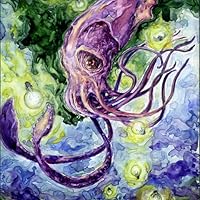
Jack Durkin is the ninth generation of Durkins who have for nearly 300 years weeded Lorne Field. It's an important job, though no one else seems to realize it. For, if the field is left untended, a horrific monster called an Aukowie will grow.
Short listed by the American Library Association for best horror novel of 2010. Black Quill nominee for best dark genre book of the year.
Author of the crime noir novel SMALL CRIMES named by NPR as the best crime and mystery novel of 2008 and by the Washington Post as one of the best novels of 2008. SMALL CRIMES has been made into the Netflix film of the same name, starring Nikolaj Coster-Waldau, Molly Parker, Gary Cole, Robert Forster, and Jacki Weaver.
Edgar Award winner for JULIUS KATZ DRAWS A STRAIGHT FLUSH, Shamus and Derringer Award winner for JULIUS KATZ. Ellery Queen's Readers Award winner for ARCHIE'S BEEN FRAMED and ARCHIE SOLVES THE CASE.
PARIAH named by the Washington Post as one of the best books of 2009. THE CARETAKER OF LORNE FIELD (2010) shortlisted by American Library Association for best horror novel of the year and named a horror gem by Library Journal. MONSTER selected by Booklist Magazine for their 2013 list of top 10 horror novels and WBUR for one of the best novels of the year.
short and sweet, with a classic horror feel to it.
this reads like an episode of the twilight zone - one of the old classic ones, not one where kiefer sutherland flies a plane which i am realizing as i am typing this was actually an episode of amazing stories but i'm not even going to go back and fix it - it will be like you and i are having a conversation together over wine instead of this remove - this barrier of a review between us. cuz we are BFFAE.
so this book is about killer plants. so it made me think about Ordinary Horror and the happening (oh, god, did i just spoil that movie?? i don't even care - that movie was spoiled by the people who made it. it should be illegal to make good trailers for shitty movies)
but back to the book. it is a slow-building psychological horror novel with a potentially unreliable narrator who is convinced of his own important role in this 300-year-old contractual dealie where he, and all the eldest male members of his family before him, have been responsible for weeding this field for the princely sum of 8,000 per annum. but the weeds - they aren't weeds - they are aukowies. monster plants that, left to their own devices, unweeded, will turn into human-eating plant monsters. sho nuff.
he has been so good at weeding and adhering to even the tiniest points of his beloved contract that he has managed to keep them at bay for his entire tenure. but he is older now, it is becoming more difficult, and the town is changing. all the old timers are dying off, and the young bucks and even his wife do not believe in this quaint legend, and do not offer durkin the same respect and perks that he and his family have come to expect. and 8,000 dollars is no longer the fortune it once was, even if you keep in mind the free house. and his eldest son is in no way interested in carrying on the family tradition.
times are changing. people are turning their backs on him. but he will not allow one shred of doubt to enter his mind. no matter what.
This is such a fantastic, underrated novel! I really feel that more people should read it. While this was not very creepy, I found the story to be engrossing and clever. The setup of the plot is fantastic. I adore potentially unreliable narrators and spent most of the novel questioning the sanity of the caretaker. Told from multiple perspective, the author cleverly hides the action to keep to the reader in the dark. The horror in the novel is largely unseen. In this way, this novel felt somewhat similar to Bird Box, although I personally found this book more interesting. The ambiguous nature of the monsters created a sense of unease, which created an eerie atmosphere.
While not overtly scary, I loved this smart, quiet story. I would recommend this novel to wide range of readers, including those who do not regularly read books in the horror genre.
If you read this book expecting something like The Day of the Triffids, you'll be disappointed. This book is really psychological fiction, where the reader has to figure if the caretaker is insane or not. There is evidence for both conclusions in the story, including townspeople who had paid Durkin and his ancestors to clear the field from the Aukowie plant monsters for nearly 300 years. But as the psychiatrist says towards the end of the book, this could be attributed to a collective hysteria that occurred for years in the town. The story will have you changing your mind right up until the last pages. While this book might not be for everyone, I thought it was a unique, compelling read.
One of the finest examples of fine literature I've read. Should be taught in classrooms from coast to coast. This is great fable-making on the order of Irving's The Legend of Sleepy Hollow, Jackson's The Lottery and the Hemmingway's Old Man and the Sea.
I'd say more but I'm a bit stunned by the thing. Instant favorite.
There was a time when the position as the Caretaker of Lorne Field was a high honor. A position of respect that came with a small cottage, a decent salary and freebies given by the local residents out of appreciation for the very difficult job held by the Durkin family. After all, only due to the diligent weeding by the Caretaker were the relentless Aukowie held back from rampaging across the world.
But 300 years have passed and in these modern times, few have any respect for the position, the family, or the ancient contract. Nobody but the current caretaker, Jack Durkin, take the Aukowie threat seriously. Not even members of his own family believe he does something that matters. Proving the validity of the threat is difficult due to the requirements of the ancient contract. Requirements that Jack for justifiable reasons is very loathe to break. As the evidence of a lack of threat and various calamities mount against him, Jack Durkin, finds himself increasingly isolated and questioning his own sanity while he struggles to protect the world in The Caretaker of Lorne Field.
Readers familiar with Mr. Zeltserman’s work will recognize themes that he has hit before in other books. His stylized version of a redemptive noir is present in this novel where every decision Jack Durkin makes backfires against him worsening the divides inside and outside his family. Those decisions and the wisdom of them are also a key part of the author’s often repeated theme questioning the sanity of the primary character. In this case, the division between sanity and insanity is stark. Are the plants the monsters that will take over the world if not plucked from the earth as soon as they sprout like Jack believes? Or, as many others suggest including his own family members, are the plants nothing more that harmless weeds that play a role in his delusions?
Mutually exclusive versions of reality frame events throughout the 237 page book that shifts in point of view from Jack, to his long suffering wife, to others. Along with touching on the themes of discord between brothers, obligations to family and community, respect for others and the themes noted above among others, the author weaves a compelling tale from start to end in The Caretaker of Lorne Field. There are reasons for everything no matter what it is in this fast moving tale that is marketed as horror but really is a mystery with just a touch of horror.
Material provided by the good folks of the Plano, Texas Public Library System. These are tough times for libraries so please do your part to support your local library system any way you can.
This was a really good one. Kind of a low key horror (real low on the horror), kind of fairy tail. A forbidden field with a task only one person can do. Why was it so important a town set up a permanent contract with a family to weed a field for 12 hours a day? Is the main character really saving the world daily? Or is there a mass hysteria going on that only the modern age is pulling the town out of? Can this odd small town story be exploited? And what will really happen if things go wrong?
I struggle with so much horror because the build up rarely leads to the payoff I feel I deserve. This book nailed it every step of the way. I was pretty sure I knew where it was going, but it is a rare book in which you really have to read all the way to the last page like this.
I set out looking for tales with scary flora and this one came across the old algorithm. I read the entire thing in one sitting. Yes, it really is that good.
The Caretaker of Lorne Field is a wonderfully weird, gritty, and pitch-dark legend, perfect for New England. Weaved in the compulsively readable narrative is a heavy dose of our current society's meanness, unease, and ambiguity: kind of a nightmare-noir zeitgeist. The thing of it is, the reader is never safe in Dave Zeltserman's hands. I love that. You should too.
Balancing delusion with duty, Zeltersman's protagonist is the victim of scorn and savour of man. Jack Durkin is honor bound by a 300 year old multi generational contract handed down from eldest son to eldest son to rid Lorne Field from weed-like monstrosities known as Aukowies. Every day from sun up to sun down and them some, Durkin is out on that field ensuring the townsfolk live another day, fore if he let the Aukowies reach their full potential, the rivers would soon run red with human blood. This small town lore, while quaint, quickly assums the tag as being almost too silly to be believable but therein lies the beauty. As the history of Lorne Field slowly unravels, much like the mind of Durkin, the reader is transfixed by Durkin's predicament and the omnipresent unknown. I found 'The Caretaker of Lorne Field' a joy to read - from the subtle change in perspective from the preposterous to possible and back again to the distinctly human feel to the Durkin's struggle and sacrifice for the greater good. Much like Zeltserman's noirs (the man-out-of-jail trilogy most notably), 'The Caretaker of Lorne Field' is brimming with heartless bastards hell bent on breaking the persistent Jack Durkin regardless of the town imposed contract to weed Lorne Field day in, day out. Bruen blurbed that this book is 'a writing of pure dark bliss' - I cant summarise it any better. Worthy of a spot near some of the more iconic Stephen King horrors - 4 stars.
The caretaker of Lorne Field must weed the field every day to prevent a terrible monster from rising.
The Caretaker of Lorne Field is not so much about the monsters as it is about the threat of monsters. Jack Durkin, the caretaker of Lorne Field, has a tough life, with having to weed the field of monsters every single day. His family has weeded Lorne Field for over 300 years, and once were well respected within the community. Times are a-chagin' though. Jack's getting no respect in town; in fact, they're starting to think he's a bit crazy. As the people in his life start to turn away from him, he tries to convince them the monsters really exist. This is a slow-building horror novel. Will Jack continue the thankless job of weeding, or will the monsters grow? I enjoyed it, but this is not a fast-paced novel if that's what you're looking to read.
*****SPOILERS*****
About the book:Jack Durkin is the ninth generation of Durkins who have for nearly 300 years weeded Lorne Field. It's an important job, though no one else seems to realize it. For, if the field is left untended, a horrific monster called an Aukowie will grow.Short listed by the American Library Association for best horror novel of 2010. Black Quill nominee for best dark genre book of the year. Release Date: 02/04/2010 Genre: Horror Pages: 237 Rating: ⭐ ⭐ ⭐ ⭐ ⭐
What I Liked: • The plot is interesting • No dull moments • Makes you think • For such a short story the auther is able to fit in a lot of details and character development.
What I Didn't Like: • I wish the book was bigger
Overall Thoughts: This book is seriously wonderful! I loved the writing, the flow, and the story. You feel badly for Jack being forced to be out there weeding all day to save everyone. This book plays with your mind so much you start to wonder; is it real? Is it fake? I went back so many times it's crazy. The ending was wonderful. There were some times in this book where I was seriously caught off guard and surprised. It makes me wonder how this started that the town believed the first person who said this. Did something happen in the area to make them be able to get them to grow in just area.
The wife is ridiculous because she just sat around all day smoking 3 packs of cigarettes letting her family starve, but kept telling him to work... She could have gotten a job.
Final Thoughts: Read this book! It's short and wonderful! I really want Netflix to turn this into a movie!
TW: Miscarriage, use of r-word, death of child, tox relationships
A possibly unreliable narrator, a rural town, an ancient pact, a terrible secret. In concept, "The Caretaker of Lorne Field" is "Frailty" meets "The Ruins" (with a hint of Shirley Jackson’s “The Lottery” thrown in for good measure). The story centers on Jack Durkin, a man who quite literally carries the weight of the world on his shoulders while laboring as a town caretaker – just as his family has done for centuries – divesting a unique field of what the outside world believes are weeds. But Jack knows otherwise, he understands the true nature of the tiny little plants that he calls Aukowies. To Jack the stranglers are anything but ordinary, rather, they’re fiendish, sentient little creepers that if left to mature, will bring about the end of the world. He knows this because he’s been snuffing out the Aukowies his whole life, just like his father did before him, and his grandfather, and his grandfather’s father. In the days gone past, Jack’s caretaker position was venerated, he was the savior of his little town after all, but no longer. As the book opens, Jack’s under siege, his wife, his son, and most of the townspeople no longer believe in the Aukowies. They think Jack’s gone mad out in the heat, wasting his life in a shack, busting his hump plucking up the tiny plants 70, 80 hours a week for a petty little stipend. But is Jack truly unhinged, or is he the only one who can see things for how they really are?
Without spoiling the rest of the story, the book moves briskly and does an excellent job fleshing out Jack and the mounting pressures he faces from his family, the town, modernity, and his ostensibly pedestrian job that’s slowly killing him.
The book’s not perfect, of course. The ending is abrupt and disjointed, more time could have been spent on the history of Jack’s family, the Aukowies, and some of the peripheral characters are not believable and/or one note, particularly a few of the townspeople and Jack’s wife who makes a wholly unbelievable attempt to capitalize on the purported legend of the Aukowies. But these quibbles are small and the story as a whole is very enjoyable and would have made an excellent “Twilight Zone” episode (paging Charles Beaumont) back in the day.
I am not a fan of anything that has the main character constantly losing. Over. And over. And over. And over again. That was 100% this book. Jack Durkin wasn't a loveable character by any means, but I also didn't hate him. The only redeeming people in this book were Hank, Bert, and Brett his attorney at the end of the book. The only 3 people that believed him.
Also the sheer amount of weeding that took place in this book had me falling asleep. This book was short, but it could've been shorter had I not had to read 50 pages about Jack weeding the same field and the trials that came with it (or how sore his back was, or that the Aukowies were looking at him funny, etc).
This book got 2 stars from me purely because . I have to take time to recover from this now.
"Look, Jack, that piece of paper is a relic, a fairy tale, nothing more. Some towns have apple festivals, some have pumpkin contests, we have a quaint tradition of having a family weed a field sitting out in the middle of nowhere."
Is it a fairy tale...maybe? I can't think of a worse job than pulling weeds day in and day out, whether they are monsters or not😣 This little book is sort of in a class by itself, psychological horror, is the caretaker crazy or are there "Aukowies" or monsters masquerading as weeds growing in Lorne field? Also a mystery, how did Jack's son Lester lose his thumb exactly, and by the way, what happened to Sheriff Wolcott’s body?
I have come to love Dave Zeltserman and his beautifully strange mind, and I really liked this story, give it a shot if you like this kind of thing, for now I will leave you with this, “What if the truth is that there are creatures growing in that field? What then?”
The Caretaker of Lorne Field was a bleak, brutal read, but the writing was compelling and the author kept me guessing about what was real and what was fantasy right up to the very end. Even now, I'm not sure if the ending really happened to the characters or if it was all a delusion.
That was ... interesting. The author leaves it to the reader to decide what to believe in the end. My favorite kind of endings... While it did not have the most likable characters, I found myself engrossed in the story and it’s strangeness.
What a strangely enjoyable book. Whilst mostly quite bleak the writing style made this easy to read and there was uncertainty over the mystery until the very last pages keeping it a real page turner.
First Line: "Jack Durkin let out a groan as his wife, Lydia, dropped a bowl of corn flakes in front of him."
This is not the blood-and-guts type of horror. In fact, the author is quite crafty at making the reader wonder if it is in fact horror or the ravings of a delusional man up until the last moment of the book. Jack Durkin and his ancestors for the last 300 years have worked themselves to the bone digging up carnivorous plants that can grow into giant man-eating monsters if allowed to go unchecked. In return, the town provides a home and $8,000/year stipend. In the past, the caretakers were respected members of the community and never wanted for anything, but the most recent generation is cynical and believes the town is wasting its money. Now, not only does Jack have to wrestle with weeds out to kill him every day, but he must face the scorn of his friends and family and a variety of legal issues that quickly begin to demean him into a deep depression. The story can be read as slow decline in our society of respect of your elders. For any of us with parents or grandparents who have suffered various indignities from employers they dedicated their life's work to, this story will be especially heartbreaking and real, despite the man-eating plants. There is also a hint of criticism for society's continuing to ignore environmental warnings. There is also just a great story so you can also just ignore all these interpretations and enjoy a good read.
I realize once again, I deviate from my fellow readers. I read a highly favourable review of this little book and thought it sounded utterly fascinating; and so, I grabbed it from the library when I saw it.
I'm glad I didn't buy it: It would have been a waste for me.
Essentially, you DO have a 'Twilight Zone' plot. Man weeds all day every day. Weeds are bad killer creatures. Everyone things man is insane. Bad things happen to man. Luck is against man. Man is accused of hurting son who went weeding with him. Is man crazy? Is he the world's saviour?
Man weeds. And weeds. And weeds. Most of this book is either dysfunctional family happenings, which feel dull and dated to me--or WEEDING. There is so much weeding, I felt like I'd been weeding myself. The pacing is slow, despite the book's brevity, because of all the bloody weeding. And the crux of the matter, the most interesting part, doesn't happen until the very end. There are so many pages wasted on weeding, I couldn't handle it. At all. I do not recommend. At all.
A three hundred year old binding contract. Nine generations of the Durkin family have followed it to the word—for if they don’t weed the field…the world will end.
It is the most important-and least rewarding job on the planet- being the Caretaker of Lorne Field. Weeding…destroying the plants that grow there.
This is a very short story with an unreliable narrator. I felt for the main character-Jack-he has a hard life as a weeder. Family life abysmal. Social skills…fractured. Malnourished and singleminded. All because he has to save the world every day while most people believe he is a nutcase.
The author did a nice job of keeping me guessing. But of course…the end comes for all things. Even at Lorne Field.
Some small towns, particularly the ones with a long history, tend to have some lingering traditions and legends that border on the bizarre. In Dave Zeltserman's The Caretaker of Lorne Field, a groundskeeper tends a field in the middle of the woods, pulling what appear to be weeds, from the spring thaw until the first frost--every single day. His name is Jack Durkin, the Caretaker of Lorne Field, a hallowed position in town that was his birthright and has been the responsibility of every eldest son in the Durkin clan.
Why tend a derelict field of weeds? Because, if he doesn't, those weeds will grow into monsters that will ravage the earth of every living thing. The creatures are called Aukowies, beastly, ravenous creatures with a malevolence unmatched by anything known to man. The trouble is that the present generation in the town passes off the legend as superstition, and consider Jack Durkin a fool for espousing such malarkey. Even Jack's wife and two sons don't believe him when he says he's saving the world everyday.
The story is a terrific tug-of-war between Jack Durkin and nearly the entire town, particularly his wife, over the existence of the Aukowies and the Contract that binds the Durkin family to Lorne Field. Jack tends the field, wearing the scars of war and the ravages of time, making a modest salary for his deeds. It's a thankless job. Meanwhile, his wife, Lydia, is resentful and doesn't believe the Aukowies are anything more than a silly tradition that should have been abandoned decades ago. She lives in poverty and wants something more before she too is withered to the bone.
The book was a little difficult to get sucked into at first, because Jack and Lydia are both utterly unlikable characters in the beginning. Hard-bitten, caustic, and verbally abusive, neither of them really present themselves as sympathetic characters, rather a bitter, old married couple reaching the end of their rope. As the story develops though, and the two sons come into play--the eldest highly resistant to becoming the next Caretaker--and Jack's relationships with certain townsfolk become clear, it becomes a hard book to put down.
The generation gaps are widely apparent and exploited to great effect. And the growing question of Jack's sanity becomes very taut, as his wife and others in town conspire to undermine his duties in Lorne Field so he will be forced to give up what they consider an insane tradition that needs to be erased. Zeltserman presents opposing points of view that keep you guessing until the final chapter whether Jack Durkin is right or simply insane.
Some of the dialogue in the beginning of the novel between Jack and Lydia feels very tinny, and created a bit of a stumbling block for me as I tried to get into it. Once I got about a third of the way through, that kind of fell away and I realized that two people who have lived such a limited existence, stuck in a small house together under trying circumstances for decades, are bound to speak in repetitive and grating tones.
I'd definitely recommend this book for folks looking for something off the beaten path in their horror and speculative fiction. There's a hint of The Twilight Zone to the story, with the small town playing host to an extraordinary legend. And there's a hint of Alfred Hitchcock too, with the mounting tension inside the Durkin family. A couple of the little twists in the story are telegraphed to the point you can see exactly how the next scene will play out, but the story still works.
Zeltserman's bread and butter is apparently with crime and mystery fiction, but he's got the chops when it comes to horror, too.
Once again I liked the idea this book was based on but I didn't like the execution of it. I immediately hated everyone in it and that feeling did not go away. I don't know if I was meant to hate everyone, including the Caretaker so much but I found the characters made it hard for me to want to read the book. Also in the edition I read there were A LOT of typos/misplaced words. And here is where I get ranty about plot points
Part of my low rating for this is due to my own expectations: I went in expecting a horror novel featuring plants that killed people (which is 100% my fucking JAM) and what I got instead was a family dysfunction novel with a healthy dose of psychological suspense. The "horror", if it can be called that, hinges on whether or not the protagonist is insane. There's nearly no monster description, no suspense, and no atmosphere. It's about as light as a Twilight Zone episode, which is the only reason I got through it - the short length meant that I wouldn't have to hate this for quite so long.
And the book does fly by; the pacing is quick and keeps you guessing. But the writing style is a struggle to get into, especially the dialogue (even this idiot of a protagonist wouldn't only refer to his wife as "you old battle axe" out loud), and without a decent atmosphere the book just seems devoid of anything but attempts at making the reader second guess the ending (which is, with respect, actually quite good).
And while the writing is weak, where the book really falls apart is the premise. It seems outstanding at first: for 300 years, the Durkin family has weeded Lorne field of maneating plants. Now the town doesn't believe in the plants and thinks the caretaker is crazy. That premise? Solid. But as soon as the novel starts expanding on the premise and constructing the world it takes place in, it completely falls apart and asks the reader to spend a herculean amount of disbelief.
If you're looking for a 'light' horror novel, you might be into this, but actual horror readers should stay far away from Lorne Field.
Overall, this feels like a story from Weird Tales. From 1938. Aside from a few instances of modern background setting/props, the atmosphere of this small town horror tale, the interactions of its characters, and the contest of "the horrible unknown universe vs. humans/civilization" that lurks behind each page all feel like something dated.
It may be an homage to older horror tales, which I can get behind, but the tired tropes that are the first thing you read on page one... they bored me terribly. I think every time a woman & man interact man in this book, it's either "shrewish" or matronly. And there aren't even that many characters.
That said, the author does a fairly good job of keeping the reader guessing until the end if the protagonist is insane or not. But because it comes at the very end, the reveal feels rushed and sudden. Rather like an episode of some horror TV show, as many have mentioned.
What an odd novella. This book reads a lot like a Beckett play mixed with a retelling of Job. The main tension of this story revolves around whether or not Jack Durkin is insane, or if he really is pulling up monsters out of a field every day. Most of the scenes take place in his kitchen where he argues with his wife, and out at Lorne Field where he breaks his back working all day. If you're looking for a monster book with a lot of action this is not the book for you. If you want a slow story where you just watch things decay and fall to pieces you might wan to give this one a try. It's far more of a study in psychology and society than a monster story. While I'm not sure I enjoyed the journey I am glad I read this one - it will stick with me.
This was a little bleak for my taste. The story is interesting, and it's got that nice, vaguely creepy and threatening thing going on, but the unreliable narrator and his Job-like suffering were not enjoyable for me. I mean, the book isn't even 250 pages. This should've been a couple of days' reading for me. Max. But instead it was almost two weeks. I just couldn't stand the thought of spending more time in this miserable man's head.
However. If you like a story with a Cassandra-like narrator, calling out inevitable bloody doom to an unbelieving society, this is your book. Boy, is it your book. Not for me, but I've got at least one person in mind I think it might appeal to...
The Caretaker of Lorne Field is a bleak little book with an intriguingly simple premise that doesn't wear out its welcome. Touchstones of The Twilight Zone and classic pulp invoked by other reviewers are apt, which formula is bound to satisfy some readers and stultify others. Me, I lap it right up. True to form, one can sense that a twist is a'comin'. Given the setup, it can really only go one of a few ways. Luckily for the reader, the tension of deciphering exactly what kind of dark, unsavory story they've embarked on provides enough oomph to drive the story home with a satisfying thwack.




 come to my blog!












![Profile Image for [Name Redacted].](https://i.gr-assets.com/images/S/compressed.photo.goodreads.com/users/1347082397i/287915._UY200_CR0,0,200,200_.jpg)