Things I’ve Been Silent About is the second memoir of Azar Nafisi, the author of Reading Lolita in Tehran, which became an international bestseller in 2003. This new book is a collection of memories of Nafisi’s growing up in Tehran as a privileged young girl in an elite family with a complicated, overwhelming mother, who didn’t give her children any personal space, and a charming but sad father, who filled Nafisi’s childhood with stories from the Shahnameh (The Persian Book of Kings) and whose desperate search for a happy family life never seemed to bear fruit. Nafisi is tangled in the web of her dysfunctional family, trying to see herself as the person she truly is and not as her mother and father want her to be, and, eventually, she escapes her troubled family life and gets into a marriage that ends in divorce.
The backdrop to this story is Iran, which is slowly moving toward the devastating Islamic revolution of 1979 that that even though succeeds in overthrowing the autocratic Mohammad Reza Shah Pahlavi, eventually, instead of delivering its promises of democracy, results in the loss of even the basic personal freedoms of Iranian citizens.
Nafisi’s mother, whose first husband—the son of a prime minister—dies a couple of years after their marriage, never seems to be able to move on and love her second husband—Nafisi’s father—and lives in a fictional world she has created, which she regularly reinvents depending on circumstances. By doing so, she destroys her relationship with all of the members of her family and drives them further and further away from her.
Nafisi is sent abroad when she is about 12 or 13 years old and spends years in England, Switzerland, and the United States, visiting her family in Iran in between her studies, returning to the country shortly after the success of the Islamic revolution in 1979. In about 1961, Nafisi’s father becomes the mayor of Tehran, and later her mother is elected as one of the first female members of the Iranian parliament. But her father is arrested in 1963—when he is still the mayor—and remains in prison, without trial, for four years on alleged charges of corruption. However, the truth is that he is the victim of a conspiracy by his political rivals, who have accused him of sympathizing with Ayatollah Khomeini and his supporters.
Nafisi tells her family story with a sure, steady hand; for me (I was born and raised in Iran), Things I’ve been Silent About is a vivid collection of familiar images and emotions, but for the Western reader, it would be an interesting journey through Iran’s history from mid 1900s to a few years after the success of Islamic revolution of 1979, intertwined with family tension and drama.
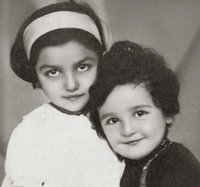
When reading a memoir that is set against a serious and important historical background, I usually create a “time line,” marking the date and place of every notable event in the book. This helps me remember things and put them into perspective. However, I found creating the “time line” of Things I’ve Been Silent About quite challenging, if not impossible. Even though this book is about Ms. Nafisi’s life, I couldn’t find her date of birth in the book, not even on the copyright page. It is important to know the age of the heroine of a memoir: how old is she when she moves away from home to a distant and strange country, falls in love for the first time, or marries? At the end, I had to Google Ms. Nafisi and found that only Wikipedia had her date of birth, which it stated at 1955. However, after spending a long time studying the book’s photos and events, I realized that this was basically impossible: Ms. Nafisi must have been born in 1948 or 49 – so I hope that she would clarify this.
Many Iranians, including myself, couldn’t truly relate to Reading Lolita in Tehran, because we had not read most of the novels that Ms. Nafisi had discussed and analyzed in it. This was the main downside of Reading Lolita in Tehran for me, and I was surprised when all the members of my book club, who are all very well-read Canadian-born women, felt the same way – but I’m glad to report that in Things I’ve Been Silent About, Ms. Nafisi speaks mainly of family relations and Persian literature and keeps referrals to Western novels to a minimal. In a book about Iran, which has a very rich history and culture, it might be to the advantage of the reader if the author remains – as much as it is humanly and circumstantially possible – within the realm she is trying to describe.
It is very difficult to fairly critique a memoir or a person’s memories of certain events and especially of family life, as how we see the world depends largely on our perspective. It is a fact that Ms. Nafisi’s privileged social status naturally affects the images she creates in her works, but this in no way diminishes their value. Ms. Nafisi’s long periods of absence from Iran create fragments in the book that come together to paint a complex mosaic that is both Eastern and Western. Ms. Nafisi is an Iranian English professor, and it can be argued that it is her job to discuss Lolita, Wuthering Heights, Anna Karenina, etc. and to draw parallels between them and the world. Regardless of whether from the East or the West, both good fiction and narrative non-fiction have carried the human experience through hundreds of years of war, revolution, and turmoil, making history real and tangible, and even if they do not exactly correspond with our personal view of the world, they deserve our respect and attention.
Things I’ve Been Silent About is a great read, but reading 2 or 3 books on Iran would not give an individual who has never lived in that country a complete understanding of its complexities and paradoxes. Iran is a huge puzzle, and each book written on it is merely a small part of the whole image. (THIS REVIEW WAS PUBLISHED IN THE GLOBE AND MAIL)