
Jump to ratings and reviews
Rate this book

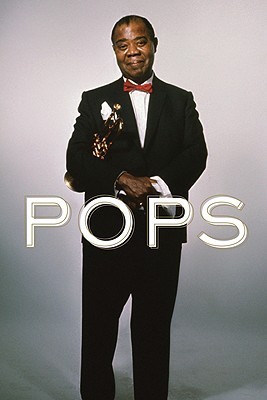
Pops: A Life of Louis Armstrong

Rate this book
Product Description
Louis Armstrong was the greatest jazz musician of the twentieth century and a giant of modern American culture. He knocked the Beatles off the top of the charts, wrote the finest of all jazz autobiographies--without a collaborator--and created collages that have been compared to the art of Romare Bearden. The ranks of his admirers included Johnny Cash, Jackson Pollock and Orson Welles. Offstage he was witty, introspective and unexpectedly complex, a beloved colleague with an explosive temper whose larger-than-life personality was tougher and more sharp-edged than his worshipping fans ever knew. Wall Street Journal arts columnist Terry Teachout has drawn on a cache of important new sources unavailable to previous Armstrong biographers, including hundreds of private recordings of backstage and after-hours conversations that Armstrong made throughout the second half of his life, to craft a sweeping new narrative biography of this towering figure that shares full, accurate versions of such storied events as Armstrong's decision to break up his big band and his quarrel with President Eisenhower for the first time. Certain to be the definitive word on Armstrong for our generation, Pops paints a gripping portrait of the man, his world and his music that will stand alongside Gary Giddins' Bing Crosby: A Pocketful of Dreams and Peter Guralnick's Last Train to Memphis: The Rise of Elvis Presley as a classic biography of a major American musician.


Amazon Exclusive: A Letter from Terry Teachout, Author of Pops: A Life of Louis Armstrong[image]

Dear Amazon Readers:

Pops: A Life of Louis Armstrong, my new book, is the story of a great artist who was also a good man.

A genius who was born in the gutter--and became a celebrity known in every corner of the world.

A beloved entertainer who was more complex--and much tougher--than his fans ever imagined.

It's not the first Armstrong biography, but it's the first one to tell Satchmo's story accurately. I based it in part on hundreds of private, after-hours recordings made by Armstrong himself, candid tapes in which he tells the amazing tale of his ascent to stardom in blunt, plainspoken language. I'm the first biographer to have had access to those tapes.

Read Pops and you'll learn the facts about his 1930 marijuana arrest, his life-threatening run-in with the gangsters of Chicago, his triumphant Broadway and Hollywood debuts, his complicated love life, and much, much more.

You'll also come away understanding exactly what it was that made him the most influential jazz musician of the twentieth century, an entertainer so irresistibly magnetic that he knocked the Beatles off the top of the charts four decades after he cut his first record.

If you've ever thrilled to the sounds of "West End Blues," "Mack the Knife," "Hello, Dolly!" or "What a Wonderful World," this is the book for you and yours. Give Pops a read and find out all about the man from New Orleans who changed the face of American music.

Sincerely yours,

Terry Teachout

(Photo © Ken Howard)


Amazon Exclusive: Terry Teachout's Top 10 Louis Armstrong Recordings

In Pops: A Life of Louis Armstrong, I tell the story of a beloved giant of jazz whose greathearted, larger-than-life personality shone through every record he made. Here are ten of my special favorites:

1. "I Gotta Right to Sing the Blues" (1933). Of all Louis Armstrong's records, this is the one I love best. Listen to how he floats atop the beat in the last chorus--he sounds just like a tenor going for a high C.

2. "West End Blues" (1928). The most celebrated of all Armstrong recordings and the quintessence of swing."

3. "Hotter Than That" (1927). “I just played the way I sang," Pops said. His wordless vocal on this Hot Seven track proves it.

4. "Star Dust" (1931). Further proof: listen to how he rewrites the lyrics to this familiar Hoagy Carmichael ballad.

5. "Darling Nelly Gray" (1937). Satchmo transforms an old slave song, backed up by the suavely swinging Mills Brothers.

6. "Jeepers Creepers" (1939). A charming souvenir of Armstrong's film career--he introduced this Johnny Mercer song in "Going Places."

7. "Struttin' with Some Barbecue" (1938). A boiling-hot big-band remake of a classic 1927 Hot Five side in which the trumpeter improves on perfection.

8. "You Rascal, You" (1950). Louis meets Louis in this raucous romp thro...

475 pages, Hardcover

First published December 2, 2009

54 people are currently reading
1695 people want to read

About the author

Terry Teachout

25 books45 followers
Terry Teachout is the drama critic of The Wall Street Journal and the chief culture critic of Commentary. His latest book, "Pops: A Life of Louis Armstrong," will be published on December 2 by Houghton Mifflin Harcourt. He blogs about the arts at www.terryteachout.com. His other books include "The Skeptic: A Life of H.L. Mencken," "All in the Dances: A Brief Life of George Balanchine," and "A Terry Teachout Reader." "

Ratings & Reviews

What do you think?
Rate this book

Friends & Following

Create a free account to discover what your friends think of this book!

Community Reviews

5 stars
373 (38%)
4 stars
415 (42%)
3 stars
144 (14%)
2 stars
31 (3%)
1 star
7 (<1%)
Displaying 1 - 30 of 147 reviews
Profile Image for Bill Kerwin.
Author 2 books84.3k followers
April 21, 2020

A relatively short biography (400 pages not counting the bibliography and notes) of perhaps the most influential jazz musician of all. Terry Teachout--not only a good writer but also a former professional bass player who loves trad jazz and yet is no "moldy fig" with an axe to grind--appreciates both Armstrong's seminal Hot Fives and his later more commercial recordings.

He shows us Armstrong in all his complexity: the sunny disposition and the explosive rages, the devotion to wife Lucille and his continual affairs, his generosity to fellow musicians and his long-standing musical grudges. In addition, Teachout gives us intelligent and sensitive appreciations of many of the classic recordings. I enjoyed this book and would recommend it to anyone with a liking for jazz and an interest in its history.
Profile Image for Erin .
1,625 reviews1,523 followers
January 12, 2019
"He was born poor, died rich, and never hurt anyone on the way"

I didn't know anything about Louis Armstrong before this book. I had of course heard some of his music like What A Wonderful World & Hello Dolly but I didn't realize how important he was. I have a love/hate relationship with Jazz. There was a period in my life when for 2 years I listened to nothing but Jazz and then I couldn't stand the sound of it for like 5 years. I think Jazz has that affect on some people, its mood music.

In all my years as a Jazz lover I never listened to Louis Armstrong. His music seemed "old timey" and uncool. I'm more of a Miles Davis girl or Thelonious Monk. I, undervalued the artistry of Louis. I'm not the only one, for Louis' whole career people doubted him or called him an Uncle Tom. Louis Armstrong was not only a great artist but he was also a good man ( unless you were married to him).

At first I didn't like this book because I thought it spent too much time on his music and too little on his life but as I continued reading I realized that his music was his life. Louis Armstrong needed music to survive. He performed until just weeks before he died. After reading this book I can say with absolute certainty that Louis Armstrong is one the most important musicians in history.

A must read for music lovers.

Biography, Autobiography and Memoirs Bookclub.
Profile Image for Mikey B..
1,136 reviews481 followers
October 10, 2016
On a radio jazz show that I once listened to, the host remarked that “There is jazz, and there is Louis Armstrong”. He is in a class by himself.

Never has an American music personality risen to the very top from the very bottom of the heap. Louis Armstrong had every lined up against him – his race and wretched poverty. His mother was fifteen when he was born, and his father was absent. His formative years were spent in a rough area of New Orleans where brothels were plentiful and disputes were settled by fists and guns. But there was plenty of music and this is where Louis started.

All this must be kept in mind when Louis vaulted to fame starting in the 1930’s. Louis was from way on the other side of the tracks and his language and mannerisms would often reflect this. He could be abrupt with anyone who rubbed him the wrong way. For example when Benny Goodman tried to upstage and boss Louis on a tour in the 1950’s he was put in his place. After a few days Goodman had to leave the tour for “medical reasons”.

Louis was the first African-American to appeal to all audiences. He toured across North America, Europe (starting in the 1930’s), and Africa in the 1950’s.

Some African Americans criticized Louis Armstrong for being too much of a showman – and for being a “Tom” (subservient) to the white man. Some of this is due to his music no longer being at the fore-front of the new jazz world that began in the late 1940’s (namely bebop). But Louis saw himself as both a musician and an entertainer – and he excelled at both. One must also remember the era of Louis Armstrong; he was born in 1901 in the Southern U.S. – when to transgress a line could have meant a severe beating or even death by lynching. The music business in New Orleans, and then Chicago and New York where Louis became famous was dominated by organized crime. Louis’ New Orleans upbringing was a preparation for this; he knew how to deal with these characters and form the proper alliances (Joe Glaser being a good example as the author explains in his book). His life was under threat a number of times but he managed to wiggle out.

All this is outlined in the book. The author is a musicologist so I found certain passages overly meticulous about the musical notes being played by Louis on the trumpet.

I wish there would have been more on Louis’s singing. He was the first African American whose singing voice became immensely popular and recognizable with all audiences. The author mentions how Louis charisma was a factor in interviews (Ed Murrow for example), short screen bits, a radio show host... Louis knew how to attract attention. He was a superstar and a worldwide icon.

Nobody Knows the Trouble I've Seen
https://www.youtube.com/watch?v=SVKKR...
Profile Image for Cherisa B.
706 reviews96 followers
March 4, 2022
Thorough and workmanlike, Teachout surveys Armstrong's life, work, and impact on music, race relations, and his unique and wonderful blend of musicianship and showmanship. He shows us the icon was supremely an entertainer of the highest caliber, equally at ease and joyous making music, innovating, hitting high Cs and making his audience glad to be along for the ride.

Wonderful to listen to songs and specific recordings of note on Spotify. Streaming services make reading musical biographies an updated pleasure.
Profile Image for Joe.
342 reviews108 followers
December 31, 2018
Even for non-music/jazz aficionados Louis Armstrong's face, voice and the "sound of his horn" are easily recognizable. He's become inseparable from the city of his birth, New Orleans, and the birth of his music, jazz. The mention of his name immediately conjures up the image of Louis immaculately dressed, his trumpet in one hand, white handkerchief for his sweaty brow in the other, poised to entertain with his big smile and never to disappoint his audience. With his music and talent he transcended time and race, a shining light proving the American Dream is a reality. In hindsight all of this may seem true, but of course Satchmo's rise to American icon status is more complicated than that.

Pulling from Armstrong's tape recorded "diaries" and conversations; hundreds of his letters - Armstrong was a prolific letter writer - newspaper/magazine interviews, reviews and articles; and firsthand accounts from many of Armstrong's peers, the author has pieced together a thorough and adequate narrative of Armstrong's life and to a lesser degree, his times.

The reader follows "Little Louis" from his more than humble beginnings in the Crescent City - his mother a prostitute and his father "absent"; Armstrong's "time" at the New Orleans Colored Waif's Home for Boys, where at some point he picked up his first horn and joined the Home's band. Then after hanging out at New Orleans dance halls, with the likes of Joe "King" Oliver, launching on his professional career - riverboats, Chicago, New York - we witness his climb to world-wide fame. And of course - Armstrong revolutionized music.

Once the narrative settles into Armstrong's career, I found the story told somewhat repetitive - band rosters, recording sessions, endless touring and even the claim that Louis "sold out" - which is not to say that this isn't an accurate portrayal/description - it is - but the level of detail may not hold the reader's attention.

The author also attempts to explain and even defend Armstrong's behavior/decisions/musical choices once he was "established". For instance the claim that Armstrong was easily "managed" - by white men - which drew fire from critics with Louis' "settling" to be an entertainer, rather than continuing on as the combustible creative force he was early in his career. Also Armstrong's surrounding himself - at times - with mediocre band-members; demanding little from his musical arrangers and playing the same tunes, the same way, night after night - and Armstrong played a lot of nights on the road. (I'll leave it to each individual reader's judgment whether the author's repeated "explanations/defense" of Armstrong are necessary. Personally I think Satchmo's popularity/influence/longevity speaks for itself.)

All in all, Pops is still a very readable biography and provides a good overview of Armstrong's life - although it may leave you hankering for a little more. I found the focus at times too limited with only sporadic instances of placing Armstrong within the context of his times, the "music scene" and the evolution of American music. Because of this, I found Laurence Bergreen's Louis Armstrong: An Extravagant Life a much more engaging and informative book. Obviously a personal preference, but a preference nonetheless.
Profile Image for GoldGato.
1,302 reviews38 followers
December 31, 2020
His name was pronounced as "Lewis", not the "Louis" the rest of the world preferred to call him. He changed music. Period. Before Louis Armstrong, there was ragtime and some beginnings of 'jazz', but it was Pops who made jazz, JAZZ. Yet by the time he died in 1971, he was known more for his singing and entertaining than for his pivotal use of the trumpet (instead of the cornet) in twentieth-century music.

RkGFJ3.jpg

Louis Armstrong was born and raised in New Orleans, the Crescent City that could just as well have been called the Cesspool City. He developed into a young man with a passion for the horn and a work ethic that set him apart from just about every other musician. And what a work ethic it was! His music and performing was what he lived for and he did not let the destroying horsemen of alcohol and heroin into his life (though he loved his cannabis).

In essence, Armstrong was the middle-class shopkeeper of modern music. He felt a man should have a job, do his best to exceed at that job, and live a citizen's life. This conflicted with the later jazz musicians, such as Miles Davis, who considered Pops an Uncle Tom for kowtowing to "the white man". How Satchmo managed to ride out racial prejudice, Mafia takeovers, and changing tastes is one of the main points of this book, which shows Armstrong to be so much more than the handkerchief-headed relic he was perceived to be.

"I don't listen to fanatics that try to tell me how to blow my horn"

My experience of Mr. Armstrong, prior to reading this book, was his singing, particularly his album with Ella Fitzgerald. I knew he was a great jazz trumpeter, but not really aware of his overall influence on the medium. The detail in this book was astonishing, as Terry Teachout educates the reader on the life and music of Pops (with a strong bibliography and notes section).

XarwN4.jpg

Most biographies fall into one of three areas:
1. Let's write about the subject's life.
2. Let's write about the subject's work.
3. Let's make up poop about the subject and call it verified.

This book is none of the above. The author provides the life of Armstrong, but also his extraordinary work, down to the exact recordings to which the reader should listen (not easy, given that Pops was already recording in the 1920s). There are so many asides, such as Louis Armstrong acknowledging his debt to Bing Crosby (Pops made his trumpet "speak" like Crosby's singing) and, vice versa, Crosby's debt to Armstrong's effect on how he phrased a song (Der Bingle floated lyrics by copying Armstrong's change-of-pace).

I obviously enjoyed the book and the research that went into it. It was never boring, and I also started searching for downloads of other seminal jazz figures mentioned within. My respect for Louis Armstrong, and the strength he showed, grew tenfold.

Now that's jazz.

Book Season = Spring (scrub the dust)
Profile Image for Nooilforpacifists.
987 reviews64 followers
February 1, 2019
A dandy of a book. For years, I had the pleasure of reading short pieces by Terry Teachout in the Wall Street Journal, where he was the drama critic. (He also writes more broadly on the arts in Commentary.). His WSJ articles put this book in my sights for years, especially because Teachout also is a trained musician and jazz bassist. But even his drama articles impressed me with the breadth of his erudition: his writing is very good, though perhaps not top drawer; his insights, however, are both penetrating and connect concepts where relationship was non-obvious moments before.

Louis (not Lou-ie; he wasn't French) Armstrong was born in New Orleans around the turn of the Century in the poorest possible circumstances. He was the family's breadwinner from about age six, got busted and sent to reform school at 12--which turned out to be his first lucky break. Somehow, he'd already fiddled with a cornet, but now had access to a real trumpet. Within two years of his release, Armstrong (at age 18) was the best blues/boogie trumpeter in town, and was starting to play the new music then called "jass".

Lured to Chicago, then Harlem, he made some of his finest recordings then (albeit on lo-fi 78s or even wax cylinders). His playing was his prime ticket; and the best bands (and in the 1920s, these still were segregated) demanded musicians that could sight read music--Armstrong's reform school years gave him that. Indeed, it soon became clear that Armstrong was more serious about music than almost any of his band mates, in any combo: between sets, they would play cards; Armstrong would seek the best musician in the club, black or white, and jam after the show.


"No sooner did he make his debut at Roseland [in Harlem] than word went out that he was something special. 'Louis played that opening night at Roseland, and my goodness, people stopped dancing to come around and listen to him. . . The next night, you couldn't get into the place. Just that quick.' So said Howard Scott, who sat next to him in [band leader] Henderson's trumpet section, and there is no shortage of corroborating testimony… Coleman Hawkins told of another night where he played Don Redman's 'Shanghai Shuffle' so sensationally that 'I think they made him play ten choruses. After that piece, a dancer lifted Armstrong up onto his shoulders.'

We need not take these stories entirely on faith, for the Henderson band went into the recording studio a week after Armstrong's arrival in New York, and one of the first sides it cut was 'Shanghai Shuffle.' The band's playing of Redman's arrangement, a coy piece of pop 'chinoserie', is bouncy but square (if no more so than most of the other records cut in 1924 by dance bands of both races). Then Armstrong crashes out of the starting gate with a syncopated phrase that leads into a blistering-hot chorus in which he pulls one of his favorite musical tricks out of his hat for the first time on record: he plays eighteen [high] Cs in a row, avoiding monotony by varying the accentuation of each one. To modern ears his solo contains no surprises, for the rhythmic language he was forging on Henderson's bandstand was to become the lingua franca of jazz. But, in Armstrong's case familiarity breeds no contempt, and 'Shanghai Shuffle' remains listenable to this day."


Crucially, in addition to being able to sight read music, Armstrong could write. He wasn't a reader. But he wrote compulsively, later in his career, dictating into early reel-to-reel tape recorders. The results are at least two authentic Armstrong autobiographies, with minimal ghostwriting. Moreover, Armstrong left (and published a few) essays about his life and his views of music, not to mention race relations--including an essay praising the Jews for being subjected to nearly as much discrimination, but "sticking together" and not wasting their money on "gambling" and "whoring." These materials, and Armstrong's perpetual smile (and ham-it-up vaudeville style early in his career) made him an anathema to black musicians from (surprisingly) Dizzy Gillespie to (obviously) Miles Davis.

Armstrong's Achilles' heel was his unwillingness to take leadership of his own band or finances--even after he became the star attraction with top billing. For a while, his third wife (and sometimes piano accompanist), Lil, ordered him around, probably to Armstrong's benefit. But ultimately, Armstrong turned his entire business over to Joe Glasser, a white man who Louis always called "Mr Glasser", never Joe. Glasser found the bands, got the gigs, and paid Armstrong a fixed fee (later renegotiated to a 50/50 split)--in a 10 year contract. Most everyone found the deal inconceivable, even rather "Uncle Tom". But Armstrong wanted nothing to do with business.

This hurt Armstrong in four ways: in the prime of his career, his sidemen were mediocre, and couldn't carry part of the load; therefore Armstrong played too much, permanently damaging his lips (which would split open and gush blood some nights); he played too many road shows (including in the segregated South), rather than having a fixed home (e.g., Sinatra at the Sands); and it turned out Glasser was mobbed-up: a Chicago mafia figure paid off Glasser's start-up loan--Glasser only was a figurehead, something Armstrong didn't learn until the reading of Glasser's will.

That didn't stop Armstrong from making good records and having even more fun. He was the first jazz musician to make the cover of Time magazine. And, with "Hello Dolly", he became the oldest person (age 63) to record a number one pop song; until Armstrong recorded the song, the musical didn't have a title. Later, the president of ABC records refused to publicize "What a Wonderful World", which sank without a trace when released in the U.S.; in England, it sold over 600,000 copies, and may be Armstrong's most recognizable song today.

Before Armstrong's death, the Gillespie/Monk generation were able to consider the man in his time, and made both peace and musical tributes. Armstrong died on June 27, 1970: twenty-five thousand people filed past his coffin as it lay in state. Armstrong's honorary pallbearers all were celebrities in their own right: Pearl Bailey, Count Basie, Johnny Carson, Dick Cavvet, Bing Crosby, Duke Ellington, Ella Fitzgerald, David Frost, Dizzy Gillespie, Merv Griffin, Bobby Hacket, Harry James, Alan King, John Lindsay, Guy Lumbardo, Nelson Rockefeller, Frank Sinatra, Ed Sullivan, and Earl Wilson. Duke Ellington summed it up best: "He was born poor, died rich, and never hurt anyone on the way." What a wonderful world.

Other biographies of Armstrong exist. But I doubt any of them were better able to describe what was so pathbreaking about his playing, so amazing about his music, his proper place as a cultural icon.
Profile Image for Forrest.
Author 4 books9 followers
July 10, 2014
Pops is, by far, the best account of Louis Armstrong’s life I’ve ever encountered. Terry Teachout’s narrative is graceful and full of insight, and his esteem for Armstrong shines through every page. But reading it, I also realized for the first time how challenging it must be to write about the man.

Armstrong was an undisputed genius. He raised jazz above the level of novelty music and inspired an entire generation of artists with his 1920s Chicago bands and the seminal records of his “Hot Five.” He even demonstrated how jazz could truly be art with essential, timeless recordings like “West End Blues.” But within a decade of his emergence on the scene, the critical tide was already beginning to turn against Armstrong: first for joining the big band craze and turning his back on small-group hot jazz, then for sticking to his “good ol’ good ones” while the rest of the jazz world was moving relentlessly forward. Satchmo was chastised for working with mediocre sidemen, for embracing commercial pop songs, for his old-school vaudeville antics on stage, for his shrinking and fossilized repertoire, for his roles in a long string of forgotten B-movies, and for his apparent subservience to white managers. Such stones would be flung at Armstrong by music critics, modernists, and black intellectuals for the rest of his life.

All of these criticisms have merit, but they neglect Armstrong’s own vision. His desires were simple. He wanted to play the songs he liked for the largest possible audience. He wanted to sing. He wanted the spotlight, without competition from his sidemen. He wanted to be taken care of and absolved from difficult business decisions. And he wanted to be loved.

Any honest assessment of Armstrong’s life needs to resolve this conflict. Is his story a rags-to-riches tour de force where a New Orleans slum kid rises from nothing to become the world’s most beloved entertainer, or a tragedy where a great genius becomes set in his ways and fritters his talents away to suit the exploitative whims of others?

Both stories are true, and Teachout (like Gary Giddins in his much shorter Satchmo ), understands this. Teachout is not afraid to challenge critical orthodoxy, and generally respects Armstrong's choices. But this book is not quite the fawning apologia some reviewers say it is. Teachout is honest about the paradoxes of Armstrong’s life: he shows us where he triumphed and where he held himself back (or allowed others to do so). We see the fiery player with the golden horn, hitting hundreds of high C’s in a row, but also the showboater who pushed his body to the point of failure just to please his audience. We see the adulation of the masses, but also Armstrong’s philandering, his run-ins with the mob, his terrible business deals, long stretches of weak recordings and dull concerts, and the flashes of temper or melancholy that were so well hidden from the public.

But when all is said and done, we see Louis Armstrong the Giant—a man who truly loved the world and was loved by the world in return. It’s a tremendous life, and Teachout presents it beautifully.
Profile Image for Jonfaith.
2,145 reviews1,745 followers
April 28, 2021
My awareness of jazz came relatively late, the spring and summer before I turned twenty-four. At least that's what I think. I should stress the word awareness, I knew that something called jazz existed, especially as I appreciated other black music i.e. soul and hip-hop at the time but i had no idea of this improvisational music and its rich heritage. I do recall then listening to cds at at the university library. This coincided I believe with my discovery of Ralph Ellison and the marvelous treatment of What Did I Do To Be So Black and Blue in his novel Invisible Man. Of course I didn't know the song was written by Fats Waller and had no idea who that was but thanks to Good Morning Vietnam I knew if only vaguely that Louis Armstrong existed. As my tastes quickly developed it was John Coltrane who became my lord and savior. This was followed by the lost apostle Eric Dolphy who I truly revered. After that, my tastes began the sinuous shuffling that continues to this day. Shostakovich, hillbilly, Tom Waits etc.

Somewhere along the way I acquired the revered Hot Five and Seven recordings, a set of sides recorded by Armstrong when he inadvertently changed the world. A little over a week ago I began listening exclusively to these records, almost hypnotically. I wanted to know everything I could about them. The historical coincidence that less than a thousand miles away Ralph Peer was recording the Carter Family struck me as cosmic but that is likely a discussion best served on our front porch with plenty of cold ale at hand. It was with such vigor that I bought this biography Sunday morning--and was quickly disappointed. Teachout does foreground the autobiographical writings (some unpublished during his lifetime) as well as the hundreds of hours of oral history he recorded on his endless life on the road. Thus as Duke Ellington noted, he was born poor, died rich and never hurt anyone along the way. Teachout is very middlebrow in his approach, which might be appropriate given Armstrong's move from jazz revolutionary to shmaltzy entertainer? Teachout spends a fair amount of time examining the charges that Armstrong perpetuated a shuffling passive stereotype while playing segregated venues. The private aspects reveal an angry man who bristled at having his artistry overshadowed and thus preferred to to maintain ensembles of inferior musicians. The biography also revealed the incessant correspondence which became part of Armstrong's itinerant life, his typewriter pecking away night after night in another anonymous hotel room.

Being somewhat bruised by this experience, I likely won't pursue a book specific to the Hot Five and Sevens but still marvel at their majesty.
Profile Image for Clif Brittain.
134 reviews17 followers
January 13, 2010
This book explains as well as anything I've ever read the kinds of losses our country has suffered as a result of racism. Louis Armstrong is probably the greatest American musician of the 20th century, yet he had to develop his style and his music to conform to the confines of racism.

How much more could he have done in a culture free of racism?

The most difficult thing for Teachout to explain is the relationship between Glaser, Armstrong's white manager and promoter, and Armstrong. Armstrong hired him because of his ability to penetrate the white music scene. Glaser suceeded, but at great cost to Armstrong's pride and the direction that Armstrong's music took.

I think Teachout has done a great job in telling us how Armstrong survived and even thrived within these limitations. I am so glad I read this book. I listen with new appreciation to Satchmo's music.

How ironic it is that I am reluctant to type "Satchmo". It sounds so much like Sambo, yet that was what Armstrong preferred to be called (contraction of Satchel Mouth). This discomfort is at the heart of accepting the man and the music and his era.
Profile Image for Fred Moramarco.
17 reviews5 followers
March 29, 2011
To give you an idea of how much I like this book, I should tell you that half way through it I downloaded "The Essential Louis Armstrong" for my IPod so I could play the songs after reading Terry Teachout's descriptions of them. Teachout is a drama critic and a former professional musician who writes about music with an enthusiasm and detailed accuracy I have never before encountered. He takes us into Armstrong's world, from his New Orleans beginnings through his Chicago stint with King Oliver's Creole Jazz band, to his rise to stardom in New York and his development into a national icon and and International music ambassador. Teachout quotes extensively from Armstrong's own writing throughout revealing a great deal about his large and compassionate soul. Never before seen photographs enrich the book as do assessments of Armstrong's unrivaled contribution to 20th century American music. If you know a lot about Armstrong this book will deepen and expand your knowledge. And if you don't know much about him it's an absolute "must read."
Profile Image for Mary Ann.
451 reviews70 followers
June 16, 2021
I found Joe's 2-star review below the most balanced and objective. Like reviewers who gave this 4 and 5 stars, I, too, am a great admirer of Armstrong, but I probably got more of a sense of Louis and his music from Ken Burns's documentary series, "Jazz" than from this book. For me, the best chapters were those dealing with the early years in New Orleans and the move to Chicago. I find Teachout's style to be dry, pedantic, and soulless. The story of this great man cries out for a biographer of the caliber of Michael Korda or Philip Norman. Joe also recommended Laurence Bergreen's Louis Armstrong: An Extravagant Life as much more engaging and informative book; I think I'll give it a try.

Joe's review: https://www.goodreads.com/review/show...
Profile Image for Joshua Thompson.
1,061 reviews570 followers
December 5, 2021
A truly outstanding biography that was both comprehensive and deep, yet still was highly readable strong narratively. A must-read for jazz aficionados.
Profile Image for Mark.
1,272 reviews147 followers
April 5, 2018
Louis Armstrong is one of the legends of twentieth century music. During five decades as a performer he thrilled audiences with his cornet and trumpet virtuosity, while his gravelly voice made him one of the most popular and recognizable singers of his day. Such a career became the stuff of legend, making it difficult to discern the truth underneath. In this book, Terry Teachout undertakes the difficult task to sift though the legend to discover the man underneath.

In this he is aided by Armstrong, who left behind two autobiographies and numerous audio recordings. From them we learn a man unashamed of his impoverished beginnings in the "black Storyville" neighborhood of New Orleans. The musical scene of the town's brothels and clubs provided the young Armstrong with both his early musical education and his first employment. Teachout goes on to describe his journey during the 1920s from promising young cornet player into the headlining talent he became by the end of the decade. Teachout rightly gives this period, one that saw some of his most innovative music, considerable attention, but he challenges critics such as Gunther Schuller who dismiss Armstrong's work with the big bands of the 1930s and 1940s. These decades dominate the biography, taking up eight of the book's twelve chapters. The final chapters chronicle the established entertainer who faced the twin challenges of aging and the disdainful attitude of the younger generation of musicians who followed in his giant footsteps.

In examining Armstrong's life, Teachout brings to bear his skills as detective and storyteller. He succeeds in depicting a very human yet enormously gifted performer, a talented musician who was also a superb entertainer. His book easily supersedes earlier biographies of Armstrong in its thoroughness and readability, yet it remains frustratingly incomplete by itself. For while Teachout does an admirable job of describing Armstrong's music, the book really is best enjoyed when accompanied by the songs Teachout describes. Though the author identified thirty songs in an appendix that can be downloaded by the reader, the sheer amount of music he describes warrants more comprehensive collections. It is only when listening to them in conjunction with Teachout's book that the degree of Armstrong's achievement is best understood.
Profile Image for Eric.
318 reviews20 followers
February 24, 2023
Finally, the biography Armstrong always deserved. Tho it is painful to think of all the ways the great man suffered, most of all the awful ingrained & institutionalized racism in this country that shaped his personality as a poor street kid in New Orleans and dogged him even into the 1960s when he was an international star (but still had to use the "colored" washroom), ultimately his story of relentless openness & optimism & his rewarding work ethic coupled with an unmatched artistic genius of such purity as to be unassailable blows away all negativity & is an uplifting inspiration. Teachout's book is no fawning fluff piece; tho he occasionally pours on the reverent and astonished testimony of those encountering the man's power (or personality) for the first time, it is more to blow the jaded dust out of our modern ears and eyes, and he is clear-eyed about Armstrong's shortcomings, soberly analyzing every phase of his long career. Having access to Armstrong's archive of writings and recorded thoughts & reflections (he was an obsessive chronicler), this book is as comprehensive (and compassionate) as one would hope. No doubt many will be surprised to find that the grinning, ingratiating showman on stage was also not only fiercely intelligent but capable of anger & criticism of his own, not mincing words about president Eisenhower's handling of the civil rights crisis brewing in the 1950s, referring to Secretary of State Dulles as an "ignorant motherfucker" & spurning the government's desire to parade the trumpeter overseas on a "goodwill tour." Fascinating, rewarding, and incredibly illuminating of not only its subject but of ourselves as well: the fickle, judgmental audience.
Profile Image for Harold.
379 reviews72 followers
November 29, 2009
Seems like there's a new bio of Louis Armstrong every few years. This is an excellent one and I would recommend it to anyone interested in Jazz. As with the Monk bio, it sent me back to the recordings and I've been having a ball listening to Pops. I recently bought the Mosaic Decca 1930s reissues and I've been digging them in the best sound ever for that stuff.
Profile Image for David.
37 reviews6 followers
November 29, 2009
A few years ago I received a Louis Armstrong CD for Christmas from a family member who knew of my appreciation of the great man’s music. Unfortunately, to my mind at the time, it was a later CD, a collection of his songs with the All-Stars, the small combo band he formed in 1947 and continued performing with right up until his death in 1971. I had listened to little of Satchmo’s music from this period because I had the same opinion of it that many jazz fans had, i.e., that it was the music of a man who had stopped taking chances long before, that compared with the blazing hot music of his early career it was not worth listening to. Might as well just put on “Potato Head Blues,” or “Muggles,” or “Mahogany Hall Stomp” or any of the dozens of songs he recorded back in the twenties and thirties and listen to them again.

A few days after that Christmas, while my wife and I were taking down the decorations, I put the CD on and was more than pleasantly surprised. It is terrific. While the music on the CD is certainly not comparable to the music of his early years, it wasn’t trying to be. It was something else entirely: the music of an old pro, smooth, self-assured, and highly entertaining. It has few of the exhilarating moments of the early stuff but, again, that was not the point of this music.  This is music for the masses, pure entertainment, and it succeeds on that level.  It’s fun!  While snobs and jazz aficionados can and often have called it the music of a sell-out, they missed out on some terrific entertainment in their insistence that Armstrong had to push at the boundaries each time he picked up his trumpet.  The opinion-makers of Armstrong’s time damned him because he wouldn’t produce another “West End Blues,” and unfortunately, it was the view of these high-brows that came to prevail.  In a nutshell, the opinion of Louis Armstrong for many years before and after his death was that he had sold out in order to please white audiences, that he valued fame and popularity more than his music.

There is much to Terry Teachout’s terrific biography of Armstrong, Pops: A Life of Louis Armstrong, but if there is a main point it is to shatter this opinion.  Teachout, who was a jazz musician himself before becoming a full-time writer and critic, shares in the enthusiasm of Armstrong early, ground-breaking work – his analysis of this early work is alone worth the price of the book - but he also builds an impressive case for the worth of Armstrong’s later music.  It’s definitely not a hagiography.  Teachout, who I consider the finest critic in America today, is intimately familiar with Armstrong’s music.  He knows when Armstrong was mailing it in or settling for less than he should have, and he has no qualms about pointing these moments out.  But he takes the music of Armstrong’s career for what it was and he is marvelous at pointing us to the highlights of his career, including what was worthwhile in his later work.  I’m not going to go into it any more than this but I’ll simply say if you love Satchmo then you need to read this book.  You’ll end up with a better understanding of the man and who he was, the man in full.  What’s more, Teachout doesn’t criticize Armstrong for not being the man many of his contemporaries wanted him to be.

Teachout also points out something important: From the early 1930’s onward, Armstrong probably could not have duplicated his earlier technique due to the lip problems he began experiencing around that time.  His embouchure – the technique of shaping the lips to the mouthpiece of his horn - was flawed from the beginning and it was hard on his lips.  As a result his lip began to break down around this time, often rupturing in the middle of a performance, and he’d have problems with it on and off for the rest of his life.  He had to alter the way he played, if he wanted to play at all.  And he had to play.  Armstrong made it clear to everyone who knew him, including his four wives, that his horn came first.  It was his reason for being.  He would spend over fifty years, from the time he was fourteen years old until he was in his late-sixties, on the road, playing his horn.  If he took a  break, even late in life due to doctor’s orders, he would soon become restless, summon his band, and hit the road again.

Well, who else does this remind you of?  Earlier this year on my blog, I made the case that there are four musicians who could make the claim of being the “Greatest American Musician.”  Armstrong was one of them, along with Dylan, Presley, and Sinatra, take your pick.  All four of these men were (in the case of Bob Dylan, still are) obsessed with their craft.  After the prime of their careers, they all continued on, making records surely, but for the most part on the road, playing before adoring audiences.  To a man, they toured constantly.  They’ve all been accused of selling out (in the case of Armstrong, Dylan and Elvis) or continuing on long past the time when they should have hung it up (Sinatra.)  But none of them cared.  They were music men.  They all lived to play, to share their special talent with those who appreciated it.  They’ve all been condemned by the know-it-alls for these so-called failings.

But consider the following.

If [Armstrong’s:] new style was less spectacular, it was also purer, shorn of the excesses that had obscured the lyricism at the heart of his artistry.  To some extent this purity may have been imposed by the cumulative effects of the string of split lips that he suffered in the early thirties, but if that was the case, it would not have been the first time that a great artist has been freed to follow his inner impulse by technical limitations arising from physical decline.


Long before Teachout gets to this passage on page 217 I had been thinking about the parallels between Armstrong’s split lip and Sinatra’s vocal cord hemorrhage in 1950.  Sinatra had been a smash with the kids during the war, dubbed “The Voice”, a classic crooner in the style of Bing Crosby.  He had numerous number one hits for Columbia records during the forties but by 1950 his popularity was waning and he hadn’t had a number one hit for a few years.  He was also unhappy with the direction Columbia was taking when it hired the hokey Mitch Miller as its musical director.  Then came the vocal cord injury and he emerged from the incident a changed singer, perhaps even a changed man, one who was intent on becoming more than a pop star.  He left Columbia records and signed with Capitol and the rest is history.  His voice was now deeper, and he could no longer croon.  Instead, he invented a new style of singing: conversational, personal, less directly emotional, but more affecting.  There was a distance now between Sinatra and the song he was singing and that distance allowed the listener in; there was room for us to imagine ourselves in the song.  This was the key to his success, to his art.  (To illustrate this point, listen to Sinatra sing “I’m A Fool To Want You” during his Columbia days here, and then listen to his later, more mature, more controlled version of it here.)  He was no longer a pop star, he was an artist, the man who created the music in which we saw ourselves.  As with Armstrong, circumstances other than his physical injury had something to do with Sinatra’s new style but it certainly played a role.  What emerged, as Teachout says of Armstrong, was something purer and more profound.  For years afterward Sinatra was creating something new each time he entered the studio, and he knew it.

I could make the case that Bob Dylan emerged from his motorcycle accident in 1966 a changed man but it’s a case that’s been made many time before and is hard not to see. The difference between the pre-accident Highway 61 Revisited and Blonde on Blonde and the post-accident The Basement Tapes and John Wesley Harding is profound.  You may prefer the earlier work but it was Dylan’s retreat to his roots in the latter records that set the stage for the rest of his career.  Blood on the Tracks, Empire Burlesque, Good As I Been To You, and all of the records that he’s produced in the last dozen or so years during his re-emergence have much more in common with the records he produced just after the accident than those just before it.

Read Teachout’s book.  It is marvelous, his best book yet.  I concentrated on a particular thread that happened to interest me but there is so much more to it.
Profile Image for Marc  A..
66 reviews21 followers
June 13, 2016
I was inspired to read this after I saw the terrific one man show, "Satchmo at the Waldorf" that Mr. Teachout wrote based on his research for this fine book. Coming late to the field of "Armstrong-ography" , Teachout had the advantage of a wealth of earlier efforts (including two autobiographies by the subject himself), plus a trove of new material that has become come available relatively recently and includes hundreds of reels of private tapes recorded by the artist himself over many years. The fact that the author has worked as a professional musician provides some extra insight and, I think, lends credence as he guides the reader through the years of performances and recording sessions whilst pointing out the most significant and durable contributions of the unique American Jazz artist that was Louis Armstrong. For those like myself, who came to appreciate jazz music well after Armstrong's seminal (really, foundational) contributions to the music were already so well baked in and absorbed into it's DNA that it's hard for a layman to understand what all the fuss is about, this book is indispensable.

I gave only 4 stars simply in deference to Stanley Crouch's fantastic biography of Charlie Parker, "Kansas City Lightning".
Profile Image for Josh.
1,001 reviews19 followers
April 29, 2013
Immediately one of the best musician biographies I have read-- and among the best biographies, period-- Teachout's book presents us with a full,robust portrait of Louis Armstrong, his life and times, his towering personality, his art and his music. Everything is here: His troubled beginnings in New Orleans, his apprenticeship with Joe Oliver, the seminal Hot Five and Hot Seven sessions, his years as a working big band leader, his 1947 Town Hall comeback, the All-Stars, his uncomfortable relationship with bop, his marriages, his love of food and laxatives, his penchant for smoking pot, his views on race, the Eisenhower outburst, "Hello Dolly," Ella and Bing and Miles Davis-- everything! The book's central thesis re: Armstrong's position as a black entertainer, more prone to spreading love and joy than to making overarching political or social statements, is deeply compelling. If I have any small criticism, it is that some of the author's personal opinions of Armstrong's music seem a bit ill-formed and uninteresting, but that is indeed a small quibble for a book that paints a vivid and lovable portrait of a true giant, and an American hero.
Profile Image for Melissa.
27 reviews2 followers
March 3, 2011
I didn't finish this book and I don't think I will. The author is clearly a fan of the artist, but between the fawning over Armstrong and name dropping, it was difficult to get a handle on the subject. At least I found out that Armstrong's mother and first wife were both prostitutes.
Profile Image for Laura B.
45 reviews
July 30, 2018
A beautifully written, enjoyable biography. I also learned a lot about jazz too.
Profile Image for Patrick.
83 reviews7 followers
June 28, 2019
I really enjoyed this book. It is not a scholarly biography, but a synthesis of other research into a narrative portrait of Armstrong. It definitely helped me get a better understanding of Armstrong.

I have always sort of struggled with Armstrong. I was born in 62 and growing up when I did, I experienced Armstrong as a popular entertainer. He was the Hello Dolly guy who also showed up on all the talk shows and he played the trumpet. When I started to listen to jazz as a young teen, I had a difficult time getting my head around him. This was in the early 70s and his recordings, especially his pre-50s stuff was not that easy to come across, at least for me. Back before streaming, it could take ages and more dough than I had to track down long out-of-print recordings. In some ways, the20s and 30s were more remote from the 70s than they are to 2019.

Also, at that time, Armstrong was somewhat controversial--there was a whole strain of criticism that he was a sellout and an uncle tom. A brilliant musician who had compromised his artistry in order to make money. I would read about what a great artist he had been, how he was one of the most important jazz musicians ever and I had a difficult time tracking down any recorded examples of this. I remember trumpet player friends in high school playing recordings of a young Armstrong hitting strings of very high notes and, while that seemed virtuostic, it was not persuasive in terms of his importance to jazz.

Later, especially with the glut of reissues following the arrival of CDs, it became easier to hear more of his earlier work and I began to get a better sense of him as a jazz musician.

Pops manages to put my own experience of Armstrong into perspective while painting a fuller portrait of him. Indirectly, it's also a sort of cultural and racial history of the first 60 or so years of the 20th century.

One of the amazing things about right now, is that I could follow along with so much of the book via streaming. It opens with a description of Armstrong's debut with the New York Philharmonic at Lewisohn Stadium in 1956--and I could watch that very event on youtube. Every film clip or recording referenced in the book that I tried to track down online I could find on youtube.
Profile Image for Texbritreader.
83 reviews26 followers
November 25, 2011
In the cultural pantheon of 20th century America Louis "Satchmo" Armstrong occupies a unique place; revered as one of the seminal figures in the evolution of Jazz, he was also consistently disdained by critics and jazz buffs alike from the 1930s on for his penchant for artistic populism. A master player and brilliant innovator, he was also an endearing and beloved entertainer, who enjoyed clowning for audiences while he engaged in an habitual routine of grinning, eye rolling and mopping his brow with a handkerchief. As a result Armstrong was often labelled an Uncle Tom by black intellectuals and liberal observers who viewed his style of showmanship as deferential and embarrassing. In Teachout's wonderfully readable and thorough biography the dichotomy of Armstrong's genius alongside his occasional pandering to the public and frequent reticence in his business dealings is sensitively explored, painting a picture of a complex and driven individual, obsessed with "blowing my gig".

But while the author offers a keen and detailed assessment of Satchmo's career we also get an excellent picture of the private side of the man. The product of a hardscrabble youth in New Orleans, filled with prostitutes, gamblers and the ubiquitous absent father, Armstrong was blessed with an incredible talent which he honed to perfection through continuous effort and apprentice work. Starting as a cornet player in his youth and graduating as a young performer to the trumpet Armstrong got his first big break with a job in Chicago as second horn to his mentor King Oliver. By this time we have already met his loving but hard-living mother, Mayann, seen Louis through the first of his four marriages, to Daisy a Storyville hustler and learned about Clarence Armstrong his mentally challenged adopted son.

The book gives equal consideration to the music, giving us an excellent sampling of both the popularity and critical reception of his plethora of performances and the many recordings Armstrong made. The writer takes us through his early bands The Hot Five and The Hot Seven, to his Big Band and his final group the All Stars with it's changing line-up. There is also a perceptive account of his long professional friendship with Bing Crosby and there are many, many glimpses of other jazz greats including: Bix Beiderbecke, Duke Ellington, and Benny Goodman plus some of his famous band mates and sidemen like: Earl Hines, Jack Teagarden and Cozy Cole.

One of the most fascinating characters in the book is longtime manager, Joe Glaser, a mobbed up operator who took 50% of the earnings, ran everything except the musical show and was always called Mr. Glaser by Armstrong despite their decades long "friendship" and business partnership. This relationship is examined very well and provides many insights into Armstrong's character, revealing his need to have a decision maker and a heavy and his almost complete focus on his own music. His other wives are also interesting, jazz pianist Lil Hardin who worked alongside her husband pushing and guiding him through his early career rise; Alpha Smith his adoring, young mistress who ended up his spoiled and bored third wife and Lucille Wilson his beloved fourth wife with whom he finally found happiness and common ground in his final three decades in spite of his long absences and ongoing infidelities.

Teachout does a great job exploring the historical context of his subject's life, reminding his readers that you can't accurately view him through a modern lens. To make fair judgments about the behavior and attitudes of an African American of this era it is imperative to consider the endemic racism, legal limitations and real dangers he faced in the U.S. at that time. Armstrong grew up in the Jim Crow South where lynchings were commonplace and he lived most of his life in a segregated country, surviving only seven years after the Civil Rights Act of 1964.

Using a vast number of sources, including many original letters, autobiographical writings and personal recordings from Armstrong himself the author has crafted a rewarding read, illuminating the subject sympathetically but honestly and offering us a nuanced portrait of the man behind the million watt smile.
Profile Image for Roger.
520 reviews23 followers
October 16, 2017
Pops is billed as the first biography of Armstrong written by a musician - Terry Teachout is the drama critic for the Wall Street Journal,sometime Jazz Bassist and Librettist for Operas. A musician he may be, an Armstrong disciple he certainly is, which has both good and bad effects on his book.

Pops is a comprehensive life of the great man, leavened by much recent research on Armstrong, and by newly accessible material created by him, both on tape and paper. The famous birthdate of July 4th 1900 is shown to be more than a year out of date, and the story of him getting his first cornet at the colored waifs home is also shown to be probably not true. Probably, because there remains the problem of Armstrong's own stories, which have created several versions of major events in his life, so tracking the true path can be tricky.

Teachout provides a good overview of Louis' early years, and throughout the book he is at pains to place Louis' story into the greater milieu of what was happening in US popular music and politics at the time. He also gives us an insight into just how incredible Louis' playing was at that time - we are used to bravura playing with lots of fast runs and high notes these days, but you only need to listen to some of the really early Jazz recordings, or to the playing of someone such as Bunk Johnson, to imagine what an effect Armstrong must have had when he burst onto the scene in the 20s.

Armstrong was famously seen to be somewhat of an Uncle Tom by some of the post-war Jazz players - Teachout tries to make the case that Armstrong was fighting for civil rights in his own way, but what comes out for this reader is of someone trying to make their own way in the world while not trying to bring trouble down on their backs. For a black man, especially before the war, that meant having a white man in your corner, and Joe Glaser, Louis' manager for many years, was his white man. Teachout shows that Glaser certainly was a pretty unsavoury character, with mob connections, but also manages to give us some idea of why they stayed together and formed such a successful partnership. One reason was certainly that Louis didn't like to change things in his life, so if something was working he left it alone. His deal with Glaser (a 50\50 split of earnings) seems horrifying now, but if Louis could be left alone to play, have enough money for some reefer and a Cadillac, he was happy.

He was happiest when playing and singing, and it seems he didn't mind too much what he played and sang. From the 30s on, he was happy to be guided by managers, producers and recording engineers to the songs he should record and play. This never seemed to worry Louis too much, but certainly exasperated many of his fans, who despaired at some of the saccharine he put out later in his career. Teachout tries to make the best of this era, and this is the weakest part of his book, as dross is dross, even when played by a genius.

Armstrong's battle with his lip is also fairly well documented - after first having trouble with his embouchure in the 1930's, Louis never fully regained his earlier power on the horn, and played less and sang more as his career moved on. As a fellow trumpet player, I'm sure that these problems would have weighed heavily on Louis' mind, and perhaps this, ironically, is why he'd set himself such punishing playing schedules, trying to make the most of what he had while it lasted, however short a time that might be. There is a revealing quote in the book, which I paraphrase here, where Louis says he never played at parties, because if someone banged into his horn you never knew how much damage you can do to yourself. Playing the trumpet can be likened to walking a tightrope - when you fall off, everybody knows about it.

An added value to Pops is all the apparatus at the end of the book - comprehensive notes, bibliography and a list of 30 "must listen" Armstrong recordings (all available on iTunes).

Check out my other reviews at http://aviewoverthebell.blogspot.com.au/
Profile Image for Randall Wallace.
665 reviews651 followers
February 22, 2019
When staff on the film set treated Louis differently because he was black, Louis said, “Listen you tell MGM to shove that picture up their ass. Why you on me with this shit? Cause I’m colored?” At one point he said, “It’s getting so bad a colored man hasn’t got any country.” When he actually called Governor Orval Faubus a “no-good motherfucker”, the reporter asked if could come up with a euphemism was Louis came up with “uneducated plowboy.” He didn’t want to tour Russia because he asked, how could a black man possibly represent the United States abroad when it was treating black people so shabbily at home? He didn’t take part in Civil Right demonstrations out of fear of the police busting his lip. “My life is music. They would beat me on the mouth if I marched and without my mouth I wouldn’t be able to blow my horn. They would beat Jesus if he was black and he marched.” He told a journalist in 1967, “I was the first to crack them big white hotels.” Terry says that Louis’s greatest contribution to racial justice was the genuine love Americans felt for Louis Armstrong.

In 1932, Louis “was still part of the musical avant-garde”. Louis plays in small groups until 1929 when he switches to the big band format from 1929 to 1947 - no question – dancing was where the money was in those years. Lionel Hampton, a drummer, played the first vibraphone on record with Louis (Memories of You) – cool, I forgot how serious percussionists are also trained to play mallet instruments. Louis started smoking pot “on a regular basis in 1928 and continued to do so the rest of his life.” It was customary for a few years for him and his band to smoke before recording. “At one point, he started writing a book in which he called for the legalization of marijuana, declaring it to be ‘an assistant’.” Louis tones down his Trumpet style: “For many years I blew my brains out, hitting notes so high they hurt a dog’s ears… Joe Glaser told me ‘Play and sing pretty. Give the people a show’.” Louis worked with famed tenor player Dexter Gordon because Dexter was a fellow viper (weed head) who thoughtfully “shared his high-quality stash with his boss.” A wise man. Terry say the finest performance of Armstrong in front of a camera was “On the Sunny Side of the Street.” The “Ella and Louis” LP has an interesting back story: Norman Granz said, “When she (Ella Fitzgerald) made the album with Louis she insisted he select the tunes, and she sang them all in his keys even if they were the wrong keys for her.” Impressive. Good book and a very enjoyable read.
Profile Image for Andrew.
354 reviews6 followers
August 16, 2019
This book uses new source materials, including letters and reels of private tapes Armstrong recorded) to provide a fresh look at one of the key figures in jazz. He was born in New Orleans (though not on July 4, 1900 as he always thought) among prostitutes and gamblers, and went to a waif's home for shooting a gun on New Year's Eve. There he 'straightened out' and learned the cornet.

He was highly influential for transforming ragtime and other musical forms in to jazz, and his early small-combo recordings are considered classics. During his middle period he led a big band, and some considered this music less artistic. But after WWII he returned to a small combo format and had a resurgence. In his later years he became a staple of TV and films and scored two late hits with Hello Dolly (which took the top spot over the Beatles, and What a Wonderful World


The book often deals with the racism he faced. When asked what was up, he answered, "Nothin' new. White folks still ahead." Although later generations sometimes considered his act too submissive to whites, he did break color barriers, and publicly criticized Eisenhower for not acting in Little Rock (Ike changed course the week after). He was denied access to a Connecticut restaurant's men's room in 1960.

He had four wives, smoked pot daily, and had the occasional grudges and temper fits. But for Armstrong music was his top priority, and he was acknowledged to be a happy and giving person.

Although I wasn't a big fan of his music, his life story was intriguing.
Profile Image for Jeff Crompton.
442 reviews18 followers
March 26, 2011
If I could give this biography of Louis Armstrong four and a half stars, I would. It's excellent; certainly far better than James Lincoln Collier's Armstrong biography, which is more an attempt at armchair psychoanalysis than an objective account of Armstrong's life and music. I would dock Teachout half a star because I found myself wishing for a more detailed account of Pops' young adulthood: his time playing on the riverboats, with King Oliver's band in Chicago, and the period of the amazing Hot Five recordings that made his reputation. But to fair, those days have been well-covered elsewhere. And it would be hard to imagine a better account of Armstrong's life from the late 1920's onward than is found in this fine book. I knew a lot about Louis Armstrong when I picked this book up; I know more now.

Teachout "gets" the essence of Armstrong as a musician in a way that many writers (like Collier) don't. For many commentators, there is an unbridgeable gulf between the brilliant, groundbreaking jazz musician Louis was in the 1920's and the smiling, eye-rolling entertainer who appeared on the Ed Sullivan show in the 1960's. For Armstrong, there was no difference between being an artist and an entertainer, and he was capable of creating startling, breathtaking music almost until the end. Tonight I listened to one of his last albums, a 1968 piece of fluff called Disney Songs the Satchmo Way. His trumpet playing on "Chim Chim Cheree" gave me goosebumps as much as "Potato Head Blues" from 1927. Louis Armstrong was a treasure, and Teachout gets it.
138 reviews1 follower
October 12, 2012
I didn't actually finish this book. I started to read it becasue I saw a wonderful one-man play, called Satchmo, based on the book. The author must have taken everything interesting from his book to make the play, because the rest of the book is pretty dull going. The author is a music critic, and he goes into great detail about every performance and recording of Armstrong's. Not really my cup of tea. I wanted to learn more about the great man's life, but I guess I'll have to go elsewhere for that.
527 reviews3 followers
August 23, 2023
My earliest memory of Louis Armstrong is not my own, but my mother's. It's a mental remnant of the time when she and her grandmother danced to along "Uncle Louis" on vinyl, thereby keeping my great-grandfather awake and grumbly with all their ruckus. These late night dance sessions inspired a lifelong love of Armstrong, which I noticed at an early age. My own interest grew when, at eleven years old, I started playing the trumpet, and I went on to learn "What a Wonderful World" for her shortly thereafter. Still, I didn't really dig into the man or his music until I found this book at a library book sale and ended up reading it because 1) I don't read enough books about musicians or their craft and 2) I read even less about my kindred trumpet players. Thankfully, I ended up enjoying it quite a bit. So, before I try to get all critical on this autobiography, how'd Louis' life actually turn out?

Louis (as in Lewis, not Lewey) was born to New Orleans' red light district to a more-or-less single mother and grew up there with said mother, his little sister, and an assortment of "stepdaddies" until he was sent to a school for delinquent boys for firing a pistol in public. It was either at this school or with the Jewish family that was so fond of in his early years that he first picked up the horn, but wherever he first found it, the rest is history. He cut his teeth on the stages of New Orleans and the boats of the Mississippi River before ending up playing alongside the seemingly egotistical Joe Oliver in Chicago. Louis had been through a couple wives by then but was still waiting for his big break. He soon started to record singles, ended up in New York, and he went through a couple managers. He gradually got bigger and bigger through musicals, successful records, and eventually leading his own band. Things really came to a head with Joe Glasner, a talent manager who tried to wrestle Louis out of his mob-connected managers and into his greedy yet capable arms. Louis' careers then sags despite his rigorous touring schedule with the All Stars, but is eventually revived by his hit "Hello Dolly," which propels him into a fruitful yet inherently bittersweet twilight era. That is by no means comprehensive, but it is a cursory look at what Terry Teachout covers in this book.

But what does Teachout *really* cover? Louis' personal life? His music? The business deals that shuffled him between here and there? Well, I'd say that he balances all of the above relatively well. I've seen some reviewers say that he gets too into the technicalities of his music for the average reader, but as a somewhat-trained musician, I found that the sections detailing his performances and recordings to be slightly pedestrian but definitely knowledgeable. I would've liked to see more detail of Louis' business dealings, record contracts, and performance details, especially in the chunk of his life where Joe Glaser was nowhere to be found. Maybe that wouldn't be the average person's cup of tea, but I feel like more details of his twisted family life would probably fill those cups of tea, and shed some more light on just why he did the things he did, although I suppose that dwelling on his cheating ways too much would rob this compelling narrative of some of Louis' virtues, which Teachout is undoubtedly trying to accentuate with this book.

Teachout writes this book well; it's not stuffy or archaic in its sentence structure and it flows relatively nicely. I never found myself thinking "I wouldn't have written that sentence in that way," even though I never thought, "Wow, I want to write like that!" So, positive marks, I guess.

I certainly did not expect some elements of Louis' persona to be so prevalent - in particular his traitorous polygamy, his pot usage, and his strong streak of an entertainer. I knew he was a fun guy on stage, but I didn't know just how much he leaned into that, or that he was singing in barbershop quartets before he ever picked up a trumpet. I've been debating about how much I should tell my mother about his life, as to not taint the beautiful memories she has of the happiness his records brought, so I don't think I'll say too much; but, on that note, it must be said that I don't feel cheated by Louis' morally pigheaded actions. I still see the light that he's brought into this world, the wide and triumphant tone that he colored all his listeners' lives with in some way or another, and every time I hear Louis crooning about seeing children on "What a Wonderful World," I'll remember the late-life picture of him playing with a neighborhood boy and carrying on his lifelong goal of spreading joy.

Maybe that's what Teachout wanted, for better or worse.

Not all parts of him will bring to joy to everyone, though, least of all his unique if somewhat muddled views on race. Some of his clearest comments in letters and the tapes which he lovingly collected in the latter parts of his life revolved around the aforementioned Jewish family that he was close with, and his observations that Jewish people fared better than blacks because they had each other's backs, while black people didn't; whether he was right, wrong, or indifferent, is obviously not for me to decide, but it's interesting commentary; even more so when cross-referenced with his later comments about black men still "being behind" and the Little Rock Nine. He was certainly an interesting character whose perspective can be studied for decades.

As far as my own enjoyment of the book went, I'd say that I only got really into it during the last third, about when Louis + Joe Glaser got the All Stars together. Something about the prime of his commercial life and his slow death hit a chord with me and erased any suggestion of this being a mere three-star read for me. Still, was it good enough for an 8.5? I think not; I'll stay down with an 8/10 simply because it didn't arrest my intense engagement the whole time, even though I was always absorbing the book's information and finding it worth my while. I am glad I read this book, and imagine that I'll want to read someone else's overview of his life, although I do think I must read a couple other jazz biographies before circling back to Satchmo. Hopefully it won't be long till then, and if you click on my name ("Darnoc Leadburger"), you'll probably find a more recent review of a musician's biography! I hope you look forward to reading that as forward as I look to writing it. Till then, my fellow jazz fans (or agnostics) and Satchmo enthusiasts (or dabblers).

"If you have to ask what jazz is, you'll never know."
-Louis () Armstrong
Displaying 1 - 30 of 147 reviews

Can't find what you're looking for?

Get help and learn more about the design.