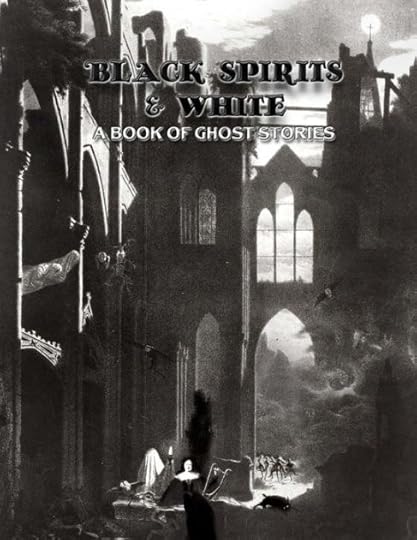
A collection of six ghostly tales by Ralph Adams Cram, ranging from the demonic to the deeply sad. Gruesome apparitions, oppressive atmosphere, and throughout it all, a profound appreciation for the haunting beauty of Europe through the eyes of an American architect.
This collection of six tales of the supernatural is an American fantasy cornerstone. "... foremost for horror fans is a small collection BLACK SPIRITS & WHITE ... hailed as one of the most extraordinary volumes of terror tales published. It includes his best-known story of a frightening journey through 'The Dead Valley,' which Lovecraft [in Supernatural Horror in Literature] singled out for praise." - Ashley, Who's Who in Horror and Fantasy Fiction, p. 58.
"Excellent local color; transitional between the Victorian personal ghost story and the Edwardian interest in supernatural evil." - Bleiler, The Guide to Supernatural Fiction 442.
"No. 252 Rue M. le Prince" is one of the very best haunted house stories. Barron (ed), Horror Literature 2-16.
- No. 252 Rue M. Le Prince, - In Kropfsberg Keep, - The White Villa, - Sister Maddelena, - Notre Dame des Eaux, - The Dead Valley, - Postscript.
Ralph Adams Cram (December 16, 1863 – September 22, 1942) was a prolific and influential American architect of collegiate and ecclesiastical buildings, often in the Gothic Revival style. Cram & Ferguson and Cram, Goodhue & Ferguson are partnerships in which he worked.
Ralph Adams Cram is one of my favorites. I was beyond delighted when I found this at Project Guttenburg. The stories are all great and nightmarish. This collection contains one of my favorite short stories ever, The Dead Valley. My least favorite was Notre Dame des Eaux. His love for architecture was just a little too much for me in this story. These are my notes for each story and my original review for Sister Maddelena and The Dead Valley. No. 252 Rue M. Le Prince- Guy's aunt dies. She was a witch that lived in a magical flat where no one ever saw you leave. She leaves her fortune to an estranged nephew, pissing off another (male) witch. He curses the flat. So Nephew and some buddies decide to debunk the curse/hauntings and stay the night. 3.5 stars. In Kropfsberg Keep- Great story about a haunted(?) Keep and a couple of ghost hunters. 4⭐/5 The White Villa- a haunted Villa 4⭐/5 Sister Maddelena- (read in october 2016) this is a nice short ghost story. although, now a days, it has become predictable it's still a nice story. 4 stars Notre Dame des Eaux- story about a madman. 3 stars The Dead Valley- (first read in December 2015) I first heard this story on the h.p. lovecraft litrary podcast. I fell in love with it. I absolutely love this story. it's about 2 guys that take a trip to the next town over to buy a dog. they come across a very disturbing landscape. read the story to find out more! it's soooo worth it :) 5 stars
American author Ralph Adams Cram’s been tentatively included in an informal canon of queer horror writers. His collection of six, suitably eerie ghost stories from 1895 primarily explores the tensions between rationality and belief in the supernatural or otherworldly, reflecting cultural anxieties of their era. There’s also a slight impression of the cautionary, as Cram frequently focuses on hapless Americans encountering frightful things in various “foreign” settings and the majority are told from the perspective of an unnamed character journeying through Europe, later joined in his travels by friend Tom Rendel. In Cram’s first offering “No. 252 M. Rue Le Prince” a group of men spend the night in the house of a deceased occult practitioner and are besieged by an unfathomable presence. Although the scenario’s not a particularly original one I loved the details Cram includes here, and the shifts between the strange and the mundane, his hero fighting sleep as a consequence of an ill-timed lettuce salad, the house’s bizarre décor, in particular the three rooms dedicated to former dastardly, demonic activities - architecture and layout are carefully chronicled, not surprising I suppose that a renowned architect like Cram paid such close attention to visual, spatial features. The less enticing “In Kropsfberg Keep” is a similar tale but told in slightly tongue-in-cheek comic tones, presumably supposed to make the denouement all the more ghastly. Of the remaining entries the standout’s “The Dead Valley” probably the most famous piece in the collection because H.P. Lovecraft singled it out for praise. It deals with a form of primeval fear linked to a place that reeks of some unnamed horror, the narrative’s a little too vague for my liking but the atmosphere Cram constructs as well as the sense of place impressed me.
This is a great collection of short stories by Ralph Adams Cram. All of them are set in Europe, usually the protagonist is an American traveler. Cram seems to have been a bit of a Francophile, but he clearly romanticized all of the continent. I found the ghost stories to be quite original and even ahead of their time. The prose is very modern and it is easy to forget that this collection was first published in 1895.
In his renown essay "Supernatural Horror in Literature," H. P. Lovecraft wrote: "In 'The Dead Valley' the eminent architect and mediævalist Ralph Adams Cram achieves a memorably potent degree of vague regional horror through subtleties of atmosphere and description."
It is not surprising to see Cram praised by Lovecraft; after reading these short tales, his influence on Lovecraft’s writing is undeniable. In fact, the first story in the collection, “252 Rue M. Le Prince,” seems particularly Lovecraftian and I think any fan of the Mythos would love this volume of Cram’s weird fiction.
Es caprichoso el destino. Dedicas tu vida a la arquitectura, a levantar casas y edificios públicos, embellecer cuanto puedes Nueva Inglaterra, de vez en cuando divulgar en manuales técnicos tu pasión por los monumentos europeos, pero 20 años después de tu muerte, resulta que un joven escritor de Providence, más raro que un perro verde, descubre que una vez, cuando eras poco más que un adolescente con la imaginación enfebrecida por los paisajes y la literatura fantástica europea, escribías cuentos de fantasmas y terror, y que esos cuentos a los que en vida no dedicaste más de un pensamiento, o incluso desdeñaste al considerarlos escarceos juveniles, eran buenos cuentos, lo suficiente como para merecer una mención de honor en un tratado sobre el horror sobrenatural en la literatura. Así, Ralph Adams Cram quedó en la historia de la literatura, al menos en la humilde historia de la literatura de terror.
En esta pequeña antología publicada por Valdemar se reúne toda la producción cuentística de este arquitecto que, como digo, siempre renegó de su etapa como juntaletras. Pese a tratarse de un aficionado al género, Adams Cram tiene oficio, y logra en este escaso puñado de cuentos crear atmosferas convincentes y buenos clímax aterradores, si bien es cierto que sus historias no destacan más que por ser correctos divertimentos fantasmales en los que destaca el amor del autor por la Europa medieval y mágica. Los relatos incluidos en esta colección son:
-El 252 de la calle M. Le Prince (***): Uno de casas encantadas, en las que el narrador es invitado por su amigo, un americano en París y único heredero de las propiedades de su solitaria tía, a pasar una noche en la siniestra propiedad. La aparición, el clímax de la historia, es lo mejor del relato.
-Vigilia en Kropfsberg (****): dos jóvenes amigos, temerarios y fanfarrones, buscan una aventura de tintes sobrenaturales: quieren pasar la noche en un castillo en el que se hayan aparecido fantasmas. Sus deseos se harán realidad con terroríficas y trágicas consecuencias.
-La Villa Blanca (***): de nuevo en casas encantadas, aunque esta vez en Italia. La repetición ya empieza a hacerse evidente aunque todavía no cansa. Una pareja de amigos pierden el último tren a su hotel, por lo que tienen que hacer noche en una villa abandonada en la que se oculta un terrible secreto.
-La hermana Magdalena (****): un cuento de apariciones que desarrolla la leyenda de la monja aparecida. En este caso, el cuento no es de terror, pero contiene un regusto gótico que deja un muy buen sabor de boca.
-Nuestra señora del mar (***): un relato que tiene como centro la iglesia de Nuestra Señora del Mar, donde seremos testigos de una accidentada historia de amor.
-El valle de la muerte (****): con diferencia el mejor cuento de la colección, el más original y extraño en comparación. Aquí no hay apariciones fantasmales, sino un influjo malsano que distorsiona el paisaje y la percepción de nuestros protagonistas. Dos jovencitos recorren los bucólicos caminos de Suecia para adoptar un perrito. Sin embargo, en el camino de regreso, parecen extraviarse en una región desconocida, en la que no hay ni rastro de vida. Un cuento extraño, incómodo, en el que se sugiere mucho pero se cuenta muy poco ¿Alucinación colectiva, fuerzas telúricas maléficas, envenenamiento? ¿Quién sabe?
-El decadente (**): este cuento no forma parte de la colección de relatos de fantasmas que publicara en vida Adams Cram. Y cómo se nota. El relato se compone de una interminable sarta de chorradas pseudointelectuales entre un joven decadente hasta el culo de opio y su compañero, un socialista convencido que va cayendo rendido bajo la narcotizada retórica de su amigo. Al menos se agradece la buena mano de Adams Cram para escribir diálogos largos pero no insoportables.
-De cómo cabalgó Jamie por el rey (***): una aventurita inofensiva que tiene por protagonista a un joven lord escocés y su pony. Simpático.
I greatly enjoyed this collection, particularly the lengthy and excellent intro by Stefan Dziemianowicz. While it was a brief collection (6 stories from Black Spirits and White and 2 additional uncollected stories) I felt that the spectral stories in the first 6 were well done. The two standouts for me where No. 252 Rue M. Le. Prince and The Dead Valley. Cram did a masterful job developing an atmosphere of dread in both of these.
The Decadent was another story that was outstanding, but hardly part of the spectral realms. Overall, this was a fantastic collection published by the ever outstanding Tartarus Press.
Ralph Adams Cram siempre será conocido por ser un arquitecto y profesor universitario de prestigio, autor de obras de no ficción relacionadas con la arquitectura. Menos conocida es su faceta de escritor de ficción, por llamarla de alguna manera, ya que únicamente publicó los ocho relatos incluidos en el presente volumen, de los cuáles seis de ellos formaron la antología Black Spirits and White, publicada en 1895. Pero Cram siempre se avergonzó de estas obras de juventud y prohibió su reedición; en vida sólo autorizó un par de reimpresiones. Hasta que llegó un tal H.P. Lovecraft y su ‘Horror sobrenatural en la literatura’, en donde opinaba que el relato de Cram ‘El Valle de la Muerte’, era una de las mejores historias de terror jamás escritas, algo que suscribo absolutamente. Con el respaldo del Maestro de Providence, Cram entró en el terreno de la leyenda.
Estos son los ocho relatos incluidos en ‘El Valle de la Muerte y otros cuentos de fantasmas’:
El 252 de la calle M. Le Prince (*****). El narrador, de viaje por Francia, es invitado por su buen amigo d’Ardéche a visitar la casa de número 252, de la que se dice está maldita. En la visita les acompañarán dos expertos de lo sobrenatural. El plan, llegar al fondo del asunto. Gran cuento de casas encantadas.
Vigilia en Kropfsberg (****). Dos jóvenes, descreídos de la existencia de los fantasmas, deciden pasar la noche en el castillo de Kropfsberg, ya en ruinas, para divertirse. Buen relato, con regusto gótico.
La Villa Blanca (***). El narrador y su amigo Tom andan por tierras italianas, y deciden hacer noche en la Villa Blanca, que esconde un terrible secreto. Buen cuento, de nuevo con tintes góticos.
La hermana Magdalena (***). De nuevo tenemos al narrador y su compañero de andanzas Tom Rendel de visita por el valle del Oreto, en Italia, donde el Cavaliere Valguanera les invitará a pasar unos días en la casa del convento de Santa Catalina. Buen relato con monja fantasma y regusto gótico.
Nuestra Señora del Mar (****). La residencia Bergerac se ha convertido en una colonia veraniega de pintores, donde los artistas tienen como nexo común la iglesia de Nuestra Señora del Mar. Todo transcurre pacíficamente hasta el trastorno del joven Jean. Buen relato de locura y amor.
El Valle de la Muerte (*****). Dos niños de excursión caen bajo el influjo terrorífico de un valle asolado por inexplicables fuerzas de la naturaleza. Gran relato, donde prima la magnífica ambientación.
El decadente (**). Supuesto homenaje a la particular visión de la vida de Oscar Wilde, donde se enfrentan socialismo y monarquía. Flojo.
De cómo cabalgó Jamie por el rey (**). Relato de aventuras de corte juvenil. Regular.
Unassuming Parisian house hides the remnants of its previous inhabitant’s occult debauchery; in a crumbling Italian villa, bordering on the „deathless ruins of a dead civilization“, a ghostly reenactment of a tragedy that led to ruin of one noble house is being played out; in an abandoned convent, ghost of a beautiful young nun seeks rest; a wrong turn is made in seemingly tame Swedish woods, revealing an unearthly corruption. Out of these six stories, opening and closing ones are chilling horror yarns – former is an evocation of that Huysmansesque milieu of fin-de-siecle Paris‘ occult underworld, while the latter is concerned with an inexplicably, horribly tainted patch of landscape (this tale, „The Dead Valley“, earned high praise from Lovecraft – indeed, one recognises in it one of the sources of his „The Color Out of Space“). Middle four tales, while ghostly (in one way, or another), are melancholy and nostalgic rather than scary. Ghosts of Old Europe are evoked, with some gorgeous and detailed descriptions of its landscapes and architecture. Their cores are perhaps formulaic – one will encounter even such gothic staples as the bricked-up maidens – but they are well told, dignified and restrained, with this genuine humanity to them.
This is a collection of six short stories (found here at Gutenberg):
No. 252 Rue M. Le Prince A night spent in a haunted/cursed Paris home.
In Kropfsberg Keep A night spent in a haunted German castle.
The White Villa Missing a train means spending the night in an old Italian villa.
Sister Maddelena In Sicily a nun's ghost seeks rest.
Notre Dame Des Eaux A picturesque church and a madman.
The Dead Valley Exactly what the title says.
The stories are old fashioned and interesting - not the best short stories of the era that I've read, and I waffled between two and three stars on this. Still, very well worth a read. I think the Dead Valley has been anthologized elsewhere because I feel sure I've read it before.
Este libro merecería las cuatro estrellas si no fuera por los dos últimos relatos que completan la totalidad de la narrativa de este arquitecto avergonzado de su pasado escritor. Pues esta antología es realmente buena, salvo por las dos obras de no terror que la cierran. No obstante, si obviamos estos dos últimos relatos, estamos ante una recopilación de historias de fantasmas bastante notable. Los cuentos que más me han gustado han sido «El 252 de la calle M. Le Prince», un fantástico acercamiento a las casas embrujadas, y «La hermana Magdalena», sobre un convento con una hermosa presencia. Pero el resto no desmerecen tampoco, en especial «La villa blanca» y «El valle de la muerte».
Me apena profundamente que el escritor decidiese apartar de por vida su labor como narrador y que incluso se avergonzase de ella, pues tenía gran calidad. Es absurdo que pudiera sentir vergüenza de ello y que incluso llegase a prohibir la reimpresión de sus cuentos. Parece, como puede extraerse de la lectura de los cuentos finales, que tenía una personalidad un tanto peculiar. Valoremos al menos nosotros lo que él no supo...
A collection of horror short stories written in 1895. The writing is very good, especially the descriptions of the creepy places these ghost/spirits inhabit. The author makes you feel like you are right there with the characters. The style reminded me a bit of M. R. James, and the last story really had a Lovecraftian feel to it. The horror has more of a slow build, but is still effectively creepy. It can be found free in a variety of ebook formats at Project Gutenberg here: https://www.gutenberg.org/ebooks/26687
Cram will never be a major figure in literature, but as far as the uncanny goes, he's one of the founding fathers. "The Dead Valley" is one of the most troubling and memorable settings ever to be encountered in horror and dark fantasy, and the rest of the stories are quite good too, with an architect's eye for the way location can influence the tale's feeling.
This is a collection of six short-stories mostly, it seems, inspired by specific buildings, and dealing with supernatural goings-on. A three-star rating is probably right for the set as a whole, but it's very much a mixed bag. A few brief notes:
No. 252 Rue M. le Prince: A weird tale rather than a ghost story and not, despite one or two decent effects, a terribly good one. Quite a good example of how not to write a short story.
In Kropfsberg Keep: A story in the fine old gothic strain with a nice touch of ambiguity about the supernatural events. This one fits together much better than its predecessor.
The White Villa: An M.R.James-ish sort of a ghost story, albeit a little more active and perhaps a touch cruder in execution.
Sister Maddelena: Gentle rather than scary. On the whole, another dud.
Notre Dame des Eaux: Gothic again and probably the best of the bunch so far, but neither a ghost story nor a tale of the supernatural.
The Dead Valley: This is the one cited in Lovecraft’s essay, but is it any good? Actually, yes. It’s a nicely shaped weird tale without too many distractions.
I really wanted to love these stories particularly since the author was a contemporary of Lovecraft who admired the last story The Dead Valley. Sadly, most of the stories felt stale. I doubt these stories were considered scary even in the time they were written in.
One thing they had going for them was the lush, descriptive writing. The author would have been an excellent travel writer. There were some beautiful descriptions of France in the late 1800's. The last story was the best of the lot. Strange and surreal, but not all that frightening, and too brief to let the atmosphere get a good grip on me.
Excellent collection of highly literate ghost stories from the turn of the twentieth century that won praise from no less an expert than H.P. Lovecraft. But his literary work is barely mentioned in Cram's lengthy Wikipedia biography. It was really his work as an architect - New York's Cathedral of St. John the Divine is his masterpiece - that won him such renown that he had his picture on the cover of Time Magazine in 1926. When one looks at that photo and others on Wikipedia, Cram appears so sober and upright that he is the last person one would ever suspect of dabbling in "weird" fiction.
I've loved Cram's buildings and nonfiction writings (on architecture, of course) for years, so when I discovered that he wrote ghost stories, too, picking this up was a no-brainer! They were quite fun. Told as if the man himself had experienced them, mostly during a trip to Europe. Brief enough that I could tear through them in just one day, but also different enough to intrigue. (The one story that was explicitly Catholic in nature reminded me vaguely of a Father Brown mystery.) Delightful!
Most of the stories in this collection have one moment in them that is great, whether that be a description of a room or a revelation about a character, but the bulk of the writing is pretty typical fair for this genre and period. Lovecraft was, apparently, a fan of the collection's final story, and the tone and style bear a certain resemblance throughout.
As the stories are short, are available for free via Project Gutenberg, and usually contain one truly excellent moment, they are worth a read.
The best goddamn ghost and weird fiction story collection I have ever read! Undisputed master in horror atmosphere, even I enjoyed it more than Algernon Blackwood atmospheres, and to say that is almost a blasphemy as Blackwood is considered by majority as the master of horror atmosphere. I love the Willows and The Man who the Threes Loved and Descent into Egypt, they are truly incredible, but I was amazed that this only and single work of this Architect had so much power in his stories. Specially Notre Dame des Eaux as well the already mentioned by Lovecraft The Valley of Death.
No. 252 Rue M. Le Prince – Ruined by the Frenchness of it. A group of guys stay for a night in a wicked aunt’s old place where she held cult gatherings. A Lovecraftian monster attacks one of the guys. The house burns while they rushed their friend to the hospital. 3 Stars
In Kropfsberg Keep – Pretty good horror story. 2 self-proclaimed ghost hunters stay in an abandoned castle where a count killed all his guests at a party by burning them alive and then hanged himself. Good atmosphere and supernatural event. The beginning where he sets it up is a bit tedious and the ending is kinda abrupt, but the actual story event was great. 4 stars.
The White Villa – Too much setup. 2 guys stay in a ruined mansion and 2 ghosts re-enact the murder with the explanation of the event coming at the end. Conventional. 2 Stars.
Sister Maddelena – Nun ghost seeks eternal rest. Not really scary and more emotional. 2 stars.
Notre Dame des Eaux – Guy goes insane and turns feral scaring a girl. 1 star.
The Dead Valley – Cram’s best written story. Two boys stumble upon a mist-filled valley in the hills and they hear a piercing cry. Probably still liked “In Kropfsberg Keep” better as a horror scare but Lovecraft liked this one especially probably due to how the monster mirrors his own creations. 4 stars.
Ralph Adams Cram was de bekendste Amerikaanse architect van de neogotiek (zeg maar de Amerikaanse tegenhanger van Pierre Cuypers). Hij schreef ook wat verhalen, waaronder deze bundel. Het zijn echte 'ghost stories', maar met - niet vreemd dus - veel aandacht voor de architectuur van de huizen. De ene keer meer romantisch, de andere keer meer studentikoos (studenten doen een weddenschap wie in een spookhuis durft te overnachten e.d.). Opvallend is het postscriptum van de schrijver: 'There seem to be certain well-defined roots existing in all countries, from which spring the current legends of the supernatural; and therefore for the germs of the stories in this book the Author claims no originality. (...) If the Author has succeeded in clothing one or two of these norms in some slightly new vesture, he is more than content.' Origineel zijn de verhalen inderdaad niet, en - hoewel zeker niet slecht - lees ik liever de 'ghost stories' van M.R. James: deze zijn enerzijds traditioneel, maar zeer goed geschreven en erg spannend. Eén verhaal is niet echt een 'ghost stoy', maar wel 'supernatural', en wijkt ook qua stijl wat af van de rest: The Dead Valley. Dit verhaal vond ik het sterkst en is te lezen als een 'weird tale'.
Interesting that author Ralph Adams Cram was by training and profession an architect, and yet in Black Spirits and White he demonstrates great skill at designing ghost stories in place of buildings.
Unsurprisingly, the author pays special attention to the settings of his tales—which often take place in some variation of a haunted house—and the architectural details thereof. This is a nice, creative and concise collection of ghost tales with some memorably unsettling moments. S. T. Joshi included the final tale, "The Dead Valley"—which is perhaps the most 'weird' of the stories in this volume, and the only one not set in a specific building—in his fine anthology, Great Weird Tales.
Black spirits and white, Red spirits and gray, Mingle, mingle, mingle, Ye that mingle may.
This is a real treasure of a book. Written in 1895, Ralph Adams Cram was way ahead of his time. H.P. Lovecraft wrote about him and it's clear that Cram influenced Lovecraft. The stories (and book) are short and are a quick read. A stormy night in front of a roaring fire in the fireplace would be a perfect setting to read this one. I would've given it a higher rating but Goodreads doesn't allow half-stars, otherwise this would've been a 4.5/5.
One last note, I had a different edition than the one listed in Goodreads. Theirs is listed as being out of print but mine was still in print. ISBN: 9781535299930, if you're having trouble finding it.
Si bien el mercado de las historias de fantasmas está bastante saturado, debo decir que este libro tiene aspectos bastante interesantes. Su autor, como arquitecto de profesión, supo describir muy bien esos lugares góticos y opresivos de la época victoriana, a la vez de transformar esos ambientes en otro personaje más de la historia, con características especiales. Mis relatos favoritos fueron El valle de al muerte y La villa blanca. También mencionaría un relato que se incluye en esta edición de Valdemar, titulado El decadente, que aunque no tiene nada que ver con fantasmas, es una aguda crítica al socialismo y su particular forma de narrarlo, a través de los diálogos de los personajes, la hace entretenida.
Aunque Ralph Adams Cram (1863-1942), ya como reconocido arquitecto con una larga trayectoria profesional, considerase las historias fantásticas aparecidas en el presente volumen como una suerte de pecado de juventud, lo cierto es que historias como "El valle de la muerte" han supuesto una inspiración para generaciones de escritores contemporáneos y posteriores. El propio H. P. Lovecraft alababa sin tapujos la anterior historia y, cualquier aficionado al género lovecraftiano, entenderá porqué nada más leerlo; esa sensación ominosa de encontrarse ante un terror indefinido, producido por alguna entidad arcana y maligna, que más que mostrarse abiertamente, se intuye.
A curious collection of Victorian-era ghost stories written by a well-regarded American architect of his time. Most of the tales in this collection involve an American traveling to Europe and encountering a supernatural phenomenon, often in connection to a local architectural wonder. This book would have fallen into further obscurity if Lovecraft had not mentioned his love for the story "The Dead Valley". Its well-written atmospheric descriptions make it the most intriguing tale for me as well. Although none of these stories are masterpieces in my eyes, they are effective supernatural tales for someone whose profession was not even in creative writing.
These stories were really enjoyable. Melancholy and sinister throughout, and the horrors in them begin to feel at times like the cosmic horror of the 20th century and less like those of the romantic ghost tales of the 19th century. My understanding is that Lovecraft read these stories and was influenced by then, and I can see it, although I can equally see some Poe influence on Cram. Most of all maybe, the settings and mood were very palpable. These stories are little known today, which makes their dark power even more of a surprise.
Appropriate title, with malicious ghosts defending their turf and non-malicious ghosts who are haunting because something has been left undone. Pretty generic, though; I barely remembered the stories after I read them. Cram does a nice job of setting scene, with detailed descriptions, but the live characters are as generic as the dead ones. There are better out there.
I have seen a couple of these stories anthologized, and was pleased to find the entire collection. Every story is well-written and evocative of the 1800s. Recommend!