Jump to ratings and reviews
Rate this book

Oswald Bastable #1

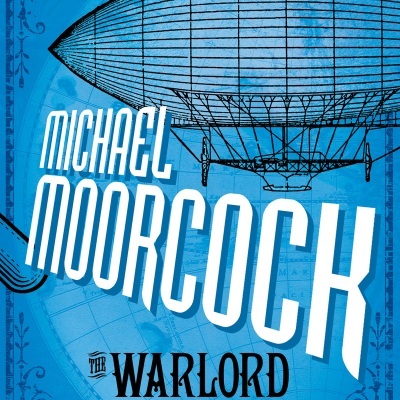
The Warlord of the Air

Rate this book
Suppose that a few of our present inventions had been made earlier, and others not discovered at all? How would the last century have evolved differently?This is the story of Oswald Bastable, a Victorian captain who found himself in such alternate worlds. It is based on notes handed down to Michael Moorcock from his great-grandfather. It's a story of a world of empires secured by airships, and a Chinese genius who invented the means of overthrowing the West's power!

192 pages, Mass Market Paperback

First published January 1, 1971

80 people are currently reading
2113 people want to read

About the author

Michael Moorcock

1,206 books3,742 followers
Michael John Moorcock is an English writer primarily of science fiction and fantasy who has also published a number of literary novels.

Moorcock has mentioned The Gods of Mars by Edgar Rice Burroughs, The Apple Cart by George Bernard Shaw and The Constable of St. Nicholas by Edward Lester Arnold as the first three books which captured his imagination. He became editor of Tarzan Adventures in 1956, at the age of sixteen, and later moved on to edit Sexton Blake Library. As editor of the controversial British science fiction magazine New Worlds, from May 1964 until March 1971 and then again from 1976 to 1996, Moorcock fostered the development of the science fiction "New Wave" in the UK and indirectly in the United States. His serialization of Norman Spinrad's Bug Jack Barron was notorious for causing British MPs to condemn in Parliament the Arts Council's funding of the magazine.

During this time, he occasionally wrote under the pseudonym of "James Colvin," a "house pseudonym" used by other critics on New Worlds. A spoof obituary of Colvin appeared in New Worlds #197 (January 1970), written by "William Barclay" (another Moorcock pseudonym). Moorcock, indeed, makes much use of the initials "JC", and not entirely coincidentally these are also the initials of Jesus Christ, the subject of his 1967 Nebula award-winning novella Behold the Man, which tells the story of Karl Glogauer, a time-traveller who takes on the role of Christ. They are also the initials of various "Eternal Champion" Moorcock characters such as Jerry Cornelius, Jerry Cornell and Jherek Carnelian. In more recent years, Moorcock has taken to using "Warwick Colvin, Jr." as yet another pseudonym, particularly in his Second Ether fiction.

Ratings & Reviews

What do you think?
Rate this book

Friends & Following

Create a free account to discover what your friends think of this book!

Community Reviews

5 stars
393 (20%)
4 stars
725 (37%)
3 stars
658 (33%)
2 stars
128 (6%)
1 star
36 (1%)
Displaying 1 - 30 of 163 reviews
Profile Image for Glenn Russell.
1,511 reviews13.3k followers
Read
August 7, 2022


Rollicking, ripping action packed adventure yarn.

The Warlord of the Air - in the spirit of Balzac and Maupassant, a good old-fashioned frame tale. Actually, our British author goes one better, giving us a frame tale within a frame tale. And this novel is the first of three in his classic steampunk trilogy Nomad of the Time Streams.

Here's the setup: Michael Moorcock comes into possession of a manuscript typed out by his Grandfather, a gent also by the name of Michael Moorcock. Turns out, back in 1903 Grandpa served as scribe for one Oswald Bastable, a man who over the course of several days and nights related his fantastic, outrageous adventures - both in 1902 and 1973!

I'll leave the hows and wheres for each reader and make an immediate shift to the bulk of the novel: Bastable's bold, astonishing tale, presented here as a highlight reel:

KINGDOM CLAIMING TO BE OLDER THAN TIME
Bastable, a handsome chap in his late twenties, begins as the beginning: despite his young age, back in 1902 he was Captain Bastable who lead a small army into the upstart Himalayan land of Kumbalari (they dared kill a few British officials manning a frontier station within their borders) to make sure this race of cruel, ignorant, dirty but proud people recognized the supreme, rightful authority of the British Empire.

Events move apace until their leader, Sharan Kang, invites the good Captain and a handful of his men to his palace in Teku Benga. Upon entering this walled mountain city, Bastable can't imagine how such a city was built out of the crags of the Himalayas as many of the buildings “looked as if they had been plucked up and perched delicately on slivers of rock which could scarcely support the weight of a man.”

The more we listen to Bastable's descriptions of the city's barnyard stench and the sickening mixture of architectural styles with sculptures formed into “serpent finials, fabulous monsters grinning or growling from every corner, tigers and elephants standing guard at every doorway,” the more Teku Benga appears to be not only the stuff of fabled Oriental exotica but a maddening, diabolical cross between the mythic city of Shambala and Kurtz's Heart of Darkness Inner Station. Any bets on an unexpected spiraling down for Captain Bastable and his band of not so merry men?

ACTION AND MORE ACTION
Many reviewers give away far too much. A reader deserves to follow Bastable's adventures and misadventures with fresh eyes. But I will say Captain B faces the challenge of being drugged and then waking up in the aftermath of an earthquake only to face a mind-bending (understatement) time shift.

POLITICS AND SOCIETY
A pair of Bastable reflections: One: “All over the world the British were settling and administering – and so civilizing – even the most inaccessible areas, thanks to the invention of the airship.” Two: “And as for the seamier side of life, well, there was hardly any at all, for the social and moral evils which had created them had been abolished. The Suffragettes of my own day would have been happy to hear that women over thirty now had the vote and there was talk of extending the franchise to women of twenty-one.”

One of the more charming features of the tale: a man from the world of 1902 observing the tale's world of 1973.

SUPERSIZED STEAMPUNK
“For the entertainment of the passengers there were kinemas, ballrooms, phonographs, deck sports and party games, restaurants – all anyone might desire concentrated in a space of a quarter of a mile floating two or three thousand feet above the surface of the earth.” Hmmm. I wonder if those kinemas are something like the “feelies” from Brave New World?

A key invention of retrofuturistic technology: the airship. Michael Moorcock, prime precursor of what has come to be known as Steampunk, lets it fly – his airships here can be ten times as large as the largest ocean liners. The QE2 x 10. Now that's colossal! Are there any doubts we're talking alternate 1973 history?

Fans of steampunk will especially take to The Warlord of the Air since a good chunk of the novel's drama transpires up in the clouds.

WHAT'S IN A NAME?
Michael Moorcock, prolific real life author, always leaves enough room for a reader's imagination. Case in point, as part of the fun we can make our own connections revolving around characters. For example: there's a Captain Joseph Korzeniowski (Joseph Conrad's Polish name), ah, another JC eternal hero, and the captain had a fine former second officer named Marlowe (perhaps a conflation of Christopher Marlowe with Marlow the sailor/meditating Buddha of Heart of Darkness fame). The list goes – Che Guevara, Lenin, Churchill, Kennedy, Humphrey Bogart, Greta Garbo, Mick Jagger, even a fashionably dressed young man with long black hair: Cornelius Dempsey - but we need not be bound by our own twentieth century cause we're talking alternate history here.

CORNBALL CAPTAIN
Recall I alluded to Bastable's misadventures. This term surely applies when our hero must deal with a bloated buffoon who happens to be the leader of teenage scouts. “His comical appearance was heightened by the look of stern self-importance on his red, lumpy face.” And the name of this poopstick? Captain Reagan. Bullseye, Michael Moorcock! So prescient. Ronald Reagan was only a B actor turned California Governor back when Sir Michael wrote Warlord.

SHE'S BEAUTIFUL, AND THEREFORE TO BE WOOED
“Behind him stood a pretty girl dressed in a long, black traveling coat. Her short, dark hair framed her heart-shaped, serious little face and she stared at me curiously with steady grey eyes.” What's a tale of adventure without the presence of a stunning beauty? Also aboard a colossal airship is none other than luscious lovely Una Persson, one of the female luminaries from the Jerry Cornelius novels. Hang in there, Bastable! You might hit a streak of luck, romance-wise.

TRUE WARLORD
Michael Moorcock lets us know he's always had an enthusiasm for late-Victorian and Edwardian fiction. Indeed, this novel can be seen as a tribute to writers like H.G. Wells and Jules Verne. Grab a copy and read about the many twists and conundrums Oswald Bastable must face, especially when he encounters General O.T. Shaw, a man who proves beyond doubt he is the true Warlord of the Air.


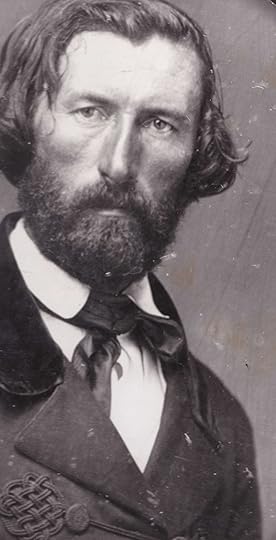
Rare photo of Oswald Bastable

"Each ship was a thousand feet long. Each had a hull as strong as steel. Each bristled with artillery and great grenades which could be dropped upon their enemies. Each ship moved implacably through the sky, keeping pace with its mighty fellows."


British author Michael Moorcock, born 1939
Profile Image for J.G. Keely.
546 reviews12.7k followers
February 15, 2013
As ever, Moorcock is a wry, clever author full of ideas and insights, but he ends up rushing from one moment to another when I wish that he would let his stories play out. The characters and their relationships were intriguing and promising, but Moorcock tends to fall back on exposition instead of showing the development of his characters and plot through interaction and carefully-constructed scenes. The scope of his tales rarely seem to match the length of his books.

I have great appreciation for the freedom he allows his imaginative drive, so that he has no compunction about sticking a bit of inexplicable Lovecraftian time travel in as a framing story for his zeppelin combat narrative. That sort of pulp zaniness combined with an authorial voice that can be subtle and clever and precise will keep drawing be back to Moorcock's writing--indeed, he is an inspiration for authors of speculative fiction, if only he'd spend a little more time polishing up.

Some of his political satire was a bit rough, lacking in the precision that makes satire truly effective, but other sections showed a much lighter, knowing touch. Likewise, there were errors in his structure, particularly the killing off of a certain character in a large battle that seemed entirely unnecessary--there was no apparent reason that he needed to be sent into sudden danger when he was, especially as the conflict could have been (and eventually was) resolved by a much simpler method. It seemed he was only thrown to the wolves to procure a bit of drama, which seemed rather cheap to me.

Hopefully as the series continues Moorcock will take a bit more confidence in his voice and let the story play out instead of interposing interesting scenes and rather more bland exposition.
Profile Image for Amanda.
282 reviews186 followers
November 21, 2009
Very good, if your into steampunk, which i very much am. It was so neat to read some that was written in the 70's and compare it with the steampunk genre today. This is the first book in a 3-novel volume i'm reading about Oscar Bastable called The Nomad of Time, if you have a more recently published copy, it is now called The Nomad of the Time Streams.
Moorcock's story, if it wasn't for the fantastical aspects, very much reminded me of George Orwell actually, in the way it covered British colonization, imperialism in general and war. Set in an alternative history where life is similar to ours but some inventions have been created earlier and some not at all. Some cameos from people whoare suposed to represent- Mick Jagger, Lenin and Ronald Reagan as a childish, tempermental Boy Scout Troup leader. This was my first Moorcock book and i will be reading more; it is extremely well-written in my opinion. Great book- air ships, time travel, and he's good at describing the mundane and making it great..
Profile Image for Stephan.
284 reviews7 followers
May 20, 2019
This book is certainly well-written and interesting. It starts rather slow, with Moorcock explaining how he found a manuscript left by his grandfather, with the grandfather explaining how he met the main protagonist who dictated said manuscript, and then the main protagonist, Oswald Bastable, describing how he managed to get from a punitive expedition in the 1902 Himalaya to the 1973 British Empire build on giant airships. But the speed of the action increases, and Bastable goes through what appears to be a fairly conventional adventure stories, with air pirates, rowdy Americans, and everything. But underlying this is a strong critique of imperialism and colonialism, subverting not just Bastables' morals as an upstanding British officer, but also some of the readers preconceptions about politics and adventure literature.

On the downside: While easy enough to read, and, after a slow start, well-paced, the books writing does show its 1971 vintage. If I remember correctly, there are only two women in the book - and for one we primarily hear about her ankles. The other is a physicist and anarchist and, IIRC, takes a bigger role in other instances of Moorcocks multiverse, but remains rather anaemic here.

Recommended as a good yarn with some unexpected depth, and a very early example of steampunk.
Profile Image for Derek.
1,382 reviews8 followers
April 1, 2015
In general the book was more successful in its ideas than in its story: the author gets carried away with the description of life in alternate 1973 and the exploration of the results of unchecked imperialism, and then skimps on the story aspects of plot and character. Much of it felt cramped, with the Warlord of the title only appearing some two-thirds through, and then Bastable experiencing a relatively fast change of heart to join him. This conversion is shown in a compressed time scale without a personal event to anchor it, and as a result it felt like I was being told instead of shown, and rushed through the author's themes of imperialism and racism.
Profile Image for Daniel.
164 reviews15 followers
February 28, 2023
Moorcock tells this story in an alternative future, by the eyes of a typical soldier of the British Empire who is sent to an alternative future where the British Empire seems to have created an utopia. At least in the main character's eyes. The British Empire after years without going to war ( the technology is not as advanced as it was back in our actual 1973) which leads to apparent economical and social advances. We will know later that the Empire is in fact lying in fragile foundations. Although heavily biased to left propaganda, this is an awesome and seminal steampunk fantasy book.
Profile Image for Craig.
6,330 reviews178 followers
April 29, 2020
This first Oswald Bastable novel was steampunk before there was a name for such a thing.... before there was anything-punk, come to dwell on it. It's an alternate-history political novel very much in the tradition of Wells, told with the found-manuscript framing made so popular by Burroughs. Set in a 1973 world in which World War II never happened, it shares some common themes and characters with other multiverse tapestry pieces, but isn't an integral part. It's more slowly paced than his sword-adventure books, but less serious Reagan and Jagger have walk-ons) than much of his later, more consciously literary work. It's good stuff.
Profile Image for Rob.
181 reviews4 followers
January 31, 2021
I didn't even know this book existed until a friend on Goodreads mentioned it to me, and I'm so glad he did. Thanks for the recommend Jorge.

I love the steampunk idea but it often falls short for me. Retribution Falls is by far the best I've read to date. But I think Moorcock's The Warlord of the Air is something a little different, maybe that's because it was written quite a while back, it may have even been one of the first steampunk novels, I'm not sure. But it is something a little special.
This is a short book at 222 pages and therefore couldn't spend too much time building up the world we were roaming around in, but even with that I still felt very much immersed, I could picture, feel, being there. I want to say this book is very much of its time, but of course, this time never existed. And I for one would never have guessed this was written in the '70s, it stands up so well that it doesn't feel dated at all to me.

I really enjoyed the beginning of this. It felt just like those old classics in its telling. Fantastic stuff.

My only criticism is that the third quarter of the book was a little rushed. I would have liked to have dwelled on Bastable's predicament between downfall to revolutionary a little more. But that's just me trying to think of an issue, it's really not that big a deal.

In short, I'd say, a must-read! And yes, I've already bought the next two books in the series.
Profile Image for Andrew Lasher.
56 reviews9 followers
April 26, 2010
Oswald Bastable IS steampunk. There may have been earlier examples of the genre, and perhaps there are later examples that more solidly explore the ideas behind steampunk, but the Nomad of the Timestreams trilogy is the definition of steampunk to me.

While a dimension hopping, time traveling Oswald Bastable might seem to be a hard pill to swallow, it is written with such an honest face that not only could I suspend my disbelief, I could almost turn full circle and believe that I was reading a historical text.

Moorcock used the conceit that the novel was copied down by his true grandfather and that even adds to the illusion. Perhaps the political subtext is laid on a little thick in the way that Moorcock represents certain historical figures, but even these touches add to the purported reality of alternate dimensions.

If you have any interest in steampunk, I couldn't advise a better trilogy than the Nomad of the Timestreams to introduce the genre. This is a must read.
Profile Image for Checkman.
606 reviews75 followers
April 14, 2015
3.5 Stars

Intentionally written in the style of H.G. Wells as well as the pulp science fiction of the early 20th Century (seePhilip Francis Nowlan), but with modern (late sixties and early seventies) sensibilities. Having been a fan of this type of science fiction since my childhood I found "The Warlord of the Air" to be great fun. Mr. Moorcock combines Victorian and mid-twentieth century attitudes and throws the story at us with a wink since the inside joke is that we (the readers) already know that it's an alternative history story. Typical of this type of fiction character development is minimal and the plot relies on improbable events taking place to move it forward. There are other reviewers who have taken issue with this, but if you are familiar with the older science fiction novelists then you won't have any trouble with "The Warlord of the Air". This is my first Michael Moorcock novel and I think I'll try another one.
Profile Image for M. Jones.
Author 7 books34 followers
June 26, 2021
Long on politics, short on action and adventure. OK, so it takes all sorts, but this is my review and I felt like I was reading a pamphlet (which is not to say I do or don't disagree with the sentiments, just this is fiction and I prefer fiction to be fun). I'd also quibble with the status of this book as a steampunk classic. Not much 'steam' and pretty easy on the 'punk', too. It's dieselpunk, if anything. The presence of a few airships in a book does not a steampunk classic make, so look elsewhere if that association is what drew you to this book. As readers of this review have rightly pointed out, that's not Moorcock's fault, (see further comments below), but now that I've read more Moorock, I think the 2 stars are warranted independently of this work's dubious steampunk status.
Profile Image for Tony Calder.
700 reviews17 followers
January 27, 2022
Michael Moorcock, one of the most prolific of British SFF writers, was at his most prolific in this period. This book is the first of the Oswald Bastable trilogy - Bastable being one of the less well-known manifestations of the Eternal Champion.

Written 16 years before steampunk became "a thing" with Jeter's 'Infernal Devices', this proto-steampunk novel is a mix of steampunk, alternate history and the multiverse. It is also one of the more overtly political novels of this period of Moorcock's career.

This is something different from an author known for being different.
Profile Image for A.M. Steiner.
Author 4 books43 followers
January 9, 2021
The steampunk adventures of Oswald Bastable, a Victorian soldier lost in time.

Lauded as one of the stories which established the steampunk genre, Warlord of the Air sees Oswald Bastable, a well intentioned Victorian soldier, catapulted into a future in which the British Empire never fell, the world wars never happened, the streets are crowded with electric cars and the skies with airships. Moorcock takes the adventurous principles of HG Wells and Jules Verne, and injects into them his own political sensibilities, wacky late 60s/early 70s freakadelia, and a sense of pacing and fun that surpasses the efforts of either. The book is the very definition of a ripping yarn. Is it as profound as your typical Wells novel? absolutely not, but it was and is more profound than 99% of the pulp science fiction aimed at teens that gets published back then and now. You see the world through Bastable's eyes and learn as he learns. What starts as a gentle ribbing of Victorian sensibilities and ideas of cultural superiority and "the white man's burden" - Bastable initially believes he has been transported into some future utopia, slowly becomes something far more serious and unsettling.

I'm very surprised by the low rating on Goodreads. Moorcock is well respected, and this novelette has Moorcock (at least in his youthful form) operating at peak powers. The pacing is terrific, the themes are properly explored, the characters well-developed and the ideas original and thought-provoking. I will certainly read the remainder of the Trilogy some time soon.
Profile Image for Jonfaith.
2,145 reviews1,745 followers
October 29, 2019
Very much an entertainment, to coin Greene’s use of the term. Steampunk with a wide net of allusion from Conrad, Lenin and TE Lawrence to the fumbling bigot Reagan, I enjoyed this, I’m not sure it engendered a great deal of thought. There in that silence, that pause, remains the other books in the series. I’m not adept at finishing cycles.
Profile Image for Charles Dee Mitchell.
854 reviews69 followers
July 5, 2013
In 1971, Michael Moorcock receives from his father a box of his grandfather's, and namesake's, papers. In the box is a typewritten manuscript prepared by the first Michael Moorcock in the year 1903. It is the transcript of a narrative related to the elder Moorcock by Oswald Bastable, an opium-addicted stowaway he encounters while taking a kind of rest cure on Rowe Island in the Indian Ocean. (Rowe Island is Moorcock's -- our Moorcock's -- invention.)

Bastable was a British officer serving in the Raj in 1902. He had been sent on dangerous expedition into Nepal to put down a potential rebellion by one Sharan Kang, a sorcerer leader based in the remote fortress of Teku Benga. Bastable is a shattered man, and over the next three days Moorcock records his remarkable tale. In Teku Benga, Bastable and his men are drugged, lost in the labyrinthine maze of the temples at Teku Benga, and victims of what appears to be an earthquake. When Bastable regains consciousness, his clothes are in tatters, the city is destroyed, and a chasm now separates him from any hope of return. But he is rescued by a vast air ship. The year is 1973.

Warlord of the Air is Moorcock writing in a Wellesian mode and the first of his Nomads of Time trilogy. The story brings together three time sequences. Moorcock the writer in 1971 is reading his grandfather's 1903 transcription of adventures that Bastable claim took place in 1973. The reader can write off Bastable story as opium-induced ravings, since what he has to say about 1973 is so far off the mark of what we, and Moorcock, Jr., know. But Moorcock's grandfather is inclined to believe the young man, and we should be as well. Just because Bastable has travelled into the future, it doesn't mean that it is our future. In the same sense, Bastable suspects that the present he has returned to is not exactly the present he left that year before in Teku Benga.

Bastable is awestruck and delighted with the future world his discovers. It is a colonialist utopia. All those benign powers he knew from the turn of the twentieth century control their colonies with a firm but just hand, although there remain a few warlords in China and no right-thinking Englishman could really approve of how things are handled in Russians and Japanese territories. But there has been no serious war for seventy years and as his rescuer, Major Howell, assures him things are going along swimmingly. At that moment a bomb explodes nearby.

Major Howell's face was suddenly grim and white and his dark eyes blazed with anger,
"What was that?"
"Bomb"
"Here?"
"Anarchists, Madmen, European troublemakers, almost certainly...Germans - Russians - Jews, they've all got an interest in the disruption of order."


Damn those malcontents. Bastable instinctively does not approve of them. The rest of Moorcock's short novel will be Bastable's education in the ways of this new world, the flaws in this utopia, and an account of his hero's difficult transition from faithful soldier of the Raj to one aligned with the revolutionary movements of the day.

As an exercise in literary style, this is the most entertaining of any Moorcock book I have read. He is writing in the 1970's what purports to be a transcript taken in 1903. The future he describes, as comically off-the-mark as it may be, is true to the vision we can imagine concocted by an early twentieth-century novelist. He peoples it with stock characters including evil Oriental geniuses, London dandies, aristocratic anarchists, and socialist visionaries, all aided by a technology the we know never developed in the way his characters experience it. At the end of the story, with Bastable once again disappeared into the time stream, Moorcock's grandfather reviews the manuscript in his hand.

I glanced through my notes. Giant airships--monorailways - electric bicycles - wireless telephones - flying machines - all the marvels. They could not have been invented by the mind of one young man,


Moorcock is describing the novel he himself has just completed.


Profile Image for Zéro Janvier.
1,705 reviews125 followers
January 23, 2022
Absolument génial ! Ce roman est à la fois un roman d'aventure, une satire politique, un hommage aux grands romans victoriens et en particulier aux oeuvres de H.G. Wells, et un précurseur du mouvement steampunk. J'ai adoré cette lecture du début à la fin.
Profile Image for Katie O’Reilly.
695 reviews13 followers
September 26, 2021
I read this book because it’s supposed to be a steampunk classic, and it did have some cool steampunky bits. I also liked the possibilities of the book’s multiverses. However, I wanted more steampunk and less political discourse. This book is pretty short, yet a disproportionate amount of it is filled with characters lengthy soliloquies on politics. In case you were wondering, colonization is definitely Bad. The characters in the book were also all cartoonish and rather shallow. Overall, a disappointment.
Profile Image for Joachim Boaz.
483 reviews74 followers
April 20, 2020
Full review: https://sciencefictionruminations.com...

"Notable as an Early Steampunk/Jules Verne homage….

The Warlord of the Air is the first of a trilogy of steampunk novels (Land Leviathan, The Steel Tsar) by Moorcock collected in the omnibus edition The Nomad of Time and later as The Nomad of the Time Streams.

The story follows Oswald Bastable [...]"
Profile Image for Shannon Appelcline.
Author 30 books169 followers
September 3, 2024
An enjoyable read. It's hurt a bit by Bastable's general inaction throughout the book, but its great imagery and unique setting make up for that a bit.
Profile Image for Bill.
1,995 reviews108 followers
June 5, 2019
I have read Warlord of the Air by Michael Moorcock once before, many years ago. I saw it in a used book store on one of my visits a few years back and decided it would be worth trying again. So there you go, a bit of back history before my review.

The book was originally published in 1971. It purport to be a story written by Michael Moorcock's grandfather, from events he recorded back in 1903. It's a neat tale, told to Moorcock Senior by Oswald Bastable, a Victorian Captain who is thrust into the future. Sound confusing? Well, it is only somewhat but the story is rich and interesting.

Moorcock Senior has moved to Rowe Island, a small island near Indonesia to recover from a nervous disability. While there, he encounters Bastable, who has disembarked from a tramp steamer, his clothes worn and shredded and also appearing to suffer from a heroin addiction. Moorcock takes him under his wing, feeds and bathes him and tries to stop him from using heroin. While with Moorcock, Bastable tells his fascinating tale.

While in the British army in India, Bastable takes a troop of Sepoys and Gurkhas to a remote Himalayan country, Teku Benga to stop the warlord / magician from continuing to threaten border outposts. Bastable and a few of his men go to the capital city and are drugged. An earthquake strikes and while trying to escape, Bastable is lost in the passage ways of the palace. (He has been warned that there are doorways to unknown places below the palace.

Waking up, Bastable finds himself in rubble of the destroyed city and is unable to get off the mountain due to the destruction. He is very surprised to find himself rescued by an airship of the Royal Indian Air Force. Thus begins Bastable's adventure. It turns out that he has moved from 1902 to 1973, in a different, modern world. The world is at peace, airships are the norm, the world is divided into major empires; the British, the American, the Russian, the Japanese, etc.

Bastable finds himself in this new, seemingly peaceful world. After exams he trains for a job on one of the commercial airships as an Security Air Policeman. And from this point the adventure builds and moves into a time of less peace.

It's a fascinating fantasy adventure. Reading this again in 2019, trying to picture both the Victorian era from which Bastable starts to the 1970's, which is different from that we've experienced and comparing with some of the actual events that occurred in 'our' world's history makes for a surprisingly rich layer of textures. It's a simple story in many ways but also quite complex. Meeting some historical characters and events that take place in Bastable's future add to the story. I'm glad I read it again; I think I appreciate it more. (4 stars)
Profile Image for Ian Read.
38 reviews2 followers
May 14, 2023
In the first few moments after finishing, I wasn't sure how to review this book. After a bit of deliberation, I came to a conclusion that I wished to share with everyone. The following details my candid but spoiler-free opinions on the story.

Overall, this is science fiction in its purest. It's a relatively quick read with a phenomenal premise with clear inspiration from masters like H.G. Wells (who is directly mentioned multiple times in the text). The line between science and fantasy is rather thinly drawn, but this allows you to emphasize with Bastable who is presented as a fish out of water in many ways. However, his characterization otherwise is a tad shallow, as his character arc feels incomplete in many ways.

This leads me to my next point. The pacing of the book is a little uneven and off kilter. The best analogy I can offer without spoilers is like riding down the highway in a car at a breakneck speed. You start slow, enjoying the scenery, then the plot quickly picks up pace until you are veritably hurtling past several plot points and character development. By the end of the story, you are actually starting to enjoy it a bit until you come to a sudden rather anticlimactic stop with hardly even a cliff hanger in expectation of the next book in the trilogy.

One final note is that this book uses much outdated derogatory language and occasional racial and ethnic stereotypes, which largely keeps me from considering a higher rating. I can understand that this is written through the lens of historical fiction as the first person account of a man plucked from the turn of the 20th century and placed in a time -and universe- not his own. It is true that some of this language and stereotyping is recognized and condemned as a product of racism and imperialism (especially in this incredibly dystopian version of the 70's), but others are summarily ignored and used in an uncannily cavalier manner.

This being said, I will eventually get around to reading the next two books (as I got them together cheaply on AbeBooks) and see if anything changes for the better.
Profile Image for Johnny.
Author 10 books144 followers
November 8, 2024
The Warlord of the Air offers more of a pulp adventure set in differing time streams but focusing (in this novel) more on a steampunk era. Using the tabula rasa of an alternate history, Michael Moorcock is able to offer a tale that considers multiple utopian visions and even more “flies in the ointment.”Using the trope of the first-person narrative penned by an amanuensis and passed along to another (purportedly the author) is as classic as Edgar Rice Burroughs (John Carter of Mars) and Lin Carter (Jandar of Callisto), among others, Moorcock has his narrator tell the story to his “grandfather.”

The Warlord of the Air (as I suspect I will discover in the next two novels of the A Nomad of the Time Streams books) is not so much about “derring do” and “swordplay” as many pulp adventures. Rather, it is about creating a mood, a style, and a feel that moves leisurely toward the climax. In this case, you would be correct in thinking that airships will play a role.

Oswald Bastable, the nomad of time, is presented with several views of so-called utopias and confronted with manifestos for others. I liked his turn of phrase: “Every coin has two sides. Every dream of perfection contains a nightmare of imperfection.” (p. 175) Later, Bastable’s ideal of British imperialism is verbally dissected by this comment: “The conqueror always assumes that his moral superiority—rather than his ferocious greed—is what has allowed him to triumph.” (p. 185)

When Project NFB (a powerful weapon system) comes to fruition with Bastable doing his part to defend what he believes is right, there comes an earthshaking, time-shifting concussion that leaves our protagonist dazed and confused—his moral conundrum unresolved. At least, this episode in a three-part series doesn’t end with a false sense of triumph such as we see in many pulp adventures. The Warlord of the Air is more sophisticated than that for all its gloomy pastiche of some of H. G. Wells’ darker adventures.
Profile Image for Tristan.
1,441 reviews18 followers
May 17, 2024
Originally published in 1971, this is the first volume of the trilogy, A Nomad of the Time Streams. It is an alternative world and a steampunk tale, heavily featuring dirigibles in a world where imperialism has continued unchecked, without world wars.

The story is a multiple frame narrative, supposedly being a found manuscript from the turn of the 20th century penned by the author’s fictional grandfather, itself transcribing the confessions of a man, Oswald Bastable, projected from the 1900s to the future, being the alternative 1970s, before being returned to the 1900s. This literary technique distances the narrator from the reader, thereby calling into question the reliability or moral rectitude of the narrative.

Indeed, Bastable is an arch imperialist viewing the world through the lens of imperial dogma, whilst the author’s true sympathies are with the anti-imperial rebels who include his recurring heroic characters. Moorcock makes a clear prefiguration of today’s culture wars, showing how authoritarians believe themselves to be defenders of progress and liberty, and demonise as anarchists the liberals who call out the tyrannical greed and discrimination that grinds down the oppressed. This speculative novel is as relevant today as it was fifty years ago.

This book is a pleasant read, rattling on at pace with lots of adventure and imagination, but it is somewhat hasty, summary, and barely more than a vehicle for a bit of heavy handed moralising. It could have been a bit more subtle.

Nevertheless, I enjoyed it much more than the Hawkmoon books. I’ll score this a three and will read the following books in the trilogy (all currently available on Kindle Unlimited), and if I read them again I’ll adjust my score accordingly.
Profile Image for Shawn.
744 reviews20 followers
April 24, 2023
In an alternate future a Victorian era British Army officer is wowed by the utopia he encounters. It has giant airships, automated vehicles and peace that only unchecked Colonialistic Imperialism can bring. But he soon realizes the hidden underbelly that keeps the utopia afloat is powered by repression and violence. Will he give up his Nationalistic pride or his duty in service to crown, country and fellow soldiers?

Duh. How else will Moorcock be able to tell us his thoughts on socialism's pros and cons? The old bait and switch politics hidden in a pretty unimaginative fantasy tale. Large swathes are dedicated to nautical jargon about the airships and how they are sailed. The speculative technology (for the time period it was written in, not necessarily the style it's trying to emulate) is tame. The one thing that stood out as amusing is a parody of Ronald Reagan as an over zealous, racist, past-his-prime boyscout captain.

The book isn't pure torture and its short length (made shorter by the amount of skippable blathering) means you can knock it out quickly and find something better to read.
Profile Image for Joseph Inzirillo.
393 reviews34 followers
October 28, 2018
I understand why this is considered a steampunk classic. Although, I will admit that it started a bit slow for me, it did pick up and get me sucked in, which is good because there are two more books in the series.

The best thing about this book is that Moorcock wrote it in a way that was reminiscent of writers from the early 1900’s, keeping the feel of it realistic. The airships and inventions are great but don’t have the intricate details of the newer steampunk genre. Remember, Moorcock and Jeter practically invented steampunk. This was the beginning of it.

Overall, a fantastic book. Look forward to the next one.
Profile Image for Estott.
330 reviews5 followers
June 25, 2021
A solid three out of five. The setup is fine, and we are treated to an interesting alternate timeline, but then the author's message rears up and the book becomes pretty much a political tract. Oswald Bastable is the most fully realized character in the book, and he's admirable but bland. The rest of the characters are cardboard in varying degrees of flexibility. The most interesting ones end up getting killed.

This novel is usually categorized as Steampunk but it really isn't- it's an alternate history novel like Harry Turtledove's books. There's little or no fun to be found here, though I'm not saying it isn't a good read. Moorcock is too good a workman to produce something poor. I just feel I was a victim of mistaken expectations.
Yes, I plan to read the sequels.
Profile Image for Lauren Stoolfire.
4,770 reviews296 followers
February 24, 2022
As much a fan of steampunk, I'm glad I tried this. While it wasn't a favorite, it's still a solid read.
Profile Image for Michael.
273 reviews869 followers
November 24, 2009
The Warlord of the Air is an early example of steampunkery, written in the early seventies. I've never read Michael Moorcock before, nor have I read much SF from the seventies. In fact, I haven't read much steampunk, either. So, that combination of factors may color my response to the book.

The story: guy goes to temple in India in 1902, gets transported to the same temple in the seventies. Gets picked up by an airship, and starts to realize where he is--well, WHEN he is, I guess. He discovers that England, Japan and some other places are 'utopia'-esque, and he thinks it's frickin AWESOME, and he becomes an airship pilot! No wars since a long long time ago? No real violence other than the occasional revolutionary? AWESOME!

But are things really as ideal as they seem? Or are things NOT so ideal for someone, somewhere...perhaps all those colonized countries following the rule of the more powerful nations....

You bet. Things suck in those nations. And, slowly but surely, our hero converts from a soldier of England to a rebel himself!

Well, actually, it's not so slowly; nor is it so surely. This book moves FAAST, and it moves so fast that it seems a bit superficial. Our hero buys into the utopia too quickly, and then converts to a radical too quickly, and doesn't end up with any interesting personality, really. It all feels just a bit Nancy Drew. You know...this happens, which causes this to happen, which knocks over the next domino, and then the DAY IS SAVED! YAAAY!

Clearly, I didn't like the pacing, or the characters. But, Warlord of the Air is partially redeemed by the fact that it was still a fun read, and it at least ATTEMPTED to wrestle with some important social issues. Some of the passages toward the ending were a little philosophical even. I really wish this book had only been elaborated upon, and made into a 250-page book instead of a mediocre 170-pager. Then, it could've been a very good read.

But I also have the feeling that, this far after the book's writing, a lot of the ideas that were creative in the seventies just feel 'ho-hum' now.

Regardless, I enjoyed it enough to continue the trilogy, and hope I enjoy the later volumes more. This book is followed by The Land Leviathan and The Steel Tsar.
Displaying 1 - 30 of 163 reviews

Can't find what you're looking for?

Get help and learn more about the design.