A unique storyline, a satisfying -albeit at times frustrating, reading experience. I applaud Cossé’s courage to write this novel. This is a manifesto intended to honour great literature; a book whose message will not escape to those readers who, like me, find great pleasure in good, classical masterpieces and greatly admire writers like Stendhal, Balzac, Flaubert, Dickens, Dostoyevsky, Rimbaud, among others of that stature. In essence, A Novel Bookstore critiques the current publishing and literary standards as well the current commercial publishing furore. Oh where have our standards gone? I often wonder! Now, you can see that I have not rated this book, I prefer not to rate this novel because although the book is technically flawed and can be greatly improved, its originality and purpose makes A Novel Bookstore memorable, thought-provoking, and necessary, and I do not think rating it with Goodreads 'stars' can reflect this.
Many readers will find their views reflected in A Novel Bookstore, however, this book may be also perceived as highly polemic by a significant sector of readers. I am part of the former group: I am definitely a snob when it comes to literature and I think that most novels available now are , in their majority, mediocre; there I said it! There are some lines that Larry de Winter, a character of A Novel Bookstore, utters and which reflect my own views:
'I have never dreamt of either success or money. I don't think about it. It is elegance that interests me. I mean elegance in the broadest sense -intellectual, moral, physical, elegance in one's relation with other people' (p.143)
I commenced reading A Novel Bookstore with much excitement. I particularly enjoyed the initial seven chapters of A Novel Bookstore, which were slightly humorous and elegantly written. I was grateful reading the references to great works written by classic authors and, I identified with the literary taste of the protagonists of the novel and also with most of their views of the current book publishing trends. This may be infantile but I must add it: You should have seen how happy I felt and how widely I smiled each time they mentioned Stendhal! I felt like jumping around! Stendhal is so often overlooked in the English speaking world yet he is one of the greatest writers in the history of literature. The same applies to Balzac! Literature connoisseurs would never overlook these two brilliant, exquisite writers!
Back to the book. The protagonists of A Novel Bookstore are Van and Francesca. Van and Francesca’s literary preferences mirror mine closely. Like them, I do consider myself a book snob; also like them, I can be very judgemental -but I am becoming far more accepting of modern literature . I too, like Van and Francesca, prefer to re-read great books several times than buying new books which explore unoriginal and predictable topics, in these books it often becomes evident that the author is pushing a particular agenda, rather than providing a complex exploration of a character's inner-world in a sophisticated or skilful manner. Van and Francesca stand firmly against mediocrity in the publishing world, that is why I found them very relatable.
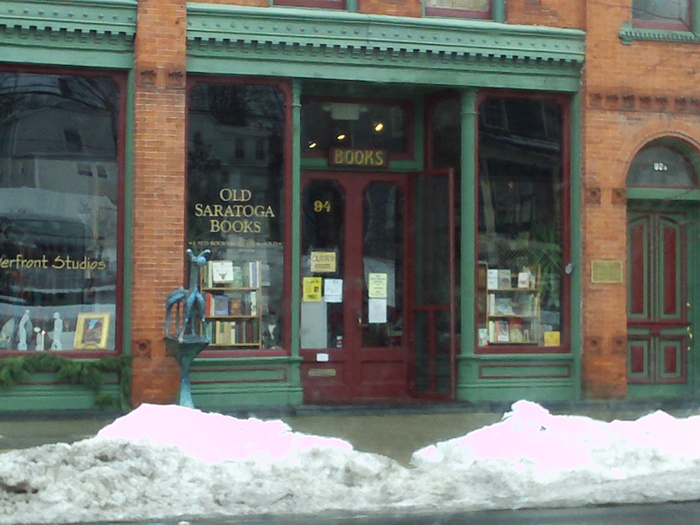
In A Novel Bookstore’s story, Francesca and Iván open a niche bookstore which aims to satisfy and fulfill the expectations of the most discerning readers, who as a whole are the main -or I rather say only- target market of their store. Initially Van and Francesca's bookstore succeeds but the concept behind the bookstore offends many people who feel that the bookstore's mere existence, Is an insult to readers who prefer Dan Brown or Danielle Steel. Is is true, Van and Francesca do judge the literary taste of the majority of readers and best-selling authors, whose books they do not have in store or are unwilling to ever have there, but they do it but offering a much-needed alternative. They critics go beyond this. The critics see Van and Francesca's attitudes to conceit, as it is clearly that these two good lovers, are attributing a superior status in literary matters to people who share Van and Francesca’s literary taste and reservations. As a result of this, Francesca and Van are accused of being elitist, prejudiced, and conservative. This posits the question? Should we care if our reading choices have the potential to offend other people and that not embracing some genres makes us intolerant? Should a bookstore cater to all tastes even if the owners strongly dislike what half of the readers seem to prefer? Personally, I don't believe a bookstore should cater to all, and neither did Francesca and Van; after all, there is no one single bookstore that has all books available on store or 'on request'. A Novel Bookstore tells us that story...and more!
Now, let’s discuss my initial impression of the book and what happened after I read the first chapters. The first seven chapters of A Novel Bookstore were excellently written. Those were, to me, the most enjoyable of all. I particularly enjoyed the subtle witty observations. Alas, by chapter 10 the focus of the storyline switches and the writing style starts to suffer. This change is conspicuous, but as a reader I remained invested in the story. My reading experience could be better described as walking through a land in which you can find glittery ponds with beautiful flowers and foliage, especially at the centre of the land, but then find out that all this is surrounded by cactus, dried grass, and much preventable aridity. To put it simply: I experienced genuine joy and delight, but also much boredom. Why? Because I do have an issue with the book: the love story. I do not find it necessary at all; in my opinion, the ‘romance’ affects the fluidity of the writing and diminishes the impact of the main message that I sense the author is tying to convey. Each time that the focus was taken away from the books and redirected to the so-called ‘love story’ I felt frustrated; to me that storyline was expendable. The love for great books - which ‘no one’ buys anymore and many which are possible already out of print- is what truly captivated me. Oh, and how I wished that rather than just listing or referring to some books the characters took the time discuss some of them in more detail.
I also found the ‘crime’ plot to be contrived and unconvincing. There were also many superfluous descriptions and incidents that did not add much value to the narrative. I believe that Laurence Cossé, the author, has the capacity to explore the same core subject in a more effective, succinct, clever, an aesthetically stimulating way than what Cossé did here. The initial chapters are a clear example of the author’s talent. Obviously, there is also the possibility that much was lost in translation; this must be considered.
In summary, A Novel Bookstore is an interesting book which addresses the modern phenomenon of what I believe is the 'MacDonalization' -a term coined by sociologist George Ritzer - of the book publishing industry and of fiction writing. I deeply connected to A Novel Bookstore’s main subject but the execution of the story could be greatly improved. The book does need further editing, yet, I am certain that the average reader will appreciate the subject and if you consider yourself to be a ‘book snob', as I do, you will find that the main premise of this book is exactly what you have been wanting to read for a while, flaws and all.


 come to my blog!