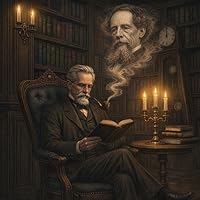
"He is the one absolute and unquestioned master of weird atmosphere," pronounced H. P. Lovecraft of Algernon Blackwood (1869-1951).
The preeminent British supernaturalist of the twentieth century, Blackwood combined elements of philosophy and modern psychology to introduce a new sophistication to a genre formerly dominated by traditional ghost stories.
Blackwood's second legendary collection of stories includes: The LISTENER A reclusive, impoverished writer is delighted to find an inexpensive home in an old building at the heart of London; but in the course of three months living there, he comes to understand why its so cheap... MAX HENSIG: Bacteriologist and Murderer A tabloid newspaper reporter is assigned to cover the trial of a frightful psychotic murderer, and earns his implacable enmity. Then the murderer is set free, and the deadly cat-and-mouse game begins.... The WILLOWS A pair of adventurers on a canoe trip down the Danube discover, after stopping for the evening on a small island covered with tiny willow trees, that they are trespassers at the gate of unknown and hostile forces from beyond the Earth—and they may never get off the island alive. The INSANITY of JONES An mild-mannered clerk in a fire insurance office becomes convinced, through theintervention of the ghost of a deceased co-worker, that his manager was aalguacil of the Spanish Inquisition who tortured him to death in a past life — so he buys a gun. The DANCE of DEATH A young man, just diagnosed with a weak heart and feeling despondent about it, goes to a dance, where he meets the woman of his dreams. But is she real, or a ghost? And if she is a ghost, what is he? The OLD MAN of VISIONS The old man didnt talk much, but if one were allowed into his garret room, one could look out the window and see beyond the veils of the material world. But he was careful to warn: “Should you seek to explain me to another, you must lose me beyond recall.” MAY DAY EVE A skeptical, materialistic physician, on the way to visit a dreamy folklore professor, strays from the road on May Day Eve and finds himself wandering helpless and lost as the wild English moors transform into a strange and terrifying spirit world. MISS SLUMBUBBLEand CLAUSTROPHOBIA Miss Daphne Slumbubble, a forty-something unmarried lady with bird-like mannerisms and abiding fears of men, is on holiday when for no apparent reason a ghostly terror creeps into her soul; she panics and tries to leap from the train. She later learns she isn’t the first to do so. The WOMAN’S GHOST STORY She was a psychic investigator on the job, trying to learn if a famous house was haunted or not. It was indeed haunted when she arrived … but the ghost had a very peculiar request.
Algernon Henry Blackwood (1869–1951) was an English broadcasting narrator, journalist, novelist and short story writer, and among the most prolific ghost story writers in the history of the genre. The literary critic S. T. Joshi stated, "His work is more consistently meritorious than any weird writer's except Dunsany's" and that his short story collection Incredible Adventures (1914) "may be the premier weird collection of this or any other century".
Blackwood was born in Shooter's Hill (today part of south-east London, but then part of northwest Kent) and educated at Wellington College. His father was a Post Office administrator who, according to Peter Penzoldt, "though not devoid of genuine good-heartedness, had appallingly narrow religious ideas." Blackwood had a varied career, farming in Canada, operating a hotel, as a newspaper reporter in New York City, and, throughout his adult life, an occasional essayist for various periodicals. In his late thirties, he moved back to England and started to write stories of the supernatural. He was very successful, writing at least ten original collections of short stories and eventually appearing on both radio and television to tell them. He also wrote fourteen novels, several children's books, and a number of plays, most of which were produced but not published. He was an avid lover of nature and the outdoors, and many of his stories reflect this.
H.P. Lovecraft wrote of Blackwood: "He is the one absolute and unquestioned master of weird atmosphere." His powerful story "The Willows," which effectively describes another dimension impinging upon our own, was reckoned by Lovecraft to be not only "foremost of all" Blackwood's tales but the best "weird tale" of all time.
Among his thirty-odd books, Blackwood wrote a series of stories and short novels published as John Silence, Physician Extraordinary (1908), which featured a "psychic detective" who combined the skills of a Sherlock Holmes and a psychic medium. Blackwood also wrote light fantasy and juvenile books.
“All this that takes so long to describe became apparent to me in a few seconds.”
Reading a sentence like this from a writer like Algernon Blackwood wrung a wry smile from my lips because no matter how blunt a person’s perception may be, or however myopically they might blink into the light of day – it would always take Algernon Blackwood longer to describe a thing in question than the dim-wit or the purblind to perceive or to notice it. Had Blackwood ever undertaken to describe the perambulation of a snail, particularly inclined to dawdling and to introspection, across a gigantic lettuce leaf, why! the dilatory mollusc would have accomplished its way back before Blackwood could have fully depicted its first travel from A to B.
There are times when Blackwood’s tendency to heap word upon word successfully conjures up a dense atmosphere of menace and unease, as in his hallmark story The Willows, which is also part of this collection and which I have given a review of its own, but more often than not, it strains the reader’s patience and sadly unhinges the story, as in Max Hensing – Bacteriologist and Murderer, where a journalist has drawn upon himself the full malice of a cold-blooded psychopath. In this story, Blackwood shows deftness at handling the climax, but all too often on his way towards it, he just ruins the pace of his tale by including too much detail and frequently repeating himself. Other stories, like May Day Eve or The Old Man of Visions literally drown in obscure wordiness, all the more so since the narrator loses himself in vapours of pseudo-mysteriousness. A story like The Insanity of Jones, which are based on the concept of transmigration – an idea already funny in itself –, turns out an involuntary side-splitter when the protagonist angrily shouts at his adversary a sentence like “’You tortured me to death four hundred years ago’”, and one remains asking oneself whether this story is to be taken as a persiflage or a serious attempt at curdling the reader’s blood.
Nevertheless, there are also two very good stories in this collection, namely The Willows, which has been anthologized quite often for very good reasons, and The Listener, in which we accompany a very nervous loner in his nigh-descent into madness. Here, in this classical haunted house story, Blackwood ingeniously conjures up an atmosphere of threat, revealing manifold uncanny details by and by and leaving it to the readers to make sense of whatever dark clues they can get before eventually providing us with the solution – a solution that does not disappoint. Another good story in this collection is Miss Slumbubble – and Claustrophobia, which starts in a playfully satiric way but later develops into a hauntingly eerie tale.
This collection also comprises a couple of quite good stories, but all in all, it came out as a mixed bag to me, and it is quite clear that Blackwood was a man utterly in tune with the the awe-inspiring mysteries of nature, but he also had a tendency to obscure ramblings of wordiness and pseudo-meaningfulness. Still, coming across gems like The Willows and The Listener is worth wading through pompous nothingnesses like May Day Eve or The Old Man of Visions.
Not perhaps his greatest, but some ok stories! The more you read of his, the more you’ll notice him adding his little anti-materialism digs to so many of them!
3.6 stars. Nothing was abysmal, though a couple were bad (The Insanity of Jones and May Day Eve). Blackwood is really a fan of that "imagination as the 'true' reality" and "mocking the rational skeptics" theme. It seems to be his favorite writing go-to. Gets very tedious very quickly.
However, this book contains "The Willows," which I still consider to be the best horror story I've ever read. It's perfect.
The only other story I'd rate with 5 stars is "Miss Slumbubble—and Claustrophobia." I was surprised to like it but I really did.
Probably half of these stories are middle of the road, but there’s some pretty enjoyable early entries into American horror/the weird here.
The highlights to me feature an early serial killer type story where the narrator is a journalist interviewing a murderer, which eventually posits that a state of near blackout drunkness exists where the intoxicated person reaches a heightened state of consciousness (which is just an absolutely incredible concept), a journey through the woods where the narrators encounter a strange life form and start to question reality, and another about a guy who works in an insurance office and believes his manager tortured him to death in a past life.
Definitely would recommend reading later weird authors like the big 3 first, but if you’ve read them all extensively and want to go further back down the horror history trail, these may be worth you while.
Ho letto il racconto Colui che ascoltava nel buio e penso che l’autore abbia pienamente raggiunto il suo scopo: è un racconto assolutamente inquietante! L’atmosfera è il vero punto di forza: cresce lentamente, insinuandosi nel lettore con un senso di tensione sottile ma costante. La rivelazione finale mi ha sorpresa — non era ciò che mi aspettavo. Forse mi aspettavo qualcosa di ancora più oscuro e decisamente horror, ma proprio questa scelta lo rende diverso dal classico racconto spaventoso. Un testo breve ma capace di lasciare una sensazione persistente di disagio
I've been on a bit of a kick, lately, reading late 19th/early 20th century fiction, particularly of a weird bent. This 1907 collection, like most of these I've read, is radically uneven, with some duds and some classics, like "The Willows," a pre-Lovecraftian horror tale with a (to me) surprisingly nihilistic angle.
The Listener 4⭐ Max Hensig: Bacteriologist and Murderer 5⭐ The Willows 5⭐ The Insanity of Jones: (A Study in Reincarnation) 4.25⭐ The Dance of Death 3.5⭐ The Old Man of Visions 3.5⭐ May Day Eve 5⭐ 313 • Miss Slumbubble—and Claustrophobia 4.25⭐ The Woman's Ghost Story 4⭐
Una raccolta di racconti perfetta per introdurre questo prezioso autore. I Salici è sicuramente il migliore(anche se messo come primo ha diminuito la bellezza degli altri ed è stato anche un poco pesante da leggere) ma ho apprezzato anche in maniera particolare "la vigilia del primo maggio" e "Colui che ascoltava nel buio". 3,5 stelle.
Blackwood’s work in this collection is similar in style to other classic short-form horror writers' (Poe, Lovecraft) but imho achieves a more natural prose, more relatable characters, and a creepier effect. The best story from this collection was definitely "The Willows," which crafts a menacing, largely unsolved mystery with a few particularly spooky reveals (was the man in the boat actually a a man??) and good psychological tension.
"Max Hensig" is a satisfying thriller story involving a teasing, psychopathic killer and both "The Insanity of Jones" and "The Listener" successfully employ an unreliable narrator to heighten the uneasy mood.
"Miss Slumbumble" was enjoyable and actually kind of funny, but "The Dance of Death," "The Old Man of Visions," "The Woman's Ghost Story," and "May Day Eve" were underwhelming.
On a side note, I listened to these stories via free YouTube recordings rather than a professional audiobook. However, I got confused on the table of contents and also listened to Blackwood's story "The Wendigo." If it had been included in this collection, I would have rated it below "The Willows" but above the rest of the stories.
The Willows, included herein, is probably my favourite short story/novella of all time. Either that, or The Colour Out of Space (HPL).
That said, there are several contenders in this anthology that have really raised my opinion of Algernon Blackwood.
His ability to create worlds of otherness is up there with the best. His 'Invisibles' and elementals leave you in as much suspense and potential horror as the Ancient Ones and Elder Gods.
If you're into Lovecraft, get this. No direct link to the Cthulhu mythos, but, for the imaginative reader, the connection to the cosmos (and mankind's insignificant role therein) is all too clear.
5 sterren voor 'May Day Eve' en 'The Willows'. Deze bundel bevat het beroemde verhaal ‘The Willows’, waarvan Lovecraft zei dat het ‘almost a model of what a weird tale ought to be’ is. Maar is het verhaal wel ‘weird’ of eerder ‘eerie’? Mark Fisher heeft deze verschijnselen onderzocht in een boekje met essays over literatuur, films en kunst met deze eigenschappen. Wellicht het duidelijkst legt hij de definities en het verschil uit bij zijn inleiding over ‘the eerrie’: ‘The weird is constituted by a presence – the presence of that which does not belong. In some cases of the weird (those with which Lovecraft was obsessed) the weird is marked by an exorbitant presence, a teeming which exceeds our capacity t orepresent it. The eerie, by contrast, is constituted by a failure of absence or by a failure of presence. The sensation of the eerie occurs either when there is something present where there should be nothing, or when there is nothing present when there should be something.’ In de meeste (met name de bekendste) verhalen van Lovecraft ZIJN de monsters er duidelijk fysiek, soms worden ze zelfs wetenschappelijk benaderd, in elk geval rationeel, al zijn ze ‘te verschrikkelijk’ voor de mens om te bevatten. ‘Weird’ dus. In ‘The Willows’ van Blackwood zijn ook entiteiten aanwezig, maar deze zijn in eerste instantie aanwezig in het ‘gevoel’ van de hoofdpersoon en in een wat subjectieve waarneming. De twee personages zien sporen van de entiteiten, aanwijzingen, en soms zien ze vaag wat, maar altijd in combinatie met het water, geluiden ‘in het hoofd’, de waaiende wilgen, duisternis. Het neigt daardoor veel meer naar ‘eerie’ dan naar ‘weird’ en het verhaal vind ik daardoor eigenlijk nog indringender dan de verhalen van Lovecraft – al kan ook Lovecraft goed spelen met spanning wanneer de personages eerst alleen nog aanwijzingen zien van de aanwezigheid van ‘dat wat niet moet zijn’. Een misschien groter verschil is hoe Blackwood en Lovecraft, als persoon én schrijver, omgaan met wat ook S.T. Joshi benoemd als ‘awe’, maar wat ook onder de noemer ‘het sublieme’ kan vallen. Lovecraft, en met hem ook Dunsany, waren zelf erg rationeel en gebruikten verhalen om bovenmenselijke krachten te benadrukken, respectievelijk de kracht van het ‘cosmicisme’ (Lovecraft: de onwetendheid en nietigheid van de mens t.o.v. de onbekende kosmos) en de kracht van fantasie (Dunsany: middels goden en natuurwezens). ‘Awe’ bij Lovecraft is altijd negatief: de mens is als een mier voor het monster dat hem niet ziet staan, maar hem ook makkelijk kan vertrappen – en de mens is bang voor dit monster. Bij Dunsany zit het in de mythische proporties van de goden die ook weinig om de mensen geven, maar niet als monsterlijk worden geduid. Algernon Blackwood, en met hem ook Arthur Machen, benaderen ‘awe’ vanaf een niet-rationele kant. Machen was erg gelovig, en zijn ‘awe’ is dan ook een religieuze, zelfs als hij het heeft over natuurgeesten. Blackwood hield niet van een wetenschappelijke benadering, maar ook niet van een religieuze of spiritistische – zijn benadering doet meer denken aan bepaalde Oosterse filosofieën, zoals het Boeddhisme. Beide schrijvers schreven verhalen waarin deze ‘awe’ positief was, zoals een mens ook het ‘sublieme’ kan voelen van de krachten van de natuur waardoor hij zich breekbaar en nietig voelt en tegelijkertijd er deel van uitmaakt. Toch belichten de twee verhalen waar ze het meest bekend van zijn juist de ‘horrorkant’ van deze ‘awe’: Machen in zijn ‘The Great God Pan’ en Blackwood dus in zijn ‘The Willows’. En op dit punt is het waar Lovecraft, Machen, Dunsany én Blackwood elkaar als het ware ontmoeten – in feite zijn het alle cosmicistische schrijvers in die zin dat ze allen de mens zien als insignificant ten opzichte van krachten die de mens niet kan duiden en/of mentaal of psychisch aankan. Alleen de bron en de vorm van die krachten verschillen bij de schrijvers onderling. Een citaat uit ‘The Willows’ geeft dit gezamenlijke element mooi aan: ‘There are forces close here that could kill a herd of elephants in a second as easily as you or I could squash a fly. Our only chance is to keep perfectly still. Our insignificance perhaps may save us.’ Het volgende citaat, eerder in het verhaal geeft daarbij juist het verschil van benadering aan tussen Lovecraft en Blackwood: ‘When common objects in this way become charged with the suggestion of horror, they stimulate the imagination far more than things of unusual appearance.’ Iets waar ik het overigens mee eens ben. De andere verhalen in de bundel zijn nogal verschillend in kwaliteit (vanuit mijn ogen). Ik vond het titelverhaal en het verhaal ‘Max Hensig’ qua schrijfstijl mooi – de typische trage en gedetailleerde en tegelijk sobere stijl van Blackwood – maar qua verhaal en clue behoorlijk zwak. Veel van de andere verhalen zijn een stuk minder aards, d.w.z. dat ze vooral ingaan op de gemoedstoestand van het hoofdpersonage en de onbetrouwbaarheid daarvan en soms bijna als een delirium of droomtoestand overkomen. Hierin wordt de ‘awe’ vaak positief of neutraal geduid. Wellicht het duidelijkst is dit in het door S.T. Joshi hoog aangeschreven verhaal ‘May Day Eve’, ook een van mijn favorieten. Het is bijna of hij een definitie geeft van het gevoel van het ‘sublieme’ als hij schrijft: ‘I felt immense, yet tiny, confident, yet timid; a part of huge, universal forces, yet an utterly small, personal, and very limited being.’
These stories were surprisingly impressive for their age, hypnotic even. Perhaps especially well-wrought was “The Willows,” but I truly enjoyed just about every piece in here. Some may complain about meandering descriptions, but I find Blackwood has a deft hand with mood, suspense, and character—and these work for me even if some of the stories land without a follow-through.
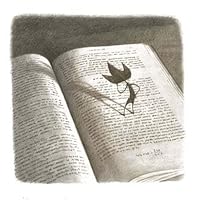
Ho letto la versione 2023 di Fanucci illustrata da Daniele Serra. Racconto godibilissimo, acquerelli superlativi. Daniele Serra si conferma un artista di grande livello e la sua arte vale il volume.
[Eveleigh Nash] (1907). HB. 1/1. 350/34 Pages. E. Nesbit’s copy (1858-1924), bearing her bookplate and signature (“E. Nesbit Bland”). Purchased from Fern-Garden.
“The Listener” “Max Hensig - Bacteriologist and Murderer” “The Willows” “The Insanity of Jones” “The Dance of Death” “The Old Man of Visions” “May Day Eve” “Miss Slumbubble—and Claustrophobia” “The Woman's Ghost Story”
A mixed bag in terms of both quality and genre - with some very pronounced high-points.
The latter two entries are, for example, rather humdrum.
I enjoyed “The Willows” best of all; a subtle, atmospheric masterpiece of cumulative unease.
I'll need to give this another chance not as an audiobook as the reader was ... not the best. Still, even if I had trouble enjoying and connecting to most of the stories, the title tale is a reeeeeal great Halloween chiller.
Blackwood is not someone you hear a lot of when discussing the classics of literature - he was sort of an obscure writer who was kinda left in the shadows. And out of the shadow was born, nonetheless, a decent inspiration to Lovecraft himself who considered Blackwood an ”unquestioned master of weird atmosphere”.
I think that lately Blackwood got much more appreciation though (albeit he is long gone) as weird literature got a boost from the British Library and alike publications (check out for example ”Roarings from Further Out: Four Weird Novellas by Algernon Blackwood” published in 2019). And Blackwood’s posthumous rise is well deserved. ”The Listener and Other Stories”, originally published in 1907, has much to offer to anyone who is at least slightly interested in the weird fiction genre. And ”The Willows”, for example, is an absolute must.
Stories in the beginning of this anthology are better written compared with latter ones - there is simply more depth, thought and eeriness in the former. Nonetheless, I did not think there were any really weak stories in the book, even though a modern reader would have to adjust to the classic plot flow and language.
☆☆☆☆☆ (excellent): - The Listener - The Willows ☆☆☆☆ (good): - Max Hensing - Bacteriologist and Murderer - The Dance of Death ☆☆☆ (ok): - The Insanity of Jones - The old man of visions - May Day Eve - Miss Slumbubble – and Claustrophobia - The woman’s ghost story.