

What do you think?
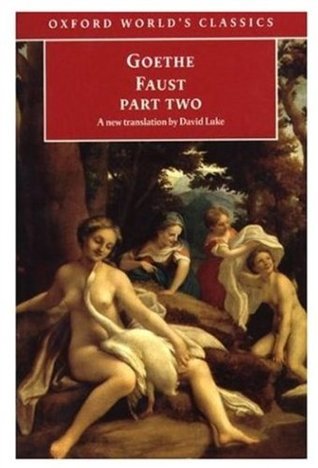
Goethe’s Faust #2 of 2
Faust, Part Two
This is a new translation of Faust, Part Two by David Luke, whose translation of Faust, Part I was the winner of the European Poetry Translation Prize. Here, Luke expertly imitates the varied verse-forms of the original, and provides a highly readable and actable translation which includes an
introduction, full notes, and an index of classical mythology.
introduction, full notes, and an index of classical mythology.
304 pages, Paperback
First published January 1, 1832
About the author
Johann Wolfgang von Goethe
13.6k books7,325 followersA master of poetry, drama, and the novel, German writer and scientist Johann Wolfgang von Goethe spent 50 years on his two-part dramatic poem
Faust
, published in 1808 and 1832, also conducted scientific research in various fields, notably botany, and held several governmental positions.
George Eliot called him "Germany's greatest man of letters... and the last true polymath to walk the earth." Works span the fields of literature, theology, and humanism.
People laud this magnum opus as one of the peaks of world literature. Other well-known literary works include his numerous poems, the Bildungsroman Wilhelm Meister's Apprenticeship and the epistolary novel The Sorrows of Young Werther .
With this key figure of German literature, the movement of Weimar classicism in the late 18th and early 19th centuries coincided with Enlightenment, sentimentality (Empfindsamkeit), Sturm und Drang, and Romanticism. The author of the scientific text Theory of Colours , he influenced Darwin with his focus on plant morphology. He also long served as the privy councilor ("Geheimrat") of the duchy of Weimar.
Goethe took great interest in the literatures of England, France, Italy, classical Greece, Persia, and Arabia and originated the concept of Weltliteratur ("world literature"). Despite his major, virtually immeasurable influence on German philosophy especially on the generation of Georg Wilhelm Friedrich Hegel and Friedrich Wilhelm Joseph von Schelling, he expressly and decidedly refrained from practicing philosophy in the rarefied sense.
Influence spread across Europe, and for the next century, his works inspired much music, drama, poetry and philosophy. Many persons consider Goethe the most important writer in the German language and one of the most important thinkers in western culture as well. Early in his career, however, he wondered about painting, perhaps his true vocation; late in his life, he expressed the expectation that people ultimately would remember his work in optics.
George Eliot called him "Germany's greatest man of letters... and the last true polymath to walk the earth." Works span the fields of literature, theology, and humanism.
People laud this magnum opus as one of the peaks of world literature. Other well-known literary works include his numerous poems, the Bildungsroman Wilhelm Meister's Apprenticeship and the epistolary novel The Sorrows of Young Werther .
With this key figure of German literature, the movement of Weimar classicism in the late 18th and early 19th centuries coincided with Enlightenment, sentimentality (Empfindsamkeit), Sturm und Drang, and Romanticism. The author of the scientific text Theory of Colours , he influenced Darwin with his focus on plant morphology. He also long served as the privy councilor ("Geheimrat") of the duchy of Weimar.
Goethe took great interest in the literatures of England, France, Italy, classical Greece, Persia, and Arabia and originated the concept of Weltliteratur ("world literature"). Despite his major, virtually immeasurable influence on German philosophy especially on the generation of Georg Wilhelm Friedrich Hegel and Friedrich Wilhelm Joseph von Schelling, he expressly and decidedly refrained from practicing philosophy in the rarefied sense.
Influence spread across Europe, and for the next century, his works inspired much music, drama, poetry and philosophy. Many persons consider Goethe the most important writer in the German language and one of the most important thinkers in western culture as well. Early in his career, however, he wondered about painting, perhaps his true vocation; late in his life, he expressed the expectation that people ultimately would remember his work in optics.
Ratings & Reviews
Friends & Following
Create a free account to discover what your friends think of this book!
Community Reviews
Displaying 1 - 14 of 14 reviews
April 24, 2025
ESPAÑOL: Una de las obras maestras de la literatura universal. Teñida de Romanticismo, del que Goethe fue uno de los principales precursores, describe al hombre que quiere elevarse por sí mismo hasta igualar a Dios, el "hombre faustico", a quien Spengler consideró el máximo representante de la segunda parte de la civilización occidental, que nos condujo al enorme ascenso de la ciencia y la tecnología que todavía no ha terminado, aunque podría estar cerca de hacerlo. Un problema del espíritu fáustico es que siempre termina mal, incluso aunque el Romanticismo cuya bandera Goethe enarboló le impulsa a buscar el final feliz, en este caso el de la salvación de Fausto. Una cuestión teológica interesante es si alguien que vendió su alma al diablo puede salvarse. He leído el primer acto de esta segunda parte en versión original alemana y toda ella en traducción al español.
Esta segunda parte es muy distinta de la primera, que tiene un argumento coherente y continuado, la corrupción de Fausto por Mefistófeles y la consiguiente seducción y castigo de Margarita, aunque con una digresión: los dos apartados dedicados a la Noche de Walpurgis. La segunda parte, en cambio, es una amalgama de escenas diversas, como la del Carnaval de Florencia, donde aparecen máscaras de muchos personajes mitológicos que apenas dicen unas palabras. Debo reconocer que esta parte me gustó, especialmente la invención del papel moneda por Mefistófeles, garantizado por los tesoros escondidos bajo tierra, aún sin descubrir; o la reacción de los hombres y mujeres de la Corte, en versos alternados, cuando Fausto hace aparecer a Paris y Helena ante el emperador.
Después, Wagner crea un homúnculo en su laboratorio alquímico, y Mefistófeles lleva a Fausto y al homúnculo a la antigua Grecia, donde recogen a Helena de Troya y la trasladan a un castillo medieval. Pero el interés que al principio despertó en mí esta parte ha ido disminuyendo a medida que avanzaba. El tercer acto, el rapto y seducción de Helena de Troya por Fausto; el cuarto, la batalla en la que Fausto y Mefistófeles ayudan al Emperador; y el quinto, en el que Fausto provoca la muerte de Filemón y Baucis y finalmente muere, me han resultado menos interesantes. En el final, la salvación del alma de Fausto, no aparece por ningún lado su arrepentimiento de sus muchos pecados, y la causa de su salvación ("Quien siempre aspira y lucha merece recibir la salvación") parece más romántico-humanista que cristiana.
ENGLISH: One of the masterpieces of universal literature. Tinged with Romanticism, of which Goethe was one of the main precursors, it describes the man who wants to elevate himself and equal God, the "Faustian man", whom Spengler considered the greatest representative of the second part of the Western civilization, which has led us to an enormous rise of science and technology that has not yet ended, although it could be close to doing so. One problem with the Faustian spirit is that it always ends badly, even though Romanticism, whose flag Goethe raised, drives him to seek a happy ending, in this case Faust's salvation. An interesting theological question is whether someone who sold his soul to the devil can be saved. I have read the first act of this second part in the original German and all of it in a Spanish translation.
This second part is very different from the first, which has a coherent and continuous plot, the corruption of Faust by Mephistopheles and the ensuing seduction and punishment of Gretchen, albeit with one digression: the two sections devoted to Walpurgis Night. The second part, on the other hand, is an amalgam of diverse scenes, such as the Carnival of Florence, with masks of many mythological characters, which barely utter a few words. I must admit that I enjoyed this part, especially the invention by Mephistopheles of paper money, guaranteed by treasures hidden underground, yet to be discovered; or the reaction of men and women in the Court, in alternate verses, when Faust brings forth the appearance of Paris and Helen before the Emperor.
Wagner then creates a homunculus in his alchemical laboratory, and Mephistopheles takes Faust and the homunculus to ancient Greece, where they collect Helen of Troy and transport her to a medieval castle. But the interest that aroused in me this part at the beginning diminished as it progressed. The third act, the abduction and seduction of Helen of Troy by Faustus; the fourth, the battle in which Faustus and Mephistopheles aid the Emperor; and the fifth, where Faustus causes the deaths of Philemon and Baucis and finally dies, I found less interesting. In the ending, the salvation of Faust's soul, his repentance for his many sins is nowhere to be found, and the reason for his salvation ("He who always aspires and strives deserves to receive salvation") seems more romantic-humanistic than Christian.
Esta segunda parte es muy distinta de la primera, que tiene un argumento coherente y continuado, la corrupción de Fausto por Mefistófeles y la consiguiente seducción y castigo de Margarita, aunque con una digresión: los dos apartados dedicados a la Noche de Walpurgis. La segunda parte, en cambio, es una amalgama de escenas diversas, como la del Carnaval de Florencia, donde aparecen máscaras de muchos personajes mitológicos que apenas dicen unas palabras. Debo reconocer que esta parte me gustó, especialmente la invención del papel moneda por Mefistófeles, garantizado por los tesoros escondidos bajo tierra, aún sin descubrir; o la reacción de los hombres y mujeres de la Corte, en versos alternados, cuando Fausto hace aparecer a Paris y Helena ante el emperador.
Después, Wagner crea un homúnculo en su laboratorio alquímico, y Mefistófeles lleva a Fausto y al homúnculo a la antigua Grecia, donde recogen a Helena de Troya y la trasladan a un castillo medieval. Pero el interés que al principio despertó en mí esta parte ha ido disminuyendo a medida que avanzaba. El tercer acto, el rapto y seducción de Helena de Troya por Fausto; el cuarto, la batalla en la que Fausto y Mefistófeles ayudan al Emperador; y el quinto, en el que Fausto provoca la muerte de Filemón y Baucis y finalmente muere, me han resultado menos interesantes. En el final, la salvación del alma de Fausto, no aparece por ningún lado su arrepentimiento de sus muchos pecados, y la causa de su salvación ("Quien siempre aspira y lucha merece recibir la salvación") parece más romántico-humanista que cristiana.
ENGLISH: One of the masterpieces of universal literature. Tinged with Romanticism, of which Goethe was one of the main precursors, it describes the man who wants to elevate himself and equal God, the "Faustian man", whom Spengler considered the greatest representative of the second part of the Western civilization, which has led us to an enormous rise of science and technology that has not yet ended, although it could be close to doing so. One problem with the Faustian spirit is that it always ends badly, even though Romanticism, whose flag Goethe raised, drives him to seek a happy ending, in this case Faust's salvation. An interesting theological question is whether someone who sold his soul to the devil can be saved. I have read the first act of this second part in the original German and all of it in a Spanish translation.
This second part is very different from the first, which has a coherent and continuous plot, the corruption of Faust by Mephistopheles and the ensuing seduction and punishment of Gretchen, albeit with one digression: the two sections devoted to Walpurgis Night. The second part, on the other hand, is an amalgam of diverse scenes, such as the Carnival of Florence, with masks of many mythological characters, which barely utter a few words. I must admit that I enjoyed this part, especially the invention by Mephistopheles of paper money, guaranteed by treasures hidden underground, yet to be discovered; or the reaction of men and women in the Court, in alternate verses, when Faust brings forth the appearance of Paris and Helen before the Emperor.
Wagner then creates a homunculus in his alchemical laboratory, and Mephistopheles takes Faust and the homunculus to ancient Greece, where they collect Helen of Troy and transport her to a medieval castle. But the interest that aroused in me this part at the beginning diminished as it progressed. The third act, the abduction and seduction of Helen of Troy by Faustus; the fourth, the battle in which Faustus and Mephistopheles aid the Emperor; and the fifth, where Faustus causes the deaths of Philemon and Baucis and finally dies, I found less interesting. In the ending, the salvation of Faust's soul, his repentance for his many sins is nowhere to be found, and the reason for his salvation ("He who always aspires and strives deserves to receive salvation") seems more romantic-humanistic than Christian.

November 27, 2025
Volví a leer la segunda parte, el sentido mágico/romántico de esta es superior a la primera parte. Es, siendo una anécdota inferior a la primera parte, es una pieza de arte más alta.
Acá amamos a Goethe.
Acá amamos a Goethe.

July 20, 2025
La primera parte de este drama es la conocida historia del doctor Fausto que vende su alma al diablo, Mephistopheles, para obtener conocimiento. Paralelamente a todas las reflexiones metafísicas a que se presta el drama, se nos presenta una historia de amor que pasa por muchas fases, muchas trágicas, y que acaba con la vida de Gretschen (Margarita) y la condena de Fausto. El autor, Goethe, inaugurando el Romanticismo.
Pero es la segunda parte la que acabo de leer, escrita por Goethe treinta años después, ya mayor. Curiosamente en el momento en el que el Romanticismo ha triunfado en toda Europa, su “iniciador” escribe un drama continuación del anterior en un estilo clásico. Para empezar, Fausto y Mephistopheles casi no actúan, sino que van pasando de un acto a otro contemplando diferentes escenas sin aparentemente relación directa con ellos. Me recuerda un poco la “Divina Comedia” de Dante. Además, es una obra extremadamente simbólica y alegórica con significados muy difíciles de entrañar. Basta pensar en la infinita galería de personajes que intervienen, por dar un par de ejemplos: los mismo hay un coro de hormigas que un coro de ángeles, Helena de Troya junto a muchos otros personajes de la mitología griega, el Kaiser y otras figuras de la política, el ejército, la religión (un “Generalissimus”, obispos…), una esfinge, Anaxágoras… y, en el acto final, figuras religiosas (Pater Seraphicus, Magna Peccatrix, Chorus Mysticus…) que, junto con la Gretschen de la primera parte, acaban redimiendo los pecados de Fausto y llevándoselo al cielo, a la salvación.
No puedo decir que haya disfrutado esta lectura, pues ha sido difícil establecer relación entre las diferentes escenas y hay todo un entramado de significados alegóricos y paródicos que no siempre he comprendido. Además, es muy larga para ser una obra de teatro y el estar escrita en verso y con rima hace que la lengua empleada sea aún menos directa y diáfana. Comprendo, eso sí, su mérito literario y confieso que la he leído por quitármela de las asignaturas pendientes.
Pero es la segunda parte la que acabo de leer, escrita por Goethe treinta años después, ya mayor. Curiosamente en el momento en el que el Romanticismo ha triunfado en toda Europa, su “iniciador” escribe un drama continuación del anterior en un estilo clásico. Para empezar, Fausto y Mephistopheles casi no actúan, sino que van pasando de un acto a otro contemplando diferentes escenas sin aparentemente relación directa con ellos. Me recuerda un poco la “Divina Comedia” de Dante. Además, es una obra extremadamente simbólica y alegórica con significados muy difíciles de entrañar. Basta pensar en la infinita galería de personajes que intervienen, por dar un par de ejemplos: los mismo hay un coro de hormigas que un coro de ángeles, Helena de Troya junto a muchos otros personajes de la mitología griega, el Kaiser y otras figuras de la política, el ejército, la religión (un “Generalissimus”, obispos…), una esfinge, Anaxágoras… y, en el acto final, figuras religiosas (Pater Seraphicus, Magna Peccatrix, Chorus Mysticus…) que, junto con la Gretschen de la primera parte, acaban redimiendo los pecados de Fausto y llevándoselo al cielo, a la salvación.
No puedo decir que haya disfrutado esta lectura, pues ha sido difícil establecer relación entre las diferentes escenas y hay todo un entramado de significados alegóricos y paródicos que no siempre he comprendido. Además, es muy larga para ser una obra de teatro y el estar escrita en verso y con rima hace que la lengua empleada sea aún menos directa y diáfana. Comprendo, eso sí, su mérito literario y confieso que la he leído por quitármela de las asignaturas pendientes.

October 6, 2025
En gran medida, a diferencia de la parte 1, esta segunda mitad del Fausto de Goethe entra en esa categoría de obras universales (como la Eneida, la Divina Comedia o, por ahí, Las Metamorfosis) que son bien inabarcables para un simple mortal.
El acto inicial y el final tienen un valor evidente, un comentario sobre la modernización de la que Goethe fue testigo. A diferencia de la parte uno, se le ve un autor implicito mucho más comprometido con la congoja espiritual que trae consigo la ilustración, el liberalismo y la industria para la humanidad.
¿Qué nos espera, qué puede concebir esta humanidad aparentemente implacable, irrefrenable y hambrienta de conocimiento y progreso? Nada. Un homunculo, un pequeño humano a medias que recurre a la divinidad para completarse. Una réplica de personajes mitologicos anteriores, que aun siendo hijo de la sabiduría antigua y moderna, cae por su propio peso. Guerras y tragedias que, vistas desde fuera, nada nuevo traen.
Creo que para Goethe, la modernidad era terrible. Estaba alejando a los humanos de la comunidad, de cierto valor espiritual, de una cosmovisión que él valoraba mucho. Pero en última instancia, no pareciera ser algo que la humanidad, en sus miles de años, no hubiera vivido ya.
Quizás por eso su rescate a tanta tradición primigenia, mitologías olvidadas de regiones lejanas. Todo eran ecos de lo que sucedía entre Fausto y Mefistofeles. Todo pasó, nada nuevo revela el sol, y esa experiencia es lo que el humano tiene para servirse, libremente. El espacio en el que Fausto encuentra algo a lo que decirle: "detente, eres tan hermoso".
El acto inicial y el final tienen un valor evidente, un comentario sobre la modernización de la que Goethe fue testigo. A diferencia de la parte uno, se le ve un autor implicito mucho más comprometido con la congoja espiritual que trae consigo la ilustración, el liberalismo y la industria para la humanidad.
¿Qué nos espera, qué puede concebir esta humanidad aparentemente implacable, irrefrenable y hambrienta de conocimiento y progreso? Nada. Un homunculo, un pequeño humano a medias que recurre a la divinidad para completarse. Una réplica de personajes mitologicos anteriores, que aun siendo hijo de la sabiduría antigua y moderna, cae por su propio peso. Guerras y tragedias que, vistas desde fuera, nada nuevo traen.
Creo que para Goethe, la modernidad era terrible. Estaba alejando a los humanos de la comunidad, de cierto valor espiritual, de una cosmovisión que él valoraba mucho. Pero en última instancia, no pareciera ser algo que la humanidad, en sus miles de años, no hubiera vivido ya.
Quizás por eso su rescate a tanta tradición primigenia, mitologías olvidadas de regiones lejanas. Todo eran ecos de lo que sucedía entre Fausto y Mefistofeles. Todo pasó, nada nuevo revela el sol, y esa experiencia es lo que el humano tiene para servirse, libremente. El espacio en el que Fausto encuentra algo a lo que decirle: "detente, eres tan hermoso".
Read
April 19, 2025es tan complejo que requiere una guia que acompañe, previa, o posterior, al igual que la segunda, obra que debo releer
no creo que se pueda apreciar por alguien nuevo, o sin un gran interes y concentracion y dedicacion extrema
no creo que se pueda apreciar por alguien nuevo, o sin un gran interes y concentracion y dedicacion extrema
July 12, 2021
Aunque si me gustó, me pareció mejor la primera parte, sin duda alguna, un excelente autor.

Read
January 18, 2023un viaje de ayahuasca

February 26, 2023
que pesado y aburrido

April 1, 2024
Debo volver a leerlo, pero ahora en Alemán.

February 6, 2025
Otro libro con el que no pude ...

June 29, 2018
Esta Segunda Parte de Fausto es una síntesis de la tradición y cultura Occidental Clásica, en la que Goethe ofrece un juicio moral sobre las decisiones y acontecimientos del pasado. Aunque parece no tener relación directa con los acontecimientos de la Primera Parte, logra concluirlo todo con esperanza, manifestando la infinita misericordia de Dios, que vence las maquinaciones del espíritu del mal.
___________
This second part of Faust is a synthesis of classical western culture and tradition, in which Goethe offers a moral judgment on the decisions and events of the past. Although it doesn't seem to have a direct relation with the events of the First Part, at the end everything concludes with hope, showing the infinite mercy of God, who overcomes the setups of the spirit of evil.
___________
This second part of Faust is a synthesis of classical western culture and tradition, in which Goethe offers a moral judgment on the decisions and events of the past. Although it doesn't seem to have a direct relation with the events of the First Part, at the end everything concludes with hope, showing the infinite mercy of God, who overcomes the setups of the spirit of evil.

June 19, 2022
Considero súper innecesario este libro. Me parece un poco salido de la nada, sin fundamento en lo absoludo.
Es un fanfic. No tan interesante como La Divina Comedia , pero un fanfic al fin y al cabo.
Es un fanfic. No tan interesante como La Divina Comedia , pero un fanfic al fin y al cabo.

January 10, 2014
la segunda parte está repleta de personajes mitológicos que junto a Fausto y Mefistófeles recorrerán innumerables aventuras por espeluznantes lugares. Genial obra.

February 21, 2014
Por fin lo termine, muy interesante y valió la pena leerlo.
Lo recomiendo? NO
Es demasiado pesado para ser solo 250 paginas
Lo recomiendo? NO
Es demasiado pesado para ser solo 250 paginas
Displaying 1 - 14 of 14 reviews