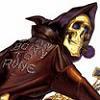
A tale of pilgrimage and hope, betrayal and transformation. It was Avluela the Flier's scarlet and ebony wings that lead the Watcher to the seven hills of the ancient city, leaving the skies and deep space unguarded. And so the invaders came and conquered and Avluela became lost in the turmoil.
There are many authors in the database with this name.
Robert Silverberg is a highly celebrated American science fiction author and editor known for his prolific output and literary range. Over a career spanning decades, he has won multiple Hugo and Nebula Awards and was named a Grand Master by the Science Fiction and Fantasy Writers of America in 2004. Inducted into the Science Fiction and Fantasy Hall of Fame in 1999, Silverberg is recognized for both his immense productivity and his contributions to the genre's evolution. Born in Brooklyn, he began writing in his teens and won his first Hugo Award in 1956 as the best new writer. Throughout the 1950s, he produced vast amounts of fiction, often under pseudonyms, and was known for writing up to a million words a year. When the market declined, he diversified into other genres, including historical nonfiction and erotica. Silverberg’s return to science fiction in the 1960s marked a shift toward deeper psychological and literary themes, contributing significantly to the New Wave movement. Acclaimed works from this period include Downward to the Earth, Dying Inside, Nightwings, and The World Inside. In the 1980s, he launched the Majipoor series with Lord Valentine’s Castle, creating one of the most imaginative planetary settings in science fiction. Though he announced his retirement from writing in the mid-1970s, Silverberg returned with renewed vigor and continued to publish acclaimed fiction into the 1990s. He received further recognition with the Nebula-winning Sailing to Byzantium and the Hugo-winning Gilgamesh in the Outback. Silverberg has also played a significant role as an editor and anthologist, shaping science fiction literature through both his own work and his influence on others. He lives in the San Francisco Bay Area with his wife, author Karen Haber.
Nightwings, Robert Silverberg’s 1969 work is a very Ursula K. LeGuin type novel.
It is actually, three novellas put together to make a novel sized work, anchored by the Hugo award-winning novella Nightwings.
This is set in the far future, thousands of years, and the earth has survived, generations ago, a cataclysmic apocalypse which destroyed the “second cycle”. The first cycle would be where we are now, the second beginning when we first met aliens. Society is regimented into occupational guilds, similar to what was described by Ayn Rand in Anthem and by Lois Lowry’s The Giver. Earth has become an alien tourist attraction backwater and humans are coping with their new station in the cosmic pecking order.
Like his 1969 novel Downward to the Earth, there is a spiritual journey and rebirth. A ubiquitous theme in Silverberg’s cannon is open sexuality and Nightwings is no exception, though this is less erotic than others. Telepathy and shared consciousness may also be a common theme in his work and is represented here
The far future setting is also reminiscent of Poul Anderson’s Orion Shall Rise, especially in his description of the changes in geography and cultural icons.
This review is for the novel version of Nightwings, which is comprised of three tightly linked novellas.
Robert Silverberg is possibly the most underrated sf writers of all time considering how long he has been at it and the numerous awards he has won and been nominated for. For some reason, he just does not seem to be "in vogue" these days. It is a pity that most of the younger generation of sf readers today have never read anything by him.
What Silverberg does better than almost any sf authors writing today is to write short stand alone novels with very strange plots and excellent characterization. His special talent us to drop the reader right in the middle of a strange place and time of his imagining and gradually acclimatize you through his story telling skills rather than just making an infodump.
Nightwings is set on Earth but in a future so far flung and strange that it may as well be an alien planet. There are many guilds and mutants and genetically modified humans populating the earth which is about to be invaded by rather reasonable aliens! This novel is both post-apocalyptic and dystopian. It all ends rather optimistically with redemption for the flawed but lovable protagonist. It is astonishing how much plot, grandeur, ideas, subtext, and characterization Silverberg managed to squeeze into one short novel. This book easily goes to my all time best list!
three travelers on the road to the city once called Rome: the Flier unfurls her dainty wings at night, then soars; the Watcher scans the galaxy, searching for invasion; the Changeling grins and plots - there is more to him than meets the eye. the world is in its Third Cycle: the barbaric First Cycle is where the reader lives; in the glorious Second Cycle we reached our heights and then crashed, due to hubris; and now the Third Cycle, a time of guilds and decadence, the Earth reduced to a tourist trap for aliens. a Fourth Cycle approaches! but first, an invasion: those we once caged have come in full force, to deliver their long-delayed reckoning. the Watcher's watch is now finished; his life shall begin again, and again, and finally again.
Silverberg is a spiritual author, mapping the rebirth of a man, a people, and a planet, looking beyond the mortal frame and this mortal coil. not for him, despair or closed circles, despite the dying earth society on display. he creates layers of history, of a transformed earth, of new forms and structures for humanity, and then puts those layers together so carefully that none of them can dominate, all are a part of this sweet, rich confection, an airy and delicate construction: this is a napoleon of a novel. the story is wise in its understanding of human foibles and cruelties, but it is always looking forward and up, away from ignorance and into understanding, into transcendence. a hopeful book.
Have you ever noticed the weird psychological effect where, if you're reading a new edition of a work, it just doesn't "feel" old (but if you're reading an old paperback with yellowed pages and a half-naked chick on the cover, it will undoubtedly feel dated?) Well, this copy of 'Nightwings,' which was written in 1968, does, admittedly, have the unclad female (tho' such a pretty, tasteful one!), but it's all new and shiny, and I didn't feel the story seemed dated at all. Interesting. Anyway. Silverberg gives us, in his Hugo-award winning 'Nightwings' an Earth approximately 35,000 years in the future. Humanity has risen, and (through hubris, bad political moves, and the unfortunate effects of trying to change the planet's climate) subequently fallen. Society is strictly governed by membership in guilds, some of which fill expected places in society... politics, mercantilism, historians, service industries... and some groups which are odder, such as the beautiful butterfly-winged fliers, created by genetic engineering in the Second Age, or the guildless Changelings, monstrous-looking outcasts, mistakes engendered by that same tinkering. Our lead character is a Watcher, his life devoted to using a cart of instruments which allow him to monitor space for unknown alien invaders. It is barely remembered why the Watchers were set up - they seem practically useless... but little known to humanity, the invasion is nearly upon Earth... Through three linked novellas, we follow the elderly Watcher on a journey through three ancient cities... first Roum, where he loves the lovely flier Avluela, but she loves the grotesque changeling(?) Gorman... Invaders set him on the path to Perris, along with a prince in disguise, where he becomes an historian, and later, a traitor(?)... and then to fabled Jorslem, where Pilgrims may have their bodies renewed and their sins cast aside... At different times, the book reminded me slightly of Tanith Lee's books of Paradys, of Arthur C. Clarke's The City & The Stars, of China Mieville's New Crobuzon.... and also, of Silverberg's own 'Valentine' series... but overall, it was itself... with a beautiful dreamlike quality... very nice.
Vrlo lagano štivo stare škole SF-a. Izvrsno smišljen svijet podjeljen na "esnafe" koji upravljaju svijetom i mutante koji tumaraju Zemljom. Silverberg izgleda ne može razočarati, pa iako je tema koju obrađuje prežvakana stotinama puta - Osvajači vrše invaziju na naš planet i pokoravaju nas. Ono što volim u SF romanima je ljubav kao vodilja cijele priče(jebi ga, senitmentalan sam). I to mi baš daje ključni začin zašto mi se svidjela knjiga. Trojčica je tu jer stvaro je pitka, lagana, bez dubioza i neke teške filozofije, pa i bez bravuroznih literarnih vizura, ali je Silverbergovska skroz na skroz i prija.
Nightwings is a fix-up novel comprised of three sequential stories from Galaxy magazine; Perris Way from the November 1968 issue, To Jorslem from February 1969, and the titular original from September 1968, which won the Hugo Award for the best novella of the year. It's a far-future depiction of a cyclic Earth (in a Dystopian/down phase), which has become something of a touristy curiosity stop for a galactic civilization. The characters are overshadowed by the setting, but it's an interesting society. I didn't think the two latter thirds were as effective or as evocative as the original novella, but it's a worthwhile read. Very thoughtful and philosophic. It was published as a paperback original by Avon in 1969, less than two months after the first manned Lunar landing, with a nice fantasy-flavored cover by Don Ivan Punchatz, and was dedicated to Harlan Ellison.
This is another excellent novel from Silverberg’s most prolific period that depicts a far-future Earth that has seen greater ages, and now has become a backwater destination for alien tourists. Humanity is segregated into rigid guilds, including the narrator who is a Watcher assigned to scans the heavens for signs of alien Invaders. When they do arrive, it is not with the expected intentions, and when the story’s narrator discovers why they have come (a secret lost in Earth’s far past), he is torn as to who is truly in the wrong, the aliens or humanity.
There were a surprising number of plot similarities between this book and Roger Zelazny’s earlier This Immortal, which also features a diminished Earth civilization that once roamed the stars but suffered a now-forgotten disaster and is a pale shadow of its former glory. Zelazny’s story focuses more on the mutants who roam the planet due to a limited nuclear exchange, with an overlay of Greek mythology, but both books explore how more powerful aliens look down on once-mighty human civilization in a baroque and exquisitely-depicted future world.
An alternative or future earth story, Roman Empire ascendant, but fallen anyway, with fantasy aspects. Pretty okay if your aim is to read all of Silverberg's works, but if you are new to him and want to try something by him in this style, stick with the Lord Valentine's Castle series. He outdid himself there.
В предговора си от 2001 г. (апропо, хитроумно превърнат от родните издатели в послеслов, за да не се разкриват сюжетни моменти) Робърт Силвърбърг обстойно обяснява как през 1968 е написал трите истории ("Нощни криле", „Сред Помнещите“ и „Пътят към Йорсалим“), появили се на страниците на списание „Галакси“ (с редактор Фредерик Пол) и станали впоследствие гръбнак на този великолепен роман. И аз за пореден път се убеждавам, че fix-up-ът е моят най-най-любим модел на творене, белязал Златната ера на Американската фантастика. Авторите от ония времена буквално избухват в сравнително кратките си прозаични обеми и могат да си позволят дори само да щриховат и маркират десетки (странични) страхотни идеи, които съвременните им колеги несъмнено щяха да раздуят до 20 тома захарен памук… А пък Силвърбърг, освен това, е и изключителен сладкодумец с напевен до лиричност език. Е, във финалната история осезаемо се долавя един леко наивен пацифистки уклон (така де, и оная година е била хаотична до предполагаемо апокалиптична), което не променя другия факт – романът звучи все така зверски добре 55 лета по-късно.
Забележка: Старото издание Нощни криле трябва да бъде откачено от Edition – списъка, защото на практика съдържа наградената с „Хюго“ едноименна новела и новелата „Някой е бил тук“, нямаща нищо общо с продълженията. А новото издание е исти��ско бижу!!! Адмирации за неуморния екип на ИКФЕП "А. и Б. Стругацки", Пазарджик.
Silverberg is a good writer, in that he writes intelligently and mellifluously. He is generally a joy to read. But here, I found the world-setting more interesting than the actual story he tells. I have to agree with Frederick Pohl, who loved the first novella but had reservations about the following two. (MINOR SPOILER ALERT). By the second novella, it becomes clear this book is something of a picaresque. Each novella takes place in a different city (Rome, Paris, Jerusalem) and the main character joins a different guild in each. The guild part doesn't make much sense, since we are told early on that the guilds are strict, and joining one is largely outside one's own control, but the main character has a habit of benefiting from extremely lucky coincidences, which drains the narrative of much impact and suspense. The world created is more interested than the story being told. Again, though, the world is quite interesting and well-described, too bad that the main story isn't that impactful.
Silverberg creates a fascinating depiction of a far future Earth that has seen the rise and fall of several "cycles" of human civilization. The fatal blows dealt to civilization are inevitably the result of human hubris, the last of which resulted in catastrophic environmental devastation. Now it is essentially a desolate backwater, serving as a destination for alien tourists. In the current cycle, humanity has been segmented into guilds, based on occupation, special abilities, genetic engineering, random mutation and other factors. The story follows a melancholic wanderer on a journey of redemption, which parallels humanity as a whole.
A short and elegaic SF novel in the 'dying earth' tradition that follows the wanderings of a member of the Watcher's Guild as he looks to the stars in anticipation of a foretold alien invasion of Earth. His companions include a beautiful young 'Flyer' (the "Nightwings" of the title) and an enigmatic Changeling.
As the story unfolds we see great changes come over both the main character and the earth itself. I enjoyed this story for the tone it conveyed as well as the world & characters that were presented. Well worth picking up if you can find a copy.
Wonderful! This Robert Silverberg novel from 1969 is ageless. Good science fiction with a touch of fantasy, to satisfy all fans of the fantastic genre. I recommend the book if you have not read it yet.
Special mention to the narrator of this audiobook, Stefan Rudnicki. When I started the book I didn't like it but after I was able to see the great variety of registers that his voice can adopt, I was convinced.
Interesting concept, but I was constantly grossed out by the narrator's relationship with Avluela. He is a self-proclaimed "old man" who says that he views her (a 17-year-old who is described as looking like a child) as a daughter. But in the end it is revealed that he has been attracted to her the entire time. And of course, she spends much of the book naked, because she can't fly with clothes on. Engaging plot otherwise, but unfortunately reads like a creepy old dude's fantasy.
Nightwings is a far future science fiction novel. Well, a fix-up novel, consisting of three linked short stories.
I first read the short story "Nightwings" when I was around 13 years old. I didn't understand all of it, but the ending demolished me. That same week I read Poul Anderson's "Goat Song", which had a similar effect: mental stretching and emotional shattering.
I reread it now, almost 40 years later, thanks to a nice Kindle sale.
Nightwings takes place thousands of years from now. Humanity has risen to great heights, then fallen into a semi-medieval decline. Civilization is structured by fiercely structured guilds and run by some form of aristocracy. Humans don't seem to voyage into space much, but aliens frequently visit.
Our narrator begins the first story, "Nightwings," as a Watcher, part of a guild charged with using cryptic tech to scan space for a promised alien invasion. He visits the city of Rome ("Roum") with two genetic mutants: Gorman, a guildless, monstrous, and mysterious outcaste; Alvuela, a tiny person with wings who can fly at night. The second story, "Among the Rememberers," takes our protagonist to another city (Paris) , a different guild, and a love triangle. The last one, "The Road to Jorslem," adds a third city (Jerusalem), a new guild, a road trip, religious discussion, and reunited characters.
The novel's style is dreamlike, elegiac, mannered, and lush. Dialog is theatrical. The world is sketched out lightly, not encyclopedically, with touches: alien plagues, three moons, the replacement of computers with networked human brains, sunken continents and a bridge spanning Italy and North Africa. Silverberg sometimes offers quick glimpses on rich details, like this: "Gormon, slouching disdainfully against a wall embellished with the shells of radiant mollusks..." (44) The effect nicely suggests a qualitatively different world than our own.
Let me say more about the plot behind spoiler shields.
Silverberg is playing with a lot of references and themes here. The stories are clearly set within the "dying Earth" tradition of Jack Vance and Clark Ashton Smith. Some Dante riffing is going on, as each story draws on each volume of the Divine Comedy. The second story engages Oedipus at Colonus. Sf is in play, too. I'm reminded of contemporary interest in myth and deep time, like Delany's Einstein Intersection. Olaf Stapledon's ghost moves across the second story.
Overall, I recommend Nightwings as a fine work of 1960s sf. Especially of interest for those interested in the dying Earth subgenre.
İlginç bir dünya tasviri: Değişkenler, uçucular ve envai çeşit uzaylılar var.
İzleyiciler, koruyucular, hacılar, anımsayıcılar, uşaklar vb. gibi meslek grupları ve bunların bağlı olduğu loncalar var.
Meslek grupları ve ırkların birbirleriyle ilişkileri kanunla sınırlı, bir kast sistemi var. Bu mesleklerin dünyaya hizmetleri işlevsel olmaktan çok ruhani.
İrade dedikleri tanrısal bir güce inanıyorlar, zaman zaman ona bağlandıklarını düşünüyorlar.
Teknoloji bazen üst düzey bazen çok ilkel.
Tüm bu curcuna içinde sürükleniyorsunuz, sürekli ilginç bir kişiyle, olayla ya da nesneyle karşılaşıyorsunuz. Çoğu temelsiz, pat diye ortaya çıkıyor. Boyutkesesi mesela ya da Gerçeğin Ağzı.
Halılar, kilimler, perdeler, ışıklar canlı; zaman zaman acı çekiyorlar. Diğer yandan limuzinvari araçlar var. İletişim için ölü insanların çıkarılmış beyinleri kullanılıyor. Rengarenk bir dünya içinde şaşkınlıkla ilerliyorsunuz.
Ama tüm bu çeşitlilik tutarlı bir düzen içinde ortaya çıkmıyor. İnançla ilgili, teknolojiyle ilgili, toplumsal düzenle ilgili çelişkilerle dolu bir dünya tasviri.
Roman kişilerinin hikayeye girişleri mesnetsiz, çıkışları amaçsız. Hiç kimse özdeşlik kurabileceğiniz kadar yakından anlatılmıyor.
Varsa yoksa loncalar, kurallar: O bununla birlikte olamaz, o şununla yola çıkamaz, bu şunun ismini asla öğrenemez. Geçmişleri yok, gelecekleri merak uyandırmıyor.
Hisleri olan tek kişi Roum Prensi sanırım: Acısı, arzusu, gururu, nefreti var. Diğerleri kağıttan, sürekli mesleklerine ve ırklarına vurgu yapılıyor. Tabi bunda seçilen bakış açısının da payı var, her şeyi yaşlı bir İzleyici'nin gözünden izliyoruz. Anlatıcı bize dünya hakkında bilgi vermeye öyle istekli ki roman kişilerinin ruh dünyaları es geçiliyor.
Hikayenin hükmü yok. Bir yolculuk hikayesi mi, karakter gelişim hikayesi mi, gizem mi belli değil. Olayların sebepleri, kişilerin eylemleri inandırıcı değil.
Hikayeye hizmet etmeyen sahneler, kişiler var. Örneğin hikayenin sonuna doğru bir hac yolculuğu başlıyor ve kafileye böceksi bir uzaylı katılıyor ve bir kaç sayfa sonra anlamsız bir şekilde ölüyor.
Irkçılık eleştiriliyor ama yoğun değil, teğet geçiliyor. İnanç eleştiriliyor ama kitabın bu konuda kafası karışık: Tanrısal inanç ve kadercilik tamamen dışlanmıyor, insan merkezci bakış biraz destekleniyor. Aşk var ama yarım yamalak garip bir cinsellik vurgusu ile zayıflıyor.
Hikaye bir peri masalı gibi gökten hepimizi birer elma bağışlayarak sıkıcı bir öğreticilikle bitiyor. Sırf ara sıra parlayan bazı fikirler ve icatlar için "sevdim" diyebilirim.
Not: Öğrendim ki Silverberg aynı dünyada geçen üç novella yazmış ve çok sonra bu novellaları ufacık değişikliklerle birleştirip bu romanı oluşturmuş. Tutarsızlıkların sebebi belli oldu.
Another impulse $2 street-vendor paperback from the 60s. I would probably not be all that likely to read this if someone actually tried to pitch it to me (in the post-utopian post-post-apocolyptic future, the remainder of human civilization has reformed into a quasi-medieval guild system intermixed with interstellar visitors/invaders, mutants, etc, and our protagonist must move, with earth, through a series of stages towards a sort of redemption). But found at random with a vaguely surreal cover involving ruins, a wizard, and some kind of psychedelic wing-moon-head thing (I mean, look at it below), I would totally read this. So I did.
First complete edition, Avon, 1969, cover artist unknown.
The novel, in fact, collects a sequence of three previously published novellas, each setting up a few characters en route to a new city (Roum, Perris, Jorslem, guess which those are), then inevitably shaking them out in some kind of reckoning. There's a sort of diminishing returns: though each develops the world and its progress further, the first when all is kept vaguest and strangest is really most involving, its conclusion punchiest and most ambiguous (and so free of clumsily lofty aims). I enjoyed it. For that matter, I enjoyed the others well enough too I suppose, but they just felt much less original and essential.
In a world on the razor-edge of collapse, an old man and his two young traveling companions—a fairy-like woman and a deformed man—explore the way to Roum (Rome). Taking place thousands of years into the future and after the collapse of a nigh-magically technologically advanced civilization, we follow the Watcher as he watches for invaders who have promised to destroy Earth for the past sins of man.
Nightwings is Silverbergian in its themes of redemption, pride, transformation, and sensuality. The travels of this old man are set to reforge him—and by extension humanity—to redeem himself and the world for their sins and trespasses.
With a strong narrative voice and solid characters, Nightwings marches along at a solid, though introspective, clip. It’s made up of three major sections, previously novellas that were “fixed-upped” into a novel. What I liked most is that it could have been a dour, dark story about the world’s collapse. But Silverberg restrains himself. He offers hope and optimism into a world about to change.
Definitely recommended for Silverberg fans or for science fiction lovers who appreciate themes of redemption, love, and transformation.
It usually takes a while to get into the world of a fantasy novel -- unless you are in the hands of a master like Dunsany or Tolkien -- so I wasn't sure how I felt about Nightwings until I finished the book. By that time, I had a much better feeling for Robert Silverberg's Earth of the future than I did at the beginning.
I suspect that part of my problem is that the novel I read was actually three novellas pasted together: The original Nightwings followed by Perris Way (the weakest of the three), and finally To Jorslem.
The hero is a member of the Guild of Watchers, named Wuellig, whose mission is to scan the environs of Earth at stated intervals to see if an expected interstellar was on the way. He is accompanied by a slim lovely Flier -- like a 14-year-old angel with wings who can fly only at night -- and a Changeling who turns out to be something altogether different.
Nightwings was a pleasant read, though by no means a classic.
Nightwings isn't really a science fiction book, for all that it takes place in the far future. I actually think a lot of it would work better as straight fantasy, but that would get rid of all the obvious time-changed place names like Jorslem and Roum and Eyrop and prevent as many allusions to real history. One of the other reviews casts it as a retelling of the fall of Rome and the spread of Christianity, which does make a lot of sense.
A lot of the interest I had in the book came out of the setting. Far-future Earth is in its Third Cycle, after the rise of civilization and the development of technology in the First Cycle, the contact with alien civilizations and great feats of planetary engineering of the Second Cycle, ending in the moment when Man Grew Proud and tried to enact weather change on a wide scale across the entire planet, leading to massive disruption, chaos, and the collapse of civilization. Now Third Cycle Earth lives among the ruin of past glories, a poor galactic backwater visited by alien tourists with native society divided into a series of guilds that structure society. The main character, a member of the Watchers, a guild that performs ancient ritual functions that no one really believes are even necessary anymore, travels the world, meets various people, falls into and out of different organizations, and in the end experiences renewal and hope.
Some of the fun of post-apocalyptic or dying earth-style fiction is figuring out what exactly all the names and events referred to are when they've been corrupted by the passage of time, but there's really none of that in evidence here because it's all obvious. It doesn't take much brainpower to realize where "Perris" is supposed to be, for example. That's one of the things I quite like, and I wasn't very fond of its absence.
Instead of being a showcase of the weird and wonderful state of Earth, then, Nightwings is more of a travelogue of the Watcher's experiences and interior state, from worrying about the uselessness of his profession to learning that it was incredibly useful but still not enough to reconciling himself with Earth's new masters to trying to learn about the past to seeking redemption from his sins. And that's all well and good, but I didn't have any strong feelings about the main character, so their interior mindscape wasn't of great interest to me. I would have rather read about why computers were replaced with living brains, or what the difference was between the Guild of Dominators and the Guild of Masters. I guess that's a bit of complaining that a dog is terrible for not being a cat, but it is what it is.
The ending is very 60s-sci fi. It turns out that the solution to the problems plaguing far future Earth are universal brotherhood and communion with one's fellow man. Or at least, with one's fellow mutated post-human creatures who are hated and despised for deeds their ancestors did a millennium ago. I actually quite liked it--a modern version would probably have the main character join a terrorist cell to fight Earth's new masters and commit dozens of atrocities to show the reader that the solution if your plan doesn't work is just to use more violence. "We shall conquer them with peace" is cheesy to modern sensibilities, but at least it's not barbaric like so much of modern politics.
At first I found that I wasn't particularly engaged by the story but I was expecting science fiction when in fact this is more science fantasy in the Dying Earth tradition. Indeed, it works much more as a fantasy novel than SF and once I had made the mental adjustment to the right mode, I began to enjoy it much more.
The human race has gone well past its peak and is now in the third age in which much of the technological marvels that it attained in the previous age have been forgotten and what is left is a rigidly stratified society that is technologically backward. We follow through the eyes of the wandering protagonist as he passes through a period of intense personal and social upheaval. He moves from one guild to the next as his old perceptions and beliefs are altered by the events in the world around him, the old social structure is torn down and from the ruins a new enlightened culture can emerge.
Robert Silverberg writes well here and that helped sustain my interest in the early part of the book before I had engaged with the story. It's not among my favourite of his novels I've read from this period but still well worth reading, particularly for fans of future fantasy.
This has all the charm of a gross old man's lurid fantasy: a faultless narrator who gains eternal youth, a valid sexed-up always naked women... and a creepy quasi-erotic bond between the two. Throw in a hippy "we will join all of mankind together and conquer with love" ending... and you've got a pretty lousy read.
This line sums it up for me: "Her nostrils flickered in delight."
The ultimate tale of redemption, renewal...and coexistence. Such a wonderful story in less than two hundred pages. For a proper review, look for those written by Sandy, Apatt, and Stuart.
Originally appearing as three separate but linked novellas in the pages of "Galaxy" magazine, Robert Silverberg's "Nightwings" was, remarkably, the author's 35th science fiction novel in 15 years; just one of six that he came out with in 1969 alone (the others being "Across a Billion Years," the remarkable "Downward to the Earth," "Three Survived," "To Live Again" and "Up the Line"). Released during one of Silverberg's most prolific and highly creative phases, during which he pushed back the parameters of modern sci-fi and reveled in the genre's new lenient attitudes as regards sex, drugs, mind-expanding ideas and means of expression, the "fix-up novel" has proven to be one of the author's most popular, its initial section garnering the Hugo Award for best novella of that year, and deservedly so.
The book transpires on an Earth some 40,000 years or so in the future...although this is an approximate figure only, our once-aged narrator tells us, as the calendars in his time are different, and the world only has a 20-hour day. Earth is in what has come to be known as its Third Cycle, a period of regression after the glory days of the Second Cycle, when mankind created a paradise on Earth but fatally overreached itself by using weather machines to alter the planet. (Earth of the 21st century is still in its primitive First Cycle, to put things in perspective.) This cataclysmically resulted in the sinking of several continents, the formation of the Land Bridge between "Afreek" and "Eyrop" (all the place names have undergone spelling changes, as might be expected after 400 centuries), and the deaths of hundreds of millions of people. Now, a rigid caste system prevails, with the bulk of humanity divided amongst various guilds. Our narrator (whose name we do not learn until the novel's midpoint, at which time he is given another) is a member of the Watchers guild, whose members tirelessly scan the heavens four times a day, via mind-expanding machinery, to detect the prophesied invaders of Earth. In the first novella, "Nightwings" (from the September '68 issue of "Galaxy," with a cover price of 60 cents), our Watcher tells of his experiences in Roum, to which he has traveled with Avluela, a 17-year-old, winged girl of the Fliers guild, as well as Gormon, a mutant and guildless Changeling. Our Watcher observes firsthand the overthrow of Roum as the anticipated invaders descend upon and conquer the planet, effectively putting him out of a job. In part 2, the novella entitled "Perris Way" (from the November '68 "Galaxy"), our Watcher flees to the city of Perris with the blinded Prince of Roum, joins the Guild of Rememberers, learns an awful lot about Earth's earlier history (a truly fascinating segment), and is compelled to become a collaborator with the alien invaders. Finally, in part 3, "To Jorslem" (from the February '69 "Galaxy"), our aged narrator travels with Olmayne, a disgraced female Rememberer, over Land Bridge to the ancient holy city, seeking both redemption and a possibility of rebirth....
Simply but beautifully written, and evincing little of Silverberg's breadth of literary reference that would feature so prominently in novels such as "Dying Inside" (1972), "Nightwings" is one of its author's more charming creations, and a work that the reader will surely feel compelled to absorb in a few breathless sittings. In parts dreamlike, in others almost fairy talelike in nature, the novel straddles the fine line between sci-fi and fantasy in a most pleasing fashion. As usual, Silverberg generously peppers his story with any number of imaginative touches; hence, the "overpockets" (otherdimensional storage sacks that enable a person to carry any number of items on his or her person), the thinking caps that are attached to computerlike, disembodied human brains (kind of like the Google of the 421st century), the sentient carpets made up of alien plant life, the spinneret webs that the authorities use to stop cars on highways, the dreadful, alien, crystallization disease, and on and on. As in "Downward to the Earth," our central character here undergoes a dangerous ritual of spiritual and physical renewal that results in a purified and reinvigorated man. In both novels, we are given a character who bears the guilt of a past infraction and who is morally purged by the novel's wonderful conclusion. As befitting the halcyon days of 1969, in "Nightwings," a complete acceptance of one's fellow man and fellow creatures turns out to be the initial step toward true brotherhood; love, it seems, really is all powerful. It is an ending both lovely and pleasing, bringing a hope of salvation to a conquered and downtrodden Earth. All told, my only complaint with Silverberg's "Nightwings" is the fact that it is on the slim side. The reader comes to genuinely like and admire the book's imperfect but nonetheless saintlike narrator, and is sorry to see his tale come to an end. Personally, this reader would have preferred this wonderfully imaginative book to be twice its 190-page length. But I suppose that leaving its audience wanting more is hardly the worst fault that a novel can have, right? The bottom line is that this is still another remarkable accomplishment from one of sci-fi's very best....
"Нощни криле" е излизала и преди у нас. Има един проблем, обаче - тази повест е началото на трилогия такива. Според мен трите са неразделни части от роман, който е на много, ама много високо ниво и не бива никога повече да се издават самостоятелно. Сюжетът разказва за грехове и тяхното изкупление - тези на основния персонаж и тези на цялата ни раса. Светът, в който се развива историята е едно дал��чно бъдеще, в което преживялото технологичен (и не само) упадък човечество има няколко изкуствено създадени разклонения, а оцелелите технологии са обвързани с ритуали и касти. Наистина си струва да се прочете, не бях чел Силвърбърг от една злополучна книга на име "Лицето над водата" преди 5-6 години, която почти ме беше накарала да забравя, че той е класик на научната фантастика! Тези три повести в роман трябва да достигнат до повече читатели на жанра, защото са първокласен класически представител на жанра "фантастика"!
The last time I read this, I was in my middle teens around 50 years ago. Silverberg was one of the "go-to" writers for young science fiction readers. He was an author whose works you had to read, like those of Heinlein, Clark, Asimov, Farmer, etc. In the 1980s, Silverberg essentially dropped off the map for me. I wasn't interested in his Maljipoor stories.
I probably haven't read Silverberg in the last four decades, but a recent YouTube on classic science fiction novels got me interested in Silverberg again. So, I decided to pick out a story I dimly remembered mostly as flashes of image. I was surprised in fact to see how much of the story's plot and characters I remembered.
Nightwings is a novel composed of three novelettes. The first part "Night Wings" is the best. The story is set in the far distant future, maybe 40,000 years in the future. Our time is dimly remembered as the First Cycle. The story is set in the Third Cycle, long after Earth has slid into backwardness and poverty from the height of the Second Cycle. The inhabitants of Third Cycle Earth know that they have lost their greatness. They live among the great architectural wonders of the prior world and know that they can't ever build such things ago.
Silverberg effectively communicates that the Earth of the Third Cycle is buried under its own history. The Third Cycle world is organized into various guilds in a hierarchical fashion under the Dominators, Masters, Defenders, Indexers, and the rest. The feel of the story is medieval, not Divergent. The guild system was set up to provide stability to the Earth after it had fallen from its peak of glory.
Earth has more problems than a loss of glory. An alien race has promised to conquer the Earth in order to avenge an ancient slight to their ancestors. They are not prosecuting their mission with alacrity. It seems that the promise of revenge has been outstanding for thousands of years.
In the face of this threat, Earth has organized a guild of Watchers, whose job is to use a kind of telepathic device they cart around at set intervals during the day to scan the galaxy for the invading force. Once they detect the invasion force, they are to give a warning, and then their life mission is over.
The focal character is an old Watcher. He has walked along the land bridge from Afreek to Talya to visit Roum. A feature of the book is the familiar strangeness of the world. He is in the company of a Changeling - a human subspecies created to be mutant monsters during the Second Cycle - and a Flyer - another human subspecies created during the Second Cycle with wings that can be used only at night when they do not have to fight solar radiation. They meet the Prince of Roum, visit the sites of Roum, and the Watcher learns that his long watch may be ending.
The story begins with these classic lines:
"ROUM IS A CITY built on seven hills. They say it was a capital of man in one of the earlier cycles. I did not know of that, for my guild was Watching, not Remembering; but yet as I had my first glimpse of Roum, coming upon it from the south at twilight, I could see that in former days it must have been of great significance. Even now it was a mighty city of many thousands of souls."
Silverberg, Robert. Nightwings (p. 5). Open Road Media. Kindle Edition.
That is the perfect opening to set the hook. It communicates a sense of nostalgia for our future. We learn so many things obliquely. We know we are on Earth, but that it is a different Earth.
My earlier self could not have recognized that this story may have influenced Gene Wolfe's magisterial "the Shadow of the Torturer" in its nostalgia for our future amidst a world that has declined from greatness.
The next two parts follow the old Watcher as he joins the guild of Rememberers and then makes his way to Jorslem to be rejuvenated.
The story moves along cleanly, telling a captivating story. The world sketched by Silverberg is surprising and engaging. I liked the character of the Watcher.
The Nightwings portion of the book won a well-deserved Hugo Award for Best Novella in 1969.
Fix-up novel uniting threw short stories, but most importantly "Nightwings", an amazingly touching love story from 1969 about, seemingly, the conquest of Earth. The second story gives a much better background to the causes of the overstory, and the third part wraps it up, more uplifting-ly but less... well, just less.
This was a beautiful journey and adventure. A haunting yet chillingly believable vision of the future. The science fiction elements are not that pronounced and really not that important as it all hinges on the characters. I must admit I did not understand some of the decisions of the protagonist but I still found his combined stories moving.
Robert Silverberg es un autor de ciencia ficción clásico que gusta de mezclar varios géneros, dos o tres a los sumo, para llevar el fondo del argumento o el mensaje de la historia a su terreno predilecto, LA ÉTICA Y ESPIRITUALIDAD. Y con ésta novela nos encontramos, precisamente con esto, una obra ENTRE SCI FI Y FANTASÍA, CON TOQUES DE NOVELA HISTÓRICA E INTRIGAS PALACIEGAS QUE NOS LLEVA A LA FUNDAMENTAL FILOSOFÍA DEL AUTOR, DE LAS CONSECUENCIA KÁRMICAS Y ESPIRITUALES DE LA HUMANIDAD.
Pero cómo siempre voy allá con el argumento y demás observaciones a destacar del libro...
Nos encontramos en el tercer ciclo de la tierra, un paraje actualmente devastado por la irrespetuosidad pasada de los humanos y su poca consciencia ecológica y racial, la cual la ha llevado a renovarse y administrar la sociedad en HERMANDADES (más de 100): vigilancia, memoria, regidores, defensores, voladores, fabricantes, transportistas...para dotarlos de una trabajo útil que pueda reportarles un beneficio práctico en su día a día, carente apenas de pasado narrado y con un incierto futuro, plagado de una más que probable invasión (de ajustes pendientes) extraterrestre que amenaza su globo. Vigía, es un vigilante (que procura por la vigilancia de la amenaza de invasión) que viaja a Rom, junto con Avluela ( una voladora) y Gormon ( una mutante, raza inferior o paria) para obtener un presente mejor en la que fue la capital del primer ciclo de la tierra. En ella quedan revestimientos claros de vestigios pasados, cómo la ostentación y poder de su príncipe, Enrico. A partir de su estancia en Rom, Los tres personajes darán giros a su vidas, otorgándoles a unos el poder de cambiar su destino y a otros conducirlos a un final menos feliz.
Pero sobretodo la obra, es el particular odisea del vigía, mediante tres partes separadas en la narración de la obra, en las cuales se mezclan pasado, presente y deslumbramientos del futuro, llevado por las circunstancias que va encontrando en el y en su particular camino, a cada cual le hacen cambiar de vigilante a memorizador para concluir cómo redentor. La narración es sumamente majestuosa en su forma, embellecida del lenguaje a modo antiguo, conciso y preciso de los personajes, dotado de reflexiones filosóficas típicas del autor. Así mismo, su contenido está bien estructurado y casi desarrollado; aunque si bien adolece de un final algo rápido, pero profético y poético / idílico, muy en la línea de las narraciones de los 70. ( vaya, en una palabras: hippie) Sus personajes se pueden calificar en malos, semi buenos y generosos de corazón, cómo el vigía protagonista. Tal cual la suma de la trama, personajes y desarrollo se podría calificar de historia de caballeros de lanza y espada, de la lealtad, honor y perseverancia, que buscan su personal grial en la vida, todo ello reflejado en un tiempo futuro, que predice el declive de la raza humana y su mundo de modo visionario pero no absolutamente negativo, siempre con una esperanza final. El autor da mucha relevancia a los oficios de vigía, memorizador y redentor, los tres con un rituales zen, en conexión total del ser que los lleva a cabo con el universo. El gran propósito de la teoría Robert Silverberg, es que somos un todo y una pequeña consecuencia en la cadena del resultado.
En lo tocante al apartado más técnico de la obra, hay que destacar nuevamente más el fondo que la forma, cómo en el caso de las mutaciones genéticas realizadas en laboratorio o el tanque de renovación espiritual ( uno de los mejores pasajes de la obra, sin duda), que conducen a conclusiones cargadas de simbolismo ético y moral.
En conclusión, un obra DE SCI FI ESPIRITUAL Y FILOSÓFICA, muy recomendable, DE UN AUTOR CON UNA IDEAS A TRANSMITIR MUY CLARAS Y UNA PUESTA EN ESCENA MUY PARTICULAR Y CASI IMPECABLE.
Para los amantes de la ciencia ficción y el mensaje denuncia zen, para los seguidores y no seguidores del autor, y en resumen, para los que les guste avocar aires de tiempos pasados con conexión divina del presente y futuro.