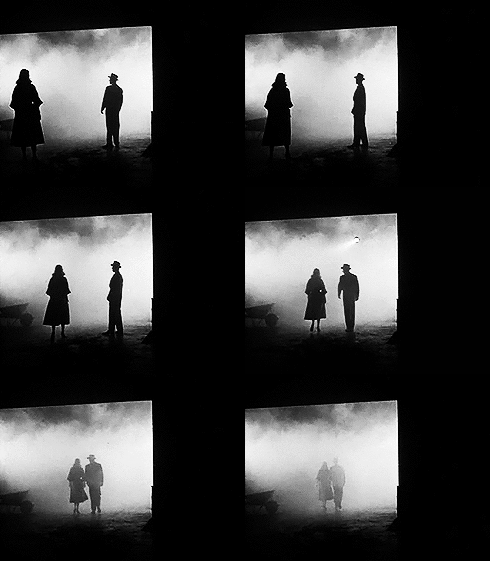
So I think I am done for the moment with my little nasty obsessive foray into the world of Elizabeth (Bettie) Short and some of the (other, which is to mean besides me, now) men who were obsessed with her. Short, at 23, was found murdered and mutilated in a vacant lot in LA January 15, 1947, and it is still one of the most sensational murders in LA history, fueled by multiple accounts of the grisly details of her death, and speculation (which typically accompanies these kinds of stories) about the nature of Short’s sensationalized (sex) life. A naked woman dies and is found in a vacant lot, we have to ask questions for seventy years about her sex life, of course.
I first read Rick Geary’s comics true crime account, which is short but dense, and carefully researched, and focuses on Bettie Short's life. Geary's research leads him to accept the media and publicly stated police view (that helped to fuel public interest in her case) that she was basically a “nice” girl, a virgin (almost) to the end who just wanted to have fun with men and maybe make it in the movies. Short kept a scrapbook of dozens of men she dated, most of whom insisted they never had sex with her (because this is one of the questions cops want to know, too, about a dead beautiful girl). This perspective on her as a “Madonna” somewhat strains credibility, however, as her father’s testimony denies it, and several of her roommates cast doubt on it, and one of her last “boyfriends” seems to have been a guy in an LA mob that was in charge of prostitution for his outfit.
Ellroy, in both this novel and the graphic adaptation of it, takes the position that Bettie is, while sexually active—and who cares if she is? Apparently everyone, including me—a victim of circumstances. Like thousands of women (and men) who naively think they can break into the film world, Bettie left home without much money, with no promise of work, and tried to piece together a life in LA, getting involved with “the wrong crowd,” one of whom she clearly crossed.
But the story in Ellroy’s Black Dahlia is less about Short and more about the obsession to know her and solve her crime. Those who get hooked on her are implicated in this crime, including we readers, and we all have our own histories and demons to bring to it. Ellroy’s story is about detective Dwight "Bucky" Bleichert, and his partner, Lee Blanchard, who both are led to drugs and madness and criminal excess themselves in the process of investigating this crime. Bleichert and Blanchard are best friends, ex-boxers and partners in the case. As it turns out they both get involved in complicated ways with women that connect them to Short’s story.
Blanchard lost his sister and wants to solve the murder to in part deal with his rage and guilt over her loss; Bucky eventually also gets similarly obsessed with the case, and in the process gets involved with a woman who looks like Short who had a short affair with her. Both Lee and Bucky are in love, too, with Kay, the woman Lee lives with. I know, whew, a lot of layers to work through here, but Ellroy is good at digging deep into this muck. And for Ellman it is indeed the muck of the human condition wit which Ellman is pricipally concerned. The "good old days" of LA in the forties, all those great Hollywood films and glamour? Forget about all that.
Everyone in Ellroy’s story is morally compromised, including we as readers obsessed with this sad, ugly tale, as we, too, ask questionable questions about her sexual reputation and get fascinated with her wild life as people usually do in and through media-sensationalized cases: How many men? Is she bi-sexual? Is she, in the end, a prostitute for the mob? And why should we care about her sensational case? Why can’t we just leave her alone in peace? Who are we to obsess about the men in her life? And why can’t we look away when we, too, find her body in that vacant lot?
This is a particularly American story of lies and media obsession and madness, it seems to me. In the process of investigating the crime, the LAPD received over 2,000 confessions from literally all over the world, and probably still receive tips today, which we learn is typical of a case like this. What is up with that?! It certainly seems like a tale of collective cultural madness, saying something particularly about some/many men, maybe, but the story as a whole also implicates many women as willing partners in this crazy world, too.
The Black Dahlia is brutal, crude, profane, filled with the lingo and tastes and smells and sounds of forties dark LA life. It’s not always easy to read, like you're wanting to look away from the car wreck on the side of the road but you're not able (or willing) to. The year after publishing this fine noir, carefully researched crime novel (not a “true crime” novel, and more a cultural thriller than a straight murder mystery), Ellroy got even more sensational and published a memoir about how his obsession with Bettie Short was connected to the fact that his own mother was raped and killed. Like Blanchard, Ellroy was driven to actual madness, completely out of control, maybe even like Blanchard near death, obsessed with his mother’s case, which he fictionally conflates in many ways with Bettie Short’s story. So that is fascinating, right? Now, obsessed myself, having also just seen the Brian de Palma film version, I have to read Ellroy’s My Dark Places. Whew, when will it end? Help!