Thomas Ligotti is a contemporary American horror author and reclusive literary cult figure. His writings, while unique in style, have been noted as major continuations of several literary genres—most prominently Lovecraftian horror—and have overall been described as works of "philosophical horror", often written as philosophical novels with a "darker" undertone which is similar to gothic fiction. The Washington Post called him "the best kept secret in contemporary horror fiction"; another critic declared "It's a skilled writer indeed who can suggest a horror so shocking that one is grateful it was kept offstage."
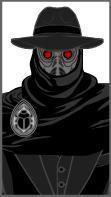
A graphic interpretation of four Ligotti stories: "The Last Feast of Harlequin," "Dream of a Mannikin," "Dr. Locrian's Asylum" and "Teatro Grottesco."
With Ligotti, often the most suggestive horrors are philosophical rather than physical, and therefore images cannot convey how disturbing these stories really are. Still, these illustrated tales are both compelling and useful, as aids to a literary meditation on nihilism.
These illustrations may operate in much in the same way as an icon that is used in the journey of Orthodox prayer. Except that here your destination is an abandoned outpost filled with derelict bungalows and impassible roads.
Not really for me. The artwork is interesting and unsettling, I swear I could feel the creepiness, but somehow the stories are disconnected and difficult to follow.
This is a graphic adaptation of 4 of Ligotti’s short stories and thankfully all of them were enjoyable and adapted faithfully. I enjoyed the artwork in each to different degrees however all of the artists did manage to capture the atmosphere and themes very effectively. If you’re a fan of Ligotti I’d definitely recommend this to you.
Well, I decided to cheat and read a comic book instead of the real book by Thomas Ligotti. The introduction was not the most inspiring one, and I think it is totally my fault. In the ideal world, it should have worked. According to critics, Ligotti's works are very subliminal, dark, Lovecraftian , and very atmospheric. So, the images should have contributed to the feelings of space and presence, but they did not. There are a number of reasons. 1. I have always been a word over an image person. 2. The target audience for most of comic books is teens (far way from my current age), 3. The translation of his story into a comic narrative simply did not work.
I enjoyed the preface to every story that explains the mechanics of horror and the transcendental - I like the deconstruction of fiction, but this was possibly the most enjoyable thing in the book plus the first story was both atmospheric and coherent in its incoherent way. Others were not for me.
I think I need to give the author a proper chance by reading books, not comics.
To me, Thomas Ligotti's work is a good demonstration of how horror is most effective in small doses. These illustrated adaptions of a handful of his stories haul you in but don't give you enough time to become acclimated (and therefore desensitized to) the premise before bringing things to an abrupt (anti) resolution. Ligotti is one of the modern masters of weirdness and the artwork ranges from decent to downright spooky. Interesting stuff.
I love Ligotti's work, and I mostly love the artists who took on illustrating four of his stories in this collection. I have no experience with any of the writers at all, but I'm going to count this one as a well-intentioned failure.
It wasn't necessarily bad, but if there's anything you can say about a Ligotti story, it's that each one drips with a sickening, dark, moist atmosphere of dread and despair and oceans of nihilism and doubt.
It takes a special writer to take these on, condense them to graphic novel dialogue balloons, and keep that idea going. Sadly neither writer succeeded, though perhaps the first story came closest. As for the art, each artist did try to get across that cloying, clinging horror, but none completely succeeded.
Fair attempts, but each unsuccessful.
Which is too bad, because, if someone was able to do Ligotti right in graphic novel form, that truly would be the stuff of nightmares.
Art was good, I didn't really connect with the stories though. Haven't read the text versions. It feels like the comics need to be longer and more fleshy.
The best gift someone (at least this girl) can receive is a book, or in this case, a graphic novel of an author's most horror-inducing tales. I've been figuratively dying to get my hands on The Nightmare Factory, and now thanks to the merry holidays, I have it in my possession. Once I had a moment to myself, my greedy hands pawed at this book, devouring its words and images like the literary glutton that I am. And before I knew it, I had reached its end. The graphics ceased, but my enjoyment had not.
To have images styled to Thomas Ligotti's words was a gift in and of itself. Ligotti's writings are so imaginative and grotesque, that it is almost necessary to have accompanying graphics; all lovingly crafted from a few different artists of today. I love Ligotti and I love this graphic representation of his stories. Definitely worth your attention.
some critic somewhere said once that ligotti's overarching theme was his stories' sense of dread, in a word: doubt. his characters are saddled with it like a melancholic Atlus, the coming gotterdammerung too strong to allow you to even care to shrug. well, none of that translates to the comic medium. a couple (four total here) of the stories' ends are completely changed, one of them has an entirely new character in its protagonist and the most well known (and most comically (heh) astute) the Last Feast of Harlequin, seems just silly when the ending is shown. none of this leaves the reader feeling like the original stories do, and most of it excises his beautiful prose, and all of it will do nothing to garner more readers for him. pastiche, completely disposable. a shame.
La fábrica de pesadillas en realidad es una fábrica de somníferos.
Es innegable que Ligotti es un escritor con gran dominio del lenguaje, una imaginería muy original, y una prosa evocadora con reminiscencias de Poe y Lovecraft, pero sus narraciones a veces son demasiado introspectivas y muy lentas para mi gusto. Este libro lo he usado un par de noches que tenía insomnio, y mano de santo.
Yet another bargain bin find, I was surprised when I got to this one in the backlog. Where did this come from? Is this book so evil that it planted itself into my collection in order to enslave my soul? I must have picked this up when I was on one of my more adventurous kicks. The artwork is quite different from story to story, and for the most part it works for each respective story. The writing is superb, with these stories being incredibly layered and nuanced. The ideas Ligotti has have bore themselves into my brain like maggots into a rotting corpse, and are forcing me to reflect on their foulness.
The Last Feast of Harlequin is the best, with it's H.P. Lovecraft ancient ones flavored evil. I am a big fan of psychological Horror and suspense, and Ligotti (with Moore and Harris) deliver it in spades. I am not sure if I bought this book or if I am cursed and it has chosen to possess me. Either way, there's no turning back...
I dislike the way that the cover of this book feels in my hands. It's uncoated cardstock and it has a rough, gritty feel to it that makes me ill. I was a stockboy in my adolescence, and one of my tasks was stocking shelves with liquor bottles. Gilby's Gin had frosted glass some 20 plus years ago, and it made me feel ill and creepy crawly just touching it for an instant. This book gave me a similar feeling and brought back that memory from way back when. The paper is at least super thick, high quality coated stock. I just wish that the cover didn't feel so gross.
“A fractured mind is often the way into a world not suspected by those of an innocent normality.”
The Nightmare Factory is a graphic novel based on the stories of Thomas Ligotti written by Stuart Moore and Joe Harris. This collection includes the following stories:
The Last Feast Of Harlequin
Dream Of A Mannikin
Dr Locrian’s Asylum
Teatro Grottesco.
Each of these includes an introduction by Thomas Ligotti where he talks about creating and expanding the stories. We get a deeper explanation behind the motivations of the characters as well as a historical point of view.
These were quite dark and on many occasions disturbing. They swim close to the edge of horror and before you know it you’re fully immersed. The artwork draws on the fear and tension within the stories adding to the unnerving experience of reading them.
This collection was perfect for this month and I can’t wait to read more.
Este libro reúne una selección de relatos muy variados. A diferencia de autores del mismo género, Ligotti se decanta por lo grotesco confundiéndolo, en mi opinión con el terror básico, que es mucho más interesante. No obstante existen relatos como la música de la luna, Netherescurial o el bungalow, que presentan cierta similitud con las historias de terror más clásicas, aunque eso no mejora la calidad global del libro.
Desde mi punto de vista no consigue la atmósfera agobiante y estremecedora por lo que resulta una lectura muy aburrida, incomparable con los relatos de Poe o Lovecraft.
A bit of a strange intro to Ligotti (who I have had the hardest time tracking down works from over the years). The stories here are clearly all abbreviated/transformed for the medium, and while the art is pretty solid in this volume, I don't know if this is how I want to become familiar with his work.
A lot of it also feels very Neil Gaiman/Last Temptation-y, but I suspect that's simply because I read the Gaiman first.
Ligotti's stories sometimes veer into the abstract, which can be wonderfully unsettling. I enjoy being lead astray, lost in the woods, and a certain, purposeful lack of clarity. And though I did enjoy these graphic versions of his stories, I found a couple of them unnecessarily vague to the point where I lost the interpretation.
Just the same, they're Ligotti's stories, so enjoyable. Volume 2 is a little better.
A fun and fitting adaptation of Ligotti's more iconic stories. While I enjoyed it overall, there seemed to be something lacking with this graphic adaptation, which I believe to be the absence of Ligotti's evocative prose. Otherwise, the graphical presentation is creative, unique among the stories, and each perfectly demonstrated the dilapidated reality which is a prevalent theme of Ligotti's writing.
Enter the universe of renowned horror master Thomas Ligotti—a universe where clowns take part in a sinister winter festival, a scheming girlfriend makes reality itself come unraveled, a crumbling asylum's destruction unleashes a greater horror, and a mysterious Teatro comes and goes, leaving only shattered dreams in its wake.
Ud heca en una coctelera a Lovecraft, Poe y Kaf....Sale Ligotti. Cuentos intensos, casi contados desde la esquzifrenia. Algo escondido, algo en las paperedes, en un vaso mal puesto en la la mesa, en un libro antiguo. Sim embargo a veces puede sonar medio repetitivos ya que muchos cuentos que como que cambia ciudad nombres y es igual.
2.5 stars but upped to 3 stars because the art work was very good and added to the novellas. But only two of the novellas were well chosen and well rendered. The rest were not. It is worth reading this for the two first stories but I wouldn't buy it and put it on my bookshelf.
I have no idea how or when this appeared in my collection, but I picked it up from one of the several boxes of my books that have arrived in the house from my dad's flat recently. Not the most incredible collection, but good short horror stories for fans of the genre.
The artistry was superb, but I don't normally go in for graphic novels. It was a hard way to get into his fiction. Hopefully, the full-fledged works will better for me.
The art saved it but I just don’t vibe with Ligotti’s writing. Last time I read one of his books it was a DNF and I’m just realizing he’s not for me. Sad and weird since I love horror, but true.