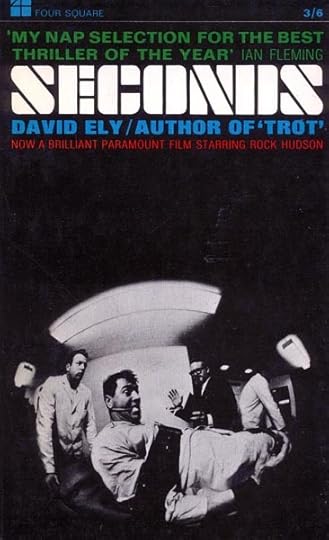
A measurement of intervals of time: one sixtieth of a minute
A second helping of food at a meal
Inferior goods
As a verb: agreeing with something or someone
All of these meanings have resonance with the storyline of “Seconds”. However, for me, this story was less about ‘seconds’ and more about ‘firsts’ — to wit, can you be a second if you were really never a first?
A very successful long-married middle aged banker is finding himself bored with his life and his marriage when he gets a phone call from his old Harvard roommate Charlie (whom he thought had died the previous year in a quite bizarre ‘fall’ into an active volcano). Charlie explains to his friend, thereafter referred to as Mr. Wilson, that his demise had been expertly engineered to look like a tragic accident by a secret organization that, for a steep fee, was able miraculously to grant qualifying candidates a chance at a completely new life — one unencumbered by all former responsibilities of family and profession. A second chance to make those unrealized dreams come true — a rebirth, but one in which the ‘newborn’ skips past all the struggles, dips and challenges of growing up, and is instead ‘born’ anew with an already actualized identity, a new surgically reconstructed countenance, and a ‘past’ with all the requisite phony certificates to authenticate the second life. So a stand-in for the first iteration of Wilson is staged to present as tragically deceased from a sudden heart attack in a midtown hotel, while the second iteration of Wilson in hiding undergoes some months of grueling surgery and physical training to ultimately land in a cushy and enviable setup on the beaches of Malibu, in a fabulous home with a full time servant, along with an art studio fitted out by the company in order that the second Wilson can realize his dream of living the life of the wildly successful ‘painter’, one with a plethora of glowing (and completely counterfeit) reviews of his many art exhibits. The only problem is that Wilson, who apparently hadn’t held a paintbrush since maybe 6th grade, was an inept artist without any more idea of how to construct a life for himself as a second on his own terms than he did when he was a first.
A non-entity doesn’t suddenly morph into an entity, or add nothing to nothing and you still wind up with … nothing.
Artiste Wilson becomes more and more discombobulated by his new life, by the realization that he is being watched (the butler is a company spy), by his neighbors who all seem to be ‘rebirthers’ and quite desperate in their libertine pursuits, and by the realization that he was hardly a blip on the radar screen of his former family’s lives — not thought of with fondness, or disdain even — just not thought of at all. So it’s no surprise that Wilson winds up back at the secret company compound, waiting his turn to become one of the cadaver stand-in for new recruit rebirthers. There, as an agitated Wilson is finally realizing he’s not getting a third chance at existence, one has to ask: was Wilson ever really alive?
It’s a well-written albeit fantastic story with a Swiss cheese degree of plot holes, but I think especially in the context of the ‘60s (when the book was written), it does reflect the zeitgeist of challenging cultural norms & expectations and questioning prevailing cultural values. But for me the most interesting part of the book was when Wilson visited his daughter & wife, and realized he had been dead to them well before the company faked his death in that hotel room.