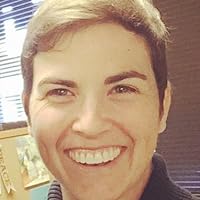
Ardath Frances Hurst Mayhar was an American writer and poet. She began writing science fiction in 1979 after returning with her family to Texas from Oregon. She was nominated for the Mark Twain Award, and won the Balrog Award for a horror narrative poem in Masques I.
She had numerous other nominations for awards in almost every fiction genre, and won many awards for poetry. In 2008 she was honored by Science Fiction and Fantasy Writers of America as an Author Emeritus.
Mayhar wrote over 60 books ranging from science fiction to horror to young adult to historical to westerns; with some work under the pseudonyms Frank Cannon, Frances Hurst, John Killdeer, Ardath P. Mayhar. Joe R. Lansdale wrote simply: "Ardath Mayhar writes damn fine books!"
There have been books in the past where I had to put them down because the tension was constant and I couldn't catch a breath. This book has the opposite problem: even in the most tense moments of conflict, I felt already assured that the good folks were going to pull through just fine on account of their know-how and tendin' to each other. I wanted to like it a lot more than I did -- I have a pretty awful craving for post-apocalyptic rebuilding narratives -- but I kept getting hung up on the thickness of the down-home old-country-folks-knew-best theme.
...I am also a little creeped out by the fact that the novel's villains are
Someday I hope to read a book in this genre that doesn't spend its time clumsily moralizing, and possibly even where there are characters I can identify with. Experiences so far suggest I should not hold my breath.
I can't believe that I have now found a utopian post-apocalyptic novel. Yep, the world may have ended, but the folks of Hickory Hollow are doing just fine. You see, they're good farming people who are used to doin' for themselves without help from the outside world. They know how to get along with their neighbors and take care of each other. Sure, the do run into some trouble from the inbred Unger women down by the river, but the take care of that problem. These people are adjust almost too well to the end of the world as we know it.
Despite the obvious unbelievability of the story, I enjoyed it. It was kind of nice reading a post-apocalyptic novel where people do okay. Fortunately, it was short. I don't think the perfection of Hickory Hollow could have filled any more pages.
Nice idea for a story--rural folks in East Texas pulling together all their resources to survive after a nuclear holocaust they weren't even aware had happened because they were already off the grid. However, the pedestrian prose and limited character development lessen the satisfaction of the read. It was written in the 80's, when the nuclear scenario was plausible, and only published in 2007. Still is is a plausible portrayal of the sequence of efforts of good people to band together, keep farming going, and solve diverse survival problems. The only evil to be fought is a band of ex-prostitutes, which is an interesting counterpoint to the usual cast of mauraders or religious maniacs in post-apocalyptic tales.�
When the world ends, the decent folk of Hickory Hollow just keep trekking.
This was a short, easy read that was interesting because the people in this book really don't care that millions have died and 'civilization' has come to an end. They're used to farming the land, making what they need, and are pretty much off the grid anyway, so they're fine. I think there would be more suffering and struggling, even in a small community like this, but I enjoyed seeing the author's version of how some people would be affected only in a small way by this type of event. The villainous tribe of former prostitute women was a little jarring, though. I guess if the apocalypse isn't enough of a conflict, you can always fall back on inbred families.
I love end of the world novels and this one did not disappoint. Often these types of tales are located in large cities, this was located in the woods of East Texas. It was an interesting perspective. I've always said the best place to go at the end of the world would be someplace very rural. Oddly feel good.
This novella was surprisingly great! I'm not usually one interested in Texas literature set in rural communities but this one drew me because it is post-apocolyptic. But, the end of the world idea just isn't that significant in this novella. Instead, the apocolypse could serve as a metaphor for any life-changing event that effects a community. In this case, the community is rural and very self-reliant. So, when the end of the world comes, this first family doesn't even know it has come - until some time has passed. And, then, they do what they've always done. They farm and they adjust. Now, there are some major adjustments that they do have to make, including making their own fuel-alcohol, but the point is that they are able to do it! They rebuild their communities and confront a variety of problems that present themselves along the way. But, this book is more that too. It confronts prejudices, values, politics, etc. For teenagers, and anyone else, a great read because....Country Boy Can Survive. Teens who are so overindulged and tend to have everything provided for would benefit from seeing what young children are capable of when they are needed by their communities.
I often wondered what libertarian socialism would like (seems oxymoronic, doesn't it)? This novella gives us a sense of the power of democratic community on a small scale. But, it's not Tea Party...though that philosophy is represented too...it's just different. Awesome read!
Mayhar tells a pretty simple story, one that's been told since the first campfire, I'm sure. Here is what happens when the world as we know it ends. I like a lot of her characterization; the protagonists are "good people" and even when they make difficult or terrible choices they remain sympathetic. There are many stories (movies, novels, TV shows, comics, internet stories, etc) within this post-apocalyptic genre, and few of them have the positive viewpoint that Mayhar offers. I rather like the optimism her characters evince.
I guess my only problem (and it's a big one, unfortunately) is that there's a lot of preaching happening in the story, both in the narrative and through the characters. The line "why did they leave when everything they need is right here" became a litany for everyone, even people who weren't initially interacting. It became a theme within the story, and I think that's why I wasn't in love with this novel. People sometimes leave, and sometimes they do it for reasons you approve and sometimes not...it's, at best, positivist, to expect ALL people to behave as one believes they aught; at worst, it's egocentric. I've always found that truly great writing doesn't preach at the reader a "message"...instead, it shows one way of being and allows the reader to engage with that way. I wish Mayhar had done the second; had she, this would have been a great story.
I read this book after reading “Earth Abides” and thank goodness, because this book removed the lingering nasty taste that “Earth Abides” left me with! This is a similar post-apocalyptic story, but there the similarity ends. Instead of passively living off the remains of 20th century technological civilization, the characters in “Hickory Hollow” create a sustainable agrarian life with as much of that technology that they can keep working. And when they don’t know how to do something, they learn how by reading and researching the issue! There’s no descent into stone-age “simplicity” in this book.
Generally well-written, with interesting, appealing characters, and a genuine exploration of the realities of life in a small communal group without the benefits of a larger civilization. I highly recommend this.
A short, easy read but so compelling, I couldn't put it down. The world as we know it, ends, leaving small groups of survivors, this one in Texas. They band together, help eachother with survival and surviving. When another band of people, called the Ungers, begin to attack home by home, they have to do everything they can to preserve the life they have made, making decisions they never had to face in the old world.
Kind of like "Lost", except instead of some beautiful, mysterious island, they're in east Texas :>))
I love "end of the world" type books and this is really a good one. It takes things down to a very basic level, sharing the story a small town and one family's response to doomsday.
Very disappointing dystopian novella. The characters are stereotypes of rural Texans and many of the peripheral characters seem interchangeable due to lack of description. The only real challenge in the post-apocalyptic world comes from a illiterate filthy tribe of women that were already local residents. That fact alone defies common sense.
This is one of those post-apocalytic stories where they slap a thin plot on what's really a wishlist of prepper's delight. There's some not-so-subtle commentary on ridiculous people who can't be self-sufficient and the wastefulness of government. Some of the survivalist bit is fun (which is why I kept reading), but the weak plot devolved to 'how we going to kill these murderers'.
This is a short book on the sliding end of the Earth. Nuclear war and what happens afterward are the subjects of this book. Very well written and somewhat realistic. If you enjoyed the Earth Abides, you will like this one.
The characters came alive for me, especially Luce and Zack. They were strong and did what needed to be done to keep their new family alive, while having a lot of compassion.
It was my understanding that this was a little-known post-apocalyptic survival story. It is actually the very coziest of catastrophes. wherein the protagonists went off the grid of their own free will years ago (when I say off the grid, we are talking 1985 levels of off-the-grid--no TV, no phones, nearest town over a thousand is fifty miles away), and only find out the nuclear apocalypse has descended when they make their monthly (!) trek to town to visit Hubby's sainted mom. Sure, the power went out, but we didn't think anything of it...
What follows is, with very few exceptions, pure undiluted survival porn. The protagonist family adjusts to the new way with astonishing ease, as this is basically how they've been living for four years. Some quirks of wind and the gulf stream keep fallout from reaching Hickory Hollow--indeed, not a single character gets radiation sickness, and the only environmental sign that half the US has been nuked is some altered weather patterns. Various other survivors, including scrappy kids, wise elders who have knowledge to pass on, and families who conveniently have lots of supplies and tools to contribute all join together. Everyone farms and builds and tends stock and makes alcohol-based car fuel and/or preserves, and there's no nuclear winter or radiation in the soil to affect the crops. The only characters that die are a couple of the aforementioned elders, one racist guy who refuses to join in the new community because there's a black family there already, and the designated "bad guys". Who aren't even scavengers or a militia gone wrong or what have you, they're a clan of inbred white trash (mostly women, that's not problematic at all) who have always lived in the area and decide to go feral post-apocalypse because the welfare checks and the men who paid booze and food for sex all stop coming. Not a single one of them gets an iota of character development except the child rescued from them, who of course is redeemed by the Power of Love and, when asked what should be done with her erstwhile family, says flatly "You should kill them all".
Don't get me started on the narrator's idle comment as she looks at her expanded post-nuclear family around the dinner table and thinks that she wouldn't change a thing that's happened because it's led to this. Or the conversation she has with her husband where she tells him that they have to think of the white-trash clan as inhuman monsters to be exterminated--"like the settlers thought of the Indians!" Or the casual mention of one African-American woman's "carefully enunciated, precise English". You'd think this was written in 1955, not 1985.
To sum up, I paid $2.50 for a used copy, and I'm honestly not sure it was worth it.
This entire review has been hidden because of spoilers.
I really enjoyed this book. Read it in one day. On the front and rear covers it is compared to "Earth Abides." I disagree on one major point--in "...Hickory Hollow" the characters make an effort not to depend on anything they can not make or repair themselves. In "Earth Abides," they are still eating out of cans and the main character has to trick the kids into learning how to use a bow and arrow. In short, the characters in "Earth Abides" are pretty lazy and content with going back to the stone age, whereas the characters in "...Hickory Hollow" make endless efforts to survive: gardening, making fuel, converting engines, collecting mules and horses. Either way, I enjoyed both immensely.
This was an easy read. Since you never do find out many details about the civilization ending event, the author never has to work to hard to explain it. It was a little too idyllic with the majority of the characters all being educated and knowledgeable in sustainable off the grid living. Every one knew useful skills that contributed to the group, kids were all willingly helpful and no one ever fought. Well, except the bad breeding barely human Ungers. Again a case of too easy black and white characters. Even with my criticism that everything was a tad bit too Utopian for the aftermath of a civilization ending event, I still enjoyed the story.
This is not a bad book, just probably written for a younger reader than myself. "The World Made By Hand" definitely set the standard for post-apoplyptic books for me, and this just didn't come any where close to that for me. The premise, as always is interesting, but everything just came to conveniently for my tastes. The main characters happend to have neighbors who were all brilliant and knew how to do the things they didn't. They had figured out how to convert machines to run on alcohol from gasoline way before the incident happened. So while it was easy and somewhat fun to read it was hard to digest as even a future possiblity when you looked at it closely.
Yes, I really liked it. Even though it was short! Sometimes a short read is disappointing. I read this book in a day. It quickly got to the heart of the matter, and kept going from there. It was refreshing to read from the perspective of a woman. I was surprised by a few things in the book, seemingly uncharacteristic of the characters that said or did the things, but those happenings did not detract much from the overall book.
I'll pass this one on to Lucy. It was fairly light and predictable. But if it was the first post-apocalyptic story I'd read, I would have eaten it up like Little House on the Prairie. It really reminds me of World Made By Hand in that you get the feeling the author is writing him/her self into the role of moralistic hero despite the world ending. Fast read, good for a middle schooler.
A slow burn, this is. Not what I was expecting based on the book jacket's description. As advertised, I thought this book would more action-filled; it wasn't. But this does not detract from the story. Instead, this contemplative end-of-the-world novel challenges the reader to think about moral issues. Just because the world "ends" does not mean that humanity must end, does it?
This was a simple easy book that was written in the 80's. I enjoyed the book and found it remotely believable. In this end of the world as we know it the author tells how the next generation may come about. She also expresses how important the elders who survive will be to this transition.
didn't like the writing, too bad because the story had potential. Front cover says the book is written in the style of another book so I put that one on hold t see if it is any better.