

What do you think?

A Little Princess
Sara Crewe is a student at Miss Minchin's fancy boarding school. She has the very best of everything. But when her rich father dies, she's left without a penny. Now Sara lives in the school's cold attic and works for crusts of bread. With some help from a secret friend and a touch of magic, Sara's world is about to change in ways she never dreamed. An adaptation of the classic novel that's just right for young readers "From the Trade Paperback edition."
112 pages, Paperback
First published January 1, 1905
About the author
Cathy East Dubowski
172 books49 followersCathy East Dubowski is a narrator, editor, and illustrator. She specializes in novelizations of movies and literary classics for children and young adult readers. Dubowski has written more than 100 books for children, including adaptations of The Aristocats, Frances Hodgson Burnett’s A Little Princess, and Anna Sewell’s Black Beauty.
Ratings & Reviews
Friends & Following
Create a free account to discover what your friends think of this book!
Community Reviews
Displaying 1 - 30 of 12,153 reviews

August 2, 2014
Oh my goodness I absolutely adored this! This brought me right back to childhood since I loved the movie as a kid, so glad the book is just as good!!

April 24, 2008
My mother thought it completely foolish of me to buy a hardcover book and then finish it in one night (these were the days before Harry Potter and, besides, we had enough books in our house, in her opinion). But I loved owning this edition with its gorgeous images and, when I gave it to my younger cousins in Singapore, believing myself ready to part with my childhood attachment to a book I wouldn't ever forget, I did mourn its loss, though I was a teenager by then and studying the dead white male canon. I'm an awful person, I know, but when I visited my family in Singapore the year before I graduated from college, I noticed the book on their shelf and asked to see it, and my aunt, noticing how my face lit up, asked if I wanted it back.
"Really? You mean it? Is that OK?"
"Of course, why wouldn't it be?"
"Are you sure? Oh, but I'm awful. I guess I didn't know how much it meant to me. You're so wonderful. What can I give you?"
I forget what I gave them in exchange, but it certainly held no value compared to this book. Not to be too psychoanalytical, but I suppose my reclaiming the book was a silent protest against my mother (and my unconsciously wanting to reconnect with my father, from whom I'd inherited my love of books). I haven't changed much in all these years.
"Really? You mean it? Is that OK?"
"Of course, why wouldn't it be?"
"Are you sure? Oh, but I'm awful. I guess I didn't know how much it meant to me. You're so wonderful. What can I give you?"
I forget what I gave them in exchange, but it certainly held no value compared to this book. Not to be too psychoanalytical, but I suppose my reclaiming the book was a silent protest against my mother (and my unconsciously wanting to reconnect with my father, from whom I'd inherited my love of books). I haven't changed much in all these years.

May 22, 2017
My favourite book of all time.

May 1, 2018
UNPOPULAR OPINION TIME. Sorry folks.
Meet the characters:
Sara aka the Little Princess is described as (and I'm only using words written explicitly in the book): thin, pale, with striking green eyes too big for her face (now I know where so many YA heroine's descriptions come from LOL), clever, good, serious, quick at her lessons, proud, brave, generous, hospitable, unconquerable, amiable, good-tempered, having good manners. She speaks fluent French, though she'd never learned it. She also speaks fluent Hindi.
Sara's father is described as young, beautiful, nice and clever.

Ermengarde (aka Sara's best friend) is explicitly described as fat, stupid, not clever, having a slow little mind, vulgar, forgetful and forgettable.
Lottie is another one of Sara's friends, a young child. She's also fat and stupid, but also ill-tempered and capricious, prone to throwing tantrums.
Beckie, aka the servant, is another Sara's friend. She's always described as poor-poor-poor Becky. Also stupid.
Lavinia, aka the nemesis, is described as horrid, nasty, priggish, sneering, and jealous.
Miss Minchin, aka the headmistress, is described as rude, acid, harsh, domineering, hard-hearted, mean, vulgar. Also, she doesn't know French and doesn't try to learn it, being the headmistress of a top school for young ladies in XIX England. Hmmm...
Cook is described as vulgar and insolent.
Beggar girl seen on the street: with a stupid look of suffering, frightful, little ravening savage, poor little wild animal.
Do you see a pattern here? I do.
1) Sara is a total Mary Sue, so is her kin (dad). They are oh-so-clever (even though Father never set aside any of his money for his daughter in case something happened, didn't even pay her school forward for even a day. Is that very clever?)
2) Sara's friends are all fat and stupid, and their only redeeming quality is that they worship her and trail her like puppies with unwavering loyalty and admiration.
3) Sara's enemies are all dumb and rude.
Do I have to say I didn't adore a book with such characters?
WHAT ABOUT THE PLOT?
So. Sara is awesome and rich. She briefly becomes poor but stays awesome. Her friends continue to worship her; her enemies expose their shallow, awful true natures. Then Sara becomes rich again, remaining awesome as ever, and punishing all who were mean to her. Yup, Sara never changes in her awesomeness, she doesn't need a character arc. Instead, the whole world around her makes an arc. Brilliant.
Don't even get me started that a child who has always been given all she wants, has never heard the word "no" and had -literally- servants and slaves at her beck and call - isn't spoiled, but is instead wise and teaches her wisdom to the adults around her. Sure, because wisdom isn't something you learn through error and hardship. You're just born with it if you're a true Princess inside.
WHAT MADE ME WANT TO GOUGE MY EYES OUT
Was the complete and unwavering snobbism of Sara and the author.
"It's not your fault that you are stupid" - says Sara to her BFF Ermengarde. How nice and kind, right?
I tried not to be a princess. I tried! - but failed. Who could blame you, Sara?
I can give buns and bread to the populace! - says Sara exuberantly, when she becomes rich again.
"You couldn't look like a street beggar, you haven't a street beggar face," "...clothes to make her look somehow like a servant" - um, so what is a "beggar face" and what do servants look like? Not like humans, just in different clothes?
Everyone keeps beating themselves up about how much Sara is working (at the time she is poor), but no one pays any mind to Becky, who is of comparable age and actually works more and also harder. Sara deserves all the sympathy because she used to be rich, you see! The whole London filled with hungry children working way too hard is of no concern because they look like servants and have beggar faces.
Miss Minchin is portrayed as a monster because she made Sara work when she turned from crazy rich to a beggar. Sara is, in fact, indebted to Minchin, because not only did her father not pay forward, he also didn't cover some hefty bills. Minchin does a good thing not throwing Sara out and also adapting her to a change of station. Because her station is indeed very much changed. What should she have done? Ignored reality, to make Sara face it later, even more harshly? Sure, Minchin could have been softer to a child who's just lost her father. But of course, the author wouldn't have that.
So I absolutely HATED every page of this book. As I hated Little Women and Black Beauty, as a matter of fact. Maybe catching up on children's classics I haven't read is a bad idea.
P.S. (20.07.2019) In fairness, I've just finished a different book by Frances Hodgson Burnett - The Secret Garden - which is a children's classic as well. And I loved it and gave it 5 stars. So it seems too early to give up on the genre or even the author. The Little Princess was just not for me.
Meet the characters:
Sara aka the Little Princess is described as (and I'm only using words written explicitly in the book): thin, pale, with striking green eyes too big for her face (now I know where so many YA heroine's descriptions come from LOL), clever, good, serious, quick at her lessons, proud, brave, generous, hospitable, unconquerable, amiable, good-tempered, having good manners. She speaks fluent French, though she'd never learned it. She also speaks fluent Hindi.
Sara's father is described as young, beautiful, nice and clever.
Ermengarde (aka Sara's best friend) is explicitly described as fat, stupid, not clever, having a slow little mind, vulgar, forgetful and forgettable.
Lottie is another one of Sara's friends, a young child. She's also fat and stupid, but also ill-tempered and capricious, prone to throwing tantrums.
Beckie, aka the servant, is another Sara's friend. She's always described as poor-poor-poor Becky. Also stupid.
Lavinia, aka the nemesis, is described as horrid, nasty, priggish, sneering, and jealous.
Miss Minchin, aka the headmistress, is described as rude, acid, harsh, domineering, hard-hearted, mean, vulgar. Also, she doesn't know French and doesn't try to learn it, being the headmistress of a top school for young ladies in XIX England. Hmmm...
Cook is described as vulgar and insolent.
Beggar girl seen on the street: with a stupid look of suffering, frightful, little ravening savage, poor little wild animal.
Do you see a pattern here? I do.
1) Sara is a total Mary Sue, so is her kin (dad). They are oh-so-clever (even though Father never set aside any of his money for his daughter in case something happened, didn't even pay her school forward for even a day. Is that very clever?)
2) Sara's friends are all fat and stupid, and their only redeeming quality is that they worship her and trail her like puppies with unwavering loyalty and admiration.
3) Sara's enemies are all dumb and rude.
Do I have to say I didn't adore a book with such characters?
WHAT ABOUT THE PLOT?
So. Sara is awesome and rich. She briefly becomes poor but stays awesome. Her friends continue to worship her; her enemies expose their shallow, awful true natures. Then Sara becomes rich again, remaining awesome as ever, and punishing all who were mean to her. Yup, Sara never changes in her awesomeness, she doesn't need a character arc. Instead, the whole world around her makes an arc. Brilliant.
Don't even get me started that a child who has always been given all she wants, has never heard the word "no" and had -literally- servants and slaves at her beck and call - isn't spoiled, but is instead wise and teaches her wisdom to the adults around her. Sure, because wisdom isn't something you learn through error and hardship. You're just born with it if you're a true Princess inside.
WHAT MADE ME WANT TO GOUGE MY EYES OUT
Was the complete and unwavering snobbism of Sara and the author.
"It's not your fault that you are stupid" - says Sara to her BFF Ermengarde. How nice and kind, right?
I tried not to be a princess. I tried! - but failed. Who could blame you, Sara?
I can give buns and bread to the populace! - says Sara exuberantly, when she becomes rich again.
"You couldn't look like a street beggar, you haven't a street beggar face," "...clothes to make her look somehow like a servant" - um, so what is a "beggar face" and what do servants look like? Not like humans, just in different clothes?
Everyone keeps beating themselves up about how much Sara is working (at the time she is poor), but no one pays any mind to Becky, who is of comparable age and actually works more and also harder. Sara deserves all the sympathy because she used to be rich, you see! The whole London filled with hungry children working way too hard is of no concern because they look like servants and have beggar faces.
Miss Minchin is portrayed as a monster because she made Sara work when she turned from crazy rich to a beggar. Sara is, in fact, indebted to Minchin, because not only did her father not pay forward, he also didn't cover some hefty bills. Minchin does a good thing not throwing Sara out and also adapting her to a change of station. Because her station is indeed very much changed. What should she have done? Ignored reality, to make Sara face it later, even more harshly? Sure, Minchin could have been softer to a child who's just lost her father. But of course, the author wouldn't have that.
So I absolutely HATED every page of this book. As I hated Little Women and Black Beauty, as a matter of fact. Maybe catching up on children's classics I haven't read is a bad idea.
P.S. (20.07.2019) In fairness, I've just finished a different book by Frances Hodgson Burnett - The Secret Garden - which is a children's classic as well. And I loved it and gave it 5 stars. So it seems too early to give up on the genre or even the author. The Little Princess was just not for me.

January 24, 2025
A blast from the past
Once upon a time, in my childhood, I had watched the movie and read a modernized version of this old classic book, but I had never actually dusted off The Original.
On eBay, I scored a 1928 copy of A Little Princess in relatively good shape for about $20.
Mmmmmmmmmmm. What a tactile treat! The book has these incredible glossy color pictures. The 1905 version does have a few extra pictures (cost cutting existed even in the 1900’s!). The text is laid out perfectly — it isn’t bunched all together where you need a magnifying glass to read it. The pages in this book were uncut and had to be separated by hand. The paper, nice and thick, a perfect weight in your hands.
As luck would have it, a few of my pages still needed to be cut. Just imagine. Some of these pages had been waiting to be read for almost 100 years! Worry no more. I liberated them!
As far as the story is concerned, it couldn’t be more timely. Ultra wealthy, seven-year-old Sara Crewe is dropped off at boarding school. Unfortunately, Sara experiences a tragedy, and her circumstances suddenly change drastically. Will Sara rise above her challenging circumstances?
A great reminder to focus on what we can control.
The Green Light at the End of the Dock (How much I spent):
Hardcover Text – $21.28 on eBay
Connect With Me!
Blog Threads BookTube Facebook Insta My Bookstore at Pango
Once upon a time, in my childhood, I had watched the movie and read a modernized version of this old classic book, but I had never actually dusted off The Original.
On eBay, I scored a 1928 copy of A Little Princess in relatively good shape for about $20.
Mmmmmmmmmmm. What a tactile treat! The book has these incredible glossy color pictures. The 1905 version does have a few extra pictures (cost cutting existed even in the 1900’s!). The text is laid out perfectly — it isn’t bunched all together where you need a magnifying glass to read it. The pages in this book were uncut and had to be separated by hand. The paper, nice and thick, a perfect weight in your hands.
As luck would have it, a few of my pages still needed to be cut. Just imagine. Some of these pages had been waiting to be read for almost 100 years! Worry no more. I liberated them!
As far as the story is concerned, it couldn’t be more timely. Ultra wealthy, seven-year-old Sara Crewe is dropped off at boarding school. Unfortunately, Sara experiences a tragedy, and her circumstances suddenly change drastically. Will Sara rise above her challenging circumstances?
A great reminder to focus on what we can control.
The Green Light at the End of the Dock (How much I spent):
Hardcover Text – $21.28 on eBay
Connect With Me!
Blog Threads BookTube Facebook Insta My Bookstore at Pango

April 6, 2021
Sara Crewe is a young pupil at Miss Minchin's Select Seminary for Young Ladies and it is clear from the start that she is favored.
Of course she is - she's absolutely loaded. A private room, custom gowns, more toys than what she could ever play with.
The teachers resent her and the other students envy her.
And yet...and yet...Sara is the kindest soul of them all. Always quick to lend a hand or provide guidance or comfort the younger ones.
And (of course) her actions do nothing but stir the pot of hatred from the others.
And then, the worst possible thing happens - Sara's father dies, and with it her fortune. Suddenly the teachers have no problem with being cruel to Sara's face.
And the little princess becomes nothing more than a servant.
But Sara maintains her aura of poise and grace - she will be a princess in riches or rags. And maybe, just maybe, her life will get better.
Oh my gosh. First I read the Secret Garden and I'm blown away. Then I read this one and I'm just in love.
I cannot get over just how wonderful Sara is, the hardships she faced and the true kindness she showed despite it all.
This is such a truly amazing story - I cannot recommend it enough!!
Of course she is - she's absolutely loaded. A private room, custom gowns, more toys than what she could ever play with.
The teachers resent her and the other students envy her.
And yet...and yet...Sara is the kindest soul of them all. Always quick to lend a hand or provide guidance or comfort the younger ones.
And (of course) her actions do nothing but stir the pot of hatred from the others.
And then, the worst possible thing happens - Sara's father dies, and with it her fortune. Suddenly the teachers have no problem with being cruel to Sara's face.
And the little princess becomes nothing more than a servant.
But Sara maintains her aura of poise and grace - she will be a princess in riches or rags. And maybe, just maybe, her life will get better.
Oh my gosh. First I read the Secret Garden and I'm blown away. Then I read this one and I'm just in love.
I cannot get over just how wonderful Sara is, the hardships she faced and the true kindness she showed despite it all.
This is such a truly amazing story - I cannot recommend it enough!!

June 1, 2021
"She liked books more than anything else, and was, in fact, always inventing stories of beautiful things and telling them to herself."
This book tells the story of a seven year old girl, Sara, whose father got posted in a faraway place and she had to stay in a seminary.
And this is the best description of Sara so far as the story goes at the beginning of the book:
"Her young mother had died, and as the child had been treated like a favorite doll or a very spoiled pet monkey or lap dog ever since the first hour of her life, she was a very appalling little creature."
But what's more important about her character is how she tells stories and being there for those who need some kindness and a pair of listening ears.
Other characters include Miss Minchin (strict without much purpose I feel, very dislikeable) and her other staffs, Ermangarde ("fat", "not clever" *me: I just can't ugh...), Lavinia (almost a bully and a bully), Lottie (with the "small, fat legs"), Becky (the young, "ugly", stunted maid), Miss Amelia (the one with "fat" hands), Ram Das (the man next door) but try to know who are these characters when you read the book: Emily, Mr and Mrs Melchisedec.
*Child labour, starvation, child abuse and neglect
"“I can’t bear this,” said the poor child, trembling. “I know I shall die. I’m cold; I’m wet; I’m starving to death. I’ve walked a thousand miles today, and they have done nothing but scold me from morning until night. And because I could not find that last thing the cook sent me for, they would not give me any supper."
I really do not like the usage of derogatory words like ugly, fat over and over again in books especially in books that are considered classics and meant for the youngsters.
I liked this book and enjoyed it thoroughly but I wasn't ready for the stereotypes it has regarding gender and culture.
To be honest I was bored in between as there was an unending fuss on the main character. And then the book took a turn and it got pretty serious. That's when I started enjoying the book for the story it has.
The book deals with loneliness (and grief) in great detail from the perspective of a child. Sara even made friends with animals and birds to overcome such times.
The best part though is the writing. It made the book so easy to get into and get through with it until the end. It tells how company and imagination comfort during such difficult times. And also, there are a lot of times Sara stood up for herself and spoke her mind. It's liberating!
*Quite relatable:
"People who are fond of books know the feeling of irritation which sweeps over them at such a moment. The temptation to be unreasonable and snappish is one not easy to manage."
"Her imagination was beginning to work for her. It had not worked for her at all since her troubles had come upon her. She had felt as if it had been stunned."
“It’s a lonely place,” she said. “Sometimes it’s the loneliest place in the world.”
"Give her books, and she would devour them and end by knowing them by heart."
“I am growing quite fond of him. I should not like him to be disturbed. I have adopted him for a friend. You can do that with people you never speak to at all. You can just watch them, and think about them and be sorry for them, until they seem almost like relations."
(This sounds so much like me fangirling over my K-pop idols. Creepy me!)
“I don’t want you to give me anything,” said Sara. “I want your books—I want them!” And her eyes grew big, and her chest heaved.
*Lines to reflect upon:
"If Nature has made you for a giver, your hands are born open, and so is your heart; and though there may be times when your hands are empty, your heart is always full, and you can give things out of that—warm things, kind things, sweet things—help and comfort and laughter—and sometimes gay, kind laughter is the best help of all."
“Adversity tries people, and mine has tried you and proved how nice you are.”
“EVERYTHING’S a story. You are a story—I am a story."
"When people are insulting you, there is nothing so good for them as not to say a word—just to look at them and THINK."
"When you will not fly into a passion people know you are stronger than they are, because you are strong enough to hold in your rage, and they are not, and they say stupid things they wish they hadn’t said afterward. There’s nothing so strong as rage, except what makes you hold it in—that’s stronger. It’s a good thing not to answer your enemies."
"While the thought held possession of her, she could not be made rude and malicious by the rudeness and malice of those about her."
“Perhaps you can FEEL if you can’t hear,” was her fancy. “Perhaps kind thoughts reach people somehow, even through windows and doors and walls. Perhaps you feel a little warm and comforted, and don’t know why, when I am standing here in the cold and hoping you will get well and happy again."
(***The iconic lines***)
“Whatever comes,” she said, “cannot alter one thing. If I am a princess in rags and tatters, I can be a princess inside. It would be easy to be a princess if I were dressed in cloth of gold, but it is a great deal more of a triumph to be one all the time when no one knows it."
“Perhaps,” she said, “to be able to learn things quickly isn’t everything. To be kind is worth a great deal to other people.
*This part broke my heart:
“You are nothing but a DOLL!” she cried. “Nothing but a doll—doll—doll! You care for nothing. You are stuffed with sawdust. You never had a heart. Nothing could ever make you feel. You are a DOLL!”
The anguish. The frustration.
No child should feel this way.
The story ends well. Believe in yourself. Believe in the magic. Believe someone cares for you. Kindness matters.
And Miss Minchin, go to H. I really dislike such heartless, abusive, shallow characters.
Well, being yourself and being kind. That's how you conquer everything you want.
This book tells the story of a seven year old girl, Sara, whose father got posted in a faraway place and she had to stay in a seminary.
And this is the best description of Sara so far as the story goes at the beginning of the book:
"Her young mother had died, and as the child had been treated like a favorite doll or a very spoiled pet monkey or lap dog ever since the first hour of her life, she was a very appalling little creature."
But what's more important about her character is how she tells stories and being there for those who need some kindness and a pair of listening ears.
Other characters include Miss Minchin (strict without much purpose I feel, very dislikeable) and her other staffs, Ermangarde ("fat", "not clever" *me: I just can't ugh...), Lavinia (almost a bully and a bully), Lottie (with the "small, fat legs"), Becky (the young, "ugly", stunted maid), Miss Amelia (the one with "fat" hands), Ram Das (the man next door) but try to know who are these characters when you read the book: Emily, Mr and Mrs Melchisedec.
*Child labour, starvation, child abuse and neglect
"“I can’t bear this,” said the poor child, trembling. “I know I shall die. I’m cold; I’m wet; I’m starving to death. I’ve walked a thousand miles today, and they have done nothing but scold me from morning until night. And because I could not find that last thing the cook sent me for, they would not give me any supper."
I really do not like the usage of derogatory words like ugly, fat over and over again in books especially in books that are considered classics and meant for the youngsters.
I liked this book and enjoyed it thoroughly but I wasn't ready for the stereotypes it has regarding gender and culture.
To be honest I was bored in between as there was an unending fuss on the main character. And then the book took a turn and it got pretty serious. That's when I started enjoying the book for the story it has.
The book deals with loneliness (and grief) in great detail from the perspective of a child. Sara even made friends with animals and birds to overcome such times.
The best part though is the writing. It made the book so easy to get into and get through with it until the end. It tells how company and imagination comfort during such difficult times. And also, there are a lot of times Sara stood up for herself and spoke her mind. It's liberating!
*Quite relatable:
"People who are fond of books know the feeling of irritation which sweeps over them at such a moment. The temptation to be unreasonable and snappish is one not easy to manage."
"Her imagination was beginning to work for her. It had not worked for her at all since her troubles had come upon her. She had felt as if it had been stunned."
“It’s a lonely place,” she said. “Sometimes it’s the loneliest place in the world.”
"Give her books, and she would devour them and end by knowing them by heart."
“I am growing quite fond of him. I should not like him to be disturbed. I have adopted him for a friend. You can do that with people you never speak to at all. You can just watch them, and think about them and be sorry for them, until they seem almost like relations."
(This sounds so much like me fangirling over my K-pop idols. Creepy me!)
“I don’t want you to give me anything,” said Sara. “I want your books—I want them!” And her eyes grew big, and her chest heaved.
*Lines to reflect upon:
"If Nature has made you for a giver, your hands are born open, and so is your heart; and though there may be times when your hands are empty, your heart is always full, and you can give things out of that—warm things, kind things, sweet things—help and comfort and laughter—and sometimes gay, kind laughter is the best help of all."
“Adversity tries people, and mine has tried you and proved how nice you are.”
“EVERYTHING’S a story. You are a story—I am a story."
"When people are insulting you, there is nothing so good for them as not to say a word—just to look at them and THINK."
"When you will not fly into a passion people know you are stronger than they are, because you are strong enough to hold in your rage, and they are not, and they say stupid things they wish they hadn’t said afterward. There’s nothing so strong as rage, except what makes you hold it in—that’s stronger. It’s a good thing not to answer your enemies."
"While the thought held possession of her, she could not be made rude and malicious by the rudeness and malice of those about her."
“Perhaps you can FEEL if you can’t hear,” was her fancy. “Perhaps kind thoughts reach people somehow, even through windows and doors and walls. Perhaps you feel a little warm and comforted, and don’t know why, when I am standing here in the cold and hoping you will get well and happy again."
(***The iconic lines***)
“Whatever comes,” she said, “cannot alter one thing. If I am a princess in rags and tatters, I can be a princess inside. It would be easy to be a princess if I were dressed in cloth of gold, but it is a great deal more of a triumph to be one all the time when no one knows it."
“Perhaps,” she said, “to be able to learn things quickly isn’t everything. To be kind is worth a great deal to other people.
*This part broke my heart:
“You are nothing but a DOLL!” she cried. “Nothing but a doll—doll—doll! You care for nothing. You are stuffed with sawdust. You never had a heart. Nothing could ever make you feel. You are a DOLL!”
The anguish. The frustration.
No child should feel this way.
The story ends well. Believe in yourself. Believe in the magic. Believe someone cares for you. Kindness matters.
And Miss Minchin, go to H. I really dislike such heartless, abusive, shallow characters.
Well, being yourself and being kind. That's how you conquer everything you want.

June 25, 2014
"Whatever comes," she said, "cannot alter one thing. If I am a princess in rags and tatters, I can be a princess inside. It would be easy to be a princess if I were dressed in cloth of gold, but it is a great deal more of a triumph to be one all the time when no one knows it."
Much can be said about the improbabilities in the plot, about the desperate sentimentality and caricature of Victorian England's boarding school system. It doesn't matter.
To me, Sarah Crewe will always remain a symbol for inner strength, perseverance and values winning over greed, sadism and abusive power. I can't recall how many times I read my hardcover copy as a young girl, shivering with anger and fear when the young heiress thinks she has lost everything and is turned into an unpaid maid at the school where she used to be a shining star.
Quite often, I think of her when I enter a bakery on a cold day, the smell of fresh bread making me instantly hungry. I think of the hungry girl, and how much she must have craved the buns she bought for a coin she found. And I know it is a simple show-effect on the part of Frances Hodgson Burnett to make Sarah hand over the buns to a starving girl sitting outside the bakery. It is not realistic! We are human beings. We a greedy, egotistical, trained and constructed to guarantee our own selfish survival first of all. We don't give away our bread. We hoard it until it gets moldy and can't be eaten by anyone!
And yet - Sarah Crewe, the fictional perfect human being, clever, kind, using her power to help, rather than to destroy others, makes my heart feel a tiny bit better each time I think of her. She is not realistic, and nor is the poetical justice in the novel, giving back the wealth she had thought she lost as some kind of divine reward for being a good sport when she lost it.
Does it really matter whether this story is exaggerated? If I can choose to give my children one of the countless bestselling young adult novels that show humanity in its worst egomania, or this tale of friendship, genuine care and power of imagination, I won't have to think twice. I like to imagine that people loving Sarah Crewe might start seeing those around themselves that are "hungrier than she was herself", and that they might feel that they can offer a bun or two from their bakery basket as a result of their reading. If reading inspires, I like to think this one inspires more than a dire account of teenage violence and crime...
Try being a princess no matter what - that's what I believe in, loving my fairy tales still!
Much can be said about the improbabilities in the plot, about the desperate sentimentality and caricature of Victorian England's boarding school system. It doesn't matter.
To me, Sarah Crewe will always remain a symbol for inner strength, perseverance and values winning over greed, sadism and abusive power. I can't recall how many times I read my hardcover copy as a young girl, shivering with anger and fear when the young heiress thinks she has lost everything and is turned into an unpaid maid at the school where she used to be a shining star.
Quite often, I think of her when I enter a bakery on a cold day, the smell of fresh bread making me instantly hungry. I think of the hungry girl, and how much she must have craved the buns she bought for a coin she found. And I know it is a simple show-effect on the part of Frances Hodgson Burnett to make Sarah hand over the buns to a starving girl sitting outside the bakery. It is not realistic! We are human beings. We a greedy, egotistical, trained and constructed to guarantee our own selfish survival first of all. We don't give away our bread. We hoard it until it gets moldy and can't be eaten by anyone!
And yet - Sarah Crewe, the fictional perfect human being, clever, kind, using her power to help, rather than to destroy others, makes my heart feel a tiny bit better each time I think of her. She is not realistic, and nor is the poetical justice in the novel, giving back the wealth she had thought she lost as some kind of divine reward for being a good sport when she lost it.
Does it really matter whether this story is exaggerated? If I can choose to give my children one of the countless bestselling young adult novels that show humanity in its worst egomania, or this tale of friendship, genuine care and power of imagination, I won't have to think twice. I like to imagine that people loving Sarah Crewe might start seeing those around themselves that are "hungrier than she was herself", and that they might feel that they can offer a bun or two from their bakery basket as a result of their reading. If reading inspires, I like to think this one inspires more than a dire account of teenage violence and crime...
Try being a princess no matter what - that's what I believe in, loving my fairy tales still!

April 18, 2026
Kindness, friendship, love, imagination, and respect are at the heart of A Little Princess by Frances Hodgson Burnett.
This story has one of the most powerful narrative arches I’ve ever read. It explores how we perceive ourselves, how others perceive us, and how to always stay true to who you are despite outside influences. Sara Crewe, experiences—firsthand—how quickly your circumstances can change and, along with it, how you exist in the world.
Sara, who at the beginning of the novel is well cared for and well treated, eventually faces unimaginable cruelty. Despite it all, she never loses her self respect nor her loving nature. She was defiant in the face of injustice, showing that nothing and no one could make her feel small. This aspect of her character is nothing if not admirable and inspiring.
If you ever feel like you’re just a small piece of a very big and complex puzzle, read A Little Princess. It will show you the beauty of your “small” piece and its effect on the world. With you, the puzzle would be unfinished. We all deserve to be part of the puzzle. We all deserve to be held with a gentle hand and placed where we’re meant to go. That is life, and that is A Little Princess.
This story has one of the most powerful narrative arches I’ve ever read. It explores how we perceive ourselves, how others perceive us, and how to always stay true to who you are despite outside influences. Sara Crewe, experiences—firsthand—how quickly your circumstances can change and, along with it, how you exist in the world.
Sara, who at the beginning of the novel is well cared for and well treated, eventually faces unimaginable cruelty. Despite it all, she never loses her self respect nor her loving nature. She was defiant in the face of injustice, showing that nothing and no one could make her feel small. This aspect of her character is nothing if not admirable and inspiring.
If you ever feel like you’re just a small piece of a very big and complex puzzle, read A Little Princess. It will show you the beauty of your “small” piece and its effect on the world. With you, the puzzle would be unfinished. We all deserve to be part of the puzzle. We all deserve to be held with a gentle hand and placed where we’re meant to go. That is life, and that is A Little Princess.

April 25, 2015
One of my favorite books of all time.
Okay, this needs an update. I love magical realism and as far as I can tell, this is one of the first books that I read about magical realism. This book moved me so much. The world seems to crumble around the 'little princess', but she keeps her hope that things are better with story and imagination, no matter the real world. She uplifts those girls around her.
She is left at a boarding school for girls while her father goes to be in a war. He sets her up with the best room and things and he does his best to spoil her from afar. She is kind to the girls around her and spins fabulous tales that change the lives of the girls around her. It gives them strength and hope and a sense of belonging, of home.
Then, her father goes missing and the money stops and the head mistress who put up with the girls shenanigans lets her hatred out and the girl has to become a servant in the school. She continues to help the girls around her, she continues to spin tales.
Our perspective in life really does define our reality. I love this story because I strive to be this way, but I fall so short. I want to be able to live this so much. When life gets difficult, I tend to give up and shrink away. Then I have to build myself up all over again. I want to be more like Sarah and able to withstand tough times.
This would be a desert island book for me. I need that romantic view of life. I'm also a 4 on the enneagram which is the romantic and I just see the world through that romantic lens, so it makes sense stories about romantic ideals will speak to me. This is the best of the best.
Okay, this needs an update. I love magical realism and as far as I can tell, this is one of the first books that I read about magical realism. This book moved me so much. The world seems to crumble around the 'little princess', but she keeps her hope that things are better with story and imagination, no matter the real world. She uplifts those girls around her.
She is left at a boarding school for girls while her father goes to be in a war. He sets her up with the best room and things and he does his best to spoil her from afar. She is kind to the girls around her and spins fabulous tales that change the lives of the girls around her. It gives them strength and hope and a sense of belonging, of home.
Then, her father goes missing and the money stops and the head mistress who put up with the girls shenanigans lets her hatred out and the girl has to become a servant in the school. She continues to help the girls around her, she continues to spin tales.
Our perspective in life really does define our reality. I love this story because I strive to be this way, but I fall so short. I want to be able to live this so much. When life gets difficult, I tend to give up and shrink away. Then I have to build myself up all over again. I want to be more like Sarah and able to withstand tough times.
This would be a desert island book for me. I need that romantic view of life. I'm also a 4 on the enneagram which is the romantic and I just see the world through that romantic lens, so it makes sense stories about romantic ideals will speak to me. This is the best of the best.

June 20, 2025
✩ 5 stars ✩
What to Expect:
➼ Riches-to-Rags-to-Riches
➼ Unexpectedly Orphaned
➼ Emotional Read
➼ Rich in Spirit/A Princess at Heart
➼ Children’s Classic
➼ Third Person POV
As a long time fan of the film, my expectations were high, but I’m happy to report that the book was equally as charming and magical. Classics don’t always feel as accessible from a modern perspective, but this still felt very relevant and had high readability. This is a riches-to-rags story in which Sara Crewe goes from a very wealthy child to a penniless orphan overnight. Whether she was rich or poor, she remained uncommonly kind and generous to everyone around her with no regard to class or societal norms that may have dictated otherwise.
I’ve had a hard time writing this review, because there were some things I found problematic that I would like to address, but it’s hard to do so without spoilers or detailing the entire plot for those who haven’t read the book or seen the film. Her father’s circumstances were significantly altered and those circumstances are at the root of most of the issues I had with the book. If you don’t want to know the alternate ending, please don’t read any further.
In the movie, her father leaves her at the boarding school when he is called to war (World War I). It is later reported that he has died and that he also lost his fortune, resulting in all of her status being stripped from her. These details aligned with the book, but this is where the plot diverges.
In the movie, he did not actually die but suffered a head injury that caused temporary amnesia and his identity was confused with other soldier who had died. He miraculously ends up living next door to the boarding school with no memory of his life or his daughter. In a very cinematic turn of events, he comes into contact with his daughter and his memory returns and they of course live happily ever after. Admittedly, this does sound a little too good to be true, but it’s fiction, so why not?
In the book, her father does actually die, however, and it is his business partner in the diamond mine that comes looking for her. It was reported that his investment in the mine was not profitable which caused him to lose his fortune, but those reports turn out to be false. His business partner then spent years searching for Sara to give her her inheritance. He did not know which school she had been placed at and had been searching all over Europe only to eventually learn that she had been living next door to him for all that time. To me, this is even less likely than the circumstances detailed in the film. Even if he didn’t simply take the money and run, he wouldn’t have spent anywhere near that long searching for her.
This is where things become a bit problematic. I think it was accurate for the time period, but considering how magnanimous Sara’s character is, it’s interesting that the author herself does not seem more evolved. In both versions, there is also an Indian man living next door who owns a monkey that sneaks into the attic room that Sara is living in. After she helps to return the monkey, the man secretly sneaks over (kind of creepy) to decorate her whole room and bring food and gifts. He does not take credit for it, so to Sara it feels like magic.
This is very beautiful and wonderful and makes her feel like a princess again after being downgraded to a servant, but she is not the only girl living in an attic room. There was another girl who had always been a servant living in a room next to her that gets no such treatment. Of course Sara shares, but while Sara gets an entire new soft bed, Becky gets maybe a spare blanket and some food. At the end when the man decides to adopt Sara, Becky gets to come along with her and work as her servant. A step up for her for sure, but still a very mixed message in a book and a storyline that felt designed to teach us to look past class and societal norms. The underlying subtext that Sara gets to stay a “princess,” but Becky will always be a servant was just very confusing to me. In the movie, Sara’s father adopts Becky which was a much happier ending and again less problematic even if it was likely an unrealistic outcome.
In the book, Sara is also described as having dark hair and green eyes. Her description sounds very beautiful but it’s clear that she did not meet the western standard for beauty at the time. It also raises some questions as to her parentage and leads me to assume her mother was likely Indian. Not knowing the circumstances, it’s hard to say if this is problematic or not, but knowing what I know about white male colonizers, I’d say it’s likely.
With classics, there will always be aspects that aren’t completely right or acceptable in society today, but I did mostly love this book. It’s a beautiful and inspirational story that to me represents the potential we have as human beings to be kind to one another. I cried like a baby when she gave a hungry little girl 5 out of 6 of her fresh buns even though she was poor and hungry herself. Sara is just such a beautiful soul that we should all strive to be more like. This is definitely a book that I think everyone should read at least once. 💖
✼ ҉ ✼ ҉ ✼ ҉ ✼ ҉ ✼ ҉ ✼ ҉ ✼
Pre-read: Excited for this one! The movie has always had a special place in my heart. ♥️
Classic pick for June 👸🏻
≪ ◦ ❖ ◦ ≫
Connect with me on Instagram
What to Expect:
➼ Riches-to-Rags-to-Riches
➼ Unexpectedly Orphaned
➼ Emotional Read
➼ Rich in Spirit/A Princess at Heart
➼ Children’s Classic
➼ Third Person POV
As a long time fan of the film, my expectations were high, but I’m happy to report that the book was equally as charming and magical. Classics don’t always feel as accessible from a modern perspective, but this still felt very relevant and had high readability. This is a riches-to-rags story in which Sara Crewe goes from a very wealthy child to a penniless orphan overnight. Whether she was rich or poor, she remained uncommonly kind and generous to everyone around her with no regard to class or societal norms that may have dictated otherwise.
I’ve had a hard time writing this review, because there were some things I found problematic that I would like to address, but it’s hard to do so without spoilers or detailing the entire plot for those who haven’t read the book or seen the film. Her father’s circumstances were significantly altered and those circumstances are at the root of most of the issues I had with the book. If you don’t want to know the alternate ending, please don’t read any further.
In the movie, her father leaves her at the boarding school when he is called to war (World War I). It is later reported that he has died and that he also lost his fortune, resulting in all of her status being stripped from her. These details aligned with the book, but this is where the plot diverges.
In the movie, he did not actually die but suffered a head injury that caused temporary amnesia and his identity was confused with other soldier who had died. He miraculously ends up living next door to the boarding school with no memory of his life or his daughter. In a very cinematic turn of events, he comes into contact with his daughter and his memory returns and they of course live happily ever after. Admittedly, this does sound a little too good to be true, but it’s fiction, so why not?
In the book, her father does actually die, however, and it is his business partner in the diamond mine that comes looking for her. It was reported that his investment in the mine was not profitable which caused him to lose his fortune, but those reports turn out to be false. His business partner then spent years searching for Sara to give her her inheritance. He did not know which school she had been placed at and had been searching all over Europe only to eventually learn that she had been living next door to him for all that time. To me, this is even less likely than the circumstances detailed in the film. Even if he didn’t simply take the money and run, he wouldn’t have spent anywhere near that long searching for her.
This is where things become a bit problematic. I think it was accurate for the time period, but considering how magnanimous Sara’s character is, it’s interesting that the author herself does not seem more evolved. In both versions, there is also an Indian man living next door who owns a monkey that sneaks into the attic room that Sara is living in. After she helps to return the monkey, the man secretly sneaks over (kind of creepy) to decorate her whole room and bring food and gifts. He does not take credit for it, so to Sara it feels like magic.
This is very beautiful and wonderful and makes her feel like a princess again after being downgraded to a servant, but she is not the only girl living in an attic room. There was another girl who had always been a servant living in a room next to her that gets no such treatment. Of course Sara shares, but while Sara gets an entire new soft bed, Becky gets maybe a spare blanket and some food. At the end when the man decides to adopt Sara, Becky gets to come along with her and work as her servant. A step up for her for sure, but still a very mixed message in a book and a storyline that felt designed to teach us to look past class and societal norms. The underlying subtext that Sara gets to stay a “princess,” but Becky will always be a servant was just very confusing to me. In the movie, Sara’s father adopts Becky which was a much happier ending and again less problematic even if it was likely an unrealistic outcome.
In the book, Sara is also described as having dark hair and green eyes. Her description sounds very beautiful but it’s clear that she did not meet the western standard for beauty at the time. It also raises some questions as to her parentage and leads me to assume her mother was likely Indian. Not knowing the circumstances, it’s hard to say if this is problematic or not, but knowing what I know about white male colonizers, I’d say it’s likely.
With classics, there will always be aspects that aren’t completely right or acceptable in society today, but I did mostly love this book. It’s a beautiful and inspirational story that to me represents the potential we have as human beings to be kind to one another. I cried like a baby when she gave a hungry little girl 5 out of 6 of her fresh buns even though she was poor and hungry herself. Sara is just such a beautiful soul that we should all strive to be more like. This is definitely a book that I think everyone should read at least once. 💖
✼ ҉ ✼ ҉ ✼ ҉ ✼ ҉ ✼ ҉ ✼ ҉ ✼
Pre-read: Excited for this one! The movie has always had a special place in my heart. ♥️
Classic pick for June 👸🏻
≪ ◦ ❖ ◦ ≫
Connect with me on Instagram

January 8, 2026
In a Nutshell: A children’s classic about a young girl and her fortitude in times of adversity. Overly perfect main character, decent story (though a bit too straightforward.) Many inclusions that haven’t aged well at all. This was a reread after many decades, and it confirmed that my original feelings for the book haven’t changed; this can never be my favourite.
~~~~~~~~~~~~~~~~~~~~~~~
Plot Preview:
I had purchased this book from a book fair at school when I was about eight or so. I remember reading the book once and never returning to it. It somehow never created that big an impression on me, though I never understood why.
A few years ago, I heard a friend calling this her favourite book of all time. As I could recollect neither head nor tail of the story, I decided to give the book another go. I shouldn’t have. Child-me and Adult-me ended up with the same opinion at least as far as this book goes, but Adult-me is ready with reasons.
Bookish Yays:
💵 Sara’s being rich yet kind-hearted – a rarity in classic children’s fiction.
💵 The language – great vocabulary (when it is politically correct). No dumbing down of words for youngsters.
💵 The focus on the power of imagination coming through Sara’s storytelling and her play skills. Her version of Emily the doll’s life could very well have been the basis for Toy Story.
Bookish Okays:
💰 The story follows a standard ‘riches to rags to riches’ cycle. No surprises in any section.
💰 Sara as the lead. Fits the bill for a children’s book but she’s annoyingly perfect. I like realistic characters better. Further, the part when Sara aged ten tells a younger motherless child that she can be her mother left me bewildered.
💰 As in most classic children’s books, characters are either good or bad. There’s no layering. Most negative characters are shallow. Every good character worships Sara and every bad character hates her – that’s the one-liner summation of secondary character development.
💰 The story spans a fairly long time period wherein Sara goes from early tween to fourteen, but the passage of time isn't always clearly indicated.
💰 The friendship Sara shares with some pupils such as Ermengarde and with Becky the young maid feels good but also is patronising in some ways, which comes out through Sara’s thoughts. She became close only to those who were inferior in some way, though this wasn’t her conscious choice as far as I could tell.
💰 The overly smooth ending. Good for children’s fiction. Unbelievable for adult heads. Sara wants to help other poor kids but lets her “friend” Becky stay a maid, albeit a personal one. 😒
Bookish Nays:
💸 The glossing over of the harms of colonising and the stereotypical portrayal of India! I know the book is a product of its times and this content needs to be forgiven, but it is so, so difficult when the ignorant imperialist attitude is prevalent almost throughout the book. I had the same opinion about the Indian section of the author’s other popular favourite ‘The Secret Garden’, but at least in that book, the comments are left behind once the character is out of India. In this book, India features more prominently and hence the author’s white-saviour opinion comes out too strongly.
(What bugs me the most is that the author never visited India personally, forget about staying here. All her “knowledge” stems from what she imagined about the place. It is said that she wrote India as a contrast of the English countryside. 🙄)
💸 Yet another aspect that absolutely hasn’t aged well: the labelling of children as ugly or stupid or fat. Sara is supposedly an angel because she befriends kids despite their physical unattractiveness. In one scene, she almost tells Ermengarde, "It's not your fault that you are stupid". Oh my God!
💸 The lack of logic in multiple scenes. How can a girl make a hole in a penny coin without any tools? How can entire rooms be furnished through the roof without any noise and without the homeowner’s knowing?
Overall, I should have let this 200 page novel stay in my past. But at least I didn’t waste much time on it. It has a few redeeming qualities, but on the whole, I don’t think I want today’s kids to read this book. Of course, as is more and more usual, mine is an outlier opinion. 🤷🏻♀️
2.5 stars. (If this were a contemporary middle-grade fiction, it would be 1.5 star material. I’ve given 1 star as grace marks for its being penned 120 years ago. No rounding up though; I am no angel-hearted Sara.)
~~~~~~~~~~~~~~~~~~~~~~~
Connect with me through:
My Blog || The StoryGraph || Instagram || Facebook ||
~~~~~~~~~~~~~~~~~~~~~~~
Plot Preview:
At the age of seven, Sara is sent by her wealthy and loving father, who is serving in India, to her new school in London. Dubbed ‘the little princess’ by her classmates for her fancy clothes and toys, Sara shows that her richness hasn’t spoilt her compassion and kindness towards those of lesser means. But when her father suddenly dies bankrupt, Sara’s circumstances change drastically.
The story comes to us in various characters’ third-person perspectives.
I had purchased this book from a book fair at school when I was about eight or so. I remember reading the book once and never returning to it. It somehow never created that big an impression on me, though I never understood why.
A few years ago, I heard a friend calling this her favourite book of all time. As I could recollect neither head nor tail of the story, I decided to give the book another go. I shouldn’t have. Child-me and Adult-me ended up with the same opinion at least as far as this book goes, but Adult-me is ready with reasons.
Bookish Yays:
💵 Sara’s being rich yet kind-hearted – a rarity in classic children’s fiction.
💵 The language – great vocabulary (when it is politically correct). No dumbing down of words for youngsters.
💵 The focus on the power of imagination coming through Sara’s storytelling and her play skills. Her version of Emily the doll’s life could very well have been the basis for Toy Story.
Bookish Okays:
💰 The story follows a standard ‘riches to rags to riches’ cycle. No surprises in any section.
💰 Sara as the lead. Fits the bill for a children’s book but she’s annoyingly perfect. I like realistic characters better. Further, the part when Sara aged ten tells a younger motherless child that she can be her mother left me bewildered.
💰 As in most classic children’s books, characters are either good or bad. There’s no layering. Most negative characters are shallow. Every good character worships Sara and every bad character hates her – that’s the one-liner summation of secondary character development.
💰 The story spans a fairly long time period wherein Sara goes from early tween to fourteen, but the passage of time isn't always clearly indicated.
💰 The friendship Sara shares with some pupils such as Ermengarde and with Becky the young maid feels good but also is patronising in some ways, which comes out through Sara’s thoughts. She became close only to those who were inferior in some way, though this wasn’t her conscious choice as far as I could tell.
💰 The overly smooth ending. Good for children’s fiction. Unbelievable for adult heads. Sara wants to help other poor kids but lets her “friend” Becky stay a maid, albeit a personal one. 😒
Bookish Nays:
💸 The glossing over of the harms of colonising and the stereotypical portrayal of India! I know the book is a product of its times and this content needs to be forgiven, but it is so, so difficult when the ignorant imperialist attitude is prevalent almost throughout the book. I had the same opinion about the Indian section of the author’s other popular favourite ‘The Secret Garden’, but at least in that book, the comments are left behind once the character is out of India. In this book, India features more prominently and hence the author’s white-saviour opinion comes out too strongly.
(What bugs me the most is that the author never visited India personally, forget about staying here. All her “knowledge” stems from what she imagined about the place. It is said that she wrote India as a contrast of the English countryside. 🙄)
💸 Yet another aspect that absolutely hasn’t aged well: the labelling of children as ugly or stupid or fat. Sara is supposedly an angel because she befriends kids despite their physical unattractiveness. In one scene, she almost tells Ermengarde, "It's not your fault that you are stupid". Oh my God!
💸 The lack of logic in multiple scenes. How can a girl make a hole in a penny coin without any tools? How can entire rooms be furnished through the roof without any noise and without the homeowner’s knowing?
Overall, I should have let this 200 page novel stay in my past. But at least I didn’t waste much time on it. It has a few redeeming qualities, but on the whole, I don’t think I want today’s kids to read this book. Of course, as is more and more usual, mine is an outlier opinion. 🤷🏻♀️
2.5 stars. (If this were a contemporary middle-grade fiction, it would be 1.5 star material. I’ve given 1 star as grace marks for its being penned 120 years ago. No rounding up though; I am no angel-hearted Sara.)
~~~~~~~~~~~~~~~~~~~~~~~
Connect with me through:
My Blog || The StoryGraph || Instagram || Facebook ||

November 4, 2020
"When one was sitting by a warm fire in a big, glowing room, it was quite delightful to hear how cold it could be in an attic."
This might be commonly classified as a children's book, but I absolutely loved it. The story is give your a blast of all kinds of emotions throughout the story, and how the protagonist, Sarah Crewe faces and reacts to each of them in quite a wonderful way. The way how each supporting character complements the story is excellent, and adds much impact.
' “You see, I know what it is to be hungry, and it is very hard when one cannot even pretend it away.” '
This book will make your laugh, sad, cry, and happy while submersing you in one of the loveliest plots of all time. It's true that certain things seems a bit too perfect, but I guess it's best that way, considering this is indeed a children's book. Also, the lessons are plentiful, specially in the middle part of the story, which will be invaluable to any child. If you have not read this book - regardless what age you are in right now - give it a chance, for, I think, this is something that has no age limit.
"She had learned to know how comforting a smile, even from a stranger, may be."
This might be commonly classified as a children's book, but I absolutely loved it. The story is give your a blast of all kinds of emotions throughout the story, and how the protagonist, Sarah Crewe faces and reacts to each of them in quite a wonderful way. The way how each supporting character complements the story is excellent, and adds much impact.
' “You see, I know what it is to be hungry, and it is very hard when one cannot even pretend it away.” '
This book will make your laugh, sad, cry, and happy while submersing you in one of the loveliest plots of all time. It's true that certain things seems a bit too perfect, but I guess it's best that way, considering this is indeed a children's book. Also, the lessons are plentiful, specially in the middle part of the story, which will be invaluable to any child. If you have not read this book - regardless what age you are in right now - give it a chance, for, I think, this is something that has no age limit.
"She had learned to know how comforting a smile, even from a stranger, may be."

February 6, 2023
Why I chose to read this book:
1. after recently reading and enjoying The Secret Garden by Frances Hodgson Burnett, several GR friends recommended this book; and,
2. February 2023 is my "Books For Young and Old Alike" Month.
Praises:
1. even though MC Sara Crewe had an indulgent upbringing, her positive outlook on life, her self-control, and her compassion for others less fortunate than herself make her character extremely likeable - a character young readers could hopefully emulate, especially when things go wrong; and,
2. Miss Minchin is one of the most terrifying villain(nesses) I've ever come across in literature! She was intent on breaking a child's spirit!
Niggle:
This may be a tricky read-aloud as some words and phrases may be uncomfortable for today's youth to hear in the context provided (e.g. stupid, fat).
Overall Thoughts:
"There but for the grace of God go I."
This story really had me thinking: "What if ...?" my comfortable lifestyle vanished instantly? Would I be able to face my new challenges with the same grace as Sara?
Recommendation?
This story sends a lovely message of empathy, compassion and patience; however, I do recommend reading it to yourself first before sharing it with young listeners.
1. after recently reading and enjoying The Secret Garden by Frances Hodgson Burnett, several GR friends recommended this book; and,
2. February 2023 is my "Books For Young and Old Alike" Month.
Praises:
1. even though MC Sara Crewe had an indulgent upbringing, her positive outlook on life, her self-control, and her compassion for others less fortunate than herself make her character extremely likeable - a character young readers could hopefully emulate, especially when things go wrong; and,
2. Miss Minchin is one of the most terrifying villain(nesses) I've ever come across in literature! She was intent on breaking a child's spirit!
Niggle:
This may be a tricky read-aloud as some words and phrases may be uncomfortable for today's youth to hear in the context provided (e.g. stupid, fat).
Overall Thoughts:
"There but for the grace of God go I."
This story really had me thinking: "What if ...?" my comfortable lifestyle vanished instantly? Would I be able to face my new challenges with the same grace as Sara?
Recommendation?
This story sends a lovely message of empathy, compassion and patience; however, I do recommend reading it to yourself first before sharing it with young listeners.

December 8, 2020
Last week I read a novel Maud Martha and wondered as I was reading it, and when done, where I was for all of these years and never heard of that book prior to being on Goodreads. Today as I was reading this book the exact same question popped into my head. I guess better late than never. 😉
This book came out in serial form in 1888 in St. Nicholas Magazine, a popular American monthly publication designed for children. Imagine being a child back in the day and reading these chapters and coming to the end of a chapter and having to wait (at least) 30 days until the next chapter. When you’re left wondering what happens next in Sara’s life. There’s something to be said for serialization. I guess that’s the way a lot of people got their reading of literature from…literary publications that came out weekly or monthly.
A riches-to-rags-to-riches story. I read this from a Puffins Book edition (2014)…it had drawings in it by Margery Gill (from Puffins edition in 1961) which I enjoyed as part of the reading experience. Miss Minchin was certainly a meanie extraordinaire. Sara Crewe almost reminded me of a saint (nobody can be this good, can they?), but I think her moral code is what made the book shine for me. She was a saint come hell or highwater. And she not only “do unto others as they will do unto you”…she affected other people so that they too did good.
• A wonderful example of this was when she came upon a beggar girl who was starving…she had just found a coin in the muddy streets of London and could buy 4 buns for it from a bakery. She herself was starving from the mistreatment of Miss Minchin. But after she bought the 4 buns (and the woman who owned the bakery shop felt so bad for Sara she threw in 2 more buns for good measure) she stepped outside the bakery and gave a bun to the beggar girl…who wolfed it down. And Sara knew this girl was starving and was in even worse straits than she was, so she gave another bun and another…until she walked away with only one bun. Meanwhile the bakery woman had been watching this with amazement (she knew Sara was in bad shape and yet she was giving her buns away to the beggar girl), and she ended up taking the beggar girl in, employing her, and clothing her and feeding her… And get this, rewind to when Sara found the coin…she was starving and she saw the bakery across the road, but she wondered that perhaps the baker women had lost the coin…and so she walks into the bakery and asks if the baker women had lost a coin. How good is that??!!!
I am anxious to get to GR reviews and reviews from literary periodicals on this book, so I’ll shut my piehole for now. 😮 I liked this book bunches. 😊 It was an interesting and enjoyable read, and it had a happy ending, and sometimes we all need that.
Notes
• Wow…this is interesting…I knew about the magazine serialization but not about the two plays: the 1905 book is based on an adaptation from two plays (1902 & 1903) that is based on the serial publication in St. Nicolas Magazine (1887-8). I found this in an abstract of a Master’s Thesis awarded to Johanna Elizabeth Resler in 1952 at Indiana University—Purdue University Indianapolis (Department of English) in 1952. SARA’S TRANSFORMATION: A TEXTUAL ANALYSIS OF FRANCES HODGSON BURNETT’S SARA CREWE AND A LITTLE PRINCESS (iupui.edu) https://scholarworks.iupui.edu/handle...
• According to Burnett, after she composed the 1902 play A Little Un-fairy Princess based on that story, her publisher asked that she expand the story as a novel with "the things and people that had been left out before". 4] The novel was published by Charles Scribner's Sons (also publisher of St. Nicholas) with illustrations by Ethel Franklin Betts and the full title A Little Princess: Being the Whole Story of Sara Crewe Now Being Told for the First Time. From: https://www.brooklinebooksmith.com/bo...
Reviews from periodicals:
• https://www.theguardian.com/childrens...
• https://www.independent.co.uk/arts-en...
Reviews from blogsites:
• https://www.readingforsanity.com/2016...
• https://joyfulantidotes.com/2016/11/0...
This book came out in serial form in 1888 in St. Nicholas Magazine, a popular American monthly publication designed for children. Imagine being a child back in the day and reading these chapters and coming to the end of a chapter and having to wait (at least) 30 days until the next chapter. When you’re left wondering what happens next in Sara’s life. There’s something to be said for serialization. I guess that’s the way a lot of people got their reading of literature from…literary publications that came out weekly or monthly.
A riches-to-rags-to-riches story. I read this from a Puffins Book edition (2014)…it had drawings in it by Margery Gill (from Puffins edition in 1961) which I enjoyed as part of the reading experience. Miss Minchin was certainly a meanie extraordinaire. Sara Crewe almost reminded me of a saint (nobody can be this good, can they?), but I think her moral code is what made the book shine for me. She was a saint come hell or highwater. And she not only “do unto others as they will do unto you”…she affected other people so that they too did good.
• A wonderful example of this was when she came upon a beggar girl who was starving…she had just found a coin in the muddy streets of London and could buy 4 buns for it from a bakery. She herself was starving from the mistreatment of Miss Minchin. But after she bought the 4 buns (and the woman who owned the bakery shop felt so bad for Sara she threw in 2 more buns for good measure) she stepped outside the bakery and gave a bun to the beggar girl…who wolfed it down. And Sara knew this girl was starving and was in even worse straits than she was, so she gave another bun and another…until she walked away with only one bun. Meanwhile the bakery woman had been watching this with amazement (she knew Sara was in bad shape and yet she was giving her buns away to the beggar girl), and she ended up taking the beggar girl in, employing her, and clothing her and feeding her… And get this, rewind to when Sara found the coin…she was starving and she saw the bakery across the road, but she wondered that perhaps the baker women had lost the coin…and so she walks into the bakery and asks if the baker women had lost a coin. How good is that??!!!
I am anxious to get to GR reviews and reviews from literary periodicals on this book, so I’ll shut my piehole for now. 😮 I liked this book bunches. 😊 It was an interesting and enjoyable read, and it had a happy ending, and sometimes we all need that.
Notes
• Wow…this is interesting…I knew about the magazine serialization but not about the two plays: the 1905 book is based on an adaptation from two plays (1902 & 1903) that is based on the serial publication in St. Nicolas Magazine (1887-8). I found this in an abstract of a Master’s Thesis awarded to Johanna Elizabeth Resler in 1952 at Indiana University—Purdue University Indianapolis (Department of English) in 1952. SARA’S TRANSFORMATION: A TEXTUAL ANALYSIS OF FRANCES HODGSON BURNETT’S SARA CREWE AND A LITTLE PRINCESS (iupui.edu) https://scholarworks.iupui.edu/handle...
• According to Burnett, after she composed the 1902 play A Little Un-fairy Princess based on that story, her publisher asked that she expand the story as a novel with "the things and people that had been left out before". 4] The novel was published by Charles Scribner's Sons (also publisher of St. Nicholas) with illustrations by Ethel Franklin Betts and the full title A Little Princess: Being the Whole Story of Sara Crewe Now Being Told for the First Time. From: https://www.brooklinebooksmith.com/bo...
Reviews from periodicals:
• https://www.theguardian.com/childrens...
• https://www.independent.co.uk/arts-en...
Reviews from blogsites:
• https://www.readingforsanity.com/2016...
• https://joyfulantidotes.com/2016/11/0...

June 14, 2017
I managed to write an almost-full review of this book. It is here!: https://emmareadstoomuch.wordpress.co...
---------------------------
I can't believe I'm saying this, but...the movie really was a better story.
Maybe I'll go watch that for the millionth time.
This book pales in comparison to The Secret Garden, but it was still good. Hard to make an über-wealthy seven-year-old seem great, but this book does it. (Burnett KILLS it with the unlikable characters!) I liked the first half better than the second, probably because, again, the movie version of the story is just a lot more entertaining.
There are also a lot more villains in the book. It's more like Sara in a sea of people who are average-to-bad, which is kind of a weird message for a children's book.
Anyway. I'm glad I finally read this, though. It was good, and if I'd read the book first I wouldn't be judging it so harshly.
Bottom line: Yeah, give it a try. Look at that goddamn cover!
---------------------------
I can't believe I'm saying this, but...the movie really was a better story.
Maybe I'll go watch that for the millionth time.
This book pales in comparison to The Secret Garden, but it was still good. Hard to make an über-wealthy seven-year-old seem great, but this book does it. (Burnett KILLS it with the unlikable characters!) I liked the first half better than the second, probably because, again, the movie version of the story is just a lot more entertaining.
There are also a lot more villains in the book. It's more like Sara in a sea of people who are average-to-bad, which is kind of a weird message for a children's book.
Anyway. I'm glad I finally read this, though. It was good, and if I'd read the book first I wouldn't be judging it so harshly.
Bottom line: Yeah, give it a try. Look at that goddamn cover!

May 12, 2017
This was actually really nice. An uplifting tale, where the heroine wins out and the villain fails (screw you Miss Minchen!)
Sara Crewe is a well off young lady, whose father sends her to a boarding school in London so she can be educated.
Despite her upbringing being given her every hearts desire, Sara doesn't act like a brat. She shares what she has with the other girls - apart from two awful jealous ones. (There's always a vindictive girl and her sidekick).
So when her father dies suddenly having lost their fortune Sara is reduced to a life of servitude and hunger.
Despite this she pretends in her heart that she is a princess just going through hard times and that things will improve.
It's a wonderful story with an ending that everyone would love. It restores faith in karma and good triumphing over bad. I thoroughly enjoyed it.
Sara Crewe is a well off young lady, whose father sends her to a boarding school in London so she can be educated.
Despite her upbringing being given her every hearts desire, Sara doesn't act like a brat. She shares what she has with the other girls - apart from two awful jealous ones. (There's always a vindictive girl and her sidekick).
So when her father dies suddenly having lost their fortune Sara is reduced to a life of servitude and hunger.
Despite this she pretends in her heart that she is a princess just going through hard times and that things will improve.
It's a wonderful story with an ending that everyone would love. It restores faith in karma and good triumphing over bad. I thoroughly enjoyed it.

January 12, 2018
“If I am a princess in rags and tatters, I can be a princess inside. It would be easy to be a princess if I were dressed in cloth of gold, but it is a great deal more of a triumph to be one all the time when no one knows it.”
What an adorable, heartwarming little book !! I believe this is the second classic that I have read ever( yeah, not a huge fan of classics :-|).The plot is a very simple one .But, as an old wise man once stated “Mysteries and complexities have their own charm but sometimes the simplest stories are the nicest”. Best way to sum it up!
It is the story of a little girl named Sara. She is remarkable…an intelligent, kind girl…a bit strange at times…but overall remarkable. She is super rich and her father spares no expenses to fulfill any of her wishes. But she doesn’t let it go to her head.
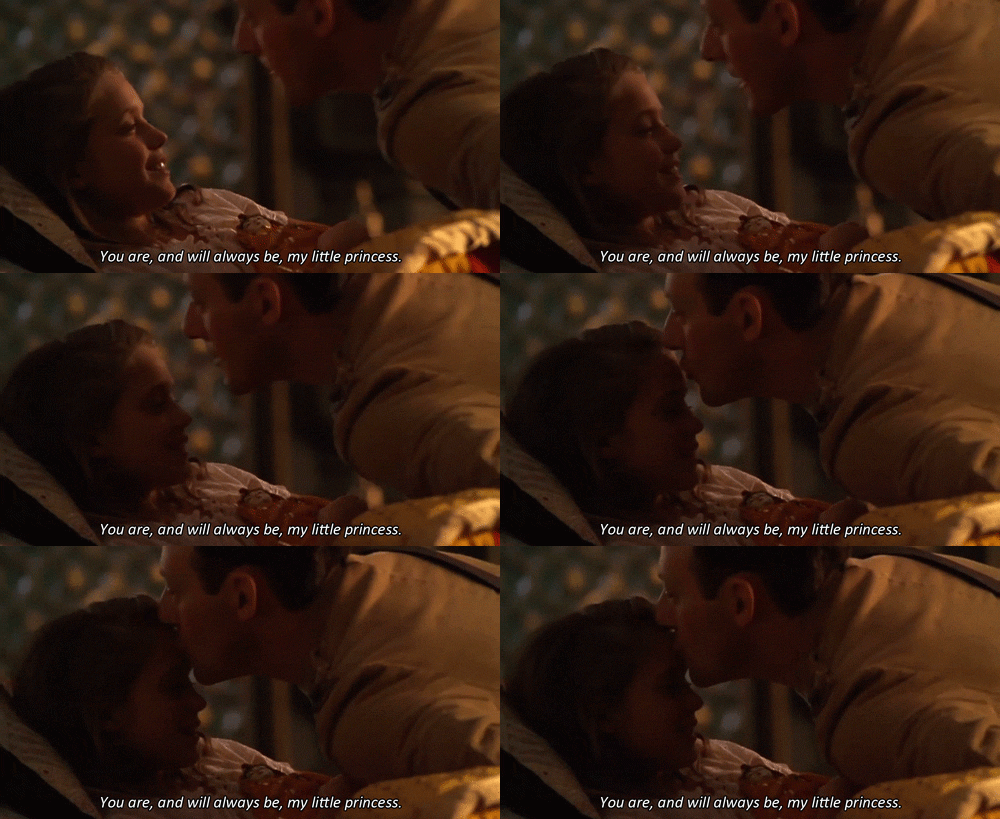
Will she be the same person if the circumstances were to change?? What determines what kind of a person you are? Well, no suspense here …we find out soon enough . Something really horrible happens …and she turns from princess to a servant overnight. What stands out though, is her unique way of dealing with these extraordinarily horrible circumstances .She uses make-beliefs to draw strength and cooks up stories to stay positive.

Well, every story needs a villain. And Oh yes …we get the cruelest of them all- Ms. Minchin. I hated her with all my heart!

Overall, a wonderful story with a beautiful theme/ message. But I felt there were some repetitiveness and the plot was too simple. If I had been younger , probably it would have been a 5-star read . But, still it’s a great book for everyone. And if you are in need for a little pick-me-up …it’s the perfect one ! ;)
“There’s nothing so strong as rage, except what makes you hold it in – that’s stronger.”
Thank u Mr. Grumpy for the awesome rec and BR ! :)

December 5, 2016
Some books don’t hold up well over time. Others improve with every reading. This is a book that is firmly in the latter category for me. I liked this book a lot when I was a child. I love it as an adult. Maybe I’ve grown to adore this book because, as I age, the premise of the book and the lessons it teaches strike my heart harder. I’ve never experienced highs quite as high as those Sara Crewe experiences, and I’ve never suffered through lows quite as low as Sara is forced to endure. But, like everyone, I have experienced triumphs and tragedies. The more I go through in my life, the more I respect little Sara Crewe, a little princess if ever there was one, and how she handled everything both happy or horrific that life threw her way. She always carried herself as the little princess she pretended to be, whether dressed in tattered rags or extravagant riches. She shared what she had with those less fortunate, even when she didn’t really have enough for herself. Sara endured. And if Sara can endure, so can I. My story can be her story in the disguise of my times, hidden within the setting of my life.
I don’t want to say much about the story, though I know it’s a classic and thus the plot is probably already known to anyone who reads this review. If you haven’t read this book, please do. It’s short and it’s lovely and it reminds readers that the way we view ourselves and the actions spawned from that view truly matters. It also reminds us to see others as people, no matter their station in life, and to give freely. Is there any better way to wrap yourself in Christmas spirit than by remembering to give unto others as Christ gave to us? That’s what Sara Crewe’s story does for me.
Merry Christmas. May you remember the true reason for the season. And if your memory should fail, let little Sara Crewe remind you.
“Everything’s a story - You are a story - I am a story.”
I don’t want to say much about the story, though I know it’s a classic and thus the plot is probably already known to anyone who reads this review. If you haven’t read this book, please do. It’s short and it’s lovely and it reminds readers that the way we view ourselves and the actions spawned from that view truly matters. It also reminds us to see others as people, no matter their station in life, and to give freely. Is there any better way to wrap yourself in Christmas spirit than by remembering to give unto others as Christ gave to us? That’s what Sara Crewe’s story does for me.
“If nature has made you for a giver, your hands are born open, and so is your heart. And though there may be times when your hands are empty, your heart is always full, and you can give things out of that—warm things, kind things, sweet things—help and comfort and laughter—and sometimes gay, kind laughter is the best help of all.”
Merry Christmas. May you remember the true reason for the season. And if your memory should fail, let little Sara Crewe remind you.

July 20, 2016
Book #3 for #booktubeathon is DONE!
I finished this audiobook on the way to work this morning and MAN do I love this story. I've loved the movie for a long time and I loved this book just as much, although the endings and elements of the story were different. Sarah is such a fantastically beautiful character with such a big heart for others. I loved reading about her adventures and how she continued to have the attitude of a princess, regardless of her circumstances.
JUST A GREAT CHILDREN'S BOOK, ERRYONE READ IT.
I finished this audiobook on the way to work this morning and MAN do I love this story. I've loved the movie for a long time and I loved this book just as much, although the endings and elements of the story were different. Sarah is such a fantastically beautiful character with such a big heart for others. I loved reading about her adventures and how she continued to have the attitude of a princess, regardless of her circumstances.
JUST A GREAT CHILDREN'S BOOK, ERRYONE READ IT.

May 3, 2023
Buen libro, súper fácil de leer.
Cada nuevo día es una completa sorpresa. Intentamos controlarlo todo, programar lo que haremos por la noche, al siguiente día, en el fin de semana, en las vacaciones, pero por más que tengamos planes para el futuro hay situaciones inéditas que afectan completamente aquella ruta de viaje programada. Esto ocurre porque en el fondo, ese control que creemos poseer solo es una ilusión, y por más que sintamos que nuestro porvenir depende de nosotros mismos la verdad es que no es así. Hay infinidad de situaciones, posibilidades y caminos, que en caso de presentarse alteraría completamente nuestra vida: desde nuestro trabajo, hasta nuestra vida sentimental. No nos gusta reconocerlo porque nos sentiríamos vulnerables, pero de una u otra forma dependemos de lo que hacen los demás. Si se muere el dueño de la empresa donde trabajamos, ¿seguiremos teniendo empleo? Si algún sector productivo de nuestro país deja de funcionar, ¿seguiremos disfrutando de las comodidades que podemos disfrutar? Si se presentan desastres naturales cerca a nuestro hogar, ¿tendremos la fortuna de que nuestros familiares sigan con vida? Si sufrimos una enfermedad, ¿tendremos la capacidad física y mental para seguir nuestro plan de vida al pie de la letra? Pues bien, de esto es lo que trata esta obra.
En, La princesita, conoceremos la historia de Sara Creewe, hija del Capitan Creewe, que de la noche a la mañana se convierte en una niña pobre, a pesar de que antes había gozado de todas las comodidades posibles que le brindaba su padre. La historia está clasificada en el género Drama/Infantil por lo que naturalmente no encontraremos escenas excesivamente sombrías o crueles; sin embargo, aquí la autora hace el intento de plasmar de una forma tenue la visión de cómo un infante puede quedar expuesto en un mundo de miseria donde la desigualdad social es la que prima en todas partes. La autora hace un gran trabajo al describir correctamente esas situaciones, especialmente con el cambio de actitud de las personas hacia Sara cuando se enteran de la nueva situación económica de la protagonista. Es una crítica muy interesante que nos ayuda a reflexionar sobre los prejuicios que tenemos como sociedad hacia las personas con menos recursos. Es como si juzgáramos a las personas por la cantidad de dinero que poseen en sus bolsillos y no por las habilidades o inteligencia que puedan poseer para sobrevivir en el mundo. Personalmente, creo que fue un gran acierto de la autora primero describir ese mundo «color rosa» para luego mostrar la otra faceta de la vida, ese mundo «color mierda».
El argumento de la historia me ha parecido muy bueno, la prosa también porque he logrado leer el libro a una velocidad rápida, e incluso el vocabulario me ha parecido bastante claro y fácil de entender: Lógicamente, al tratarse de un libro enfocado para un público infantil y juvenil, debía ser así. Sin embargo, quizás por mi historial de lectura, fue una obra que no logró conmoverme por la historia de la protagonista. No sé, me pareció todo como muy leve, nunca tan grave. Lo sé, no puedo exigir en este libro orientado para un público juvenil más situaciones lúgubres para la protagonista, pero en caso de que se hubieran presentado escenas más dramáticas, más giros inesperados, más dificultades, y más miseria, sería una obra maestra en todo el sentido de la palabra. No obstante, no significa que no me haya gustado la obra o que mi experiencia sea negativa. Nada de eso. Lo que ocurre es que a veces nuestra mente nos hace creer que el contenido que acabamos de consumir pudo ser mejor.
Otro aspecto del libro importante para mencionar es sobre la protagonista. Sara, es una niña muy bien educada, sabe comportarse, controlar sus emociones, es amable, solidaria con las más necesitadas, tiene una imaginación increíble, y en verdad que es una niña ejemplar. Sara tiene el tipo de personalidad adecuada para la historia, ya que justamente es en las situaciones adversas cuando vale la pena observar sus reacciones y comprobar si es capaz de mantener su actitud temple todo el tiempo. No obstante, no fue un personaje que se ganara mi cariño y simpatía. Quizás también es un tema personal, algo relacionado a la química que siento con ciertas personalidades, pero siento que un poco de picardía y rebeldía hubiera sido perfecto para Sara. Al fin y al cabo era una niña, por lo que esa docilidad con la que se comportó todo el tiempo no me terminó de convencer. Sin embargo, es un personaje correcto, cumple su rol, y quizás a otros lectores si les guste su participación.
En resumen, una obra con una idea interesante, una autora que escribe de forma amena, una crítica social que nos invita a la reflexión, y una lectura que recordaré como una experiencia agradable, a pesar de que la resolución de la historia es bastante predecible desde casi el inicio del libro. La calificación de tres estrellas me parece apropiada: Menos sería injusto, pero más ya sería demasiado generoso. Buen libro.
Cada nuevo día es una completa sorpresa. Intentamos controlarlo todo, programar lo que haremos por la noche, al siguiente día, en el fin de semana, en las vacaciones, pero por más que tengamos planes para el futuro hay situaciones inéditas que afectan completamente aquella ruta de viaje programada. Esto ocurre porque en el fondo, ese control que creemos poseer solo es una ilusión, y por más que sintamos que nuestro porvenir depende de nosotros mismos la verdad es que no es así. Hay infinidad de situaciones, posibilidades y caminos, que en caso de presentarse alteraría completamente nuestra vida: desde nuestro trabajo, hasta nuestra vida sentimental. No nos gusta reconocerlo porque nos sentiríamos vulnerables, pero de una u otra forma dependemos de lo que hacen los demás. Si se muere el dueño de la empresa donde trabajamos, ¿seguiremos teniendo empleo? Si algún sector productivo de nuestro país deja de funcionar, ¿seguiremos disfrutando de las comodidades que podemos disfrutar? Si se presentan desastres naturales cerca a nuestro hogar, ¿tendremos la fortuna de que nuestros familiares sigan con vida? Si sufrimos una enfermedad, ¿tendremos la capacidad física y mental para seguir nuestro plan de vida al pie de la letra? Pues bien, de esto es lo que trata esta obra.
En, La princesita, conoceremos la historia de Sara Creewe, hija del Capitan Creewe, que de la noche a la mañana se convierte en una niña pobre, a pesar de que antes había gozado de todas las comodidades posibles que le brindaba su padre. La historia está clasificada en el género Drama/Infantil por lo que naturalmente no encontraremos escenas excesivamente sombrías o crueles; sin embargo, aquí la autora hace el intento de plasmar de una forma tenue la visión de cómo un infante puede quedar expuesto en un mundo de miseria donde la desigualdad social es la que prima en todas partes. La autora hace un gran trabajo al describir correctamente esas situaciones, especialmente con el cambio de actitud de las personas hacia Sara cuando se enteran de la nueva situación económica de la protagonista. Es una crítica muy interesante que nos ayuda a reflexionar sobre los prejuicios que tenemos como sociedad hacia las personas con menos recursos. Es como si juzgáramos a las personas por la cantidad de dinero que poseen en sus bolsillos y no por las habilidades o inteligencia que puedan poseer para sobrevivir en el mundo. Personalmente, creo que fue un gran acierto de la autora primero describir ese mundo «color rosa» para luego mostrar la otra faceta de la vida, ese mundo «color mierda».
El argumento de la historia me ha parecido muy bueno, la prosa también porque he logrado leer el libro a una velocidad rápida, e incluso el vocabulario me ha parecido bastante claro y fácil de entender: Lógicamente, al tratarse de un libro enfocado para un público infantil y juvenil, debía ser así. Sin embargo, quizás por mi historial de lectura, fue una obra que no logró conmoverme por la historia de la protagonista. No sé, me pareció todo como muy leve, nunca tan grave. Lo sé, no puedo exigir en este libro orientado para un público juvenil más situaciones lúgubres para la protagonista, pero en caso de que se hubieran presentado escenas más dramáticas, más giros inesperados, más dificultades, y más miseria, sería una obra maestra en todo el sentido de la palabra. No obstante, no significa que no me haya gustado la obra o que mi experiencia sea negativa. Nada de eso. Lo que ocurre es que a veces nuestra mente nos hace creer que el contenido que acabamos de consumir pudo ser mejor.
Otro aspecto del libro importante para mencionar es sobre la protagonista. Sara, es una niña muy bien educada, sabe comportarse, controlar sus emociones, es amable, solidaria con las más necesitadas, tiene una imaginación increíble, y en verdad que es una niña ejemplar. Sara tiene el tipo de personalidad adecuada para la historia, ya que justamente es en las situaciones adversas cuando vale la pena observar sus reacciones y comprobar si es capaz de mantener su actitud temple todo el tiempo. No obstante, no fue un personaje que se ganara mi cariño y simpatía. Quizás también es un tema personal, algo relacionado a la química que siento con ciertas personalidades, pero siento que un poco de picardía y rebeldía hubiera sido perfecto para Sara. Al fin y al cabo era una niña, por lo que esa docilidad con la que se comportó todo el tiempo no me terminó de convencer. Sin embargo, es un personaje correcto, cumple su rol, y quizás a otros lectores si les guste su participación.
En resumen, una obra con una idea interesante, una autora que escribe de forma amena, una crítica social que nos invita a la reflexión, y una lectura que recordaré como una experiencia agradable, a pesar de que la resolución de la historia es bastante predecible desde casi el inicio del libro. La calificación de tres estrellas me parece apropiada: Menos sería injusto, pero más ya sería demasiado generoso. Buen libro.

October 17, 2016
A Little Princess by Frances Hodgson Burnett is the story of a little girl "Sara" whose father’s bankruptcy and death leave her impoverished, alone, and at the mercy of the evil Miss Minchin, i didn't read the book when i was a child but i loved the animation adaptation of Burnett’s book. when I did read it! Meeting the real Sara for the first time it was a completely different experience for me, It makes me feel really old :(


“Never did she find anything so difficult as to keep herself from losing her temper when she was suddenly disturbed while absorbed in a book. People who are fond of books know the feeling of irritation which sweeps over them at such a moment. The temptation to be unreasonable and snappish is one not easy to manage.
"It makes me feel as if something had hit me," Sara had told Ermengarde once in confidence. "And as if I want to hit back. I have to remember things quickly to keep from saying something ill-tempered.”
“Never did she find anything so difficult as to keep herself from losing her temper when she was suddenly disturbed while absorbed in a book. People who are fond of books know the feeling of irritation which sweeps over them at such a moment. The temptation to be unreasonable and snappish is one not easy to manage.
"It makes me feel as if something had hit me," Sara had told Ermengarde once in confidence. "And as if I want to hit back. I have to remember things quickly to keep from saying something ill-tempered.”

November 23, 2009
Now as much as Frances Hodgson Burnett's A Little Princess is and remains both a childhood and adulthood favourite for me, in some if not actually many ways, main protagonist Sara Crewe and her entire demeanour do at times appear as being simply and frustratingly just a bit too good to be true. And while I have indeed always liked Sara's story tremendously, I also must admit that I have never loved A Little Princess as much as, say, The Secret Garden (also, of course, by Frances Hodgson Burnett) or the Anne of Green Gables and the Emily of New Moon series (Lucy Maud Montgomery). For in all of these here novels, the main characters are presented as having their share of faults (and at times even seriously problematic and major ones), while in A Little Princess, Sara Crewe seemingly has little or no such peccadilloes (except perhaps that she does at times appear almost patronising in her goodness and her feelings for the populace, but I think that the author, that Frances Hodgson Burnett actually does not mean this to be considered as a fault, and it is just our more modern sensibilities which tend to make us consider this kind of noblesse oblige feeling to be not entirely, not altogether praiseworthy anymore).
And actually, one important consideration to keep in mind is that A Little Princess was published quite a few years before The Secret Garden (the fomer was published in 1905, I believe, and I think The Secret Garden was not published until 1911 or so, and the novella on which A Little Princess is based, Sara Crewe, Or What Happened At Miss Minchin's was actually published even earlier, around 1888). And thus, perhaps Frances Hodgson Burnett's attitude towards children had matured by the time she penned The Secret Garden, and she might have by then realised that it would be better to have main characters who are not perfect, but also have their share of not so stellar character traits. But on the other hand, I also have to wonder whether the author, whether Frances Hodgson Burnett might not have deliberately portrayed Sara as a faultless princess-like character because she wanted to portray her as some kind of magical, fairy tale like entity (a child-goddess of compassion, helpful, patient, accepting, but ultimately too good to be true, a bit like the type of character Dickon represents in The Secret Garden, similarly godlike and unrealistic, but then, Dickon is a supporting character and not the main character, like Sara is in A Little Princess).
Still, A Little Princess truly is and always will be a lovely and sweet tale (somewhat of an upside down fairy tale, a riches to rags and then back to riches story) and a novel that although written more than a century ago, is still enjoyable, readable and for most children, sufficiently approachable (and I bet many adults are like me, having not just fond childhood memories of A little Princess, but also of repeated rereads).
And actually, one important consideration to keep in mind is that A Little Princess was published quite a few years before The Secret Garden (the fomer was published in 1905, I believe, and I think The Secret Garden was not published until 1911 or so, and the novella on which A Little Princess is based, Sara Crewe, Or What Happened At Miss Minchin's was actually published even earlier, around 1888). And thus, perhaps Frances Hodgson Burnett's attitude towards children had matured by the time she penned The Secret Garden, and she might have by then realised that it would be better to have main characters who are not perfect, but also have their share of not so stellar character traits. But on the other hand, I also have to wonder whether the author, whether Frances Hodgson Burnett might not have deliberately portrayed Sara as a faultless princess-like character because she wanted to portray her as some kind of magical, fairy tale like entity (a child-goddess of compassion, helpful, patient, accepting, but ultimately too good to be true, a bit like the type of character Dickon represents in The Secret Garden, similarly godlike and unrealistic, but then, Dickon is a supporting character and not the main character, like Sara is in A Little Princess).
Still, A Little Princess truly is and always will be a lovely and sweet tale (somewhat of an upside down fairy tale, a riches to rags and then back to riches story) and a novel that although written more than a century ago, is still enjoyable, readable and for most children, sufficiently approachable (and I bet many adults are like me, having not just fond childhood memories of A little Princess, but also of repeated rereads).

August 20, 2018
My heart is so full after reading this. Years ago, I got the movie A Little Princess for my birthday. I had never heard anything about it before, but little did I know that I would break the DVD player watching it so many times. Like the movie, the book is beautiful. There really is no other word that can accurately describe it.
I've never felt as connected to a protagonist as I did to Sara. This little girl had the biggest, most generous heart and no matter how bad her situation got, her character remained pure; even when she had nothing to her name she still put others before herself and never wanted pity. When she was grieving the loss of her father and went from being treated like a princess to being treated like a slave, I wanted so badly to save her. It made me want to find a way into the pages to take all her sadness and pain away because she deserved none of it.
This is one of those books that you should encourage your kids to read when they are young. Not to say that it isn't a book for adults, because it is, but I think children especially would benefit from reading it as they are most impressionable. As I was reading, I was overcome with a compelling desire to adopt Sara’s open-heartedness—it just made me want to be a better person which I think is a really special reaction to a book. Honestly every time my heart cracked and pieced back together was worth it and I would suffer a million times over if it meant that I had the honor of being touched by this story forever.
My favourite quote in the whole book:
“If nature has made you for a giver, your hands are born open, and so is your heart; and though there may be times when your hands are empty, your heart is always full, and you can give things out of that—warm things, kind things, sweet things—help and comfort and laughter—and sometimes gay, kind laughter is the best help of all.”
I've never felt as connected to a protagonist as I did to Sara. This little girl had the biggest, most generous heart and no matter how bad her situation got, her character remained pure; even when she had nothing to her name she still put others before herself and never wanted pity. When she was grieving the loss of her father and went from being treated like a princess to being treated like a slave, I wanted so badly to save her. It made me want to find a way into the pages to take all her sadness and pain away because she deserved none of it.
This is one of those books that you should encourage your kids to read when they are young. Not to say that it isn't a book for adults, because it is, but I think children especially would benefit from reading it as they are most impressionable. As I was reading, I was overcome with a compelling desire to adopt Sara’s open-heartedness—it just made me want to be a better person which I think is a really special reaction to a book. Honestly every time my heart cracked and pieced back together was worth it and I would suffer a million times over if it meant that I had the honor of being touched by this story forever.
My favourite quote in the whole book:
“If nature has made you for a giver, your hands are born open, and so is your heart; and though there may be times when your hands are empty, your heart is always full, and you can give things out of that—warm things, kind things, sweet things—help and comfort and laughter—and sometimes gay, kind laughter is the best help of all.”

December 30, 2025
"Do you love your father more than anything else in all the whole world? I love mine more than all the world ten times over." [Sara]
I watched the movie version of A Little Princess as a kid and I was always very fond of it, so I decided to read the book, trying to find out which version I will love more. I ended up loving both.
A Little Princess follows Sara Crewe, a child that was brought from India to England by her father, Captain Crewe, to a school for girls to start her education. I'm relieved that the book version of Sara is the same as the movie version. Both have beautifully wonderful souls, full of an incredible imagination, a kind-hearted heart, cleverness and friendliness as I remembered. Call me boring if you wish, but I love the purely good, kind-hearted characters so much. They never fail to bring back the feeling of hope for humanity, showing that, despite all the bad things happening around the world, there are good people out there who will give you a friendly smile and a helping hand.
"If Sara had been a boy and lived a few centuries ago," her father used to say, "she would have gone about the country with her sword drawn, rescuing and defending everyone in distress. She always wants to fight when she sees people in trouble."
Sara is one of the good ones. If angels were around us, she would certainly be one of them. She is a rich girl, which means she never starved, never had to wander looking for a warm place to stay, never felt afraid for her life, never felt fear in general, receiving everything no matter if she asked about them or not. She had a life without any problems, feeling happy with her beloved rich father, but she never bragged about her high status. She isn't a narcissist, she isn't egoistical, bad mannered, full of herself, making fun of the ones who were lacking. On the contrary, she is more happy giving than receiving. She is generous, sharing all her things with others, offering them a friendly smile and a helping hand if they need it. She called herself a little princess, and she was one, but she was also a little heroine. It was such a breath of fresh air after reading about all the women thinking they are badasses if they were mean to everybody around them.
"Are you learning me by heart, little Sara?" he said, stroking her hair.
"No," she answered. "I know you by heart. You are inside my heart."
As much as I love Sara's relationship with all her friends, what is most precious to me is her relationship with her father. There are stories where the main characters love their parents, yes, but usually there are family issues that build the background and the inner conflict of the characters. It's not what happened here, and I'm so glad for it. Captain Crewe is a single father, trying his best for his only child and loving her with all his might. And Sara loves him with all her might in return. This big love is a constant thing flowing through the whole story, even after the loss of the Captain. It's as touching as it's painful, but this is how life is. It gives you something, and takes it away, just to give you something in return. So when Sara loses her beloved father, and thinks that she lost everything, after many hardships, she gains new friends that she can rely on and that can rely on her, at any time.
"There isn't any banquet left, Emily," she said. "And there isn't any princess. There is nothing left but the prisoners in the Bastille." [Sara]
The movie made me cry hard whenever I watched it as a child, and I worried if I would feel the same, as an adult, while reading the book. I shouldn't have to worry, because I felt the exact same emotional weight I have felt before. Sara's character felt as precious to my soul as she felt before, and observing all of her hardships hurt my heart, despite knowing that her story will have a happy ending. She's so strong. Mentally, I mean. So many people, even adults, would crumble down after losing everything, but she faced her hardships with her head held high. She never wavered, never failed, always offering a kind smile and thinking of others first before her own needs, even when she was starving and felt faint. So when she finally had a breakdown, it was especially impactful. I bawled my eyes out, for Sara, for her father, for Becky, and for everybody who should be happy and safe, but had to suffer instead.
"I am afraid," said Miss Minchin, with a slightly sour smile, "that you have been a very spoiled little girl and always imagine that things are done because you like them."
Miss Minchin's character was designed for you to hate her, and that's exactly how I felt. As the head of the school, she should be the maternal figure for the students, but she never cared for the girls, she cared for the money that their families provided for the school. She was incredibly judgemental and full of herself, thinking that only her opinions had any value, completely ignoring everybody else's, even her own sister's. She didn't like Sara from the very beginning, but showed her off to everybody, because her father was rich. The moment she found out about him being gone, her respect for Sara was also gone. She was infuriating whenever she showed up on pages, I just wanted her to face consequences for all the mean things she had done to the girls, not only Sara, but also Becky, who were only children, but were treated like robots.
Overall, A Little Princess was such a delightful story. I enjoyed reading it so much, it was everything I thought it would be. I was brought back to my childhood, in a way, which I'm incredibly grateful for, and I am sure that I will come back to this book very often. Sara just found her place in the list of my favorite characters, and her story is definitely one of my favorites. I need to see the movie again very soon! ☺️
P.S. You all, beloved bookworms, can so very easily relate to Sara who loves books just as much as she loves her father. She would happily spend her life with her nose buried in the books and with her beloved father at her side. Also, her imagination is as endless, as the universe, and I love it so much about her.
I watched the movie version of A Little Princess as a kid and I was always very fond of it, so I decided to read the book, trying to find out which version I will love more. I ended up loving both.
A Little Princess follows Sara Crewe, a child that was brought from India to England by her father, Captain Crewe, to a school for girls to start her education. I'm relieved that the book version of Sara is the same as the movie version. Both have beautifully wonderful souls, full of an incredible imagination, a kind-hearted heart, cleverness and friendliness as I remembered. Call me boring if you wish, but I love the purely good, kind-hearted characters so much. They never fail to bring back the feeling of hope for humanity, showing that, despite all the bad things happening around the world, there are good people out there who will give you a friendly smile and a helping hand.
"If Sara had been a boy and lived a few centuries ago," her father used to say, "she would have gone about the country with her sword drawn, rescuing and defending everyone in distress. She always wants to fight when she sees people in trouble."
Sara is one of the good ones. If angels were around us, she would certainly be one of them. She is a rich girl, which means she never starved, never had to wander looking for a warm place to stay, never felt afraid for her life, never felt fear in general, receiving everything no matter if she asked about them or not. She had a life without any problems, feeling happy with her beloved rich father, but she never bragged about her high status. She isn't a narcissist, she isn't egoistical, bad mannered, full of herself, making fun of the ones who were lacking. On the contrary, she is more happy giving than receiving. She is generous, sharing all her things with others, offering them a friendly smile and a helping hand if they need it. She called herself a little princess, and she was one, but she was also a little heroine. It was such a breath of fresh air after reading about all the women thinking they are badasses if they were mean to everybody around them.
"Are you learning me by heart, little Sara?" he said, stroking her hair.
"No," she answered. "I know you by heart. You are inside my heart."
As much as I love Sara's relationship with all her friends, what is most precious to me is her relationship with her father. There are stories where the main characters love their parents, yes, but usually there are family issues that build the background and the inner conflict of the characters. It's not what happened here, and I'm so glad for it. Captain Crewe is a single father, trying his best for his only child and loving her with all his might. And Sara loves him with all her might in return. This big love is a constant thing flowing through the whole story, even after the loss of the Captain. It's as touching as it's painful, but this is how life is. It gives you something, and takes it away, just to give you something in return. So when Sara loses her beloved father, and thinks that she lost everything, after many hardships, she gains new friends that she can rely on and that can rely on her, at any time.
"There isn't any banquet left, Emily," she said. "And there isn't any princess. There is nothing left but the prisoners in the Bastille." [Sara]
The movie made me cry hard whenever I watched it as a child, and I worried if I would feel the same, as an adult, while reading the book. I shouldn't have to worry, because I felt the exact same emotional weight I have felt before. Sara's character felt as precious to my soul as she felt before, and observing all of her hardships hurt my heart, despite knowing that her story will have a happy ending. She's so strong. Mentally, I mean. So many people, even adults, would crumble down after losing everything, but she faced her hardships with her head held high. She never wavered, never failed, always offering a kind smile and thinking of others first before her own needs, even when she was starving and felt faint. So when she finally had a breakdown, it was especially impactful. I bawled my eyes out, for Sara, for her father, for Becky, and for everybody who should be happy and safe, but had to suffer instead.
"I am afraid," said Miss Minchin, with a slightly sour smile, "that you have been a very spoiled little girl and always imagine that things are done because you like them."
Miss Minchin's character was designed for you to hate her, and that's exactly how I felt. As the head of the school, she should be the maternal figure for the students, but she never cared for the girls, she cared for the money that their families provided for the school. She was incredibly judgemental and full of herself, thinking that only her opinions had any value, completely ignoring everybody else's, even her own sister's. She didn't like Sara from the very beginning, but showed her off to everybody, because her father was rich. The moment she found out about him being gone, her respect for Sara was also gone. She was infuriating whenever she showed up on pages, I just wanted her to face consequences for all the mean things she had done to the girls, not only Sara, but also Becky, who were only children, but were treated like robots.
Overall, A Little Princess was such a delightful story. I enjoyed reading it so much, it was everything I thought it would be. I was brought back to my childhood, in a way, which I'm incredibly grateful for, and I am sure that I will come back to this book very often. Sara just found her place in the list of my favorite characters, and her story is definitely one of my favorites. I need to see the movie again very soon! ☺️
P.S. You all, beloved bookworms, can so very easily relate to Sara who loves books just as much as she loves her father. She would happily spend her life with her nose buried in the books and with her beloved father at her side. Also, her imagination is as endless, as the universe, and I love it so much about her.

April 18, 2008
I've been in a reading slump for a while, and picking up this beloved childhood book helped lift my spirits.
Sara Crewe is one of my all-time favorite characters from literature. She's clever, compassionate and very brave. I have always liked this early description of Sara, when her father takes her to a boarding school in London:
Aside from not being able to read French or German, reading this passage as an adult made me nostalgic for the book hunger of my younger self, back when there seemed to be endless hours in which to read big, interesting books.
Here is another description I love, when Sara is first getting to observe her new classmates:
Sidebar: I had heard a piece of trivia that the book A Little Princess was part of the inspiration for the character of Buffy the Vampire Slayer. If that anecdote is true, I could see it linked to the passage above.
Later in the novel, after Sara had suffered some heartbreak and setbacks, and she has to keep soldiering on in very difficult situations for an 11-year-old, we get this description of how tough she can be:
I enjoyed rereading this beloved book so much I think I might revisit another Burnett favorite, The Secret Garden.
Sara Crewe is one of my all-time favorite characters from literature. She's clever, compassionate and very brave. I have always liked this early description of Sara, when her father takes her to a boarding school in London:
"I am not in the least anxious about her education," Captain Crewe said, with his gay laugh, as he held Sara's hand and patted it. "The difficulty will be to keep her from learning too fast and too much. She is always sitting with her little nose burrowing into books. She doesn't read them, Miss Minchin; she gobbles them up as if she were a little wolf instead of a little girl. She is always starving for new books to gobble, and she wants grown-up books — great, big, fat ones — French and German as well as English — history and biography and poets, and all sorts of things."
Aside from not being able to read French or German, reading this passage as an adult made me nostalgic for the book hunger of my younger self, back when there seemed to be endless hours in which to read big, interesting books.
Here is another description I love, when Sara is first getting to observe her new classmates:
[Miss St. John] became redder than ever — so red, indeed, that she almost looked as if tears were coming into her poor, dull, childish eyes; and Sara saw her and was so sorry for her that she began rather to like her and want to be her friend. It was a way of hers to want to spring into any fray in which someone was made uncomfortable or unhappy.
"If Sara had been a boy and lived a few centuries ago," her father used to say, "she would have gone about the country with her sword drawn, rescuing and defending every one in distress. She always wants to fight when she sees people in trouble."
Sidebar: I had heard a piece of trivia that the book A Little Princess was part of the inspiration for the character of Buffy the Vampire Slayer. If that anecdote is true, I could see it linked to the passage above.
Later in the novel, after Sara had suffered some heartbreak and setbacks, and she has to keep soldiering on in very difficult situations for an 11-year-old, we get this description of how tough she can be:
"I never answer when I can help it. When people are insulting you, there is nothing so good for them as not to say a word — just to look at them and think. Miss Minchin turns pale with rage when I do it. Miss Amelia looks frightened, and so do the girls. When you will not fly into a passion people know you are stronger than they are, because you are strong enough to hold in your rage, and they are not, and they say stupid things they wish they hadn't said afterward. There's nothing so strong as rage, except what makes you hold it in — that's stronger. It's a good thing not to answer your enemies. I scarcely ever do."
I enjoyed rereading this beloved book so much I think I might revisit another Burnett favorite, The Secret Garden.

February 22, 2018
The movie adaptation of this book was my beloved, childhood favourite, yet, for some reason, I had never read the book. I was pleasantly surprised to find how accurate my favourite film was to the classic text it originated from.
I find it odd how I adored this story so, when my favourite childhood read was Frances Hodgson Burnett's The Secret Garden. I loved the former for the pure-hearted and eternally kind protagonist and adored the latter for the unlikable, cross and bad-tempered one. The two differing protagonists dually delighted me, however dissimilar they appeared, and I believe the author has a powerful gift in creating characters children (and adults, too!) can find all sides of themselves in.
Asides from the lovable characters, this book also has a poignant story-line that completely enraptured me. Sara Crewe's riches-to-rags-to-riches story was a charming one, but what completely captivated me was in how she dealt with her fate. She remained eternally optimistic and often used fairy tale and stories created inside her own head as a brief escape from her plight. She was gifted with a pure character and a generous soul and instead of appearing as a two-dimensional 'goody good' character, she instilled in me a yearning to be a better individual and to channel some of her spirit.
The parts that brought me to tears, both then and now, was Sara's belief that every female was a princess at heart, and so it is only fitting to end this review with a quote that sums up exactly what is so endearing about this book:
"Whatever comes," she said, "cannot alter one thing. If I am a princess in rags and tatters, I can be a princess inside. It would be easy to be a princess if I were dressed in cloth of gold, but it is a great deal more of a triumph to be one all the time when no one knows it.”
I find it odd how I adored this story so, when my favourite childhood read was Frances Hodgson Burnett's The Secret Garden. I loved the former for the pure-hearted and eternally kind protagonist and adored the latter for the unlikable, cross and bad-tempered one. The two differing protagonists dually delighted me, however dissimilar they appeared, and I believe the author has a powerful gift in creating characters children (and adults, too!) can find all sides of themselves in.
Asides from the lovable characters, this book also has a poignant story-line that completely enraptured me. Sara Crewe's riches-to-rags-to-riches story was a charming one, but what completely captivated me was in how she dealt with her fate. She remained eternally optimistic and often used fairy tale and stories created inside her own head as a brief escape from her plight. She was gifted with a pure character and a generous soul and instead of appearing as a two-dimensional 'goody good' character, she instilled in me a yearning to be a better individual and to channel some of her spirit.
The parts that brought me to tears, both then and now, was Sara's belief that every female was a princess at heart, and so it is only fitting to end this review with a quote that sums up exactly what is so endearing about this book:
"Whatever comes," she said, "cannot alter one thing. If I am a princess in rags and tatters, I can be a princess inside. It would be easy to be a princess if I were dressed in cloth of gold, but it is a great deal more of a triumph to be one all the time when no one knows it.”

September 2, 2018
Short story about a little girl named Sara aged 7 who used to live with her father in India. Father being concerned of her education, decides to send her to a boarding school in London. There she lives in luxury than other pupils and everyone was envied because of her intelligence and luxurious lifestyle. However her father, Captain Crewe dies from a high fever, leaving Sara penniless. He had put all his money in the diamond mines business along with his friend, who went missing after seeing some losses.
The news of Captain Crewe’s death changed Sara’s life completely in the utter misery and mercy of Miss Minchin. She was made to live like a maid who worked for hours, ran errands and taught young pupil lessons. She was a very bright child and a quick learner, who loved reading and creating stories. Her father’s friend who ran away, searched for Sara everywhere and finally finds her after two years, as he happened to move to the house next to the boarding school.
He tells her the entire story and gives her every comfort she deserved as she was the owner of half the fortunes from diamond mines, which were later discovered. Sara always pretended and acted as if she was a princess and in the end with the help of magic (she liked to believe that) she lives her life as a princess, who was kind, well-mannered, caring and above all loved sharing her goodness with others.
Blog | YouTube | Instagram | Facebook | LinkedIn
The news of Captain Crewe’s death changed Sara’s life completely in the utter misery and mercy of Miss Minchin. She was made to live like a maid who worked for hours, ran errands and taught young pupil lessons. She was a very bright child and a quick learner, who loved reading and creating stories. Her father’s friend who ran away, searched for Sara everywhere and finally finds her after two years, as he happened to move to the house next to the boarding school.
He tells her the entire story and gives her every comfort she deserved as she was the owner of half the fortunes from diamond mines, which were later discovered. Sara always pretended and acted as if she was a princess and in the end with the help of magic (she liked to believe that) she lives her life as a princess, who was kind, well-mannered, caring and above all loved sharing her goodness with others.
Blog | YouTube | Instagram | Facebook | LinkedIn
August 9, 2018
This was just what I needed. This book was beautifully heart-warming, and I must confess, my heart is most certainly warmed. I remember loving the film of "A little Princess" many years ago, and it has remained a firm favourite with me. Even though the story in the film is slightly different to the original book, I enjoyed both, in a similar way. Actually, I now have a distinct urge to go and watch the film!
"If I am a princess in rags and tatters, I can be a princess inside. It would be easy to be a princess if I were dressed in cloth of gold, but it is a great deal more of a triumph to be one all the time when no one knows it.”
I enjoyed the first half of the book more, in comparison to the second. Maybe this is because I feel it follows the film more, plus, there are some beautiful and incredible quotes, that really touched me. It also became apparent rather quickly, that there are many more villains in the book, which really, I think is slightly strange for a children's book. But damn, I have to say, I despised Ms Minchin. She really was such a terrible person, and each time she abused Sara, I felt quite angry inside. (Yes, some books have a profound effect on me.)
Overall, this is a wonderful story, with a prominent message, and I think I could definitely enjoy this again, at some point in the future.
"If I am a princess in rags and tatters, I can be a princess inside. It would be easy to be a princess if I were dressed in cloth of gold, but it is a great deal more of a triumph to be one all the time when no one knows it.”
I enjoyed the first half of the book more, in comparison to the second. Maybe this is because I feel it follows the film more, plus, there are some beautiful and incredible quotes, that really touched me. It also became apparent rather quickly, that there are many more villains in the book, which really, I think is slightly strange for a children's book. But damn, I have to say, I despised Ms Minchin. She really was such a terrible person, and each time she abused Sara, I felt quite angry inside. (Yes, some books have a profound effect on me.)
Overall, this is a wonderful story, with a prominent message, and I think I could definitely enjoy this again, at some point in the future.

April 23, 2026
There’s a gentle sadness running beneath A Little Princess that makes Sara Crewe’s story so memorable. Sara begins life at Miss Minchin’s boarding school as a wealthy, imaginative child adored for her kindness and intelligence, but everything changes after the sudden death of her father, Captain Crewe, leaves her penniless.
Forced into hardship and treated cruelly by Miss Minchin, Sara clings to her sense of dignity and imagination while forming quiet friendships with characters like Becky and Ermengarde. The story moves slowly by modern standards, but Sara’s resilience gives it emotional warmth throughout. It can feel sentimental at times, yet the kindness woven through the book makes it an enduring and comforting classic.
RATING: 4 out of 5 stars ⭐⭐⭐⭐.
Forced into hardship and treated cruelly by Miss Minchin, Sara clings to her sense of dignity and imagination while forming quiet friendships with characters like Becky and Ermengarde. The story moves slowly by modern standards, but Sara’s resilience gives it emotional warmth throughout. It can feel sentimental at times, yet the kindness woven through the book makes it an enduring and comforting classic.
RATING: 4 out of 5 stars ⭐⭐⭐⭐.
Displaying 1 - 30 of 12,153 reviews