The third novel in the Waverley series, and Scott's personal favorite, The Antiquary centers on a young man called Lovel who meets Jonathan Oldbuck, a loquacious old antiquary, on a trip to Scotland. There Lovel falls in love with the daughter of Sir Arthur Wardour, a local landowner. However, with no wealth or title to offer, Lovel's feelings go unrequited until an extraordinary act of courage. With its vivid drama and exuberant pace, The Antiquary confirms Scott's reputation as the great storyteller of modern Europe.
Librarian Note: There is more than one author in the GoodReads database with this name.
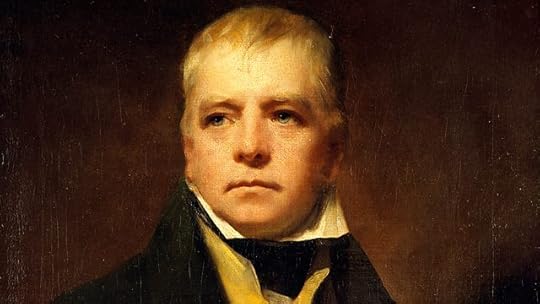
Sir Walter Scott was a Scottish novelist, poet, historian, and biographer, widely recognized as the founder and master of the historical novel. His most celebrated works, including Waverley, Rob Roy, and Ivanhoe, helped shape not only the genre of historical fiction but also modern perceptions of Scottish culture and identity.
Born in Edinburgh in 1771, Scott was the son of a solicitor and a mother with a strong interest in literature and history. At the age of two, he contracted polio, which left him with a permanent limp. He spent much of his childhood in the Scottish Borders, where he developed a deep fascination with the region's folklore, ballads, and history. He studied at Edinburgh High School and later at the University of Edinburgh, qualifying as a lawyer in 1792. Though he worked in law for some time, his literary ambitions soon took precedence.
Scott began his literary career with translations and collections of traditional ballads, notably in his Minstrelsy of the Scottish Border. He gained early fame with narrative poems such as The Lay of the Last Minstrel and The Lady of the Lake. As the popularity of poetic storytelling declined, especially with the rise of Lord Byron, Scott turned to prose. His first novel, Waverley, published anonymously in 1814, was set during the Jacobite rising of 1745 and is considered the first true historical novel. The success of Waverley led to a long series of novels, known collectively as the Waverley Novels, which blended historical events with compelling fictional narratives.
Over the following years, Scott produced a remarkable number of novels, including Old Mortality, The Heart of Midlothian, and The Bride of Lammermoor, each contributing to the romantic image of Scotland that became popular throughout Europe. With Ivanhoe, published in 1819, he turned his attention to medieval England, broadening his appeal and confirming his status as a major literary figure. His works were not only popular in his own time but also laid the groundwork for historical fiction as a respected literary form.
Scott married Charlotte Genevieve Charpentier in 1797, and they had five children. In 1820, he was granted a baronetcy and became Sir Walter Scott. He built a grand home, Abbotsford House, near Melrose, which reflected his passion for history and the Scottish past. However, in 1825, financial disaster struck when his publishers went bankrupt. Rather than declare bankruptcy himself, Scott chose to work tirelessly to pay off the debts through his writing. He continued to produce novels and non-fiction works at a staggering pace despite declining health.
Walter Scott died in 1832, leaving behind a literary legacy that influenced generations of writers and readers. His works remain widely read and studied, and he is credited with helping to revive interest in Scottish history and culture. Abbotsford House, now a museum, stands as a monument to his life and achievements.
The Antiquary is the most humorous historical fiction in the Waverley series that I've read so far. Sir Walter Scott pens a satirical story on superstition and deeply rooted absurd conventions entertained in Scotland in the 18th century. Unlike in most of Scott's novels, this one centers on the titular character, the Antiquary, an amateur historian, archeologist, and a collector of antiques who brings much interest and comicality to the story.
The Antiquary is an unusual hero for a historical fiction, being someone past his prime of life and eccentric. But he was the most entertaining character of the story. He was closely followed by Sir Arthur Wardour, a baronet of ancient descent. However, the comicality is balanced off with some pathos by the story of Major Neville (alias Lovel), a young and promising officer in the army whose love for Miss Isabel Wardour is marred by his questionable birth.
If you look at this novel as a story to delve in, I'd say there isn't much. Except for the thematic touch on possible illegitimacy and its consequences, the story is more of a commentary on the general life and beliefs of the last decade of the 18th century in which time it is set. But what lacks in the story is made up by the characters, for Sir Walter Scott has brought some interesting characters to entertain the readers. There wasn't a single character that I disliked. Even the villain Dousterswivel I found to be entertaining. :)
Here too as always, Sir Scott transports the reader to the Scottish setting with its beautiful landscape and its diverse inhabitants. This mixture of nature and diversity of class always connects the reader to the novel so that despite what faults the reader may find in it, he never loses interest in the story. Although, except for Ivanhoe I've only read novels in the Waverley series, I can safely say that Sir Walter Scott's historical fictions are quite entertaining. And The Antiquary is the most entertaining that I've so far read.
This is one of my favorite Sir Walter Scott novels. It has tragedy, satire, treasure, a duel, a conman and romance.
The Antiquary Jonathan Oldbuck of Monkbarns is on his way home when he meets the mysterious Lovel. He becomes friends with him and likes his manners and behavior. However, Lovel has a past which he is ashamed.
Oldbuck finds out Lovel is illegitimate and is wealthy from a large estate left to him. Lovel is in in love with Sir Wardour’s daughter Isabella but she cannot marry him due to his questionable lineage. Sir Wardour is also the brink of bankruptcy thanks to a German conman. There is a comical scene with him and the beggar Edie Ochiltree.
Best name for a character is Oldbuck’s penpal Mr Dryasdust. Oldbuck’s nephew Hector who is hot headed and obsessed with hunting is funny as well with the ongoing joke between him and his uncle over a battle Hector has with a seal or as the antiquary calls it a phoca.
This is a great adventure story and I understand it was Sir Walter Scott’s favorite. It is set around 1794 where France was threatening to invade England which is woven into the story.
Description: Richard Wilson stars as The Antiquary, a man who hordes secrets as well as treasures. Will his knowledge allow Lovel to marry his secret love? With David Tennant as Walter Scott.
The Antiquary (1816) is a novel by Sir Walter Scott about an amateur historian, archaeologist and collector of items of dubious antiquity. Although he is the eponymous character, he is not necessarily the hero, as many of the characters around him undergo far more significant journeys or change. Instead, he provides a central figure for other more exciting characters and events - on which he provides a sardonic commentary.
This is Scott's gothic novel, redolent with family secrets, stories of hidden treasure and hopeless love, with a mysterious, handsome, young man, benighted aristocracy and a night-time funeral procession to a ruined abbey. The romance and mystery is counterpoised by some of Scott's more down-to-earth characters, and grittily unromantic events.
Scott wrote in an advertisement to the novel that his purpose in writing it, similar to that of his novels Waverley and Guy Mannering, was to document Scottish life and manners of a certain period - in this case the last decade of the 18th century.
3* Waverley CR The Antiquary (Waverley Novels #3)
4* Ivanhoe 3* Rob Roy 3* The Bride of Lammermoor 4* The Heart of Mid-Lothian TR The Pirate 3* The Fair Maid of Perth
From BBC Radio 4 - Drama: Richard Wilson stars as The Antiquary, a man who hordes secrets as well as treasures. Will his knowledge allow Lovel to marry his secret love? With David Tennant as Walter Scott.
The Antiquary (1816) is a novel by Sir Walter Scott about an amateur historian, archaeologist and collector of items of dubious antiquity. Although he is the eponymous character, he is not necessarily the hero, as many of the characters around him undergo far more significant journeys or change. Instead, he provides a central figure for other more exciting characters and events - on which he provides a sardonic commentary.
This is Scott's gothic novel, redolent with family secrets, stories of hidden treasure and hopeless love, with a mysterious, handsome, young man, benighted aristocracy and a night-time funeral procession to a ruined abbey. The romance and mystery is counterpoised by some of Scott's more down-to-earth characters, and grittily unromantic events.
Scott wrote in an advertisement to the novel that his purpose in writing it, similar to that of his novels Waverley and Guy Mannering, was to document Scottish life and manners of a certain period - in this case the last decade of the 18th century.
Music by Ross Hughes and Esben Tjalve Cello played by George Cooke
Produced and Directed by Clive Brill A Brill production for BBC Radio 4.
Read this from Rhoda Wheeler Sheehan's library filled with glass-windowed bookshelves, while I rented a room above the library in my first year as her teaching colleague at Bristol Community College, Fall River, Mass. Rhoda was Vassar '33, her classmates Elizabeth Bishop and Mary McCarthy (who wrote The Group and I think put Rhoda in it); Bishop rented the Hurricane House (which floated across Westport Harbor in the '38 hurricane) every summer, finished her memorable Art of Losing villanelle there after the death of her longtime Brazilian lover. Bishop's most famous poem was The Fish, and I once cleaned a fish--a bluefish--for the writer of The Fish.
But getting back to Walter Scott and The Antiquary (1815): Mr Oldbuck of Monkbarns, a humorist, is the title character, and Mr. Lovel, a young guest. This, by far my favorite Scott novel, witty and literary-historical as it is. The foreword "Advertisement" focuses on Scottish mendicants, early called "Jackies, who go about begging; and use still to recite the Sloggorne, war-cries of the most ancient surnames in Scotland (8).* "It was some fear of Andrew's [Gemmell's] satire, as much as a feeling of kindness or charity, which secured him the general good reception he enjoyed everywhere"(9). The King's Bedesmen, or Blue Gowns, were every year granted as many beggars as his age, and as many shillings as his age"(11). "On the same occasion one of the Royal Chaplains preaches a sermon to the Bedesmen, who (as one of the reverend gentlemen expressed himself) are the most impatient and inattentive audience in the world. Something of this may arise from the feeling on the part of the Bedesmen, that they are paid for their own devotions, not for listening to those of others."
Scottish traditions include the Clavi-geri (Latin), or club-bearer (armed by the monks). "For the truth of this custom, Mr. Oldbuck quoted the chronicle of Antwerp, and that of St Martin; against which authorities Lovel had nothing to oppose, haing never heard of them until that moment"(48). Anecdote of "Snuffy Davy Wilson," who bought the first book published in England, "The Game of Chess," 1474, for two pence (groschen) in Holland stall, and eventually sold it to royalty for £170. Mr Oldbuck confesses, "How often have I stood haggling a halfpence, lest, by a too ready acquiescence in the dealer's first price, he should be led to suspect the value I set upon the article!--how have I trembled, and regarded each poor student of divinity that stopped to turn over the books in the stall, as a rival amateur, or prowling bookseller in disguise!"(51).
Scott next asseses Lovel: not an actor, but mysteriously unsociable--neither tea circles nor coffee house. Everyone would have known if any evil could be said of him, "for the natural desire of speaking evil of our neighbor could in his case have been checked by no feelings of sympathy for a being so unsocial"(70). This approaches the irony of Austen, published in the same years, though probably not read by Sir Walter up north. Similarly, on why Sir Anthony, a Jacobite, does not ride in the cause for a King James. "His demi-pique saddle fit only one of his horses, the one that would not stand fire. Perhaps the worshipful owner sympathized in the scruples of his sagacious quadruped, and began to think, that which was so much dreaded by the horse could not be very wholesome for the rider"(73). Ch.VI features a dinner party with Lovel, Oldbuck and Sir Arthur Wardom. Lovel is asked to settle the dispute, but hadn't listened for the last hour. Oldbuck, "I thought how it would be when the womankind were admitted--no getting a word out of a young fellow for hours after." They're debating about philology, whether the Pict language, of which only one word remains, "Benval," was Celtic or Saxon (91). Both cited authoritites. The dispute decends, testily, from philology to Scots kings, like Eachan MacFergus, whom Oldbuck laughs at, calls "mushroom monarch." Then he defends his ancestor, a typographer. Sir Arthur takes off in a pique, looking for the room where his wife's having tea, slamming doors in the dark "with each disappoitment." ( Scottish food, "callops" a kind of stewed meat.) Grisel, the story of the haunted Green Room at Monkbarns. "I hate the word 'but'..."But" is a more detestable combination of lettrs than No itself. 'NO' is a surly, honest fellow...BUT is a sneaking, evasive, half-bred, exceptious sort of conjunction which comes to pull away the cup just when it is at your lips"(152) [Compare Anthony and Cleopatra, II.iv.52] Oldbuck suggests Lovel excercise his poetic pretensions in an epic, with Oldbuck's own "Essay on Castramentation" appended. "Then we shall revive the good old forms so disgracefully neglected in modern times. You shall invoke the Muse...then we must have a vision in which appears the Genius of Caledonia, with a succession of real Scottish monarchs"(192).
* Pagination from edition published by Ticknor and Fields: Boston, 1868.
Der Vorsatz den Altertümler zu lesen, bestand seit dem Erstkontakt mit E.M. Forsters Aspekte des Romans im Sommer 1989 und wurde beim Wiederlesen 2017 wieder wach. Die Vermöbelung dieser Einfältigkeit in Kulissenromantik machte mich eher neugierig auf das Opfer. Damals war ich auf dem Gipfel meiner Musil-Begeisterung. Das schlecht ausbalancierte Riesenfragment dieses monomanischen Idols kam bei mir zuletzt mit drei Sterne unter die Räder, allen Seiten zu Einrahmen zum trotz, die dauernden Einlagen des Paradoxismusvirtuosen Ulrich gingen mir nur noch auf den Wecker. Ist der Antiquar also ein besseres Buch als der Mann ohne Eigenschaften? Ist ein Pferdegespann praktischer oder schneller als ein VW Polo? Natürlich nicht. Die Jahrhundertkatastrophe Weltkrieg ist einigermaßen Gebildeten, die im 20. Jahrhundert aufgewachsen sind, trotzdem näher als deutsche Romantik oder ein paar Wehen der Französischen Revolution und ein paar Ahnungen der Jakobitenrevolte. Im Vergleich zu dem, was noch ein paar Jährchen vorher produziert wurde, liefert Scott überragenden Charakterstudien, natürlich nur eingefleischte Engländer und Schotten, wie schon Balzac bezüglich der weiblichen Charaktere bemerkte, bei der persönlichen Domäne sind die Blicke schärfer, statt dessen hat der Schöpfer bei den Kerlen unverhältnismäßig viel Dutzendware oder Fleisch gewordene Prinzipien produziert. Scott hat ein Händchen für herrliche Sonderlinge und schrullige Naturen, grenzt damit an die deutsche Romantik, das Liebespaar Lovel/Neville-Isabella fällt dagegen klar in die Kategorie der flachen/unterstützenden Charaktere. Die von Forster bemängelten 200 Seiten ohne persönliche Lovel und Isabella stören überhaupt nicht, da allerlei alte Geheimnisse aufgeklärt werden, obwohl die Eröffnung über eine heimliche Beerdigung in der nächtlichen Klosterruine als Herzstück einer komischen Handlung für einen Realisten sicher ein wenig over the top ist. Mitten drin der Proto-Wurzelsepp und Königs Bettler Edie Ochiltree eine Spur jener Nacht führt zu meinem Hauptanlass den Roman vorzuziehen Elspeth of the Craigburnfoot/Mucklebackit. In Robert Louis Stevensons Essay ein typisches Beispiel für die Charakterisierung durch Namen. Nicht die einzige durch und durch bösartige alte Frau in Scotts Schaffen, die ziemlich hart von ihrem Podest gepurzelt ist, aber sicherlich diejenige, mit einprägsamsten Namen.
Aber, das lässt sogar Forster stehen, Scott zieht seine Leser, im Gefolge eines jungen Mannes schnell ins Buch und hoch in die schottischen Highlands und in die Gesellschaft von allerlei seltsamen Gestalten und schrulligen Käuzen, die man nicht so schnell vergisst. Zu denen zählt auch der von Erich Walter als Dusterschieler übersetzte deutsche Schwindler Dousterswivel. Den Kollegen Dryasdust lässt meine Version unübersetzt, obwohl man einen Notar kaum treffender benennen könnte. Der Roman war Scotts Lieblingsbuch, der geborene Fabulierer hatte sicherlich den allergrößten Spaß beim Zusammenspinnen dieser Satire auf Schottland und seine eigenen Romane. Neuere Ausleger*, die sich, nach wie vor an Forsters Verächtlichmachung oder Unverständnis abarbeiten, gelangen gar zu der Einsicht, dass das Finale des Romans Elemente des Poststrukturalismus nach Umberto Eco vorgenommen hätte. Denn erst die Deutungshoheit des Antiquars beim dürftigen Quellenmaterial Wie schon gesagt, die Liebesgeschichte ist allenfalls Begleitmusik, ein weiterer Bonus für mich war eben der Aspekt der literarischen Entwicklung. Der Kontrast zu Rousseaus nur aus allerbesten Absichten und sonst nicht bestehenden Gestalten in Julie und den Scott-Nachwirkungen auf dem Kontinent wie Balzac, Immermann und Karl Mays Wurzelsepp.
Für etliche GR-Rezensionisten waren die Dialektpassagen oder Dusterswivels mit schwerem deutschem Akzent beladenes Beschwörungsgechwafel ein massives Hindernis, habe schon ein paar Scotts im Original gelesen, aber Erich Walter liefert eine ziemlich süffige Prosa, die bei mir auch zur Sogwirkung beigetragen hat. Vielleicht hätte ich E.M. Forster, der aus vielerlei Gründen einen Kreuzzug gegen den populären Fabulierer führt, sonst einfach einen guten Mann sein lassen, wäre das Original erste Wahl gewesen und nicht schlichte Zerstreuung. Robert Louis Stevensons Essay über Scott (Memories and Portraits) ist sicherlich der bessere Appetitmacher, bei aller Einsicht in die Grenzen des Vorbilds. Um noch mal auf die bessere Bewertung gegenüber Musils Mann ohne Eigenschaften zurück zu kommen: Jeder von Ulrichs Paradoxismusschüben ist für sich genommen 5 Sterne wert, aber auf Dauer geht er mir mit seinen Feuerwerken nur noch auf die Nerven, eines am rechten Fleck hätte genügt und vielleicht später noch mal eines, aber in der vorliegenden Form handelt es sich um eine Zwangsstörung. Und die Moosbrugger-Kapitel hätten wohl schon Anno 1989 fünf Sterne verhindert.
*Aatif Rashid, der sich in der Kenyon Review mehrmals sehr anregend an E.M. Forsters Tunnelblick und den Konsequenzen abarbeitet
The great Scottish writer said he wrote his historical novels to make his compatriots come in contact with history and the way of life of other times. A big and serious purpose, to which he was committed, but that did not mean that he could not humour with it. The protagonist of this book is essentially the author himself, but in a version of himself full of self-sarcasm. Our hero is a persistent scholar of history and he tries to do some historical research, but his persistence often leads him to mistakes and his tendency to see behind anything major historical events is often funny. In other words, through this book the writer mocking himself and all those like him who are interested in history, looking for historical relics and lost treasures, and with their imagination they try to recreate a past that has often never existed.
But is history really not just that? Did the relics of the past have far less to tell us than the narratives of ordinary people and their way of life stemming from Scotland's long tradition? Does history ultimately have to remain in the past and not define the present? Sure, however, is that the past and its mysteries disrupt some of the other heroes in our story and impose class divisions that put obstacles even in love. These obstacles in an area that is famous for the intense passions it inspires create tensions that end up in collisions. With good intentions, however, philosophical mood, Scottish courage, the remorse of the previous generation and some necessary coincidences all are possible.
All this in a book that is certainly on the same high level as the previous one, although I can have similar objections to the unequal result which in some places has made me lose my interest. But surely, once again, the author demonstrates his ability to create extraordinarily and interesting characters that each has something special and tie them in the most ideal way to the imposing scenery of Scotland in a story that despite the weak moments and the somewhat abrupt end offers a lot to the reader, without at any point the writer being driven into emotional excesses, although the many intense moments would justify this. So at the end I can say that liked this book very much, but without this enjoyment making me consider it equal to the first book of this series without this, of course, meaning many things because as I go in the work of this great writer, the greater my appreciation is increasing.
Ο σπουδαίος Σκωτσέζος συγγραφέας έλεγε ότι έγραφε τα ιστορικά μυθιστορήματα του για να κάνει τους συμπατριώτες του να έρθουν σε επαφή με την ιστορία και με τον τρόπο ζωής άλλων εποχών. Μεγάλος και σοβαρός σκοπός, στον οποίο ήταν αφοσιωμένος, αυτό, όμως, δεν σήμαινε ότι δεν μπορούσε να κάνει χιούμορ με αυτόν. Ο πρωταγωνιστής αυτού του βιβλίου είναι ουσιαστικά ο ίδιος ο συγγραφέας αλλά σε μία εκδοχή του εαυτού του γεμάτη με αυτοσαρκασμό. Ο ήρωας μας είναι επίμονος μελετητής της ιστορίας και προσπαθεί με όσα μέσα διαθέτει να κάνει κάποιες ιστορικές έρευνες, αυτή η επιμονή του, όμως, πολλές φορές τον οδηγεί σε λάθη και η τάση του να βλέπει πίσω από οτιδήποτε μεγάλα ιστορικά γεγονότα είναι πολλές φορές αστεία. Με άλλα λόγια μέσα από αυτό το βιβλίο o συγγραφέας σατιρίζει τον εαυτό του αλλά και όλους αυτούς που σαν αυτόν ενδιαφέρονται για την ιστορία, αναζητούν ιστορικά κειμήλια, χαμένους θησαυρούς και με τη φαντασία τους προσπαθούν να αναπλάσουν ένα παρελθόν που πολλές φορές απλά δεν υπήρξε ποτέ.
Μήπως, όμως, στην πραγματικότητα η ιστορία δεν είναι μόνο αυτό αυτά; Μήπως τα κειμήλια του παρελθόντος έχουν πολύ λιγότερα να μας πουν από τις αφηγήσεις των απλών ανθρώπων και τον τρόπο ζωής τους που πηγάζει από τη μακραίωνη παράδοση της Σκωτίας; Μήπως τελικά η ιστορία πρέπει να μένει στο παρελθόν και να μην καθορίζει το παρόν; Το σίγουρο πάντως είναι ότι το παρελθόν και τα μυστήρια του αναστατώνει κάποιους από τους άλλους ήρωες της ιστορίας μας και επιβάλλει ταξικές διαφορές που βάζουν εμπόδια ακόμα και στον έρωτα. Αυτά τα εμπόδια σε μία περιοχή που φημίζεται για τα έντονα πάθη που εμπνέει δημιουργούν εντάσεις που καταλήγουν σε συγκρούσεις. Με τις καλές προθέσεις, όμως, τη φιλοσοφική διάθεση, το σκωτσέζικο θάρρος, τις τύψεις της προηγούμενης γενιάς και μερικές απαραίτητες συμπτώσεις όλα είναι δυνατά.
Όλα αυτά σε ένα βιβλίο που είναι σίγουρα στο ίδιο υψηλό επίπεδο με το προηγούμενο, αν και μπορώ να έχω ανάλογες ενστάσεις για τον άνισο αποτέλεσμα που σε κάποια σημεία με έκανε να χάσω το ενδιαφέρον μου. Το σίγουρο, όμως, είναι ότι για άλλη μία φορά ο συγγραφέας επιδεικνύει την ικανότητα του να δημιουργεί εξαιρετικά ενδιαφέροντες χαρακτήρες που ο καθένας τους έχει κάτι το ξεχωριστό και να τους δένει με τον πιο ιδανικό τρόπο με το επιβλητικό τοπίο της Σκωτίας, σε μία ιστορία που παρά τις στιγμές που κάνει κοιλιά και το κάπως απότομο τέλος προσφέρει πολλά στον αναγνώστη, χωρίς σε κανένα σημείο ο συγγραφέας να οδηγείται σε συναισθηματικές υπερβολές, αν και οι πολλές έντονες στιγμές θα δικαιολογούσαν κάτι τέτοιο. Οπότε στο τέλος μπορώ να πω ότι και αυτό το βιβλίο μου άρεσε πάρα πολύ, χωρίς, όμως, αυτή η απόλαυση να με κάνει να το θεωρώ ισάξιο με το πρώτο βιβλίο αυτής της σειράς, χωρίς αυτό, φυσικά, να σημαίνει πολλά πράγματα καθώς όσο προχωράω στο έργο αυτού του μεγάλου συγγραφέα, τόσο περισσότερο αυξάνεται η εκτίμησή μου.
I adore Sir Walter Scott's writing! He can be a little long-winded at times, but it is absolutely worth it.
I wish that this story had focused more on Mr. Lovel as the hero, instead of telling nearly everything from the Antiquary's point of view. It is funny and touching though, seeing everything through Oldbuck's eyes. I wish there were more depth to Lovel's character; we don't get to see him nearly enough. Same thing with Miss Mc'Intyre. She seems so sweet and nice, but she barely has any dialogue. The ending is rather abrupt, but good with all the loose ends nicely tied up to everyone's satisfaction.
All in all, a fantastic story, excellent writing, beautiful characters, and a finely laid plot!
My fifth Scott, and the best by far. It's the first I've read where the characters actually seemed like real people - Edie Ochiltree is so much more credible than Meg Merrilies, for example. And while The Antiquary himself infuriated me, he was all of a piece and really held the story together. I'm on a mission to read all of Scott - I'm more optimistic about the task after this. And the trope of the seal debacle is genuinely funny - never thought I'd write that about this author!
On his way home from Edinburgh, antiquarian Jonathan Oldbuck of Monkbarns meets a young man, William Lovel, travelling in the same direction. They strike up a friendship and Oldbuck invites Lovel to Monkbarns and introduces him to his family and neighbours. One of the neighbours is Isabella Wardour, daughter of the snobbish but impecunious Sir Arthur Wardour. It is soon apparent that Lovel and Isabella have met before and are in love, but, for reasons not immediately made known to the reader, Isabella knows her father would never countenance the match. But there is a mystery around Lovel. Who is he? Where has he come from? And why is he visiting this provincial district?
This rather slight plot is the vehicle Scott uses to hold together a wonderfully insightful and humorous depiction of provincial life in Scotland in 1794, with the French Revolutionary Wars rumbling along in the background and invasion scares even in this quiet backwater in the northeast of Scotland. It’s a panoramic view of all levels of society, from the lofty Countess of Glenallan, through the minor lairds like Oldbuck and Wardour, the military and naval men stationed at the local harbour town of Fairport, the local fishermen and their families, all the way down to the licensed beggar, Edie Ochiltree. Not that in Scott’s world those at the bottom of society can really be described as “down” – in fact, Edie the beggar could make as good a claim to be the book’s hero as anyone else, while those in exalted positions come in for a good deal of mockery and criticism, especially over their haughtiness and vanity.
The question of the hero is a bit of an enigma. It’s obvious that Lovel is to be our romantic lead, but, very much like the eponymous hero in Guy Mannering, he actually disappears for a huge part of the book. Oldbuck is the title character which would suggest he should be the hero, but while he is the main character and the lynchpin around which all the various strands of the story turn, he is hardly heroic – his fascination with all things past means he’s often quite oblivious to what’s happening in the here and now, and he doesn’t play much active part in the eventual denouement. Edie tends to act as a kind of plot facilitator, turning up just at the crucial moment with a piece of information that moves the story forward, or warning of some kind of danger, or acting as an intermediary between other characters. But he also acts heroically when required, and has more common sense than most of the rest of the characters put together.
The characterisation is great, with an array as varied as a Dickens novel. In fact, the word Dickensian was in my head most of the time I was reading, and I kept having to remind myself that it’s really Dickens who was “Scottian” rather than the other way round. The antiquary himself ought to be an irritating character. He lectures endlessly on his favourite subject of antiquities at the drop of a hat, dropping in quotes and misquotes from poetry and the classics complete with Latin and French tags, and he’s incredibly rude about his “womankind” – his sister Griselda and niece Maria who live with him, and vaguely extending out to cover the entirely female staff of domestics that run his house. One might accuse him of misogyny if it weren’t obvious that in reality he feels a deep affection and sense of responsibility for these women, even if he does think of them as a kind of inferior species. But the characterisation is done with such warmth and humour that it’s easy to overlook his faults, and to like him just as much as his much maligned womankind clearly do. Scott claimed the character of Oldbuck was based on a friend of his, but it seems to be generally accepted that he’s actually the alter-ego of Scott himself.
The pace is leisurely, filled with much conversation among the various characters which gives Scott an opportunity to display his remarkable skill in reproducing dialects. Each layer of society speaks a different version of Scots, from the educated landowners whose language is largely standard English, to the much broader speech of the fishermen and their wives and of Edie the beggar. For the most part it’s easy enough to read although I did find that the broadest versions required me to work a bit harder and pay closer attention. In my Oxford World’s Classics edition, there is a glossary, but I think on the whole the meaning is usually clear even if some words may be unfamiliar. It is a virtuoso performance from Scott, and not just in dialects – he also shows the customs and habits of the various ranks of people that make up this community and how they interact, all done with none of the condescension towards the lower classes that often appears in novels from as long ago as this.
The plot plays out much as expected, but there are lots of dramatic and comic set-pieces along the way to keep the reader’s attention engaged. For example, there’s the great storm which leads to a daring rescue; the funeral of a fisherman; the German conman Dousterswivel attempting to dupe poor Sir Arthur; Hector’s run-in with a seal, in which the seal comes out the winner; the duel; and the dramatic moment when it looks as if the French really might be about to invade after all! And behind the plot is a rather darker story than one might expect, of the cruelty people do to one another in the name of family pride.
I first read this many decades ago and didn’t remember anything about the plot, but I clearly remembered that I had felt that Scott might replace Dickens as my favourite author. That didn’t happen, but on re-reading this one I see again why I had that reaction. There is a definite similarity in the way they both show the various strata of society and their fascination with the quirks in human nature, and in the way they slip easily between the comic and the tragic. Although this one has more of a plot, it feels to me a bit like Pickwick Papers – a series of loosely connected events intended to conduct the reader through society, gazing with a mocking but affectionate eye. A true joy of a novel!
Prolix and meandering like the titular character, The Antiquary seemed often in its earliest pages to lose its way. For quite a while, I was uncertain whether this is a gothic horror tale, comedy, romance, an action-and-adventure tale or a political tract. There’s even a folktale thrown in about a certain demonic spirit that seems to have little to do with the story at all (however, it becomes pertinent later so it bears remembrance). Therefore, this reader merely settled back to immerse herself in the characters and dialogue.
The Scottish slang is almost impossible to follow for modern English readers; Scott hewed precisely to the way rural people talked in the 18th century. So this book also comes with a helpful glossary in back as well as copious notes about the various literary references and translations of Latin phrases.
All that aside, Scott’s novel delves expertly into the lives of the various beings trotted into this story. The local vernacular, the settings, the people and the plot (which involves a lost heir and an inheritance, among other things) all wind together to create a lively tapestry of a certain part of 18th-century Scotland. Nobles, peasantry, landed gentry and beggars are all represented with a keen eye to their respective places in life. The book both respects and rejects the pedantry of the bombastic title character and soars into nothing less than a sharp-eyed, delightful look into a long-ago past.
I re-discovered this book on my bookshelf at home and decided to read it. I've read a few other Waverly novels, so I'm looking forward to this one. The archaic language and phrasing should give my brain a bit of a workout, too. lol The first sentence of the "Introduction" reads: "The present Work completes a series of fictitious narratives, intended to illustrate the manners of Scotland at three different periods, WAVERLY embraced the age of our fathers, GUY MANNERING that of our own youth, and the ANTIQUARY refers to the last ten years of the eighteenth century." Sir Walter Scott is a master story-teller, and I hope to re-acquaint myself with his works. I'm so glad I have the set of novels on my bookshelf so I don't have to search for them!
Oldbuck, the title character of this Gothic novel, is not really its main character. Instead, events affecting many other characters revolve around him, leaving him relatively unaffected by it all. Indeed, very often, Scott's humorous glint in his eye appears when Oldbuck's attempts to expostulate at length on some ancient ruin are desperately thwarted by his all-too-impatient listeners. Family secrets, stores of hidden treasure, hopeless love and a night-time funeral procession to a deserted abbey help keep the reader turning pages of this story which its author stated was designed to depict the manners of Scottish society in the late eighteenth century. Not bad at all.
This is the first Scott novel I have read, and it was a great first choice. I picked it out of a list of favorites from one of my GR friends, who is a big Scott fan. One of the things I really like about this book is Scott’s use of language, and how he brings characters and settings into vivid relief. I also liked the character of Jonathan Oldbuck, the Anitquary himself. Scott created a very memorable and believable character in Mr. Oldbuck, and I could easily see the attraction of being an antiquarian. (His grumbling about his sister and niece was amusing.) The plot was good, and was well maintained; I didn’t lose interest at all, and this is a long novel. The character names: Herman Dousterswivel, Mrs. Mailsetter (a postmistress, naturally), the Mucklebackits are fun. My only quibble, and it’s a minor one, is with the character of William Lovel, who is built into a principal character, but then disappears for a while. I kept turning pages, expecting him to reappear in short order. This was a really good reading experience and I’m going to read Ivanhoe next.
This was a wonderful novel and apparently Scott’s favourite. It was at times very funny with lots of amusing incidents and names and many twists and turns in the narrative to keep the reader on their toes. Looking forward to more of Scott’s novels
Let me begin by saying I respect Sir Walter Scott as an author. There are no “but’s” that follow. Antiquary was a good book and a good story. Why 2 Stars then?
Characters: 2 I enjoyed the characters, Scott created. There were interesting and very different from anyone you would encounter these days, I felt. Who is an Antiquary, anyways? Is it a person who collects old stuff or is it a historian? Is it both? What is a blue cloak? If they are honored for their service to he king, why are they beggars? Questions like these ran through my head all story long. Each one of them represented a certain kind of a person who lived in England/Scotland during Scott’s Times. Each character was unique and different in their own way and provided a good backstory of how people behaved and how social classes worked in an everyday setting. What I had difficulty with is understanding what they were saying in almost every dialogue piece. Having tried to supplement this book with an audio book when I was on a go, I quickly had to stop the audio book or I was going to get lost in the old language. Or maybe it is Scottish dialect?
Plot: 2 That leads me in the Plot of the book. I felt it was good, engaging and interesting somewhere deep underneath all the fluff, all the dictionary look ups and all the wiki historical browsing. I persevered, I figured out what Scott was saying and than somewhere half way through the book, I also figured out what the ending was going to be. I was hoping I was wrong, but I was not.
Setting: 3 Given the Scott’s own point that Waverly novels are meant to show the spirit of his times, I can’t help but think of Balzac who did the same with his “Human Comedy”. One huge difference is that I read Balzac translated to English from old French so I can immerse better in the story. Setting as great, Scott does a great job creative a good and immersive images of the old times, it is just very difficult to comprehend. I suppose it is fair to say that his work did not age well and that is my biggest gripe with this Work. I wonder how many years before the books will become unreadable and maybe someone qualified should consider updating the language while somehow preserving the feel of the times so that young people can also enjoy this work.
As it is right now, I cannot imagine anyone who is not a deep DEEP fan of old literary works actually lasting through this story. I’d recommend you stayed away from this book, unless you have a reason not to. Use this as a gauge: 1. When was the last time you have finished, let’s say , a Charles Dickens novel. 2. Did you flip the back cover and wished it did not have to end? If 1 is within the last 12 months, proceed to #2. If 2 is a solid yes, give Antiquary a try.
If not...read something else, save your time, you’ll thank me later.
The funniest of all the Sir Walter novels I have yet read; yet also the most lacking in the type of gripping historical adventure that characterises the best of his work.
Scott demonstrates here once again that he is very capable of writing strong scenes and peopling them with vivid and memorable characters. He is less able to string them together into a compelling story.
The book begins with the titular Antiquary - no doubt based partly on Scott himself - and a mysterious young man called Lovell purposing to stay some time in a Scottish coastal town. A gothic storm traps the local nobleman and his beautiful daughter Miss Wardour on a cliff-side. With much derring-do Lovell, with the help of a wandering mendicant - is able to save them. A love affair is hinted between Miss Wardour and our hero but owing to his obscure origins is discouraged by the lady as being socially inappropriate.
All of this is interspersed by the humorous prolixity of the Antiquary, apt to call his home a cenobitium and quote passages of Tacitus' Agricola to all and sundry. He meanwhile has enlisted Lovell's help in the writing of a Caledoniad to tell the tale of the northern revolt against the Roman legions.
One looks forward then to a tale which, if familiar, will be told in Scott's idiosyncratic way with plenty of pleasurable beats. How will the love affair be resolved? How will the epic poem be completed? Will the couple elope to the distress of the father? Whatever questions we have must be put on hold, because about halfway through the book all of this is suddenly laid aside and new elements are introduced.
There are a lot of scenes which are superfluous to the narrative, and others which will foreshadow the ending in a manner both obvious and unconvincing. Scott is often criticised for being verbose, but I find this is often enjoyable so long as it is in service of a narrative and characters one is interested in. This felt too much like reading two separate books awkwardly mashed together. However, I will say that the Antiquary himself is one of my favourite of Scott's creations.
Never read anything by Wally Scott before and it was a very mixed experience. A tiresome first third, during which I almost abandoned the book, settled into a very satisfying middle third before the great rush of resolution in the last part. Reading in part like an expanded stage play with character entries and exits overt, held in check by the self-conscious narrative style, this is a precursor to the great 19th century novels of England. Many familiar tropes are to be found; last minute reveals, lost inheritances, mistaken identities, unknown lineages, confessions, all neatly resolved with a flourish in a handful of pages - claims and inheritances restored, the wicked punished, true love rewarded, and so on. You need to battle woeful exposition, thick Scottish brogue, and a primary character given to verbosity and Latin. Throw in some archaic expressions and you have a heady mix of language. To its credit I stayed the distance, and it made me laugh out loud. For 19th Century lit nuts I am afraid.
Wat een wonderbaarlijk boek! Het verhaal krijgt maar erg traag vorm, maar wat voor een personages spelen een rol: een pruikenmaker met nog slechts drie klanten, een Duitse zwendelaar en - natuurlijk - de oudheidkundige uit de titel.
De ontknopping van de al bij al flauwe plot - maar Scott kan bezwaarlijk clichématig worden genoemd! - neemt slechts enkele zinnen in beslag. De ruimte die dat laat, vult de bijzondere Jonathan Oldbuck, Laird of Monkbarns maar al te graag - en dat neem ik hem niet kwalijk.
One of my new favorite classics. Reminds us to hold on to the past, while venturing into the future. To never forget where you come from, and who fought for the way of life one leads today. Not to mention, the character 'The Antiquary', with his witty shrewdness and staunch passion for the old and ancient, makes him one of the more interesting and engaging people of fiction I've read in a while.
I felt this novel dragged and I was not engaged by the main character of The Antiquary himself or by the younger hero and heroine who were cyphers even more than usual in Scott novels. However, there are some wonderfully lurid plots and gothic adventure in this novel and interesting digressions on what it means to be an antiquary in the eighteenth century so still worth a read.
The most difficult book i ever read because of the language. I have to read the summary on Wikipedia to know what was going on and who is who. It took me months to finish too. However, i did not dislike this book at all. It is sort of charming.
I think the possibility to read Scott in the original was the chief motivation for me to study English. I'll try to learn some Scots, too. This is a very enjoyable book, quite in Scott's style. Describes many of the customs and habits of the past.
I am not a big reader of Romantic fiction, so Walter Scott has never been much on my radar. Indeed, despite him being such a well-known author he doesn't seem to be particularly read these days, nor for some time. The Antiquary is the first of his novels that I've read and, according to the introduction that I skimmed, not entirely typical among his oeuvre.
It is certainly not a Romantic tale of heroism, but rather an amusing and often wry comedy that paints a picture of Scottish society in the late 18th century that is almost Realist at times. So, there are several things going on here and perhaps to the detriment of the novel as a singular work. Still, there are impressively dramatic scenes of kinetic energy that would not be out of place in Shakespeare - and Scott is clearly a Shakespeare obsessive - and the hints of Realism are tantalising, even if they never really get off the ground and grant the reader a more socially minded narrative.
What is most impressive, though, are the characters and the vernacular. Both come to their apogee in the figure of Edie Ochiltree, registered itinerant beggar - a gaberlunzie as they were termed at the time the novel is set - who roams this lowland part of Scotland and, in the style of one of those deeply human characters in Shakespeare, resolves most of the tensions and problems within the drama. His language, like that of other socially low-born characters, is dense in the vernacular of the time and place, and Scott is impressive in how the language does much of the work of portraying the society in which his characters live.
A major theme throughout is anxiety about paternity in a broadly understood sense. Who will continue on this or that great familial line, what is the pedigree of this or that historical object, and not least of all the ostensible story of a lost and found son to a great lord. This anxiety perhaps in part accounts for the offstage interest in the French revolution and general fear of French invasion that is often mentioned and hastily pushed aside by the characters. Indeed, the brief bits of the introduction that I glossed over seem to argue that this is really a novel about people trying not to think about bigger social and political issues of the day. That may as well be, but I do wonder if there is a real stretch going on there in trying to label this as a proto-Realist text and to rescue Scott from the dustbin of Romanticism. There's something of Realism going on here perhaps, but it might be overstating it a bit to try to draw a line to Tolstoy - as the author of the introduction does.
Enjoyable overall and often quite funny with some wonderfully drawn characters and dialogue. The end is terribly rushes, which I guess might be typical of Romantic fiction in some sense, and the impression I was left with was of a somewhat uneven novel that gets lost in some of its more dramatic scenes before trying to regrasp the thread of plot.
"Let us see now: A collection of fugitive pieces; but no—your fugitive poetry is apt to become stationary with the bookseller. It should be something at once solid and attractive—none of your romances or anomalous novelties—I would have you take high ground at once. Let me see: What think you of a real epic?—the grand old-fashioned historical poem which moved through twelve or twenty-four books. We’ll have it so—I’ll supply you with a subject—The battle between the Caledonians and Romans—The Caledoniad; or, Invasion Repelled;—let that be the title—it will suit the present taste, and you may throw in a touch of the times.”
“But the invasion of Agricola was not repelled.”
“No; but you are a poet—free of the corporation, and as little bound down to truth or probability as Virgil himself—You may defeat the Romans in spite of Tacitus.”
“And pitch Agricola’s camp at the Kaim of—what do you call it,” answered Lovel, “in defiance of Edie Ochiltree?”
“No more of that, an thou lovest me—And yet, I dare say, ye may unwittingly speak most correct truth in both instances, in despite of the toga of the historian and the blue gown of the mendicant.”
“Gallantly counselled!—Well, I will do my best—your kindness will assist me with local information.”
“Will I not, man?—why, I will write the critical and historical notes on each canto, and draw out the plan of the story myself. I pretend to some poetical genius, Mr. Lovel, only I was never able to write verses.”
“It is a pity, sir, that you should have failed in a qualification somewhat essential to the art.”
“Essential?—not a whit—it is the mere mechanical department. A man may be a poet without measuring spondees and dactyls like the ancients, or clashing the ends of lines into rhyme like the moderns, as one may be an architect though unable to labour like a stone-mason—Dost think Palladio or Vitruvius ever carried a hod?”
“In that case, there should be two authors to each poem—one to think and plan, another to execute.”
“Why, it would not be amiss; at any rate, we’ll make the experiment;—not that I would wish to give my name to the public—assistance from a learned friend might be acknowledged in the preface after what flourish your nature will—I am a total stranger to authorial vanity.”
The Antiquary has going for it a strong line up of interesting and rather contrasted characters. The main character, the Antiquary is an eccentric Scottish nobleman, a sort of amateur historian and a bit of a snob. As a result, at times this leads to dialogue about obscure historical and archaeological titbits that may turn some off and may charm others. While the Scottish dialogue would have been familiar to most of Scott’s 19th century English readers as would a Brooklyn accent to most Americans, I expect most North Americans such as I will find the Scottish dialogue to be a bit to chew on. I did stumble a few times on such dialogue, but as I plugged along I did pick up some vocabulary (“ken”=understand, “bairn”=children and “unco”=uncommon) and felt my perseverance was rewarded. While the storyline did plod at times Scott does you make you care enough about the characters to take you to the end of the story. Perhaps not a sample of Scott’s best writing, but still worth reading.
I DIDN'T read this particular edition, but rather a Everyman's edition printed by Dent & Sons, 1907/1969.
Apparently The Antiquary was Scott's favourite among his novels, and I can see why; it might be mine too. This is a fun story of family secrets and hidden identities, and given the studious nature of the titular character, it is also chock full of literary and historical references. Sometimes I find Scott's writing a little tedious to wade through, especially with all the phonetically rendered Scottish accents, but this one wasn't too bad in that respect, which is how I managed to finish the book so quickly. (in half the time I'd anticipated). If you are already a fan of Scott's writing, you'll enjoy this, but I also believe it would not be the worst place to start if you are coming to his works for the first time. 4.5 stars from me.
‘Here were editions esteemed as being the first, and there stood those scarcely less regarded as being the last and best; here was a book valued because it had the author’s final improvements, and there another which (strange to tell!) was in request because it had them not. One was precious because it was a folio, another because it was a duodecimo; some because they were tall, some because they were short; the merit of this lay in the title-page, of that in the arrangement of the letters in the word Finis.’ This for its erudite yet genteelly comedic prose.
fantastic novel even if a bit hard to understand (thanks OE and Scotland to boot). Scott’s characters are so robust and his treatment of them was not only fair but masterful. you’ll have to read to understand the next part, but if i can only grow up to be as wise and mediating as Oldbuck, as daring and mysterious as Lovel, as confident and surprising as Hector, as gracious and steadfast as Miss Wardour, and as entertaining and unwaveringly humble as our hearty mendicant Edie, i’m sure to be juuuuuuust fine.




 http://www.bbc.co.uk/programmes/b064xbpk