Cover art by Anthony Roberts. This anthology contains: A Meeting with Medusa by Arthur C. Clarke; Shaffery Among the Immortals by Frederik Pohl; Patron of the Arts by William Rotsler; When It Changed by Joanna Russ; On the Downhill Side by Harlan Ellison; The Fifth Head of Cerberus by Gene Wolfe; When We Went to See the End of the World by Robert Silverberg; and Goat Song by Poul Anderson.
Works of prolific Russian-American writer Isaac Asimov include popular explanations of scientific principles, The Foundation Trilogy (1951-1953), and other volumes of fiction.
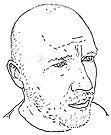
Isaac Asimov, a professor of biochemistry, wrote as a highly successful author, best known for his books.
Asimov, professor, generally considered of all time, edited more than five hundred books and ninety thousand letters and postcards. He published in nine of the ten major categories of the Dewey decimal classification but lacked only an entry in the category of philosophy (100).
People widely considered Asimov, a master of the genre alongside Robert Anson Heinlein and Arthur Charles Clarke as the "big three" during his lifetime. He later tied Galactic Empire and the Robot into the same universe as his most famous series to create a unified "future history" for his stories much like those that Heinlein pioneered and Cordwainer Smith and Poul Anderson previously produced. He penned "Nightfall," voted in 1964 as the best short story of all time; many persons still honor this title. He also produced well mysteries, fantasy, and a great quantity of nonfiction. Asimov used Paul French, the pen name, for the Lucky Starr, series of juvenile novels.
Most books of Asimov in a historical way go as far back to a time with possible question or concept at its simplest stage. He often provides and mentions well nationalities, birth, and death dates for persons and etymologies and pronunciation guides for technical terms. Guide to Science, the tripartite set Understanding Physics, and Chronology of Science and Discovery exemplify these books.
Asimov, a long-time member, reluctantly served as vice president of Mensa international and described some members of that organization as "brain-proud and aggressive about their IQs." He took more pleasure as president of the humanist association. The asteroid 5020 Asimov, the magazine Asimov's Science Fiction, an elementary school in Brooklyn in New York, and two different awards honor his name.
Another memory from my teen years, when I first started out on SF. I could enjoy only A Meeting with Medusa by Arthur C. Clarke when I first read it, it was the only "straightforward" story - but later on, I came to appreciate the power of Joanna Russ' When It Changed.
So here we are on my Asimov nostalgia trip although to be honest this is not really an Asimov - more it is an anthology that was put together where Asimov was asked to add a few words as way of an introduction - after all the choice of material was from the awards and not from Asimov.
That said I have always loved the way he had with words and how was was able to speak with both authority and style that made you respect his words but also feel as though they were said as if the were meant just for you (I am sure someone will be able to explain it better than that)
Now since I openly admit that only a fraction of this book is really the work of Isaac Asimov, so why do I keep it in my collection - well to be honest its for the stories in the pages (and various categories) after all here are the award winning stories of their time.
Now I will admit just because its won an award does not mean its fun to read - I have read (and tried to read) books that claim all sorts of accolades only to give up on them. However there are a number of stories in this book which I really enjoyed.
For example Arthur Clarks Meeting with Medusa - not only was it the inspiration (at least I feel it was) for the front cover but many years later was inspiration for the sequel the Medusa Chronicles. Which to me just goes to show the endearing and powerful quality of these stories.
But what is more this was from an age of science fiction where anything was possible - and that felt so thrilling. So for someone still finding his way through what science fiction was - this was mind blowing - and yes at that time if it has Asimov on the front cover you could pretty much guarantee I would pick it up.
Blown away by Joanna Russ's "When It Changed". I loved Robert Silverberg's "When We Went to See the End of The World". I was totes amazed by Poul Anderson's "Goat Song". The rest were also good, but those three are must-reads!
Bought it for Gene Wolfe's Fifth Head of Cerberus, which I was surprised (somewhat) to learn was beaten out by a hair by Arthur C. Clarke's A Meeting With Medusa for the 1972 Nebula award for best novella. Short stories are not my favourite, generally, though I appreciate the form. Otherwise an excellent collection of big names and a notice of a changing of the guard, in some ways - Wolfe's story is the better, and of the new guard of writers, whereas Clarke's represents the best of the old guard, both stylistically and subject-wise (space exploration, android dreams-not). What is the standout of this collection is Asimov's very insightful introductory essay on science-fiction and conventional literature, which surprised me: he articulated my own belief that science fiction is as an idea what matters but conveys an idea of what the future now could be. In the 21st century, we have entered that future now, and it shows how the science fiction of this time is no longer Asimov's hard science fiction in the sense of fiction based on actual scientific discovery, fact, or application. And it is not even science fiction in the sense of a futuristic environment powered by scientific advancements; it is just fiction, with our powerful toy phones ruining the speculative vision of the future. Or so it seems to me. Asimov's introductory remarks to each story, with reference to the others included in the collection, are insightful and interesting, in and of themselves. Reminding me once again of Asimov's great contribution as writer and editor to the genre, and a great fan of it, at heart.
* xi • Introduction: So Why Aren't We Rich? • essay by Isaac Asimov - Asimov having fun exploring an idea. * 3 • A Meeting With Medusa • (1971) • novelette by Arthur C. Clarke - Very hard science, with a little bit of a 'character' study about 'what it means to be human' * 52 • Shaffery Among the Immortals • (1972) • shortstory by Frederik Pohl - typical Pohl, as it's kinda funny satire, until it's not... almost a shaggy dog story, so watch out * 70 • Patron of the Arts • (1972) • novelette by William Rotsler - women are only objects of beauty and sexuality; ridiculously offensive * 95 • When It Changed • (1972) • shortstory by Joanna Russ - the women were doing just fine; could not Russ have said that the return of men would show women prevailing, rather than be victimized yet again? * 106 • On the Downhill Side • (1972) • shortstory by Harlan Ellison - experimental-ish writing and a lack of understanding of what 'love' is... sorry if you 'love' this * 124 • The Fifth Head of Cerberus • (1972) • novella by Gene Wolfe - ugly content, but often beautiful writing * 191 • When We Went to See the End of the World • (1972) • shortstory by Robert Silverberg - relevant right now, as I agree we really are facing 'the end of the world' and ignoring that fact * 202 • Goat Song • (1972) • novelette by Poul Anderson - mix of myth and science, eerie, but also sorta inspirational, especially to 12 year-olds*
1.5 stars rounded down... if you rated it higher, you really need to think about what you got out of it, and read other sorts of works.
Whenever I read short SFF from this era I'm always jealous of the leeway writers were allowed on the pacing (even when I as a reader do not like their pacing). Granted it helps to already be a Known Name, but this observation has held consistent with lesser-known works too!
Highlights for me were "When It Changed" by Joanna Russ (tight, angry) and "Goat Song" by Poul Anderson (a bit preachy and Isn't This Protagonist Special And Cool, but damn! The vibes! The Dark Queen! The Orpheus of it all!).
Most of the stories were okay but slightly boring. There were interesting story ideas (like "The Fifth Head of Cerberus") but the writing style was mostly tedious and lacked excitement.
The gem of the collection was defenitely "When it Changed" by Joanna Russ. No wonder it won the Nebula! It was wonderfully succint story describing a fundamental change in the society of the protagonists.
Le tre stelle sono una media fra le quattro del racconto di Arthur C. Clarke (che è stato il motivo dell’acquisto e da anche il titolo alla raccolta) e le due stelle degli altri racconti, che qualche volta sono anche da una sola. Avranno anche vinto il premio Nebula!
I enjoyed all of these stories, more or less (apart from Frederik Pohl's Shaffery Among the Immortals, which struck me as creaky and corny). Arthur C. Clarke's A Meeting with Medusa is just about the only example of hard sci-fi, and stands up really well.
This collection is of its time, and so seven of the eight stories are by men. The one story by a woman - When it Changed by Joanna Russ - imagines a society long peopled only by women about to become reacquainted with men. It's the only story in the collection that could've been written yesterday, and was my favourite, alongside Gene Wolfe's The Fifth Head of Cerberus (which I'd read before).
** A Meeting with Medusa • Arthur C. Clarke ** Shaffery Among the Immortals • Frederik Pohl **** Patron of the Arts • William Rotsler **** When It Changed • Joanna Russ * On the Downhill Side • Harlan Ellison ***** The Fifth Head of Cerberus • Gene Wolfe **** When We Went to See the End of the World • Robert Silverberg **** Goat Song • Poul Anderson