What do you think?
Rate this book


134 pages, Paperback
First published January 1, 1894
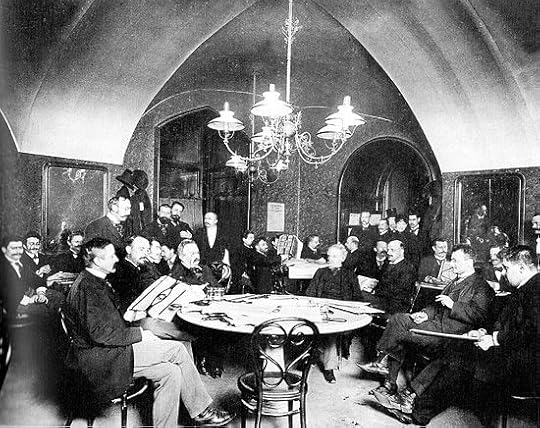
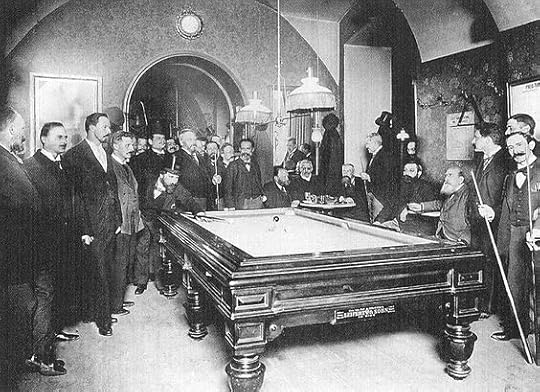
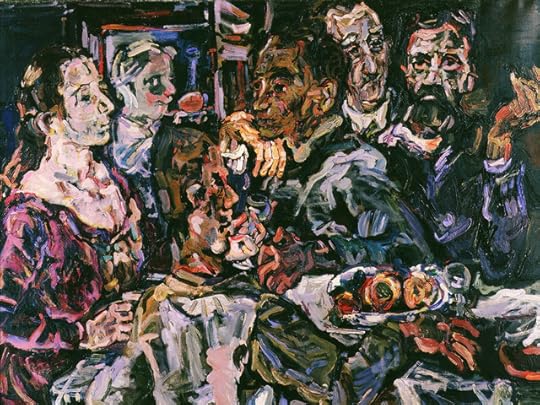
So these—these were the Wanderings for which the youth of Vienna had yesterday sent him their thanks. Had he deserved them? He would not have been able to say. The whole sorry life that he had led now passed through his mind. Never had he felt so deeply that he was an old man, that not only the hopes, but also the disappointments lay far behind him. A dull hurt rose up in him. He put the book aside, he could not read on. He had the feeling that he had long since forgotten about himself.Saxberger is introduced to Meier's group and is treated reverently as the esteemed author of the Wanderings. Some of the artists of the "Enthusiasm" group, it is explained in the afterword, are based on real people known by Schnitzler but it is not necessary to know any details as the characters are outlined perfectly by Schnitzler. There's Blink the cynical critic, Christian who writes historical plays, young Winder who ends up being most besotted by Saxberger and amongst others there is also the ageing actress Fräulein Gasteiner. Saxberger's life is changed by being introduced to this group of admirers, for the first time he is treated respectfully and as a man of importance.
The ovation roared around him. He felt nothing in particular, hardly even the embarrassment he had feared. He had to go up again—this time without Fräulein Gasteiner, and it was a little peculiar to him to hear the noise of clapping hands and the loud shouts of "Bravo". He bowed several times, turned to the door and then, just as the clapping was getting weaker, he heard a voice from slightly behind him, or to the side—he couldn't quite tell—but the words were perfectly distinct, no matter how quietly they had been said: "Poor devil!" He wanted to look around, but he felt that that would seem absurd.Who said this and what, exactly, did they mean? Saxberger can't understand it.
“While someone’s young, they might manage to get a few things together… and then… then it’s just over and you don’t know how it ended.”
The acclaim of these youngsters felt to him like the belated fulfilment of many exhilarating things that he had fervently wished for many decades ago and that he had forgotten in his gray, everyday life.
...he was returning from a short, troublesome journey to a home that he had never loved but in which he now rediscovered the soft and muffled comforts of before.
"In that instant it was incomprehensible to him how many profound interior experiences were extinguished by the mere wretched flow of existence as if they had never been." (51)Eduard Saxberger is an elderly clerk who once wrote a collection of poetry—Wanderings—but who now spends most of his time quietly at the office, among his colleagues, or dazing in his unprepossessing apartment. Long since forgotten, Saxberger's ambitions as a young poet are reignited when, one day, he is paid a visit by a young man who convinces him that his poetry is highly regarded by a group of young Viennese artists. Sucked into the group's activities, which mostly consist of denigrating others and inflating their own importance, Saxberger grapples with the question of who he really is. Is he a poet? At times it seems that he really is, that he has been a poet all along, that he was merely distracted by his work and colleagues from his true calling, that he can become a famous poet yet. This hope—set against the quiet forgetfulness of his life—begins to take a hit and finally fizzles out as he slowly comes to realize that the group of artists is full of hot air. Humorous and sad, compelling to the end, Late Fame is a kind of Thomas Bernhard lite—a lampooning of artistic pretensions without the scathing bitterness.