I really struggle to find a good way to review “Watchmen”. It doesn’t feel like enough to say “This is great, and even if it has flaws, everyone should definitely read it”, thought that would be the TL-DR version. Watching the new HBO series, which is a continuation of the dystopic alternate universe created by Moore in his masterpiece, made me think about the original work again, and I found I had things to say about it.
This is the graphic novel that got me interested in graphic novels, a medium I had snobbishly written off as shallow, juvenile and unintelligent. An ex-boyfriend put a copy in my hands about a decade ago, and I’m sure I protested, but I ended up reading it – and I changed my mind about graphic novels. Now I have a huge shelf full of them. I am picky about them, but I know they can be used to tell stories as complex, as challenging and as layered as prose novels.
Set in an alternate history, the universe of “Watchmen” is one in which masked vigilantes exist, but have outstayed their welcome: laws forbidding them from superhero-ing have been passed, and those who were active in the so-called golden age of vigilantes now live in retirement, more or less as simple civilians. The Cold War has brought a palpable tension in society, and the mutual annihilation of the United-States and the USSR seems inevitable. Through flashbacks, bits and pieces of character’s diary and another one’s memoirs, a murder investigation unearths a far-reaching and complicated plan to “save the world” from the seemingly unavoidable mushroom cloud.
The grittiness of the story appealed to me instantly when I first read it, because one of the main gripes I had with most graphic novels was the inane good vs. evil set up, where bad guys are all bad and good guys are all good and the lines between them are neat and clearly defined. I wondered who actually took that crap seriously when life was so obviously more complicated and nuanced than this. While the nuances in “Watchmen” are mostly dark and unsavory, they were definitely more interesting and realistic than the other nonsense I had been exposed to in graphic novel form. I liked that the characters were complicated, contrary, confused and ultimately struggling to do what they thought of as the right thing. Because that’s an important part of that graphic novel: even the most insane, twisted and fucked up ones among us are trying to do what they think is best.
The artwork is a little bland for my taste, the colors too faded, the comic book within a comic book thing gets tiresome, the long excerpts from the original Nite Owl’s memoirs can drag, and the ultimate ending is a little silly (though the TV show reused it brilliantly), but despite these flaws, the importance of that graphic novel cannot be underestimated. And it is a genuinely enjoyable and engrossing story – provided you like bleak stories filled with existential angst and have an appreciation for dark humor.
This should be a mandatory read, for people who love graphic novels and for people who hate them. If you’ve ever wondered what that medium was truly capable of, this might just show you how great story-telling is not limited by its format. Most of the graphic novels I love so much now could not have been written had it not been for "Watchmen".
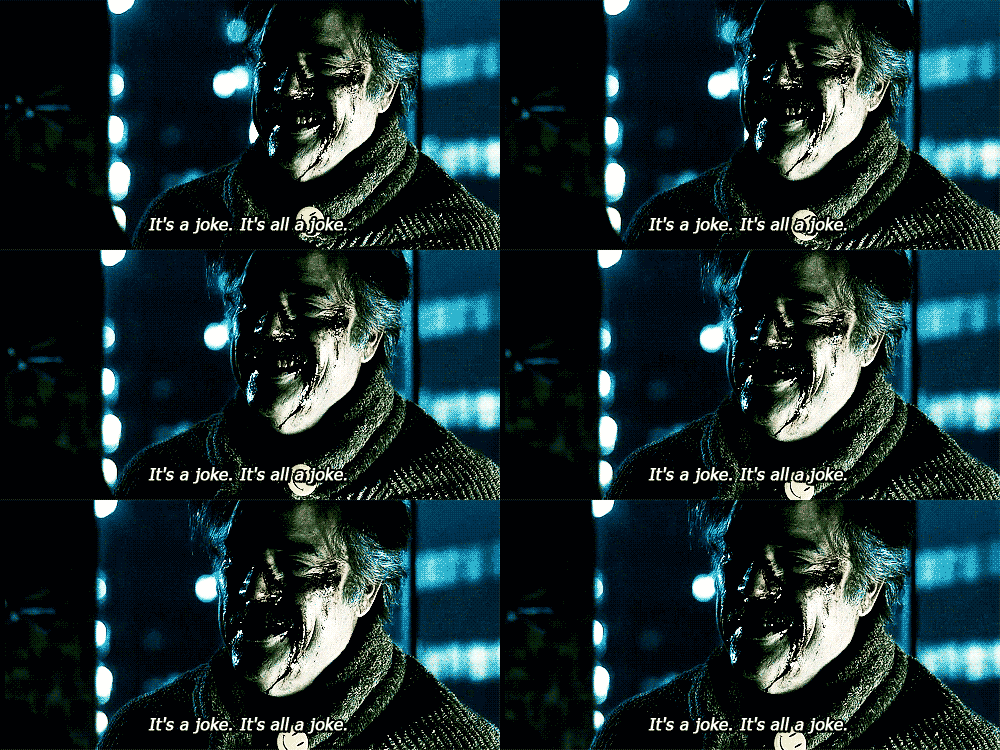
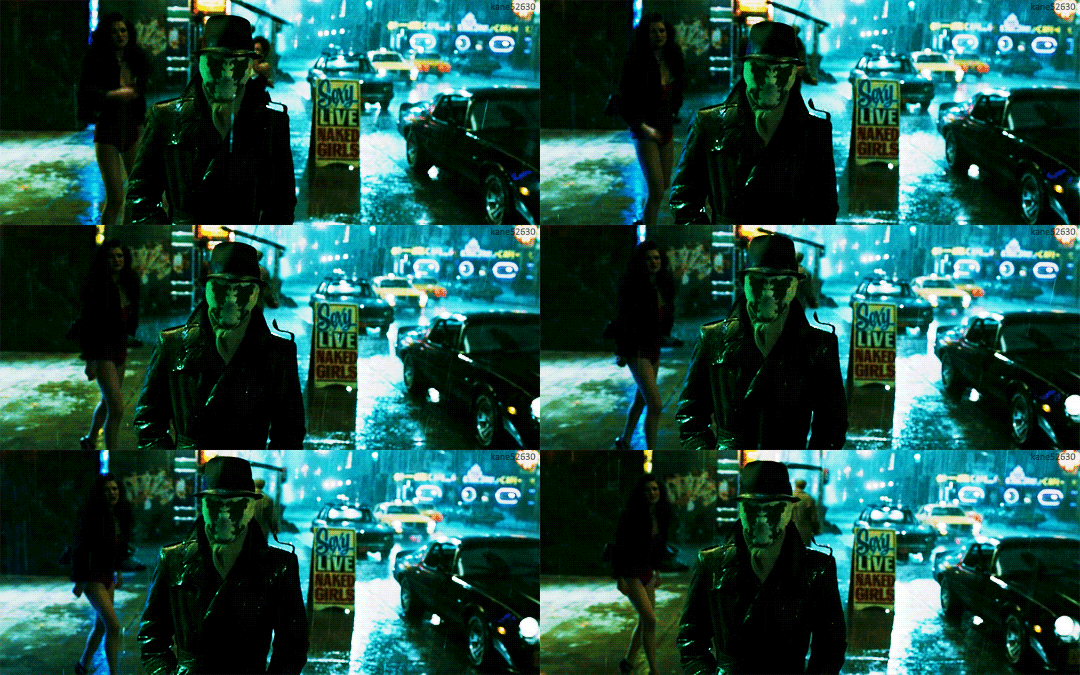
(Everyone likes to hate the 2009 movie, but I actually really loved it because it got rid of the stuff that had annoyed me in the book, and the photography and music were remarkable. The HBO series is also excellent, and brings the universe Moore created to a very topical place.)


 (
(