Francine Green doesn’t speak up much, and who can blame her? Her parents aren’t interested in her opinions, the nuns at school punish girls who ask too many questions, and the House Committee on Un-American Activities is blacklisting people who express unpopular ideas. There’s safety in silence. Francine would rather lose herself in a book, or in daydreams about her favorite Hollywood stars, than risk attracting attention or getting in trouble.
But when outspoken, passionate Sophie Bowman transfers into Francine’s class at All Saints School for Girls, Francine finds herself thinking about things that never concerned her before: free speech, the atom bomb, the existence of God, the way people treat each other. Eventually, Francine discovers that she not only has something to say, she is absolutely determined to say it.
Once again, Karen Cushman follows a young woman’s progress toward her true self, this time exploring the nature of friendship and the experience of growing up Catholic in an era that is both fascinating and relevant to today’s young people. Author’s note.
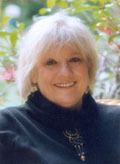
She entered Stanford University on a scholarship in 1959 and graduated with degrees in Greek and English. She later earned master’s degrees in human behavior and museum studies.
For eleven years she was an adjunct professor in the Museum Studies Department at John F. Kennedy University before resigning in 1996 to write full-time.
She lives on Vashon Island, Washington with her husband, Philip.
This book provides a good look at how confused, paranoid and misleading the US government and education system was, concerning the threat of communism and nuclear war in the 1950s. Communism: bad to the point of being satanic. Nuclear weapons: good if we have them; bad if the commies have them; easy to protect yourself as long as there’s a bomb shelter, ditch, or school desk nearby. It would be funny if it wasn’t so honest and sad.
Francine is a very believable and confused young girl. I like how she deals with problems. She desperately wants to believe what’s she told. And she aims to keep quiet and out of trouble at all costs – a good strategy at her very strict Catholic all-girls school. But all that goes wrong when her outspoken new best friend, Sophie, shows up.
The school nuns are the most Satanic ones. Francine’s teacher demands that all her students obey authority, suppress their own personalities, and willingly accept their punishment – to stand in the trash can – whenever they step out of line. Cushman provides enough depressing details and dialogue to make me cringe. Francine cringes too, but she also gets mad at Sophie for speaking her mind, and creating trouble for everybody else. It makes for a very convincing and frustrating sequence of conflicts.
Maybe it’s just a function of Francine’s character, but this story doesn’t have quite the emotional power of Cushman’s best historical fiction. And I wish the anti-communist fears among the adults were a little more developed, a little less abrupt.
I also have one big picky vocab problem: Francine consistently refers to sarcasm as irony. I wouldn’t mind it as an honest middle schooler’s mistake, but she identifies sarcasm as irony a dozen times or more. I realize that Francine is almost always thinking for herself, but still, as a benefit to her readers and English teachers everywhere, Cushman could have let Francine set herself straight at some point.
I read this book to see if it would be a good selection for our mother-daughter book club for my tween daughter. When she first tackled it, she didn't know enough about the Red Scare period in history to make sense of what was going on. She tripped up on the cultural references that I lapped up. Montgomery Clift is dreamy, for example.
Then we went to the MOHAI museum and there just happened to be an interactive game about the Washington state's own version of the Committee on Un-American Activites, the Canwell Committee. In the game, one person plays the interrogator and the other answers questions. You play to find out if you would be left alone, or have your friends and family hauled in for questioning or whether you'd go to prison. They were stunned and played the game over and over again. It was modernized to ask if you read a Dr. Seuss book (Yertle the Turtle?) or are involved in environmental groups. It inspired a lot of great questions and conversations. At that point I knew she would understand Francine Green, and she did.
If we do this for the Mother-Daughter bookclub, it would be fun to make a three-column chart translating the cultural references > Montgomery Clift > Donny Osmond > Harry Stiles (well maybe not quite that, but you get the idea.)
Other things I loved: * explores religious belief - tough, but inconclusive * explores the theme of free speech politically, but also among parents and kids, at school, between friends * the main character is rather timid and ordinary --that was a stroke of genius
The ending was abrupt. My daughter found it unsatisfying. I'm mulling it over.
I have mixed feelings about this book. I usually love Karen Cushman, but felt the research was sloppy in this one. Would a K-8 Catholic school for girls in 1949 have a copy of A Tree Grow in Brooklyn in its library, and would it be considered a safe alternative for book reports? Would a Catholic high school put on a production of Oklahoma? Sure, those are classics today, but that just doesn't ring true for 1949-50 school year. Also, I don't know what to think about the ending. Sure, it packs a wallop, but at the expense of resolution. And while I guess that's appropriate in a book where all the sensible adults express confusion and doubt about modern life, the fact is that Sister Basil is a bully. It can't end well. That said, Francine and Sophie are great characters; I like that the adults Francine goes to with questions either give her more uncertainty or they give her platitudes, even the ones you are set up to expect understanding from. I guess what I'm saying is that I'm not sure it's a book for kids, yet will teens pick it up? The characters are too young.
I have mixed feelings about this book. Cushman typically writes wry, inventive historical fiction for middle school readers. But this book is a by-the-numbers coming-of-age story set in the late 1940s, and the narrator is a putz. I suppose the book could be useful in a classroom just because it provides so much info on Cold War-era suburbia. But who'd have thought a book hell-bent on criticizing Catholic schools' repression of girls could be this dull? Ye gods and little fishes, indeed.
First read: A little slow but very thought provoking! Second read: I read this again because I knew it had an interesting theme and that I may "get" more of it now. Some of it is cringe-ey middle school celebrity crushes and such which is why I rated it a 3. Otherwise, the book is a great story that deals with some of the real internal struggles like fear and learning how to speak up for yourself and what you believe in. It was written in a very relatable way with endearing characters. It is so valuable for young girls and really everyone to find their voice and I love how that was displayed in Francine throughout the book.
Per me è strano dare "appena" tre stelle a un libro di Karen Cushman, ma sia il tema che, sopratutto, i personaggi mi hanno lasciata abbastanza fredda. Per quanto l'autrice sia brava nel rendere l'atmosfera di ansiosa paura e di caccia alle streghe dell'America maccartista, e l'opprimente ambiente delle scuole cattoliche del tempo, non ho sentito vera emozione per nessuno dei personaggi. Francine, in particolare, mi ha lasciato indifferente, seppur abbia apprezzato il suo tardivo riconoscere gli altri - compresi i genitori - oltre le apparenze; Sophie mi stava fondamentalmente antipatica: più che una paladina dei diritti civili mi sembrava una provocatrice con poco cervello, totalmente concentrata su sé stessa nonostante tutti i suoi discorsi sul prossimo. Tenerissimo e realistico invece il personaggio di Artie, il fratellino di cinque anni di Francine. Creativo e fantasioso, portatore di disastri come tutti i bambini, con la sua crescente paura dei "communisti" e della bomba è il vero barometro del tempo. Meritevole comunque di una lettura, The loud silence of Francine Green è comunque lontano dagli altri bellissimi romanzi dell'autrice, e sopratutto dalle sue protagoniste: presuntuose, sciocche, prepotenti, acide, chiuse, ma ricche di una vita che a Francine e Sophie manca.
Who can resist an evil teacher nun story? Not me. I loved this coming of age story set in an LA 1950s Catholic school during the rise of the McCarthy era. The hysteria, the massive amounts of misinformation and misdirection - hmm, not so different from just the other day when our 45th president incited an insurrection to further his own agenda. Another engaging story from the wonderful Karen Cushman, long may she write!
Right before I read The Loud Silence of Francine Green, my boyfriend shared with me a selection from Francis Spufford's The Child That Books Built: A Life in Reading, which stuck with me as I read and critiqued this book.
Spufford, in describing his early experiences with books written for adults, writes:
And I was equally puzzled by the strange silence of the authors about their characters. Oh, they described them all right - but who was good? Who was bad? What was I supposed to think about them? I was used to the structure of a fictional world being a structure of judgments, an edifice built to provide you with a moral experience in exactly the same way that it brought you tastes, smells, and sights. I expected to be guided. I thought that reading was intrinsically a bargain in which you turned off your own powers of judgment and let the author's take over, so he or she could show you a pattern made by the interplay of some people who were exactly what the author said they were. (p. 169)
To my mind, this is the goal of children's literature, and the primary reason I read it. I like to be told where I am, who's there with me, and where they're taking me. And I think the challenge of writing good children's books is to do that in a subtle way, without showing every seam and sounding a trumpet every time something important happens.
It is this subtlety that was completely missing from The Loud Silence of Francine Green, and because of that, I found it difficult to enjoy the book.
It is the early 1950's and Francine Green lives in fear of being in trouble. She obeys the rules set forth by her parents, her church, and the nuns who provide her education, and when she has contrary opinions, keeps them to herself, trying to fit the mold provided. Francine's new friend and classmate, Sophie Bowman, on the other hand, lives to challenge authority, and test the limits of free speech, especially when it comes to Communism, McCarthyism, and Catholicism. The entire novel is a portrait of this odd couple's friendship and the push and pull between wanting to speak one's mind and wanting to err on the side of caution.
My first problem with this book is that it doesn't seem to have a clear plot line. Instead, it's a mish-mash of 50's pop culture, stereotypical depictions of pre-Vatican II Catholics, and an endless litany of differences between quiet Francine and outspoken Sophie. I had no sense of suspense, and no curiosity about how things would turn out. The guide characterized by Spufford was present, but it felt like she was an absent-minded curator bustling from exhibit to exhibit in a 1950's museum, with no sense of story, and a self-indulgent interest in showing us only those things she loved most. I think I have an excellent sense of what Karen Cushman finds interesting about the 50's, but I was never fully sold on why those things were interesting.
My second problem was the depiction of the Catholic church as some sort of enemy. I am aware of the humiliation and abuse sometimes implemented by Catholic school teachers during that time period, and I realize that pre-vatican II Catholicism was a very different breed than the Catholicism I have been practicing during my lifetime. But it bothered me that the only sense of balance we get, and the only acknowledgement that not all nuns are abusive tyrants comes in the author's note, outside of the story, in a section that a lot of readers would be likely to skip. Again, the guide taking us through the story seems to have an overly simplified view of what's happening, and stereotypes run rampant.
Finally, I just thought Sophie and Francine were talking heads for two watered-down points of view. I felt as though the book glorified Sophie's disrespectful behavior and criticized Francine's good behavior, and I didn't see much change in Francine at all, even after everything she supposedly learns from Sophie and her dad.
All in all, I was disappointed by this book. I think I would like to try some of Karen Cushman's older books, set further in the past, and see if those are a bit better. I have a feeling they will be, and that perhaps writing about a time period one has never lived in makes it easier to keep personal biases and agendas from bogging down the story.
Francine lives in America in 1949/1950 at the beginning of the Cold Ward when everyone was fearful of Communists and bombs and Senator McCarthy was beginning his inquiries. She is a quiet girl who wants nothing more than to stay out of trouble. She cannot even write a big part for herself in the screenplay in her head. But when Francine meets the irrepressible Sophie, things begin to change for Francine and she begins to think outside of her own neighborhood and into the world beyond.
It was different from what I expected. I thought it was going to be about a girl who likes movie stars and is quiet and silly and that's about it. But I was wrong. I mean, Francine does like movie stars and is quiet, but she is worrying about big issues like the H-bomb and Communisim and none of the adults will listen to her or talk to her about the state of the world. I guess, in the 1950's, children and especially girls weren't taken seriously and were expected to be quiet and accept things the way they are, to stand still and look pretty so to speak. Francine makes friends with Sophie, who doesn't accept the status quo and asks a lot of questions and gets in trouble a lot. Sophie makes Francine think about what is going on in the world.
It was interesting to see this era through the eyes of a girl. It was funny how they thought if you ducked under a desk, then you'd be okay in the event of a nuclear blast. And how radioactivity wasn't really that dangerous. There was also a small view of the damage that Senator McCarthy did with his inquiries. Sophie's father is a screenwriter and he and his friends fall under scrutiny. The fallout was so sad. The ending made me sad, but it was well worth the read.
Karen Cushman’s new historical fiction book is modern compared to her other novels. The Loud Silence of Francine Green takes place in 1950’s Los Angeles during the height of the Red Scare and McCarthyism. Thirteen year old Francine attends All Saints School for Girls, and is constantly being told, by her parents, her teachers, and her confessor, to keep quiet and do as she is told. On the other hand, her new best friend, Sophie, encourages her, by example, to speak out against what is wrong and to question authority. Francine is both embarrassed and inspired by Sophie’s fearless antics, which often lead to Sophie’s standing in the waste basket, Sister Basil’s favorite form of punishment. Francine’s friendship with Sophie causes her to wonder if the advice of the adults in her life to “keep quiet” and “don’t get involved” is really the best advice. We see Francine mature in this book, but not too much - the scene where Francine decides to call the Pope for advice reminds us that she is very much still a child. [return]Cushman endows Francine with a genuine and endearing voice. It sometimes feels like Cushman is trying too hard to illustrate the effects that the fear of Communism had on people, with Francine’s father building a bomb shelter in the backyard, and a family friend of Sophie’s being blacklisted for his political beliefs. Altogether though, the book works, and by novels end we see a more mature Sophie that has grown in courage and self-confidence.
I read this multiple times in middle school. Absolutely adored it, and still do. A serious historical fiction book for young readers but with a lot of heart and humor.
Update: I see a lot of reviews have mentioned that today's middle school/young adult audience would not be interested in this one because of the unfamiliar time period and cultural setting, as well as the Catholic school setting which would be uninteresting for those who did not attend such an institution. .... Do we not read to explore and learn about other places, times, people, cultures, settings..? Maybe not every kid would be drawn to this one but definitely the good young reader will enjoy this. And do kids not learn American history anymore? Why should McCarthyism and the Red Scare be unfamiliar? I read this as a 13-year-old in the mid 2000s and was instantly enthralled. I had only some knowledge on the time period and this book helped expand that knowledge while also being an enjoyable read. I think in today's political climate it would be even more meaningful to kids who read it. Lastly, I'm a Jewish gal and the Catholic school parts were still very interesting and poignant to me (: On the whole, I don't think anyone should dismiss this one as too "out there" for kids. Give this book, and its audience, a bit more credit! I'm going to give it another read; it's been too long for me!
This gets a solid 3.5 stars. I don't hate it, but I know she's capable of doing better. There were clunky moments like when Francine wishes there was a library but for movies that she could take home and watch. It felt like the author was saying I'm Talking To You, 2006 Reader, and Reminding You This is Different. Historical fiction authors, especially for kids, do this a lot but I expect more from her. We NEED more historical fiction books about McCarthyism, especially for kids. I liked the side plot of Sophie's dad's friend the actor and I felt like Francine's parents were given room to live as fully developed characters and not archetypes which was awesome. And I love the relationship between Francine and her brother. But this just didn't quite get there and the ending was less than satisfying.
My sister has been trying to get me to read this book for ages. I don't know why I didn't read it sooner, but I'm glad I eventually did! It was a great, touching book for young adults. It's probably most appealing to the 10-12 year old crowd, but had enough interesting points to keep me reading even though usually I find those books a little below my interest level. This one really caught my emotions and held on. I loved reading about the 'red scare' and the Catholic school environment that Francine lived in. Some parts were a little silly, but there were some very serious (even sad) moments. The parts with her little brother were funny and heartbreaking at times. I highly recommend this book to kids, adults, and everyone in between.
I've loved Karen Cushman's historical fiction about the medieval times, so I was excited to read this new one about a young girl during the early 1950's while WWII was still fresh on her mind and people were building bomb shelters to protect themselves from communist attacks. This is not as light hearted as Cushman's other books because it deals with some serious issues. To make the themes and conflicts more relevant, we have a generation of people who are still living that could further talk about this time period.
This YA novel covers a time period most teens probably don't know much about-the blacklisting of actors thought to be members of the communist party. Francine, with the help of her friend Sophie, slowly begins to realize the unfairness of this. She gradually gains enough confidence to speak up about it. An interesting part of history seen through the eyes of a teen, but also a good example of a teen fighting for what he/she thinks is right.
In 1949, thirteen-year-old Francine goes to Catholic school where she becomes best friends with Sophie, who questions authority and is frequently punished by the bullying nuns. Francine, who has been taught by her family to keep quiet and out of trouble, begins to question and see the hypocrisy and contradiction of those teachings, as well as those she is forced to accept from the school.
This book hasn't circulated so I took it home for a read. I love some of Karen Cushman's other books, particularly Lucy Whipple and the Midwife's Apprentice. This one is will be weeded. This book has no 21st century kid appeal whatsoever. Communism, Catholic School and the bomb-all scary things- served up on piece of stale bread.
This book probably deserves more than three stars, but when I compare it to others that I have rated as four star, I just cannot raise it any higher. This story takes place in the 1950s in Los Angeles, California. The protagonist, Francine Green, attends a Catholic elementary school run by an order of nuns. It is the time of the Cold War and McCarthy is beginning his infamous work against the so-called Communists in the film industry. Indoctrinated by the nuns that Communism and anything resembling socialism is the work of the devil and any disagreement with that position will lead to eternal damnation, Francine is "content" to live in fear of the atomic bomb that she is sure will come and destroy everything. Her world is shaken when a new student, Sophie, comes to her school. Sophie is not afraid to disagree with the tyrannical Sister Basil about free speech, Communism, the existence of God, and numerous other subjects. For these opinions, she is subjected to daily punishments in the classroom, most of them cruel and humiliating. While outside events create fear in society and Sister Basil creates fear in the classroom, Francine remains silent and unable to defend Sophie, even though she has become her best friend. That is, she is silent until.....
Reading this book brought back memories of my own Catholic elementary education. I remember the Schaefer's Peacock Blue ink I would sometimes use in my fountain pen. I remember the "duck and cover" bomb drills. I remember the school library which housed mostly books on the saints and the life of Jesus. I remember the scent of Cashmere Bouquet talcum powder. Francine talks about all of these. I don't remember the nuns being cruel, but we were required to believe everything they said. I remember my own fears of what would happen if (when?) the Godless Communists took over and made me renounce my faith. Would I have the strength to resist and save my soul? This book would probably not have as much meaning to someone who was not a student in the 50s and 60s, but I found it thought-provoking. Looking back, I wonder how many people had the convictions of Sophie, but, like Francine, did not have the courage to speak out.
I greatly enjoyed reading this story of Francine, a timid 8th grader in about 1951 in southern California, whose life is interrupted and challenged by the arrival of the brash, fearless, and intellectually curious Sophie Bowman. The two girls struggle in their own ways to make sense of the threat of Communism, the fear of McCarthyism, and the messy world of middle school. When Sophie begins to attend Francine's school, All Saints Catholic School for Girls (which is given many funny nicknames throughout the book, such as The Sin-Free Institute For Truly Feminine People,) she immediately runs afoul of the principal, Sister Basil, who is a plain old bully.
I enjoyed seeing things through Francine's eyes, from her love for her little brother Artie to her child-like adoration of the dreamy movie star Montgomery Clift. She admires Sophie's brave way of taking on the world, and yet also sees that Sophie brings a lot of trouble on herself by being reckless about challenging authority. I also appreciated that the very mean Sister Basil was balanced with a much gentler and kinder nun, Sister Pete. Nearby Russian neighbors, the Petrovs, who fled Communist Russia decades before, sadly become targets thanks to McCarthyism, as do Sophie, her father, and their kind friend Jacob, and watching what happens to them is heartbreaking.
Many good quotes in this novel!
Though aimed at middle schoolers, this book might be better for teens, but might feel too young for them. In some ways I wish the author had written this is a story about high school girls: the themes are certainly mature, but the two main characters are just 13.
Might be an iffy read for an 8th grader or younger, but a great read if the parent reads along.
Karen Cushman's historical fiction is often set hundreds of years in the past; this one, in the early fifties, looks at more recent history and raises questions for today. Starstruck Francine Green lives in San Diego in the early fifties, and her biggest concern is getting to meet "dreamy" Montgomery Clift. In the course of the novel she begins to realize, through her friendship with new girl Sophie Bowman, that there might be more important issues in life. Motherless and living with her screenwriter father, Sophie is well informed about politics and constitutional free speech issues. The adults in Francine's life consider Sophie "not a good influence," but as Joseph McCarthy's House Un-American Activities Committee begins its purge of Jews and suspected Communists from Hollywood, Francine's eyes are opened to injustice and prejudice.
This book was very well thought out. I believe that Karen Cushman has out done herself with, The Loud Silence of Francine Green. This story was very well written and showed me some of the things that people talked and thought about when the invention of bombs came out and on people’s thoughts on communism. Francine Green, one of the main characters in the story, if not the main, was a quiet girl who eventually met an outspoken girl named Sophie and became very close friends with her. They went through good and bad times together. Sophie made Francine come out of her shell more and more. And Francine was someone that Sophie could talk openly to. I can’t wait to read Karen Cushman’s other books!
Plot Summary: Francine Green is a young girl who has been conditioned to live an obedient life. When she befriends an outspoken, over-the-top neighbor named Sophie, she begins to build opinions, ideas, and passionate viewpoints about the issues surrounding her. Francine begins to question her own values which inspire her to to speak up and stand up to those who disrespect her beliefs.
Critical Analysis: The Loud Silence of Francine Green is a powerful story that helps readers understand the importance of speaking up and thinking critically. Many topics are presented that many readers feel strongly about like; freedom of speech, friendship, growing up, fear and family. Cushman provides readers insight into McCarthyism and the power that comes from a government-fearing population.
This is the latest historical novel written by the same author who wrote “Catherine, Called Birdy”, “The Midwife’s Apprentice”, “Matilda Bone” and “The Ballad of Lucy Whipple”. Set in Los Angeles in 1949, this book captures the terrors and confusions of the McCarthy era. Eighth-grader Francine admires her friend Sophie, who was kicked out of public school for painting "There is no free speech here" on the gymnasium floor, because she is not afraid to speak up, ask questions, or give her opinion. Francine wishes she could be more like that, but is discouraged from doing so at home and at her rigid Catholic school, "the land of ‘Sit down, Francine' and ‘Be quiet, Francine.'" Her worries escalate as Communist scares in Hollywood grow, and Sophie and her playwright father fall under suspicion. Filled with period slang, the smoothly inserted historical details, from Francine’s crush, movie star Montgomery Clift, to backyard bomb shelters, Francine's adolescent struggles and questions are featured. Readers will savor the story of friends and family tensions, the sly humor, and the questions about patriotism, activism, and freedom, which bring the novel right into today's most polarizing controversies. This would be a good choice for teachers to use to provoke lively class discussion. Another book for interested readers about the McCarthy hunts is Ellen Levine's Catch a Tiger by the Toe. Suitable for teens in grades 6-10, and for those interested in politics and historical fiction.
When you read many books by the same author, they can't all be your favorite. I greatly enjoy Karen Cushman's talent for writing about characters and situations in medieval times. Catherine Called Birdy is one of my favorites, but Matilda Bone and the Midwife's Apprentice are close seconds. Francine Green deals with similar questions and problems, but her era (the 1950s) is different. Me and Francine didn't click as well. The story still has merit and is still interesting. It's just not as entertaining as the others, and if I tell a friend to read a book by Karen Cushman, I'll recommend others above this one.
I LOVED this book! I thought it was cool it was about the Red Scare time period, because I haven’t read a ton of things set in that time.
I loved Sophie. Her character was so well developed that I came to like her like a real human. I enjoyed her so mush because of her questioning mind in a Catholic school where that was highly discouraged. I loved the way she made Francine think about things differently: God and communists and school. The only book character it is easy to compare her to for me is Leslie from Bridge to Terebithia.
Francine’s character development was so well done: from the quiet, shy girl we know for the majority of the book, to the one who tells Sister Basil she is a bully.
I really enjoyed all but the last 4 minutes of this book. (I listened to the audio) Most of the characters were well developed and the plot had enough going on to keep me interested. Every time I thought I knew where the plot was going, Cushman surprised me with a redirection. I was emotionally invested in the characters and even teared up a few times. In fact, I was so invested, I yelled at my phone when the story ended! You can't do that to a person!!
Definitely a good read for middle graders with or without prior knowledge of the Cold War era.
This entire review has been hidden because of spoilers.
Catholic school Francine is happy not causing problems or even thinking about them, but her new best friend Sophie won't stop asking questions to get herself in trouble. Then real trouble hits too close to home for Sophie when a family friend starts getting questioned by about his "communist tendencies" and is threatened unless he gives them names of others like him. And then Sophie's dad stops getting work for communist sympathies. Can Francine sit back and not do something? Will she join the other schoolgirls bearing signs that say "Kill a Commie for Christ"?
I was a big fan of this book when I first read it, back in middle school. My rating may be a bit inflated, due to nostalgic reasons, but I still enjoyed it very much. The most controversial thing this novel tackles is the United States view on communism, which is still a highly polarizing topic even today. For years, Americans have fallen to the propaganda machine, choosing to believe that communism is inherently evil, but Sophie decides to question that- to ask if these people really deserve our scrutiny when they are just ordinary people as well.
The book started off slow but picked up the pace later and finished with a ban! The Loud Silence of Francine green is a very good book about equality. Set in the late 1940's and early 1950's, WWII has just finished and now it is the beginning of the Cold War. Everyone is afraid of the communists and bombs being dropped on them anytime. Francine herself has to overcome her own problems and through adversity, she learns what is truly important in life.