Jump to ratings and reviews
Rate this book

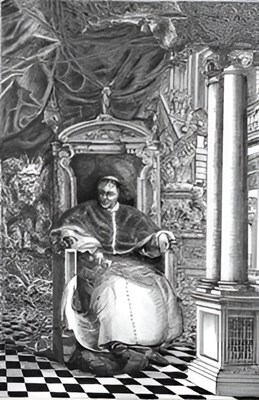
The Dreams of Cardinal Vittorini

Rate this book
Contents:
'Beside The Shrill Sea'
'Feng Shui'
'In Arcadia'
'The Evil Eye'
'Miss Marchant’s Cause'
'Tiger In The Snow'
'Gardens Gods'
'The Black Cathedral'
'The Boy in Green Velvet'
'The Golden Basilica'
'Death Mask'
'A Warning To The Antiquary'
'The Seventeenth Sister'
'The Copper Wig'
'The Dreams Of Cardinal Vittorini'

360 pages, Hardcover

First published January 1, 2003

19 people are currently reading
223 people want to read

About the author

Reggie Oliver

164 books128 followers
Reggie Oliver is a stage actor and playwright. His biography of Stella Gibbons was praised as “a triumph” by Hilary Spurling in the Daily Telegraph, his play Winner Takes All, was described as “the funniest evening in London”, by Michael Billington in The Guardian, and his adaptation of Hennequin and Delacour’s Once Bitten opened at the Orange Tree Theatre in London in December 2010.

He is the author of four highly-praised volumes of short fiction: The Dreams of Cardinal Vittorini (Haunted River 2003), The Complete Symphonies of Adolf Hitler (Haunted River 2005), Masques of Satan (Ash Tree 2007), and Madder Mysteries (Ex Occidente 2009). His stories have appeared in over 25 anthologies and, for the third year running, one of his stories appears in The Mammoth Book of Best New Horror, the most widely read and popular of contemporary horror anthologies.

Ratings & Reviews

What do you think?
Rate this book

Friends & Following

Create a free account to discover what your friends think of this book!

Community Reviews

5 stars
66 (46%)
4 stars
57 (40%)
3 stars
14 (9%)
2 stars
4 (2%)
1 star
0 (0%)
Displaying 1 - 25 of 25 reviews
Profile Image for Ronald.
204 reviews42 followers
October 22, 2012
Since I was impressed with two books published by Tartarus Press (both written by Mark Samuels), I searched for other things published by them. I got this book for my ereader. My high opinion of the publisher and their writers stands.

The stories in this book (some might be novelettes, for some are longer than a typical short story) are well written.

According to the author's bio, Reggie Oliver is a stage actor and playwright. Perhaps it could be said that Reggie Oliver is developing a sub-genre of weird fiction, for some stories here are supernatural/occult horror with the theater as the setting.

Other stories take a different track. "Feng Shui", perhaps the shortest story in this book, is partly humorous, and justice is done to the main characters in this story. It would make a good episode for a revived Twilight Zone TV show. Other stories are about the encounter with an evil spirit, which I found chilling.


Profile Image for Isidore.
439 reviews
July 25, 2012
Reggie Oliver is probably the best living writer of the M.R. James species of weird tale, and one of the finest in the entire horror genre. Unfortunately, his collections of short fiction tend to appear in tiny press runs from small publishers, and are usually unavailable except from high-priced book dealers. The good news is that Tartarus Press, in addition to publishing his latest assortment of horrors ("Mrs. Midnight and Other Stories") is now starting to reissue the earlier collections, beginning with this, Oliver's first.

These tales are constructed along Jamesian lines: the tone is low-key, the characterization deft, the plotting ingeniously devised to lead the reader to a moment when something truly bizarre and monstrous is glimpsed, and then the tale wraps up logically, without excessive explanation. Usually there are subtle indications of the awfulness to come: these are made more mysterious by being obtained at second or third hand, or read in a manuscript, or otherwise indirectly perceived.

Oliver's horrors are sometimes readily comprehensible, sometimes so outre as to take us far away from orthodox ghosts or monsters, as with the revolting "bag of skin" in "The Golden Basilica". They are unfailingly set forth in prose of astonishing precision and clarity. Like the very finest writers of weird fiction, Oliver can achieve a bigger impact with a single carefully-fashioned line than some writers can in entire novels. In this regard, I am particularly fond of the "The Seventeenth Sister": at one point the reader is afforded a look at the crazed scribblings of a man who died "a bad death" (one notes the almost humorous understatement); these largely incomprehensible writings nevertheless convey the notion that the dead man was tormented by a strange, terrifying thing, which he does not actually describe beyond scrawling the eerie line, "Her mouth wept cold water on my pillow". Now, even James would have trouble topping that!

"The Boy in Green Velvet" is also extremely effective. It's built around a fictional play of the same name (likely the most noxious unwritten work of dramaturgy since "The King in Yellow"). Oliver describes the play's grotesqueries with great economy and suggestiveness. I also liked "Evil Eye", which demonstrates that even at the beginning of his career, Oliver was far more than a writer of pastiches. It's about as far removed from James as one can get in terms of subject matter and ideas (if anything, it reminds me of a certain Clive Barker story), but Oliver's characteristic combination of outlandish horror and tight writing bring splendid results.

Obviously I recommend this collection very, very highly. But it isn't flawless. Some of the stories are stronger than others: for example, "Garden Gods" is a little too predictable and contrived. And the apparatus of an apparently orthodox Christian view of the afterlife occasionally intrudes, to the slight detriment of a few of the stories. Oliver is never as heavy-handed as Russell Kirk, but the pleasantly Hollywoodish endings of "Death Mask" and "Miss Marchant's Cause", in which the dead are helped to find Eternal Peace, detract from otherwise superb stories. But these are minor blemishes. Get this book while you can!

Profile Image for Jim Smith.
390 reviews46 followers
October 17, 2017
Reggie Oliver is a delightful author for any obsessive of the classical supernatural horror tale practised by Robert Aickman, Sheridan Le Fanu, Walter de la Mare, Arthur Machen, M. R. James, Sarban, William Hope Hodgson, etc. While some of his stories in this debut collection can at times seemingly only aspire to be warmly entertaining pastiche, they are nevertheless a consistent pleasure to read and tinged with that sense of ineffable strangeness of life, and when Oliver is on top form, displayed here with such excellent tales as The Boy in the Green Velvet, Death Mask and the titular story, his work is of comparable quality to the great tales of that estimable company of his influences and places him in the highest ranking of contemporary horror authors.
Profile Image for Oscar.
2,256 reviews579 followers
May 4, 2025
"The Dreams of Cardinal Vittorini and Other Strange Stories", la primera colección de relatos de Reggie Oliver, publicada en 2003, es un libro de horror sobrenatural que recuerda a autores como M.R. James o E.F. Benson, pero con un estilo propio. La colección, nominada al International Horror Guild Award, incluye quince relatos en su edición original de Haunted River, aunque la de Tartarus Press omite uno, “A Warning to the Antiquary”, por decisión del autor.

Los relatos tratan temas variados: relaciones que persisten tras la muerte, como en “Beside the Shrill Sea”, un inventor atrapado en un videojuego o un cardenal del siglo XVI con visiones de una secta, como en el relato titular. La prosa es clara, con un tono teatral que refleja la experiencia de Oliver como actor y dramaturgo. Algunos cuentos, como “The Seventeenth Sister” o “Death Mask”, destacan por su atmósfera y se quedan en la memoria. Otros, como “The Copper Wig” o “The Boy in Green Velvet”, me parecieron menos logrados, con ideas que no terminan de cuajar.

El libro mezcla lo sobrenatural con elementos cotidianos, como en “Feng Shui”, donde un armario tiene un aura maligna, o “In Arcadia”, que combina arte y terror. No todos los relatos tienen la misma fuerza, pero en general se leen bien y ofrecen algo diferente dentro del género. Oliver actualiza el cuento de fantasmas clásico sin imitar a sus predecesores, y eso se nota en la variedad de escenarios y personajes.

Es un libro correcto para quien disfrute del horror sobrenatural con un enfoque más tradicional. Me ha gustado, aunque no lo considero excepcional.

Author 12 books137 followers
June 9, 2019
One of the stronger Oliver collections that I've read. Aside from the title story, I also greatly enjoyed "Tiger in the Snow," "The Black Cathedral," and "The Seventeenth Sister."
Profile Image for Jay.
546 reviews26 followers
July 14, 2016
If you like early Thomas Ligotti or M.R. James, this collection is for you.
This is a collection of short stories and, as such, varies in content and quality to a degree. Theater is a recurring theme, as are cursed objects and possession (in multiple meanings of the word), but the breadth of setting is encouraging.
As is the quality of the work, as a whole. There are no bad stories, though a couple have eye-rolling moments (the game titles in Black Cathedral are awful, to the point that I wondered if he had played a video game since the 2600 era), and several of the endings seem perfunctory. The title story is a standout, though, as is Miss Marchant's Cause.
Narrative resolution may not be the author's strong suit, but tone certainly is. Dread and tension of the slow creeping kind pervade this book, and that sense of doom is what engaged me most. You won't find much gore here, nor fast-paced thrills, and give up much hope of shocking twists. These tales steadily build to conclusions which, in hindsight, seem inevitable. There is also a fair bit of humor, but it is quite dry.
This was the author's first collection, and, if he maintained or improved upon this level of quality, I look forward to reading the others.
Profile Image for Riju Ganguly.
Author 39 books1,879 followers
July 26, 2012
At the time of its first publication, this book had dazzled lovers of supernatural fiction as well as hardened critics, with the elegant and yet utterly terrifying narratives. Passage of years since then had increased the price of the book in the second-hand market, as well as the lure of the stories. Tartarus Press has done the fiction-lovers by releasing the book (excluding one story that had grated many-a-reader with its rather controversial undertones in the earlier version, but thankfully has been ommitted from this one) in a truly affordable format that would ensure that many more lovers of classic supernatural fiction as well as the admirers of "strange stories" would get to read several stories that have become classics of macabre.

The contents are: -

(*) “Author’s Note”
1. “Beside the Shrill Sea”
2. “Feng Shui”
3. “In Arcadia”
4. “Evil Eye”
5. “Miss Marchant’s Cause”
6. “Tiger in the Snow”
7. “Garden Gods”
8. “The Black Cathedral”
9. ”The Boy in Green Velvet”
10. “The Golden Basilica”
11. “Death Mask”
12. “The Seventeenth Sister”
13. “The Copper Wig”
14. “The Dreams of Cardinal Vittorini”.

Highly recommended!
Profile Image for Canavan.
1,700 reviews19 followers
July 19, 2021
✭✭✭½

“Beside the Shrill Sea” ✭✭✭✭✭
“Feng Shui” ✭✭✭½
“In Arcadia” ✭✭✭½
“The Evil Eye” ✭✭✭
“Miss Marchant's Cause” ✭✭✭
“Tiger in the Snow” ✭✭✭½
“Garden Gods” ✭✭✭½
“The Black Cathedral” ✭✭✭✭
“The Boy in Green Velvet” ✭✭✭½
“The Golden Basilica” ✭✭✭½
“Death Mask” ✭✭✭
“A Warning to the Antiquary” ✭½
“The Seventeenth Sister” ✭✭✭½
“The Copper Wig” ✭✭✭✭
“The Dreams of Cardinal Vittorini” ✭✭✭½

All stories 2003 except “Beside the Shrill Sea” (2002) and “The Dreams of Cardinal Vittorini” (2001).
Profile Image for Doug Bolden.
408 reviews35 followers
May 27, 2023
Summary: Reggie Oliver's first collection of ghostly and strange tales shows the direction his generally better later works would go while offering up plenty of of charm on its own. While not as polished or strong as other collections, there are still things quite worth reading, especially in the latter half. For fans of gentle ghost stories, middle class haunts, and folks who like stories involving theater and academics. Note that the Tartarus Press edition that I am reviewing is technically missing a story omitted at the bequest of the author.

====

Reggie Oliver is undoubtedly one of the biggest and best names in the joyously still extant genre of the ghostly and strange tale (both overall and in the category of living master). However, one should approach this first-of-his collection a bit more gently than others. Not all the beats land so smoothly as later stories and many of the stories have breaking points where things feel a bit off compared to the mastery of essentially every other volume of Oliver literature.

The four-star rating I have given it as roughly as imprecise as telling someone to find Millport by going west of Edinburgh. It is true that this is a four-star book but it could also be seen as a three-star book (compared to other things written by Oliver) or a five-star book for its impact on the genre (the bulk of that impact being that it introduced us to Reggie Oliver). The title story, "The Dreams of Cardinal Vittorini," is one of the best stories in the entire oeuvre of strange fiction and is an astounding work (it is available elsewhere if you just wanted to see that one but not the rest of these). Others are much more middling but then others are quite good.

"In Arcadia, Ego" features the old canard of a person so moved by a painting they begin to interact with it (a hairy proposition to tell well in text at any rate). While it contains striking imagery and some nice set-pieces, as well as a nod to artists living on in their art, the general effect becomes dreamlike and pointless, so much so that I wonder if this is based on a dream that Oliver himself had. Another of these not-quite-there stories is "Miss Marchant's Cause." The blend of two researchers trying to unearth an old mystery — with a somewhat brief ghostly sighting near the start that barely fits — shows a lot of Oliver's charm and skill and then then whole thing ends with a sequence where the man slaps some sense into the woman as he uses his skills to ward off what is essentially the specter of feminist revisionism.

Others from the front half of this collection include "Evil Eye" — a serviceable but slight comeuppance story about a voyeur spying on a tenant with a prescient nod towards some AirBnB hidden camera type scandals — and "Tiger in the Snow," which takes some cheeky-but-loving digs at the art community which is mostly marred by its insistence on being a ghost story. The thread towards the end about the artist becoming obsessed by a single piece of art feels more haunting by a stretch. "Beyond the Shrill Sea" is ok and a good introduction to Oliver's "theater tales" but not much happens until the very end and it was something very obvious.

Of these earlier-by-page-count stories, my favorite is the very slight and comedic romp, "Feng Shui." Nothing happens there, as well, but Oliver has a sense of joy in telling it. It is charming and gentle with its ghost.

As you approach the middle point of the collection, and the stories grow a bit longer, you begin more clearly to see why Oliver is worth reading. "The Garden Gods" is a good take on the haunted estate with ghostly secrets and strange mazes and statuary where you can forgive the convenience of the ending. "The Black Cathedral" does a nice job of updating dark magick (with a k, for sure) and the "black pilgrimage" into a more virtual sphere though could maybe do with more exactitude on actual videogames in the text.

By the time you get to the last six stories, you begin to see why I consider new Oliver collections to be a must buy.

The family drama mixed with the horror of a literally little play (a different sort of a personal drama, ha!) in "The Boy in Green Velvet" is a perfect bite of post-(M. R. )Jamesian weird with twists that are more winks to the genre. Obvious, perhaps, but still fun. "The Seventeenth Sister" begins with a similar question as "The White People" on the nature of true evil and then travels down to E. F. Benson country to deal with the confession of nuns, the women in their care, and the eponymous sister. It is the sort of tale of which Benson or H. R. Wakefield would have been (deservedly) proud. "Death Mask" has just the right dash of ghostly spice in a story mostly about suburban and academic drama. The ending is one of the sappiest in Oliver's stories, but you can mostly understand. "The Golden Basilica" has a moment of absolute squelch (and, you know, the implication) but the true awe of it is the heartbreak of the ending. Sad and kind of beautiful (but also very, very squelchy) all at once.

I would say the only misstep in these final stories is "The Copper Wig" and the way it tells the reader what the twist will be, basically, and then tries to act like there is a twist. Moving a paragraph or two to later in the story would probably have tripled its story-telling effectiveness. Maybe Reggie Oliver was taking a dare at using dramatic irony in a story about stagecraft.

And then there is "The Dreams of Cardinal Vittorini". The final story deals with a priest and his brush against the heretical Ignoists. With its depictions of the inquisition, insights into the mind of the cult, brushes with mystical lore, and effectiveness of its central play on philosophical reductio ad absurdum — if God came from nothing, then Nothing created God — Oliver crafts a truly masterful and significant weird tale. For my money, I put it in the class of "The Call of Cthulhu," "The White People," and "The Willows" as a story that represents the best of the genre. Like those earlier three, I would hope this one is long considered a foundational story and an inspiration for authors going forward.

One additional thing is that the first half (especially) has a slightly off-putting tendency to link people's physical appearances with their general place in the story. I did not catalog this precisely but had the definite notion of people being fat or thin or ugly or beautiful is based on how good or wicked they might end up being. It felt, and still feels, unnecessary.

An odd aside, the Tartarus Press edition omits a single story from the earlier printing — "A Warning to the Antiquary". Oliver himself says the story had outlived its usefulness and had no reason to be reprinted. While there's always a twinge of knowing you are missing out (even when you know what you are missing out would detract from the whole), there is a little extra spice in this revision. While trying to find out some text about the story to understand its exclusion, I came across this review of the reprint where the true joy is in the comment section [note: link goes to wayback machine's version just in case the comments disappear/etc]. The spat between publishers and multiple accusations of editorial egotism (or, to quote one comment, monomania) being behind the inclusion and exclusion of the story is exactly the sort of middle class dispute that you could see launching a Reggie Oliver tale.

I will bring this long review to a close just to say it is worth reading as a collection but I would start Oliver somewhere else and then come back to it, personally. Otherwise, maybe read the stories in reverse order. Starting at the final story and working backwards would probably help you to understand the hype a bit better.
342 reviews15 followers
February 13, 2016
Oliver has his fans, even ardent ones, judging by some of the other reviews here, and the stories in this collection are ok enough. But they're best described as pastiches of M. R. James rather than strong works in their own right. Diverting enough for an undemanding afternoon, but not as polished as they should have been and never quite good enough to make you forget that you're not actually reading the real thing.

If you've read a modest number of stories of this kind, Oliver's choices tend to be too obvious--the references to Ravel and Debussy and a statue of Pan in a garden, to take one example. All very much in the spirit, but a bit too much right down the line--provoking a nod and a sigh of, "Yes, of course he went with that"--and their predictability reinforces that sense of pastiche: promising ideas that are never pushed to the point of becoming truly memorable.
Profile Image for Andrew.
2 reviews4 followers
October 10, 2016
A Modern M. R. James

This is a fantastic collection of short ghost stories in the tradition of Montague Rhodes James. Oliver trades a preoccupation with the theater for his predecessor's familiarity with frumpy Edwardian medievalists, but does so without any loss of charm or horror. I would highly recommended it to anyone looking for a vein of horror that had seemed as defunct as the heresy of the title tale.
Profile Image for Chris Cangiano.
265 reviews14 followers
August 31, 2013
Elegant and erudite, Oliver is one of the most exciting contemporary writers of unsettling, supernatural and weird tales. He variously brings to mind MR James, Russel Kirk and Robert Aickman but always with a contemporary sensibility. Highly recommended. I will certainly be seeking out more of his work. This review is of the e-book version of this short story collection.
Profile Image for Matt Poland.
61 reviews4 followers
April 15, 2013
An heir to M.R. James and Robert Aickman. Can there be higher praise in the small world of English ghost stories?
Profile Image for Vultural.
478 reviews16 followers
April 8, 2025
Oliver, Reggie - The Dreams Of Cardinal Vittorini


Oliver’s first collection for Tartarus Press is just solid in every way. Stories set among the theatre boards, others in the countryside, a few dipping into bygone times.

“Beside The Shrill Sea” is an actor’s recollections from his green youth. First roles, minor roles. The troupe. Unpleasant memories of toxic companions. The tightening of the spring until – well – I never specified the recollections were happy ones.

The painting was a curious sort. Forgotten in the manor of an aristocratic line all but tapped out. An illustration neither recognized nor valued, save by Jason, actor on location, still striving for that career break. He doubted anyone would actually miss the painting, a tranquil, bucolic scene, with an almost hypnotic allure, set “In Arcadia”. It exerts a tug, into thievery, into quieter depths.

It’s not that he was a lonely child. His parents were in the diplomatic corps, continuously abroad, while he was conveniently offloaded to boarding school. Bit of an afterthought, I suppose. Nevertheless, one of the masters takes a shine to him. Gordon and his wife Freda, a couple sophisticated and swank. Our lad is suitably impressed, yet as time rolls, his observation keens. So much so, that he spies the “Death Mask”, or the ghost in their home. Not to worry, others have witnessed it. There are ghosts seen and unseen, however, as the chic pair are also haunted. This is a poignant tale, drawing from friendship and loss, personal loss and cruel Fate.

Another inducement for this collection are the illustrations. Oliver has included line drawings (his own) prefacing each tale. And this is my only quibble, or wish if you like. Would that these were slightly larger.
Profile Image for Mike Mclatchey.
58 reviews1 follower
May 9, 2023
Absolutely amazing first collection of weird tales by an author I'll likely go back to fairly quickly. There's not a single story in this that isn't well-written and interesting, but my favorites were "The Evil Eye" and "The Seventeenth Sister." Oliver's style is often described as something like a modern take on M. R. James and while you can certainly make the link, already in this collection I thought the subject matter was a lot broader, sometimes broaching on much more modern concerns. I grew up in England in the late 70s and so several of these were really nostalgic for me, especially "Death Mask." There are vivid depictions of estates and their hauntings, but one may also tell Oliver is well read in the occult, which informs stories like the collection's title cut and gets into old religion in quite the scholarly way. "Garden Gods" similarly wears the mantle of Arthur Machen quite well. Much of Oliver's work touches on the theater as well and there are a few stories here, whose amazingly brushed character studies are as fantastic as in the weirdest tales. Just from this I'd think Oliver has to be one of the best writers out there creating these sorts of stories, so I'm well pleased I've got a bunch more of his collections ready to go.
Profile Image for Dan.
100 reviews8 followers
Read
October 7, 2020
Reggie Oliver is an author who has cropped up a few times in various
anthologies I’ve come across over the years and I’ve log wanted to read through his
story collections. At the beginning of this year I acquired the Tartarus Press paperback
re releases. These stories are very much in the same vein as M.R. James but with a much more modern flavour and focus on the theatre (I believe Mr Oliver is a playwright also). All the stories here and indeed the writing style was very readable and I was able to power through them.
My favourite stories included The Seventeenth Sister, Garden Gods and the title story. I’ve taken to not binging on collections by the same author immediately after one another but I am looking forward to more by Oliver in the near future. Ratings below:

- Beside the Shrill Sea - 7
- Feng Shui - 7
- In Arcadia - 8
- The Evil Eye - 7
- Ms Marchant’s Cause - 7
- Tiger in the Snow - 8
- Garden Gods - 8
- The Black Cathedral - 7
- The Boy in the Green Velvet - 4
- The Golden Basilica - 7
- Death Mask - 8
- The Seventeenth Sister - 9
- The Copper Wig - 3
- The Dreams of Cardinal Vittorini - 8
Profile Image for Jonnie M.
296 reviews13 followers
February 13, 2026
I stumbled onto the work of Reggie Oliver through a Reddit post describing him as the spiritual successor to M.R. James. As a lifelong fan of James’s ghost stories, I was immediately intrigued. There are clear echoes of James throughout this collection, including a few direct nods, and I was especially impressed by how Oliver captures that classic, creeping unease while placing it in more modern settings.

The stories are consistently well written and genuinely effective for the most part, with a couple of real standouts. He doesn’t always stick the landing – a few endings feel a little perfunctory – but the overall quality is high and the variety kept me engaged throughout.

I finished this collection and immediately ordered two more of Oliver’s books, which probably says everything about how much I enjoyed it.
Profile Image for Chaz.
80 reviews
June 30, 2025
An insight to the author himself. His totality is present in all of his work: his vast knowledge of classical literature and church history, of the world of the stage, of academia, of romantic relationships, of the damned and the saved (mostly the former). All of it casts a spell on the reader where she considers 'yeah, that sounds right.' All plausible especially the numinous and the spectral -- a tall order for The Weird, otherwise known as Strange Tales. Some of his stories are slow burning, raising tension the while, when he goes for the jugular. He doesn't pull any punches, and can be brutal but always just enough. You put the book down on your lap when he's frightened you, then you bring it up a moment later because he's got you!
Profile Image for Morgan.
Author 11 books12 followers
February 15, 2026
Nobody brings the feeling of a classic paranormal story into the present(ish) day like Reggie Oliver. If you're in the mood for cursed objects, possessions and obsessions, then
Profile Image for Tommy.
299 reviews4 followers
May 8, 2017
Heavy on atmosphere. A couple will stick with me for a while....
Profile Image for Bibliophile.
790 reviews91 followers
May 17, 2016
An evil cupboard that refuses to let itself get feng shui'd, an alluring painting that literally sucks you in, a peeping Tom who gets more than he bargained for, an artist whose hit art show turns bloodthirsty. These are a few of the strange and wonderful stories in Oliver's first short story collection. For each story he creates an entire universe, believable but slightly off-kilter. So far this one and Flowers of the Sea are my favorites. They are hard to come by in hardback, but are available as e-books so people, check them out.
Profile Image for James.
14 reviews5 followers
November 10, 2012
I really enjoyed these stories. There was a good mix of themes and ideas, with an underlying nod towards theatre land in many of them, which For me, anchored them together as a whole in a way that I found quite satisfying.
The seventeenth sister is probably nearest to the genre of horror and The Black Cathedral touches on the occult. Garden Gods was another of the longer stories that I found particularly inventive
Profile Image for John Hepple.
89 reviews5 followers
December 18, 2012
What can I say? Its Reggie Oliver! Of course its good!

Thank you Tartarus Press for republishing.
Profile Image for Bill Borre.
656 reviews4 followers
Currently reading
May 23, 2024
"Death Mask" - A boy is haunted by the suicides of his teacher and the man's wife after their financial problems become insurmountable.
This entire review has been hidden because of spoilers.
Displaying 1 - 25 of 25 reviews

Can't find what you're looking for?

Get help and learn more about the design.