Jump to ratings and reviews
Rate this book

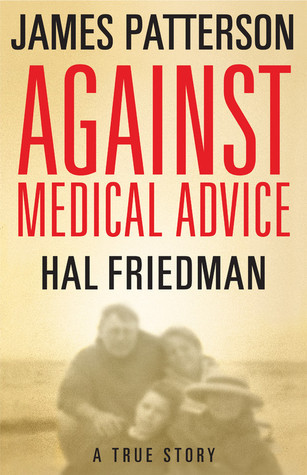
Against Medical Advice

Rate this book
This is the heart-rending drama of one family's courage, heartbreak, sacrifice, and triumph in confronting an agonizing medical condition, written by two master storytellers.

Cory Friedman woke up one morning when he was five years old with the uncontrollable urge to twitch his neck and his life was never the same again. From that day forward his life became a hell of uncontrollable tics, urges, and involuntary utterances. Eventually he is diagnosed with Tourette's Syndrome and Obsessive Compulsive disorder, and Cory embarks on an excruciating journey from specialist to specialist, enduring countless combinations of medications in wildly varying doses. Soon it becomes unclear what tics are symptoms of his disease and what are side effects of the drugs. The only certainty is that it kept getting worse. Despite his lack of control, Cory is aware of every embarrassing movement, and sensitive to every person's reaction to his often aggravating presence. Simply put: Cory Friedman's life is a living hell.

Against Medical Advice is the true story of one family's decades-long battle for survival in the face of extraordinary difficulties and a rigid medical establishment.

304 pages, Hardcover

First published October 1, 2008

231 people are currently reading
7004 people want to read

About the author

James Patterson

955 books355k followers
Official US Site
Official UK Site
JIMMY Patterson Books
ReadKiddoRead

James Patterson is the most popular storyteller of our time and the creator of such unforgettable characters and series as Alex Cross, the Women’s Murder Club, Jane Smith, and Maximum Ride. He has coauthored #1 bestselling novels with Bill Clinton, Dolly Parton, and Michael Crichton, as well as collaborated on #1 bestselling nonfiction, including The Idaho Four, Walk in My Combat Boots, and Filthy Rich. Patterson has told the story of his own life in the #1 bestselling autobiography James Patterson by James Patterson. He is the recipient of an Edgar Award, ten Emmy Awards, the Literarian Award from the National Book Foundation, and the National Humanities Medal.

Ratings & Reviews

What do you think?
Rate this book

Friends & Following

Create a free account to discover what your friends think of this book!

Community Reviews

5 stars
3,006 (35%)
4 stars
3,010 (35%)
3 stars
1,838 (21%)
2 stars
431 (5%)
1 star
123 (1%)
Displaying 1 - 30 of 1,037 reviews
Profile Image for Barbara.
1,773 reviews5,295 followers
May 5, 2023


3.5 stars


Cory Friedman had an uneventful childhood until he was nearly five years old, when a combination of Tourette's Syndrome, Obsessive Compulsive Disorder (OCD), and Anxiety Disorder upended his life for 13 years. Cory's story - written by Hal Friedman (Cory's father) and James Patterson - is told in Cory's voice, with the aim of helping other people in a similar situation.

Cory's troubles began with a shake of his head shortly before his fifth birthday. Feeling tension in his neck while playing a videogame, young Cory jerked his head to the side. Then he did it again - and again - and again. Before long the shaking became uncontrollable.


Young Cory Friedman


Cory Friedman and his father Hal Friedman

The first doctor Cory saw for the head shaking thought he had Attention Deficit Hyperactivity Disorder (ADHD) and prescribed Ritalin, which "was like trying to put out a fire by drowning it in gasoline." While on the medication Cory exhibited a range of uncontrollable behaviors such as moving different parts of his face all the time; repeating what people said (echolalia); constantly clearing his throat; repeatedly touching his sister's shoulder; grimacing; blinking; and more. In time Cory was diagnosed with Tourette's Syndrome - a neuropsychiatric disorder characterized by vocal and motor tics.

Tourette's has no quick fix, and a range of physicians tried different medicines on a trial and error basis. Over the course of his childhood and adolescence, Cory saw dozens of doctors and tried 50 to 60 medicines.....none of which helped for long. Some of Cory's treatment problems was caused by the fact that he had additional pathologies: OCD made Cory repeat the aberrant behaviors even more, and anxiety made him restless and apprehensive, so that - among other things - Cory constantly feared a disaster was about to befall his mother.

Cory's obsessions and tics were not only disturbing, they were dangerous. Shortly before third grade, Cory was riding with his mother when he got the urge to stick his face out the car window and make faces in the side view mirror; open the car door; and touch the steering wheel. All this distracted his mother so much that the car crashed.

Cory's illnesses isolated him, because the shaking and twitching made it impossible for the boy to stay in school for the whole day. Moreover, children were uncomfortable around Cory, and he had almost no friends. The kids Cory did know were acquaintances he met in the school's 'resource room' - a (supposedly) quiet space for special needs kids who required a time out. In reality, the resource room was anything but placid because of the 'out of control' students sent there. Thus Cory's anxiety increased, and his tics went off the charts.

In middle school Cory was able to become a pitcher for the baseball team, which he enjoyed. However, during an important game the players on the opposing team - encouraged by their coach - made fun of Cory's ticcing, which devastated him. (This probably wouldn't happen today, with the crackdown on bullying.)


Cory Friedman growing up

When middle school became overwhelming, Cory was sent to a hospital for people who can't control their body movements. Cory was given the anti-psychotic Risperdal, which exacerbated his head-twisting and foot-tapping. The doctors advised Cory's parents to 'let the medicine start working' and increased his dosage from 1.5 pills, to two, to four, to six.....which would make most people catatonic. The Risperdal made Cory gain weight, and the 5' 7" boy shot up to 230 pounds. In the end Cory had to be taken off Risperdal, which resulted in painful withdrawal symptoms.

Other medications followed, which caused Cory to bounce around his bed at night, and made him feel like another person was taking over his body. Cory's mom gave him Benadryl to induce sleep, but it didn't work. Cory wanted to die - wanted his mother to kill him. The doctors finally agreed that the treatments weren't working, and eased Cory off the medicines.....though different ones were prescribed.

Through all this Cory worried that his problems would break up the family and that his sister Jessie loved him less than she used to. Cory acknowledges that things WERE difficult for his sibling, because he got all the attention and he made it hard for Jessie to have friends and lead a normal life. In part, this may have been related to Cory's loss of control when he got into a rage. Cory would become ultraviolent and irrational, and scream and strike out at the people around him. (Note: Jessie probably loved Cory just fine because she went on to become a special education teacher.🙂)

Though Cory's body betrayed him, he had a superior mind and was able to remember everything his teachers said in class AND learn from homeschooling. Cory also took it upon himself to study internet marketing online.

As Cory advanced to high school, he kept hoping for the next medicine to work, for things to get better as he got older. But it kept not happening. Cory began to hang out with other troubled kids, who'd buy booze and drink in the park. Cory still didn't have friends at school, and his classmates continued to make fun of him. By now Cory was also smoking heavily, and constantly had to sneak out of school to grab a cigarette.

Cory had a series of bad experiences in high school:
He had to leave the football team because he couldn't always make it to practice on time.
He had to use a wheelchair (for a while) because his spasms made him a hazard in the hallways.
He was assigned an aide who got him suspended for smoking. Cory then wrote the aide a threatening email, which was a criminal offense.


During this time, Cory's questionable friends would hang out in his basement where they got drunk; made out; and sometimes got into fights with each other. By his own description, Cory was 'a fat chain-smoker who needed alcohol to get some peace.' (It's hard to believe Cory's parents put up with this, but apparently they didn't know what else to do.) The last straw for Cory's folks occurred during his junior year in high school - when Cory fell asleep on the basement couch with a cigarette in his hand.....and set fire to the sofa.


Cory's family knew they had to stage an intervention, and decided to check Cory into the Dressler Psychiatric Hospital for alcohol abuse. Cory was appalled at being in an 'insane asylum', and was removed 'against medical advice.'

Cory's folks then sent him to Wyoming's Roundtop Wilderness Camp for troubled teens - for a month; followed by the adolescent OCD ward of the Wellington Neurological Center - for six weeks; and then on to the Devereux School in New England - a private therapeutic boarding school with no cars, no alcohol; no cigarettes; and no life (in Cory's eyes). Cory hated Devereux, made a huge fuss, and was eventually allowed to return home and re-enroll in his old high school.

At this point, toward the end of Cory's junior year in high school - when he was clear of medication - he developed 'a sense of well-being', and his tics subsided. Cory's family became convinced that his worst symptoms were caused by the variety of medications that were prescribed in good faith.

In Hal Friedman's epilog to the book, which was published in 2008, he noted that Cory finished high school with good grades and went on to the School of Information Studies at Syracuse University. After graduation Cory worked in internet marketing and became the lead singer in his own New Jersey band. Though Cory still had some physical symptoms, he took very little medication and was doing well.

Hal credits Cory's recovery to his son's irrepressible spirit, his best doctor, and his mother - an "endlessly loving, unselfish human being."


Corey Friedman today

The narrative provides a compelling and instructive glimpse into the life of a person suffering from a combination of psychological disorders. I'd recommend the book to readers interested in the subject - and especially to parents, guardians, teachers, doctors, and others who deal with afflicted children.

You can follow my reviews at https://reviewsbybarbsaffer.blogspot....
Profile Image for Laren.
490 reviews
February 22, 2009
This is James Patterson's first foray into non-fiction, slapping his name on Hal Friedman's true story about his son. Right on the cover it says "One family's struggle with an agonizing medical mystery" so imagine my surprise when I figured out what he had on the first page of the preface to the book and my diagnosis was confirmed on the very next page. I guess the mystery is supposed to be why nothing was able to help this patient with OCD and Tourette's for 13 years. Instead, I found several other mysteries. For example, why would the author think telling the story from his son's point of view would be "more powerful" than telling his own story? Personally I found it distracting because he kept inserting comments about Mom & Dad's feelings and parental compliments which were likely his own POV, and there were many stories about things his parents didn't know happened yet we knew Dad was telling the story. If all this first hand information was given to the author, why not share writing credit or just let his son tell his own story? Why is the book less than 270 pages but it has 73 chapters, a preface, a foreword and an epilogue (the latter two were the author's own voice)? Why is the story not told completely linear so the reader can get a proper sense of the escalation of frustration etc. I felt I was wandering aimlessly through vignettes of someone's life, and it didn't quite tell the story I thought I was getting. Obviously this was a terribly long and painful journey, so I was quite frustrated that it was written so oddly that it didn't have the impact I feel the author wanted it to have.
Profile Image for Sherri.
116 reviews3 followers
November 14, 2008
I was in the middle of reading another book when I saw this in the store. I'm a big fan of James Patterson and it looked interesting so I picked it up and started reading. In no time I had read the first four chapters and decided that I had to buy the book and read it now. I know that Patterson's books read really fast and I knew this would also. I finished this in just a couple of days, which is pretty quick for me now because I have so little time to read.

This is the story of a teenage boy (Cory) suffering from OCD, Tourette's Syndrome and an anxiety disorder, all of which made his life hell. The story was told through the voice of Cory and was an amazing read. It was written so well that I could almost feel what Cory was feeling as he would be overcome by his tics and his obsessions.

Like many people, before reading this I only knew a little about these conditions, with much of my information coming through television and movies...often laughing at the symptoms that these conditions produce. I never thought that it was offensive to laugh about OCD or Tourette's and would often joke about my friends having these afflictions. It was meant in good humor and fun, and most everyone would laugh at the exaggerated images this would produce. Never again will I act like this...reading this book has definitely made me much more aware.
Profile Image for Mary M.
268 reviews1 follower
March 14, 2009
I enjoyed inhaling this book in only two days. I'm usually a slow reader, and this is truly a quick read & an interesting real-life story about a boy with Tourette's and OCD. I recently met someone with Tourette's for the first time. A woman was in the hallway next to a computer lab where I was working with a group of students. She was making very odd trilling noises very loudly, so it was quite distracting. I went out in the hall to ask her to keep it down, and while blinking and contorting her face, she told me she had Tourette's and she would try to move as far away as possible while she waited to talk to someone. I thanked her and thought, "How frustrating must it be to have to explain your medical issues to strangers constantly, every day and everywhere you go?" Not to mention the lack of control of one's body...

I felt the greatest sympathy and understanding for the boy and his family and their amazing struggle, but I also felt for the teachers in this book - it's hard to weigh an individual student's right to learn in regular classroom just like everyone else against the other students' right to have a distraction-free environment. A lot of interesting issues here.

The father writing from the perspective of his son Cory was ok, but I found myself wanting to hear straight from the Cory's mouth. Also, a few times when "Cory" criticized other parents, I felt like I was actually hearing the dad's voice. For example, there's a description of a baseball game when a father on the opposing team was helping to lead a chant to distract Cory, even though they all knew about Cory's disabilities. Supposedly, Cory was thinking it was "really crummy sportsmanship" and it was unbelievable that "a grown-up can be doing such a thing."

Other than a few parentally-motivated comments like this though, I do believe that this father understood his son's compulsions in the most tender and insightful way.

26 reviews
December 8, 2008
I listened to this on CD since my professions find me in my car most of the time. Having a son with sever ADHD, and upon the recommendation of Rush Limbaugh and Glenn Beck, I bought this on CD. A fascinating book...so many of the struggles this young man faced with Tourette's, anxiety disorder and OCD modeled many of the symptoms my son faces on a daily basis. And, now that he is of age, we're finding a whole new set of problems as he has total exercise of his free will in his life. My heart is still very tender over the book and over my own situation in our family. If you have a loved one or suffer from any of these disorders yourself, this is an excellent read, especially for those us looking for something other than a medication-only solution.
Profile Image for raccoon reader.
1,801 reviews4 followers
October 17, 2010
Hmm... well, I had this on my list for a while and then my husband read it and was impressed by it so I finally downloaded it and listened. BTW not sure if it makes a difference but it was an mp3 version not a cd version I listened to. However, it seems to be the same reader, length, etc.

I was not impressed with this families story. I was a social worker for several years, so in a lot of ways this book "took me back" to the days when I lived in their drama every day, just as a helper though, not as the unwilling participant of the disease. I was a therapeutic social worker so all of my children had axis I diagnosis at a *minimum* and most had numerous diagnosis on several Axis making their lives just as difficult as this boy Cory's. Not to diminish what this family went through, but to listen to the book, (and perhaps this is in part colored by the fact that it is a reader I do NOT like) you would think that this child is the only child in the history of the world to have a serious diagnosis and challenge in life. You would think that his family was perfect beyond measure and that this boy suffered more than any other child on the planet. Really. It's an insult to every child out there who has an Axis I diagnosis, paired with any other challenge, not including the challenges such as being a foster child. Cory was highly advantaged and privileged compared to most, no, wait- *all* of the kids I worked with.

He came across as a whiny self indulged child who, I swear I threatened if he repeated one more time "But they knew I coudln't help it!" "they should have known better. They DID know better!" yadda yadda couldn't help it crap...I swore I was going to delete the book unfinished, if not smash my mp3 player. But I didn't. I finished it at my husbands request. In the end you realize that the child improved himself not through drug treatment, but through behavioral therapy, which was the way in which I was trained to help children overcome similar surmounting odds. I am a huge advocate of these methods and am not surprised that they worked for Cory.

I am surprised however, that this book didn't mention the possibility that his ocd and tourettes could have been headed off at the pass when he began to act so inappropriately at age 4. Instead of indulging the "oh he can't help it!" routine they could have taught him how to actively change his behaviors. Isn't this what parents are supposed to do? No matter what the problem? Your kid throws food at you at the table, you don't just look at it like "wow, are you okay?" you actively step in and TEACH the child what is okay or not okay. No one seemed to do this for Cory. Who lets their 5 year old hit them or curse at them or buys the "I didn't mean to" crap? It sounds like he had a family unwilling to hold him accountable for his negative treatment of others. Ever. Even when he was a teen they make excuses or help bail him out. He seems to have lived a life never responsible for any actions, even when he nearly burned down his house. Or perhaps if his parents has learned to just say NO to their 4/5 year old. Instead they just sought out a drug.... I felt the parents were very much to blame for the following decade and a half of hell Cory lived through. As well as Cory not trying to control it earlier. I had a lot of difficulty being sympathetic to Cory and his family. He was not a likable or believable most of the time. The book feels as though the participants don't take responsibility where they could have for Cory's behaviors.

I couldn't recommend this book to anyone. Let me summarize it for you so you don't have to read/listen to it- if you are having trouble with a physical/psychological issue, no matter how severe, try to learn behavioral therapy techniques paired with meditation or physical activity that will help you improve your situation. Drugs are nice, but they can't cure everything- especially if you are NOT trying to change.
Profile Image for Ted.
123 reviews45 followers
April 8, 2014
My rating of this book is mostly due to my opinion (as someone with Tourette's) of its depiction of someone with Tourette Syndrome, and is an effort to address what seems to be the public opinion of this story as representative of a typical case of Tourette's (which I feel it largely is NOT). I'll leave my gripes with the (relatively awful) writing and style of this book out of the discussion - but wow, I could write pages on my opinion of that alone. (Just quickly though - the writing really is pretty terrible, and the fact that the authors attempt to narrate it from the voice of the son is at best awkward and distracting, and at worst entirely creepy: witness phrases such as "Nearing the end of her talk, my mom looks at me tenderly. Her face is glowing. She looks so beautiful I can't begin to describe it." Ew.)

But this is not my primary reason for writing this review - What I *do* want to address is my worry that this book might be seen as representative of a typical case of someone with Tourette Syndrome. It's not, at least from everything I've read, seen, and experienced over the course of my own life. I have Tourette's (and an instance of it edging toward the more intense end of things), and read the book because my neurologist said she'd like to hear my opinion of it. While this particular story may show the struggles of one PARTICULAR family dealing with this PARTICULAR, extremely severe, instance of TS (and, it turns out, a great number of other, often bigger, problems as well), it is only that of one particular case. Some elements of the story rang true for me, but only a very few - and while the boy's case of Tourette's sounds undoubtedly VERY severe, I fear this isn't pointed out in the novel (or at least, in its marketing) to nearly the extent that I would like.

That is to say, this is not, in my opinion, the story of a typical boy and his family struggling to triumph over Tourette's, but rather of a boy and his family to deal with a case of EXTREMELY severe Tourette's - as well as OCD, alcoholism, depression, and many, many other physical, social, and mental problems.

Many people with Tourette's, by the time they reach adulthood, tend to seem rather ambivalent about having dealt with it all their lives - yes, it causes frustration, but it might create small, less-than-tangible benefits as well. Moreover, what I would pin as the more "typical" case of someone with Tourette Syndrome would be much closer to that of one who has accepted TS and the symptoms that accommodate it as part of his/her daily life, for better or for worse. For most people with Tourette's, it seems to be an integral part of life, and little more: they get over it.

While a very few snippets of this book reminded me of my own situation with Tourette's, it was this distinction that really drew the line: the central character of this book only really learns to deal with his symptoms near the very end of the book, when he's nearly an adult - this is his epiphany, this is the breaking point of the novel, this is where it begins to wind down. His "triumph" in this book, it seems, is that he ultimately comes to view his Tourette Syndrome very much like many, many others with Tourette's view their own cases for most of their lives.

This has become a rant - I don't mean to disparage the central character of the book, nor his family. His struggle does seem genuine, and the experiences of the family are often painful to read about. His Tourette's sounds very severe, and I don't know how I would act were my symptoms exactly like his. My point is more to draw a distinction between this one edge case of a person dealing with depression, alcoholism, OCD, and Tourette's, and the many other people simply living (and dealing relatively well) with Tourette Syndrome, as I fear this story may be interpreted.
614 reviews
December 29, 2008
There's always something kind of weird in the tone of a book written by an adult, *for* adults, but in the voice of a child/adolescent. It just kind of struck me as odd throughout the book. The story was interesting but I felt that there could have been more information/detail on the actual condition and how outside factors and behavioral issues contributed to the overall Tourette's symptoms.
Profile Image for C.
183 reviews9 followers
January 30, 2011
Dear James Patterson,

It's okay for chapters to be longer than eight paragraphs. Really.

~Me


I am confused: Hal Friedman is the author, but the book is written from the first person point of view of his son, Cory. Why not call Cory an author as well? Was Hal taking dictation? He says he wasn't. So did he make up everything about how Cory felt and what he thought? This is unclear.
Profile Image for Jeanette.
4,088 reviews837 followers
July 7, 2016
This is written from the point of view of Cory Friedman. And also in short, easy context sentencing- you can see the James Patterson pattern of words. Brief clipping. And not at all a favorite writing style, but in this sense of capturing the entire Cory condition and his own cognition beyond the emotive- it works.

But the message IS wrapped within the mood of Cory beyond his disease. And in the myriads of family dynamics for his condition's care and RX outcomes. All from 5 years of age on- through more than an decade of his childhood. All I could think of was "Do No Harm". Every attempt to help having dubious positive results.

I read this book in two sittings and it was embedding in a fast, stark, trapped, and fatalistic Cory mood sense for the hours of this read- but the tension is there too! How to help Cory, or even "not hurt" Cory? Difficulty of parenting children with these Axis I or severe medical states. How to incorporate so many societal and school fall-outs in reality of a school or family life- from the obvious effects of his condition.

The critics who Saturday morning quarter back about Mother or Doctor directive or attitude? I am flummoxed. Not only by the lack of knowledge for this type of Tourette's but by the parental critique that criticizes the patience and the positive approach to seeking during these long years of Cory's upbringing.

Especially now, when the sense of violence by young men and women with mental illnesses or other conditions of compulsion are under such observation as having such "wide cracks"?

Too many medicines. And not only in Cory's case by any means.

This book was supremely sad- even within the apparent outcome, IMHO. Suffering is not enjoyable to peruse.

My heart goes out to Childhood Schizophrenics and all children and teens with cognitive or neural diseases of this all encompassing physical nature. IMHO, and owning some crossover education and career in a closely associated field for Cognitive Behavioral Psychology methods of adjustment- I rather differ with the current mode of main streaming. More hurtful all around, and not only for the inflicted. The positive consequence is less apt to be there for reward in my experience. Special schooling, home or professional in smaller settings seem better in outcomes, from what I have observed.

I could never judge Cory's attitude of significance (as if he is full of himself) or any of his parents' decisions or enabling positions here. These are shoes I have never walked in and they are NOT easy footprints.
Profile Image for Deborah.
37 reviews1 follower
May 19, 2009
What an amazing read! I couldn't put this book down! James Patterson and Hal Friedman did an amazing job of portraying illness through a child's eyes. Cory became a strong survivor as the story progressed. He is an example to all that no matter what hurdles are put before us, they can be overcome.

Our daughter was diagnosed with PANDAS (pediatric autoimmune neuropsychiatric disorders associated with streptococcal infections) in January of this year. This caused sudden, overnight onset of OCD due to the swelling of the basal ganglia as her body attacked itself instead of the strep infection. Her sudden onset mimicked Cory's. Cory's journey throughout the memoir is difficult but inspirational. It is my belief that Cory was also a victim of PANDAS, but prior to the NIMH study of this illness in 2000. My hope is that these illnesses will get the attention and research that is so needed to help these children overcome their side effect and live happy, healthy lives. Doctors need to be made aware of this illness so that it can be properly treated through prophylactic antibiotics and cognitive behavioral therapy.
Profile Image for Linda Lipko.
1,904 reviews51 followers
May 6, 2010
The brain is a marvelous, incredible joy to behold -- when it is functioning properly. When the signals are crossed, chaos results, leaving frustration, fear, anger, pain, sorrow and helplessness.

At the age of five, Hal Friedman's son Cory began to twitch frantically. Over the years, Tourette's Syndrome, obsessive compulsive disorder, alcohol, and an exceedingly high level of anxiety took over Cory's life and made it and those around him a living hell.

An entire spectrum of anti psychotic, anti depressant, anti seizure, blood pressure, mood enhancer, mood depressor drugs were prescribed. Some created a larger problem.

In the end, a cognitive behavior modification program and a wilderness survival camp were the only things that helped.

The story was interesting and I learned a great deal about Tourette's. However, I remained skeptical throughout. Cory's parents appeared to be too unreal, too perfect, too understanding.

Because the story was told in the voice of Cory, but written by his father, the level of honesty was compromised and thus it detracted from the realness of this very complicated and difficult situation which impaced Cory, his family, his teachers, his therapists and all with whom he came in contact.

This book will NOT be on the list of top reads for 2010.
Profile Image for Lucy.
214 reviews3 followers
November 16, 2008
This topic, the agony of having Tourette's and OCD, deserves a better book than this one.
Profile Image for Tracy Miller.
1,035 reviews44 followers
December 4, 2008
I read this in an evening. It was an interesting story, but I think it could have been summed up in a magazine article, rather than an entire book.
Profile Image for Ilhem.
92 reviews20 followers
August 8, 2017
6/5☆
J'essais d'écrire ce que je pense de ce livre mais les mots m'échappent! Une histoire trés touchante racontant les 16 ans de combat d'un enfant atteint du syndrome de Gilles de la Tourette, et les differentes épreuves qu'il a pu surmonter pour retrouver son état "normal".
Avec le soutien de ses parents en premier lieu, et grace aux sacrifices qu'il a fait, son courage et sa perseverence, Cory a pu faire face a touts les obstacles qui l'empechaient à aller en avant!

PS: vous allez pleurer, préparez vos mouchoirs si vous comptez lire cette merveille!
Profile Image for Kelsey Geurink.
85 reviews1 follower
April 17, 2024
WOW! An amazing story, both inspiring and perfectly scratched that medical part of my brain. Shockingly best book I’ve read in a while. Did not expect this!
Profile Image for John.
1,458 reviews36 followers
August 3, 2017
Interesing story, poor approach to the material.
Despite the fact that AGAINST MEDICAL ADVICE is an autobiographical account written from the perspective of a teenage boy named Cory, the primary author was actually the boy's father, leading to the obvious question: what father can really claim to understand the innerworkings of his teenage son's mind, especially someone as troubled as Cory? Parents who think they know their children inside-and-out tend to be self-deluded to some degree. Sure, the authors got Cory's approval before this manuscript was published, but, then again, what other choice did the boy have? Say no and destroy his father's literary aspirations, in addition to kissing all that money goodbye?
AGAINST MEDICAL ADVICE feels like a YA book expressly intended to be adapted into a HALLMARK movie-of-the-week. I'm not sure how James Patterson contributed, other than to slap his name on the cover as a way to boost sales.
Cory's story deserves to be told, but I would prefer hearing it from the father's own perspective. With Patterson's involvement, AGAINST MEDICAL ADVICE seems overly calculated, resulting in something that feels like a "product" rather than a message of hope for families who find themselves trapped in a similar situation.
Profile Image for Laurie Lou.
26 reviews1 follower
March 30, 2009
This was a book club book for March. Truly, I would have NEVER read this without having been asked to for a book club (I'm not such a fan of the way Patterson writes). Even having been asked to read it, I had a hard time reading it at times. Both Tourette's & OCD are near and dear to my heart, and reading this book literally hurt at times. At the end of the book, I was glad that I'd finished it. I'm incredibly grateful for people who share their stories or adversity, and this is a story or adversity like none that I'd read in some time. It's heart breaking, and that can be hard to read, but it was worth it. (It's only a 3 because I can't bring myself to pull Patterson up to a 4. The content was a 4. The writing level was at a 3 for me. I know, I judge.)
Profile Image for LibraryCin.
2,651 reviews59 followers
June 3, 2015
4.5 stars

Cory Friedman was only 5 years old when he began having ticks and was diagnosed with Tourette's syndrome. He had a tough life as a kid with all his weird gestures and no friends. He went from doctor to doctor and tried medication after medication. School was tough, but with the unwavering support of his parents, he persevered. Cory was later also diagnosed with OCD and anxiety disorder. The book is in his own “voice” and follows him until he is 17 or 18. His father wrote a preface and epilogue for the book.

Wow, how difficult would that all have been to go through!? Amazing story! I listened to the audio and was drawn in to the story right away – my mind rarely wandered. The narrator did a very good job, I thought. Cory's father read his own portions of the book.
Profile Image for Brittany Reads.
116 reviews40 followers
February 6, 2017
This is a fascinating true story about a boy named Corey who at the age of five was suddenly stricken with Tourettes and OCD. From the age of five on he was extremely ill for all of his childhood and his teenager years, suffering from painful and embarrassing tics like lurching forward at the waste, spitting on people, and flipping the bird. It's a sad coming of age story but ultimately hopeful. I have an immediate family member with bipolar one, and the nightmare of working with a string of specialist and trying to figure out the right medications really resonated with me. I have more discussion available in my January 2017 wrap up https://www.youtube.com/watch?v=XnAWx...
Profile Image for Debby.
931 reviews26 followers
August 10, 2010
This is the true story of Cory Friedmand's 13 year hellish battle with and hard-fought effort to overcome Tourette's Syndrome, OCD and Anxiety Disorder, was written by James Patterson and Hal Friedman, Cory's father.
Way too often people look at behavior they observe and judge as if they have all the info and answers when in fact, they know NOTHING of what this person or this family are battling and enduring. I found it very difficult to think bout putting myself in the shoes of Cory or his parents or his sister and wonder how I'd respond if this was me, my child or my brother suffers like this.
Against Medical Advice is phenomenal and well worth reading!
64 reviews
June 21, 2012
As a parent of a child (probably two, haven't gotten the second diagnosis yet) with Tourette's, I hated this book. I have spent my son's life convincing him that he is a complete person...with his Tourette's, not in spite of it. This book is nothing but self- disdain and self-pity until the end. Even then, the "rejoice" moment comes not when he realizes how far he's come, but when he wakes up and has mostly stopped ticcing, as if his life is only worth living without the condition.

The only way this book could help a family going through it is as a cautionary tale...what not to do, and how not to parent, a child with Tourette's.

56 reviews5 followers
December 1, 2008
This story, told from the boy's point of view, was an eye opener. He suffers from severe OCD,anxiety and Tourette's. Some of side effects of the medication were heartbreaking. The family did the best they could. Medical community wasn't really that helpful. It would be very hard to deal with as a family. His tics were sad too. I was alittle discouraged near the end of the book, but in the end it is a story of love, patience, courage and hope.
7 reviews12 followers
October 24, 2008
I have to admit I was surprised at the high review of this book. It just didn't do it for me, and I thought I would enjoy the subject. This is the first book I have read by Patterson and I was disappointed.
Profile Image for Tammy.
23 reviews
February 6, 2009
I was disappointed in this book and would not read it again. I was expecting more information on the illness and more history about the son. The voice of the book was simple, as it was "written" by the son. This made the book less detailed and one-sided.
Profile Image for Stacy.
81 reviews
July 18, 2009
Tried to like this one. Recommended by someone I like and trust. But the author is writing from the point of view of a teenage boy, and it seems like he things teenage boys are stupid. Or he thinks his readers are. Couldn't stomach it.
Profile Image for Connie D.
1,623 reviews55 followers
September 2, 2016
This is basically a memoir of a boy with extreme OCD and Tourette's (written from his notes by his father and James Patterson). I found what he had to deal with both fascinating and horrifying, and there's quite a bit of suspense in the mystery of what will happen next.
362 reviews9 followers
November 23, 2008
Didn't really enjoy this book much--amateurish writing and abrupt ending with no real explanation for how the boy got better.
Displaying 1 - 30 of 1,037 reviews

Join the discussion

Can't find what you're looking for?

Get help and learn more about the design.