BLINDING LIGHT, NOISE BEYOND SOUND -- A JOURNEY INTO NOTHINGNESS....
Imperial Intelligence Agent Brion Bayard was catapulted into nothingness by an unknown force and woke to find himself in a universe not his own. Surrounded by hulking, cannibalistic ape men who called themselves Haroon, Bayard was soon entrapped in a web of time lines. He found himself running from the Hagroon into the arms of Dzok, the educated monkey man of Xonijeel; transported by Dzok to a universe where Napoleon the Fifth was in power and left there to the tender powers of the beautiful witch woman Olivia; struggling in the bonds of a fictitious past, always striving to regain his lost universe of Zero-zero Stockholm so he could bring the warning which might save his world from sudden, violent death...
John Keith Laumer was an American science fiction author. Prior to becoming a full-time writer, he was an officer in the U.S. Air Force and a U.S. diplomat. His brother March Laumer was also a writer, known for his adult reinterpretations of the Land of Oz (also mentioned in Keith's The Other Side of Time).
Keith Laumer (aka J.K Laumer, J. Keith Laumer) is best known for his Bolo stories and his satirical Retief series. The former chronicles the evolution of juggernaut-sized tanks that eventually become self-aware through the constant improvement resulting from centuries of intermittent warfare against various alien races. The latter deals with the adventures of a cynical spacefaring diplomat who constantly has to overcome the red-tape-infused failures of people with names like Ambassador Grossblunder. The Retief stories were greatly influenced by Laumer's earlier career in the United States Foreign Service. In an interview with Paul Walker of Luna Monthly, Laumer states "I had no shortage of iniquitous memories of the Foreign Service."
Four of his shorter works received Hugo or Nebula Award nominations (one of them, "In the Queue", received nominations for both) and his novel A Plague of Demons was nominated for the Nebula Award for Best Novel in 1966.
During the peak years of 1959–1971, Laumer was a prolific science fiction writer, with his novels tending to follow one of two patterns: fast-paced, straight adventures in time and space, with an emphasis on lone-wolf, latent superman protagonists, self-sacrifice and transcendence or, broad comedies, sometimes of the over-the-top variety.
In 1971, Laumer suffered a stroke while working on the novel The Ultimax Man. As a result, he was unable to write for a few years. As he explained in an interview with Charles Platt published in The Dream Makers (1987), he refused to accept the doctors' diagnosis. He came up with an alternative explanation and developed an alternative (and very painful) treatment program. Although he was unable to write in the early 1970s, he had a number of books which were in the pipeline at the time of the stroke published during that time.
In the mid-1970s, Laumer partially recovered from the stroke and resumed writing. However, the quality of his work suffered and his career declined (Piers Anthony, How Precious Was That While, 2002). In later years Laumer also reused scenarios and characters from his earlier works to create "new" books, which some critics felt was to their detriment:
Alas, Retief to the Rescue doesn't seem so much like a new Retief novel, but a kind of Cuisnart mélange of past books.
-- Somtow Sucharitkul (Washington Post, Mar 27, 1983. p. BW11)
His Bolo creations were popular enough that other authors have written standalone science-fiction novels about them.
Laumer was also a model airplane enthusiast, and published two dozen designs between 1956 and 1962 in the U.S. magazines Air Trails, Model Airplane News and Flying Models, as well as the British magazine Aero Modeler. He published one book on the subject, How to Design and Build Flying Models in 1960. His later designs were mostly gas-powered free flight planes, and had a whimsical charm with names to match, like the "Twin Lizzie" and the "Lulla-Bi". His designs are still being revisited, reinvented and built today.
La novela comienza cuando el coronel Bayard es requerido en Estocolmo, donde se le interroga sobre el funcionamiento del Imperio y su Red de mundos alternativos. A todo esto se encontrará con un ser ígneo con el que tendrá un extraño enfrentamiento que le llevará a un mundo distinto al que conocía.
‘Al otro lado del tiempo’ (The Other Side of Time, 1965), del estadounidense Keith Laumer, es una excelente historia de ciencia ficción, viajes en el tiempo, mundos alternativos y ucronías. Ha resultado un pulp muy entretenido, con algún concepto increíble, visto recientemente en la película de Christopher Nolan Tenet.
Lo que nos cuenta. El coronel Bayard es llamado por Freiherr von Richthofen de forma súbita e inesperada al Cuartel General del Servicio de Inteligencia Imperial en Estocolmo. Pero no es la ciudad del continuo donde nació Bayard sino el munco Cero-cero del Imperio, la capital de la Red de mundos alternativos, la matriz de las realidades simultáneas. Durante la reunión, Richthofen hace unas preguntas muy extrañas a Bayard, como si quisiera estar seguro de que es él y no otra persona. Cuando termina, y al volver a su casa, primero tiene un grave incidente con lo que parece ser un hombre de fuego para a continuación descubrir que posiblemente no hay ninguna otra persona en Estocolmo además de él, pero descubrirá que sí hay más seres, aunque son algún tipo de invasores. Segundo libro de la serie Imperio.
¿Quiere saber más de este libro, sin spoilers? Visite:
Yeah...not that good. This book is half Planet of the Apes (suspiciously published just two years earlier), half The Time Machine, and half pure WTF???
As usual, Laumer is all over the place in terms of location, genres, tone and style - but while that often works for him, it really doesn't here. Plus, his hero is a total douchebag towards the young woman who sacrifices everything to help him get back to his own world and shallow-but-hot bimbo of a wife. Oh, and his alternate universe pals include the septuagenarian Manfred von Richthofen (the Red Baron) and Hermann Goering (the Nazi everything), which even a half century after its publication still feels like "too soon."
It felt kind of derivative throughout. I hope it wasn't because it was first written in 1965 and had been ripped off so many times. The clearest derivation was the Xonijeelians, who seemed heavily influenced by Pierre Boulle's Planet of the Apes. I specifically mean the novel (the film version had not been made yet), and it can't be due to translation because I read the novel in the original French back in 2001. I knew of this book for years because of the Oz references, but I saw a copy in a used book store only recently.
Everything mysterious about the book is resolved by the end, and it's disconcerting that Brion Bayard has Hermann Goering as an ally. Goering was mentioned briefly at the beginning, but doesn't play a real role until the end. That part at the beginning is presumably to recap the events of the previous book. There is nothing in this edition to indicate explicitly it is a sequel, but my suspicions were raised at this point, confirmed when I went to the Goodreads page. The Hagroon portion reminded me of bad 1980s sci-fi with primitive prison cells and monsters hard to imagine as anything but poor knockoffs of Jim Henson's Creature Shop. When they send Bayard to an earth that diverged in 1814, the story picks up a little, but I still felt like I was reading a similar version of a story I'd read dozens of times in different clothing, as Bayard tries to account for differences in history on two worlds with a common history and piece together his technology from scraps in Maxoni's house, now a museum. This part gives the book also the feel of a time travel novel, even though there is no actual time travel until quite late in the novel. (The book, despite the technology presented, appears to be set in an alternate then-present, with Bayard's commanding officer being Maynard von Richtofen, who was killed in World War I on our Earth and is in his sixties here), and a reference to four dollar pants in the first chapter that makes no sense to the contemporary reader, at least if s/he wasn't here in 1965.)
Overall, this book is an entertaining read, but the prose is often as purple and as overcrammed with details as the text stories in collections of 1940s and '50s comic books. I don't know if I'll approach the other books in the Imperium series.
OK, well... Imperium #2 was pretty damned good. I think it was even better than #1. For a book published so long ago, the author uses amazing theoretical Physics to create his plot... multiple universes, time travel, principles discovered by Faraday, Tesla, Maxwell, et al. Interesting stuff!
After being disappointed in The Great Time Machine Hoax, it was great to read a really great Laumer book. This is the 2nd in his Imperium series, and the first in the series is also the first time-travel book I'd ever read. The idea of time-stories have never really appealed to me, but since I already liked Laumer I thought I'd give it a shot. Obviously I enjoyed it, since this is the 2nd in the series.
The Imperium lives in an alternate reality from our own, and they travel between multitudes of others...and homo sapiens did not dominate in all realities...
In this book, the Imperium is under attack from a hostile group that lives in another alternate timeline. In Worlds of the Imperium, the Imperium is the smart group, the guys in the know. In Other Side of Time, they're out-classed by a mysterious force that has a history of raiding other realities, and they're better at warfare using time-tricks than the Imperium.
Once again Laumer takes a familiar sci-fi concept, and takes it further than anyone else (in my limited experience). I'd highly recommend this series (including the 3rd book).
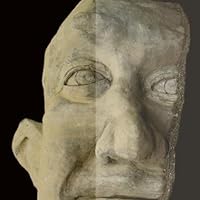
There must be a real story of time travel behind the cover of this book... because somehow there's a picture of the modern, adult Tom Cruise's face on the cover of this book published in 1972 - when Tom Cruise would have only been 10 years old!
Take a little bit of The Time Machine, add a healthy dose of Planet of the Apes, and whip it up with a dash of Philip K Dick and you've got the Other Side of Time.
This childhood favorite of mine holds up fairly well as an adventure story - don't look here for deep characters or intricate plot, but you do get a mad dash across a time-space multiverse, a lot of cool techno-mumble jumble, and a few good fight scenes.
Not as good as the best New Wave of Sci Fi works (by Moorcock, Disch, PKD, and others) but right there in tone and weirdness, and a short length combined with a breakneck pace keeps it from ever getting boring, in spite of its overall lack of originality.
This book starts off REALLY slowly, and the over-description in some of the early chapters is really annoying, but for those stalwarts that stick with it, you are rewarded with very clever story of time travel, alternate universes, and lots of intelligent primates of the non-sapien persuasion.
The twist ending was really fun, if scientifically unfeasible. I'm not sure how the rest of the books in the series is, nor does it matter. In fact, the story was very much plot and not character driven... so much so that I'm really not that interested in what happens to the main character in either the book before or after. Totally worth reading as a stand alone book, though, especially if you like Planet of the Apes.