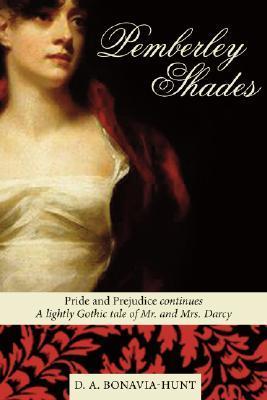
Originally published in 1949, the unusual plot takes the Darcys into the realm of the Gothic―perfect for fans of Death Comes to Pemberley . Mr. Darcy must appoint a new rector at Pemberley, which affords the author the opportunity to introduce a host of new characters to mingle with the beloved and familiar ones of Jane Austen. A delightfully witty plot, full of "Who could have foretold that Dr. Robinson, who had done nothing of note in all his lifetime should, by the common and natural act of dying, set in motion a train of events so strange, so startling, so far removed from probability as to emulate the riotous fancies of a disordered mind?" "The kind of story Jane Austen would have delighted to tell." ―J. Donald Adams What readers are "Really a great book and captures Austen's characters quite well. I was excessively diverted." "A very original plot." "A wonderful addition to Jane Austen's Pride and Prejudice sequels!"
It is with great pleasure that I learned that the classic Pride and Prejudice sequel, Pemberley Shades by Dorothy Alice Bonavia-Hunt, would be re-issued in September by Sourcebooks. Originally published in 1949, it was the second Jane Austen sequel ever to be written and not easily available for purchase unless you were lucky enough to find a small boutique publisher’s edition or a second-hand copy offered at outrageous prices for a first edition. Having existed as the ultimate mysterious and allusive Austen sequel for many years, the wait is now over and the enjoyment can begin. However, what the heck are Pemberley Shades?
My educated hunch is that it refers to his passage in Pride and Prejudice when Lady Catherine de Bourgh is interrogating the heroine Elizabeth Bennet in chapter 56.
“Heaven and earth — of what are you thinking? Are the shades of Pemberley to be thus polluted?”
As a novice reader I didn’t quite understand Lady Catherine’s reference to the shades of Pemberley. In ancient Roman times, shades were referred to as dead relatives. Lady Catherine’s use of the word refers to Mr. Darcy’s illustrious ancestors whose memory would be tainted by the association with the Bennet family who were recently humiliated by the infamous elopement of its youngest daughter Lydia. Taken in context, author D.A. Bonavia-Hunt knew exactly what Austen was implying and used it as a clever play on words for the title of her novel. And what a perfect match it is to the tone of her book which has an underlying thread of hidden life stories, family honor and dis-honor throughout.
Pemberley Shades is true to Austen’s style in that it begins with a significant life change and ends with a marriage. It has been four years since Elizabeth Bennet and Fitzwilliam Darcy married Their pastoral life at Pemberley with their young son Richard is close to perfect until the death of the parish minister sets a course of peculiar events into play that recall a plot in one of the Gothic novels so popular during Austen’s life.
“Who could have foretold that Dr, Robinson, who had done nothing of note in all his lifetime should, by the common and natural act of dying, set in motion a train of events so strange, so startling, so far removed from probability, as to emulate the riotous fancies of a disordered mind?”
Eager to fill the vacancy, Darcy advertises for the position of Rector of Pemberley determined to find a better man to lead the parish. Among the many applicants is one from his wife’s cousin (yes the odious one himself) Rev. Mr. Collins, anxious for a new situation away from Hunsford since he has fallen out with his benefactress Lady Catherine de Bourgh. “I fear to mention that I have lost that unqualified approbation with which your aunt, Lady Catherine de Bourgh, was wont to distinguish me.” Lady Catherine believes that he had a hand in promoting the marriage of his cousin Elizabeth and Mr. Darcy. Knowing that a life of sermons by Mr. Collins would be Purgatory, Mr. Darcy is pressed for a reason to put him off and invites applicant Rev. Mr. Steven Acworth, who is also the brother of school friend, to Pemberley for an extended stay to see if it is a good match. Mr. Acworth is recently widowed and according to his brother deeply affected by the loss. It does not take long for everyone including Mrs. Darcy to doubt his suitability for the position. His behavior is perplexing. One moment he is all charm and affability, the next dark and morose. This disturbs Elizabeth and Darcy who conclude that he would not suit as Rector, but are compelled to keep him on as a house guest as a favor to his brother.
The majority of the plot line revolves around Georgiana Darcy, Mr. Darcy’s younger sister age 20, single and residing at Pemberley. Now a proficient musician on the pianoforte, Elizabeth and Darcy are concerned that her intensity verges on eccentricity, making her dreamy and unsocial. They think it is time she should marry. Three suitors are interested; Rev. Mr. Mortimer the second son of a local gentry who are in financial decline for several generations, Major Francis Wakeford age 32, a wounded war veteran and cousin to Mr. Darcy with no bright prospects of wealth or position, and the creepy Rev. Mr. Acworth who shares a passion for music with Georgiana and a mysterious hold over her. Not a very promising selection for the heiress of Pemberley with a £30,000 dowry. Or so it appears.
Many of the characters from Jane Austen’s novel make their summer visit to Pemberley Manor; Charles and Jane Bingley and their two young daughters, Mr. Bennet sans Mrs. Bennet (with little explanation, but does she deserve one?), Mr. and Mrs. Gardiner, Lady Catherine de Bourgh and daughter Anne (quite a surprise which is thoughtfully explained), and Kitty Bennet who adds a bit of theatrical drama and energy to the palatial manor! New characters are included that blend in so seamlessly that it is a logical transition into this continuation. Ms. Bonavia-Hunt has full command of Jane Austen’s style and knowledge of the plot and her characters. The letter that Mr. Collins writes to Darcy in application for the position of Rector is priceless. I never forget that this is not a Jane Austen novel, but her use of early 19th-century language and style is effortless and engaging.
The plot has many turns and surprises, shadowed by a lingering mystery which keeps one on edge and turning the next page to discover a resolution. I now understand why this novel holds such a special place in the Jane Austen sequel cannon. It is amazing to acknowledge that it was written close to sixty years ago before Jane Austen became a Hollywood star or pop cult icon. Ms. Bonavia-Hunt was writing for a genre that would not come to fruition for another fifty years and that is an incredible achievement. It is sad that we know so little about her or her motivations to write Pemberley Shades, but her legacy to us has withheld and will endure. In comparison to today’s plethora of Austen sequels about, it reigns in my estimation as one of the best ever written.
I just finished reading this novel for the second time. The first time was in 2009 when I purchased it. I found it slow going for about the first third of the book but it caught and held my interest as the plot thickened. I can't say this was a thriller but more a character study with a mystery concerning one actor, in particular, and some questions as to which romances would play out or fail due to circumstances. This is only the second of any sequels written for Jane Austen’s Pride and Prejudice (written in 1949).
As the book description tells us (and do read the reviews and the book Sample on Amazon, as well) the Darcys are happily in their third year of marriage with a son, Richard. The rector, Mr. Robinson, dies and Darcy must search for an appropriate replacement. Mr. Mortimer, a neighbor, helps fill in for Sunday services but he is not the replacement Darcy seeks. A letter from Elizabeth’s cousin (Yes, him) presently placed at the Hunsford Parsonage, arrives and Darcy must have an honest reason to turn away Collins’ request to secure the position. Fortunately, Darcy knows of a school acquaintance’s brother, a Stephen Acworth, recently widowed who is in need of placement. Darcy travels to London to interview him and returns to Pemberley with both this candidate and a war-wounded partial-amputee cousin, a Major Wakefield. So there are to be 13 people sitting at table during this season: Charles and Jane Bingley (visiting with their two daughters), Mr. Bennet (who surprises them with a drop-in visit), Kitty, Rev. Acworth, Major Wakefield, Lady Catherine and her daughter, Anne de Bourgh (who arrive a day early for their visit), Mr. and Mrs. Gardiner along with residents, Darcy, Elizabeth and Georgiana. Mr. Mortimer is invited to even out the unlucky count at table.
Some may realize or figure out what is happening, what intentions are at play as they read. I found I could guess about much but was still drawn in to see if it all played out. There is even a maid newly in service to the Darcys about whom one wonders. Just what is she attempting? Mason falls down the stairs and breaks her leg - (Who left the broom across the stairs?) Are the late vicar's daughters going to give up the parsonage or prevail in their attempts to remain in what they consider their domicile? What business is Mr. Gardiner investigating for Darcy which prevents him joining his wife at Pemberely immediately for the summer? And why doesn't Darcy share that information with Elizabeth? After all we know what he says about disguise of any sort? Then there are incidents occurring between Elizabeth and the candidate which she decides to keep quiet about - is this only because Mr. Acworth has begged her secrecy or because she fears a duel between her husband and the latter if she relates exactly what this roué said and did? Then there is the mention, in passing, that Elizabeth thinks she recognizes Mr. Acworth when she meets him.
There is no action in this tale of characters from canon: Wickham and Lydia, Mrs. Bennet, Mary, Mr. and Mrs. Hurst, Caroline Bingley and Col. Fitzwilliam. Most of this story occurs at Pemberley with some events of short duration in London. Georgiana is now 20 and has overcome most of her shyness. In fact, she seems to have conversations and spend time with several gentlemen. Is she compromised? This young lady has matured some but still benefits from now having a “sister” with whom she can talk.
There are visits to Mr. Mortimer’s small estate and to the Pemberley Parsonage: to the latter of which more than once. The 2 Robinson sisters are definite characters and play one actor against the other ala Lady Catherine, an old and dear friend. (Or keep secrets about trysts?) Anne de Bourgh may surprise a reader or two…just when you thought you had her figured out.
I found this author spent words, paragraphs and pages giving us character studies and day-to-day glimpses into life at Pemberely. I enjoyed it but be warned it is not as much action as it is the development of relationships and the discovery of motives and meanings.
This entire review has been hidden because of spoilers.
Unlike some sequels that start immediately where "Pride and Prejudice" ends, in "Pemberley Shades" we drop in on the Darcy's during their third year of marriage. We see that things haves settled nicely for them, they have established a routine, and learned much about each other. In the midst of this "happily ever after" Darcy searches for a new rector for his parish and has trouble finding anyone who can measure up to his standards (he most likely will not choose anyone who gives any resemblance to Mr. Collins!) Darcy invites one of his candidates (Stephen Acworth) for rector to come to Pemberley for a six week stay. While in London, Darcy runs into his cousin Major Wakeford who is recovering from war injuries and also invites him to stay at Pemberley. Now with two new strangers and members of both families visiting at Pemberley all sorts of exciting events may unfold!!
Upon meeting Stephen Acworth, the Darcy family is a little hesitant and distrustful of him, they can't figure out why, but his manners, things he say, his looks all make them feel that something about him isn't quite right. Is he really interested in becoming the rector at Pemberley or did he have ulterior motives for coming there?
I found this to be one of the most enjoyable sequels of Pride and Prejudice I have yet to read! I loved the intrigue about Stephen Acworth and how the author kept us guessing until the end. I loved reading more about some of our favorite characters: Kitty, Georgiana, and Anne de Bourgh all have a little time in the spotlight in this sequel and I enjoyed their storylines. Darcy and Elizabeth are a loving couple that banter quite frequently and you can still see the sparks fly between them. Mr. Bennet is there with his dry wit, Mrs. Gardiner is there with guidance and support, Jane with her thinking the best of everyone, and Lady Catherine with her displeasure with everyone and disparaging remarks. The author did a wonderful job of keeping the characters true to themselves and recognizable. What was odd though, was that we did not see the Hurst's, Mrs. Bennet, Caroline Bingley, COlonel Fitzwilliam, or the Wickham's at all in this sequel. Maybe Ms. Bonavia-Hunt thought she had enough on her plate with the other characters and didn't want to have too many story-lines going on at once?
I highly recommend this book to anyone who looks for good Pride and Prejudice sequels, this is one they will not want to miss! If you would like to see Lizzy and Darcy after marriage and are curious to see what happens to Georgiana, Kitty, and Anne de Bourgh, I think you will enjoy reading this book.
To give you an idea of how this book rates against other Pride and Prejudice sequels I've read (not included retellings or what if possibilities), here's how I would rank them so far:
1. Pemberley Shades: Pride and Prejudice continues 2. Old Friends and New Fancies: An Imaginary Sequel to the Novels of Jane Austen 3. Mr. Darcy Presents His Bride: A Sequel to Jane Austen's Pride and Prejudice 4. The Darcys & the Bingleys: A Tale of Two Gentlemen's Marriages to Two Most Devoted Sisters 5. Conviction: a sequel to Jane Austen's Pride & Prejudice
The writing style of this author was great! The way Darcy and Elizabeth's marriage was portrayed was just perfect - in character, in time period and realistic. Darcy must pick a new vicar for Pemberley and the one recommended to him by an old friend is a mystery in himself. I wouldn't describe this novel as gothic but a slight mystery - nothing too shocking. Some of my suspicions proved true whereas others did not so I enjoyed the novel. Very well written! I'd love to read so,wing by this author again!
Two words to describe this sequel: simplistic and refreshing.
The writing style and storyline had a simple elegance to it. And while the plot was predictable in places, it was straightforward and believable. As this sequel was published in 1949, the author had no preconceived movie version of Darcy and Elizabeth, and therefore character development stemmed purely from her interpretation of Austen's original work. It was a nice change of pace to read a story written for the original characters and not one where the author envisions herself opposite Mr. Darcy (which for a lot of authors of P&P sequels, translates to their own torrid fantasy with Colin Firth or Matthew MacFadyen with Darcy's name as cover. LOL).
The author incorporated other original characters into the storyline, keeping them as amiable as Austen created them. She also introduced some new characters who had an air of mystique to them.
After some of the sequels and adaptations I've read, I felt like this was a homecoming, of sorts, to the simplistic beauty that is the heart of Austen's writing.
Pemberley Shades by D. A. Bonavia-Hunt is subtitled “a lightly Gothic tale of Mr. and Mrs. Darcy,” but very little happens that could justifiably be termed as sinister or bizarre. There is a mystery about one character’s true identity, but we are informed of that almost immediately and Bonavia-Hunt is unable to create a sense of danger or suspense; even when the person who is not Stephen Acworth is making improper declarations or has one or another of the ladies alone. The depiction of characters from P & P is in keeping with how Austen portrayed them and Bonavia-Hunt’s new characters are well-drawn. I especially liked the elder Miss Robinson, the imperious daughter of the just deceased pastor, who continually oversteps her place by making arrangements directly opposing the wishes of the Darcys. She is, predictably, a great favorite of Lady Catherine who appears in all her imperious glory. Pemberley Shades is a good story, just not a very exciting one.
Eeeehhh??? I can't really think of a better word to describe my feelings for this book, other than vague sounds of shrugs and uncertainty. It's not bad... But it's not good either. When I hear the word "gothic", I think of cloudy, moonless nights where a breeze let in by an open window whispers against loose curtains and cobwebs. Not... Whatever this was. There's some manner of suspense here, but it's in that sort of elegant high school gossip way that boils down to, without wishing to spoil, who is dating whom. Would I recommend it? Eeeehhhh??? Who is the target audience? Eeeehhh??? Okay, that's a lie, obviously this is for the true blood Jane Austen fans who can't get enough spin-offs and mini-series. But for me, it was just.... Eh.
Pemberley Shades fu pubblicato per la prima volta nel 1949 ed è il secondo sequel in assoluto di Orgoglio e Pregiudizio. Al contrario di Old Friends and New Fancies — il primo sequel di Sybil G. Brinton, scritto nel 1913 — D. A. Bonavia-Hunt poteva dare un volto ai suoi protagonisti. L’immaginario collettivo, infatti, poteva immaginare Mr Darcy come Sir Laurence Olivier ed Elizabeth Bennet come Greer Garson. Non sappiamo se la Bonavia-Hunt abbia visto il film — molto poco fedele all’originale, praticamente in tutto — del 1940, tuttavia l’idea per un sequel potrebbe essere scaturita anche dalla popolarità riscontrata da Orgoglio e Pregiudizio sul grande schermo. Del resto, sappiamo che è proprio grazie alla serie del 1995 e al film del 2005 se è nato il fenomeno delle Austen Inspired Novels. Inoltre, la Bonavia-Hunt aveva probabilmente avuto modo di conoscere e di leggere Georgette Heyer e le sue Regency Novels. Altro motivo di ispirazione per la Bonavia-Hunt potrebbe essere stata la sua stessa famiglia: cresciuta in un ambiente ecclesiastico in cui l’arte e la musica erano due fattori fondamentali (sua madre era una scrittrice e suo padre — un pastore anglicano — era il fondatore del Trinity College of Music di Londra), potrebbe essere stata influenzata non poco nell’ambientazione del romanzo e nella definizione dei personaggi. Mi spiego meglio: si sa che l’ambientazione è Pemberley, certo — un vero e proprio palcoscenico su cui si svolgono le vicende di Pemberley Shades — ma il fattore scatenante per questo sequel è la morte del parroco della prebenda di Pemberley e la sua sostituzione. I vari candidati — fra cui spicca Mr Collins con una delle sue deliziose lettere piene di autostima e autocompiacimento — e i nostri cari Mr e Mrs Darcy, se la dovranno vedere con le due ‘deliziose’ figlie nubili — di età avanzata — dell’ex parroco, Mr Robinson. Le due Miss Robinson, infatti, non ne vogliono sapere di lasciare la canonica, che è stata la loro casa per tantissimo tempo. Inoltre, la mancanza di una signora di Pemberley ha fatto sì che la maggiore delle due sorelle divenisse il punto di riferimento per le questioni che a Pemberley andavano gestite da una donna. Sarà dura per Elizabeth far valere la sua autorità su un predominio così radicato. In questo ho rivisto nelle sorelle Robinson moltissimo delle Miss Jenkyns, le Amazzoni di Cranford di Elizabeth Gaskell. Peccato che — dopo averci promesso una scoppiettante rivalità — la Bonavia-Hunt le abbia effettivamente relegate un po’ troppo sullo sfondo; addirittura sul finale, ha liquidato il loro trasferimento con poche frasi… possibile che non abbiano più fatto storie? E il loro rapporto cospiratorio con Lady Catherine avrebbe potuto essere sviluppato meglio: come mai due caratteri così forti come Lady C. e Miss R. vanno tanto d’accordo? Non so se riesco a credere a una Lady Catherine che si abbassa ad andare a trovare le Miss Robinson e a una Miss Robinson mansueta al punto da riuscire a compiacere Lady Catherine… È la prima volta che un sequel che ha per protagonisti Darcy ed Elizabeth riesce ad essere credibile: di solito, per non cadere nello sdolcinato o nello scontato, si privilegiano altri personaggi, che in Pride and Prejudice erano minori. Gli altri personaggi provenienti dal romanzo di Jane Austen sono fedelissimi agli originali, a parte Lady Catherine, che purtroppo viene spesso ridotta a una macchietta di se stessa… errore in cui spesso cadono un po’ tutti gli autori di Austen Inspired Novels. Lady Catherine, tuttavia, arriva ad agitare le acque: dopo un inizio molto promettente, infatti, a un certo punto la narrazione — intorno a metà romanzo — perde la sua verve. Le new entries sostituiscono perfettamente i personaggi non ‘confermati’ (scusate se ne parlo come il cast di un telefilm) nella seconda serie. George Wickham è totalmente scomparso: di lui e di Lydia non si sa niente, ma di certo non ci poteva essere sequel di Orgoglio e Pregiudizio senza un mascalzone! Il villain di turno seguirà in tutto e per tutto le orme del suo predecessore — non mi esprimo per non cadere nello spoiler —, seguendo uno schema ben collaudato un secolo e mezzo prima. Del resto, il mistero che dovrebbe aleggiare sul romanzo, risulta chiaro fin dall’inizio: sono i pochi i dettagli che verranno svelati alla fine. E ancora, sebbene di lightly gothic (leggermente gotico) ci sia ben poco — nonostante le dichiarazioni di intenti —, ci sono numerosi riferimenti a Northanger Abbey durante l’esplorazione di Clopwell Priory (notare anche l’allusione del nome: abbazia-priorato) di Mr Robert Mortimer. La cassapanca misteriosa, aperta con gran circospezione, che in realtà contiene stoffe per tendaggi, è una vero e proprio omaggio al romanzo di Jane Austen, e anche la giovane Kitty Bennet sembra essersi trasformata nella Catherine Morland delle situazione (anche qui c’è la coincidenza dei nomi, dato che Kitty è diminutivo di Catherine, il suo nome di battesimo!) Bellissimo il rapporto di Elizabeth e Georgiana, è proprio quello in cui ci fa sperare Jane Austen in conclusione di Pride and Prejudice. In pieno stile ottocentesco, poi, Elizabeth porta a termine una gravidanza senza che vi sia alcuna allusione a parte qualche capogiro sospetto e uno o due svenimenti… Ciò mi aveva fatto temere che la Bonavia-Hunt avesse trasformato la nostra eroina nella protagonista di Love and Freindship! Interessanti le elucubrazioni di Mr Bennet sul matrimonio e le giovani donne…
“There is no shame in any natural process such as procuring a husband. It is every young woman’s proper business and the sooner she accomplishes it the better. For that I have the highest authority—your mother” “I am sure,” cried Jane, “Kitty would never marry unless her heart prompted her.” “Fiddlestick, my love. You would not perhaps, and that is as much as you can say. Consider the example of Charlotte Collins, and her sister Maria Lucas, and a lot of others I could name. What has prompted them? Nothing but the desire of being married. For that any man will do.”
[“Non c’è vergogna in un processo naturale com’è quello di procacciarsi un marito. È un mestiere indicato a ogni giovane donna, e prima assolve il suo compito, meglio è. In questo campo conosco la massima autorità: vostra madre.” “Sono certa,” gridò Jane, “che Kitty non si sposerebbe mai, a meno che non fosse ciò che il suo cuore la spinge a fare.” “Sciocchezze, mia cara. Forse tu non lo faresti, è solo questo ciò che puoi asserire. Considera l’esempio di Charlotte Collins — e di sua sorella Maria Lucas — e di tante altre che non sto a nominare. Cosa ha spinto loro? Nient’altro che il desiderio di essere sposate. Per esse un uomo va bene come un altro.]
In conclusione: un sequel scritto molto bene, originale, nonostante il rischio comune di scadere nello scontato e non solo per il fatto di essere uno dei pionieri del genere, bensì per l'affinità di Bonavia-Hunt con Jane Austen, forse dettata dai tempi (anche se centocinquanta anni non sono pochi), o forse dall’ambiente famigliare. Decisamente da tradurre.
Potete trovare la recensione completa delle Lizzies QUI
From the back cover: “Originally published in 1949, Pemberley Shades is the second sequel to Pride and Prejudice ever written, the first being Old Friends and New Fancies from 1914.”
I read Old Friends and New Fancies about 10 years ago, so while it is not fresh in my mind, I would characterize it as a sequel to all 6 of Austen’s novels, and most specifically Mansfield Park and P&P.
Pemberley Shades is definitely a P&P sequel. It takes place three years after Darcy and Elizabeth are married. Many familiar characters are there: Jane and Bingley, Georgiana, Kitty, Mr Bennet, the Gardiners and even Lady C and Anne. Inexplicably missing are Mrs. Bennet and Colonel Fitzwilliam.
I thought that the writing was excellent and it reminded me a bit of Georgette Heyer. While there is a sense of mystery, I saw a few of the plot points coming. Overall a really good story.
Mr. and Mrs. Darcy are living at Pemberley with Georgiana. When the parson dies (of old age), it is Darcy's responsibility to replace him. Of course, Mr. Collins submits his application. He is out of favor with Lady Catherine as she blames Collins for not preventing Darcy's marriage to Elizabeth.
The former parson's elderly daughters are quite dug in at the Parsonage and consider it their forever home. Darcy has a couple of possibilities for the replacement, but first he must get the sisters relocated. Meanwhile Lady Catherine is working her mischief behind Darcy's back.
I have read Pride and Prejudice several times. It's my favorite Jane Austen book (I've read everything she's written.) When my sister-in-law told me about this sequel, I was intrigued. Who doesn't want to know the "rest of the story?"
This book picks up a few years after Elizabeth and Darcy are wed. They now have a precocious 2 year old son. They are living together very happily, in spite of Aunt Catherine's dire predictions that their marriage is doomed. However, the need to hire a new rector after the death of the previous one, puts a little wrinkle in their lives.
Darcy is very particular on who the new rector should be. As he's taking his time, he hears about a man who seems to be ideal. As soon as they meet, Darcy begins to have serious doubts about this man's suitability. However, he has promised that they would try out this arrangement for six weeks, and Darcy is a man of his word.
There are many household visitors during this time frame and this book wouldn't be true to the Jane Austen spirit without at least a couple of single characters falling in love and the bumps and misunderstandings that come from this state of happy confusion. I thoroughly enjoyed this sequel.
I loved it! I thought the prose was excellent, but this may have a lot to do with the story being written in 1949 as well as Bonavia-Hunt's life experiences. I deeply enjoyed the "mystery", and was most please about the conclusion. I was surprised with the omission of characters we regularly see in sequels, such as Col. Fitzwilliam, but I liked the new characters very much. I was most impressed with Bonavia-Hunt's characterization of the original characters, it was very authentic and captivating.
I'm not really sure about the "lighty gothic tale", because the gothic theme is only very very veeeery light. But ignoring that, this book is a really good sequel to Pride and Prejudice. I was able to guess most of the plotlines, but it was written in an engaging way and the author managed to stay true to Jane Austen style.
If you're looking for a calm nice return to the world of Pride and Prejudice, then I can higly recommend reading this book.
Horace Carlini kept everyone on their goes with his less than perfect imitation of his half-brother who was raised as a gentleman. Everyone at Pemberly was suspicious of him except Lady Catherine. She wanted him to marry Anne. An older cousin fell in love with Georgina, and she with him; but it didn't work out well for them. Kitty got engaged to a neighbor. Elizabeth and Darcy had to navigate a houseful of guests, which included Lady Catherine and Anne.
Pemberley Shades is a wonderful sequel to Pride and Prejudice and offers readers a lovely return to the world that Jane Austen created.
I picked up this book after I learned that it was the first sequel ever written for Pride and Prejudice and I really enjoyed reading it. I would recommend it to any Austen fan.
Bonavia-Hunt has written the novel "as nearly as possible in the style of the original" and I think she does a good job of it. The writing style is similar to Austen's, the plot moves along at a gentle pace, and the main story is driven by character interactions. There is a bit of romance, a bit of intrigue, and a nice dose of Regency refinement, all of which feels authentically Austen.
This is a countryside novel that primary takes place at Pemberley and its surrounds. I really enjoyed getting to know the area better, and in a way it reminded me of Mansfield Park because the location is so central to the book and its story.
Several characters from Pride and Prejudice are in this novel, and they all stay true to their original personalities. I was so glad to see Mr. Bennet and Lady Catherine De Bourgh living up to their original roles, but I was somewhat disappointed that Mrs. Bennet and Mr. Collins did not make a showing (aside from one letter from Mr. Collins).
There are also some great new characters, including Robert Mortimer (a neighbor living in Clopwell Priory), Major Wakefield (a childhood friend of Darcy's who struggles with injuries from his time in the armed services), Stephen Acworth (an odd clergyman who confounds Darcy and Elizabeth), and the Robinson sisters (the gossiping daughters of the deceased rector who constantly overstep their role).
Overall, this is a great book for anyone wanting to find out what happens after Pride and Prejudice ends. I will happily keep this on my shelf for a future re-read.
One note for readers whose edition claims this is a lightly Gothic novel. I do not think that is a fitting description of this book. Fortunately the edition I have does not make this claim, so I did not have those expectations going into it, but I can see how it might be disappointing to readers who are expecting a Gothic novel.
I liked this about as well as one of the lesser Austen novels. The speech really seemed to capture an Austenesque flavor, and the plot was similar in style to Austen's, though slightly more Gothic as the cover says. I was disappointed that a romance for Georgianna was not done so romantically as could have been done, and even the Kitty engagement came off rather rushed, whereas the uncomfortable advances towards married Elizabeth were given more development. Here were some quotables I enjoyed: "It is impossible to conduct a conversation where none but oneself observes the rules of logic." Elizabeth's enjoyment of her lot was therefore no longer unqualified, and she wished for it to be restored with the least possible delay. She desired, in fact, as we all do, to be forever happy.
To this he replied that people commonly believed what pleased them best, and often in defiance of proof to the contrary. "All I can say is that it is a most irrational world." "Many of the men and women in it are." "It would do him good to marry," she said. "Do not you agree?" "The good of a man's marriage depends on a man's choice."
Firmness in a husband when it supports instead of opposes the pleasanter course is wholly admirable. She consented with a good grace to obey him.
"And since I have warned you beforehand , you cannot quarrel with me." "Heaven forbid," said Darcy. "I have neither the time nor the inclination for it. Quarreling is a sort of entertainment for people who have nothing better to do." This was the end of their conversation. ELizabeth would willingly have gone on talking, but Darcy still had his letter to write,and she left him in peace to get it done. In spite of continuing perplexity about Georgiana she went away lighter in heart for having confided it to his ear. Reposing in his calm and steady judgment, and sensible of his deep affection, his warm solicitude for her happiness, nothing could dismay her very much while he was at hand to counter every adverse circumstance which might threaten the comfort and well-being of their family life.
This must be one of the earliest "sequels" to Pride and Prejudice. Darcy and Elizabeth are now happily settled at Pemberley. The need for a new vicar arises, and Darcy is persuaded to consider the brother of an old acquaintance. But Mr. Acworth does not behave like a gentleman -while his musical talents are undoubted, he is given to emotional outbursts and indiscriminate flirtation. So Elizabeth and her young sister-in-law, Georgina, keep their distance. Meanwhile, Lady Catherine de Bourgh and her daughter, and Mr and Mrs Bingley, as well as Kitty Bennett come to stay at Pemberley. Between the suspicions around Mr. Acworth, Kitty's setting her cap at a neighbor, and Georgiana's worries, Elizabeth has to exert all her tact to keep the houseparty on an even keel.
As with all these P & P sequels, it's but a pale imitation of the original. The mystery around Mr. Acworth could be guessed a mile away, and he becomes just tiresome.
The author probably came as close as anyone could to capture the Jane Austen style and wording. There were some lines that were so true to form that I laughed out loud. I was a little disappointed with the development of Mr. And Mrs. Darcy’s relationship. There were some dialogues that just should have happened in my opinion and didn’t. Also Elizabeth seemed to lack some of her usual intuition at times, which seemed to detract from her strength of character. The plot begs you to turn the page. Overall a worthwhile read for any Jane Austen fan, although it can never fully satisfy the imagination.
I thoroughly enjoyed this 'sequel' to Pride and Prejudice. The writing style was very Austen-like and took me back into the lives of Elizabeth and Mr Darcy. We get to meet some of our old favorites, Mr Bingley and Jane, Mr Bennett, Mrs Gardiner, Georgiana Darcy and Lady Catherine de Bourgh. Such notable characters as Mr Collins, are mentioned, but do mot make a physical appearance. We get to meet some refreshing new characters who provide the 'entertainment' in this charming story. This was a delightful book and has not diminished my love of Pride and Prejudice in any way.
An enjoyable continuation of the story of Mr. and Mrs. Darcy. It lacks the verve of the original but is still worthwhile. The characters, old and new, are lively and believable.
Good Austen voice, very mild, and almost no depiction of the relationship between Mr and Mrs. It's as if they don't live together or need each other's input, company, etc. Okay
What can I say about this one? Me, the skeptic who remains ever-doubtful that the perfect sequel exists? I loved this one! I did! Last week, I talked about what I expected out of an Austen sequel..."I don't expect the writer to be Jane Austen. I don't expect her to try to channel Austen when she's writing. I don't expect her to match Austen's literary style or her wit. Just a teeny tiny smidgen of it is good. If she can capture just a small trace of the charm or humor (or both) then that's enough. What makes Austen likeable? Is it her focus on love and romance? Is it her focus on women's lives? Is it her focus on society? Is it her focus on class? Is it her focus on these often comical eccentrics? (Like Mr. Collins or Mrs. Jennings or Mrs. Bennet) Is it the fact that she was good at taking snapshots of her world? Of describing life as it was? Is it the fact that she develops so many characters all at once? Her books are never the story of one man and one woman falling in love. They are always so much more than that. There will never be a sequel that can capture anything and everything Austen was...as a writer. But I think the best of the lot will try to be multidimensional. Maybe not as widely as Austen herself was. But more than just one-dimensional."
This one delivers and then some. We've got a nice balance of Austen characters--Elizabeth, Darcy, Georgiana, Kitty, Lady Catherine, Anne, etc.--with new characters: Mr. Mortimer, Miss Robinson, Miss Sophia, Major Wakeford, Stephen Acworth, etc. This blending is so natural, so seamless that it just works. The story is simple: a new rector must be found to fill the parish/living. Mr. Darcy is looking for candidates--good candidates--to interview. The only thing he knows for certain--and Elizabeth agrees--is that it cannot, must not be filled by Mr. Collins! (He does apply for the job!) Temporarily, Mr. Mortimer is filling in as substitute preacher. But while Mr. Darcy feels he is good enough for that, the idea of him becoming the new rector is unlikely. But who will he find? One candidate after another fails to meet Mr. Darcy's standards. But then an old friend contacts him. This old friend has a brother, a younger brother, a young widower. A scholarly man who would be "perfect" for the job. A Mr. Stephen Acworth. Darcy sets off to interview him. And happens to come back with not one but two house guests: Stephen Acworth and Major Wakeford, a soldier who had at one time been quite chummy with him. But though this probation period--of six weeks--has been set in place, been promised, something about Stephen Acworth bothers Darcy. Is this his old sense of prejudice resurfacing? Or is Darcy onto something?
The story is of course more complex than that. It is filled with characters--all well-developed, all flawed, all human, some quite comical or eccentric--all have their own story to tell. There are visits, walks, parties, balls, declarations of love both proper and improper, and much much more. I don't want to say much more, but I don't want to say too little either. I highly recommend this one to skeptics everywhere. Who will like this book best? Those that love Jane Austen and who typically find modern sequels to be sickening. Who find that modern writers just don't get what Elizabeth and Darcy are about. Who will not like this book? If you're all about contemporary sequels that offer sex, sex, sex, and more sex...then this one will disappoint.
One other note: THIS IS NOT A GOTHIC BOOK. Despite the fact that it says "lightly" gothic. The point of the book is that it is an entertaining, sometimes comical, lightly romantic, moderately mysterious sequel.