Herbert George Wells was born to a working class family in Kent, England. Young Wells received a spotty education, interrupted by several illnesses and family difficulties, and became a draper's apprentice as a teenager. The headmaster of Midhurst Grammar School, where he had spent a year, arranged for him to return as an "usher," or student teacher. Wells earned a government scholarship in 1884, to study biology under Thomas Henry Huxley at the Normal School of Science. Wells earned his bachelor of science and doctor of science degrees at the University of London. After marrying his cousin, Isabel, Wells began to supplement his teaching salary with short stories and freelance articles, then books, including The Time Machine (1895), The Island of Dr. Moreau (1896), The Invisible Man (1897), and The War of the Worlds (1898).
Wells created a mild scandal when he divorced his cousin to marry one of his best students, Amy Catherine Robbins. Although his second marriage was lasting and produced two sons, Wells was an unabashed advocate of free (as opposed to "indiscriminate") love. He continued to openly have extra-marital liaisons, most famously with Margaret Sanger, and a ten-year relationship with the author Rebecca West, who had one of his two out-of-wedlock children. A one-time member of the Fabian Society, Wells sought active change. His 100 books included many novels, as well as nonfiction, such as A Modern Utopia (1905), The Outline of History (1920), A Short History of the World (1922), The Shape of Things to Come (1933), and The Work, Wealth and Happiness of Mankind (1932). One of his booklets was Crux Ansata, An Indictment of the Roman Catholic Church. Although Wells toyed briefly with the idea of a "divine will" in his book, God the Invisible King (1917), it was a temporary aberration. Wells used his international fame to promote his favorite causes, including the prevention of war, and was received by government officials around the world. He is best-remembered as an early writer of science fiction and futurism.
He was also an outspoken socialist. Wells and Jules Verne are each sometimes referred to as "The Fathers of Science Fiction". D. 1946.
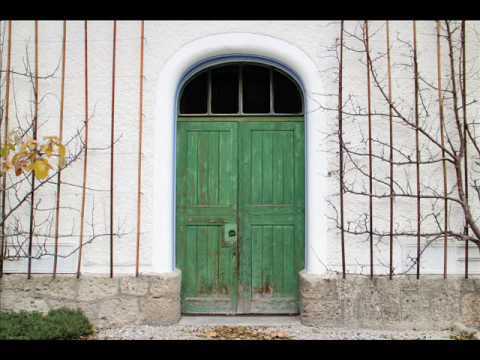
" لقد عرض الباب الأخضر نفسَه ، و دعاني إلي الدخول حيثُ السلام و المتعة و الجمال الذي يفوق الأحلام ، ذلك الباب الذي خلفَه حنان و عطف لا يعرفه أي إنسان. "
قصة ( الباب الذي في الجدار). كيف يمكن للحياة بزخمها أن تُلهيك عن حلمك و عن راحتك حتي ترى خلاصك أمامك فلا تتخذ الخطوة لتناله .
"والاس" رجل ذو مكانة عالية في إنجلترا ، و رغم كل هذه الوجاهة و النفوذ مازال يحلم بذلك الباب الأخضر و ذلك الجدار الأبيض الذي رآهما عندما كان طفلاً. والاس الصغير كان يتيم الأم و لديه أب غاضب صارم ، و كل ما يدور حوله كان كئيباً داعياً للحزن ، حتي مر بجانب جدار ابيض في منتصفه باب أخضر يدعوه للدخول ، و ما إن دخل فيه حتي رأي حدائق ساحرة و ناساً بشوشة و أطفالاً يدعونه للعب فانتقل من تعاسة و كآبة إلى فرح و سرور ، حتي اختفي كل هذا فجأة..
و وجد نفسه في شوارع إنجلترا القذرة مرة أخرى و عندما أخبر أباه و أصدقاءه نعتوه بالكاذب لكنه يعرف أن هذه حقيقة.
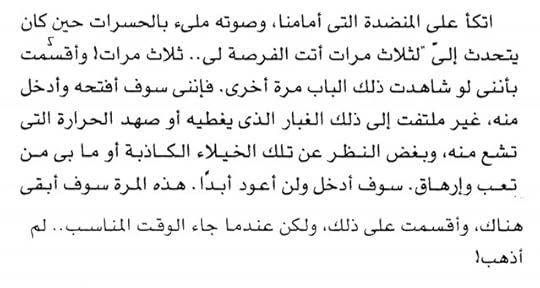
و يكبر والاس و لا يزال يطالع الباب الأخضر من وقت لآخر و من مكان لمكان ، كلما كان هناك قرار مصيرى في حياة والاس حتي يظهر له الباب و كأنه دعوة لأن يرتاح.
في النهاية هل كان هذا الباب حقيقة أم خيالا ً و هل سيدخله والاس فيجد السعادة التي تتوق نفسه لها أم ستلهيه الحياة بتعبِها ؟
القصة من أجمل الكتابات القصيرة لويلز و سأترك لينك مترجم لها في الكومنت 🤩✨.
You will not find giant creatures from space in this collection, in fact there is only one sci-fi story and that is along the lines of scientific speculation. It involves a star headed towards collision with Pluto sending both hurling towards Earth. It has been said before that Wells was ahead of his time and that is true with this story which includes global warming, rising waters and panic.
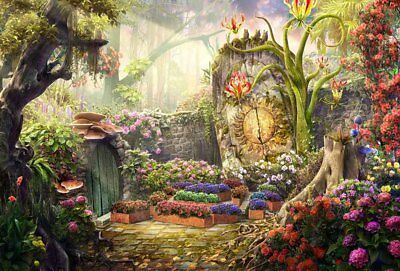
The other stories are also very well done. Most involve some form of tense relationships between people and relationships with nature. Several darker tales involve murderous rage with a backdrop of flaming industrial settings. My favorite story is the first and title of the book “The Door in the Wall.” A celebrated man of the world is relating his life story to the narrator. At a very young age he discovered a magical garden behind a door in a garden wall. He has brief vivid experiences then must leave. Unhappily he never can recover this childhood magic as life gets in the way. The door appears now and then to him but he is busy and never takes the chance again. It’s beautifully handled.
All the stories are well done. Wells doesn’t get into politics or his usual sci-fi hypothesizing.
I didn't expect to like this book as much as I did maybe because even though I've heard a lot about this author it was my first time reading him. I like how fantasy and sci-fi are well represented in these short delightful stories.
My favorites were:
The Star which is hard to talk of without giving the punch of it so I won't explain it.
A Dream of Armageddon about a man who has a complete life in his dreams.
The Country of the Blind about a seeing man in a country ruled by the blind. I was very surprised about this one, I think it proves how H.G. Wells was a visionary; it reminds me a lot about our society's not always accepting people's difference or seeing something as an handicap when really it is a way of life (maybe an imposed one, but still a way of life).
This book was a gift from my father, the late Dr. Leon Stover, an H.G. Wells scholar. The Door in the Wall is a haunting story, one that I'm about to read again....A story, the narrator assures us, is about "a real door leading through a real wall to immortal realities." For me is is less about hallucination than it is about seizing the moment...letting life's passions evaporate through neglect...I wish Leon were here to discuss...
It's remarkable how a skilled writer like H.G. Wells can write fiction that resonates with readers a century later. This collection is a little gloomy in its view of humanity; one recurring theme is how preferable it is to die than it is to live in a way that restricts liberty. About half the stories of the collection embrace this theme.
Most of the collection merited four stars, but one story, the hardest to read of the collection, dropped it down to three. The collection deals with Armageddon, natural disasters, murder and other travesties, but the most horrifying of the collection is "Lord of the Dynamos"—a terrifying reminder of the rationalization widespread in Western society that attempted to excuse the enslavement of whole populations of people. Ideas expressed in this story fall right in line with writings from the likes of Karl Vogt and Samuel Morton, casually dropping references to racially-based intellectual inferiority, a tendency toward instinct over reason in Africans, and even racially correlated brain sizes. By far the scariest part of this collection, this story serves as a glaring and frightening reminder that very few among H.G. Wells' turn-of-the-century audience would have batted an eyelash at these ideas, which were used to defend historical horrors ranging from the trans-Atlantic slave nearly a century earlier to the Nazi eugenics program just a couple of decades into the future.
There is an art to writing a good short story. More impressive is his understanding of the world and his ability to "see the future." The Door in the Wall addresses responsibility over happiness while A Dream of Armageddon does the opposite. The Star tells of pending natural disaster with a real twist at the end. The Cone and The Lord Of The Dynamos both address jealousy. A Moonlight Fable and The Diamond Maker tell what happens when you follow your dreams. Finally, The Country of the Blind is a retelling of a fable that has existed since the ancients. In the country of the blind, the one eyed man is king. Or is he?
**** The Door in the Wall (1906) *** The Star (1897) *** A Dream of Armageddon (1901) *** The Cone (1895) *** A Moonlight Fable (1909) *** The Diamond Maker (1894) *** The Lord of the Dynamos (1894) ***** The Country of the Blind (1904)
De toutes les histoires qui y sont, celle qui m'aura profondément marquée est la toute première : "The door in the wall". Elle inspire une profonde méditation.
Je citerai également celles qui, sans être exceptionnelles, valent le coup d'être lues :
A dream of Armageddon A moonlight fable The diamond maker The country of the blind
[This is a review of an audiobook with the same title but which differs slightly from the original 1911 collection. Mine swaps, confusingly, A Dream of Armageddon for A Vision of Judgement, and adds The Crystal Egg].
------------------------- The Door in the Wall: (1906) Another one of Wells' beautiful, numinous stories. An allegory of a midlife crisis (both main character and author had turned 40) that defies easy interpretation. It's not just worldly things like school and career that keep Wallace from the garden. He even mentions love. The mysterious ending is reminiscent of The Time Machine's chilling end. Is Wallace finally a body lying at the bottom of a London excavation? Or did the door indeed lead to "another and more beautiful world"? A clue can be found, I believe, in that made-up game of Northwest Passage that brought the boy to the door in the first place, except the main character succeeds where delusional Hudson failed. I like to think Wallace is a portrait of a brilliant mind turned visionary--one who, dissatisfied at last with earthly bounds, begins a new quest, and leaves mankind behind.
------------------------- The Star: 1897. "It would seem, gentlemen, if I may put the thing clearly and briefly, that—man has lived in vain.”Less a story and more the impact event scene in a disaster movie. Some pretty cool moments.
------------------------- The Crystal Egg:
"The dirty little place was impenetrably black except in one spot, where he perceived an unusual glow of light. Approaching this, he discovered it to be the crystal egg..."
(1897). A crystal in a curiosity shop turns out to be from outer space. Another speculative story in a familiar setting. Another wonderfully inconclusive ending.
It's a miniaturist, multidimensional piece, Borgesian and alien, ahead of its time, with a neat little mise en abyme, as the earth can be seen in the sky in the egg.
There's a cool theory that, since The Crystal Egg was published just before The War of the Worlds, and the Martians look similar in both, this story about Martians spying on us is a precursor to the invasion in the latter.
There are also curious parallels to The Door in the Wall. The main character sees a "moving picture" inside the crystal in the same way a movie appears in the book in the garden of the other story. Both the vision in the crystal and the door to the garden are elusive. Wells even compares peeping into the crystal "as a child might peep upon a forbidden garden," which even by itself is a strange analogy. Why forbidden? What exactly was eating at Wells?
------------------------- The Cone: (1895) domestic drama economically penned, set against the industrial hellscape of an ironworks. Wells clearly had fun describing it, and juxtaposing this mad new world with an old tale. The language is both grotesque and sensual.
"...the deliberate steam-hammer beat the juice out of the succulent iron, and black, halt-naked Titans rushed the plastic bars, like hot sealing-wax, between the wheels."
You can feel the cuckold's repugnance.
The ending is horrifically well done.
------------------------- A Moonlight Fable: elsewhere titled The Beautiful Suit. From 1909. Very short piece of black comedy, like Gogol but very British. A man fusses obsessively over a fancy suit his mother made for him, then goes crazy one moonlit night and rampages around town, ruining it and breaking his neck but dying with a smile on his face.
------------------------- The Diamond Maker:
(1894). Yet another intriguing story where Wells leaves the reader hanging. Felt like a rough sketch for The First Men in the Moon.
"...a merciful darkness hides the dirt of the waters, and the lights of this transitional age, red glaring orange, gas-yellow, and electric white, are set in shadowy outlines of every possible shade..."
Interesting to hear Wells describe his time as "this transitional age."
------------------------- The Lord of the Dynamos: (1894)
"Certain odd possibilities of the negro mind brought into abrupt contact with the crown of our civilisation Holroyd never fully realised, though just at the end he got some inkling of them."
This one was wickedly great, with a Kipling-esque horror to it. A displaced and abused African, grotesque and savage, is ill-equipped to handle the wonders of London and in his ignorance begins to worship one of the white men's inventions, an enormous dynamo--even to the point of killing for it.
"...he went and whispered to the thundering machine that he was its servant, and prayed it to have pity on him and save him from Holroyd."
Sort of a racist parable, yet humane in a way that few writers today could be.
"Presently the body was carried away, and public interest departed with it. Azuma-zi remained very quietly at his furnace, seeing over and over again in the coals a figure that wriggled violently and became still."
The powerful, cacophonous machine adds to the mayhem of the story. (This story is similar to The Cone, with their violent murders and Industrial Revolution theme). The ending was suspenseful. The very end was actually really funny.
------------------------- The Country of the Blind (skipped, reviewed earlier).
------------------------- A Vision of Judgement: a comedic look at Judgement Day. Bit like a Monty Python sketch.
Overall, a super fun book to read. Though there is, in my opinion, a very wide variety of quality of H.G. Wells’ works, the good ones are brilliant (especially for their time) and even the bad ones usually have at least one interesting concept I’m glad I read. And these were all quite good stories! (Ssee specific reviews below.) Wells continues to be one of my all-time favorite authors.
*The Door in the Wall*: 4.5 Probably my favorite story in the collection. While it’s not very scientific, or even really explained, it’s still very imaginative and thought-provoking. Usually I am not a huge fan of the story format of one person basically sitting there telling someone else their story (which, unfortunately for me, appears to be a favorite of Wells), so I was surprised with how invested I very quickly became in the story and main character. The whole thing felt like the kind of vivid dream you have only once but never quite forget.
*The Star*: 3 Quite interesting, and well-reasoned. I felt like some parts got a little garrulous, but it was still quite scientifically clever for its time. This is the kind of story I love thinking about during and afterwards, but don’t actually enjoy reading very much.
*A Dream of Armageddon*: 3.5 Super fun and interesting! Never read something quite like it. It kind of felt like two separate story ideas (the story of the future and its war, and the idea of having a consecutive dream timeline/life) jammed into one, but it actually kind of worked. The pacing was a little iffy, and I lost interest a couple times, but I’m still glad I read it.
*The Cone*: 4 This story I love purely for its descriptions. The scenery of the industrial ironworks, the psychologies and emotions hidden in the characters, the description of (SPOILER) the burning man… It was haunting, and very well written.
*A Moonlight Fable*: 4.5 I literally did a double take. Maybe I’m biased because I read this before bed and it gave me strange dreams, filled with moonlight pond lilies and obsession and silver and ivy and death. It was one of my favorites, and I can’t even tell you why— the way it was delivered just stuck in my head.
*The Diamond Maker*: 3.5 I think this would have been really interesting as a character/scene/starting point in a novel. I find the diamond maker and his story very intriguing, but I wish I could have either seen his story (rather than just heard his own summarized recounting of it) or seen where it went from there. As it is, it’s a pretty unique concept and character story, but not as compelling in the form of a short story.
*The Lord of the Dynamos*: 2 This one has such potential to be a good, interesting story. The gradual language and perspective changes in the main character as he his ideas of the dynamos and gods intermingle, the unique voices of the characters, the descriptions and actions, the interesting psychological concept… I would have loved it, but I can’t get over how blatantly racist it is.
*The Country of the Blind*: 3.5 A very interesting and unique concept. A bit too long, and I feel like it could have been developed better, but I still enjoyed the change of perspective and the well-thought-out implications. Apparently there is a revised edition with a different ending, and I think I would have liked that conclusion more. But it was still a good story in the original!
"فى نهاية الامرهل كان ثمة باب اخضر على الاطلاق؟؟ لا ادرى.. لقد رويت قصته كما حكاها لى. وهناك اوقات اشعر فيها ان (والاس) لم يكن سوى ضحية لنوع نادر من الهلوسة والهذيان. ولكن فى حقيقة الامر لم يكن هذا اعتقادى الداخلى. ولكنى اكاد اجزم ان (والاس) كان يمتلك منحة غير عادية، تتمثل فى جدار ابيض وباب اخضر منحاه مخرجا وممرا غريبين للهروب الى عالم اخر اكثر جمالا وبهاء"
فى يعض الاوقات قد يكون الحلم او الخيال هو هبة من الله لنشعر ان هناك عالم اجمل ولكن السؤال كيف نفرق بين الحلم والوهم ومتى نقرر ان نسعى وراء حلمنا ونضحى بالواقع او نقرر تناسى الحلم والتعامل بواقعية
قصة جميلة جدا عن شخص يحكى عن رؤيته فى طفولته لباب اخضر فى حدار فى مكان غير متوقع ويقرر الدخول ماذا رأى وهل كان الباب موجود اصلا ام تخيله.. واذا كان تخيله لماذا رآه اكثر من مرة وماذا كان رد فعله
N.B. The Edition I read was Penguin Mini Modern Classics, which contains 3 short stories.
I bought this collection of three short stories for the title story, but also enjoyed “The Sea Raiders”, about giant cephalopods - a many-tentacled tale - and “The Moth”, about rival academics.
But on to “The Door in the Wall” - this is a gem of a story, on a similar theme to “Le Grand Meaulnes”. A paradise is glimpsed and enjoyed on the assumption that one can always find it again, but it proves elusive. In this case, it’s a successful politician named Lionel Wallace who recounts his boyhood experience. The enchanted garden (complete with panthers) that beckons him in, aged 5 or 6, is full of joy and light. But later the “wonder-happy" little boy is punished and bullied for being too imaginative. He sets himself on a course for study, university and politics and never finds his way to the garden again, until, maybe ...
The glimpse of the garden feels like a recurring dream where you know you have been there before, and reading the story reminded me to occasionally pause in life and take the road less travelled.
This is a collection of some of the better known short stories by one of the earliest speculative and science-fiction authors HG Wells. It includes my all-time favorite short story by him, which is the title of this collection, "The Door in the Wall." In this one the narrator, throughout his life beginning as a five year old boy, saw an occasional door in a wall, which, upon entering, led him to his vision of Utopia.
These stories from the 1890's until the early 1910's have some futuristic or ethereal feel to them. For example, "A Dream of Armageddon" was published in 1901 but predicts how "aeroplanes" would be tools of war in the future. The Wright Brothers had not even taken their historical first flight when this story was published. And by WWI, war planes were in use.
Frequently Wells uses a narrative story-telling technique, which was not uncommon in those days. This is when there are two characters; one who is telling the story and the other who is listening and urging the first one to continue.
I found this on Project Gutenberg and although I have read many of these stories in other editions, it is still a nice collection.
Who knew H.G. Wells wrote noir? He's celebrated for The War of the Worlds, The Time Machine and other foundational works of what was to become Science Fiction, but these stories show a side of Wells I'd never encountered before. Still florid and descriptive, with the occasional section of occasional (and unfortunate) racism, these stories round out Wells as an author truly ahead of his time. "The Cone" would not be out of place as a the plot of a 1940's film of jealousy and murder, though it was written nearly 50 years prior. There's elements of fantasy in these stories, and the standard touches of Wellsian futurism and technology, but none of it so far-fetched that it affects its readability. A very pleasant surprise.
A short collection of eight stories by H.G. Wells. They're all fairly likeable, although the focus on dreams and apocalypse can become a little repetitive. There were two that really stood out for me, though. The first was the title story, "The Door in the Wall", which was quiet and restrained and not particularly original, but so wistful and sadly regretful in its tone that it became really rather appealing. The one unreservedly great story here, though, was "The Country of the Blind" (the early version, with the non-stupid ending - why did you mess with this piece of perfection, Mr. Wells? Why?). It works on those typical sci-fi tropes of conformity and individualism and oppression, the tension between utopian and dystopian societies, and it's so subtle and so ambiguous in its original form that it rewards both a number of readings, and a number of different readings. It's genuinely outstanding.
The Door in the Wall is by far my favorite short story that I've read to date, though it's also the most frustrating. I have read it, to myself and others, multiple times, and it never grows old. It sounds for all the world like an allegory, but there are so many possible comparisons that one can never be sure what was meant to be implied, or if there was any allegorical intention at all in the writing of it. It's a story that leaves you wondering, pondering, imagining all of the what-ifs and possibilities. One cannot quite be sure if it's meant to be understood as fiction, fact or fable. And that, in my opinion, is what makes it a wonderful story.
This is a book of short stories by H. G. Wells. The last story was about a mountain climber, who took a bad fall, and ended up in the Valley of the Blind, where everyone was blind, and cut off from the rest of the world. He thought he could be the leader of this people, because he could see. He ended up fighting with the people. The blind people saw the world from their own perceptive, and they thought the man was an idiot because of the stories he told about being able to see.
Some stories definitely were a bit of a bore, others had me on the edge of my seat. Overall, Wells presents fantastical ideas, and in his writing I can see that he himself must have been thoroughly enthralled with his fantasies.
My favorites were undoubtedly "Dreams of Armageddon" and "The Country of the Blind".
Although not in this collection, I would also highly recommend "The New Accelerator".
As always H. G Wells is a author worth coming back to every so often. Reading his stories in the 21st century, easily illustrates that various plaigarisms of his work have been incorperated into many 20th century novels and films - Wells of course, like his stories was always ahead of his times!
This collects the birth of bleak science fiction and dark urban fantasy, and hints at the much later development of noir. Marred in places by dated notions of culture, and in one story by overt racism - but very much still worth reading.
I have never actually read any H.G. Wells before, and acquired this as a free e-book for my kobo. The stories were wonderfully creepy and prescient and just good (except for the one that made me cringe with the imperialist-racist-ugh). Going to have to read some more Wells, one of these days.
You have to love H.G. Wells, and to think about how long ago he wrote these stories that resonate still today is a remarkable feat. The tales are a bit on the dark side and I enjoyed them all. It is clear why all the author's books are not only classics, but amazing reads.
While these stories are interesting, they lacked a certain punch, in my opinion, in order to be really good. A lot of the time I was just waiting for a turning point that never came. But the ideas behind the stories are still interesting.