

What do you think?

Hailstones and Halibut Bones
What is orange? What is pink? What is white? Since its original publication in 1961, Hailstones and Halibut Bones, Mary O’Neill’s renowned work of poetry about the colors of the spectrum, has become a modern children’s classic. In 12 vivid poems, O’Neill explores and celebrates colors, showing how each one can be heard, touched, smelled, and seen.
John Wallner’s lavish illustrations, added to the book upon its reissue in 1989, perfectly complement O’Neill’s rich, rhythmic language. Children, parents, educators, and librarians continue to be engaged by this book, a true adventure in poetry and color.
Mary O’Neill’s Hailstones and Halibut Bones was published in 1961, becoming an instant classic.
John Wallner is the award-winning illustrator of more than 30 books for children.
John Wallner’s lavish illustrations, added to the book upon its reissue in 1989, perfectly complement O’Neill’s rich, rhythmic language. Children, parents, educators, and librarians continue to be engaged by this book, a true adventure in poetry and color.
Mary O’Neill’s Hailstones and Halibut Bones was published in 1961, becoming an instant classic.
John Wallner is the award-winning illustrator of more than 30 books for children.
64 pages, Hardcover
First published January 1, 1961
About the author
Mary O'Neill
58 books8 followersMary O'Neill was an American children's author, poet, and advertising copywriter best known for Hailstones and Halibut Bones, a celebrated collection of poems exploring colors through verse. After studying at Western Reserve University and the University of Michigan, she worked in advertising before becoming a full-time writer. Her books include People I'd Like to Keep, Saints: Adventures in Courage, and Words Words Words. Following her husband's death, she taught writing with the Peace Corps in Ghana and Costa Rica before her death in 1990.
Ratings & Reviews
Friends & Following
Create a free account to discover what your friends think of this book!
Community Reviews
Displaying 1 - 30 of 157 reviews

November 21, 2017
These poems were okay (except for using "an Indian" as an example of the color Red. C'mon O'Neill, even leaving political correctness aside Native Americans are not actually carmine). They didn't do much for me, but I see many people really liked them, so ymmv.
I had the 1989 reissue with illustrations by John Wallner, which are completely different from the original. I think the original Leonard Weisgard illustrations did a better job of depicting the colors.

Also, Wallner, you need to be a bit more mindful, because some of these look a little... wrong.

I had the 1989 reissue with illustrations by John Wallner, which are completely different from the original. I think the original Leonard Weisgard illustrations did a better job of depicting the colors.
Also, Wallner, you need to be a bit more mindful, because some of these look a little... wrong.

December 11, 2019
Delightful!

May 31, 2018
We really enjoyed this book, luckily we bought a copy with the original illustrations which are wonderful and fit perfectly with the book. Two or three pages on each colour tell you the obvious-things that are that colour, and the not so obvious-feelings, sounds and experiences. Although the poetry isn't wonderful, we enjoyed the thoughts behind the words and look forward to making some of our own. Lovely, creative book.

May 12, 2009
This was given to me by friends of my parents when I was very small. It seemed like a fuddy-duddy book, but I absolutely loved it. I don't think I was reading yet, or had just started, so my mother read it with me. I'm happy to see it's a classic and still around. I can still see some of the illustrations in my mind's eye even though I haven't opened the book in 200 years.

June 16, 2022
After a shift in one of London's hospitals, my husband asked "Would you have a short story for a patient of mine? She's so bored. A nurse tried something by Hemingway but it finished with the word "cock" or something like that. Not appropriate at all. She's an old woman."
That night, I searched my books for a story that might help the hours pass for this nameless, faceless, woman. I reached for a collection of fables but found them too cruel. Malamud, too alien. Those in The Sunday Times Magazine were too harsh. What a failure literature has become! All the anger that pervaded its pages. Where was the solace? Where was the steady rhythm of sentences ending only to begin with another like the soothing swish of waves?
Rejecting the shelves of my life's work teaching literature, I turned to a slim volume of poetry I had loved in childhood. It was Hailstones and Halibut Bones: Adventures in Color. Opposite a picture of a woman in a veil, long before such figures were commonplace on our streets, I read:
Time is purple
Just before night
When most people
Turn on the light -
But if you don't it's
A beautiful sight . . .
I could imagine enduring pain to those words. In his voice, I could listen. Yes. Positively.
"Try this," I told him on the way to his next shift.
Leonard Weisgard's illustrations are the best. If you can find it, read that original edition.
That night, I searched my books for a story that might help the hours pass for this nameless, faceless, woman. I reached for a collection of fables but found them too cruel. Malamud, too alien. Those in The Sunday Times Magazine were too harsh. What a failure literature has become! All the anger that pervaded its pages. Where was the solace? Where was the steady rhythm of sentences ending only to begin with another like the soothing swish of waves?
Rejecting the shelves of my life's work teaching literature, I turned to a slim volume of poetry I had loved in childhood. It was Hailstones and Halibut Bones: Adventures in Color. Opposite a picture of a woman in a veil, long before such figures were commonplace on our streets, I read:
Time is purple
Just before night
When most people
Turn on the light -
But if you don't it's
A beautiful sight . . .
I could imagine enduring pain to those words. In his voice, I could listen. Yes. Positively.
"Try this," I told him on the way to his next shift.
Leonard Weisgard's illustrations are the best. If you can find it, read that original edition.

November 3, 2007
Beautiful verses creating lovely images in a single hue. This is a wonderful going to bed book for my son, it's extremely soothing. Unfortunately it puts my mom to sleep faster than it does him, so she can't use it. I however can read it over and over.
The title poem:
What is White?
White is a Dove
And lily of the valley
And a puddle of milk
Spilled in an alley---
A ship's sail
A kite's tail
A wedding veil
Hailstones and
Halibut bones
And some people's
Telephones.
The hottest and most blinding light
Is white.
And breath is white
When you blow it out on a frosty night.
White is the shining absence of all color
Then absence is white
Out of touch
Out of sight.
White is marshmallow
And vanilla ice cream
And the part you can't remember
In a dream.
White is the sound
Of a light foot walking
White is a pair of
Whispers talking.
White is the beautiful
Broken lace
Of snowflakes falling
On your face.
You can smell white
In a country room
Toward the end of May
In the cherry bloom.
My favorite poem is Black. You'll have to get the book to read it!
The title poem:
What is White?
White is a Dove
And lily of the valley
And a puddle of milk
Spilled in an alley---
A ship's sail
A kite's tail
A wedding veil
Hailstones and
Halibut bones
And some people's
Telephones.
The hottest and most blinding light
Is white.
And breath is white
When you blow it out on a frosty night.
White is the shining absence of all color
Then absence is white
Out of touch
Out of sight.
White is marshmallow
And vanilla ice cream
And the part you can't remember
In a dream.
White is the sound
Of a light foot walking
White is a pair of
Whispers talking.
White is the beautiful
Broken lace
Of snowflakes falling
On your face.
You can smell white
In a country room
Toward the end of May
In the cherry bloom.
My favorite poem is Black. You'll have to get the book to read it!
March 28, 2017
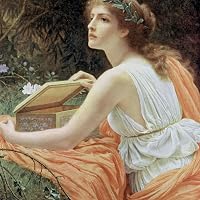
I was given the Wallner edition.. The pictures are lovely. But I can't rate the book. It reminds me of The Important Book by Margaret Wise Brown. I should love both of them, but I actually despise them. Why?
Because they *decree.* "Content is gray, and sleepiness, too." Says who!? *I* say sleepiness is a warm brown, tbh. ... So, ok, yes, both books could be used in a classroom to inspire creative writing. Fine. Teach thus: "In Brown's opinion... in O'Neill's opinion... How do you feel about these colors, these things?"
But still. If the full book is shared before the students start to write, I'm concerned that their own creativity would be stifled. I *know* mine is. Any attempt I would make now would certainly be only a reaction, a response, nothing fresh or creative.
And also, many children encountering it don't even have that guidance. They're definitely reading it as Established Wisdom. And I honestly don't think either Brown or O'Neill intended that. So, too bad, sorry, but: Fail.
Because they *decree.* "Content is gray, and sleepiness, too." Says who!? *I* say sleepiness is a warm brown, tbh. ... So, ok, yes, both books could be used in a classroom to inspire creative writing. Fine. Teach thus: "In Brown's opinion... in O'Neill's opinion... How do you feel about these colors, these things?"
But still. If the full book is shared before the students start to write, I'm concerned that their own creativity would be stifled. I *know* mine is. Any attempt I would make now would certainly be only a reaction, a response, nothing fresh or creative.
And also, many children encountering it don't even have that guidance. They're definitely reading it as Established Wisdom. And I honestly don't think either Brown or O'Neill intended that. So, too bad, sorry, but: Fail.

March 10, 2019
Love the illustrations and color. The poems are good. They made me think of colors in a different way.
Unlike another reviewer I didn't feel like I was being dictated to but encouraged to think about colors and see them differently. Just my opinion.
Do agree with another reviewer - the reference to "red is an Indian" was jarring and took points off.
Unlike another reviewer I didn't feel like I was being dictated to but encouraged to think about colors and see them differently. Just my opinion.
Do agree with another reviewer - the reference to "red is an Indian" was jarring and took points off.
December 23, 2016
Not the best poetry ever, but still good for getting children's imaginations going! I enjoyed the original illustrations by Leonard Weisgard, but I'm interested in reading the edition illustrated by John Wallner as well.

February 7, 2012
This book is fantastic for teaching poetry. I love it. It's good for description, metaphor, 5 senses, etc, and my students have really enjoyed reading the short poems.

December 11, 2009
This is an excellent book, and I love the color poems. They are well written and they rhyme, too. I also thought is was funny to read the introduction in the book and see that publishing Hailstones and Halibut Bones was almost a mistake. The author was due with some work that was not yet ready. So her publisher came over to her house and took a look around in hope of finding SOMETHING she could use. That's when her publisher found a bunch of poems all stuffed in a desk drawer that the author, Mary O'Neill, had written and collected over the years and that is how this book came to be.

March 29, 2019
Love the illustrations, the poetry not so much. As several other readers pointed out, the use of "red Indian" was startling and interrupted the flow.
May 3, 2019
In Mary O'Neills collection, Hailstones and Hailbut Bones, she explores all the different colors of the rainbow through poetry and connecting to physical sensations. She gives voice to colors and it enriches the experience of reading these poems.
This collection is great for middle schoolers as it introduces poetry in an easy way. Middle school students are quick to get overwhelmed, so often times you cannot dunk them in head first. Giving students poetry that is easy to get into, while touching on subjects that are accessible, such as color, sets one up for success in the middle school classroom.
O'Neill does a wonderful job in this collection of poems as each is filled in the brim with sensory language, but also giving color's a certain voice. You can visualize what a color means and says with the voice contained in the pages. This text is a great for using the Gallagher strategy of Sentence Starters. By forming sentence starters that correlate with this collection, you have effectively given students a set up to start writing their own poems with O'Neill's as a model.
Sentence starters
This collection is great for middle schoolers as it introduces poetry in an easy way. Middle school students are quick to get overwhelmed, so often times you cannot dunk them in head first. Giving students poetry that is easy to get into, while touching on subjects that are accessible, such as color, sets one up for success in the middle school classroom.
O'Neill does a wonderful job in this collection of poems as each is filled in the brim with sensory language, but also giving color's a certain voice. You can visualize what a color means and says with the voice contained in the pages. This text is a great for using the Gallagher strategy of Sentence Starters. By forming sentence starters that correlate with this collection, you have effectively given students a set up to start writing their own poems with O'Neill's as a model.
Sentence starters

September 19, 2025
Thank you, Knutzens!

May 22, 2011
My mom send me down to her shelves to grab some books for Ezra and I found this! I haven't seen it in ages but just seeing the cover brought back a flood of memories. This was my FAVORITE poetry book, I read it over and over. I loved the illustrations too! These are wonderful children's poems; they are easy to read aloud, the metaphors are simple easy to understand, and they all rhyme. (Who gets non-rhyming poetry as a kid?) I remember my favorite poem was White. I think now it's Purple.
(sample)
...Asters are purple,
There's purple ink.
Purple's more popular
Than you think....
It's sort of a great
Grandmother to pink.
...
or maybe Pink...
(sample)
...If you stand in an orchard
In the middle of Spring
And you don't make a sound
You can hear pink sing,
...
They are all great.
(sample)
...Asters are purple,
There's purple ink.
Purple's more popular
Than you think....
It's sort of a great
Grandmother to pink.
...
or maybe Pink...
(sample)
...If you stand in an orchard
In the middle of Spring
And you don't make a sound
You can hear pink sing,
...
They are all great.

November 17, 2011
Another Leonard Weisgard illustrated book -- I picked this to get from the library out of his illustrated work simply on title alone. The poem by O'Neill definitely has some nice moments; unfortunately it's dated and tells us that Indians are Red and Babies are Pink. But otherwise sweet and even goes beyond the basic iamges that you might expect in many poems about colors for children: "You can smell blue / In many a thing: / Gentian and larkspur / Forget-me-nots, too. / And if you listen / You can hear blue / In wind over water / And wherever flax blooms / And when evening steps into / Lonely rooms. / Cold is blue: / Flame shot from a welding torch / Is, too: / Hot, wild, screaming, blistering Blue"
November 19, 2013
The most classic of all classic poetry books. Great to possibly pair nowadays with "The Black Book of Colors." This is one of those poetry books that redefines poetry in school. So many of the great poetry books did that for this genre…Shel Silverstein, Judith Viorst, Jack Prelutsky, and, of course, Dr. Seuss.
This one is so old, I'm afraid that too many people don't even know about it. So, that is why I decided to post on it. Her idea to bring the abstract world of colors into the more concrete, tangible world of descriptive poetry is fascinating for children and the perfect subject for beginning poets! O' Neill was a consultant to W.B. Yeats- can't get much more "real" in terms of a poet than that.
This one is so old, I'm afraid that too many people don't even know about it. So, that is why I decided to post on it. Her idea to bring the abstract world of colors into the more concrete, tangible world of descriptive poetry is fascinating for children and the perfect subject for beginning poets! O' Neill was a consultant to W.B. Yeats- can't get much more "real" in terms of a poet than that.
March 17, 2010
This is a wonderful and vibrant book depicting, through poetry, 12 basic colors. It was first printed in 1961, but has been reprinted over and over since then. And it is no wonder why. The author takes us through these colors that we see everyday, but she helps us better recognize that "each has a taste, and each has a smell, and each has a wonderful story to tell..." I loved the simple but descriptive poetry and found myself changing what I thought my favorite color was based on each colors description. Accompanying the poetry are rich drawings that heighten the emotion felt with each poem. This would be a wonderful book to use for a poetry lesson or even a lesson on colors.
July 16, 2016
Hailstones and Halibut Bones is both my favorite book, in the sense that it's one of my favorite works, and my favorite book, in the sense that the copy that I own is my favorite physical book that I own. I got it from my grandparents for Christmas in 1992. It has beautiful illustrations, and I've treasured it ever since.
But I digress. The book itself has a poem about each color. Every poem is fantastic. And every color is painted as something beautiful and interesting and multifaceted, even the ones that aren't in the rainbow and that kids don't normally spend a lot of time thinking it would be fun to draw with.
But I digress. The book itself has a poem about each color. Every poem is fantastic. And every color is painted as something beautiful and interesting and multifaceted, even the ones that aren't in the rainbow and that kids don't normally spend a lot of time thinking it would be fun to draw with.

August 11, 2015
This is a good book for familiarizing kids with the sort of poetry that deals in feelings and metaphor. Not too deep, but something a little different from the funnier rhymes they tend to start out with. It was published in 1961, so there are a couple of moments that might make modern parents wince (notably the use of "an Indian" as an illustration for "Red"), but the majority is a pleasant series of "adventures in color", as the subtitle states.

March 11, 2019
Loved the illustrations, probably a bit more than the poems, but that's me. Never read the older version, but the artist chosen for this edition was perfect. Each poem is about a color. Need to read to appreciate...but I do agree with other reviewers about the "red" Indian. It stopped me so I lost the flow.
April 26, 2019
Hailstones and Halibut Bones by Mary O'Neill , 1961. Although this poem book may be a little outdated, it is authentic poetry. Because this poem book was published in 1961, I probably would not use this in a classroom.. (there are some racist aspects which I do not agree with). I actually would say that the poetry isn't even that great, but it definitely would get a child to think. #classic
April 30, 2020
The rhythm of the poems was a a bit jarring at times, and the example of an Indian in the poem about the color red was cringe-worthy. However, some of the lines were lovely and a few of the illustrations were very beautiful.

February 22, 2017
It was very good and I would feel the colors because of the perfect metaphors.

August 6, 2017
Beautiful sensory color poems. A classic.
December 17, 2017
Fun - and read this as part of my Senior Thesis work on the psychological aspects of color.

November 23, 2020
I really liked the illustrations and that overall all colors were equally valued. Didn’t like the fact that “Indians” were labeled “red.”

November 30, 2020
A nice and simple poetry book of colours.

March 12, 2012

Through the recommendations of Memoria Press in their curriculum package it is amazing what is possible to provide in a pre-school or Junior Kindergarten experience and I’d say the bulk of the best of it is within the literature and poetry section. Since there are 33 weeks and 34 literature selections, let me start with telling you about the poetry because of this, there is really only three. Two, however that you use on a regular basis throughout the year of curriculum in the lesson plans. The third doubles one week for both literature and poetry.
A key element to the Jr. K curriculum, the music and poetry offers exposure to enduring childhood classics and satisfies the child’s intrinsic interest in story and song. The interesting and rich language of the music and poetry selections (yes, even simple Mother Goose Rhymes) helps the child develop a taste for and comfort with the beautiful, stylistic language ubiquitous in the classical education to come. Fortunately, no persuasion or explanation is necessary - the Jr. K student loves to rhyme and sing!
 The main book of poetry in Jr. K is the Mother Goose. As I said in my opening post, early in the beta stage we started with Tomie dePaola’s Mother Goose which was fine, but were later switched to Richard Scarry’s Best Mother Goose Ever which is fabulous. I love Richard Scarry, we love Richard Scarry in our house. And while it is true that for the Mother Goose portion you could possibly use any of your favorite Mother Goose illustrated works, this is my favorite of all the others that we have on our shelves.
Fifty favorite and not so well-known nursery rhymes are brought to vibrant life by Richard Scarry whose bears, pigs, cats, and rabbits perfectly illustrate these familiar verses. From Old Mother Hubbard to Jack Sprat, this oversize book depicts these most classic characters in bright, funny, colorful detail.
Mother Goose is a perfect foundation for any child's library, and Richard Scarry is the ideal illustrator to make these first poems accessible and fun.
The book itself is huge and wonderfully durable. Richard Scarry is a staple in my household and his characters are very familiar to my children. Having larger illustrations to act out Mother Goose rhymes is just icing on the cake. In the book there is from one to a few more rhymes per page and there is plenty to look at and observe.
 Often we are to be found having read over our rhyme for the day, discussed it via the poetry guidelines in the lesson plans and then my daughter will beg to go back and read a rhyme for the week before or the week before that. I read through the rhymes about three times, and while she doesn’t have these memorized she knows what the main concept is and is delighted in their silliness and always wants more. Quite a few times I’ve come to find her in our library just pouring over the book and flipping the pages going on. While she cannot read on her own yet, she can remember the ones we have read and they provide her much enjoyment.
Overall in my opinion there could not be a better choice for Mother Goose rhymes than the Richard Scarry version, but then I adore his characters so I’m biased anyhow. Oh, and it’s technically a Golden Book, so that’s another point in the plus column.
 The other poetry book we have is completely new to me and the concepts learned here are more than just on poetry. It’s all about color. Hailstones and Halibut Bones by Mary O’Neill is a different kind of book for my experience, but I like it and I like it alot. It was a little confusing when I was purchasing my copy, because everywhere I look online there is a different cover image shown, but when my copy arrived it was a thin paperback that matches the images in the Memoria Press collages. Illustrated by John Wallner, Hailstones and Halibut Bones is a book for the imagination to soar. Text copyright 1961 and illustration copyright 1989 this book has been around and there is good reason why it is still in publication. The imagery is lovely and flows beautifully. In the study of poetry often it seems I find some people love certain poets that I think are bizarre, but Mary O’Neill’s poetry is attractive to the eyes and ears and I think a great influence on a possible project to try in the future one day of our own in a midst of color or another topic.
Now touching back on the lesson plans, we have a page with poetry guidelines in the appendix. These include discussion points for before you read, during your reading, and after you read as well. Through these bullet points a poem can be brought even more to life and taken further and just beginning the educational adventure. With this kind of introduction on a Jr. K level I am intrigued and excited for what we may expect in years to come.
Up to this point we have covered the lesson plans, phonics, math and now poetry. Ah, and in case I have confused you by mentioning a third poetry portion, this I mean by one week’s double choice where the literature also fits for the poetry section in Tomie dePaola’s The Song of Francis.
Other things I would love to tell you about include literature, music and crafts... Guess what’s next?
Part I – Lesson Plans
Part II – Phonics
Part III – Math
Part IV - Poetry
This post is scheduled: http://creativemadnessmama.com/blog/2...

September 20, 2025
It was on a sleepover night, gazing through the bookshelves in my friend's bedroom, that I first fell in love with this book. The cover alone of the 1989 edition was wrapped in colors and wonders and imagination. Colors always held my fascination, especially studying them one by one, in all their varying hues.
The watercolor illustrations alone made me enthralled in the depth of each shade and tone. The rainbow was full of gems and jewels in everyday life.
Then to read the words so cleverly woven, created a prism world of delight.
This is a cherished simple child's book of observation of the big beautiful world around us all.
I need to pass this on for many "children," young and old, to enjoy and elicit the feelings of wonder that our world has to bring.
The watercolor illustrations alone made me enthralled in the depth of each shade and tone. The rainbow was full of gems and jewels in everyday life.
Then to read the words so cleverly woven, created a prism world of delight.
This is a cherished simple child's book of observation of the big beautiful world around us all.
I need to pass this on for many "children," young and old, to enjoy and elicit the feelings of wonder that our world has to bring.
Displaying 1 - 30 of 157 reviews