

What do you think?

Sociedade das Relíquias Literárias #5
The Door in the Wall
The Door in the Wall, considered by both readers and critics, to be Wells's finest tale, examines an issue to which Wells returned repeatedly in his writing: the contrast between aesthetics and science and the difficulty of choosing between them. This collection also includes The Star, A Dream of Armageddon, The Cone, A Moonlight Fable, The DiamondMaker, The Lord of the Dynamos, and The Country of the Blind. Newly designed and typeset in a modern 5.5-by-8.5-inch format by Waking Lion Press.
144 pages, Paperback
First published January 1, 1906
About the author
H.G. Wells
5,922 books11.5k followersHerbert George Wells was born to a working class family in Kent, England. Young Wells received a spotty education, interrupted by several illnesses and family difficulties, and became a draper's apprentice as a teenager. The headmaster of Midhurst Grammar School, where he had spent a year, arranged for him to return as an "usher," or student teacher. Wells earned a government scholarship in 1884, to study biology under Thomas Henry Huxley at the Normal School of Science. Wells earned his bachelor of science and doctor of science degrees at the University of London. After marrying his cousin, Isabel, Wells began to supplement his teaching salary with short stories and freelance articles, then books, including The Time Machine (1895), The Island of Dr. Moreau (1896), The Invisible Man (1897), and The War of the Worlds (1898).
Wells created a mild scandal when he divorced his cousin to marry one of his best students, Amy Catherine Robbins. Although his second marriage was lasting and produced two sons, Wells was an unabashed advocate of free (as opposed to "indiscriminate") love. He continued to openly have extra-marital liaisons, most famously with Margaret Sanger, and a ten-year relationship with the author Rebecca West, who had one of his two out-of-wedlock children. A one-time member of the Fabian Society, Wells sought active change. His 100 books included many novels, as well as nonfiction, such as A Modern Utopia (1905), The Outline of History (1920), A Short History of the World (1922), The Shape of Things to Come (1933), and The Work, Wealth and Happiness of Mankind (1932). One of his booklets was Crux Ansata, An Indictment of the Roman Catholic Church. Although Wells toyed briefly with the idea of a "divine will" in his book, God the Invisible King (1917), it was a temporary aberration. Wells used his international fame to promote his favorite causes, including the prevention of war, and was received by government officials around the world. He is best-remembered as an early writer of science fiction and futurism.
He was also an outspoken socialist. Wells and Jules Verne are each sometimes referred to as "The Fathers of Science Fiction". D. 1946.
More: http://philosopedia.org/index.php/H._...
http://www.online-literature.com/well...
http://www.hgwellsusa.50megs.com/
http://www.britannica.com/EBchecked/t...
http://en.wikipedia.org/wiki/H._G._Wells
Wells created a mild scandal when he divorced his cousin to marry one of his best students, Amy Catherine Robbins. Although his second marriage was lasting and produced two sons, Wells was an unabashed advocate of free (as opposed to "indiscriminate") love. He continued to openly have extra-marital liaisons, most famously with Margaret Sanger, and a ten-year relationship with the author Rebecca West, who had one of his two out-of-wedlock children. A one-time member of the Fabian Society, Wells sought active change. His 100 books included many novels, as well as nonfiction, such as A Modern Utopia (1905), The Outline of History (1920), A Short History of the World (1922), The Shape of Things to Come (1933), and The Work, Wealth and Happiness of Mankind (1932). One of his booklets was Crux Ansata, An Indictment of the Roman Catholic Church. Although Wells toyed briefly with the idea of a "divine will" in his book, God the Invisible King (1917), it was a temporary aberration. Wells used his international fame to promote his favorite causes, including the prevention of war, and was received by government officials around the world. He is best-remembered as an early writer of science fiction and futurism.
He was also an outspoken socialist. Wells and Jules Verne are each sometimes referred to as "The Fathers of Science Fiction". D. 1946.
More: http://philosopedia.org/index.php/H._...
http://www.online-literature.com/well...
http://www.hgwellsusa.50megs.com/
http://www.britannica.com/EBchecked/t...
http://en.wikipedia.org/wiki/H._G._Wells
Ratings & Reviews
Friends & Following
Create a free account to discover what your friends think of this book!
Community Reviews
Displaying 1 - 30 of 586 reviews

March 2, 2025
Read together in Black Water 1 anthology together with the Short Story Club.
H. G. Wells does not need any introduction. I did not need one either as I've already read two of his novels previously. As such. I was looking forward to enjoying this story. Unfortunately, it did not leave too much of mark on me. I appreciated the idea and the writing skilla, but I could not focus too much on the story. It was probably a bad timing on my part.
We can find in the story the same gimmick that many SF/fantasy authors use when writing about the supernatural. The narrator counts the story of a friend/relative/stranger etc. In this case, the narrator is a friend of Wallace who, when he was five years old sees a green door set into a white wall. He opens the door and enters in a magical garden. Was it real or only in the child's imagination. We will never know for sure. During his lifetime, Wallace sees the door on several occasions but, for one reason or other, does not open it and never sees the garden again. The ending is left open. There are a few themes discusses in this longish short story. Is this a story of chasing or not chasing one's dream? Maybe. Also about reality and imagination? Read it and see.
H. G. Wells does not need any introduction. I did not need one either as I've already read two of his novels previously. As such. I was looking forward to enjoying this story. Unfortunately, it did not leave too much of mark on me. I appreciated the idea and the writing skilla, but I could not focus too much on the story. It was probably a bad timing on my part.
We can find in the story the same gimmick that many SF/fantasy authors use when writing about the supernatural. The narrator counts the story of a friend/relative/stranger etc. In this case, the narrator is a friend of Wallace who, when he was five years old sees a green door set into a white wall. He opens the door and enters in a magical garden. Was it real or only in the child's imagination. We will never know for sure. During his lifetime, Wallace sees the door on several occasions but, for one reason or other, does not open it and never sees the garden again. The ending is left open. There are a few themes discusses in this longish short story. Is this a story of chasing or not chasing one's dream? Maybe. Also about reality and imagination? Read it and see.

March 14, 2023
I first read this wonderfully eerie - and at the same time incredibly magical, but bitterly tragic - tale in 1961.
I was eleven years old, and I had been streamed by the School authorities that year into the midst of my fellow B Streamers in those Ontario back-to-basics conservative primary school years. It was euphemistically termed an "opportunity class,” and even my grades were B's or below.
But I always excelled at English - straight A's in that, throughout Grade School.
Is it any wonder? Mom was our township's chief librarian.
And, wow, I said to myself - this story was my life!
That augury, sadly, was accurate. Written off by my family, yet another ten years later I was nearly trashed.
Yikes.
The Door In the Wall had been clearly marked No Exit.
***
But Asperger's kids, no matter how hard you kick them, always wear a smile.
I wasn't finished, though the world cynically smiled and thought different.
But isolated, I became an experimental Cobail.
I saw no difference in myself from the previous “opportunity candidate,” the autistic kid, but I had panicked and now I had been judged.
And hard.
My doctors saw me, as Dickens cynically descibes their view, as a mere "upright biped" who wasn't shouldering his load. But to them, that load offered, as the philosopher Jacques Derrida points out, a “supplement” of disengaged ‘objectivity’ -
An amoral objectivity. To me, an Aspie airhead, that wasn’t morally acceptable. In one stroke I rejected modernism and embraced biblical responsibility. To me there was no longer a load of buried societal amoral guilt to share.
I had my personal guilt, of which I’d been forgiven. I had a soul, and the truth had set me free.
They didn’t buy that. They thus administered the appropriate remedy to freeze my blood.
***
But frozen, not even their devils now can hurt me. No, my blood sufficiently iced, I even to this day know there is a Door in the Wall.
I knew it because I had faith, and have it still.
I found my Alpha and Omega.
My peace is incorruptible now.
And didn't He say about two thousand years ago that He is that Door that I insanely once stumbled through?
Yes, and He has proved that to me over and over again in my life.
Kids, there IS a door to Peace.
And it's right here, now - hidden within the Prison of our Evil Days.
The Word of God is that Shangrila.
But that Door is nonsense to the world, to Wells, and to my quondam jailers.
I was eleven years old, and I had been streamed by the School authorities that year into the midst of my fellow B Streamers in those Ontario back-to-basics conservative primary school years. It was euphemistically termed an "opportunity class,” and even my grades were B's or below.
But I always excelled at English - straight A's in that, throughout Grade School.
Is it any wonder? Mom was our township's chief librarian.
And, wow, I said to myself - this story was my life!
That augury, sadly, was accurate. Written off by my family, yet another ten years later I was nearly trashed.
Yikes.
The Door In the Wall had been clearly marked No Exit.
***
But Asperger's kids, no matter how hard you kick them, always wear a smile.
I wasn't finished, though the world cynically smiled and thought different.
But isolated, I became an experimental Cobail.
I saw no difference in myself from the previous “opportunity candidate,” the autistic kid, but I had panicked and now I had been judged.
And hard.
My doctors saw me, as Dickens cynically descibes their view, as a mere "upright biped" who wasn't shouldering his load. But to them, that load offered, as the philosopher Jacques Derrida points out, a “supplement” of disengaged ‘objectivity’ -
An amoral objectivity. To me, an Aspie airhead, that wasn’t morally acceptable. In one stroke I rejected modernism and embraced biblical responsibility. To me there was no longer a load of buried societal amoral guilt to share.
I had my personal guilt, of which I’d been forgiven. I had a soul, and the truth had set me free.
They didn’t buy that. They thus administered the appropriate remedy to freeze my blood.
***
But frozen, not even their devils now can hurt me. No, my blood sufficiently iced, I even to this day know there is a Door in the Wall.
I knew it because I had faith, and have it still.
I found my Alpha and Omega.
My peace is incorruptible now.
And didn't He say about two thousand years ago that He is that Door that I insanely once stumbled through?
Yes, and He has proved that to me over and over again in my life.
Kids, there IS a door to Peace.
And it's right here, now - hidden within the Prison of our Evil Days.
The Word of God is that Shangrila.
But that Door is nonsense to the world, to Wells, and to my quondam jailers.

July 16, 2024
What’s the cost of chasing one’s dreams?
What’s the cost of not doing so?
“One confidential evening, not three months ago, Lionel Wallace told me this story of the Door in the Wall. And at the time I thought that so far as he was concerned it was a true story.”
I hadn’t heard of this HG Wells story, yet it felt familiar, with a mythic quality, conjuring memories of The Garden of the Forking Paths, the Garden of Eden, Narnia, and The Secret Garden. Like some of those, this is a nested story, where the balance of reality and metaphor is uncertain.
The narrator, who is Wallace’s friend since school, tantalises before he tells:
“I found myself trying to account for the flavour of reality that perplexed me in his impossible reminiscences.”
Wallace was a lonely, motherless, but otherwise-privileged boy when he found a green door in a white wall. He felt compelled to open it, while also somehow knowing it was wrong or unwise.
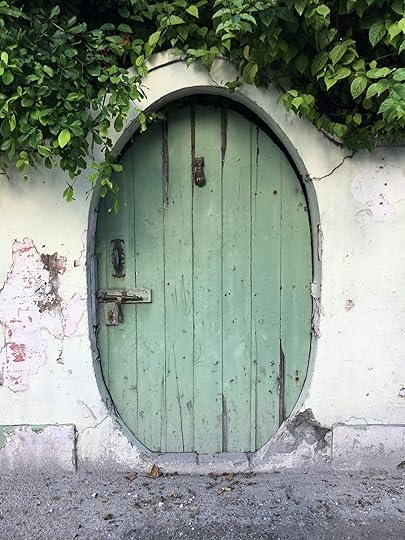
Image: A dilapidated green oval door, in a white wall with chipped plaster, and foliage hanging above (Source)
He was barely five, so of course he went in.
“It was just like coming home” - but even better: a beautiful garden of statues, flowers, fountains, spotted panthers, doves, a Capuchin monkey, and welcoming playmates.
In the garden, he’s shown a book, and Wells' story takes a post-modern meta turn:
“The pages of that book were not pictures, you understand, but realities… people moved and things came and went in them.”
Whether this experience was real, a dream, or an hallucination (in addition to a metaphor), Wallace is haunted by it for the rest of his life, sometimes searching for the door, occasionally finding it by mistake, but never opening it. Will he, one day, open it and go through?
Magical as his experience was, his lifelong yearning taints the rest of his life. He would probably have been happier if he had never found the door in the wall as a boy.
I have similar feelings about revisiting books or places that harbour treasured memories from long ago. And back to CS Lewis. I loved the Narnia books as a child, but hated The Lion, the Witch, and the Wardrobe when I read it to my child.
What’s the cost of chasing one’s dreams?
What’s the cost of not doing so?
Short story club
I read this in Black Water: The Anthology of Fantastic Literature, by Alberto Manguel, from which I’m reading one story a week with The Short Story Club, starting 4 September 2023.
You can read this story, HERE.
You can join the group here.
What’s the cost of not doing so?
“One confidential evening, not three months ago, Lionel Wallace told me this story of the Door in the Wall. And at the time I thought that so far as he was concerned it was a true story.”
I hadn’t heard of this HG Wells story, yet it felt familiar, with a mythic quality, conjuring memories of The Garden of the Forking Paths, the Garden of Eden, Narnia, and The Secret Garden. Like some of those, this is a nested story, where the balance of reality and metaphor is uncertain.
The narrator, who is Wallace’s friend since school, tantalises before he tells:
“I found myself trying to account for the flavour of reality that perplexed me in his impossible reminiscences.”
Wallace was a lonely, motherless, but otherwise-privileged boy when he found a green door in a white wall. He felt compelled to open it, while also somehow knowing it was wrong or unwise.
Image: A dilapidated green oval door, in a white wall with chipped plaster, and foliage hanging above (Source)
He was barely five, so of course he went in.
“It was just like coming home” - but even better: a beautiful garden of statues, flowers, fountains, spotted panthers, doves, a Capuchin monkey, and welcoming playmates.
In the garden, he’s shown a book, and Wells' story takes a post-modern meta turn:
“The pages of that book were not pictures, you understand, but realities… people moved and things came and went in them.”
Whether this experience was real, a dream, or an hallucination (in addition to a metaphor), Wallace is haunted by it for the rest of his life, sometimes searching for the door, occasionally finding it by mistake, but never opening it. Will he, one day, open it and go through?
Magical as his experience was, his lifelong yearning taints the rest of his life. He would probably have been happier if he had never found the door in the wall as a boy.
I have similar feelings about revisiting books or places that harbour treasured memories from long ago. And back to CS Lewis. I loved the Narnia books as a child, but hated The Lion, the Witch, and the Wardrobe when I read it to my child.
What’s the cost of chasing one’s dreams?
What’s the cost of not doing so?
Short story club
I read this in Black Water: The Anthology of Fantastic Literature, by Alberto Manguel, from which I’m reading one story a week with The Short Story Club, starting 4 September 2023.
You can read this story, HERE.
You can join the group here.

September 7, 2024
4★ (for the title story only)
“‘I have,’ he said, ‘a preoccupation—
I know,’ he went on, after a pause, ‘I have been negligent. The fact is—it isn’t a case of ghosts or apparitions—but—it’s an odd thing to tell of, Redmond—I am haunted. I am haunted by something—that rather takes the light out of things, that fills me with longings…’”
This is a tale of the supernatural, nicely told although the premise isn’t unusual to me, after many years of enjoying ghost stories, magical realism and The Twilight Zone. This was published in 1906, and the author was very well known, so it is possible this story may have been the inspiration for many such stories that followed.
Redmond says he and Lionel, whose story this is, had enjoyed a particularly fine meal, but he’s not sure what prompted his friend to reveal his secret.
Apparently, when Lionel was a little boy, he saw a very distinctive door amongst the buildings along the road, and, with his curiosity piqued, he went through it.
He had a wonderful experience meeting people, playing, exploring another world until he had to leave. Was it a daydream?
He talks about his childhood, his adult life, his longing for this place.
Some years later, he looked for it again, with very little luck. Once in a while, he would spot it somewhere, but it was always when he wasn’t free to stop what he was doing, and afterwards, when he was free, it had disappeared again.
What was the door? What kept him from going through it when he found it again? I think we’d all benefit from an experience like his, but perhaps only children are curious enough to drop everything and look.
It’s another from the Goodreads group, Short Story Club, which you can join here.
The Short Story Club
This is the title story of the collection which is available online at Project Gutenberg (free).
The Door In The Wall at Project Gutenberg online
“‘I have,’ he said, ‘a preoccupation—
I know,’ he went on, after a pause, ‘I have been negligent. The fact is—it isn’t a case of ghosts or apparitions—but—it’s an odd thing to tell of, Redmond—I am haunted. I am haunted by something—that rather takes the light out of things, that fills me with longings…’”
This is a tale of the supernatural, nicely told although the premise isn’t unusual to me, after many years of enjoying ghost stories, magical realism and The Twilight Zone. This was published in 1906, and the author was very well known, so it is possible this story may have been the inspiration for many such stories that followed.
Redmond says he and Lionel, whose story this is, had enjoyed a particularly fine meal, but he’s not sure what prompted his friend to reveal his secret.
Apparently, when Lionel was a little boy, he saw a very distinctive door amongst the buildings along the road, and, with his curiosity piqued, he went through it.
He had a wonderful experience meeting people, playing, exploring another world until he had to leave. Was it a daydream?
He talks about his childhood, his adult life, his longing for this place.
Some years later, he looked for it again, with very little luck. Once in a while, he would spot it somewhere, but it was always when he wasn’t free to stop what he was doing, and afterwards, when he was free, it had disappeared again.
What was the door? What kept him from going through it when he found it again? I think we’d all benefit from an experience like his, but perhaps only children are curious enough to drop everything and look.
It’s another from the Goodreads group, Short Story Club, which you can join here.
The Short Story Club
This is the title story of the collection which is available online at Project Gutenberg (free).
The Door In The Wall at Project Gutenberg online

November 13, 2020
"Indeciso al principio, más resuelto después, empezó a revelar el secreto de su vida, el recuerdo obsesivo de una belleza y una felicidad, que le embargaban con anhelos insaciables y le hacían ver los intereses y espectáculos de la existencia mundana como algo aburrido, tedioso y vano(...)
En el instante preciso en que la puerta se cerró, olvidé la calle cubierta de hojas, los carruajes y los carros de los tenderos que pasaban, olvidé esa suerte de fuerza gravitacional que me empujaba a la disciplina y la obediencia del hogar, olvidé cualquier miedo o vacilación, olvidé la discreción, olvidé la realidad cotidiana de esta vida. En un instante, me convertí en un niño alegre y maravillado en otro mundo. En un mundo de aspecto distinto, con una luz más cálida, más penetrante, más suave; un mundo donde se respiraba una alegría pura y sublime, donde nubes bañadas por el sol surcaban el azul del cielo"
Nos narra una historia, contada por su amigo, poco antes de morir. En la que cuenta varios pasajes de su vida, en los cuales el eje es una experiencia con un muro blanco, con una puerta verde, que conducía a un jardín encantado, Según el recuerdo que tenía de aquella vivencia infantil y que posteriormente se le presento a lo largo de su vida en diferentes etapas y el cual jura que es real
A mi entender Wells pretende mostrar las dos mitades que constituyen y confluyen "la vida y la muerte"
Como uno se aparta de lo mágico y lo lúdico, la imaginación se limita y se vuelve mas costumbrista, conformista, en cierto punto miedoso.Y es absorbido por la vorágine y las responsabilidades, aferrándose a lo superficial. Y los sueños que son postergados,dejados de lado u olvidados sea cual sea el motivo. Tal vez cuando se intenta recuperar un poco de esa "inocencia perdida" o aferrarse a esas pequeñas cosas que realmente pueden hacernos felices ...ya sea demasiado tarde.
Recomendado para cualquiera que tenga sangre en las venas, en caso contrario abstenerse.
En el instante preciso en que la puerta se cerró, olvidé la calle cubierta de hojas, los carruajes y los carros de los tenderos que pasaban, olvidé esa suerte de fuerza gravitacional que me empujaba a la disciplina y la obediencia del hogar, olvidé cualquier miedo o vacilación, olvidé la discreción, olvidé la realidad cotidiana de esta vida. En un instante, me convertí en un niño alegre y maravillado en otro mundo. En un mundo de aspecto distinto, con una luz más cálida, más penetrante, más suave; un mundo donde se respiraba una alegría pura y sublime, donde nubes bañadas por el sol surcaban el azul del cielo"
Nos narra una historia, contada por su amigo, poco antes de morir. En la que cuenta varios pasajes de su vida, en los cuales el eje es una experiencia con un muro blanco, con una puerta verde, que conducía a un jardín encantado, Según el recuerdo que tenía de aquella vivencia infantil y que posteriormente se le presento a lo largo de su vida en diferentes etapas y el cual jura que es real
A mi entender Wells pretende mostrar las dos mitades que constituyen y confluyen "la vida y la muerte"
Como uno se aparta de lo mágico y lo lúdico, la imaginación se limita y se vuelve mas costumbrista, conformista, en cierto punto miedoso.Y es absorbido por la vorágine y las responsabilidades, aferrándose a lo superficial. Y los sueños que son postergados,dejados de lado u olvidados sea cual sea el motivo. Tal vez cuando se intenta recuperar un poco de esa "inocencia perdida" o aferrarse a esas pequeñas cosas que realmente pueden hacernos felices ...ya sea demasiado tarde.
Recomendado para cualquiera que tenga sangre en las venas, en caso contrario abstenerse.

September 2, 2024
"Very haltingly at first, but afterwards more easily, he began to tell of the thing that was hidden in his life, the haunting memory of a beauty and a happiness that filled his heart with insatiable longings that made all the interests and spectacle of worldly life seem dull and tedious and vain to him "
The narrator tells about his old school friend, Lionel Wallace, who was haunted by an event from his childhood. When Wallace was five years old, a green door set into a white wall captured his attention. He gave in to his curiosity and opened the door which led into a magical, beautiful garden. Was the garden real, a hallucination, or did Wallace possess an abnormal gift of special vision? There are lots of psychological undertones in this story about the conscious rational world and the world of imagination. I enjoyed the ambiguous ending to the story.
I read the title story only with the Short Story Club. The story is online at Project Gutenberg, and in the anthology, "Black Water."
The narrator tells about his old school friend, Lionel Wallace, who was haunted by an event from his childhood. When Wallace was five years old, a green door set into a white wall captured his attention. He gave in to his curiosity and opened the door which led into a magical, beautiful garden. Was the garden real, a hallucination, or did Wallace possess an abnormal gift of special vision? There are lots of psychological undertones in this story about the conscious rational world and the world of imagination. I enjoyed the ambiguous ending to the story.
I read the title story only with the Short Story Club. The story is online at Project Gutenberg, and in the anthology, "Black Water."

October 28, 2017
Tam olarak beklediğim tadı alamasam da ilginç öyküler bulunuyor kitapta. Özellikle "Kristal Yumurta" adlı öyküyü beğendim. Diğerleri de kurgusal olarak olmasa bile imgesel olarak oldukça etkileyici . "Duvardaki Kapı" bu anlamda epey güçlü. "Sihirli Dükkan" ise anlatımıyla eğlenceli bir öykü vaat ediyor. Üç yıldız mı versem, dört yıldız mı derken yazıldığı tarihi göz önünde bulundurup torpil geçtim. Kısacası okumanızı tavsiye edeceğim kısa bir kitap.
September 2, 2024
3 short stars
Enjoyed the flow of the prose, the second hand narration (hearsay maybe?), the suspence that was maintained throughout. Expected the ending to "pack a punch" but was instead hit by a "wet noodle". Oh, well, a fast read and demonstration of the scope of the author's work.
NOTHING like War of the Worlds or The Time Machine; both stories I enjoyed immensely and do recommend!
Enjoyed the flow of the prose, the second hand narration (hearsay maybe?), the suspence that was maintained throughout. Expected the ending to "pack a punch" but was instead hit by a "wet noodle". Oh, well, a fast read and demonstration of the scope of the author's work.
NOTHING like War of the Worlds or The Time Machine; both stories I enjoyed immensely and do recommend!

January 6, 2021
Um dos contos mais lindos que eu já li em toda minha vida.
Céus! Estou eu sem fôlego?!
Tenho tanto o que dizer sobre, e mal sei por onde começar. A fuga da realidade, o escape para os sonhos, o corpo físico como mais do que nosso único meio de existirmos.
Eu não tenho palavras.
Céus! Estou eu sem fôlego?!
Tenho tanto o que dizer sobre, e mal sei por onde começar. A fuga da realidade, o escape para os sonhos, o corpo físico como mais do que nosso único meio de existirmos.
Eu não tenho palavras.

August 14, 2024
Story 3 stars**
Audio 3.75 stars**
Narrator Greg Wagland
Audio 3.75 stars**
Narrator Greg Wagland

July 28, 2019
The story was reminiscent of E.M Forster's The Celestial Omnibus and yet a masterpiece in itself.
H.G. Wells wrote the Time Machine in 1895 and had his moment of glory. But what a coincidence, that these two identically-themed stories were published in 1911.
The 1900's seem to be years of soul-searching, when people were afraid to acknowledge that they even read P.B.Shelley cause of his views. The story talks of the 'other world' that is open only to the pure-hearted, who dare to step out of the rigid boundaries of society. A lovely read if one believes in magic and alternate realities.
H.G. Wells wrote the Time Machine in 1895 and had his moment of glory. But what a coincidence, that these two identically-themed stories were published in 1911.
The 1900's seem to be years of soul-searching, when people were afraid to acknowledge that they even read P.B.Shelley cause of his views. The story talks of the 'other world' that is open only to the pure-hearted, who dare to step out of the rigid boundaries of society. A lovely read if one believes in magic and alternate realities.

April 30, 2021
Tenía pendiente leer algo de la producción de H.G. Wells que se alejara de la ciencia ficción a la que me tiene acostumbrado y esta novelette de fantasía me ha sorprendido gratamente por la profundidad que tiene a pesar de desarrollar la historia en apenas 50 páginas. Probablemente, cada lector extraerá una lectura distinta y vinculará esta trama con algún recuerdo o sentimiento distinto. Yo me quedo con la sensación de pérdida de la inocencia que trae la vida adulta, cuando dejas de usar tu imaginación y rompes con tu niño interior, y con ese deseo frustrado de aferrarse a un sueño cuando ya has despertado.
RESEÑA COMPLETA: https://www.youtube.com/watch?v=kl8sq...
RESEÑA COMPLETA: https://www.youtube.com/watch?v=kl8sq...

September 3, 2019
اولین کاری بود که از هربرت جونیور ولز میخوندم ولی بهترین کار نبود. اسمش هم نشنیده بودم، اسم کارهای دیگهشو شنیده بودم و اینو یهویی با کانیا توی باغ کتاب خریدم تا به خودم خوندنش رو تحمیل کنم. :-" بد نبود. جالب بود. داستان آخر بخصوص. از بقیه بیشتر دوستش داشتم. منتها من این ترجمه رو نخوندم، مال محمد قصاع رو خوندم.

May 12, 2018
“ Non era il caso di cercare troppo tardi ciò che non si trova cercando” .
Cinque racconti che ci trascinano in un mondo diverso, in uno spazio lontano dal nostro, forse reale in qualche luogo o soltanto mentale. Un altro mondo è quello che esercita fascino sulla mente di Wells, che ci trascina insieme a lui alla ricerca spasmodica di un accesso verso di esso. Sia esso una “porta nel muro” o un “uovo di cristallo” poco importa, quello che conta è trovare l’accesso, sfuggire alla propria realtà di meschinità e rancore, per ritrovarsi in una dimensione di felicità. E’ l’ansia di non poter trovare o ritrovare questo a rendere la vita di “chi ha visto altro” un inferno. La ricerca diventa un’ossessione che offusca tutto il resto, una tentazione che si sa di non dover coltivare e a cui si vuole cedere volontariamente. Il giovane della porta nel muro rimanda questo momento, per vari motivi, certo di poter finalmente godere a pieno della sua scoperta prima o poi, sicuro di poter ritrovare quella felicità perfetta che ha provato nei pochi momenti in cui ha attraversato la porta, lì si è sentito parte di un tutto, lui che era un bambino così solo. Il vecchio dell’”uovo di cristallo” invece mi ricorda molto Ivan I’lic, un povero che sfugge alle angherie della sua vita per rifugiarsi in un sogno e trovare pace in qualcosa che “stava diventando la cosa più reale della sua esistenza” .
Anche ne “ il caso Plattner “ ad essere indagato è l’esistenza di un altro mondo in cui ci si ritrova scaraventati malgrado tutto e risputati come se nulla fosse, se non con qualche piccolo effetto collaterale.
“ La bottega magica” e “ La storia del defunto signor Elvesham” gettano luci e ombre su possibili ma non certe dimensioni parallele, nello spazio e nel tempo, lasciando un senso di inquietudine e sospensione nel lettore che vorrebbe sapere altro.
Una immaginazione fervida, una mente capace di fascinazioni è quella di Wells che ci porta a sguazzare nei suoi dubbi. E se fossimo noi l’altro mondo che viene guardato?
Cinque racconti che ci trascinano in un mondo diverso, in uno spazio lontano dal nostro, forse reale in qualche luogo o soltanto mentale. Un altro mondo è quello che esercita fascino sulla mente di Wells, che ci trascina insieme a lui alla ricerca spasmodica di un accesso verso di esso. Sia esso una “porta nel muro” o un “uovo di cristallo” poco importa, quello che conta è trovare l’accesso, sfuggire alla propria realtà di meschinità e rancore, per ritrovarsi in una dimensione di felicità. E’ l’ansia di non poter trovare o ritrovare questo a rendere la vita di “chi ha visto altro” un inferno. La ricerca diventa un’ossessione che offusca tutto il resto, una tentazione che si sa di non dover coltivare e a cui si vuole cedere volontariamente. Il giovane della porta nel muro rimanda questo momento, per vari motivi, certo di poter finalmente godere a pieno della sua scoperta prima o poi, sicuro di poter ritrovare quella felicità perfetta che ha provato nei pochi momenti in cui ha attraversato la porta, lì si è sentito parte di un tutto, lui che era un bambino così solo. Il vecchio dell’”uovo di cristallo” invece mi ricorda molto Ivan I’lic, un povero che sfugge alle angherie della sua vita per rifugiarsi in un sogno e trovare pace in qualcosa che “stava diventando la cosa più reale della sua esistenza” .
Anche ne “ il caso Plattner “ ad essere indagato è l’esistenza di un altro mondo in cui ci si ritrova scaraventati malgrado tutto e risputati come se nulla fosse, se non con qualche piccolo effetto collaterale.
“ La bottega magica” e “ La storia del defunto signor Elvesham” gettano luci e ombre su possibili ma non certe dimensioni parallele, nello spazio e nel tempo, lasciando un senso di inquietudine e sospensione nel lettore che vorrebbe sapere altro.
Una immaginazione fervida, una mente capace di fascinazioni è quella di Wells che ci porta a sguazzare nei suoi dubbi. E se fossimo noi l’altro mondo che viene guardato?

September 3, 2024
“There was something in the very air of it that exhilarated, that gave one a sense of lightness and good happening and well being; there was something in the sight of it that made all its colour clean and perfect and subtly luminous.”
I read the title story only, but it was right up my alley: simply told, gently captivating, and leaving me thinking about all the doors I’ve passed up over the years.
I read the title story only, but it was right up my alley: simply told, gently captivating, and leaving me thinking about all the doors I’ve passed up over the years.

June 25, 2016
This book was written with clear talent. The story is unraveled in a very entertaining way, but when we finally get the whole tale it turns out to be pretty blah.
One star for story, five stars for style, for an average of three.
So what?
One star for story, five stars for style, for an average of three.
So what?

April 28, 2021
4,5 ☆ amei. só li porque o e-book tava grátis e acabou sendo uma surpresa incrível

September 6, 2024
From Black Water: The Anthology of Fantastic Literature and read for the Short Story Club. I ended up liking it a lot, but it sure did take a long tiime to get to the point! Pages and pages of irrelevant waffle!
Read
February 23, 2021Evet, yine nefis bir kitap! Babil Kitaplığı serisinden devam ediyorum. Bilim Kurgu'nun üstatlarından H. G. Wells'in 5 öyküsünün yer aldığı oldukça akıcı, eğlenceli ve fantastik bir kitap bu.
H. G. Wells'te neyi seviyorum? Her şeyden evvel yaratıcılığını. Çağının çok ötesinde fikirlere, düşüncelere sahip. Jules Verne gibi onun da hayalgücünün bir sınırı yok. Bir de sıradan insanların başına bir anda enteresan olaylar gelmesi ve kendilerini bu olayların içinde bulmalarını...
Özellikle kitaptaki Sihirli Dükkan öyküsü bu bakımdan beni oldukça eğlendirdi. Sıradan bir günün nasıl olup da fantastik bir yokuşa sürüklendiğini gördüm. Borges gibi onun da öyküleri gerçeklik treninden çıktığında siz bu yol ayrımının nerede olduğunu pek anlayamıyorsunuz.
H. G. Wells'in karakterlerin ruh haletlerine yönelik tasvirleri de hoşuma gidiyor. Özellikle karakterlerin yaşadıkları korku, iç sıkıntısı, bunalım ve gerilimleri oldukça başarılı. Yer yer öykülerinin içerine deus ex machine misali girmesini yadırgamamak gerek çünkü o dönem öykücülüğünde oldukça yaygın bir yol bu. Ancak bazen karakterlerini yargılama cüreti de gösteriyor ki bunu Kristal Yumurta isimli öyküde hemen fark edersiniz. Öykünün ilk bölümü kesinlikle Mr. Cave'ın karakterinin içsel dinamikleri üzerine kurulmuştur. Kristal Yumurta öykünün esas objesi olmasına rağmen Mr. Cave'in duygu ve hissiyatı öyküde büyük bir yer kaplar.
Duvardaki Kapı hikayesi, ki kitaba ismini veren hikaye; çift perspektifli bir hikayedir. Hikayede gerçekte neyin olduğu gizemde bırakılmış, okurun takdirine kalmıştır. Bu bakımdan diğer öykülerden ayrılan bir yönü var.
Sihirli Dükkan öyküsünde sıradan bir günün nasıl absürd bir hal alışını izlemek keyifliydi.
Kitaptaki bütün öyküler nefisti elbette ama kalan diğer iki öykünün de spesifik bazı yönlerini beğendiğimi söyleyebilirim. Son Mr. Elvesham öyküsünde Wells son derece yaratıcı bir konuyu biraz kısa tutarak harcamış gibime geldi. Bu öykü ayrıca bir roman olsaydı seve seve okurdum. Muhakkak bundan etkilenerek çekilen sinema filmleri de olmuştur. Çünkü sinemaya uyarlamaya müsait.
Peki Plattner Hikayesi'ne ne demeli? İnsanda ontolojik sancılar uyandırabilecek, oldukça kasvetli bir atmosfere sahip bu öykü teolojik kaynaklardan da beslenmiş denebilir. Ancak teolojik bir propaganda değil, teolojik bir mit atmosferi var öyküde. Bu öykünün de atmosferini çok sevdim.
Wells genelde objeleri araçsallaştırıyor öykülerinde. Dikkat edilirse her öyküsünde bir obje araçsaldır. Duvardaki Kapı öyküsünde bir kapı, Plattner hikayesinde ve Elvesham hikayesinde çeşitli kimyasallar, Kristal Yumurta öyküsünde bir kristal, Sihirli Dükkan öyküsünde ise dükkandaki şeyler. Nesneler onun için bir obsesyon adeta. Bu nedenle Wells öykülerinde bütün nesnelere dikkatle bakmak gerekir çünkü onun öykülerinde hiçbir nesne yok yere var olmaz.
Ankara'da hava son derece sıcak... Dün kızımı aşı yaptırmaya götürdüm. Yolda Mamak kışlasının ağaçlıklarını görünce uzun zamandır ağaçlar altında bir piknik yapmadığımı düşündüm. Bahar gelse de yeniden kırlara çıksak!
Ve uçsuz bucaksız tahayyül aleminin seyrine dalsak...
M. Baran
23.02.2021
Ankara
H. G. Wells'te neyi seviyorum? Her şeyden evvel yaratıcılığını. Çağının çok ötesinde fikirlere, düşüncelere sahip. Jules Verne gibi onun da hayalgücünün bir sınırı yok. Bir de sıradan insanların başına bir anda enteresan olaylar gelmesi ve kendilerini bu olayların içinde bulmalarını...
Özellikle kitaptaki Sihirli Dükkan öyküsü bu bakımdan beni oldukça eğlendirdi. Sıradan bir günün nasıl olup da fantastik bir yokuşa sürüklendiğini gördüm. Borges gibi onun da öyküleri gerçeklik treninden çıktığında siz bu yol ayrımının nerede olduğunu pek anlayamıyorsunuz.
H. G. Wells'in karakterlerin ruh haletlerine yönelik tasvirleri de hoşuma gidiyor. Özellikle karakterlerin yaşadıkları korku, iç sıkıntısı, bunalım ve gerilimleri oldukça başarılı. Yer yer öykülerinin içerine deus ex machine misali girmesini yadırgamamak gerek çünkü o dönem öykücülüğünde oldukça yaygın bir yol bu. Ancak bazen karakterlerini yargılama cüreti de gösteriyor ki bunu Kristal Yumurta isimli öyküde hemen fark edersiniz. Öykünün ilk bölümü kesinlikle Mr. Cave'ın karakterinin içsel dinamikleri üzerine kurulmuştur. Kristal Yumurta öykünün esas objesi olmasına rağmen Mr. Cave'in duygu ve hissiyatı öyküde büyük bir yer kaplar.
Duvardaki Kapı hikayesi, ki kitaba ismini veren hikaye; çift perspektifli bir hikayedir. Hikayede gerçekte neyin olduğu gizemde bırakılmış, okurun takdirine kalmıştır. Bu bakımdan diğer öykülerden ayrılan bir yönü var.
Sihirli Dükkan öyküsünde sıradan bir günün nasıl absürd bir hal alışını izlemek keyifliydi.
Kitaptaki bütün öyküler nefisti elbette ama kalan diğer iki öykünün de spesifik bazı yönlerini beğendiğimi söyleyebilirim. Son Mr. Elvesham öyküsünde Wells son derece yaratıcı bir konuyu biraz kısa tutarak harcamış gibime geldi. Bu öykü ayrıca bir roman olsaydı seve seve okurdum. Muhakkak bundan etkilenerek çekilen sinema filmleri de olmuştur. Çünkü sinemaya uyarlamaya müsait.
Peki Plattner Hikayesi'ne ne demeli? İnsanda ontolojik sancılar uyandırabilecek, oldukça kasvetli bir atmosfere sahip bu öykü teolojik kaynaklardan da beslenmiş denebilir. Ancak teolojik bir propaganda değil, teolojik bir mit atmosferi var öyküde. Bu öykünün de atmosferini çok sevdim.
Wells genelde objeleri araçsallaştırıyor öykülerinde. Dikkat edilirse her öyküsünde bir obje araçsaldır. Duvardaki Kapı öyküsünde bir kapı, Plattner hikayesinde ve Elvesham hikayesinde çeşitli kimyasallar, Kristal Yumurta öyküsünde bir kristal, Sihirli Dükkan öyküsünde ise dükkandaki şeyler. Nesneler onun için bir obsesyon adeta. Bu nedenle Wells öykülerinde bütün nesnelere dikkatle bakmak gerekir çünkü onun öykülerinde hiçbir nesne yok yere var olmaz.
Ankara'da hava son derece sıcak... Dün kızımı aşı yaptırmaya götürdüm. Yolda Mamak kışlasının ağaçlıklarını görünce uzun zamandır ağaçlar altında bir piknik yapmadığımı düşündüm. Bahar gelse de yeniden kırlara çıksak!
Ve uçsuz bucaksız tahayyül aleminin seyrine dalsak...
M. Baran
23.02.2021
Ankara

February 3, 2018
(Original review date: 3 May 2014)
I bought this collection on a whim a couple of years ago, and it languished on my shelf, unread. I had tried reading Wells before, back in college, War of the Worlds and The Time Machine, and was fairly unimpressed. His language was stuffy and old-fashioned, I thought, and his allegories tortured. So even though I like short stories as a form, I really wasn't expecting much when I picked this up.
I love being wrong in that way. It's one of my favorite things about reading, that moment when I suddenly realize I'm going to love this book I hadn't thought much of a minute ago. From the first page of the first story in this collection, I was floored.
And unlike all too many short story collections, everything in here is good. No filler, no duds, no self-indulgent B-sides thrown in to bulk up the page count. With the quality of the selections, the haunting 1911 photo illustrations by Alvin Langdon Coburn, and the beauty of the book as a physical object (thick, textured paper; illuminated letters), this has joined Winesburg, Ohio and The Illustrated Man as one of my favorite short story collections of all time.
The Door In The Wall:
In the instant of coming into it one was exquisitely glad -- as only in rare moments and when one is young and joyful one can be glad in this world. And everything was beautiful there...
A successful politician is haunted by a magical garden he discovered once as a child and has never been able to find again. Though the door to it has appeared to him occasionally throughout his life, he has always been too busy to stop and enter it when it is offered him.
This story is my favorite. It has the feel of a religious allegory, a kind of "paradise lost", or stories about childhood like Peter Pan or The Polar Express, where as adults weighed down by petty quotidian concerns, the wonder and magic of childhood are forever lost to us.
But it's deeper than that, too. And it's such a fundamental feeling for me, a frequency I am always tuned to. I have always tended toward nostalgia, which at times is just a flimsy covering over a vast chasm of grief for things lost in the past that can never be regained. This story offers a perfect encapsulation of that feeling. A door into a place familiar and sacred.
The Star:
He looked at it as one might look into the eyes of a brave enemy. "You may kill me," he said after a silence. "But I can hold you -- and all the universe for that matter -- in the grip of this little brain. I would not change. Even now."
In this apocalyptic story, a strange celestial body enters the solar system from beyond, crashing into Neptune and causing them both to plunge headlong into the sun, narrowly missing Earth in the process.
The terrestrial effects of this cosmic fly-by are cataclysmic - storms, tsunamis, floods, earthquakes, volcanic eruptions, and disastrous global warming. But after it passes, a "new brotherhood grew presently among men" - those left alive, anyway. And then the story pulls back to the perspective of Martian astronomers, who note that the Earth is little changed ("the only difference seems to be a shrinkage of the white discoloration (supposed to be frozen water) round either pole"). How insignificant are our Earthly struggles from a cosmic point of view. How fragile we are, and how vulnerable.
I am fascinated by this story for a lot of reasons: Is it true that only near-obliteration would create a "brotherhood of men"? How bad would our present struggle against climate change have to get to bring something like that about? And shouldn't we be working on colonizing space already, so that if something DOES happen to Earth all of humanity won't be obliterated with it?
A Dream of Armageddon:
"We are but phantoms!" he said, "and the phantoms of phantoms, desires like cloud-shadows and wills of straw that eddy in the wind; the days pass, use and wont carry us through as a train carries the shadow of its lights -- so be it! But one thing is real and certain, one thing is no dreamstuff, but eternal and enduring. It is the centre of my life, and all other things about it are subordinate or altogether vain. I loved her, that woman of a dream. And she and I are dead together!"
Oh shit, this story.
A man on a train meets a stranger, who tells him he has been living a separate life each night when he dreams. There, it is several hundred years in the future, and he is an important politician who has run away from a war and his duty to be with the woman he loves. But he can only run for so long...
This is the most moving story in the book, powerful and searing and unforgettable in its imagery. I may have to revise my statement above that "The Door in the Wall" is my favorite in this collection. Because while that one is the most iconic and mythic, the one that taps most profoundly into the collective unconscious - this is one of the best pieces of short fiction I have ever read. If you like science fiction at all, you need to read this story. It's just that good.
The Cone:
"I am slow to make discoveries," said Horrocks grimly, damping her suddenly. "But what I discover..." He stopped.
"What?" she said.
"Nothing."
I really wasn't expecting to find a gothic horror story in this collection, so this one took me by surprise. And it's so good. Grim and grotesque and shockingly graphic. The way Wells slowly buillds this heavy sense of foreboding from the very first paragraph is masterful, and then the payoff...!
I suppose the moral of this one is: Don't get involved with your boss's wife if he is an enormous, angry man and you are a sniveling pantywaist.
"Fizzle, you fool! Fizzle, you hunter of women! You hot-blooded hound! Boil! Boil! Boil!"
A Moonlight Fable:
He had made up his mind. He knew now that he was going to wear his suit as it should be worn. He had no doubt in the matter. He was afraid, terribly afraid, but glad, glad.
This is the closest thing to a dud, for me, that the book offers, and yet it is critically acclaimed, so someone is finding something in it.
It's a highly symbolic wisp of a story about a little boy whose mother makes him a very nice suit that he is forbidden to wear except on formal occasions. One night, he puts it on and sneaks out of the house, having a magical moonlit adventure in the yard before falling to his death in his now-ruined suit. They find his corpse smiling. Meh.
For me, it's just too similar (and inferior) to "The Door in the Wall" to be all that memorable. And little allegories like this are probably the most difficult kind of fiction to pull off well. Wells doesn't quite manage it here.
The Diamond Maker:
"I am sick of being disbelieved," he said impatiently, and suddenly unbuttoning his wretched coat he pulled out a little canvas bag that was hanging by a cord round his neck. From this he produced a brown pebble. "I wonder if you know enough to know what that is?"
In this one, the narrator is approached by a beggar who offers him a raw diamond the size of his thumb for 100 pounds. He then tells the story of how he discovered the way to make large artificial diamonds, but because his neighbor accused him of making bombs he has been forced into hiding, rich with jewels that no one will buy.
This one isn't my favorite either, but it does make think of how just having some of the right accoutrements (wealth, beauty, smarts, diamonds) won't necessarily improve your lot. And sure, the beggar's way of creating diamonds seems like forgery, a get-rich-quick scheme that isn't legitimate. But how is it more legitimate to just be born into money? How does that make you worthy? At least the beggar is clever.
In any case, what this dude needed was a diamond launderer. If only the narrator had been up for a business venture...
The Lord of the Dynamos
It is hard to say exactly what madness is. I fancy Azuma-zi was mad. The incessant din and whirl of the dynamo shed may have churned up his little store of knowledge and his big store of superstitious fancy, at last, in to something akin to frenzy.
This story, about a "fresh off the boat" foreigner who begins to worship the dynamos (generators) that he services, is another favorite. Its major flaw is that it's pretty racist in its portrayal of the protagonist, Azuma-zi -- and the fact that the story is 100 years old doesn't make some of its descriptions any more comfortable to read. Still, Azuma-zi is portrayed more or less sympathetically, and his abuse at the hands of his boss, Holroyd, is thoroughly condemned.
I just love the way this one develops and plays out. It's another model for how short stories should be constructed - brief, punchy, unforgettable. And without spoiling it too much, I love how Azuma-zi's dynamo god is actually a far more effective deity than many of its more famous peers. That bastard answered some prayers.
The Country of the Blind:
There were deep, mysterious shadows in the gorge, blue deepening into purple, and purple into a luminous darkness, and overhead was the illimitable vastness of the sky. But he heeded these things no longer, but lay quite still there, smiling as if he were content now merely to have escaped from the valley of the Blind, in which he had thought to be King. And the glow of the sunset passed, and the night came, and still he lay there, under the cold, clear stars.
This is probably Wells's most famous work of short fiction, and with reason. If you haven't read it, you should probably quit reading my bullshit and get ahold of this collection. I keep overusing superlatives, so I won't say that this one is "the best". But damn. Just damn. Here's what the dustflap says:
The book concludes with "The Country of the Blind", a durably famous tale which underscores Wells's belief that a person can and should quit an intolerable situation. Bernard Bergonzi notes, "it shows how the human spirit can assert its true freedom, even at the cost of physical extinction. 'The Country of the Blind' is a magnificent example of Wells's mythopoeic genius."
Critic Richard Hauer Costa says:
Wells viewed mankind darkly: as struggling in an evolutionary whirl to achieve a millennium of beauty, but always forced back into some sealed-off country of the blind.
I won't summarize this one. It's a strange and precious and powerful story. I've dreamt about it, and it terrifies me.
Among the blind, close your eyes.
- Turkish proverb
I bought this collection on a whim a couple of years ago, and it languished on my shelf, unread. I had tried reading Wells before, back in college, War of the Worlds and The Time Machine, and was fairly unimpressed. His language was stuffy and old-fashioned, I thought, and his allegories tortured. So even though I like short stories as a form, I really wasn't expecting much when I picked this up.
I love being wrong in that way. It's one of my favorite things about reading, that moment when I suddenly realize I'm going to love this book I hadn't thought much of a minute ago. From the first page of the first story in this collection, I was floored.
And unlike all too many short story collections, everything in here is good. No filler, no duds, no self-indulgent B-sides thrown in to bulk up the page count. With the quality of the selections, the haunting 1911 photo illustrations by Alvin Langdon Coburn, and the beauty of the book as a physical object (thick, textured paper; illuminated letters), this has joined Winesburg, Ohio and The Illustrated Man as one of my favorite short story collections of all time.
The Door In The Wall:
In the instant of coming into it one was exquisitely glad -- as only in rare moments and when one is young and joyful one can be glad in this world. And everything was beautiful there...
A successful politician is haunted by a magical garden he discovered once as a child and has never been able to find again. Though the door to it has appeared to him occasionally throughout his life, he has always been too busy to stop and enter it when it is offered him.
This story is my favorite. It has the feel of a religious allegory, a kind of "paradise lost", or stories about childhood like Peter Pan or The Polar Express, where as adults weighed down by petty quotidian concerns, the wonder and magic of childhood are forever lost to us.
But it's deeper than that, too. And it's such a fundamental feeling for me, a frequency I am always tuned to. I have always tended toward nostalgia, which at times is just a flimsy covering over a vast chasm of grief for things lost in the past that can never be regained. This story offers a perfect encapsulation of that feeling. A door into a place familiar and sacred.
The Star:
He looked at it as one might look into the eyes of a brave enemy. "You may kill me," he said after a silence. "But I can hold you -- and all the universe for that matter -- in the grip of this little brain. I would not change. Even now."
In this apocalyptic story, a strange celestial body enters the solar system from beyond, crashing into Neptune and causing them both to plunge headlong into the sun, narrowly missing Earth in the process.
The terrestrial effects of this cosmic fly-by are cataclysmic - storms, tsunamis, floods, earthquakes, volcanic eruptions, and disastrous global warming. But after it passes, a "new brotherhood grew presently among men" - those left alive, anyway. And then the story pulls back to the perspective of Martian astronomers, who note that the Earth is little changed ("the only difference seems to be a shrinkage of the white discoloration (supposed to be frozen water) round either pole"). How insignificant are our Earthly struggles from a cosmic point of view. How fragile we are, and how vulnerable.
I am fascinated by this story for a lot of reasons: Is it true that only near-obliteration would create a "brotherhood of men"? How bad would our present struggle against climate change have to get to bring something like that about? And shouldn't we be working on colonizing space already, so that if something DOES happen to Earth all of humanity won't be obliterated with it?
A Dream of Armageddon:
"We are but phantoms!" he said, "and the phantoms of phantoms, desires like cloud-shadows and wills of straw that eddy in the wind; the days pass, use and wont carry us through as a train carries the shadow of its lights -- so be it! But one thing is real and certain, one thing is no dreamstuff, but eternal and enduring. It is the centre of my life, and all other things about it are subordinate or altogether vain. I loved her, that woman of a dream. And she and I are dead together!"
Oh shit, this story.
A man on a train meets a stranger, who tells him he has been living a separate life each night when he dreams. There, it is several hundred years in the future, and he is an important politician who has run away from a war and his duty to be with the woman he loves. But he can only run for so long...
This is the most moving story in the book, powerful and searing and unforgettable in its imagery. I may have to revise my statement above that "The Door in the Wall" is my favorite in this collection. Because while that one is the most iconic and mythic, the one that taps most profoundly into the collective unconscious - this is one of the best pieces of short fiction I have ever read. If you like science fiction at all, you need to read this story. It's just that good.
The Cone:
"I am slow to make discoveries," said Horrocks grimly, damping her suddenly. "But what I discover..." He stopped.
"What?" she said.
"Nothing."
I really wasn't expecting to find a gothic horror story in this collection, so this one took me by surprise. And it's so good. Grim and grotesque and shockingly graphic. The way Wells slowly buillds this heavy sense of foreboding from the very first paragraph is masterful, and then the payoff...!
I suppose the moral of this one is: Don't get involved with your boss's wife if he is an enormous, angry man and you are a sniveling pantywaist.
"Fizzle, you fool! Fizzle, you hunter of women! You hot-blooded hound! Boil! Boil! Boil!"
A Moonlight Fable:
He had made up his mind. He knew now that he was going to wear his suit as it should be worn. He had no doubt in the matter. He was afraid, terribly afraid, but glad, glad.
This is the closest thing to a dud, for me, that the book offers, and yet it is critically acclaimed, so someone is finding something in it.
It's a highly symbolic wisp of a story about a little boy whose mother makes him a very nice suit that he is forbidden to wear except on formal occasions. One night, he puts it on and sneaks out of the house, having a magical moonlit adventure in the yard before falling to his death in his now-ruined suit. They find his corpse smiling. Meh.
For me, it's just too similar (and inferior) to "The Door in the Wall" to be all that memorable. And little allegories like this are probably the most difficult kind of fiction to pull off well. Wells doesn't quite manage it here.
The Diamond Maker:
"I am sick of being disbelieved," he said impatiently, and suddenly unbuttoning his wretched coat he pulled out a little canvas bag that was hanging by a cord round his neck. From this he produced a brown pebble. "I wonder if you know enough to know what that is?"
In this one, the narrator is approached by a beggar who offers him a raw diamond the size of his thumb for 100 pounds. He then tells the story of how he discovered the way to make large artificial diamonds, but because his neighbor accused him of making bombs he has been forced into hiding, rich with jewels that no one will buy.
This one isn't my favorite either, but it does make think of how just having some of the right accoutrements (wealth, beauty, smarts, diamonds) won't necessarily improve your lot. And sure, the beggar's way of creating diamonds seems like forgery, a get-rich-quick scheme that isn't legitimate. But how is it more legitimate to just be born into money? How does that make you worthy? At least the beggar is clever.
In any case, what this dude needed was a diamond launderer. If only the narrator had been up for a business venture...
The Lord of the Dynamos
It is hard to say exactly what madness is. I fancy Azuma-zi was mad. The incessant din and whirl of the dynamo shed may have churned up his little store of knowledge and his big store of superstitious fancy, at last, in to something akin to frenzy.
This story, about a "fresh off the boat" foreigner who begins to worship the dynamos (generators) that he services, is another favorite. Its major flaw is that it's pretty racist in its portrayal of the protagonist, Azuma-zi -- and the fact that the story is 100 years old doesn't make some of its descriptions any more comfortable to read. Still, Azuma-zi is portrayed more or less sympathetically, and his abuse at the hands of his boss, Holroyd, is thoroughly condemned.
I just love the way this one develops and plays out. It's another model for how short stories should be constructed - brief, punchy, unforgettable. And without spoiling it too much, I love how Azuma-zi's dynamo god is actually a far more effective deity than many of its more famous peers. That bastard answered some prayers.
The Country of the Blind:
There were deep, mysterious shadows in the gorge, blue deepening into purple, and purple into a luminous darkness, and overhead was the illimitable vastness of the sky. But he heeded these things no longer, but lay quite still there, smiling as if he were content now merely to have escaped from the valley of the Blind, in which he had thought to be King. And the glow of the sunset passed, and the night came, and still he lay there, under the cold, clear stars.
This is probably Wells's most famous work of short fiction, and with reason. If you haven't read it, you should probably quit reading my bullshit and get ahold of this collection. I keep overusing superlatives, so I won't say that this one is "the best". But damn. Just damn. Here's what the dustflap says:
The book concludes with "The Country of the Blind", a durably famous tale which underscores Wells's belief that a person can and should quit an intolerable situation. Bernard Bergonzi notes, "it shows how the human spirit can assert its true freedom, even at the cost of physical extinction. 'The Country of the Blind' is a magnificent example of Wells's mythopoeic genius."
Critic Richard Hauer Costa says:
Wells viewed mankind darkly: as struggling in an evolutionary whirl to achieve a millennium of beauty, but always forced back into some sealed-off country of the blind.
I won't summarize this one. It's a strange and precious and powerful story. I've dreamt about it, and it terrifies me.
Among the blind, close your eyes.
- Turkish proverb

November 16, 2025
Melancholic
Lived for everything except what mattered.
This one hit harder than I expected. At first, I thought the story was going to be about childhood trauma — a boy escaping a harsh reality into an imaginative world. But as the story progressed, I realized it was about something much deeper: dreams, longing, and the lifelong ache of living a life that isn’t truly yours.
The protagonist experienced real freedom, joy, and fulfillment as a child when he first crossed through that magical door. But as an adult, he never dared to claim that dream again. Instead, he lived a life that was successful on the outside yet completely disconnected from what his heart desired.
Throughout the years, he kept seeing the door appear again and again in unexpected moments — little reminders of the life he truly wanted. But every time, he convinced himself he was “too busy,” that he “had no choice,” that there were “more important things” to do.
So he kept running away from the one thing that made him feel whole, even as he yearned for it deeply.
And when he finally realized that turning away was his greatest mistake, it was already too late.
He died trying to reach the door he’d longed for his entire life — a door that had always been there, waiting, while he was the one who kept it shut.
He died with nothing but regret.
A full life on paper, but empty in essence — lived for everything except what mattered.
Lived for everything except what mattered.
This one hit harder than I expected. At first, I thought the story was going to be about childhood trauma — a boy escaping a harsh reality into an imaginative world. But as the story progressed, I realized it was about something much deeper: dreams, longing, and the lifelong ache of living a life that isn’t truly yours.
The protagonist experienced real freedom, joy, and fulfillment as a child when he first crossed through that magical door. But as an adult, he never dared to claim that dream again. Instead, he lived a life that was successful on the outside yet completely disconnected from what his heart desired.
Throughout the years, he kept seeing the door appear again and again in unexpected moments — little reminders of the life he truly wanted. But every time, he convinced himself he was “too busy,” that he “had no choice,” that there were “more important things” to do.
So he kept running away from the one thing that made him feel whole, even as he yearned for it deeply.
And when he finally realized that turning away was his greatest mistake, it was already too late.
He died trying to reach the door he’d longed for his entire life — a door that had always been there, waiting, while he was the one who kept it shut.
He died with nothing but regret.
A full life on paper, but empty in essence — lived for everything except what mattered.
September 9, 2026
he never dissapoints!

March 12, 2020
Un relato que te atrapa desde la primera página.
¿Un jardín encantado?¿Una puerta verde? Yo he pensado en muchas más posibilidades de las que se deja entrever en el final de la historia. ¿Era el objetivo de H.G. Wells? No lo sé, tengo que seguir leyendo al autor.
Por cierto, muy, muy corto.
Reseña en el blog: http://unablogueraeventual.com/la-pue...
¿Un jardín encantado?¿Una puerta verde? Yo he pensado en muchas más posibilidades de las que se deja entrever en el final de la historia. ¿Era el objetivo de H.G. Wells? No lo sé, tengo que seguir leyendo al autor.
Por cierto, muy, muy corto.
Reseña en el blog: http://unablogueraeventual.com/la-pue...

April 20, 2021
A porta no muro é um conto de H.G. Wells, de 1906.
Numa noite de confidências, Lionel Wallace, conta ao narrador uma história inusitada, temendo se passar por louco. Em sua infância, certa vez encontrou uma porta verde em um muro branco, próximo a algumas pequenas lojas mal-cuidadas. A curiosidade o levou a adentrar a porta, onde descobriu um mundo fantástico, com amigos para brincar, tigres mansos e outros encantos. Ao contar à família, foi rechaçado, apanhou e foi posto de castigo por contar histórias inverídicas. Tentou localizar a porta e o muro, mas somente alguns anos depois, já adolescente, deu com a porta novamente. No entanto, com a pressa de chegar à escola e não perder as aulas, resolveu não entrar.
Outras vezes durante os seus percursos na vida, a porta se apresentou novamente, mas as obrigações, mulheres, amigos, coisas da vida adulta o levaram a outros caminhos. Até que, político respeitado e reconhecido, resolver procurar a porta, tinha de descobrir se ainda lhe traria os mesmos encantos. E para descobrir se os encontrou, é necessário ler o conto :)
Com dito no início, é uma história sobre a perda da inocência à medida que crescemos e vamos deixando as coisas da infância para a criança que fomos, como se crescer, tornar-se adulto necessariamente importasse no perecimento do que fomos. E na verdade, é até saudável manter em algum lugar do nosso espírito e do nosso coração, as coisas de criança como a curiosidade, o encantamento, a capacidade de ser tocado pelo lúdico.
De certo modo, O Aleph de Jorge Luis Borges é como se uma versão adulta da porta verde, embora seja outra a narração e o encantamento, diverso da puerícia da infância.
Numa noite de confidências, Lionel Wallace, conta ao narrador uma história inusitada, temendo se passar por louco. Em sua infância, certa vez encontrou uma porta verde em um muro branco, próximo a algumas pequenas lojas mal-cuidadas. A curiosidade o levou a adentrar a porta, onde descobriu um mundo fantástico, com amigos para brincar, tigres mansos e outros encantos. Ao contar à família, foi rechaçado, apanhou e foi posto de castigo por contar histórias inverídicas. Tentou localizar a porta e o muro, mas somente alguns anos depois, já adolescente, deu com a porta novamente. No entanto, com a pressa de chegar à escola e não perder as aulas, resolveu não entrar.
Outras vezes durante os seus percursos na vida, a porta se apresentou novamente, mas as obrigações, mulheres, amigos, coisas da vida adulta o levaram a outros caminhos. Até que, político respeitado e reconhecido, resolver procurar a porta, tinha de descobrir se ainda lhe traria os mesmos encantos. E para descobrir se os encontrou, é necessário ler o conto :)
Com dito no início, é uma história sobre a perda da inocência à medida que crescemos e vamos deixando as coisas da infância para a criança que fomos, como se crescer, tornar-se adulto necessariamente importasse no perecimento do que fomos. E na verdade, é até saudável manter em algum lugar do nosso espírito e do nosso coração, as coisas de criança como a curiosidade, o encantamento, a capacidade de ser tocado pelo lúdico.
De certo modo, O Aleph de Jorge Luis Borges é como se uma versão adulta da porta verde, embora seja outra a narração e o encantamento, diverso da puerícia da infância.

July 9, 2014
A man of worldly affairs recently deceased had told his friend a most extraordinary tale just before his death. All his life he had seen glimpses of, and once as a young child entered into, a strange green door.
The door opened into a lush garden, 'into peace, into delight, into a beauty beyond dreaming, a kindness no man on earth can know', inhabited by playful children, friendly animals and a lady with a magical picture book.
Straight forward, sweetly told short story from Wells about the disenchanting nature of the adult world.
The door opened into a lush garden, 'into peace, into delight, into a beauty beyond dreaming, a kindness no man on earth can know', inhabited by playful children, friendly animals and a lady with a magical picture book.
Straight forward, sweetly told short story from Wells about the disenchanting nature of the adult world.

October 12, 2020
Relato corto interesante. 6/10

September 11, 2021
5 🌟
O que é esse conto? Sério.
Terminei e me dei um tempo para refletir sobre o que tinha acabado de ler, pois embora seja um conto curto, existem um mar de possíveis interpretações (como depois notei quando fui ler no Google e aqui nos comentários do Goodreads).
Como é um livro que não quero esquecer os detalhes, deixarei aqui (pra mim mesma ou pra quem se interessar em ler, rs), minha análise:
- O livro é marcado por 3 fases, na minha visão: infância, adolescência e vida adulta. E ao longo dessas fases vemos como o amigo do narrador interpreta o "encontrar a porta".
Na infância ele entra e vê aquele mundo incrível, sentimento bom, etc. Na adolescência, ele vê a porta, mas inicialmente a ignora pois tinha uma obrigação a cumprir (iniciando então os deveres da vida), mas depois volta a procurá-la e inclusive compartilha com colegas e zoam dele e de sua "mentira". Na vida adulta, ele também tem carreiras e responsabilidades a seguir, então sempre passa pela porta, lembrando das coisas boas, mas sempre opta por não entrar nela (mais uma vez trazendo a "importância" da vida adulta).
Quando chega aos 40/50, olha para trás e de arrepende de todas as oportunidades de viver o mundo que a porta traz por conta das obrigações, torcendo apenas por uma nova chance de encontrá-la, em meio a uma frustração e crise interna.
(Vale lembrar que o mundo da porta é fantasioso, onças mansas, amigos, uma mulher de verde.. o que nos deixa sempre em dúvida se seria realidade ou não, mas eu li interpretando mais como uma metáfora).
- Até aqui, para mim, o conto fala sobre como nos distanciamos dos sonhos e prazeres para focar na carreira e nas obrigações, sendo que a possibilidade de viver um sonho aparece em diversos momentos da sua vida, mas constantemente podemos ignorá-lo em prol da vida adulta.
Ao fim, o narrador conta que o amigo foi encontrado após, em uma noite, entrar numa porta de construção e cair num buraco. Isso traz novas reflexões, em todas elas, entendo a porta como uma fuga da realidade.
- As vezes podemos romantizar tanto lembranças que vivemos uma ilusão que nos faz tomar escolhas erradas;
- A porta e a morte foram a forma do amigo sair do sofrimento e ir para o lugar de paz que ele procurava (embora acho que o amigo do narrador não seja suicida, essa interpretação pode ter uma relação com isso)
No fim, vc escolhe como quer interpretar o final do conto, gostei bastante do último parágrafo.
Como diz um comentário aqui, no final fica a dúvida: foi uma simples fantasia ou algo tangivel e mágico? Uma pequena tragédia ou uma ascensão?
O que é esse conto? Sério.
Terminei e me dei um tempo para refletir sobre o que tinha acabado de ler, pois embora seja um conto curto, existem um mar de possíveis interpretações (como depois notei quando fui ler no Google e aqui nos comentários do Goodreads).
Como é um livro que não quero esquecer os detalhes, deixarei aqui (pra mim mesma ou pra quem se interessar em ler, rs), minha análise:
- O livro é marcado por 3 fases, na minha visão: infância, adolescência e vida adulta. E ao longo dessas fases vemos como o amigo do narrador interpreta o "encontrar a porta".
Na infância ele entra e vê aquele mundo incrível, sentimento bom, etc. Na adolescência, ele vê a porta, mas inicialmente a ignora pois tinha uma obrigação a cumprir (iniciando então os deveres da vida), mas depois volta a procurá-la e inclusive compartilha com colegas e zoam dele e de sua "mentira". Na vida adulta, ele também tem carreiras e responsabilidades a seguir, então sempre passa pela porta, lembrando das coisas boas, mas sempre opta por não entrar nela (mais uma vez trazendo a "importância" da vida adulta).
Quando chega aos 40/50, olha para trás e de arrepende de todas as oportunidades de viver o mundo que a porta traz por conta das obrigações, torcendo apenas por uma nova chance de encontrá-la, em meio a uma frustração e crise interna.
(Vale lembrar que o mundo da porta é fantasioso, onças mansas, amigos, uma mulher de verde.. o que nos deixa sempre em dúvida se seria realidade ou não, mas eu li interpretando mais como uma metáfora).
- Até aqui, para mim, o conto fala sobre como nos distanciamos dos sonhos e prazeres para focar na carreira e nas obrigações, sendo que a possibilidade de viver um sonho aparece em diversos momentos da sua vida, mas constantemente podemos ignorá-lo em prol da vida adulta.
Ao fim, o narrador conta que o amigo foi encontrado após, em uma noite, entrar numa porta de construção e cair num buraco. Isso traz novas reflexões, em todas elas, entendo a porta como uma fuga da realidade.
- As vezes podemos romantizar tanto lembranças que vivemos uma ilusão que nos faz tomar escolhas erradas;
- A porta e a morte foram a forma do amigo sair do sofrimento e ir para o lugar de paz que ele procurava (embora acho que o amigo do narrador não seja suicida, essa interpretação pode ter uma relação com isso)
No fim, vc escolhe como quer interpretar o final do conto, gostei bastante do último parágrafo.
Como diz um comentário aqui, no final fica a dúvida: foi uma simples fantasia ou algo tangivel e mágico? Uma pequena tragédia ou uma ascensão?
This entire review has been hidden because of spoilers.

August 30, 2024
Of course, I can convey nothing of that indescribable quality of translucent unreality
This review concerns the title story only, The Door in the Wall, representing an opening into other dimensions, the road not taken, the impact of choices we make, how when one door opens other possibilities are neglected, how regrets can shape our destiny, how longings can inform our dreams . . .
Gosh, that's a lot, isn't it?
The format of this short story is presented in a familiar frame: the narrator says, "so-and-so told me an incredible story, I don't know if it is true or not, but here it is just as he told it." And of course, the storyteller's death so soon after confessing his fantastic tale cranks up the narrative tension.
As hinted above, the door in the wall has great metaphoric potential. The door in question arises unexpectedly, during decisive moments. An ambitious man may long for playing in a park rather than working. A lonely boy may wish for friends. And then of course there are always those souls who (paradoxically) expect life to be better once theirs is over.
It's a well written story, apparently one of Wells's best (or most popular), and provides the reader with much to think about. When do we decide to go through that door, and create a new life?
This review concerns the title story only, The Door in the Wall, representing an opening into other dimensions, the road not taken, the impact of choices we make, how when one door opens other possibilities are neglected, how regrets can shape our destiny, how longings can inform our dreams . . .
Gosh, that's a lot, isn't it?
The format of this short story is presented in a familiar frame: the narrator says, "so-and-so told me an incredible story, I don't know if it is true or not, but here it is just as he told it." And of course, the storyteller's death so soon after confessing his fantastic tale cranks up the narrative tension.
As hinted above, the door in the wall has great metaphoric potential. The door in question arises unexpectedly, during decisive moments. An ambitious man may long for playing in a park rather than working. A lonely boy may wish for friends. And then of course there are always those souls who (paradoxically) expect life to be better once theirs is over.
It's a well written story, apparently one of Wells's best (or most popular), and provides the reader with much to think about. When do we decide to go through that door, and create a new life?

January 25, 2019
Este relato nos habla de una puerta con la que está obsesionado el amigo del narrador, una puerta que atravesó de niño y nunca ha vuelto a olvidar. ¿Qué hay detrás de la puerta? Eso no os lo voy a desvelar, je,je,je, tendréis que leer el relato que está muy bien escrito y es muy corto. Una puerta hacia otro mundo quizás mejor, quizás idealizado, o no. Mejor que lo comprobéis vosotros mismos atravesando la puerta. Os lo recomiendo.
October 30, 2017
Ognuno di noi ha lo proprie perversionii, molte delle quali è bene rimangano nascoste nell'armadiuolo del cuore.
Tra le tante (troppe) vergogne private una in particolare posso condividerla perché ormai al sicuro dietro il velo del tempo.: Il ricordo di me a sei o sette anni, verso le otto di sera, che nel mio letto sorseggiando una camomilla (!) mi immergevo nella lettura di uno dei libri che allora mi appassionavano.
I tempi della camomilla sono ormai lontani, lontanissimi. A dire il vero forse una o due volte in vita mia dopo quel periodo infame mi è capitato di bere camomilla.
Ma qui si parla di libri, non di bevande! E tra i libri di quell' orrido divoratore di succhi di tranquilllità due tra i preferiti erano "L'uomo invisibile" e "La macchina del tempo" del nostro Herbert George Welles.
Dopo di allora molte cose sono successe, tra le quali la scoperta del vino e di Joyce, è quindi con una sorta di diffidenza che dopo aver controllato l'assenza di tisane in dispensa prendo in mano, dopo tanti anni, un volume di Welles.
Cinque racconti, tutti belli e ben strutturati, tutti che portano i segni di una mente tanto acuta quanto tormentata.
Come nota Borges nella sua introduzione in ogni racconto il fuoco è su di un unico fatto fantastico: Una porta verso un misterioso Eden che accompagna il protagonista per tutta la vita come rammemorazione costante di un altrove possibile, lo strano caso di un uono che viene risucchiato in un'altra dimensione salvo poi esserne risputato come un visitatore dall'interno di John Malcovich ma rivoltato come un calzino, l'astuto piano di un malefico vecchio che sapeva troppo (anche di occulte alchimie), mondi racchiusi in un granello di sabbia come dice Blake (o Borges nel suo Aleph), una visita in una strana, strana bottega che non ha (fortunatamente) conseguenze se non una certa inquietudine che sarà difficile dimenticare.
Cinque racconti misteriosi e senza soluzione, in cui il narratore onnisciente se n'è andato per lasciare il posto ad un narratore che sa poco o niente ma tenta di raccontare i fatti per come li conosce, incredulo quanto noi, che pone domande più che dare risposte. Ciinque racconti che tentano di superare le barriere della percezione per farci ipotizzare altri mondi, altre leggi naturali, per suggerirci che l'uomo è più di quel che sembra. E se il mago Orson omonimo dell'autore ha preso in prestito la sua (dell'autore) "Guerra dei Mondi" per gettare il panico su una nazione forse è perchè nella scrittura di Welles c'è qualcosa di misterioso ed inquietante che ci mette di fronte a cose che non capiamo e non possiamo spiegarci, e ci fa venire voglia di rifugiarci come bambini sotto le coperte a sorseggiare una camomilla.
Insomma, a me sono piaciuti.
Voto: 7,5
Tra le tante (troppe) vergogne private una in particolare posso condividerla perché ormai al sicuro dietro il velo del tempo.: Il ricordo di me a sei o sette anni, verso le otto di sera, che nel mio letto sorseggiando una camomilla (!) mi immergevo nella lettura di uno dei libri che allora mi appassionavano.
I tempi della camomilla sono ormai lontani, lontanissimi. A dire il vero forse una o due volte in vita mia dopo quel periodo infame mi è capitato di bere camomilla.
Ma qui si parla di libri, non di bevande! E tra i libri di quell' orrido divoratore di succhi di tranquilllità due tra i preferiti erano "L'uomo invisibile" e "La macchina del tempo" del nostro Herbert George Welles.
Dopo di allora molte cose sono successe, tra le quali la scoperta del vino e di Joyce, è quindi con una sorta di diffidenza che dopo aver controllato l'assenza di tisane in dispensa prendo in mano, dopo tanti anni, un volume di Welles.
Cinque racconti, tutti belli e ben strutturati, tutti che portano i segni di una mente tanto acuta quanto tormentata.
Come nota Borges nella sua introduzione in ogni racconto il fuoco è su di un unico fatto fantastico: Una porta verso un misterioso Eden che accompagna il protagonista per tutta la vita come rammemorazione costante di un altrove possibile, lo strano caso di un uono che viene risucchiato in un'altra dimensione salvo poi esserne risputato come un visitatore dall'interno di John Malcovich ma rivoltato come un calzino, l'astuto piano di un malefico vecchio che sapeva troppo (anche di occulte alchimie), mondi racchiusi in un granello di sabbia come dice Blake (o Borges nel suo Aleph), una visita in una strana, strana bottega che non ha (fortunatamente) conseguenze se non una certa inquietudine che sarà difficile dimenticare.
Cinque racconti misteriosi e senza soluzione, in cui il narratore onnisciente se n'è andato per lasciare il posto ad un narratore che sa poco o niente ma tenta di raccontare i fatti per come li conosce, incredulo quanto noi, che pone domande più che dare risposte. Ciinque racconti che tentano di superare le barriere della percezione per farci ipotizzare altri mondi, altre leggi naturali, per suggerirci che l'uomo è più di quel che sembra. E se il mago Orson omonimo dell'autore ha preso in prestito la sua (dell'autore) "Guerra dei Mondi" per gettare il panico su una nazione forse è perchè nella scrittura di Welles c'è qualcosa di misterioso ed inquietante che ci mette di fronte a cose che non capiamo e non possiamo spiegarci, e ci fa venire voglia di rifugiarci come bambini sotto le coperte a sorseggiare una camomilla.
Insomma, a me sono piaciuti.
Voto: 7,5
Displaying 1 - 30 of 586 reviews