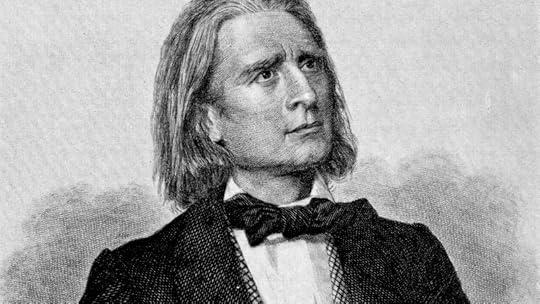
Hungarian composer Franz Liszt (1811-1886) was an anomaly. A virtuoso pianist and electrifying showman, he toured extensively throughout the European continent, bringing sold-out audiences to states of ecstasy while courting scandal with his frequent womanizing. Drawing on new, highly revealing documentary sources, including a veritable treasure trove of previously unexamined material on Liszt's Weimar years, best-selling author Oliver Hilmes shines a spotlight on the extraordinary life and career of this singularly dazzling musical phenomenon. Whereas previous biographies have focused primarily on the composer's musical contributions, Hilmes showcases Liszt the man in all his many shades and personal reinventions: child prodigy, Romantic eccentric, fervent Catholic, actor, lothario, celebrity, businessman, genius, and extravagant show-off. The author immerses the reader in the intrigues of the nineteenth-century European glitterati (including Liszt's powerful patrons, the monstrous Wagner clan) while exploring the true, complex face of the artist and the soul of his music. No other Liszt biography in English is as colorful, witty, and compulsively readable, or reveals as much about the true nature of this extraordinary, outrageous talent.
I picked this from the library shelf for its subtitle. Biography is my genre, and I wondered what a 19th century superstar could be. I knew nothing about Liszt and went to You Tube to hear some of his music which I’m listening to as I write this and hear familiar refrains. Oliver Hilmes does not give the reader a musical biography; it is the story of how Liszt lived his life.
Like Mozart he had a stage father, who, pushed and profited from him. Fortunately for Liszt, his father died (Liszt age 15) before too much damage was done. After a quiet period of supporting his mother by giving piano lessons in Paris, Liszt returned to concert touring. This time, as an eligible young man, he developed a sensual stage presence.
Women swooned for him as they would do in the future for Valentino, Sinatra, Elvis, the Beatles and Justin Bieber. They threw bouquets, fought (physically) for souvenirs such as his handkerchief, they grabbed and smoked his cigar butt, they embroidered his portrait, they wore gloves and broaches bearing his likeness, they framed upholstery fabric from chairs where he allegedly sat and, flirted and slept with him. Liszt may have been cavalier (my opinion -author Oliver Holmes does not interpret) in his after concert trysts; for instance, he used Chopin’s apartment to seduce Chopin’s former fiancée and who was the current wife of his friend. Throughout the book there are hints of his known female companions disappearing for months and of the children possibly secretly born in this or that spa or secret place in Europe.
Of his many relationships with women, two stand out for their duration. He was not able to marry either of the two wealthy and titled women (countess and princess) because they were married to someone else. With Countess Marie d’Agoult he had 3 acknowledged children, with Princess Carolyne zu Sayn Wittgenstein perhaps one or two about whom we will never know.
His disinterest in his 3 acknowledged children is appalling. Their mother is also unconcerned as they are moved about from their kindly grandmother to strict and overbearing guardians. Cosima is the only one of the three to survive to age 30. She married Liszt’s student and admirer, Hans von Bulow, whom we later see humiliating his students. When she leaves him for Richard Wagner (who doesn’t seem much better in human relations) her father essentially rejects her for reasons - given his own life – that are pathetically hypocritical.
Throughout this messy personal life, Liszt is traveling… a lot. He performs all over Europe, over the Alps countless times in carriages, over to England (doesn’t say how) and has periods of retreat. He is composing, writing on music, and giving to charity. He spent almost 20 years as Kapelimeister (sort of like a cultural affairs director), served as the sometimes present President of the Royal Academy of Music in Budapest and later moved to a monastery and became something like a priest (often called Abbe) who could wear the robes but not give mass.
The ending seems heavy on comparing Cosima’s reaction to the deaths of Richard Wagner and Franz Liszt. It’s hard to blame her for mourning one and not the other; however, given the complexity of the relationships, I guess I’ll have to read the author’s biography of Cosima Wagner to get more of the story.
I did not expect to get so interested in this… classical music is not a strong interest of mine, but Hilmes really pulled me in.
It's an unusual experience going through the story of someone's life in a couple of days. The ending is no mystery in a biography. The author and translator of this biography of Liszt did an excellent job of portraying Liszt's character, his strengths and foibles.
Liszt seemed to have a tendency to fall for eccentric women. It appears to me that both Marie d'Agoult and Carolyne von Sayn-Wittgenstein had their share of mental health concerns. Marie d'Agoult's jealousy and vindictiveness made her difficult to sympathise with, and I felt quite sorry for Liszt during the years he spent with her. She seemed to be quite controlling, with Liszt having to ask her permission to leave to perform at concerts. She also did not appear to appreciate Liszt's genius as a composer and as a musician. The description of Marie's "Nelida" made me laugh.
One mark on Liszt's character was his almost complete absence from the lives of children when they were growing up - clearly his children idolised him and wrote to him, begging him to visit, however Liszt paid little attention, deciding to visit aristocrats and tour instead. One can't help feeling that his daughter Cosima would have been more receptive to Liszt in later life if he had been around more and hadn't subjected them to the iron rule of the governess Carolyne sent.
Overall one gets a picture of Liszt as being a man of nuanced character. He comes across as having been genuinely friendly and good-natured, with a large amount of patience and kindness. He frequently found himself in monetary trouble which could have been avoided had he not made it a habit of donating much of his performance money to charity. He also worked very hard as a teacher, usually without payment. Overall, I was happy to discover that one of my greatest idols was a modest and warmhearted person (he was no Wagner).
It was sad to read about his last years, where he was suffering from depression and alienation from his daughter Cosima. One gets the sense that Liszt was growing tired of life, and it is not difficult to understand. Liszt had conquered the world of music, had toured Europe as the greatest pianist in the world and had inspired Lisztomania among the cities and towns he visited. However as he went through life, he saw the other musical giants of his time fall. By the time Liszt died, Chopin had already been dead over 35 years despite being born at the same time as Liszt. Mendelssohn, Schumann, Wagner - Liszt lived on as these monumental composers died in front of him (not to mention Liszt's own children). Liszt's struggle with alcohol addiction in his last years are understandable. He had done it all, and what was left for him to do?
Liszt, while perhaps not being the greatest composer of the 19th century, has a decent claim at being the best all-round musician of the 19th century. He was the archetypal Romantic artist, and anyone who wants to learn more about his life will gain a good insight by reading this.
There was a great quote from Liszt at the end - 'In life one must decide whether to conjugate the verb "to have" or "to be".'
An engaging and lively look on the composer's life, which had a surprising amount of gossip and drama to it!
Franz Liszt is an interesting dude in that he is generally considered the first superstar. A Hungarian composer, pianist and teacher of the Romantic period, he was loved and celebrated by peers and audiences alike. In here, Oliver Hilmes focuses mainly on him as a person and public figure (less so his music). In that, he succeeds.
While not all encompassing, the themes he covers are talked about thoroughly and well-researched. I was actually surprised by how tumultuous his life was, with two difficult marriages and a complicated relationship with his daughter Cosima (later the wife of non other than Richard Wagner).
I think he captures the glamour and the attraction of Liszt well. While inarguably a virtuoso from early age on, there really isn't a modern day equivalent to how he combined charm, good looks and newness with constant reinvention, musical bravery and forward motion. His father toured with him as a child and after his passing when Liszt was mere fifteen years old, he took his career into his own hands. That in itself is pretty impressive!
I personally know his music, but wasn't familiar with his personal life, so I did learn a lot, but if you care about the former, this won't be the right fit for you. I wish there had been a bit more on that, too, but nonetheless Liszt became more fleshed out to me after reading this!
This book is a dumbed-down version of Alan Walker's three-volume Liszt biography. It focuses too much on his virtuoso years, ignoring his contributions to Art and Music during his Weimar period. His role in the War of the Romantics, and his progressive views in Art are mentioned too briefly and spread the erroneous impression that Franz Liszt was but a shallow, piano-banging virtuoso.
The fact that his crowning masterpiece, the Piano Sonata in B minor is mentioned so briefly, shows again how poorly this book is written. Moreover, it is hugely lacking in musical analysis. Without evidence, readers can hardly comprehend how he pioneered in the the impressionistic twelve-tone scale and 20th century atonality.
The book makes him sound like an egotistical person. Yes, he could be flamboyant, but he was also one of the most selfless artists to exist in the entire 19th century. No other musician of the 19th century had the same ability to distinguish genius in other composers. He was a champion of struggling composers such as Wagner and Berlioz. He even sacrified himself for such causes. This was a major focus of his life for more than a decade, yet the book fails to mention it in its entirety.
Read Walker's version, not this, if you really want to learn about the man. Do yourself a service
This is a superb biography of one of the greatest superstars in music history. Originally published in 2011 by the German historian Oliver Hilmes, this excellent English translation by Stewart Spencer appeared in 2016. Many biographies and monographs have been published about Franz Liszt. He was a larger-than-life figure who transformed piano playing in the 19th century and also made enormous efforts to teach the art of piano playing to many of the most talented pianists of that century. His pupils went on to transmit the teachings of Liszt to many generations of pupils which include many pianists playing today. Although lesser known as a composer Liszt nevertheless made important contributions to classical music with not only his piano compositions, but also with his orchestral symphonic poems and oratorios. His late compositions foretell the development of atonal music in the 20th century. Hilmes covers all of the important aspects of Liszt's life beginning with his birth in 1811 in Raiding, Hungary. Raiding was a German-inhabited area so Liszt grew up speaking that language and later became fluent in French when he moved to Paris as a teenager. Even though he made some rather unsuccessful efforts to learn Hungarian later in life he nevertheless was always passionately embraced by Hungarians as one of their most famous artistic figures. Later in life Liszt composed his famous Hungarian Rhapsodies in homage to the heritage of his homeland. Once Liszt's enormous talent was recognized his parents moved to Paris with him to further his musical education. Like the father of Mozart Liszt's father, Adam, spent the next few years accompanying his son around Europe to play for both royal and public audiences. But, when Adam died in 1825 Liszt had to develop his piano playing and composing almost entirely on his own. Once he developed complete confidence in his abilities Liszt spent the next 20 years performing as a spectacular virtuoso of the piano. This was the same period when Nicolo Paganini, the sensational violin virtuoso, transformed the performance practices of that instrument. In fact, between 1839 and 1848 which are known as the 'Virtuoso Years' Liszt traveled everywhere in Europe performing 125 concerts every year. He composed hundreds of piano compositions which he always featured in his recitals. But, the constant traveling and performing eventually took a toll and after an unhappy break-up with one of the many lovers in his life, Marie d'Agoult, he decided to 'settle down' in the small town of Weimar, a place famous as the residence of Johann Goethe. For the next few years Liszt was the court musician for the Grand Duke. His productivity as a composer continued to flourish. But Liszt also began to explore his religious side which had he had first experienced as a teenager. In fact, he later went to Rome to study for minor orders in the Catholic church and eventually wore a cassock as a sign of his devotion. However, his libertine side never really subsided with many affairs continuing until the end of his life. During his time in Weimar a woman appeared who had a great influence in his life for 30 years. This was the Polish aristocrat Carolyne von Sayn-Wittgenstein. After many years of petitioning for an annulment they almost married but at the last minute the church denied Carolyne her request. Over the next few years Liszt became involved with many of his pupils including Agnes Street-Klindworth, Olga von Meyendorff, and Olga Janina, all of whom were gifted pianists. Liszt spent the last 30 years of his life engaged in 'La Vie Trifurquee' which involved his spending parts of every year in Weimar, Rome and Budapest. He held piano masterclasses at each place and continued his composing activities. In Rome he was moved to compose many liturgical pieces which are relatively unknown today, but are very significant examples of his output. Because one of the 3 children he had with Marie d'Agoult, Cosima, married the famous Richard Wagner he had a long-standing albeit tumultuous relationship with this controversial composer. When Wagner established his famous opera theater in Bayreuth Liszt made many trips to advise Wagner about his operas. In fact, during the last few months of Liszt's life when he became seriously ill he ended up in Bayreuth to receive help from Cosima and his grandchildren. He died there on July 31, 1886. I can highly recommend this very readable account of the life of Franz Liszt.
Interesting biography of Franz Liszt. Gives a glimpse into the times of Liszt's early years through his death. The first 3/4 of this book is well written but becomes tedious and repetitive.
After having read the glowing editorial reviews this book received, I was extremely disappointed after I had finished reading it. Though it's well written, extremely readable and contains some genuine insights into Liszt's personality, there's too much that's missing. For one thing, I've always felt a good biography should bring to life not only the subject but the times in which he or she lived. In other words, there should be some form of context. That's entirely missing here. While Liszt lived during one of the most tumultuous periods in European history, it's never really discussed here. The Revolution of 1848 is barely mentioned and then only for the inconvenience it caused Wagner who was forced to flee from Dresden to Switzerland. Likewise, the Franco-Prussian War of 1870 is passed over in a single paragraph. The composer did not live in a vacuum, and it's almost impossible to evaluate his life without some understanding of the momentous events occurring about him.
The book's most glaring deficiency is in its treatment of nineteenth century music. On page 113 Brahms's name is included in a long list of composers who visited Liszt at Weimar. That's the only mention of Brahms in the entire book. One does not have to be a musicologist to know that the controversy that dominated classical music in the mid-nineteenth century was that between the progressive elements represented by Liszt, Wagner and Berlioz and the conservative Classical Romanticism of Brahms. One need only read an article by Jan Swafford, Brahms's biographer, in The Independent that states:
"Liszt was another matter. Early in his career, Brahms and a friend wrote a manifesto condemning the Music of the Future. Directed at Liszt, the manifesto was leaked before it was ready and served mainly to embarrass the authors and touch off the war."
It's incomprehensible that there should be no reference to any of this when in reality the conflict that ensued constituted one of the most salient features of Liszt's career. Beyond that, there's no in depth analysis of his own music or of his development as a composer.
What author Hilmes does discuss in depth are the more salacious aspects of Liszt's career. The excesses of Lisztomania and the composer's numerous love affairs are described in detail. Fifteen pages are devoted to one Olga Janina, a dysfunctional stalker who once threatened Liszt with a revolver and poison but otherwise played no significant role in his life.
In the end the reader is left with the uncomfortable impression that Hilmes has sacrificed scholarship for sensationalism.
The book focuses on Liszt as a private person, it mostly ignores his compositions, thoughts and ideas about music, and concert activities. Most of the material is devoted to Liszt's family and love affairs, and these are often complicated and sometimes truly labyrinthine. The issue with Liszt's life is, of course, that there is no way to write a 300 pages biography of someone like that. I find this biography too judgmental, it was obvious that the author is not a musician, he seems to have no particular appreciation of the sublime magic of much of Liszt's music. Instead, he is a little too quick to issue moral judgments. Another explanation for the rather cold tone of this biography is simply that most likely the author found himself removing much of his own writing in order to fit everything into the 300 pages format. Some of the pages have an almost telegraphic quality. Still, in some way, it might be good to have a picture of Liszt removed from his music. It opens the stage for so much discussion and debate However, if you didn't have the time for Alan Walker's monumental masterpiece and thought that the work by Hilmes would do instead, you will end up being disappointed. The reason is simple: "Liszt the poet" is missing from this book.
Liszt is one of my favorite composers, and he certainly was done justice here, not least of all due to hitherto unavailable correspondence and advances in scholarship. I only wish more attention had been paid to the music, but alas, this wasn't that book. Still, he was a fascinating individual and I can highly recommend this.
A calculating showman, yes, but a far more complex, sympathetic individual than presumed. Refer also to "Great Masters: Liszt: His Life and Music" from the Teaching Company Series, 8 Lectures / 8 CDs and also to: "Franz Liszt: Life and Works" / Naxos / Book and 2 CDs.
Cosima Wagner and her family are my number one opps bro. 😾.
I loved this book. Very engagingly written, it’s given me a newfound appreciation for Liszt as a man and as an artist. I recommend it to all who love a good biography!
Verschlinge Bücher selten so schnell wie dieses. Franz Liszts Leben von klein auf, aufregend, wild, definitiv nicht langweilig. Ich fand es unglaublich spannend zu lesen, auch wenn die letzten 80 Seiten sich extrem gezogen haben.
Having read both this book and many others for my thesis (the Walker trilogy, the correspondence with Wagner, Portrait of Liszt by himself and his contemporaries, students' various memoirs, Liszt's Final Decade), I think Hilmes' is the most disappointing contribution to Liszt biographies. It adds nothing new and is merely a scuffle through secondary sources in order to try to make everything look sensational.
And yet, somehow, I feel there is something missing. It lacks the immersion and contextualizing of the Walker biography (Walker's feels like a window to a bygone era), and it lacks Walker's moving empathy (Walker criticizes his subject when is needed, but the result is complex and deservedly multifaceted).
For all the Liszt books I have read, I have always felt that a lot of Liszt's character comes in full force ONLY when you read what his contemporaries wrote about him (as in the book Portrait of Liszt by Adrian Williams, which shifts the stage completely to his contemporaries with minimal authorial intervention). Walker's three volumes are truer to these voices and often quotes them to shine light on the person and musician Liszt was. Instead of throwing in a sentence here and there that sounds most sensational, like Hilmes.
Hilmes also seems to downplay Liszt the influential composer. The same man who influenced Bartok and Schoenberg (who dedicated essays to him) in the next century. Many books incorporate Liszt in all his facets without being boring. I believe in Hilmes desperate attempt to make Liszt up-to-date, he botches everything that actually makes Liszt biographies compelling.
TL;DR: This book is like saying Arnold Schwarzenegger was only a bodybuilder his whole life, and spend pages describing his biceps, without also talking about his later and very substantial achievements as governor of California.
This translated book (from the German) is not a tome for musicians interested in the extraordinary artistic creations of the composer. If you wish to be a fly on the wall of the nearly day to day personal shenanigans of a revered skirt chaser who traveled Europe with his piano in tow in the mid and late 19th century, have at it. So why 2 stars and a half hearted recommendation? If you are a new to the concert hall or wish to impress the cocktail crowd at your next neighborhood soiree, then this 313 page page turner will give you the requisite ammunition to be the "go to" guy on Main street when the guy/gal next door waxes on everything Liszt. Otherwise, consult wikipedia. It will take less time and provide you with all the details necessary at the next concert hall intermission.
Franz Liszt (1811 - 1886) war ein "Tausendsassa", der sich in immer neuen Rollen wiederfand bzw. diese gestaltete. Seine musikalische Genialität war unbeschreiblich. Aber seine Verkleidung als katholischer Abbé, der zeitweise im Vatikan wohnte, blieb für alle Zeiten in Erinnerung. Seine Tochter Cosima heiratete Richard Wagner. Oliver Hilmes gelang eine ausgezeichnete Biographie, die spannend zu lesen ist