PLEASE NOTE This book is best viewed on a color Kindle device. It contains color graphics that are essential to the story. It is recommended that you view this book on a Kindle Fire, a free Kindle computer app, or a free Kindle Smartphone app.
If you have a B/W device, and you’re just dying to read my book, you can download the color illustrations as a single PDF file from my website at http://stevemargolis.com/blog/books. ----- Does your toaster oven make you feel shamefully inadequate with his lofty ideals and Jeffersonian views of the world?
Is the letter Q the wrong shade of yellow?
Are you frequently bothered by abstract images and geometric shapes falling from the sky?
If so, this book can help.
The Toaster Oven Mocks Me is a humorous memoir that chronicles Steve’s discovery, concealment, and eventual acceptance of synesthesia; a peculiar condition where one sense is stimulated, and two senses respond.
It’s like a “buy one, get one free” for your senses!
But wait, there’s more!
Join Steve on his journey and experience the world as he does:
Every letter and every number that you see, taking on its own distinct color. Visualizing dates in history and actually seeing a floating, holographic timeline just inches from your nose. And best of all, sensing personality from inanimate objects!
But that’s not all!
Watch as our charismatic hero conceals his condition for decades using misdirection, clever tactics, and a sense of humor that only a mother could love.
Order now and we’ll throw in a mental breakdown at no extra charge!
You read that right!
You’ll witness the inevitable outcome of hiding one’s individuality for over four decades; and you’ll occupy a front row seat as Steve finally figures out that uniqueness is something to be celebrated.
Now how much would you pay?
That’s a brain condition and a mental collapse, for one low price!
Fascinating first hand account of what it is like to live with the type of synesthesia that causes numbers, letters, and words not only to have their own colors but to take on human emotions - the letters or numbers might not get along, they might feel upset or happy. Even more interesting, this person's synesthesia, which was something they hid from everyone because they were ashamed of being different from "normal" people, seems very dependent upon his own emotions. It was interesting enough just as a biography, but now I am driven to revisit all the different varieties of synesthesia. This guy should try to get an appointment with V.S. Ramachandran so that Ramachandran can do a follow up book and give us all the neuroscience related specifically to this person's variant of synesthesia :)
I initially purchased this book because I've been researching synesthesia. Margolis tells his story in a raw and poignant, yet humorous and self-deprecating way. Full of his own personal stories and experiences with synesthesia, Margolis writes an easy and quick read that was enjoyable from beginning to end. This is a book I will refer back to again and again.
Some of my favorite lines from the book:
"When I'm running or walking, colored blobs and golden triangles rain down in my peripheral vision. The faster I go, the more animated and intense these colors become. When I slow down, this visual rain becomes a drizzle and the colors fade out."
"I hadn't felt such excitement since Greg Brady found the cursed tiki idol and then wiped out in the surfing competition."
"...and this one is mustard yellow, but not the expensive mustard yellow -- the French's mustard yellow."
"Forget about Frankenstein; I wanted to be Frankenberry."
"For me, my communication skills were processing like they were covered in syrup."
Having a daughter that used to ask me, "what color is this sound mommy" makes a lot more sense now! I learned A LOT from this, including how to be more cognizant of children who feel different. I expect my family will encounter this unique way of experiencing the world more in the future and I even recognized some of my own thought processes! Could have done without the profanity but I guess Mr Margolis is human, after all!
The Toaster Oven Mocks Me is one of those rare books that educates at the same time that it makes you laugh! The author, Steve Margolis, has synesthesia. When he was growing up, he thought everyone had it. It was normal for him, but there were signs that other people were not experiencing the world the same way he was.
This book explores how he discovered his condition and how it affected his life. But it does it in such a humorous way! Perfecto-mundo!
Absolutely excellent; honest and humorous; a refreshingly unique perspective on the author's experience with synesthesia. I highly recommend it to anyone who likes to read about different people's lives.
Excerpt: "So take my advice, don't hide the fact that you're different. Enjoy it."
2.5 stars -- While it is interesting to hear about synesthesia from someone who actually has it, Margolis's writing is painfully immature, especially when he talks about girls -- it's not that his lusts aren't normal for a growing boy, it's just that they are awkward and out of place here. The best way to read this book is to skim it and find the parts where he describes the colors of letters and the double mental schema he has built to memorize and retrieve them. Ironically, Margolis's immaturity is a boon when he is describing his symptoms, because he tells it like it really happens without losing any details by trying to create an overarching theme or making the reader believe or feel a certain way. He unabashedly explains some of his strangest symptoms, like talking toasters and complaining board game pieces, without hesitation or equivocation. Probably worth reading if your interested in unique neurological conditions and you don't minding skipping a bit here and there.
I found this an intriguing story. It's easy to read and understand. I'm grateful the author had the courage to tell about his experience with synesthesis. I hope that this book will help bring more awareness. The biggest negative is the crude words and situations. I don't feel comfortable recommending this to my teenage daughter.
This entire review has been hidden because of spoilers.
Steve Margolis sees letters and numbers as colors (among other things). For many years he thought this was so strange that he expended huge amounts of mental energy covering up his weirdness. In reality, while seeing letters and numbers as colors is unusual, it is a documented neurological condition called synesthesia. What a synesthete experiences is different from other synesthetes, but they all have in common some sort of crossed senses. The Toaster Oven Mocks Me is the author’s story of dealing with synesthesia. The book caught my eye because my daughter has synesthesia (ever tried to make sense of math problems when two numbers are dating, two other numbers are fighting, and they all appear in different colors?). It was pretty well written, in a conversational tone like the author was just sharing his life with colors one on one. There were occasional grammar errors. It’s short so it reads fast. It absolutely must be read on a device with color as the colors of letters are very important to his story. I recommend this book to anyone who knows someone with or is interested in synesthesia (though it might annoy another synesthete because as my daughter said, “Those colors are all wrong!”).
I said, "Bosco - why'd you torch the house?" He goes, "It was laughing at me." I said, "Bosco! It was laughing with you!"
Judy Tenuta
Who knows . . . maybe Bosco was a synesthete - a person who suffers from synesthesia.
Er, what now?
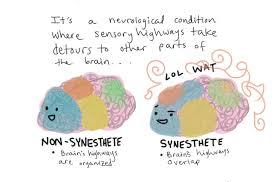
Synesthesia is a condition in which a person associates stimuli like numbers, letters, or sounds as having color, shape, spatial orientation, and so on.*
Not everyone has the same experience. Some people hear colors. Others have inanimate objects "talk" to them.
There was a slight murmur from the peas, but I couldn't make out what they were saying. The corn kernels, however, were quick to make their feelings known. They were pissed that I had chosen to eat the peas first. Apparently, it was a respect thing.
Steve Margolis first noticed something was "off" in kindergarten when he was asked to unscramble the letters AOCT. He says:
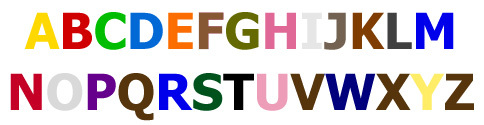
I recognized the letters, but they were written in the wrong colors. They threw my brain off-kilter. An A was supposed to be purple, not red. And why was the O blue and not olive? This is ridiculous. She must be testing me. I can't do this. How am I supposed to unscramble a word when the colors are all wrong?
This fascinating and entertaining memoir follows the author through his experiences growing up "different," and trying to hide his "uniqueness" from loved ones, teachers, and employers. Margolis exhibits a great sense of humor which makes reading this a blast. And, believe it or not, things get even stranger when he loses his ability to see letters in color.
*
There you have it - an interesting read about a little known condition.
An S for me is yellow, but for other synesthetes it might be blue or green. And for people without synesthesia, there is only the printed color. So who is really seeing the world as it is?
I am fascinated by the brain and read a good bit of articles about brain disorders and diseases, but none of the scientific studies and explanations describe what exactly it is like to experience the affliction. Memoirs don't suffer from the need to be accurate or peer-reviewed; so through them, we are offered the unique ability to understand and experience (in many ways) the disorder or disease.
The Toaster Oven Mocks Me is a very honest, sardonic memoir about the difficulty and struggle of a man with synesthesia. I enjoyed this book immensely; it felt like Margolis tried very hard to make the reader understand his life experience with synesthesia. The author is genuine, often when it would be more comfortable to gloss over the finer details. This very short novel, devoured in a single sitting, took me on a journey in which I learned what it was like to see colours assigned to certain letters and to feel as though corn dislikes being so closely sat to peas on a plate. Such experiences are not commonplace for me, so I really enjoyed the clear picture that Margolis painted so that I could really feel as though I understood his perception.
This was interesting. Al and I had both read The Man Who Tasted Shapes before we even met each other in '95 and had a shared fascination with synesthesia. I kind of wished I had it because it sounded so cool. However, this book was written by a synesthete who presented a first-hand, different side of the condition. The author spent his childhood working hard to keep his condition secret because he thought he might be insane. He never even told his wife about it when he got married. But after he was an adult and totally adjusted to it, it vanished! He had to go through an entirely new adjustment because he had relied upon the colors of letters to help him read, write, and remember things. Sometime later, it returned, but would flicker on and off. The title of the book comes from the fact that his particular flavor of synesthesia includes inanimate objects "talking" to him (he knows they aren't, but the sensations he gets from them are overwhelmingly real).
Synesthesia is a fascinating neural phenomena that I've been interested in since the first time I ever heard about it in my college neuropsychlogy class. But clinical descriptions and MRI plates don't really do that much to really help you understand what the experience is like. Thankfully, Steve Margolis decided to write this book. Margolis' style is brief yet engaging, telling a story that grips you and never lets go - I wished the book were longer by the time I got to the ending!
While it may lack the medical depth that some might desire or expect, this heartfelt and entertaining memoir should be required reading right next to Oliver Sachs for anyone with an interest in neurology, neuropsychology, or just a liking for the human brain.
This was an incredibly enjoyable book on a fascinating subject. I agree with Margolis that you get a much bigger impact on a disorder or condition when you read about it through a memoir or a biography. His writing is very entertaining. I found myself unable to contain my laughter through many parts of the book. He also explained synesthesia in a way that I was actually able to grasp; his metaphors were quite effective. And even if one never experienced synesthesia, his story is very relatable. Being different is scary. I deal with social anxiety, and not only does the anxiety itself affect me, but the idea that people view me as being difficult, oversensitive, or annoying terrifies me. Being different can be good, but it can be crippling, too. His story is inspiring. I'm happy he had the courage to share it with the world.
I had no idea what I would be experiencing when I first began reading this book! Steve Margolis, if your brain does not mutiny on you, then I highly encourage you to continue on this literary course. Your biography certainly reads as though it was painful to record, but what a wonderful gift it will be to children who may develop similar talents and suffer from wondering if something is terribly wrong with them. How differently you could have lived, had you the knowledge before that you have so generously and courageously shared between the covers of your book. Thank you for sharing as you have.
Fast and fun read. I had heard about this condition before but did not realize the broad range of symptoms that people experienced. One of the things that puzzled me before reading was how the author would be able to convey this condition but early in the book he shows an alphabet chart with letters in their various colors and also clarifies that the letters are consistently that color not randomly changing. I found myself laughing several times as I was reading this. Definitely worth reading.
If I had a complaint about the book, it would be that some of the chapters are very short.
Synaesthesia is a subject that fascinates me as one of my favourite online friends revels in it (she says it makes life more interesting) and I luckily found this book for free.
I found the book to be a great starting point for me to research further what she sees and feels that I don't. The writing is breezy and laid back. The author explains what he sees in a way that I understood. I felt I learned a lot from this book despite its relatively short length. As I am not neurotypical myself I am fascinated by others that are neurodiversive too.
I would recommend this book to anyone who is interested in synaesthesia.
I really enjoyed this book. I'm fascinated by synesthesia though I don't have it. I like that it wasn't a scientific book, but rather a story from a very personal point of view. I think it gives a much better picture of what it's really like to have it.
The author is funny and real. You get a sense of his struggle and the interesting ways it's played out in his life. The book is laid out in a good way as well.
I think I would have liked more about his experiences as he goes quickly over some years of his life.
You definitely need to read the book in color though to fully understand it.
As an intellectual person I'm always curious about how others see the world. I have often questioned what "normal" anything might be, simply because what we perceive as normal is often cultural bias. Reading Steve's "normal" view of the world is interesting and fascinating. He presents it in a humorous manner however, the pain and challenges he has gone through are evident.
As a side note I was one of those "gifted" children in the early eighties and can recall similar experiences.
I've always been fascinated by synesthesia so I was really excited to pick up this book. Unfortunately this book wasn't quite what I expected. I hoped that there would be a little bit more of the science behind what causes synesthesia. At one point the author even loses his synesthesia and relates that in most of the literature it sounded like it wasn't even possible, yet still didn't talk to anyone about it. The vignettes were interesting and pretty good at explaining exactly how his synesthesia works. However I was still hoping for a more in depth look.
This was an interesting read. I felt like the end of the story was only half-told-- I was left with a lot of questions. But that is probably as it should be, given that Mr. Margolis is only opening up about his synesthesia quite recently. The story IS only half-told, even in the reality of his life. There was nothing spectacular about the writing here, but he succeeded in his goal of giving a human, experiential face to his condition, in the ways that it has added richness to his life along with the ways it has caused him problems.
What an interesting book! Written by a man with Synesthesia, about growing up and learning to live with his condition. Imagine his surprise when he found out that not everyone saw letters & numbers in specific colors, saw time as a graphical image that appears in front of his face. Or had inanimate objects express their feelings to him. In this shortish memoir, the author shows us how it felt to grow up with synesthesia, how & why he hid it from his friends & family, and when he finally decided to come out of the closet (not until his 40's). A quick & fascinating read.
I've read a couple of the same books regarding living with this phenomenon. People who can hear color out taste sound. I can imagine some things being incredibly overwhelming, yet living with another depth to every experience and learning to appreciate it is an amazing feat. Thank you so much for sharing ur struggles and perception with the world. It makes me appreciate some of my unique understanding of my world.
A cool, fast, funny and informative read!! We read this for Book club as recommendation from one of our members whose son has synesthesia. I had never heard of this condition - have you? Well it is a a condition where one sense is stimulated, two senses respond. Like when you hear sound, you actually see color too. Is your Q yellow? A fascinating condition and a fun read about one man's personal story with synesthesia.
I really enjoyed this book. It as a short read, but full of insight for a neurological phenomenon that is rarely talked about. I hesitate to use the word disorder because while "normal" brains do not experience words in color, the term normal is all relevant to what we are familiar with and what we are comparing things to. I enjoyed the honesty and sense of humor.
The vast majority of people probably have no idea what synesthesia is or even how to pronounce it. This is a great work that not only explains the condition but also what it is like living and dealing with it. A look behind the curtain at both good and bad in a life few will ever know.
I am amazed that Steve hid his condition so well from childhood until the wiring of his book. Good for you Steve being brave is hard. The arguments of objects made me chuckle (I know that's not nice but..) I do wish you told how your family reacted. It would be interesting. To know. Thanks for sharing.
Fast read. This is a true story of a man who developed a condition called "synethesia" when he was 6. The most prominent of this condition is seeing letters in different colors. Very lively story, sometimes TMI, but I enjoyed the quick read.
Don't be put off by my 3 rating. It was a good book, however, I reserve 4 and 5 for books I might read again. I pretty much never reread non-fiction. :)
I have always been fascinated by synethesia, from the moment I heard of it. Some people with it seem to see it as a burden, an illness. I always thought it seemed like a super power. I am glad the author feels the same. While I, myself do not have it, I still find it fascinating. Great book, well written. I loved it!
This is an interesting glimpse into one man's life with synesthesia, beginning with his discovery of his different view of the world as a young boy, and his struggle not to appear weird. After hiding the synesthesia all his life, I am mightily curious as to how his relatives and friends reacted to his announcement.




 *
*