

What do you think?

Portrait of a Turkish Family
Describes in chilling, yet affectionate, detail the disintegration of a wealthy Ottoman family, both financially and emotionally. It is rich with the scent of fin de siecle Istanbul in the last days of the Ottoman Empire. His mother was a beauty, married at thirteen, as befitted a Turkish woman of her class. His grandmother was an eccentric autocrat, determined at all costs to maintain her traditional habits. But the war changed everything. Death and financial disaster reigned, the Sultan was overthrown, and Turkey became a republic. The red fez was ousted by the cloth cap, and the family was forced to adapt to an unimaginably impoverished life. Filled with brilliant vignettes of old Turkish life, such as the ritual weekly visit to the hamam, as it tells the "other side" of the Gallipoli story, and its impact on one family and the transformation of a nation. "It is just as though someone had opened a door marked `Private' and showed you what was inside.... A most interesting and affectionate book."-Sir John Betjeman. "A wholly delightful book."-Harold Nicolson
316 pages, Paperback
First published January 1, 1950
About the author
Irfan Orga
14 books37 followersIrfan Orga was a Turkish fighter pilot, staff officer, and author. He published books on many areas of Turkish life, cookery, and history, as well as a biography of Atatürk, and his own autobiography (Portrait of a Turkish Family). He also wrote two children’s books. Orga was born into a wealthy Ottoman Turkish family in Istanbul. Soon World War I broke and his life was changed forever. Orga witnessed the atrocities and hardships of war. His novels display the common everyday life of an Ottoman Turkish family. It was during his adulthood in 1942, when he met a young married Norman-Irish woman, Margaret Veronyca, while he was on a three-year posting in England from the Turkish air force. However, the Turkish Air Force did not approve of his living with a foreign woman in England, and Orga was stripped of his rank and forced out of the air force. After Veronyca’s divorce had been finalised in 1948, they married. While his wife began working her way up the hierarchy of publishing, Orga pursued several menial jobs. He also began writing and publishing books.
Ratings & Reviews
Friends & Following
Create a free account to discover what your friends think of this book!
Community Reviews
Displaying 1 - 30 of 301 reviews

April 6, 2011
NO SPOILERS!!!!!
I am making a bet with myself. Here it is. Let's see if I am proven correct! I think I will end up giving this book four or five stars! So far I have only read 13%, but I am totally captivated. The author, Irfan Orga, begins by describing his early childhood, growing up in Istanbul. He was born in 1908. It is, as usual, how an author expresses himself that makes or breaks a book. I adore the writing style. Please, do yourself a favour and check out the excerpt available at Amazon. Click on the look-inside button.
Why should I rewrite it here, when it is available there?!
As a child he lives in a white house with green shutters, beside the Marmara Sea. The author has you, the reader, listening to the gentle sounds of the sea, as he does, as he lies in his bed. The morning rituals are not what I would have expected in a Muslim household. The festivities, related to a boy's circumcision, are delightfully described. The fear, the excitement and the celebration are marvellously depicted. There is a lot to be learned from this book. Look at the date. Look at the place. The journey is sure to be captivating!
On completion:
Yes, I will give this book five stars. Near the end, 98% of the way through, one finds the line:
Now there was no one who remembered my childhood.
Had this book not been written……… yes, all of this would have been lost! I am very glad I was given then opportunity to read this book. The topic is interesting and the writing is wonderful. I will try and explain why I thought the topic was so interesting. You have the possibility of tasting the writing style by clicking on the link above.
This book depicts the life of one family living through WWI, and that family is Muslim and one belonging to the German-Ottoman side! This is not historical fiction; it is real life, grittingly and enchantingly described. All of it – the ups and the downs. Real people and real events. There is even real magic related by several witnesses, if you dare to believe them. There are so many memoirs and biographies concerning life during WW2, but here you get an amazing book on WW1. I felt I learned much about an ordinary Muslim family, not one that bows down to Mecca numerous times every day, but one that I personally could be part of. These people were little different from you or I. I liked how the book was able to show me a new perspective concerning those of the Muslim faith. You get WW1, the Muslim perspective and the experiences of a Turkish family.
The family is Turkish – not Armenian, not Greek. They lived when Kemal Atatürk ruled. Again, I was given another perspective. I have previously read many books about the Armenians; here we are presented with a family living on the other side. Atatürk was loved and honored by many.
I must state clearly this is not a book centered on the historical aspects of the time period 1914-1945. No, it is instead about a family and how their lives were so dramatically changed by the historical events. The emphasis is on the family, not the historical events. The emphasis is more on the time-period of the first rather than the seconds world war because the central focus is on the author's childhood, his parents' and his grandmother's lives.You get a wonderful view of life on the Bosporus, life in Istanbul, life in Izmir – all these places that play a role in historical events. Mostly you learn about a family and the separate individuals of that family. Each individual responded differently to the same events! You learn about people, how we all react differently. You learn about the author, his mother, his brother and sister, his grandmother, his father and grandfather and others too. Who was strong? And what actually is strength? And is survival the ultimate goal? And what happens to us as we age?
I will finish with one quote from the book, because I love the author's descriptive talent:
I wish I had the words to paint the strange enchantment of Izmir: the little crooked streets with the air of secrecy and squalor; the haphazard shops in the side ways; the open carriages and the noisy trams and the hooting of the boats, overriding all other sounds; the casinos fronting the harbor, with the never ending strains of music issuing from them; the hot sunlight and the blue sky and the golden sands, the tree-lined roads and the wisteria and bougainvillea that hangs everywhere like a scented purple curtain. (88%)
Recall these lines when you read of the atrocities that happen in Izmir.
I love this book. A life of plenty becomes one of nothing and then still life goes on. How do each of us respond to life's roller-coaster ride? Five stars.
I am making a bet with myself. Here it is. Let's see if I am proven correct! I think I will end up giving this book four or five stars! So far I have only read 13%, but I am totally captivated. The author, Irfan Orga, begins by describing his early childhood, growing up in Istanbul. He was born in 1908. It is, as usual, how an author expresses himself that makes or breaks a book. I adore the writing style. Please, do yourself a favour and check out the excerpt available at Amazon. Click on the look-inside button.
Why should I rewrite it here, when it is available there?!
As a child he lives in a white house with green shutters, beside the Marmara Sea. The author has you, the reader, listening to the gentle sounds of the sea, as he does, as he lies in his bed. The morning rituals are not what I would have expected in a Muslim household. The festivities, related to a boy's circumcision, are delightfully described. The fear, the excitement and the celebration are marvellously depicted. There is a lot to be learned from this book. Look at the date. Look at the place. The journey is sure to be captivating!
On completion:
Yes, I will give this book five stars. Near the end, 98% of the way through, one finds the line:
Now there was no one who remembered my childhood.
Had this book not been written……… yes, all of this would have been lost! I am very glad I was given then opportunity to read this book. The topic is interesting and the writing is wonderful. I will try and explain why I thought the topic was so interesting. You have the possibility of tasting the writing style by clicking on the link above.
This book depicts the life of one family living through WWI, and that family is Muslim and one belonging to the German-Ottoman side! This is not historical fiction; it is real life, grittingly and enchantingly described. All of it – the ups and the downs. Real people and real events. There is even real magic related by several witnesses, if you dare to believe them. There are so many memoirs and biographies concerning life during WW2, but here you get an amazing book on WW1. I felt I learned much about an ordinary Muslim family, not one that bows down to Mecca numerous times every day, but one that I personally could be part of. These people were little different from you or I. I liked how the book was able to show me a new perspective concerning those of the Muslim faith. You get WW1, the Muslim perspective and the experiences of a Turkish family.
The family is Turkish – not Armenian, not Greek. They lived when Kemal Atatürk ruled. Again, I was given another perspective. I have previously read many books about the Armenians; here we are presented with a family living on the other side. Atatürk was loved and honored by many.
I must state clearly this is not a book centered on the historical aspects of the time period 1914-1945. No, it is instead about a family and how their lives were so dramatically changed by the historical events. The emphasis is on the family, not the historical events. The emphasis is more on the time-period of the first rather than the seconds world war because the central focus is on the author's childhood, his parents' and his grandmother's lives.You get a wonderful view of life on the Bosporus, life in Istanbul, life in Izmir – all these places that play a role in historical events. Mostly you learn about a family and the separate individuals of that family. Each individual responded differently to the same events! You learn about people, how we all react differently. You learn about the author, his mother, his brother and sister, his grandmother, his father and grandfather and others too. Who was strong? And what actually is strength? And is survival the ultimate goal? And what happens to us as we age?
I will finish with one quote from the book, because I love the author's descriptive talent:
I wish I had the words to paint the strange enchantment of Izmir: the little crooked streets with the air of secrecy and squalor; the haphazard shops in the side ways; the open carriages and the noisy trams and the hooting of the boats, overriding all other sounds; the casinos fronting the harbor, with the never ending strains of music issuing from them; the hot sunlight and the blue sky and the golden sands, the tree-lined roads and the wisteria and bougainvillea that hangs everywhere like a scented purple curtain. (88%)
Recall these lines when you read of the atrocities that happen in Izmir.
I love this book. A life of plenty becomes one of nothing and then still life goes on. How do each of us respond to life's roller-coaster ride? Five stars.
May 14, 2021
Not many of us have a life story that, when told in detail, is absolutely riveting. A lot of us, I imagine, spend inordinate time dissecting our pasts - some attempting to learn about ourselves, some, just maybe, to find an excuse for our flaws and foibles. They simply couldn’t be our fault, right? ‘Well, certainly’ we think, ‘if my family had been (insert: less / more __) then I wouldn't have this irritating issue now!’ This may be a particular problem in the USA where we have a marked aversion to accepting responsibility or even defining a problem. My dear friend Olga Murray who has saved over 10,000 Nepali girls from slavery has noted the profound resilience of Nepali children. If American kids had one-tenth the trauma these children experienced in their early years - all now thrilled and thriving with a bit of luck and love - they’d be whining on someone’s couch at $300 / hour forever.
Okay, on to Irfan Orga’s story. A total clusterf*ck. Born to a semi-wealthy family in Istanbul in 1908. Just enough time to have concrete memories of the Ottoman Empire good life before the random chaos hits. The oldest boy, at a ripe old six years of age, when his father is abruptly sent, unprepared and unequipped, to be killed in WWI. Why do we put up with the dictates of Sultans and Presidents? Why do we obey the murderous rules of our random nation states? Why do we accept the xenophobia of others that surely sets us up for the hate and assumptions that lead us to mutual slaughter? Lemmings move to a new habitat when their population grows beyond an area’s capacity to support them. Only humans commit mass suicide.
Oh, not to worry, Irfan’s mother is a whole 15 years older than he is. She now has 3 small children and her entire fortune under the bed. She knows nothing about the world - having lived in Purdah her entire life, to date. What could go wrong? Such a tale.
Written with just enough, so we feel every terror, taste every loss. Haunting, bothersome, reminiscent of W.G. Sebald’s Austerlitz. This is a life that swings so radically that the author’s son’s afterward is as necessary as a good night kiss is, after a bedtime story told to an anxious child.
“...do you think that I am mad? Is it madness to want to help the poor, to love my children too much, to fear for my eldest son’s death? Is it madness to live alone so that I shall not be a burden to the married happiness of you and Mehmet...?”
Highly recommended.
Okay, on to Irfan Orga’s story. A total clusterf*ck. Born to a semi-wealthy family in Istanbul in 1908. Just enough time to have concrete memories of the Ottoman Empire good life before the random chaos hits. The oldest boy, at a ripe old six years of age, when his father is abruptly sent, unprepared and unequipped, to be killed in WWI. Why do we put up with the dictates of Sultans and Presidents? Why do we obey the murderous rules of our random nation states? Why do we accept the xenophobia of others that surely sets us up for the hate and assumptions that lead us to mutual slaughter? Lemmings move to a new habitat when their population grows beyond an area’s capacity to support them. Only humans commit mass suicide.
Oh, not to worry, Irfan’s mother is a whole 15 years older than he is. She now has 3 small children and her entire fortune under the bed. She knows nothing about the world - having lived in Purdah her entire life, to date. What could go wrong? Such a tale.
Written with just enough, so we feel every terror, taste every loss. Haunting, bothersome, reminiscent of W.G. Sebald’s Austerlitz. This is a life that swings so radically that the author’s son’s afterward is as necessary as a good night kiss is, after a bedtime story told to an anxious child.
“...do you think that I am mad? Is it madness to want to help the poor, to love my children too much, to fear for my eldest son’s death? Is it madness to live alone so that I shall not be a burden to the married happiness of you and Mehmet...?”
Highly recommended.

May 13, 2014
Portrait of a Turkish Family is as close to time-travel as one can get--not the kind of time travel where one is merely an observer but the even more intense kind of time travel in which the reader becomes someone from another world.

The book opens in Istanbul the fabled and romantic capital of a crumbling Ottoman Empire when Irfan Orga is just five years old; it reaches its poignant close in October 1941 as Orga, now a young pilot in the Turkish air force and ready to ship out to England, spends a last evening at home--remembering.
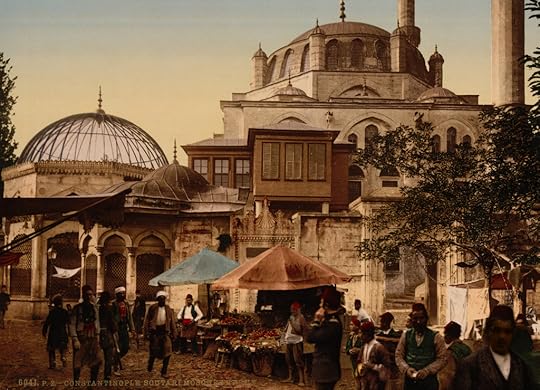
Because much of the book is told from a child’s point of view, the narrative is one of evocative images, flashes of scenes that are sometimes only half-understood. The reader absorbs an intense sense of place and time rather than history, with great and sometimes devastating events experienced as a series of dislocations and terrible aching hungers--most particularly the hunger for lost beautiful places that will never be again.
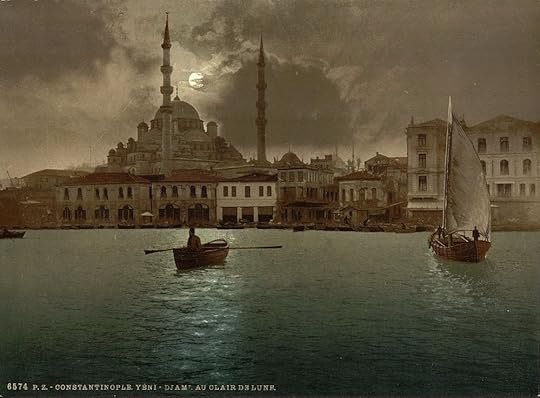
The splendid parade of characters is felt even more than described, though some characters like Irfan’s grandfather and his brother Mehmet barely emerge from the shadows of memory. We catch fleeting pictures of the markets and coffee-houses of Istanbul before the loved ones or the places are swept away forever.
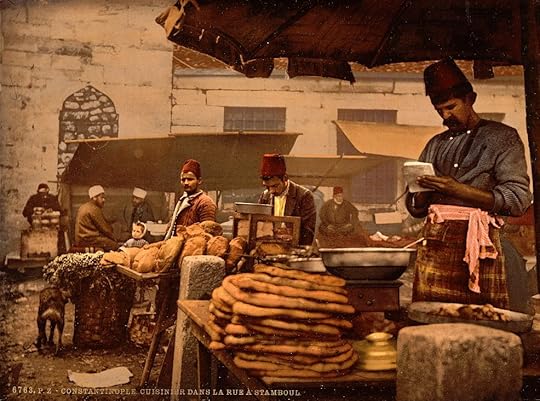
The most vivid family members are Irfan’s fragile yet brave and resourceful mother and his indomitable, aristocratic and totally impossible grandmother, both of whom are drawn with great affection and sympathy.

Here is a little taste from the chapter entitled An Autocrat at the Hamam:
"We passed through a vast marble hall with divans grouped against the wall and little frosted glass doors that opened off to the private rooms. There were many women lying about on the divans and in the center of the hall was a pool and a fountain...Many bottles of gazoz a type of soda water stood cooling in the pool...and it was here that all the women would eat and gossip….
“My grandmother looked at the naked young girls with the critical eye of a connoisseur; now and then, when a figure displeased her she would clap her hands together in a very expressive gesture denoting disapproval, saying that so and so was too thin altogether, that her backside rattled, and that she would never be able to find a husband until her figure improved. 'Give her plenty of baklava' she advised'.”

Then, into this idyllic, privileged world come the first shadows of twilight, deepening into long night.
"'Şevkiye! Don't look like that! Smile for me. I shall come back again--' My mother's frozen face relaxed to give him her old, dazzling smile, and my father said to her 'You would make a better soldier than I.' They stood there facing each other...not touching each other yet...merged...."
Content Rating: PG Warning. Besides the naked ladies in the Hamam and Grandmother's suggestive comments there's no sex, but starvation and the horrors of war and poverty are depicted unflinchingly.
The book opens in Istanbul the fabled and romantic capital of a crumbling Ottoman Empire when Irfan Orga is just five years old; it reaches its poignant close in October 1941 as Orga, now a young pilot in the Turkish air force and ready to ship out to England, spends a last evening at home--remembering.
Because much of the book is told from a child’s point of view, the narrative is one of evocative images, flashes of scenes that are sometimes only half-understood. The reader absorbs an intense sense of place and time rather than history, with great and sometimes devastating events experienced as a series of dislocations and terrible aching hungers--most particularly the hunger for lost beautiful places that will never be again.
The splendid parade of characters is felt even more than described, though some characters like Irfan’s grandfather and his brother Mehmet barely emerge from the shadows of memory. We catch fleeting pictures of the markets and coffee-houses of Istanbul before the loved ones or the places are swept away forever.
The most vivid family members are Irfan’s fragile yet brave and resourceful mother and his indomitable, aristocratic and totally impossible grandmother, both of whom are drawn with great affection and sympathy.
Here is a little taste from the chapter entitled An Autocrat at the Hamam:
"We passed through a vast marble hall with divans grouped against the wall and little frosted glass doors that opened off to the private rooms. There were many women lying about on the divans and in the center of the hall was a pool and a fountain...Many bottles of gazoz a type of soda water stood cooling in the pool...and it was here that all the women would eat and gossip….
“My grandmother looked at the naked young girls with the critical eye of a connoisseur; now and then, when a figure displeased her she would clap her hands together in a very expressive gesture denoting disapproval, saying that so and so was too thin altogether, that her backside rattled, and that she would never be able to find a husband until her figure improved. 'Give her plenty of baklava' she advised'.”
Then, into this idyllic, privileged world come the first shadows of twilight, deepening into long night.
"'Şevkiye! Don't look like that! Smile for me. I shall come back again--' My mother's frozen face relaxed to give him her old, dazzling smile, and my father said to her 'You would make a better soldier than I.' They stood there facing each other...not touching each other yet...merged...."
Content Rating: PG Warning. Besides the naked ladies in the Hamam and Grandmother's suggestive comments there's no sex, but starvation and the horrors of war and poverty are depicted unflinchingly.

February 18, 2013
Batılılar çok okuyormuş bu kitabı, öyle ün yapmış. Osmanlı'nın son yıllarında İstanbul'da yaşayan varlıklı bir ailenin 1. Dünya Savaşı sonrası tüm varlığını kaybetmesini konu alıyor. Bunları anlatırken bir yandan da, o dönemin İstanbul'unu, yaşlılarını, erkeklerini, kadınlarını ve çocuklarını anlatıyor. Ben okuduğumdan memnun kaldım. Yeri gelmişken hemen hemen aynı konuyu İstanbullu bir Yahudi ailenin gözünden okumak isterseniz Brigitte Peskine'nin "İstanbul'da Bir Yahudi Ailesi" adlı romanı da iyidir. Hatta belki bundan daha iyidir de, okuyalı çok uzun zaman oldu, karşılaştıracak kadar iyi hatırlamıyorum
En olumsuz yönü yazarın Türkiye'de doğup büyümüş olmasına rağmen kitabı ingilizce yazmış olması. Buna anlam veremedim. Onun dışında roman oryantalist bir hava taşıyor mu sorusu da aklımda ama bunu cevaplayabilecek kadar hakim değilim oryantalizm kavramına. Yine de basit bir kıyasla Orhan Pamuk romanlarımda sezdiğimden daha azını sezdim diyebilirim.
düzeltme: yazara haksızlık etmişim. o dönem İngiltere'de yaşayıp, geçimini yazdığı kitaplardan elde ettiği gelirle sağlamaya çalıştığından ingilizce yazıyormuş. Bunun dışında 8-10 tane daha ingilizce kitap yazmış o dönemde. Bu kitabı da önce türkçe yazıp sonra ingilizceye çevirmiş
En olumsuz yönü yazarın Türkiye'de doğup büyümüş olmasına rağmen kitabı ingilizce yazmış olması. Buna anlam veremedim. Onun dışında roman oryantalist bir hava taşıyor mu sorusu da aklımda ama bunu cevaplayabilecek kadar hakim değilim oryantalizm kavramına. Yine de basit bir kıyasla Orhan Pamuk romanlarımda sezdiğimden daha azını sezdim diyebilirim.
düzeltme: yazara haksızlık etmişim. o dönem İngiltere'de yaşayıp, geçimini yazdığı kitaplardan elde ettiği gelirle sağlamaya çalıştığından ingilizce yazıyormuş. Bunun dışında 8-10 tane daha ingilizce kitap yazmış o dönemde. Bu kitabı da önce türkçe yazıp sonra ingilizceye çevirmiş

August 15, 2012
Ah, this book just wound me around its little finger and transfixed me with its heartbreaking saga. I found it an utterly fascinating story- a telling of the fortunes of a Turkish family from the early 1900s through horrendous WWI and on into the 1940s. I originally was expecting a story to juxtaposition against the Armenian story I just finished reading since the Armenian holocaust happened in Turkey. But this story does not mention that holocaust; this wealthy Turkish family suffered its own devastating losses during the same time period and the author tells one of the most touching stories in beautiful English (a second language learned later in life) that I have read in a long time. The writer grew up to be a Turkish Air Force fighter pilot, but there was obviously the dreamer poet in his soul. He captures his family and all the people in his life with such feeling and pathos that they will come alive for you.
Irfan Orga writes through the child’s voice inside himself perfectly and tells this story through young eyes. He makes you delight in his happiness and ache for his miseries. War wreaks such havoc on its citizens that it makes you wonder why nations still think that bloodshed is a viable method for settling differences. The losses for the people in Orga’s family are so great that this book will make you very angry with war.
This book came out in the 1950s and was immediately a bestseller in the U.S. and England. On the cover is a quote from the Daily Telegraph: “This book is a little masterpiece”. I second that statement unequivocably. This book touched me tremendously.
Irfan Orga writes through the child’s voice inside himself perfectly and tells this story through young eyes. He makes you delight in his happiness and ache for his miseries. War wreaks such havoc on its citizens that it makes you wonder why nations still think that bloodshed is a viable method for settling differences. The losses for the people in Orga’s family are so great that this book will make you very angry with war.
This book came out in the 1950s and was immediately a bestseller in the U.S. and England. On the cover is a quote from the Daily Telegraph: “This book is a little masterpiece”. I second that statement unequivocably. This book touched me tremendously.
June 19, 2012
I started out on our trip to Istanbul reading Pamuk's quintessential book "Istanbul: Memories and the City" but I did not find myself getting very far in it. The melancholic Istanbul that Pamuk describes was not what I was seeing around me and I felt disconnected with his book. This book, A Portrait of a Turkish Family by Irfan Orga, was recommended by a friend and as soon as I looked at her copy I was sucked in. I bought (and paid probably too much for) a paperback copy at an english bookstore off Istiklal Caddesi, and started it immediately. Portrait of a Turkish Family follows a large portion of the author's life, who was born into a rich Ottoman family. The book follows his childhood and subsequent misfortunes as the empire fell and Turkey became involved in both World Wars. I can't say too much more for fear of ruining the book for other readers! It was fascinating, compelling, very readable. A great feeling of "ole Stamboul" and fun to read if you are or have traveled there, because the author talks about all those streets and areas in Istanbul.
It is a great pre-read to Pamuk's book. The melancholy he supposes to exist in Turkish people is, in his estimation, derived from living in the shadow of a great empire, now fallen. Orga's book shows the actual FALL and it's effect of the people of Turkey during that time, so it's interesting to really understand what and how much they lost. What Pamuk says was probably true of Turks from that era and probably the children of Irfan Orga's generation. But i have to say, even just being there for a short time, I really did not see that side of the people there. I am not a scholar by any means, but as a visitor/tourist, Istanbul, the city, feels very young, there are a LOT of twenty-somethings and I really felt it was a vibrant and full of culture and celebration.
It is a great pre-read to Pamuk's book. The melancholy he supposes to exist in Turkish people is, in his estimation, derived from living in the shadow of a great empire, now fallen. Orga's book shows the actual FALL and it's effect of the people of Turkey during that time, so it's interesting to really understand what and how much they lost. What Pamuk says was probably true of Turks from that era and probably the children of Irfan Orga's generation. But i have to say, even just being there for a short time, I really did not see that side of the people there. I am not a scholar by any means, but as a visitor/tourist, Istanbul, the city, feels very young, there are a LOT of twenty-somethings and I really felt it was a vibrant and full of culture and celebration.

April 21, 2017
This non fiction / autobiography book read was enjoyed as if reading a novel.
The author starts his story in last decade of the Ottoman empire in it's capital Istanbul with his family considered a rich family at the time.
With the start of the Great War the life of the family changes radically expressed by the author through the eyes of a child, to view hardships including death, hunger, poverty, wartime disaster, family crisis .. etc
Things change when the author actually receives his education and military career only to face other sorts of hardships along with his struggling family to then end up with the sad heart breaking ending.
In his story, the author pictures the final collapse of the Ottoman empire and then emergence of the modern Turkish Republic along with many interesting social details of the period.
The story ends at the beginning of the 1940s.
Regarding childhood and memories I quote the author saying:
There are some things in the heart that do not die and the loves of early childhood are the strongest loves of all.
p.91
Love can die as easily in the childish heart , if more bitterly, as in the adult. Where the senses scream and beat helplessly against the ruthlessness of a decision, wether lightly made or not, and are forced to fall back, unrecognized, unheard, then love dies too, although a child would not call it that. Perhaps it is only fully realized afterwards, when the child himself becomes adult and feels an old enmity, looking back to that withered day.
p.158- 159
I would like to quote a lovely description of a view of Istanbul by the author:
And all down the Bosphor , down, down to the Black Sea, ran the tall trees and the old wood houses that suit the skyline so well. If I turned my head to the left there on the hilltop, I could see the Dolmabahçe Saray white and artificial as a wedding cake in it's peaceful setting. Miniature mosques front the water's edge and there at the end of all the shining palaces lay İstanbul - my İstanbul that will forever hold something of my heart. Grey it would look from this hill and the smoke from the boats would lie over it like a soft veil and tall and tapering are the minarets that enchant the skyline, and from my hill I would see, behind the mosques, the Marmara like a faint line of thread.
p.212
Following the author's story, there is an interesting and touching afterword and PostScript by the author's son Ateş Orga.
The author starts his story in last decade of the Ottoman empire in it's capital Istanbul with his family considered a rich family at the time.
With the start of the Great War the life of the family changes radically expressed by the author through the eyes of a child, to view hardships including death, hunger, poverty, wartime disaster, family crisis .. etc
Things change when the author actually receives his education and military career only to face other sorts of hardships along with his struggling family to then end up with the sad heart breaking ending.
In his story, the author pictures the final collapse of the Ottoman empire and then emergence of the modern Turkish Republic along with many interesting social details of the period.
The story ends at the beginning of the 1940s.
Regarding childhood and memories I quote the author saying:
There are some things in the heart that do not die and the loves of early childhood are the strongest loves of all.
p.91
Love can die as easily in the childish heart , if more bitterly, as in the adult. Where the senses scream and beat helplessly against the ruthlessness of a decision, wether lightly made or not, and are forced to fall back, unrecognized, unheard, then love dies too, although a child would not call it that. Perhaps it is only fully realized afterwards, when the child himself becomes adult and feels an old enmity, looking back to that withered day.
p.158- 159
I would like to quote a lovely description of a view of Istanbul by the author:
And all down the Bosphor , down, down to the Black Sea, ran the tall trees and the old wood houses that suit the skyline so well. If I turned my head to the left there on the hilltop, I could see the Dolmabahçe Saray white and artificial as a wedding cake in it's peaceful setting. Miniature mosques front the water's edge and there at the end of all the shining palaces lay İstanbul - my İstanbul that will forever hold something of my heart. Grey it would look from this hill and the smoke from the boats would lie over it like a soft veil and tall and tapering are the minarets that enchant the skyline, and from my hill I would see, behind the mosques, the Marmara like a faint line of thread.
p.212
Following the author's story, there is an interesting and touching afterword and PostScript by the author's son Ateş Orga.

Read
September 15, 2014Bună de pus pe raft alături de Istanbulul lui Orhan Pamuk, Portretul unei familii turcești este povestea copilăriei și adolescenței viitorului scriitor și aviator militar Irfan Orga.
Totul începe în anul 1913, într-un Istanbul idilic și pitoresc, scăldat de apele albastre ale Mării Marmara. Irfan are 5 ani, trăiește cu părinții și bunicii săi înstăriți într-o casă frumoasă, are doică neagră, servitoare și bucătăreasă. Tatăl său se ocupă de negoțul cu covoare, mama sa e mulțumită să fie doar “o podoabă în casa soțului ei” (dat fiind că la acea vreme turcoaicele nu aveau voie să iasă din casă nici neînsoțite, nici fără văl pe față, deci nimeni în afară de familia ei nu știa cât de frumoasă era de fapt Șevkiye), iar bunica este cea care conduce toată casa, veghează pregătirea bucatelor tradiționale, taie, spânzură și pune pe toată lumea la punct.
Câteva capitole ești legănat de sunetul Bosforului, toropit de soarele verii turcești la umbra viței de vie, în paradisul unui puști de 5 ani care crede că nimic nu se poate schimba. Vine însă anul 1914, iar Imperiul Otoman se alătură Germaniei în Primul Război Mondial. Viața familiei lui Irfan, ca și a restului Europei, de altfel, se schimbă radical. Sunt concediate ajutoarele în casă, se vând afacerile de familie, se pun bani la ciorap, se fac provizii, se vând case și mobile, bărbații pleacă la război și în toată țara mai rămân femeile, copiii, bătrânii și câțiva funcționărași ai sistemului. (continuarea cronicii: http://www.bookaholic.ro/irfan-orga-p...)
Totul începe în anul 1913, într-un Istanbul idilic și pitoresc, scăldat de apele albastre ale Mării Marmara. Irfan are 5 ani, trăiește cu părinții și bunicii săi înstăriți într-o casă frumoasă, are doică neagră, servitoare și bucătăreasă. Tatăl său se ocupă de negoțul cu covoare, mama sa e mulțumită să fie doar “o podoabă în casa soțului ei” (dat fiind că la acea vreme turcoaicele nu aveau voie să iasă din casă nici neînsoțite, nici fără văl pe față, deci nimeni în afară de familia ei nu știa cât de frumoasă era de fapt Șevkiye), iar bunica este cea care conduce toată casa, veghează pregătirea bucatelor tradiționale, taie, spânzură și pune pe toată lumea la punct.
Câteva capitole ești legănat de sunetul Bosforului, toropit de soarele verii turcești la umbra viței de vie, în paradisul unui puști de 5 ani care crede că nimic nu se poate schimba. Vine însă anul 1914, iar Imperiul Otoman se alătură Germaniei în Primul Război Mondial. Viața familiei lui Irfan, ca și a restului Europei, de altfel, se schimbă radical. Sunt concediate ajutoarele în casă, se vând afacerile de familie, se pun bani la ciorap, se fac provizii, se vând case și mobile, bărbații pleacă la război și în toată țara mai rămân femeile, copiii, bătrânii și câțiva funcționărași ai sistemului. (continuarea cronicii: http://www.bookaholic.ro/irfan-orga-p...)

September 17, 2017
Portrait of a Turkish Family is a gem of a book, and I could not put it down. Told by the eldest son of a wealthy Istanbul family, the story begins in the days of the early 20th century when women wore many jewels (and veils), the family had servants, and there was a large, pleasant garden to sit in drinking coffee. All that is torn asunder by World War I, when the men in the family are called away to fight, food is scarce, fires break out from bombing, and finally the Ottoman Empire collapses. What the family must endure to survive leaves deep scars, particularly on the mother of the family, and damages relationships between mother and sons.
Turkey fought on the German side during World War I and was ill-treated by its German occupiers. After the war it was occupied by the British and French, who were a little better, but still occupiers. Then came the struggle to banish the Sultan and make Turkey a Republic, accomplished under the leadership of Atatürk. The country was often in economic chaos, poverty and hunger were common, and social customs were changing in a society that had not changed much for a long time. This account of one family's experience lends insight into the general situation in Turkey while simultaneously making us care deeply about the family members themselves. The lack of stability in their living situation and the hardships they went through are almost too much to bear.
Turkey fought on the German side during World War I and was ill-treated by its German occupiers. After the war it was occupied by the British and French, who were a little better, but still occupiers. Then came the struggle to banish the Sultan and make Turkey a Republic, accomplished under the leadership of Atatürk. The country was often in economic chaos, poverty and hunger were common, and social customs were changing in a society that had not changed much for a long time. This account of one family's experience lends insight into the general situation in Turkey while simultaneously making us care deeply about the family members themselves. The lack of stability in their living situation and the hardships they went through are almost too much to bear.

April 25, 2020
Sono stata completamente rapita dall'atmosfera orientale e dagli struggenti ricordi d'infanzia in questo romanzo autobiografico di Irfan Orga.
La narrazione, che si snoda da circa il 1912/13 fino al 1940, racconta le vicende della benestante famiglia del piccolo Irfan, passando attraverso i durissimi anni della 1° guerra mondiale che vedono la chiamata alle armi degli uomini della famiglia, fino agli anni della giovinezza e della maturità, gli studi, la carriera militare e il ritrovamento di un certo benessere. Splendidi sono, a mio giudizio, i ritratti che emergono delle due donne più importanti nella vita di Irfan: sua madre e sua nonna.
Tutto il periodo che riguarda l'infanzia fino all'entrata nella scuola militare è quello narrato nel modo più bello ed emozionante, con la delicatezza, la nostalgia per un tempo che non tornerà mai più, ma anche l'amarezza di certi dolorosi ricordi a fare da protagonisti. Poi, una volta che Irfan diventa adulto, la narrazione si fa un po' più rapida, un po' più asciutta, i capitoli sono più brevi ma nel complesso resta molto bello fino alla fine.
Ho apprezzato molto la postfazione scritta dal figlio dell'autore che ci racconta come la vita di suo padre si svolga da quel fatidico 1940 che segna la fine del romanzo e, idealmente e concretamente, la fine di una fase della sua vita.
Una piccola pecca è la frequente presenza, in questa edizione, di refusi nel testo in cui sono incappata veramente troppe volte. Peccato!
La narrazione, che si snoda da circa il 1912/13 fino al 1940, racconta le vicende della benestante famiglia del piccolo Irfan, passando attraverso i durissimi anni della 1° guerra mondiale che vedono la chiamata alle armi degli uomini della famiglia, fino agli anni della giovinezza e della maturità, gli studi, la carriera militare e il ritrovamento di un certo benessere. Splendidi sono, a mio giudizio, i ritratti che emergono delle due donne più importanti nella vita di Irfan: sua madre e sua nonna.
Tutto il periodo che riguarda l'infanzia fino all'entrata nella scuola militare è quello narrato nel modo più bello ed emozionante, con la delicatezza, la nostalgia per un tempo che non tornerà mai più, ma anche l'amarezza di certi dolorosi ricordi a fare da protagonisti. Poi, una volta che Irfan diventa adulto, la narrazione si fa un po' più rapida, un po' più asciutta, i capitoli sono più brevi ma nel complesso resta molto bello fino alla fine.
Ho apprezzato molto la postfazione scritta dal figlio dell'autore che ci racconta come la vita di suo padre si svolga da quel fatidico 1940 che segna la fine del romanzo e, idealmente e concretamente, la fine di una fase della sua vita.
Una piccola pecca è la frequente presenza, in questa edizione, di refusi nel testo in cui sono incappata veramente troppe volte. Peccato!
August 19, 2020
My emotions are all over the place. This book, dripping with immense nostalgia, sufferings, tragedies, agonies and poignant memories of lost loves, made my heart weep and bleed. No amount of words can explain what I'm feeling after finishing this harrowing tale of a Turkish family in the aftermath of World War I; most probably that this empathy that I carry in vast amounts, will one day be the death of me.

July 13, 2026
اکثر بائیو گرافیز پڑھتے وقت ضروری نہیں ہوتا کہ رائٹر جو لکھ رہا آپ اسے محسوس بھی کریں۔ بہت سے سوانحی کتابیں انسان اس شخصیت اور اس کے زمانے کے حالات سے واقفیت کے لئے پڑھتا۔لیکن یہ کتاب اپنے آپ میں ایک خوبصورت تجربہ ہے۔ پڑھتے ہوئے آپ اس تحریر میں پھو سے جاتے پیں اور خود بھی انہی خوشی غمی دکھ اور اداسی کے احساسات سے جوج رہے ہوتے جن میں سے مصنف اور ان کا خاندان گزر رہا ہوتا۔۔۔۔ کتاب کو دیکھتے رہنا ویسا ہی تھا جیسے آپ ایک بند گھر کے سامنے سے گزر رہے ہوں اور نہیں جانتے کہ ان دروازوں کی دوسری طرف کیا ہے۔ لیکن کتاب شروع کرتے ہی یوں لگتا جہسے ایک مہان نواز خاندان نے اپ کے لئے اپنے گھر کے دروازے وا کر دیئے ہیں۔۔ آپ ان کی ذات سے جڑ گئے ہیں اور ان کی ذات سے جڑا ہر واقعہ آپ کو بھی جذباتی طور پر ویسا ہی متاثر کرتا جیسا اس خاندان کے لوگ محسوس کرتے۔۔

January 10, 2021
Dit is een onweerstaanbaar familieverhaal dat zich afspeelt in de blessuretijd van het Ottomaanse rijk en tijdens de republiek onder Atatürk, en hoe interessant ik dat ook vond, het stoorde niet dat de aandacht voornamelijk gaat naar hoe de moeder en oma van de auteur de rug recht proberen te houden nadat alle mannen van de familie in de Eerste Wereldoorlog zijn gebleven. Onbekend pareltje uit de Europese literatuur wat mij betreft.

June 12, 2009
What a wonderful book! This was a recommended read in my Lonely Planet guidebook so I purchased it to take on our trip to Turkey. I didn't read much of it while over there, we were too busy, but wish I had because I would have looked up some of the places where the author lived or went to school. As it was I loved reading about a place in Istanbul and knowing just where it was and what it looked like. Sometimes writers have a way of writing or describing that makes you visualize everything so clearly. Irfan Orga is one of those writers. He made everything about that time period in Turkey come so alive. I don't think he's a good writer, stylistically. And there are some gaps and inconsistencies in the story. But I don't think that took away much from the book. What an amazing life Irfan Orga had! He and his family were impacted so negatively by both World Wars--the loss of his father, his uncle, and his way of life, the burning of his home, the bombing of Istanbul, starvation, and the mental illness of his mother. And yet through it all, he seemed to remain optimistic about life. In many ways life continued on normally, he did normal "boyish" things despite the horrors going on around him. So I was very surprised to read the afterword by his son. (When the story ends he isn't even married and it seemed like he never would.) Apparently his life, once the book ends, isn't exactly a bed of roses. He gets into some trouble with the law when he lives with a woman, unmarried, and she has his child out of wedlock. He is discharged from the Air Force, possibly dishonorably. And he is forced to flee from Turkey to Great Britain and never returns to the country he loves so much. His wife turned out to be a nasty, cheating women (from the mouth of her son) and you wonder what he saw in her, why he gave up his life for her. He wanted to die towards the end of his life. A sad ending to this story.
June 29, 2022
4.5/5
My circumstances thus far in life have molded me in such a way that a place/time/person/aspect of the world doesn't truly become real for me unless I've engaged with it through reading, nonfiction or otherwise. This makes for a scattered experience in an Anglocentric publishing landscape, especially when I avoid presumptuous tourist-type writings that claim to take one to every country on the globe, but only at the cost of one's curiosity, knowledge, and compassion, too heavy a price when considering one's limited time on this earth. Turkey is one of many places I encounter largely through hearsay generated by European accounts of various wars associated with the Ottoman Empire (Crimean, WWI, etc) and the odd food documentary on Netflix, so to stumble across a piece written from an extremely authoritative source that was published a quarter of a century ago to grand and lasting acclaim seemed almost too good to be true. Upon finishing this memoir of a man, to which is appended a brief contextualizing biographical reminiscence by his son, it doesn't surprise me how firm a grasp Irfan Orga (his surname drawn from a river with the first letter changed when the Republic of Turkey demanded such of its citizens, among other many another newfangled foreign thing) had on his early memories, for while the rest of his life was hardly a tragic opera-worthy tale, it did make his silver spoon of his first handful of years fairytale like in comparison. It makes for a highly evocative, richly enculturated, and frequently heartbreaking tale, for what made Orga a poor soldier made him a masterful writer in terms of both style and tone, and thus one of the best people to be involved in telling "the West" a tale of his homeland and his people.
While the title of this piece refers to a family, the whole piece could easily be called 'A Meditation on', or even love letter to, 'a Turkish Mother', detailing what the tripart calamities of war, dispossession, and patriarchy can wreak on the bond between mother and son. For while Orfa starts his tale in the bosom of the well to do in the last days of the Ottoman Empire and goes on to describe the massive upheavals of WWI and subsequent devastating impacts on his family's chances of survival, the details never stray far from the image of his mother. From her wild dragging of her children to safety from a city-rending conflagration, to tearing off her veil in the face of mass bureaucratic ineptitude, to establishing herself as a much sought after artisanal seamstress, she is the heart this work and, in some ways, single handedly set her children on the paths to financial stability. Orga doesn't refrain from sentiment in his detailing of a rich heritage, impoverished straits, and living through the horrors and absurdities that comes when a country that is one of the least amiable to the artificial stratifications of global "East" and West" sundered itself on the iceberg of the early 20th century and rebuilt itself on its craggy possibilities. However, it is largely evenhanded, although certain instances regarding Jews, Armenians, and the disenfranchised of Istanbul come off as rather stilted in being so studiedly neutral. I found this to be quite a relief during my concurrent read of Twain's The Innocents Abroad, to the point that, when the penultimate conflict reached its final, imperfect ending , I didn't blame the author for living in the time that he did and facing the decisions that came with it. As such, if you are in the mood to tuck in with a tale that treads the uneasy border between rainy day comfort read and devastating narrative of loss, as well as learn quite a bit about a land that still could use a firmer base of publication in the English language, this is one of the best books for it.
The worst part about having finally read this nine years after I added it is that, even after all that time, I still haven't found another work like it concerning this particular corner of the world. Diversity continues to be The Word hither and yon in my newfound world of professional (aka fulltime) librarianship, but works in translation continue to lag if they aren't of the murder mystery/pop fiction variety, and while Turkey isn't an overt target of the USA's latest warmongering onanism, it suffers a tad too much under a couple of Highlander types (Orhan Pamuk, Elif Shafak) for my liking. GRAmazon recommendations are half advertisement and half works not available in English, so I guess I'll be adding whatever ends up being my next read in this wondrous vein to my haphazard used book perusals alongside everything else. One thing I can say that I usually can't say very often these days is that I can fully recommend this work as an introduction to Turkish literature, or Turkey, or to anyone wondering what exactly Western Asia is (a term that could technically apply to the entirety of Europe, but I'll play nice), for it tells a tale in a human way of an area that could still be much better represented in the dominant public mind, and there is as much to learn as there is as much to love.
My circumstances thus far in life have molded me in such a way that a place/time/person/aspect of the world doesn't truly become real for me unless I've engaged with it through reading, nonfiction or otherwise. This makes for a scattered experience in an Anglocentric publishing landscape, especially when I avoid presumptuous tourist-type writings that claim to take one to every country on the globe, but only at the cost of one's curiosity, knowledge, and compassion, too heavy a price when considering one's limited time on this earth. Turkey is one of many places I encounter largely through hearsay generated by European accounts of various wars associated with the Ottoman Empire (Crimean, WWI, etc) and the odd food documentary on Netflix, so to stumble across a piece written from an extremely authoritative source that was published a quarter of a century ago to grand and lasting acclaim seemed almost too good to be true. Upon finishing this memoir of a man, to which is appended a brief contextualizing biographical reminiscence by his son, it doesn't surprise me how firm a grasp Irfan Orga (his surname drawn from a river with the first letter changed when the Republic of Turkey demanded such of its citizens, among other many another newfangled foreign thing) had on his early memories, for while the rest of his life was hardly a tragic opera-worthy tale, it did make his silver spoon of his first handful of years fairytale like in comparison. It makes for a highly evocative, richly enculturated, and frequently heartbreaking tale, for what made Orga a poor soldier made him a masterful writer in terms of both style and tone, and thus one of the best people to be involved in telling "the West" a tale of his homeland and his people.
While the title of this piece refers to a family, the whole piece could easily be called 'A Meditation on', or even love letter to, 'a Turkish Mother', detailing what the tripart calamities of war, dispossession, and patriarchy can wreak on the bond between mother and son. For while Orfa starts his tale in the bosom of the well to do in the last days of the Ottoman Empire and goes on to describe the massive upheavals of WWI and subsequent devastating impacts on his family's chances of survival, the details never stray far from the image of his mother. From her wild dragging of her children to safety from a city-rending conflagration, to tearing off her veil in the face of mass bureaucratic ineptitude, to establishing herself as a much sought after artisanal seamstress, she is the heart this work and, in some ways, single handedly set her children on the paths to financial stability. Orga doesn't refrain from sentiment in his detailing of a rich heritage, impoverished straits, and living through the horrors and absurdities that comes when a country that is one of the least amiable to the artificial stratifications of global "East" and West" sundered itself on the iceberg of the early 20th century and rebuilt itself on its craggy possibilities. However, it is largely evenhanded, although certain instances regarding Jews, Armenians, and the disenfranchised of Istanbul come off as rather stilted in being so studiedly neutral. I found this to be quite a relief during my concurrent read of Twain's The Innocents Abroad, to the point that, when the penultimate conflict reached its final, imperfect ending , I didn't blame the author for living in the time that he did and facing the decisions that came with it. As such, if you are in the mood to tuck in with a tale that treads the uneasy border between rainy day comfort read and devastating narrative of loss, as well as learn quite a bit about a land that still could use a firmer base of publication in the English language, this is one of the best books for it.
The worst part about having finally read this nine years after I added it is that, even after all that time, I still haven't found another work like it concerning this particular corner of the world. Diversity continues to be The Word hither and yon in my newfound world of professional (aka fulltime) librarianship, but works in translation continue to lag if they aren't of the murder mystery/pop fiction variety, and while Turkey isn't an overt target of the USA's latest warmongering onanism, it suffers a tad too much under a couple of Highlander types (Orhan Pamuk, Elif Shafak) for my liking. GRAmazon recommendations are half advertisement and half works not available in English, so I guess I'll be adding whatever ends up being my next read in this wondrous vein to my haphazard used book perusals alongside everything else. One thing I can say that I usually can't say very often these days is that I can fully recommend this work as an introduction to Turkish literature, or Turkey, or to anyone wondering what exactly Western Asia is (a term that could technically apply to the entirety of Europe, but I'll play nice), for it tells a tale in a human way of an area that could still be much better represented in the dominant public mind, and there is as much to learn as there is as much to love.
To Mehmet [(the author's brother)] and me [our mother's] courage was terrific and we still think so to-day. We cannot help but admire her colossal struggle, her intrepid spirit and even as children we were aware of this courage. We could forgive the lapses into depression and bad temper, the seeming ruthlessness when she banished her children eventually. To-day we see these things in their true perspective and can only see the wit, the bravery and the gaiety which transformed three mean rooms in a mean street into a formidable bulwark against the rest of the world.
August 2, 2009
This is truly one of the most spellbinding reads I have ever had. From the begging you are drawn into another world, a world we find it difficult to imagine now, Ottoman Istanbul, as the first world war is about to change everything forever.
We see the dramatic and heartbreaking changes through the eyes of a young boy born into a rich family, as the war turns Istanbul and their happy carefree lives upside down.
I really cannot do this book justice and is a must read for anyone interested in culture or history told by those who experienced it. If this book was written today it would be considered a masterpiece. But unfortunately for Orga the world had more pressing concerns in the 1950's.
We see the dramatic and heartbreaking changes through the eyes of a young boy born into a rich family, as the war turns Istanbul and their happy carefree lives upside down.
I really cannot do this book justice and is a must read for anyone interested in culture or history told by those who experienced it. If this book was written today it would be considered a masterpiece. But unfortunately for Orga the world had more pressing concerns in the 1950's.

March 24, 2015
"Hayatımı anlatsam roman olur" sözünün gerçekleştiği kitaplardan biri.. Bugünü yaşayan bizler geçmişte aynı topraklarda, aynı dili, aynı kültürü paylaşan önceki nesilleri anlama fırsatı buluyoruz. Uzun soluklu bir kitaptı. Daha başka birçok hüzünlü hikayeden sadece bir tanesiydi belki de. İnsanların tahammül sınırlarının nerelere kadar dayanabileceğini ve dayanamadığı yerde nasıl sağlıklarından olup, hayatlarının eriyip gittiğine şahit oluyoruz. Ve açlığın, yokluğun günümüz tüketim çağında bazıları için ne kadar anlamsız ve bazıları için nasıl baki kaldığını düşündüğünüzde dünyanın bir türlü bize yetemediğini ve bize sunduklarını adaletli paylaşamadığımızı görüyoruz.
June 17, 2015
I graduated from Kuleli which İrfan Orga graduated from too. I can clearly understand what he felt when he was a cadet in military high school. And it's an honor!
Thinking that you also walked on same road that İrfan Orga walked on,and maybe eating at the same mess hall or sitting on the same chair etc. effected me deeply. I felt as if I was carrying whole of history of Kuleli Military High School on my shoulders. I'm proud of it.
Thinking that you also walked on same road that İrfan Orga walked on,and maybe eating at the same mess hall or sitting on the same chair etc. effected me deeply. I felt as if I was carrying whole of history of Kuleli Military High School on my shoulders. I'm proud of it.

August 15, 2022
I am a bit emotional today; it feels like I am parting with a dear friend. It is funny how books have a way of finding their way into your heart.
Aside from being beautifully written, this book is a strong reminder that, while men go to war with fanfares ro play with their toys, women silently and resiliently pave new paths of life amidst the devastation left behind by war, man's favourite game.
Aside from being beautifully written, this book is a strong reminder that, while men go to war with fanfares ro play with their toys, women silently and resiliently pave new paths of life amidst the devastation left behind by war, man's favourite game.

December 22, 2019
"Birinci Dünya Savaşı'yla zenginlikten yoksulluğa itilen bir ailenin yürek parçalayan öyküsüne şahtilik ettik. Bende hissettim aynı acıları, etkileyen satırlardan kısacası;
Keşke babam dönseydi. onun haftalardır, hatta belki aylardır düşünmez olmuştum. Şimdi birden bire gözlerin önüne gelmiş, bana özlemi hatırlatmıştı. Eskiden olduğu gibi, terasa çıkıp bizi çağırdığını duymak için ah neler yapmazdım! S:110
Boğazıma bir yumruk tıkandı ağlamak bulaşıcı bir şeydi galiba. :(
Devamlı aç haldeyiz. En özlediğim şey nedir ? Deseler, çıtır çıtır taze ekmek diyeceğim.
Benim ipek elbiseler içinde gezen güzel bir annem, az konuşup çok düşünen, yakışıklı bir babam vardı. S:285
Kendimi ağladım. Sonra bir zamanlar tutkun olduğum sevgilime ağladım, depoda saatlerce oturup akerler için giysiler diken anneme ağladım.
Çevirmenin kitabı fark etmesi Türkçeye çevirmesi mükemmel olmuş.
Keşke babam dönseydi. onun haftalardır, hatta belki aylardır düşünmez olmuştum. Şimdi birden bire gözlerin önüne gelmiş, bana özlemi hatırlatmıştı. Eskiden olduğu gibi, terasa çıkıp bizi çağırdığını duymak için ah neler yapmazdım! S:110
Boğazıma bir yumruk tıkandı ağlamak bulaşıcı bir şeydi galiba. :(
Devamlı aç haldeyiz. En özlediğim şey nedir ? Deseler, çıtır çıtır taze ekmek diyeceğim.
Benim ipek elbiseler içinde gezen güzel bir annem, az konuşup çok düşünen, yakışıklı bir babam vardı. S:285
Kendimi ağladım. Sonra bir zamanlar tutkun olduğum sevgilime ağladım, depoda saatlerce oturup akerler için giysiler diken anneme ağladım.
Çevirmenin kitabı fark etmesi Türkçeye çevirmesi mükemmel olmuş.
October 5, 2024
The author managed to express the mood of each period of his family’s story, with all the charm and tragedy, in such a beautiful and touching manner.
Some of my favourite quotes from this book:
“So my mother sewed a bag for him, a coarse white linen bag which she sewed with exquisite stitchery. And I think she sewed her heart into that bag too for after my father had gone we who were left saw nothing of her heart.”
“They stood there facing each other, smiling their brilliant smiles, not touching each other yet indissolubly merged into each other.”
“We returned home to a warm fire but the chill that was in our blood took a long, long time to thaw”
“There are some things in the heart that do not die and the loves of early childhood are the strongest loves of all.”
Some of my favourite quotes from this book:
“So my mother sewed a bag for him, a coarse white linen bag which she sewed with exquisite stitchery. And I think she sewed her heart into that bag too for after my father had gone we who were left saw nothing of her heart.”
“They stood there facing each other, smiling their brilliant smiles, not touching each other yet indissolubly merged into each other.”
“We returned home to a warm fire but the chill that was in our blood took a long, long time to thaw”
“There are some things in the heart that do not die and the loves of early childhood are the strongest loves of all.”
December 25, 2019
Akıcı bir dille yazılmış, kolay okunan ve yaşanmış gerçek bir hayat hikayesi olması sebebiyle insanı en derinden etkileyen harika bir kitap.
Savaş ortamını, cephede savaşan askerlerin gözünden değil, halkın gözünden görebilmemi sağladı.
Filminin çekilip, bu güzel eserin Türk sinema tarihinde de yerini almasını diliyorum.
Savaş ortamını, cephede savaşan askerlerin gözünden değil, halkın gözünden görebilmemi sağladı.
Filminin çekilip, bu güzel eserin Türk sinema tarihinde de yerini almasını diliyorum.
May 9, 2012
Portrait of a Turkish Family is another Turkey/WWI story, a memoir, which I allowed myself to be talked into buying by a bookseller in Istanbul despite its price--about $24 for a paperback? He swore it was fantastic, offered me a moneyback guarantee (Sure, I’m going to mail it back from CA for a refund.) But I bought it, and it passed some hours on the plane and added some insight into Turkey past and present. The Turkish family in question is a moneyed one, or was until WWI came along. I imagine it was a typical story for people of this upper middle class, accustomed to servants and plenty of leisure, when the war ripped the men from their families and from society, destroyed the economy, and left women an children to cope alone not only without the resources they were used to, but often with none at all. That’s one aspect of the tale.
The other, the central element really, is the alienation of the author, Irfan Orga, and his mother. The more poverty besets the family, the more distant his mother becomes and the more he resents it, and this continues into adulthood when Orga and his brother have both achieved professional careers and the poverty is over. How much of Mom’s difficulty is simply stress from trying to raise a family alone on nothing and how much is the author’s neediness, who knows? At any rate, she eventually succumbs to mental illness leaving the author with twin burdens of guilt and relief to carry around for life. Interestingly, in an afterword, Orga’s son gives a short account of his father’s career in England where he came for a stint with the BBC and to which he was essentially exiled because of complications with his marriage to an Englishwoman and Turkish divorce laws. It turned out, apparently, that he married a woman who was as emotionally unavailable to him as his mother. Glad I succumbed to the bookseller’s pitch, but I’ve had enough of WWI for a while.
The other, the central element really, is the alienation of the author, Irfan Orga, and his mother. The more poverty besets the family, the more distant his mother becomes and the more he resents it, and this continues into adulthood when Orga and his brother have both achieved professional careers and the poverty is over. How much of Mom’s difficulty is simply stress from trying to raise a family alone on nothing and how much is the author’s neediness, who knows? At any rate, she eventually succumbs to mental illness leaving the author with twin burdens of guilt and relief to carry around for life. Interestingly, in an afterword, Orga’s son gives a short account of his father’s career in England where he came for a stint with the BBC and to which he was essentially exiled because of complications with his marriage to an Englishwoman and Turkish divorce laws. It turned out, apparently, that he married a woman who was as emotionally unavailable to him as his mother. Glad I succumbed to the bookseller’s pitch, but I’ve had enough of WWI for a while.

March 13, 2010
This was a required text for my Muslim History class. At first, I found it quite uninteresting but when the time came for me to read 150 pages in three days, it became very interesting. ;) No, this book is a very good read. There were points were I couldn't put it down. My professor was right in having us read this in our study of the late Ottoman Empire. It is by no means a happy-go-lucky story about a boy and his family. The first word someone in my class said about this book was "depressing" and I agree but such is the purpose. War was, and is, not happy or beautiful--it is sad and depressing. Orga's writing isn't the best, most of our class agreed on this, but he portrayed his family with beautiful detail. I often found myself relaing his grandmother to my own 90 year old grandmother back home. Overall, really good!!

May 11, 2013
An incredibly insightful look at the family life of Irfan Orga, from the detached air of weathly family with servants who do everything to the desperate requirement of his mother and grandmother to learn everything required to survive when they lose everything and must fend for themselves.
It is refreshing as always to have the inside view and this is as much a memoir of the effect on a young child and a young man of a mother who didn't warm to a maternal role. Heartbreaking but compelling and the afterword written by his son equally so as he shares a little of his fathers later years living in exile in England.
Brilliant and the perfect book to close my own chapter of reading Turkish literature for now.
My full review here at Word by Word.
It is refreshing as always to have the inside view and this is as much a memoir of the effect on a young child and a young man of a mother who didn't warm to a maternal role. Heartbreaking but compelling and the afterword written by his son equally so as he shares a little of his fathers later years living in exile in England.
Brilliant and the perfect book to close my own chapter of reading Turkish literature for now.
My full review here at Word by Word.

December 12, 2019
Çok beğenerek okudum.
Annesi için yazdığı son satırlar altı çizilecek nitelikde.
“Yanan evimizin zarif salonunda babamı nasıl da uğurlamıştı.
Basit eve şiir inceliği getiren o güzel kadına ağladım.
Şimdi kimseleri tanımayan bu yaşlı kadının titrek bedeni içinde ufalanmış, bir avuç toz olmuş. Anneme ağladım. “
Annesi için yazdığı son satırlar altı çizilecek nitelikde.
“Yanan evimizin zarif salonunda babamı nasıl da uğurlamıştı.
Basit eve şiir inceliği getiren o güzel kadına ağladım.
Şimdi kimseleri tanımayan bu yaşlı kadının titrek bedeni içinde ufalanmış, bir avuç toz olmuş. Anneme ağladım. “

March 28, 2022
Orta-üst sınıf bir Türk ailesinin, 1. Dünya Savaşı ile birlikte fakirleşerek değişmesinin bir anı-roman olarak anlatımı. 1950'de İngiltere'de İngilizce basılmış, yabancılar tarafından oldukça tanınmış bir eser. Türkçede iyisine az rastlayacağımız anı-roman türünün oldukça iyi bir örneği. Bir yumruk gibi. Tam 5 yıldızı hak ediyor.

January 3, 2014
Really, really interesting. I read this as part of a WW1 challenge, though it works as a biography even without the war. A different viewpoint from Turkey and one that I enjoyed learning about. Oh and beautifully written in English by a man that could barely speak the language, impressive.

January 30, 2011
Well that got a little bit wave the flag toot the nationalist horn towards the end, but I guess you would too if you weren't Ataturk's favorite person. Review soon!
December 27, 2019
16 Ağustos 1950'de yayınlanan kitabın tanıtma yazisinda;
"Başkalarının hayatı her zaman ilginçtir. Bu ister köy ortamında dolaşan bir dedikodu olsun, isterse Avrupa düzeyinde perk fark etmez.
Tabii ki kitapta bundan çok çok fazlası var ve bu anlamda haksızlık edilmiş kitaba. Bende birşeyler eksik, o yuzden 4 ama.kitap muhakkak okunmali.
Bir Turk tarafından ilk defa ingilizce olarak yurtdışında çıkan bu eser, yazarın ve kahramanın ölümünden yillar sonra 1994 yılında Turkce olarak yayımlanmış. Bu nedenle Avrupa da bu şekilde lanse edilmiş olabilir.
Hikayenin özellikle Kuleli'ye girene kadar olan kısmı çok etkileyici ve soluksuz okunmakta. Hem Osmanlı zamanındaki Istanbul'a ve o zamanlardaki gerçek Istanbul zerafetine; hem de hasta adam Osmanli'da halka yansıyan sefalet dolu günlerini kahramanın gözünden okumak paha biçilmez bir deneyim. Hele de duygusu bol, karakterler kuvvetli, dram içinde dram yaşanmis zor günler varsa.
Bu şekilde bu yolları hiç-okumamaistim değil, yasamamistim- diyorum çünkü kitabın sonuna kadar Irfan'dim, oradaydım sanki.
1919-1923 yıllarında Kurtuluş savaşı ni o yıllarda yaşamış Irfan'dan daha detaylı okuyabilseydik çok daha derin olacaktı. Sanirim ailesi ile paylaşımı olmayan yillar olduğundan, olaylara fa o gözle bağlanamadı ya da Kuleli'de o kadar detay göremedi.
Devamındaki yılların anlatımının heyecanı onceki yıllara görece düşüktü. Merak uyandırdı, ama bir şeyler eksik kaldı. Tüm olaylar çerçevesinde hayatın ona ihanet ettiğini mi söylemeliyiz.
Aslında kendi hayatını değil, etrafındaki güçlü karakterler ona bu öyküyü yazdıran. O devirde anne ve babaanne gibi güçlü 2 karakter hem onu yaşatan, hemde zorunlu olarak belki de o insafsız istemediği hayatin içine sokan.
Tabiki o şartlarda, çocuklar olmasa o güçlü karakterler,
"Solan bedenlerinin daha fazla solmasini görmektense, bir ağızda yok olmak isterdi"
Ancak direndiler ve yıllar sonra hala,
"Gözlerinde akmayan yaşlar vardi"
Kitabın sonundaki sonsözün, önsöz olarak yayınlanmaması çok doğru karar. Ancak bir sonsöz bir de çevirmenin notu ile ancak puzzle i tamamlayabiliyoruz.
Içinde bulunduğumuz tüketim toplumunu görünce bu kitabı herkesin okuması ve çocuklarımızin daha dirayetli ve değer bilen bireyler olması için uğraş vermesini temenni ediyorum.
"Başkalarının hayatı her zaman ilginçtir. Bu ister köy ortamında dolaşan bir dedikodu olsun, isterse Avrupa düzeyinde perk fark etmez.
Tabii ki kitapta bundan çok çok fazlası var ve bu anlamda haksızlık edilmiş kitaba. Bende birşeyler eksik, o yuzden 4 ama.kitap muhakkak okunmali.
Bir Turk tarafından ilk defa ingilizce olarak yurtdışında çıkan bu eser, yazarın ve kahramanın ölümünden yillar sonra 1994 yılında Turkce olarak yayımlanmış. Bu nedenle Avrupa da bu şekilde lanse edilmiş olabilir.
Hikayenin özellikle Kuleli'ye girene kadar olan kısmı çok etkileyici ve soluksuz okunmakta. Hem Osmanlı zamanındaki Istanbul'a ve o zamanlardaki gerçek Istanbul zerafetine; hem de hasta adam Osmanli'da halka yansıyan sefalet dolu günlerini kahramanın gözünden okumak paha biçilmez bir deneyim. Hele de duygusu bol, karakterler kuvvetli, dram içinde dram yaşanmis zor günler varsa.
Bu şekilde bu yolları hiç-okumamaistim değil, yasamamistim- diyorum çünkü kitabın sonuna kadar Irfan'dim, oradaydım sanki.
1919-1923 yıllarında Kurtuluş savaşı ni o yıllarda yaşamış Irfan'dan daha detaylı okuyabilseydik çok daha derin olacaktı. Sanirim ailesi ile paylaşımı olmayan yillar olduğundan, olaylara fa o gözle bağlanamadı ya da Kuleli'de o kadar detay göremedi.
Devamındaki yılların anlatımının heyecanı onceki yıllara görece düşüktü. Merak uyandırdı, ama bir şeyler eksik kaldı. Tüm olaylar çerçevesinde hayatın ona ihanet ettiğini mi söylemeliyiz.
Aslında kendi hayatını değil, etrafındaki güçlü karakterler ona bu öyküyü yazdıran. O devirde anne ve babaanne gibi güçlü 2 karakter hem onu yaşatan, hemde zorunlu olarak belki de o insafsız istemediği hayatin içine sokan.
Tabiki o şartlarda, çocuklar olmasa o güçlü karakterler,
"Solan bedenlerinin daha fazla solmasini görmektense, bir ağızda yok olmak isterdi"
Ancak direndiler ve yıllar sonra hala,
"Gözlerinde akmayan yaşlar vardi"
Kitabın sonundaki sonsözün, önsöz olarak yayınlanmaması çok doğru karar. Ancak bir sonsöz bir de çevirmenin notu ile ancak puzzle i tamamlayabiliyoruz.
Içinde bulunduğumuz tüketim toplumunu görünce bu kitabı herkesin okuması ve çocuklarımızin daha dirayetli ve değer bilen bireyler olması için uğraş vermesini temenni ediyorum.
This entire review has been hidden because of spoilers.
Displaying 1 - 30 of 301 reviews