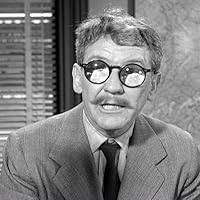
Works of prolific Russian-American writer Isaac Asimov include popular explanations of scientific principles, The Foundation Trilogy (1951-1953), and other volumes of fiction.
Isaac Asimov, a professor of biochemistry, wrote as a highly successful author, best known for his books.
Asimov, professor, generally considered of all time, edited more than five hundred books and ninety thousand letters and postcards. He published in nine of the ten major categories of the Dewey decimal classification but lacked only an entry in the category of philosophy (100).
People widely considered Asimov, a master of the genre alongside Robert Anson Heinlein and Arthur Charles Clarke as the "big three" during his lifetime. He later tied Galactic Empire and the Robot into the same universe as his most famous series to create a unified "future history" for his stories much like those that Heinlein pioneered and Cordwainer Smith and Poul Anderson previously produced. He penned "Nightfall," voted in 1964 as the best short story of all time; many persons still honor this title. He also produced well mysteries, fantasy, and a great quantity of nonfiction. Asimov used Paul French, the pen name, for the Lucky Starr, series of juvenile novels.
Most books of Asimov in a historical way go as far back to a time with possible question or concept at its simplest stage. He often provides and mentions well nationalities, birth, and death dates for persons and etymologies and pronunciation guides for technical terms. Guide to Science, the tripartite set Understanding Physics, and Chronology of Science and Discovery exemplify these books.
Asimov, a long-time member, reluctantly served as vice president of Mensa international and described some members of that organization as "brain-proud and aggressive about their IQs." He took more pleasure as president of the humanist association. The asteroid 5020 Asimov, the magazine Asimov's Science Fiction, an elementary school in Brooklyn in New York, and two different awards honor his name.
Six years of material judged the best SF of its time, so it's pretty awesome. But, also, it is sixty years out-of-date. However, the introductions by Isaac Asimov add some spice to the broth.
So let's give you the run-down: 1955 novelette, "The Darfsteller", by Walter M. Miller, Jr.: A sweet, sad tale of an actor, long out of work due to mechanical theatre troupes, taking a last, dangerous stand for his connection to his art. 1955 short story, "Allamagoosa", by Eric Frank Russell: Gloriously funny tale of the Terran Exploration Ship Bustler's effort to cover up a missing item in order to survive an administrative inspection.
1956 novelette, "Exploration Team", by Murray Leinster: A colonel in the Colonial Survey is accidentally paired with an illegal settler and his unusual exploration team to search for a doomed colony among mysterious and lethal predators. 1956 short story, "The Star", by Arthur C. Clarke: 3000 light years from Earth, a Jesuit explorer's faith is tested among the remains of a destroyed alien civilization.
1958 short story, "Or All the Seas with Oysters", by Avram Davidson: Personally, I had a hard time seeing this as a major piece of SF, but it is a spooky-fun little of tale love, and bicycles. and why there are always extra coat hangers in the closet.
1959 novelette, "The Big Front Yard", by Clifford D. Simak: I have found over the years that Mr. Simak is a writer that defies description; here, his tale of a rural junk-dealer's unusual discovery defies description as well. 1959 short story, "The Hell-Bound Train", by Robert Block: More a merger of horror and fantasy, a hobo cuts a deal with the Conductor of the titular Hell-Bound Train.
1960 novelette, "Flowers for Algernon", by Daniel Keyes: Yep, that one. As good as it was when I read it in middle school, only I understand its power soooooo much better, forty years later. Until now, I never realized that it had won a Hugo.
1961 novelette, "The Longest Voyage", by Poul Anderson: The opening sentences of the story are the best synopsis: "When first we heard of the Sky Ship, we were on an island whose name, as nearly as Montalirian tongues can wrap themselves about so barbarous a noise, was Yarzik. That was almost a year after the Golden Leaper sailed from Lavre Town, and we judged we had come halfway round the world."
The Darfsteller: This was not my cup of tea. A 1955 winner and it has not aged very well. Actors have been mostly replaced by androids who are tuned to the audience’s desires by a ‘maestro’. The protagonist is an actor who has been supplanted by the androids and must work as a janitor to live. He works at the theater for a pittance because he simply must be close to the art. Oh brother. Anyway, cold war references abound combined with a series of unlikable characters made this a tedious slog. 2 stars Allamagoosa: A 1955 winner. An inspection of a spaceship by the bean counting department goes awry. Not so much science fiction except it is set on a spaceship. Meh. 3 stars Exploration Team: A novelette and 1956 winner. Although very dated, much better than the previous 2 winners. There are several interesting threads including man vs robot; libertarian ideas vs more planned development; and how one deals with native species vs exploitation. While I probably would have disagreed with all of the supposed ‘correct’ responses, at least Mr. Leinster’s story doesn’t beat you over the head with his points. 4 stars The Star: A very short story from Arthur C. Clarke and another 1956 winner. Unlike Leinster’s previous story, Clarke really pounds the anti religion table pretty hard here. A Jesuit priest in space comes upon the obliterated remains of another civilization and questions his faith. Typical good writing from Clarke, but somewhat overwhelmed by his anti religion message. 3 stars Or All the Seas with Oysters: A 1958 short story and award winner from Avram Davidson. A ‘dangerous’ situation in bike shop. I just couldn’t get too interested. 3 stars The Big Front Yard: This was the 1st story I would consider worthy of the Hugo Awards contained in this book. A 1959 novelette by the great Clifford D Simak which covers some great themes. Space travel; aliens; love of dogs... I’m in. 5 stars The Hell Bound Train: The other 1959 winner contained in the book, and while not as good as ‘The Big Front Yard’, still pretty good. Imagine ‘The Devil & Daniel Webster’, only good. Very satisfying ending. 4 stars Flowers for Algernon: This is the reason I bought the book. A 1960 winner that we all read back in the day. Folks, this is still a great story. Inventive writing; compelling plot; intelligent plotting; excellent foreshadowing. Just a great story. The Longest Voyage: 1961 novelette winner from Poul Anderson that I enjoyed, but after the previous story, it was like the cover band coming back on after the Beatles. Forgot to mention: 4 stars.
All in all, this was an interesting trip back to the 1950s and 1960s. It was fun to go back in time, especially considering what is going on in Russia right now. Recommended only if you want to see what was popular in the day. 3 stars overall.
That's three stars on average: there are some stories that are better and some that are worse. The anthology as a whole is still well worth your time if you're at all interested in the history of SF. It's all the short fiction that won the Hugo award in the 1950s. This was a creatively fertile time when new magazines like F&SF and Galaxy had challenged Astounding's hegemony, opening up new subject matter and new styles of storytelling.
Each story has a chatty introduction by Isaac Asimov reminiscing about the writer. There's some interesting bits of fandom history (such as the difficulty of manufacturing the earliest Hugo awards), but it wears thin after a while.
THE DARFSTELLER, by Walter M. Miller: ***
A story about a human actor in an age when computer-controlled automatons have taken over the theater, who makes a desperate bid to take back his place. Though published in hard-SF bastion Analog, it's more of a soft-science story, about how people relate to art and how art evolves. The main character is someone who's deeply invested by an art form but feels alienated by the ways it's changed, something that anyone who spends a lot of time engaging with book or media fandoms can relate to at some point. The message is that art changes when technology and society change, and nothing can turn those changes back--which has some interesting ironies when it comes to the recent history of the Hugos--but the human creative faculty allows us to create new forms of engagement.
As with many older stories about computers, they're presented as a homogenizing authoritarian force in a way that comes across as dated now. (Though with today's social media panotpicon and Uber-style disruption we may be headed back in that direction.) Still, the idea of art made by a person acting in cooperation--or conflict--with machines resonates with contemporary ideas about game design and the use of procedural generation in art. The humor is clunky and unnecessarily mean spirited at times and the story takes a while to get going, but as you'd expect from the author of A Canticle for Liebowitz, there's a lot philosophically to chew on.
ALLAMAGOOSA, by Eric Frank Russell: ***1/2
Russell, who wrote influential early-Golden Age SF like Sinister Barrier, brings us a humorous military SF story about the never-ending struggle with bureaucracy. The buildup is erratic (and like The Darfsteller, it relies too much on phonetic accents), but the punchline is golden. A lot of Golden Age SF and its descendents is built on faith in omnicompitent systems, whether it's technocratic organizations like the Foundation or the unstoppable military juggernaut of milsf. The Foundation never seems to worry about garbled paperwork. But in this story, the danger that faces humanity isn't hostile aliens or cold equations but the everyday muddle that causes these systems to break down. The result is a story that's genuinely funny, and in its own way quietly subversive.
EXPLORATION TEAM, by Murray Leinster: **
This the kind of SF story certain canids venerate--the straightforward adventure story with straightforward morality, built on simple ideas that create a "sense of wonder" (from the ideas, not the texture of the writing), with heroic white men subduing the universe. That's why it's easily the least interesting story in this volume. The main heroes are a technocratic emissary of interstellar civilization and a libertarian frontiersman, representing the Golden Age SF binary of the Competent System and the Competent Man (As in most binaries, the poles have more in common than they appear and exclude quite a bit). Neither are interesting enough to stick with for the whole story. The central idea, which is probably the reason it won, is employing genetically augmented animals to colonize a planet, facing a threat robots can't handle. But it just kind of sits there--other writers would have explored the moral and existential dimensions of this. (There was a roughly contemporaneous Walter Miller story, Conditionally Human, about the ethics of dealing with uplifted animals.) Leinster, whose first SF story was published in 1919, was one of the writers who helped lay the groundwork for pulp SF, so maybe it's unfair to criticize him for sticking so closely to its basic tropes and not rising above them. It's still hard to read at a story of this length, which probably should have been cut by at least a third.
THE STAR, by Arthur C. Clarke: ****
A Golden Age SF story is a delivery mechanism for an idea. Clarke at his best is a master of that form. HIs writing is clear and genuinely straightforward--which is harder than it looks. He's also skilled at incorporating actual science in his science fiction stories, using descriptions of the nebula to enhance the mood and build to the ending. The Star is very much an atheist work, but it's mercifully not smug, instead showing a humane sadness about human attempts to make systems of meaning in the face of an universe that cares very little about them. Even if you feel the final twist is too contrived or it doesn't mean anything to you, it's still a powerful story.
OR ALL THE SEAS WITH OYSTERS, by Avram Davidson: ****
The ever-eccentric Avram Davidson tells a nicely creepy tale which straddles the boundaries of SF, fantasy and horror, about the uncanny potentialities of mundane objects. It's a perfect fit for the post-Night Vale world. The unremarked creepiness of one of the protagonists toward women--not unlike that of the collection's editor--might bring down the story a bit, though it could be seen as foreshadowing the menacing turn he takes later on.
THE BIG FRONT YARD, by Clifford Simak: ***1/2
Simak was a distinctive voice in SF, writing gentle pastoral stories with oddball premises, like this one, where aliens tinker with a man's house so his front door leads to another world. It's a good-natured and enjoyable story with meditative pacing, a "walking simulator" of SF stories. The main problem is it's a bit of a whitewashed and sentimental version of the rural past.
THE HELL-BOUND TRAIN, by Robert Bloch: ***
Foundational horror writer Robert Bloch, who had the heart of a child pickled in a jar on his desk before Stephen King stole it, delivers a tale about that perennial theme of a clever man trying to beat the Devil. It's well-told, with a strong oral-storytelling kind of voice. It has the simplicity of a folk tale, but doesn't quite have the depth--it's more like the EC horror comics of the time, a straightforwardly moralizing story about unpleasant people. There's a clever twist at the end, but I'm not sure if it's earned.
This is notable as the first unambiguously non-SF story to win a Hugo. The awards may be rocket ships, but the boundaries between SF, fantasy and horror have always been permeable--after all, one of the main magazines of the field, where this was published, is Fantasy and Science Fiction.
FLOWERS FOR ALGERON, by Daniel Keyes: ***
This is the most famous story in the volume, which many people, including me, had to read in high school. It's a very different experience reading it when you're more aware of things. Also, I'm mentally disabled myself--like many an SFF reader, I am autistic--so that can't help but impact how I read this story. Most people treat it as about the tragedy of gaining and losing intelligence, but it's also about how society treats disabled people--the part where Charlie gradually realizes how poorly people he knows have acted toward him hits close to home. (It's about class too--the age-old problem of a student from a working-class background who doesn't fit into his old world or his new one.) Mistreated by coworkers and exploited by the scientists who claim to take care of him, Charlie struggles to maintain agency and dignity in the face of a world that denies it to him. It's emotionally wrenching and told with much more literary complexity than any other story in this volume, embedded in a well-defined point of view that gradually changes. It also engages with social issues on a deeper level, which would define the coming decade of SF. Still, this is one of those stories that centers on the tragedy of being in a marginalized group by someone who doesn't belong to it, and that feeling of oscar-bait emotional voyeurism keeps me from really loving it.
THE LONGEST VOYAGE, by Poul Anderson: *
Oh god. I was actually a big fan of Poul Anderson when I was younger. His outlook on the world--romantic conservatism with a tragic edge--appealed to me a lot in my late teens and early twenties. But this story embodies every reason I hate that outlook now. Granted, it's pretty well written, in an old fashioned 19th century swashbuckly adventure fiction kind of way. I have a lot of fondness for that aesthetic. But...
First of all, it's regressive in every way that those old-fashioned adventure stories can be. It's an Age of Discovery-inspired setup with pure European explorers up against evil scheming Indians. That's not really how history played out. But it gets worse! Because they run across a lost spaceship, whose lone survivor, from an apparently utopian civilization, has been advising the pseudo-Aztec-ish empire, and they're enlisted to help repair it... but ultimately destroy it so the evil Aztecs don't get their hands on it, killing the explorer in the process. This is another one of those stories about people having to do Bad Things for the Greater Good--Anderson wrote a number of those, such as the Time Patrol stories. This Cold Equations shit was tired even then. It emerged as a subversion of Golden Age SF's often-glib optimism, but straightforward pessimism and brutality isn't that interesting either.
The cherry on this shit sundae is that there's an attempt to justify this ending with libertarianism. The heroic European sea captain argues that since they're cut off from utopia, that gives them a chance to explore and "subdue" the world on their own. First of all, why assume they're better on their own without even knowing? Maybe the benefits of interstellar civilization would have given them ways to achieve even more. There's a shadow of a valid concern about colonialism--being exploited and having their identity suppressed. But again, this is a story based on the colonization of the "New World" where the Europeans are the good guys. Imposing one's values on other civilizations is OK when we do it, I guess. It's funny how Western libertarians' commitment to self-determination never extends to the rest of the world.
And the thing is, I like what Anderson often tries to do with his endings--mixing tragedy and joy--but it flat out doesn't work here. It's a perfect demonstration of the limitations of his outlook, and of right wing SF in general. Oh, and it's another story with phonetic accents. Stop that.
So that's first batch of Hugo winners. Some of them are very much Of Their Time, some still hold up today. And they're all written by and about men. But there's already more variety and complexity than you might expect. SF didn't immediately jump from the Golden Age to the New Wave--SF writers in the 50s had already begun diversifying the field after Campbell's reign in the 40s. The 60s would push this even further. But the Hugos were about more than rockets, rayguns and straightforward idea-stories from the very beginning.
It's not often I give five stars to an anthology, since any collection inevitably contains some clunkers. But this is about as dense a concentration of excellent science fiction as it's possible to find. All of the stories are award-winning for a reason.
All of these stories been collected elsewhere, many times. So some may be familiar, but they're also worth rereading.
The stories date from the 1950s, so they tend towards gleaming rocketships, robots, and glorification of either engineers or Norman Rockwell Americana. But the stories themselves are subtly crafted presentations of weighty ideas, structured more around internal conflict than around ray-gun fights with Martians. (In fact, aliens feature in only two of the stories, and there are no ray-guns in evidence.) Most of these stories are just as strong and enjoyable as the best stuff being written today, assuming you're not put off by the oversized computers and fascination with television, and can view them nostalgically as products of an earlier time.
This volume collects the short story and novelette winners of the first six Hugo Awards and offers an insight into the minds of the greats of the time. There certainly isn't a bad story in here, and some are positively excellent. I don't usually describe each individual contribution to a collection, but this one feels like it deserves to be an exception.
Walter M. Miller's The Darfsteller won the Best Novelette for 1955 and tells the story of an old actor who acts as janitor in a theatre now that actors have been obsoleted by robot performers augmented by mind imprints of great actors. It's a tale of a man out of time and is quite heartbreaking. This is nicely augmented by Eric Frank Russell's Allamagoosa, which is a humorous tale of an item on a list of ship's stores that nobody knows anything about.
1956's contributions are Exploration Team by Murray Leinster and The Star by Arthur C. Clarke. The former is a very American tale of an illegal colonist on a new world, battling its native life with only a trio of bears and an eagle as helpmates and friends. He regales the Survey Officer who he rescues with his own brand of libertarianism, arguing that man has become too dependent on robots. Very little needs to be said about The Star as it's a well-known classic of the genre, and deservedly so.
No short fiction awards were presented in 1957, but 1958 gives us Avram Davidson's Or All the Seas with Oysters. This was the somewhat unmemorable, to be honest, story of the owner of a bicycle shop who learns more about safety pins, clothes hangers and bicycles than is good for him. This is probably the weakest story in the collection for me.
1959 goes back to having two offerings, with Clifford D. Simak's The Big Front Yard and Robert Bloch's The Hell-Bound Train. The former was another very American story, all about protecting property, enterprise and pulling a fast one, as a door to another world opens inside a handyman's house. The latter is a fun deal-with-the-Devil story whose steps are signposted throughout, but is fun to follow along.
Flowers for Algernon by Daniel Keyes is 1960's sole contribution, but what a contribution. The novelette that would form the basis of the novel of the same name, it hasn't got the depth and nuance of the expanded version, but it still brings a tear to the eye. A fabulous piece of writing.
Finally, in 1961, we get Poul Anderson's novelette The Longest Voyage about a renaissance-era voyage of circumnavigation around a world and the tales of a sky ship that reach them. This was a lovely story, that I found to be slightly marred by the portrayal of the 'savages'. It felt very much like a tale of civilised white people coming upon a race of ignorant savages, who had to be Taught A Lesson. This may be a bit harsh, as Anderson's travellers don't make any particular racist comments on the civilisation they encounter, other than noting that their skin is a little darker than their own, but their portrayal as either innocent or greedy, while the sailor officers are gentlemen is a little disturbing, although, of course, I may be being over-sensitive. It goes without saying that the usual product-of-their-time filter needs to be applied to all the stories here.
The editor of this anthology is Isaac Asimov, who puts his own stamp on the book through his little introductions to each story, wherein he describes the author and his frustrations at having to hand the awards out and not be the recipient of one. Some might find Asimov's tone grating, but I like it and find it a great bit of glue to hold these stories together.
The Hugo Winners, Volume I edited by Isaac Asimov reprints the science fiction short stories which won the Hugo at the first 19 conventions. The Hugo is an award named for Hugo Gernsback who was the first publisher who focused on science fiction exclusively and the award is given out to the best in that genera. This volume consists of nine stories that won this prestigious award. The first story The Darfstellar by Walter M. Miller, Jr. deals with theatre in the future. The actors have been replaced by robots and programmed personalities but the main character who needs to truly get in his character chooses to do one attempt at theatre himself as he plays a role of a doomed man. Allamagoosa by Eric Frank Russell tells the story of a misprint that causes great trouble during a inventory period on a spacecraft. The story is humorous and well explains the issues of bureaucracy. Exploration Team by Murray Leinster tells the story of an illegal colony on a forbidden world. The theme of the story is that sometimes organic intelligence can deal with problems robots can't be programmed for. The Star by Arthur C. Clarke tells of how a Jesuit priest on a spacecraft looses his faith when he realizes what star they found. Or All the Seas with Oysters by Avram Davidson tells about a race of shape shifters who mimic objects in normal life. One of the two discoverers has fear and the other doesn't worry about the new creatures. The Big Front Yard by Clifford D. Simak tells of how an alien race sets an exploration ship down in the yard of a small town tinkerer. It ends by showing how a new Englander can dicker better than everyone. The Hell-Bound Train by Robert Bloch tells of one mans deal with the devil. He has the ability to stop time but he never finds the time to use it during his lifetime. Flowers For Algernon by Daniel Keyes tells the story of how one mans intelligence is raised to superhuman levels by science. It also deals with the difficulty in remaining true to your roots as you advance. The Longest Voyage by Poul Anderson tells the story of a renaissance culture on a colony world where man has fallen into savagery. They have a choice when an explorer from the greater galactic civilization comes down and needs help to escape. Overall these stories are all excellent and they tell the tales that make science fiction great. They tell the tales of people like us dealing with situations which we will never be in.
I’ve got to be honest, I’m not actually sure if this book is even what I think it is, because it said something at the beginning about being split into two, so maybe this is just half of Volume One? It’s kind of hard to tell. This seems to happen a lot with old Asimov books, because the publishers realised they could make more money if they split their publications in two. But then the introduction was the introduction for Volume Two, so I have no idea. Maybe the first and second ones were originally published together.
The idea here is that Asimov introduces the Hugo Award winners from 1963 to 1967, and so we basically have five novellas that won the iconic science fiction award. The problem is that it just reminds me why I don’t really believe in awards, because while the stories were okay, they weren’t particular standouts for me. If anything, I think that they just act as a pretty good representation of “standard” science fiction.
The good news is that the writing was still pretty decent, and a few of the ideas were okay. It was just that the good stuff was diluted by quite a lot of eh. With that said, I wasn’t expecting great things from this because I knew that it was only edited by Asimov and that a bunch of different authors contributed the actual stories, and so reading a book like this as an Asimov fan meant that I already knew I wasn’t going to be all that into it.
Still, I am still glad that I read it, and I will be continuing with The Hugo Winners series, even though I’m now expecting every one of them to be just okay at best. That way, if a sudden story takes me by surprise, it’ll be a nice surprise instead of just living up to my already high expectations. And please – no more stories about dragons. There are enough of those and it seems like most of them suck. And that’s it.
I read this in the light of the recent Sad Puppies/Rabid Puppies controversy over the 2015 Hugo Awards. While I am certain there were factions and groups in the fifties and sixties in SF it appears that for these years they did not negatively impact the quality of the winners. This is a great collection with Isaac Asimov's signature wit and warm remembrances serving as introductions to each story. The highlights for me were Russell's hilarious "Allamagoosa" and Keyes' "Flowers for Algernon". Highly recommended! Individual rankings below:
Isaac Asimov - Editorial Matters - ***** Walter M. Miller, Jr. - The Darfsteller - 1955 Novelette - **** Eric Frank Russell - Allamagoosa - 1955 Short Story - ***** Murray Leinster - Exploration Team - 1956 Novelette -**** Arthur C. Clarke - The Star - 1956 Short Story - *** Avram Davidson - Or All the Seas with Oysters - 1958 Short Story - **** Clifford D. Simak - The Big Front Yard - 1959 Novelette - **** Rober Bloch - The Hell-Bound Train - 1959 Short Story - **** Daniel Keyes - Flowers for Algernon - 1960 Novelette - ***** Poul Anderson - The Longest Voyage - 1961 Novelette - ****
En general, los cuentos de ésta antología me emocionaron menos que los de la 1a de la colección de ganadores del premio Hugo, pero aún así son relatos que muestran ideas, historias y estilos muy intesantes o cuando menos entretenidos.
Mis favoritos de esta recopilación: “Artefacto" de Eric Frank Russell (muy, muy divertido...perofi jejejeje), “La estrella" de Arthur C. Clarke (fucking boss) y Flores para Algernon de Daniel Keyes (leí hace poco la novela y aunque esta es mucho mejor que el relato, no le quiero quitar mérito al cuento, que me hizo sollozar aunque ya conocía la historia).
While you'd expect that for a collection of Hugo winners, there were still several turkeys. The first two stories, for example, are poorly written: not very good literature and arguably not SF at all. What were they thinking?
A mixed bag, naturally, but some genuine classics. Flowers for Algernon is tragic, Bloch's "Hell-bound Train" has a great twist, and The Big Front Yard is enjoyably weird. On the downside some are hopelessly dated both in terms of technology and social attitudes.
“Holy Moses!” said Burman, fervently. “Let us not rely on the dubious assistance of Biblical characters,” McNaught reproved. “Let us use the brains that God has given us."
The best story here by a mile is "Flowers For Algernon" by Daniel Keys, however, I also greatly enjoyed "That Hell-Bound Train" by Robert Bloch, "The Longest Voyage" by Poul Anderson, and "The Star" by Arthur C. Clarke. I had read the Keys novel of "Algernon" which was based upon this shorter story, but the rest of the stories were new to me. The Bloch story was especially literary of the type telling of a character who deals with the devil. It's philosophical theme elevates it from an entertaining story to one of substance and depth worth revisiting. The remaining stories were interesting, but more from a historical perspective in terms of tastes and priorities of what science-fiction and fantasy literature was valued and lauded back in the '50s and early '60s. Looking forward to reading all the award winners at some point.
Colección de relatos y novelas cortas ganadoras de los primeros premios Hugo. En general, no tan buenos e interesantes como cabría esperar. Destacan, "Flores para Algernon", fabulosa, pero superada por la propia novela larga del mismo autor, y "Tren al infierno", fantástico relato condensado de Robert Bloch, que se podría usar en clases de escritura de cuentos. Destacable tambien, aunque más discreto, "Equipo de exploración"
This is the third anthology of this type I read, and it contains the earliest Hugo winners. I was surprised that the stories in this one have aged much better IMO than in the other two. The stories were enjoyable, though I wouldn't recommend this book except to people who are specifically interested in the awards, or read way more short fiction than I do, because I think there are many more interesting alternatives currently. The introductions by Isaac Asimov are still as cringe inducing as in the other two books I read. The man is supposed to talk about the authors he introduces but is unable to speak about anything else than himself, though he disguises this as humour.
This is a collection of the Hugo Winners between 1955 and 1961 introduced and fashioned with commentary by Isaac Asimov. The story range from introspective pieces on increasing automation, adventure stories about a new frontier and more comical pieces about multiplying chathangers.
Not all of them stellar, but most of them were pretty good. Some of them do show their age a bit, but perhaps because of that become just a bit more entertaining because of that. For my the standout story was the rather sad story of 'Flowers for Algenon'. Just for that story and the commentary of Mr. Asimov's alone this would be worth recommending.
Note for the audiobook version: This is an old recording with all the flaws and charm of recordings of those days. Expect a bit of crackling, popping and all the other bit of sound you may expect of a recording more than half a century old. Personally I thought they added to the experience, but your mileage my vary.
Every item in here is a Hugo Winner, from the very beginning of the award, so you should expect them to all be excellent. Isaac Asimov edited the anthology and presented most of the awards. We all know Uncle Isaac was a genius. He knew that too, and will tell you at great length. He'd be an insufferable little man if he weren't also 1) pretty much right in his assessment, and 2) funny. His intro to Avram Davidson's piece is particularly chuckleworthy.
Taking them in order: * "The Darfstellar" - Actors have been replaced by punch tape driven puppets. I found that it dragged a bit. * "Allamagoosa" - Means the same thing as "Thingamajig", not some Civil War battlefield. A funny story that just happens to be set on a spaceship. * "Exploration Team" - I expected Murray Leinster to be clunky and zeerusty. Was I ever wrong about that. A little Heinleinesque, but different enough that this one's stayed fresh for 64 years. * "The Star" - Said it before and I'll say it again, Sir Arthur is a SF Grandmaster for a reason. 6 page story. Worth seeking out. * "Or All The Seas with Oysters" - I really don't know what to think of this story. * "The Big Front Yard" - I read recently in Simak's collection, Over the River and Through the Woods. Weird meets folksy, which is Cliff in a nutshell. * "The Hell Bound Train" - A pretty straightforward Boy meets Devil story. Well written. * "Flowers for Algernon" - This is the original, short version; not the one you read in 5th grade. It will make you weep. * "The Longest Voyage" - I did not see this one coming. Keeps you guessing to the very end.
Charming Asimov introductions, personalizing the writers and SF community. ***•Darfsteller by Walter M. Miller Jr. couldn't be more timely, about an actor envious of the artificial actors currently in vogue. From 1955. ***•Allamagoosa, 1955, by Eric Frank Russell, was a cute old-fashioned joke set-up about naval bureaucracy, but in space. ****•Exploration Team, by Murray Leinster, 1956, explored notions of risks and reward in a vivid action piece featuring GMOs. Again, pretty current. He hit the theme a bit too heavily, but it was otherwise great. ***•The Star, by Arthur C. Clarke, 1956 - Spoiler Alert, but it is 70 years old. Basically a dramatized conceptual piece pointing out and trying to bring home that the Star of Bethlehem could have been a super nova, which is pretty rough justice, to snuff out one solar system to guide another. ****•Or All The Seas with Oysters, by Avram Davidson, 1958, a funny and conceptual piece. 50 years after I read this I still think of this concept in regular daily life. ****•The Big Front Yard by Clifford D. Simak, 1959 - Space warps, other dimensions, very alien creatures, capitalists and Yankee Traders. Big ideas, brought home to express important values. *****•Flowers for Algernon by Daniel Keyes, 1960 - OMG, this is such a touching heart breaker, exploring the value and lack of value of intelligence. It was later enlarged into a somewhat poorer novel, and a somewhat corny movie, "Charli". Echoing the theme of the story, Asimov describes asking Keyes how he had done it, and Keyes replying "When you find out how I did it, let me know, will you, I want to do it again." ****•The Longest Voyage by Poul Anderson, 1961 - A swashbuckler on a planet settled by marooned humans meets a modern human. Besides being grippingly told adventure, it raises questions about when to do things the hard way.
The depth and breadth of ideas on display here, from a cavalcade of the genre's finest (well, its finest white dudes, anyway), is breathtaking. Asimov's clever introductions to each story, framed as mock-self-effacing anecdotes about his relationships with each author, are charming, but the real meat here is the stories- some of which you've probably encountered before, if you're an SF nerd, but even if you've read them all before, having them together in a convenient anthology is a treat.
I grew up on SF anthologies, and there's just something about short, punchy stories that get to the point without too much dilly dallying. They may not all be to your taste, but since they're bite sized, you can glean the tasty morsels and be on to the next one posthaste. And in this case, you have Asimov's interludes as palette cleansers.
These are the short stories that won Hugos back in the day when vote fixing was harder because no internet. These are all stories with a lot of merit that illustrate the best of old time science fiction was not space opera, or women and scanty costumes making out with aliens - but stories that challenged who we are and were, and who we might become. They looked at how we thought about our place in the universe, and how we might look at the great 'What ifs' of life in new ways. There's hard science fiction, and science fiction that actually looks at character development, and some that just has fascinating ideas to go away and mull.
My recommendations in this one? Flowers for Algernon by Daniel Keyes. Or all the seas with Oysters by Avram Davidson
The Darfsteller - *** Allamagoosa - * Exploration Team - * The Star - ***** Or All the Seas with Oysters - ** The Big Front Yard - ** The Hell-Bound Train - **** Flowers for Algernon - ***** The Longest Voyage - *****
Also, the comments by Isaac Asimov were horrible in my opinion. No info about the stories, instead, he wrote about what the authors look like or other *important* stuff. Finally, the guy's sense of humor sucks as hell. Repeating the same joke about him not getting the Hugo despite how awesome he is over and over again. Shame on you, Isaac.
I'm enjoyed the hell out of this book, and I'm not a sci-fi reader. Believe it or not, I took it from a colleague who was using it to prop up and display some specimens and instruments when teaching his lab class. The stories are intriguing, the characters eccentric, and the settings and plots out of another world; more importantly, the prose and wording doesn't saturate you with pseudo-scientific jargon. A real gem.
I'm not one to automatically consider "award winning" stories as great ones but this is a very fine collection, with Flowers for Algernon, The Big Front Yard by Simak, and Anderson's The Longest voyage.
Ah, the early days of modern science fiction. These short stories are alike in only one way: they are all lovingly crafted works of art. The diverse settings, characters, and conflicts illustrate the breadth and depth which the genre can achieve, if one only uses a little imagination.
If Isaac Asimov could just make my life easy by collecting everything I ever want to read in to one place, and then writing excellent lead in for each and every thing, that would be swell. Also, if Isaac Asimov could just be my guardian angel. Also acceptable.
Besides for being an amazing collection from some of the greatest science fiction short story writers, this book is entirely worth reading for Asimov's amazing and hilarious introduction to each writer. Favorite intro was to Arthur C. Clarke-SO GOOD!