

What do you think?
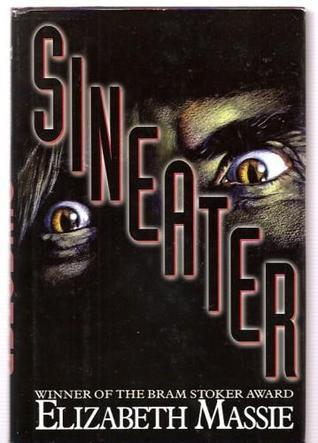
Sineater
A young man must determine whether the evil attributed to the One Condemned to Absorb the Sins of the Brethren comes from the sineater's soul or from the community that condemned him
337 pages, Hardcover
First published January 1, 1992
About the author
Elizabeth Massie
194 books162 followersElizabeth (Beth) Massie is a 2-time Bram Stoker Award and Scribe Award-winning author of horror/suspense, historical fiction, media tie-ins, nonfiction, and short fiction for adults. She also writes novels for teens and middle grade readers. Her series, Ameri-Scares, is currently in development for television by Warner Horizon (Warner Brothers), LuckyChap, and Assemble Media. Stay tuned! She lives in the Shenandoah Valley with her husband, illustrator Cortney Skinner.
Ratings & Reviews
Friends & Following
Create a free account to discover what your friends think of this book!
Community Reviews
Displaying 1 - 30 of 50 reviews

April 6, 2025
I guess I will slot this under Southern Gothic horror, Massie give us here a unique tale of backwoods Virginia and the titular Sineater, a man who eats food off dead bodies at wakes to cleanse them of their sins. I have heard of sineaters before, but Massie presents here something a bit different. In this small mountain town, where few residents even have running water or electricity, tradition has it that the sineater can never be seen. The current sineater, Avery, basically lives in the woods around town; a solitary life for sure. From spying or from notice, he shows up at wakes; when he arrives, everyone turns away, for to see him means you will either go insane or die.
Avery, however, has broke tradition in that he has a family; a wife, two boys and a daughter. The family is shunned in town, where folks feel it is sinful to associate with the sineater's 'get'. Our protagonist, Joel, is the youngest son of Avery, around 11 or so, and breaking tradition yet again, attends the local school. The eldest son, Curry, never went to school, and neither did the daughter, but as Curry will be the next sineater, the onus is off Joel, and he leads a normal life to some degree.
Sineater starts off rather slow, and while the pacing picks up some, expect a slow-burn here. We learn about Joel and his existence, his only friend, the son of the local Baptist preacher, and the importantly, the local 'holy rollers' who believe the Baptist church is too moderate; they hold their own congregations, speak in tongues, handle snakes, the whole gambit. The gist of the novel concerns a power struggle between the holy rollers, led by one Missy, who see Avery as the devil incarnate for breaking 'the rules' and having a family. She desires a new way to cleanse the dead of their sins and break with the sineater. Joel, unfortunately, seems caught right in the middle. Various threats are made by Missy for those associating with the sineater's family (the mailman, the school for having Joel attend, etc.) and when things start getting bloody, Massie leaves us hanging as to who (or whom) is doing the sordid deeds...
Massie's prose sparkles at times with 'downhome' idioms and phrases which I really enjoyed and the pacing, while relatively slow, is relentless. This felt a bit young adult at times, especially with Joel being the protagonist, but it works ok here. Enjoyable read with some good twists along the way. 3.5 stars, rounding up!!
Avery, however, has broke tradition in that he has a family; a wife, two boys and a daughter. The family is shunned in town, where folks feel it is sinful to associate with the sineater's 'get'. Our protagonist, Joel, is the youngest son of Avery, around 11 or so, and breaking tradition yet again, attends the local school. The eldest son, Curry, never went to school, and neither did the daughter, but as Curry will be the next sineater, the onus is off Joel, and he leads a normal life to some degree.
Sineater starts off rather slow, and while the pacing picks up some, expect a slow-burn here. We learn about Joel and his existence, his only friend, the son of the local Baptist preacher, and the importantly, the local 'holy rollers' who believe the Baptist church is too moderate; they hold their own congregations, speak in tongues, handle snakes, the whole gambit. The gist of the novel concerns a power struggle between the holy rollers, led by one Missy, who see Avery as the devil incarnate for breaking 'the rules' and having a family. She desires a new way to cleanse the dead of their sins and break with the sineater. Joel, unfortunately, seems caught right in the middle. Various threats are made by Missy for those associating with the sineater's family (the mailman, the school for having Joel attend, etc.) and when things start getting bloody, Massie leaves us hanging as to who (or whom) is doing the sordid deeds...
Massie's prose sparkles at times with 'downhome' idioms and phrases which I really enjoyed and the pacing, while relatively slow, is relentless. This felt a bit young adult at times, especially with Joel being the protagonist, but it works ok here. Enjoyable read with some good twists along the way. 3.5 stars, rounding up!!

October 12, 2016
This book was tense, gruesome, and emotional. it creeped me out, frightened me, made me nervous and even made me cry a little. I absolutely loved it.

November 12, 2010
Whoa. This book gave me a whole new appreciation for southern gothic and introduced me to Elizabeth Massie. Her work is nearly impossible to put down. Also, this book was a Bram Stoker award winner.

Read
January 22, 2016An interesting book based on the appalachian traditions including sineating. The story tugged at my heart strings for the young child of the sineater. The story is centered around this young boy and it is impossible not to care for him and his enviornment. Many odd characters including one Missy, a spiritual leader in the town who wants to do things her own way. The book does have a slow beginning, for several chapters. However after reading the whole book I am glad I stuck with it and read the whole thing. I give the book 4 out of 5 stars

July 1, 2013
Very slow beginning, but once it started, the action was really on a role. Knowing something about the origin of the "sineater" before I read this, probably helped my interest in the subject matter, and kept me reading on, even when I wasn't sure I would in the beginning. 3.5 stars, rounded up to 4 for the excellent writing style and great ending.

October 12, 2016
the story is not that impressive and there is some really horrible animal cruelty in it. the narrator for the audiobook wasn't that great either.

August 15, 2020
A good, moody Southern Gothic/Appalachian horror story. It seems a little languid in the middle, then turns into a real gut-puncher. It's a good eerie chiller, y'all.

January 14, 2012
This was like reading about a town chock full of the moms from the movie "Carrie." A young boy is destined by his family ties to live within the shadow of the mythical Sineater (who happens to be his father) and shunned by an entire community out of fear of this lineage. Though he tries to pave his own way through kindness and being earnest, he still stands alone. There are some murderous scenes here that take your breath away in a four-ticket-haunted-house-ride-kind-of-way. Superbly dark and psychotic, this novel speaks to the concept of the "witch hunt" in all its religious fanatic glory.

February 27, 2020
4.3 stars!
The moment I saw the title "Sineater" in a used book store, I bought it. Why? Because a Night Gallery episode "The Sins of the Fathers" starring Geraldine Page, Richard Thomas, and Michael Dunn scared me silly. Geraldine Page manipulates her son (Richard Thomas) into Eating sins. I wanted to be feel that brand of terror again, so I purchased Massie's Sineater. All in all, I wasn't disappointed. Elizabeth Massie writes living, breathing characters. I feel she's a top five woman horror author.
If you live for superstitious Appalachian horror tales then this novel was written for you.
Welcome addition to any serious horror collection.
The moment I saw the title "Sineater" in a used book store, I bought it. Why? Because a Night Gallery episode "The Sins of the Fathers" starring Geraldine Page, Richard Thomas, and Michael Dunn scared me silly. Geraldine Page manipulates her son (Richard Thomas) into Eating sins. I wanted to be feel that brand of terror again, so I purchased Massie's Sineater. All in all, I wasn't disappointed. Elizabeth Massie writes living, breathing characters. I feel she's a top five woman horror author.
If you live for superstitious Appalachian horror tales then this novel was written for you.
Welcome addition to any serious horror collection.

June 12, 2010
By page 100 out of 396 this story had still not captured my interest so I've decided to move on to better books. The main reason I couldn't get into Sineater is the long descriptive passages. Elizabeth Massie spends a lot of time describing the town, history, and people. This would be okay if it happened in the unfolding of the story, but these are separate pages and paragraphs which interrupt the sequence of events. It’s great for an author to have so much background invented, but there are more clever ways of giving the reader the info than simply typing it out, essay style in the middle of a novel.
I was really looking forward to a cool and creepy story about American folklore in the heart of Appalachia, but ended up being bored to tears. There is more to this novel I didn’t like, but really it was the telling (rather than showing) that killed it for me.
I was really looking forward to a cool and creepy story about American folklore in the heart of Appalachia, but ended up being bored to tears. There is more to this novel I didn’t like, but really it was the telling (rather than showing) that killed it for me.

October 23, 2011
I picked this up because it was on the Horror Writers' Association list of horror must-reads. I have always been a pro-horror film voice, but was never attracted to reading horror novels. Movies are over in 90 minutes. Novels takes hours and hours. And I also had the not-uncommon prejudice against the genre, or at least against anything written much later than the turn of the 20th century.
But I liked Sineater. I guess it's a horror novel, although I wondered if Massie's publisher didn't promote it as a genre book so it would not get lost in mid-list literary fiction. It's really a pretty good coming-of-age story set in a grotesque situation. If there is such a thing as the Hillbilly Anti-Defamation League, I am sure this book is on its radar. One lesson I took away from it was to fill up the car with gas before driving through Virginia and don't make any stops. These people are crazy.
Sineaters, a tradition that made it to the states from Scotland and Wales, are outsiders, shunned by the community but necessary to its functioning. They appear at wakes and eat a light meal prepared for them by the grieving family and placed on the corpse of the recently deceased loved one. The meal is the sins of the one who has passed on, and by consuming it the sineater assures their soul will go to heaven. No one must ever look on his face.
Avery Barker is an unusual sineater. He is married to the woman he loved before he took up his profession, and although even she must never look on his face, that have managed to have three children. Joel Avery, the youngest son, is the central character, the first Avery allowed to attend school. His only friend was the son of the liberal Methodist minister who has recently moved his family to a parish outside Washington, D.C. Joel's potential new friend is a very different sort of person. Burke Campbell is a skinny, angry redhead sent to live with his religious nut aunt after her daughter has gone missing. Burke's friendly overtures to Joel involve shooting him the finger every time he sees him in the halls at school.
Sineeater is not the gorefest I assumed contemporary horror novels to be. The story is long and leisurely Southern Gothic with lots of character development and one moment so repulsive that I made that pledge about never getting out the car in Virginia.
But I liked Sineater. I guess it's a horror novel, although I wondered if Massie's publisher didn't promote it as a genre book so it would not get lost in mid-list literary fiction. It's really a pretty good coming-of-age story set in a grotesque situation. If there is such a thing as the Hillbilly Anti-Defamation League, I am sure this book is on its radar. One lesson I took away from it was to fill up the car with gas before driving through Virginia and don't make any stops. These people are crazy.
Sineaters, a tradition that made it to the states from Scotland and Wales, are outsiders, shunned by the community but necessary to its functioning. They appear at wakes and eat a light meal prepared for them by the grieving family and placed on the corpse of the recently deceased loved one. The meal is the sins of the one who has passed on, and by consuming it the sineater assures their soul will go to heaven. No one must ever look on his face.
Avery Barker is an unusual sineater. He is married to the woman he loved before he took up his profession, and although even she must never look on his face, that have managed to have three children. Joel Avery, the youngest son, is the central character, the first Avery allowed to attend school. His only friend was the son of the liberal Methodist minister who has recently moved his family to a parish outside Washington, D.C. Joel's potential new friend is a very different sort of person. Burke Campbell is a skinny, angry redhead sent to live with his religious nut aunt after her daughter has gone missing. Burke's friendly overtures to Joel involve shooting him the finger every time he sees him in the halls at school.
Sineeater is not the gorefest I assumed contemporary horror novels to be. The story is long and leisurely Southern Gothic with lots of character development and one moment so repulsive that I made that pledge about never getting out the car in Virginia.

June 28, 2011
The Sineater is a stunning debut from an incredibly articulate, well-rounded writer. This is, without question, one of the best debut horror novels I've ever read. This original tale grips you and never lets go, having one of my favorite all-time endings. The world Elizabeth Massie creates is frighteningly real, populated with characters so believable that it sometimes feels like nonfiction. I can't wait to dig into more of her books. Do yourself a favor and read The Sineater. You won't be disappointed.
February 23, 2014
I somehow managed to overlook that this was a Stoker winner and went into it looking for cheap thrills and b-movie level gore and cheese. I didn't get what I was expecting, but what I got was so much better.
It does take a while to come to a good roiling boil, slowing down in early chapters to give you some town history and info on the different figures that populate the place, somewhat similar to the chapters in Salem's Lot that focus on The Lot itself. That all pays off once things pick up and you start blazing through the rest of the book with a knowledge and feeling for this setting and these characters that's as absolutely solidly sure as your mental picture of your own neighborhood and neighbors.
By the time I'd finished, the book I'd went into looking for dumb fun had shocked me, horrified and disgusted me (the brutality of some of the violence, especially against animals is even more affecting due to its restraint--this is not cartoony violence, it is real, with real consequences, physical and emotional,) then finally left me misty-eyed and cradling my sad, squishy feels, which got pretty supremely kicked by the final page.
Good stuff.
It does take a while to come to a good roiling boil, slowing down in early chapters to give you some town history and info on the different figures that populate the place, somewhat similar to the chapters in Salem's Lot that focus on The Lot itself. That all pays off once things pick up and you start blazing through the rest of the book with a knowledge and feeling for this setting and these characters that's as absolutely solidly sure as your mental picture of your own neighborhood and neighbors.
By the time I'd finished, the book I'd went into looking for dumb fun had shocked me, horrified and disgusted me (the brutality of some of the violence, especially against animals is even more affecting due to its restraint--this is not cartoony violence, it is real, with real consequences, physical and emotional,) then finally left me misty-eyed and cradling my sad, squishy feels, which got pretty supremely kicked by the final page.
Good stuff.

August 31, 2009
Any good piece of literature will speak of characters; of their faults and their redeeming qualities. The reader will know of the characters in a way that convinces said reader to care what happens. Elizabeth Massie does this masterfully in Sineater.
The rediculous notions of backwoods christianity are revealed in a way that is believable and at times even horrific. Massie's descriptive powers are spot on and cringe-worthy. This one reads as a who-dun-it and a coming of age story. It is at times touching and emotional, and still manages to be horrific and gross.
The reader gets it all with this one.
The rediculous notions of backwoods christianity are revealed in a way that is believable and at times even horrific. Massie's descriptive powers are spot on and cringe-worthy. This one reads as a who-dun-it and a coming of age story. It is at times touching and emotional, and still manages to be horrific and gross.
The reader gets it all with this one.
February 22, 2009
This is a very haunting story ... one I had a hard time letting go of. It's based on a very old Christian custom that started in Europe and was brought over with the Scottish/Irish immigrants that settled in the Appalachians. It's grim ... it's dark, but surprisingly touching in places. It's a story of a young boy living with the social stigma of having a father who is a "souleater".
This entire review has been hidden because of spoilers.
June 1, 2012
I was ALMOST ready to give up on this book by page 100 or so...it really wasn't going anywhere up until that point but I so hate to quit on things I start. Couple things that has annoyed me up to now but I am dealing with. First off she writes the plot completely in the present tense. I don't know why this bugs me but it is absolutely jarring. She only uses the past when something truly is in the past in relation to the plot. Also the author loves her thesaurus just little too much. Some of her descriptions of scenes and background, while very descriptive, do not flow with the rest of the book and feels like an essay but a fairly precocious, if not morbid, high school senior. Those things alone were enough to bury this book in my closet but she finally decided to give us some background and plot development and it is starting to look like a decent mystery. I am hoping to finish this soon and move on to something else.
Update: So I finished reading this book just now and all I can say is "Eh" really. She tried to sell the idea that life would be different but the status quo hasn't changed and the biggest adversary to towing line has accepted his lot in life. The buildup in the last 80 pages or so was real nice and a decent change from the lackluster pacing up to that point but ultimately she painted herself into a corner. I wouldn't even really recommend this to anyone and it only got the third star for the ending...wish I could do half stars.

January 15, 2014
The problem with genre fiction is that so much of it is cruft. Sineater, however, is a daimond in the rough. Massie's writing style is evocative and vivid without becoming florid. Reading this novel I had a definite feel for exactly what things looked like, how they felt, and how they smelled. The characterizations were strong and even her touches on the minor characters leave the reader feeling like they are actual people with full lives outside of their small parts in the unfolding story.
The plot is a bit slow and wanders off track in a few places, but this book is not about the plot. This is a novel of human interactions and reactions, a novel about people. The true story lies in the way in which the town is dealing with their own changing traditions. That said, I was very impressed with the fact that the action sequences are unusually well-done and, occasionally, exciting.
I read this novel straight through in one sitting and would recommend it to just about anyone, horror fan or no. I wish I'd waited and got a hardback edition.
The plot is a bit slow and wanders off track in a few places, but this book is not about the plot. This is a novel of human interactions and reactions, a novel about people. The true story lies in the way in which the town is dealing with their own changing traditions. That said, I was very impressed with the fact that the action sequences are unusually well-done and, occasionally, exciting.
I read this novel straight through in one sitting and would recommend it to just about anyone, horror fan or no. I wish I'd waited and got a hardback edition.

September 7, 2009
Joel Barker is the son of Avery, the sineater. Tradition forbids anyone to look upon the face of he who eats the sins of others. Joel has never seen his father. The small town in Virginia where Joel and his family live is built on religious tradition that the Barker family not be interacted with. The town's religious leader, Missy Campbell will do everything in her power to prevent the breaking of these traditions. She spouts fire-and-brimstone ravings to the town and gains some devout followers. Her nephew Dave befriends Joel and forms plans against his aunt and her flock. Massie has great character development, but the pacing felt uneven at times.

August 19, 2016
This is the second Massie novel I've tried to read, and I didn't like either of them, which is shocking, because her short story, "Stephen," is the scariest brief tale I've ever read. Some authors don't have it for novels like Poe and Lovecraft, but then I find she won the Bram Stoker Award. Which doesn't surprise me, because it seems the good tales go unpublished. Sadly, horror--like any other form of work--is a popularity contest, ruined by politics. The book went too many places and didn't seem to go anywhere.

April 18, 2015
I read the whole book. In my opinion, it was really dumb. I thought the book was going to focus more on the title of the book, but I can sum up this book with two words: religion and hate. There really wasn't much horror and the Sineater is briefly talked about randomly throughout the book. Very disappointing book with no real storyline, just a bunch of people who are highly religious with hate in their heart.

February 28, 2019
Pretty meh. The whole basis for the story is a bit bizarre and hard to relate to. I can't imagine why this would win any awards or deserve all the five star ratings it got. without the hype I may have gone in expecting less and not been as disappointed as I am.
Plus, there's and episode of cat murder. As an ailurophile, any depiction of cruelty against our feline friends is going to elicit a strongly negative response in me.
Plus, there's and episode of cat murder. As an ailurophile, any depiction of cruelty against our feline friends is going to elicit a strongly negative response in me.
August 26, 2012
Elizabeth Massie is the best horror writer in the business. She paints a common picture that wells up from the inside and tears it's way out. READ ALL OF HER BOOKS!

March 16, 2018
Personagens não me cativaram, a não ser pelo Joel (mas também, personagem principal, se não fosse por eu querer saber sobre a relação dele com as pessoas da comunidade tinha largado o livro no começo). A história não me prendeu, todo o aspecto religioso me pareceu bizarro, talvez pq eu não me afeiçoe à temas religiosos em geral.
O final foi legalzinho, mas o mistério de quem seria o assassino não foi bem explicado, não achei que tinha um motivo de ser.
O final foi legalzinho, mas o mistério de quem seria o assassino não foi bem explicado, não achei que tinha um motivo de ser.
May 24, 2021
I really wanted to like this, and I actually enjoyed the writing style, but... I don't know. I just realized I did not enjoy spending time with these people, and the plot was, well, absent most of the time; instead of wanting to keep reading I had to force myself to open this book, and frankly I don't think that's the point. Another DNF for me.

June 14, 2018
This book has a genuinely creepy and creative origin idea. I do feel like it did not deliver to it's full potential. This book will make you feel a spectrum of emotions, but ultimately its predictable and unsurprising. Great toilet read.

February 17, 2021
This character-driven novel explores how tradition, superstition, and belief can tear apart friends, family, and community. It's easy to see why this was a Bram Stoker Award winner. To not read it would be a sin.
August 30, 2023
I really wanted to, and fully expected to, like this book. 100 pages in, nothing that seemed at all relevant even began to occur. It was a backwoods, backwards slice of life, I suppose, with hardly any horror, or even action, taking place at all. Huge letdown.

December 28, 2022
This took me ages to read. Not sure if it was my attention span or the slow burn here.
It reminded me of McDowell's Blackwater but less inviting. I didn't love the ending but it felt just.
It reminded me of McDowell's Blackwater but less inviting. I didn't love the ending but it felt just.

February 10, 2023
Great book. Some real babies in this review section. Boo hoo, the poor widdle puddy tat.. LOL. This is a horror novel, dorks.

March 4, 2024
Childhood favorite
This book has resonated with me since my childhood. It was just as much fun to read as an adult.
This book has resonated with me since my childhood. It was just as much fun to read as an adult.
Displaying 1 - 30 of 50 reviews