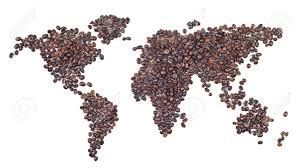
Professionals and enthusiasts alike will love this beautiful book by James Hoffmann. From overviews of the world's most vibrant coffee-growing regions, to step-by-step brewing tutorials, the content is educational, thought-provoking, and substantial. I've already recommended this book to Barista Magazine readers countless times. -- Sarah Allen, Editor Barista Magazine A beautiful world guide to the brown bean. Taking the reader on a global tour of coffee-growing countries, The World Atlas of Coffee presents the bean in full-color photographs and concise, informative text. It shows the origins of coffee -- where it is grown, the people who grow it; and the cultures in which coffee is a way of life -- and the world of consumption -- processing, grades, the consumer and the modern culture of coffee. Plants of the genus Coffea are cultivated in more than 70 countries but primarily in equatorial Latin America, Southeast Asia and Africa. For some countries, including Central African Republic, Colombia, Ethiopia, and Honduras, coffee is the number one export and critical to the economy. Organized by continent and then further by country or region, The World Atlas of Coffee presents the brew in color spreads packed with information. They include: Americans consume 400 million cups of coffee per day, equivalent to 146 billion cups of coffee per year, making the United States the leading consumer of coffee in the world. The World Atlas of Coffee is an excellent choice for these coffee lovers.
I drink coffee every day, but didn’t really know how it is grown and made. This is the ultimate “coffee table” book - (pun intended) 😁. It was very informative and enjoyable.
I’m probably not going to go out and buy and start using a french press after reading this or start roasting my own coffee beans at home, but this was an interesting book about how I start my every day. I have a much greater appreciation for coffee after reading this book.
I was in Italy a while back and we decided to visit a new and very fancy roasting facility of a regional coffee company. We enjoyed the tour and in the main “processing room” there was a whole wall dedicated to the history of coffee around the world which was very engaging and whetted my interest in more. I found it in this book.
I have friends who have been in various parts of the coffee “business” for decades. Though I may enjoy an occasional espresso, this is not my go to beverage. But, even I, found this a fascinating and very comprehensive book….and much more than just an “atlas.” Though some of it is “location oriented” a lot of it is more an encyclopedia than an atlas covering everything from the varieties of coffee, to how the berries are picked, sorted and processed, packed and shipped and then delivered to roasters who package the beans and distribute them to stores or coffee shops.
Here are some aspects that caught my attention: "Transporting coffee in container ships has a relatively low impact on the environment (certainly compared to other aspects of the coffee industry), and it is also relatively cheap. The downside is that the coffee can be exposed to both heat and moisture that may damage its quality. Shipping is also a complicated process, with bureaucracy in many countries causing roasters huge amounts of stress as containers of coffee sit for weeks or even months in hot, humid ports waiting for their paperwork. As air freight remains both an environmentally unfriendly and financially unsustainable alternative, many in the speciality coffee industry remain frustrated by this aspect of the business."
"The term ‘defect’ is used quite specifically in coffee. It is used to describe individual beans that have developed problems that result in bad flavours. Some defects can be spotted by taking a look at the raw coffee, while others only come to light when the coffee is tasted. A mild defect might be a bean that has been damaged by insects, and this is easy to spot. A more serious problem is a phenolic coffee, where the coffee has a very harsh, metallic, paint-stripper flavour, mixed with notes of sulphur (it is as bad as it sounds). The cause of this defect isn’t well understood yet. Bad processing can also cause defects, including giving the coffee a fermented flavour and an unpleasantly dirty, almost boozy quality. It can also add a taste reminiscent of barnyards and rotten fruit."
"It is often quoted that coffee is the second-most traded commodity in the world. It is not and, whether based on frequency or monetary value, is not even in the top five. Nonetheless, how coffee is traded has become a focus for ethical trade organizations."
Obviously, these excerpts are only part of the discussion of each aspect, and there is a lot more that a coffee lover would find of interest.
Couldn't put this one down. Coffee geeks of all stripes will love this book. Beautifully put together with thick glossy pages and stunning photography to enhance the wealth of information on the world's favorite beverage.
I don´t consider myself a coffee junkie, ´cause therefore I drink to less of it. But I would describe myself definitely as a coffee lover – one who loves to enjoy a decent glass of Latté Macchiato or a great cup of fine and elegant tasting espresso on a daily basis – or, if I´m not in the mood for either of it, I love to have a cup of cappuccino. And when I got aware of this title on its German publisher’s website for the first time I wasn´t even impressed by the way the cover looked in the first place. Nor was I sure, the publisher would fulfill my request for a free example to look through it and to write a review about it.
So you can imagine my wild joy when I opened some time ago one of the few packages I had picked up from the post office and saw that I´ve gotten The World Atlas of Coffee! I mean how great is that?
In case you´re wondering: Publishers in Germany love to sent you books in exchange for an honest review, but they do have only a certain amount of copies they can give out for free and when a book costs more than 10 bucks (which this title does) they are kind of fussy who gets a copy to read and write about it. AND I GOT ONE!!!
Anyways, a few hours later after I unpacked this book, I discovered that the author wasn´t just one guy who just happens to write about coffee, oh no! To my utterly surprise I learned that James Hoffmann is actually one of the most famous and best known coffee experts in the world, and that he comes very close of being a coffee god. Yep, you´ve read those words right: COFFEE GOD.
So I started reading this amazing book and dived into the great world of brown gold. Nothing in this world is for certain. There is a huge amount of experience, instinct and knowledge necessary to be successful in this business and that most of the time quantity comes before quality and that not every coffee bean is destined to give you a good or even better great tasting cup of coffee.
The World Atlas of Coffee gives you a deep look behind the counter of your next coffee shop and inside the cup of coffee you´re about to drink. You´ll get to know that planting and growing of the coffee plants isn´t the only thing that’s necessary to get to what counts the most for a cup of coffee: the coffee bean.
The perfect cup of coffee is something that lies within every individual coffee lover’s personal taste. Every taste is different, and therefore everyone tastes one and the same cup of coffee in a different way. The right amount of water as well as the right water and the right equipment. No matter if you´re using a normal coffee maker or if you fill your beans in an one touch fully automatic machine. And you have to have the right coarseness setting to get the right coffee powder. James Hoffmann tells you all those secrets, gives you many insider tips and tells you where he gets his most beloved cup of coffee. And he is so honest to tell you, that he hasn´t always made the coffee in his cup himself, that he´s about to enjoy.
Result No matter if you´re a coffee junkie, or if you´re one of the many people who simply like to enjoy a decent cup of coffee after work. This nonfiction book about coffee is one great discovery for you and your loved ones. And it gives you for sure, a totally different look into it. I will never see my daily espresso the way I used to see it. Now it´s much more …much much more!
The World Atlas of Coffee: From Beans to Brewing -- Coffees Explored, Explained and Enjoyed, by James Hoffmann, is a fascinating encyclopedia looking at coffee in all its forms globally. The book explores the plant, its cultivation and production, the development of coffee drinking as a beverage, the composition of the bean, its various species, roasting and harvesting techniques, and how to brew the beverage in various forms to promote high quality taste and flavour. It also explores, country by country, where beans are grown, and what to look for in the regions highest quality beans.
I learned a lot from this book, and it was also fascinating from a commodity/economics standpoint. The author recommends investing in high quality grinders as the best way to up your coffee's taste, as well as looking at the quality of water you use. The first section, on how coffee is grown, harvested, dried, processed and so forth, was also fascinating. This book, through and through, is an excellent way for those looking to learn more about coffee from a commodities standpoint, and those who are interested in this morning beverage of choice, to learn a whole lot of information to help improve taste, quality of coffee purchased, and engage in the process of coffee tasting. This was an excellent book - concise, interesting, and illuminating. Easy recommendation if the above sounds interesting.
An excellent introduction into the world of coffee. It covers many different aspects of coffee production and consumption, with the main focus on high quality specialty coffees, just like the title says: From Beans to Brewing -- Coffees Explored, Explained and Enjoyed.
The last third or so of this rather brief book is an overview of all the coffee producing countries: the very short history of the country's coffee industry, specific traits of the local coffees etc. So "The World Atlas" in the title is also quite appropriate.
I listened to an audio version. The book is structured as a short encyclopedia and atlas of all things coffee, so it's would be useful to have it in a printed or ebook version - makes repeated referring to specific topics much more easier. On the other hand, this particular audio book really benefits from being read by its author -- James Hoffmann's enthusiasm about coffee is clearly audible and trully contagious when he delivers the content in his pleasant voice with clear diction and charming British accent.
Your coffee drinking experience will be forever changed and enhanced after reading this book. If you prefer to stick to your instant beverage, don't read it.
At the beginning of this year I took a interest in brewing quality coffee at home. Therefore, I attacked the every piece of information being blog posts, youtube videos and specialty coffee forums. James Hoffman's Youtube channel was one of the first coffee related content I followed and to this day I follow James' videos religiously. But I was a little bit disappointed in this book. It didn't offer any new knowledge wasn't already out there and the way it's written felt like reading a glorified blog post. Only way I see myself owning this to impress some guests or offering it to someone taking interest in coffee. But hear me out, there is something called Internet where you could reach same knowledge free and arguably in better forms. :)
"In 1994, the widespread genocide in the country claimed nearly one million lives, and had a massive impact on the coffee industry." don't ever forget about the losses of the coffee industry...
The World Atlas of Coffee is, pun intended, a bit of a coffee table book. That said, it's a GREAT coffee table book.
It's all in the title. From well-respected coffee guru James Hoffmann, The World Atlas of Coffee gives a precise, objective look at all aspects of the coffee production process around the world—species of coffee plant, growing regions, processing methods, roasting, grinding, and brewing. It's objective in that Hoffmann generally presents different options for achieving the aforementioned steps by describing their general effects on the final cup without saying what he personally prefers, though the further you get in the book the more his (worthwhile) opinions begin to become clear. It's precise in its details: ratios of grams of coffee to grams of water recommended for various brewing methods, years in which coffee production began in a various countries, even the harvest seasons and altitude at which coffee is grown in various regions.
I appreciated both the objectivity and precision; it makes this a great reference book. I can easily envision myself buying some new beans from say, Yemen, and flipping to the section on Yemen to refresh my memory as I'm enjoying the inaugural cup. It also covers pretty much every country that every even thought of producing coffee, and I suspect having all that information in one place isn't particularly common in the coffee industry. However, if you're looking for a coffee book to read cover-to-cover, you might consider looking elsewhere. Though the book has a nice chronology of sections (the coffee plant, brewing and drinking, producing countries), I found that the first two, comprising roughly the first half of the book, were much more interesting to read page by page than the second half; maybe I'm unique, but I just don't care that the Catuai variety is harvested between December and March in the Acatenango region of Guatemala which ranges from 1300 to 2000 meters in altitude.
I also found that the objectivity of Hoffmann's approach made the latter sections of the book a bit repetitive. While it's wonderful that coffee from Colombia can be fruity, floral, or have a heavier body, to cover all his bases, Hoffman employs a certain vagueness in outlining the flavors of coffee varietals which I found to be annoyingly similar across a number of disparate countries. Let me be clear: as a detail-oriented coffee aficionado myself, I love the detail that Hoffmann put into his work; I just wish he'd balanced the book out more, spending equal time talking about things like the history of coffee consumption, anything having to do with decaf, specifics of flavor differences found in high quality cups, hand grinders vs electric, or even an explanation as to why he hates percolators with such passion. Aside from that last one and decaf, these topics are all described, just not with the detail he gave regarding coffee producing countries. Then again, it is The World ATLAS of Coffee, so maybe I was expecting the wrong thing.
At the end of the day, I greatly enjoyed reading this, and learned a good deal from it. As far as coffee knowledge goes, this is a great place to start.
I wish you all a flavorful cup of Guatemalan Acatenango, or if 1300-2000m grown 'Joe isn't your thing, then perhaps a Cibao terroir from the Dominican Republic will be more to your liking, though it won't have been harvested recently if you're reading this in the summertime, so maybe a simple latte is best—unless you live in Italy, in which case that's not coffee at all.
This book is basically the introduction to the world of specialty coffee.
It answers questions like “where coffee comes from?”, “what types of beans?”, “what is the history behind expresso?”, “why Ethiopia coffee is so good?” and many more.
The photographies are also delightful so this is a wonderful book to read just before sleeping.
This is not just a "coffee table" book (no pun intended); it's a fascinating book about my favourite beverage. I wonder if this guy has written a book on Gin? If so...I'll change sex and marry him.
I learned more about coffee in the first 15 pages than I've ever learned in the past. This book is well-researched and has an easy-to-read style. Just reading about coffee starts those caffeine-deprived brain cells of mine demanding I get off my arse and make a cup...stat! "Hey Honey - will you turn the espresso machine on please!" "Yes, I know it hasn't even cooled down from the last cup."
I think I might have a slight addiction problem. Sigh.
Undeniably a book for hardcore enthusiasts who crave detail - and in this respect it excels. I should've known better given the title, but this book works much better as a reference text than as something you'd read cover to cover. It is an atlas in the truest sense of the word.
I found the volume of information a little difficult to digest, and would've preferred more advice about brewing and tasting at home, but I'm rating this 4/5 for the sheer quality of research and presentation here. If you're passionate about coffee, this is arguably a must-own.
A must-have resource for coffee enthusiasts. This book takes readers on a global tour through the origins, variations, and distinctive features of coffee beans. It delves into the art of coffee brewing in minute detail, offering professional ideas and strategies to enrich the coffee-drinking experience. A priceless resource that combines a love of coffee with a wealth of knowledge, making it a must-have for every coffee enthusiast's library.
Like a good cup of coffee, this whole book fills me with comfort and warmth. Not least of which is due to Hoffmann's delightful reading voice.
I found this book fascinating. The details of the growing, roasting, and brewing processes (and everything in between) were fascinating and made me appreciate my cup of coffee all the more. And made me realize how very lucky I am to be able to savor it.
The history of coffee was equally fascinating, and I was enthralled with the explanations of how each country started growing coffee and how that played out for each different area.
While there's a slight downside for us newbies by listening to the audiobook (we can't flip back and forth to the glossary and definitions throughout the book), I feel those are balanced by the joy of getting to listen to Hoffmann read the book himself.
I so appreciate his approach and what feels like a very fair and understanding and compassionate view of the entire coffee process and all those involved.
I definitely intend to re-read this as I think I'll glean even more a second time around. :)
This book contains everything you ever wanted to know about coffee. It talks about everything from the plants to processing techniques, how to brew it and where coffee is grown with what characteristics. At times it feels like an extensive list being recited because it is precisely that, but I think it is valuable. I think everyone who is into coffee should read this book, maybe especially the audiobook version once. That way, you roughly know about most things, and then you can look them up if you want to know about a coffee you bought or something you want to explore.
My father grew some coffee when he was a farmer in the DR so I enjoyed learning more about the process of his work. This book really makes you appreciate how many hands go into the cup I make every morning.
My admiration and respect for James Hoffmann knows no bounds; I consider him a living legend and, without a doubt, one of the greatest coffee ambassadors of our time.
Whether you're simply looking to expand your coffee knowledge or, like me, you're a dedicated coffee connoisseur or enthusiast, this book has something to offer each and every one of us.
As I delved into the pages of 'The World Atlas of Coffee,' I realized it's not just a book; it's a passport to the captivating universe of coffee, personally curated by this wholesome mensch and guru. Imagine a book that takes you on a bean-to-brew journey, infused with the aroma of expertise and sprinkled with the beans of wisdom. It's a pilgrimage for coffee lovers, where each chapter pours out a fresh blend of knowledge, brought to life by vibrant photographs that make the coffee world truly immersive. You might as well have been chatting with a world champion barista from the comfort of your armchair. It's the espresso shot of coffee literature – compact, powerful, and absolutely delightful!
BONUS: For the specialty coffee home brewers - what's your favorite method? Here's my recipe. My go-to is usually a V60 or an Aeropress on the weekdays, but Siphon is undoubtedly my favorite method. Time consuming but worth it!
Siphon Coffee (Earl's Recipe) 1. Rinse the cloth filter and filter attachment with hot water. 2. Attach the cloth filter to the upper chamber and secure the attachment hook outside its bottom stem. 3. Add 500 mL of water to the lower chamber. 4. Attach the upper chamber loosely without a complete seal with the lower chamber. 5. Light the butane burner underneath the lower chamber on medium. 6. Grind 30g of Medium Coffee (7.5 1ZPRESSO K-ULTRA). 7. When the water starts to boil steadily, complete the seal between the upper and lower chambers. 8. Lower the heat for a gentle boil in the upper chamber (~200*F). 9. Add the coffee and saturate the grind with a gentle stir. 10. Start the timer, and after 30 seconds, gently stir the crust. 11. Wait 1 minute and 10 seconds and cut the heat off. 12. Stir 10 times as the drawdown occurs from the upper the lower chamber. 13. Coffee bed should have a dome if done correctly.
Este libro fue un regalo y se ha convertido en uno de mis libros favoritos
La primera mitad actúa como una introducción a todo sobre el café: su historia, las variedades de café, los métodos de cosecha, tueste y preparación, etc La segunda mitad ya actúa más como el título del libro, un atlas que te lleva en un viaje por el mundo, describiendo muchos países y sus regiones cafeteras
La verdad es que si ves seguido los videos de James Hoffmann, mucha de la información en este libro no será nueva, pero igual vale la pena leerlo debido a la facilidad que tiene con las palabras y cómo acompaña cada página con fotografías hermosas, diagramas, mapas, etc. Puntos extra si logras leer haciendo su voz en tu cabeza
La única razón por la que no le doy las 5 estrellas completas es porque a veces puede ser un poco lento leer sobre qué diferencia cada variedad de una especie de café o sobre cada una de las 10 regiones cafeteras de un solo país, pero realmente estás secciones no quitan en lo más mínimo mi disfrute de este libro
Half of the book is dedicated to the coffee-related history, processes and preparation methods while another half focuses on particular countries growing coffee.
I think that the book stands for its name - "The World Atlas of Coffee". Well illustrated, painstakingly explaining every step from coffee history and tree types to the cup. Reading hardcopy is a pleasure because of its superb quality (even book cover resembles a coffee bean bag material).
Highly recommended for those, who consider coffee to be way more than the following quote from the book (it is lovely to notice the author's aversion to commodity coffees):
[...] a generic product from somewhere tropical; an efficient, if bitter, way to get caffeine into the bloodstream and to clear the mind in the morning.
This such an informative and educational book about coffee that covers basically everything from varieties of beans, harvesting, roasting, methods of brewing, history of drinking etc. I can't imagine there being a better book for someone who found a new hobby, wants to learn/improve coffee brewing and have a better understanding about beans. This was a timely gift for me after I upgraded my espresso machine and it has been on a table ever since.
What I also really liked is that it included a large chapter of coffee origins spanning 3 continents and some very unexpected coffee growing countries. It helps you understand and make a more informative decision when buying coffee beans from your local roaster knowing which varieties are from which region and whether you can trace it.
Beautiful illustrations also made it a lot more enjoyable read.
Quite informative and manages to pack a lot of information on coffee processing methods, different origins of coffee as well as provides tips on various preparation methods. Although it doesn't try to give one perfect brewing method (which is a good call) as it acknowledges that there are many different ways you can brew a cup of coffee with same equipment. It encourages experimentation and exploration by giving some guidelines on how to do it. Overall I found it quite informative and can see myself coming back to it to reread some of the info. I would highly recommend it to any coffee lover who is just starting his adventure with a specialty coffee or just would like to learn more about coffee itself.
Libro reducido, pero con los datos necesarios para obtener una pincelada sobre cómo se organiza la producción del café y cómo afecta finalmente en la taza. Tiene mucho que mejorar pero sigue siendo un must read para quien tenga interés en el tema. Notables datos interesantes como Chile re-vendiendo producto costarricense como "Café de Valparaíso", el impacto de las guerrillas, la intervención gringa y la destrucción se plantaciones, los gringos comprando propiedades en Panamá, el trabajo esclavo e indígena en la industria, el desarrollo de infraestructura por país, etc.