Jump to ratings and reviews
Rate this book

The North

Rate this book
Here is the north, this is where it lies, where it belongs, full of itself, high up above everything else, surrounded by everything that isn't the north, that's off the page, somewhere else...

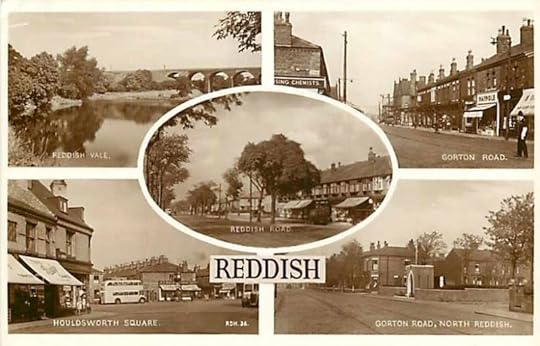
Paul Morley grew up in Reddish, less than five miles from Manchester and even closer to Stockport. Ever since the age of seven, old enough to form an identity but too young to be aware that 'southern' was a category, Morley has always thought of himself as a northerner. What that meant, he wasn't entirely sure. It was for him, as it is for millions of others in England, an absolute, indisputable truth. But he wondered why, when as a child he was so ready to abandon his Cheshire roots and support the much more successful Lancashire cricket team, and when as an adult he found he could travel between London and Manchester in less than two hours, he continued to say he was from the North.

Forty years after walking down grey pavements on his way to school, Paul explores what it means to be northern and why those who consider themselves to be believe it so strongly. Like industrial towns dotted across great green landscapes of hills and valleys, Morley breaks up his own history with fragments of his region's own social and cultural background. Stories of his Dad spreading margarine on Weetabix stand alongside those about northern England's first fish and chip shop in Mossley, near Oldham. And out of these lyrical memories rise many disconnected voices of the north; Wordsworth's poetry, Larkin's reflections and Formby's guitar. Morley maps the entire history of northern England through its people and the places they call home - from the frozen landscapes of the Ice Age to the Norman invasion to the construction of the Blackpool tower - to show that the differences go deeper than just an accent.

Ambitiously sweeping and beautifully impressionistic, without ever losing touch with the minute details of life above the M25, The North is an extraordinary mixture of memoir and history, a unique insight into how we, as a nation, classify the unclassifiable.

592 pages, Paperback

First published June 6, 2013

37 people are currently reading
534 people want to read

About the author

Paul Morley

34 books75 followers
Paul Morley is an English journalist who wrote for the New Musical Express from 1977 to 1983, during one of its most successful periods, and has since written for a wide range of publications. He has also has been a band manager and promoter, as well as a television presenter.

Ratings & Reviews

What do you think?
Rate this book

Friends & Following

Create a free account to discover what your friends think of this book!

Community Reviews

5 stars
54 (20%)
4 stars
81 (31%)
3 stars
77 (29%)
2 stars
28 (10%)
1 star
20 (7%)
Displaying 1 - 30 of 45 reviews
Profile Image for MJ Nicholls.
2,289 reviews4,895 followers
September 13, 2016
A sprawling personal epic chronicling Morley’s North (his childhood in South Reddish until his swift relocation to London as a protégé at the NME), interwoven with anticlockwise trivia from the late seventies until the 12th century, omitting most of the post-seventies stuff that happened in the author’s absence. A continuation of sorts of Morley’s memoir Nothing, this is another fine entry in a sequence of books that act as a kind of roman-fleuve: mixing autobio with well-researched factual heft in a manner that sets him apart from the usual plague of pundits and commentators prone to writing about how rock music enlivened their uninteresting childhoods (is that Stuart Maconie I see in the ‘Readers Also Enjoyed’?). Morley’s scope, lyrical and acute prose, and erudition places him leap years ahead.
Profile Image for Bettie.
9,976 reviews5 followers
March 6, 2014
BOTW

R4
pub 2013
spring 2013
non fic
br england>

BBC BLURB: 'Here is the north, this is where it lies, where it belongs, full of itself, high up above everything else, surrounded by everything that isn't the north, that's off the page, somewhere else.'

Paul Morley grew up in Reddish, less than five miles from Manchester and even closer to Stockport. Ever since the age of seven, old enough to form an identity but too young to be aware that 'southern' was a category, Morley has always thought of himself as a northerner. What that meant, he wasn't entirely sure. It was for him, as it is for millions of others in England, an absolute, indisputable truth.

Forty years after walking down grey pavements on his way to school, Morley explores what it means to be northern and why those who consider themselves to be believe it so strongly. While exploring his own 'northernness', Morley brings in other voices from the North, from Larkin to Wordsworth, Les Dawson to George Formby, Morrissey to Mark E. Smith, as he attempts to classify the unclassifiable.

Paul Morley is an acclaimed music journalist, writer, presenter and music producer. He made his name writing for the NME between 1977 and 1983, and has gone on to publish several books about music.


Reader: Paul Morley, with additional readings from Paul Hilton Abridger: Viv Beeby Producer: Justine Willett.

3: Sixties glamour hits Reddish, while football binds father and son together.
4: The teenage Morley's head is turned, when glam rock hits Manchester.
5: It's 1976, and the Sex Pistols play Manchester. Morley was there.

3*

Reddish is an area of the Metropolitan Borough of Stockport, in Greater Manchester, England. It is 2 miles (3.2 km) north of Stockport and 4.6 miles (7.4 km) southeast of Manchester.

Nawf-ern music and beautiful landscape: You're a Lady - Peter Skellern
Profile Image for Steve Duffy.
Author 81 books63 followers
July 7, 2013
"Know your place": it's a phrase that many people from the North have heard pretty often down the years, and it's also the driving principle behind this personal memoir of the North and Northern-ness from one of our most original and distinctive voices. Morley's style divides opinion, but it suits a book like this down to the ground; his love of digression and his delight in variety animate the sprawling, discursive text. I honestly didn't find it a difficult read (one of the two most frequently repeated complaints about Morley's writing); nor did I find it overly pretentious (the other recurring criticism). Anyway, Morley would certainly approve of Brian Eno's dictum on pretension: "I decided to turn the word 'pretentious' into a compliment. The common assumption is that there are 'real' people and there are others who are pretending to be something they’re not. There is also an assumption that there's something morally wrong with pretending. My assumptions about culture as a place where you can take psychological risks without incurring physical penalties make me think that pretending is the most important thing we do. It's the way we make our thought experiments, find out what it would be like to be otherwise." Apart from anything else, pretension (in precisely the Eno sense) was how Paul Morley, the awkward young Stockport Grammar student with vanishing career prospects, became the most consistently interesting writer on the staff of the NME before his 20th birthday - which happens to be just one of the life stories that flesh out this book. In the end, whatever his nominal subject, Morley always ends up writing about what he loves, and if his love is complicated, then that may be because it runs deep.
Profile Image for Laura.
7,137 reviews608 followers
March 23, 2018
From BBC radio 4 - Book of the week:
'Here is the north, this is where it lies, where it belongs, full of itself, high up above everything else, surrounded by everything that isn't the north, that's off the page, somewhere else.'

Paul Morley grew up in Reddish, less than five miles from Manchester and even closer to Stockport. Ever since the age of seven, old enough to form an identity but too young to be aware that 'southern' was a category, Morley has always thought of himself as a northerner. What that meant, he wasn't entirely sure. It was for him, as it is for millions of others in England, an absolute, indisputable truth.

Forty years after walking down grey pavements on his way to school, Morley explores what it means to be northern and why those who consider themselves to be believe it so strongly. While exploring his own 'northernness', Morley brings in other voices from the North, from Larkin to Wordsworth, Les Dawson to George Formby, Morrissey to Mark E. Smith, as he attempts to classify the unclassifiable.

Today: Morley on his northern childhood, and how he became a northerner.

Paul Morley is an acclaimed music journalist, writer, presenter and music producer. He made his name writing for the NME between 1977 and 1983, and has gone on to publish several books about music.

Reader: Paul Morley, with additional readings from Paul Hilton
Abridger: Viv Beeby
Producer: Justine Willett.


https://www.bbc.co.uk/programmes/b01s...
Profile Image for David.
29 reviews
December 6, 2024
Not worth me listing everything I didn't like about it.
Profile Image for Godzilla.
634 reviews21 followers
July 18, 2014
A vast, sprawling book, which I can see how some people would hate. It rambles at times, and flits from subject to subject, but it's like a diamond mine: there are raw, sparkly bits littered throughout.

I learnt a lot of interesting facts, read a lot that I previously knew, but it's presented with real heart and feeling.

Having read Paul Morley's Nothing, I knew the ending wasn't happy, but this transcends his personal story, riveting as that is.

No matter what you think you know, or believe about the North, if you read this, it will surely affect your thoughts in some way
Profile Image for Ryan.
1,183 reviews65 followers
March 26, 2022
Hi Paul.

1. The North isn’t just Manchester.

2. Your sentences drag on for an ice age.
Profile Image for Rachel Stevenson.
443 reviews17 followers
April 21, 2021
“When you're northern, you're northern forever and you're instilled with a certain feel for life that you can't get rid of. You just can't.”

This book really should be called “The North West” or “Lancashire” or even just “Greater Manchester.” There are a few sops to Yorkshire (Alan Bennett, J.B. Priestley, Emily Brontë, Michael Parkinson, Barbara Hepworth, Last of the Summer Wine, Batley Varieties) but it's mostly Morley’s old stomping ground. The book commences in 1976 and works backwards to 1530 because nothing happened in the North after 1976, after Paul left (and the last year of Morley Snr's life), and covers his upbringing but also lots and lots of historical info, most of which I found interesting, from things that activated my nerd glands (county administrative boundary drawings – Reddish is in Lancashire but was governed by Stockport council which is in Cheshire), to etymology (I didn’t know that shire (scir) was an Anglo-Saxon word but county (comté) a Norman one) to topography to a lovely piece on the joys of cricket to a hilarious one about the terrible food of the 60s and 70s (“glum liver the consistency of decay...death-like mincemeat that wept for humanity when fried”) to W.H. Auden's love of the north to the histories of various Lancastrians from Bernard Manning to Morrissey, George Formby to Gracie Fields, Julie Goodyear to Anthony Burgess, via L.S. Lowry, J.R. Clynes, Eric and Ernie and more. Much, much more.

A personal aside: when Paul gets to Blackpool 1939, he mentions that the Pleasure Beach stayed open during the war. My great granddad was mayor of Blackpool 1939-40 so I’m going to assume (without any actual evidence) that he was instrumental in this decision.

By the way, a note for editors at Bloomsbury books: Richard Hoggart's famous cultural studies tome was called The Uses of Literacy, not The Use of Literacy (it gives a slightly different meaning when misspelled) and I'd've thought that given Morley explains the meaning behind each place name, he should know that the South Yorks village on the River Don is Stainforth (“Stony ford”) not Stainworth. And considering the plethora of information on county borders, he should also know that Goole has always been in the East Riding and not the West.
Profile Image for Book-Social.
504 reviews11 followers
April 24, 2024
Goodness this book takes a bit of getting into. It skips around A LOT at the beginning starting with Daniel Defoe, visiting 1976, talking in lofty terms about the north as a concept before referring to Opportunity Knocks the TV show. After a while a certain rhythm does start to form, Morley turns the clock backwards with anecdotes from his childhood in the 1970s interspersed with more general commentary about the time and delightful little nuggets of info such as the fact Coronation Street was first offered up as being called Our Street before nearly being called Jubilee Street. Its 550 odd pages make it no walk in the park, especially as my copy was hardback and I did start to flounder half way through.

I think mainly it was because Morley’s north is not my north. The north is different to everyone – for a start I now live on Skye making my concept of north even more complicate but there was very little mention of Durham, Newcastle, Northumberland that make up a large part of anyones north of England. A more accurate name would have been the North West as it is full of Lancashire, Chester and Reddish! I recommend it to anyone from that region, especially if you were around in the 70s, you will no doubt recognise many an anecdote and raise many a rye smile. For me it just wasn’t eastern enough.
Profile Image for Runningrara.
743 reviews5 followers
March 22, 2019
Frankly wanted to enjoy this more than I did. Rambling and disjointed, entirely self-indulgent. As a personal memoir it was lacking; as a history of the North it was piecemeal.
Profile Image for Liam Turnbull.
8 reviews
August 16, 2022
Gave this a go for a good few months but had to give up on it. The title and premise promised hugely but it was too long and slow-paced - I was 150 pages in and it hadn’t even got going! If you want a very detailed description of what it was like to live in 1960s Reddish, this is the book for you.
Profile Image for Grant.
131 reviews
September 4, 2021
I’ve read 80 pages. I can’t read any more. It’s like reading a school textbook intended to bore the kids into submission.
It’ll go to the charity shop and some other unsuspecting sap can suffer it too.
I don’t have enough time left in my life to waste it reading the rest of this.
120 reviews1 follower
September 19, 2014
A curious book this. First the title "The North" is totally misleading. "North Reddish", a small suburb in Stockport may have been more accurate. It is not really a history of the North as the title and the cover suggests. It is more an autobiography of Morley's youth, growing up in, well, North Reddish. This main narrative is interspersed with vignettes covering key events in the North of England over the past 600 or so years, but again they have a strong Manchester bias. This didn't bother me as I was born and brought up 3 miles from Morley at around the same time so there was much of interest in the book for me, but I guess most readers will buy it thinking it is one thing only to find out it is something totally different.
Morley can write, but boy does he know it and doesn't he try to flaunt it. Never use 10 words where 100 or even a 1000 will do.
The narrative is crammed with lists: numerous different ways of saying the same thing. To do it a few times is acceptable but to do it time after time after time after time after time is more than tedious. I think there was a whole chapter that was just a list of characteristics or at least that is what it felt like (the one bolted on at the end about Liverpool).
I also got the impression that this was not written as a book but is a series of essays that have been lumped together into a book. Time after time when he is describing his neighbourhood or the rivers or the bus routes he starts locally then works out and out and out. North Reddish is part of Reddish, is part of Stockport, is part of Manchester, is part of Lancashire is part of the North etc etc. Repeated variations on the same theme. Yes I get it!
Finally, the book contains a few pictures, not glossy but sharing the same pages as the main narrative. The problem is that their location in the book in most cases has no relationship to the narrative around it. For example on page 462 in the middle of an account of what happened in the North in the year 1718 and more specifically a potted history of Thomas Chippendale is a picture of a stamp with Jodrell Bank on it. Jodrell Bank was discussed 350 pages before this!
If you are from Manchester and born around 1950 - 1960 then you may well enjoy this book. If not then be warned it is not what it says on the tin.
Profile Image for Tango Dancer.
35 reviews1 follower
September 7, 2014
A sprawling book - which is more Paul Morley's biography than it is any kind of assessment of the North. With the exception of Stockport, Manchester and Liverpool the rest of that area of England above Crewe just gets a passing mention, in a mismatch of historical snippets.

From someone who claims to have grown up loving sport(football and cricket) I found two glaring errors
- Bob Shankley and Brian Redbone!

Bob, I believe was the legendary Bill Shankley's brother who to my knowledge had no personal association with the North apart from his brother.

I assume in the sporting context that the other should be Brian Labone (Everton & England - the last of the corinthians).
Profile Image for Paul Stewart.
29 reviews
September 17, 2020
A rambling trip down cliche lane, this, first and foremost is very much not a book about the North of England. It is instead a psychogeographic memoir about the author's very average northern childhood.

It is so average, but he tries so hard to maintain it is beyond that, that I felt at times I was reading an elongated version of the Four Yorkshiremen sketch; he doesn't have a football as a kid, he has a tennis ball. A threadbare one. Hardly a ball. He did have a football but it wasn't a proper ball and it burst. I was half expecting a second voice to pop up to declare "A tennis ball? By 'eck I'd have given anything for a tennis ball! I had a rock" etc.

And even then, the averageness of Morley's childhood isn't, as the author tries to indicate, a below average northern everyman childhood. I, too, grew up in the North and it is nothing like my own experience. The author augments memoir with history, a reverse chronology of selected facts beginning in 1976 (because this is a personal history that continues into the 90's but decided history only begins in the 1970's) and ends, bizarrely in 1515. Presumably there is no significant northern history before then.

Stylistically the book is a mess, lacking rhythm and structure. Personal chapters are interspersed with history until the middle where we divert into a huge cultural history of Liverpool, written in a completely different style to the rest of the book. Later we are treated to a long, painful discussion about the Sex Pistols (admittedly significant) first gig at the Free Trade Hall. As important as this gig no doubt was, to a history of the North it adds nothing. Morely could just as easily say "and then I saw the Sex Pistols" to the same effect.

There are errors too, such as the mis-naming of "Bob" Shankley, inconsistencies in the naming conversation for historic chapters (some begin with dates, others do not) and parenthesis which open but do not close. The text is peppered, randomly with pictures unrelated to the text: an image from Coronation Street illustrates a page about the 1820's; a David Bowie 1972 concert ticket graces a section about the 1930's; the Sex Pistols sit amid a discussion on Tristam Shandy and a picture of Scafell Pike sits in the middle of a book that doesn't once mention Scafell Pike.

And this, ultimately is my greatest disappointment with this book. It isn't a book about the North. It's not even a book about Lancashire. With all the arrogance of Manchester it is a book about, mostly, Manchester with a potted history of some other bits randomly thrown in to complete the publisher's requirement that this book discusses the "North". 85% of the North is largely ignored. Newcastle is mentioned three times, the North East hardly at all except a few references to Larkin. Yorkshire is an afterthought and Cumbria only exists as a muse for Wordsworth.

The great frustration is that towards the end of the book Morley includes the pitch for the book he intended to write: a great, sweeping, intimate and contemporary history cum travelogue of the entire North of England. Instead we got this letdown.
Profile Image for Líam P.
22 reviews4 followers
March 27, 2021
"The North" is not nearly-600 pages of northern history. Although, in ways and measures, it is. Paul Morley has written as though improvised, and with dozens of tabs open on this laptop, to switch from personal memoir to snippets from the news, from Wikipedia, from history websites, from Google Maps, from National Rail timetables, and from local community nostalgia groups on Facebook. As a fan of any form of writing which takes the form of waterfalls and staircases, each paragraph tumbling from one memory to another, from one tangent to the next, I enjoyed this unusual format and all it entailed to read.

It is not about the entirely of 'the north'. As a memoir, it's Morley's personal story of growing up in Reddish, in Stockport, in Greater Manchester, and how his personal story took him from school to gig to London, and somewhere along the many tangents you learn paragraphs of related and unrelated factoids of northern people, northern history, northern politics, and general northern miscellany.

The structure does grate. The tangents can see repetitive and tedious. The balance between the personal and the global seems out-of-sorts. But I did feel engaged and inspired and interested, and I did wonder about my own version of this book, where my own version of living in a suburb with ambitions of being a writer would create a very different, and yet, somehow related facsimile.

I would caution any potential reader against reading "The North" if you want a potted history of everything north of Birmingham. It's not quite that. It's not quite a Morley memoir either. It's a smattering of a whole lot of different things. And it's had me thinking along the way, which all you can ask for.
Profile Image for Matthew Ludden.
10 reviews
Want to read
June 5, 2024
Mildly maddening, but rich as sin. I tried reading it straight from page 1 to page 552, but honestly found it more interesting to head to the index, find subjects I might be interested in, then flick through pages to discover what new pieces of gold dust have been tucked away by Paul Morley.

A good example - President Abraham Lincoln, 221-222.

I'd known that during the American Civil War the Lancashire cotton industry had faced devastation due to their reliance on slavery-dependent imports, but despite that local sentiment had been solidly in favour of freeing the slaves. I hadn't known that a letter, drafted by Lancashire cotton workers, had been sent to the president to show their support.

...the vast progress which you have made in the short space of twenty months fills us with hope that every stain on your freedom will shortly be removed, and that the erasure of that foul blot on civilisation and Christianity - chattel slavery - during your presidency, will cause the name of Abraham Lincoln to be honoured and revered by posterity.

And I definitely didn't know that Lincoln himself had replied.

... I know and deeply deplore the sufferings which the working people of Manchester and in all Europe are called to endure in this crisis. Under the circumstances I cannot but regard your decisive utterances on the question as an instance of sublime Christian heroism which has not been surpassed in any age or in any country. It is indeed an energetic and re-inspiring assurance of the inherent truth and of the ultimate and universal triumph of justice, humanity and freedom.

The more you know!
Profile Image for the great gretsby.
166 reviews
November 29, 2018
still not quite sure how i feel about this book, it’s a bit of a difficult read because there’s so many historical facts about different people and places being thrown at you (i’m only 20 and had never heard of a lot of the important people mentioned because they were before my time), but i still like how personal it is and how it manages to capture what the north actually feels like. it’s a very authentic book but also very specific to the north west (particularly stockport, manchester and liverpool), and i was a bit disappointed that there wasn’t much content about yorkshire and the north east. if you wanna learn about the north and its people, culture and history, i wouldn’t recommend this as the first book to read but if you already know a lot and/ or are from the north west yourself it’s definitely a worthwhile read x
Profile Image for Steve Hunt.
33 reviews
August 26, 2021
I've given up on this, after 80 pages of droning on, and on about how boring his childhood was. Morley seems to have been a child of little imagination, and this, at the stage I'm up to, cry for help, doesn't paint a picture of happiness, but of grey and black. Having lived in a 2 up 2 down terrace in North Manchester, before moving to the leafy suburb of Wythenshawe, I had a great childhood, I loved playing out with my mates, and using our imaginations to entertain ourselves, and yes even with Airfix figures the German stormtroopers versus the ancient Britons being a favourite. Yet Morley drones on, like a double dose of Morrissey, only broken up by lists and facts.
I really can't be bothered reading any further, it's not the North/Manchester I know and love, that's for sure.
26 reviews
October 24, 2020
In this Corona world we are living in I am currently 250 miles away from my parents and the place I got to call home which is part of the wonderful North. I found myself homesick, longing for people calling "me duck", eating oatcakes and general Northern resilience and comraderie, something that is severely lacking in the east of England. Should I have read this during a normal 2020 when people hadn't even heard of Covid-19 I might have thought it was a little drawn out and wordy but as a Northern girl in the East of England missing her roots and her parents this was the comfort read I desperately needed.
19 reviews
September 10, 2017
Not for the empirically-minded who might want more from a study of a region and its culture than what reads like a Wikipedia mashup. As it happens, The North is about Paul Morley and, to be fair, I should have read the reviews of this more carefully: the ones that said 'personal odyssey' and 'memoir'. Mea Culpa.
124 reviews2 followers
May 4, 2019
Well, not quite what I was expecting. I thought it would be more in the mode of Maconie. Nevertheless, a fascinating dialogue of Morley making sense of his place in the world - and finding a sense of place. Also interspersed with fascinating historical detail.

But it should really be called the North West!
Profile Image for Emily Sherwin.
50 reviews1 follower
July 20, 2022
How could I not give this book five stars, let’s be real. Although at some points it veered on trying to hit the word count, I loved and devoured every twist and turn it took. Morley made me miss, love, rediscover and treasure our shared north. Curious and outstanding.

Always on show and showing off.
Profile Image for Jonathan Carr.
27 reviews1 follower
April 9, 2019
A wonderful read. Essential reading for anyone from the North, in the North, or interested in the North. As someone who grew up in Stockport who attended the same school as Paul Morley, there were parts of the book that were particularly poignant.
Profile Image for JoJo.
707 reviews1 follower
March 25, 2018
I guess if you are from the North it might be interesting to hear those words every sentance, but for the rest of us maybe not
Profile Image for Jonathan Walker.
Author 5 books14 followers
July 3, 2018
I wasn't able to read all of this, because I had to return my library copy, but it probably works best when sampled anyway. I especially enjoyed the chapter on Liverpool.
Profile Image for Willy Boy.
126 reviews67 followers
July 15, 2021
Wonderfully evocative - makes me nostalgic for a time & place I am currently living in ... Good stuff as well and a tonic for all you unfortunate sorrowful souls who live elsewhere ...
Profile Image for Paul McFadyen.
62 reviews
May 6, 2016
It’s a good job that you only write reviews at the end of a book (or you should do, anyway). Approximately one-third of the way through this, I was reaching a point of complete exasperation with it – I even had the first line ready,

“I quite enjoyed ‘Manchester’ by Paul Morley, or ‘The North’ as he sees fit to call it”

I should explain…

The books starts with and stays mainly focussed on what some of us used to call “Granada-land” – i.e. that part of the NW of England that gets Granada Reports as our ITV regional news programme. We do get some discussion of and consideration of other parts of the North of England (and this book does not concern itself with anything north of the border particularly), but only rarely; in fact, the geographical centre of this book is Stockport and immediate environs, with a healthy dose of Manchester thrown in. For what this book is (and give Morley his due, he does tell us so & at length) is Paul Morley’s North and how he sees it – it is, therefore, constructed around the axis of Reddish, Brinnington and all points surrounding, where the author spent his formative years.

Structurally, it uses several different themes to make its point – we get Morley’s childhood in Stockport, up to and including his father’s suicide, as one strand, balanced off against reverse chronology of great Northern figures and dates (which eventually dissolves into the mists of the wild, untamed Elizabethan Lancashire), with various digressions thrown in to boot, such as a lengthy section about the life and work of L.S. Lowry, for example; there is a section specifically dedicated to impressions of Liverpool, as well as a reconstruction of the beginning of the original book concept, before Morley’s more personal concept took over. This takes a lot of getting used to at first – and the initial focus on Greater Manchester was maddening, before I “got” the concept of it – but it says what he wants it to. I’ve seen the word “sprawling” used in several reviews, but “digressive” is nicer and more accurate, I think – life has digressions and sidetracks and dead ends and the book reflects that in its structure.

Some of it is frustrating and annoying – my personal prejudices/beliefs bristled at some of the negative stream-of-consciousness rolled-out in the Liverpool chapter (although I understand that this was a universal perception being relayed) –and you should not read this book, if you’re looking for some cosy travelogue of Northern sites, sounds and people; Pies and Prejudice this is NOT. That isn’t to use one author to knock another –I love Stuart Maconie’s belief in people and how he draws life and joy out of almost any situation – but merely a reflection of Morley’s darker, more introverted/cerebral take on his world.

Otherwise, I really enjoyed his approach – it’s not MY North, but neither is it meant to be and I took a strong flavour away of Morley’s growing up in a small town, in an unambitious (doomed?) household and his burgeoning worldview as he grew and started to appreciate and understand the North, as it spoke to him, as someone not initially born of it and not destined to stay either.

A good book.
928 reviews5 followers
April 5, 2015
This is the most difficult book to rate that I have read since joining goodreads. There have been moments when I would have rated it two stars and then moments when I would have given it five. Just to add to the confusion, sometimes these moments occurred at the same time!

I need to say something of myself, in order for this review to make sense. I come from Rochdale, Lancashire and am of a similar age to Paul Morley. I don't know Reddish and know Stockport only slightly, but our years growing up do meet in the centre of Manchester. Since then I have lived or worked in Warrington, Altrincham, Sale, Cheadle and spent five years recently living on Mersyside. If I came from the North East, I would have been very disappointed in Morley's book; Morley's North is very much in the North West. We do get into Yorkshire frequently but rarely get up as far as County Durham.

The book is a strange mixture of historical detail, going backwards in time - much of this historical detail is very interesting and some was new to me; sections on different aspects of the North and details of Morley's own upbringing - we learn more about Reddish than most people would want to know.

Morley is a lover of fine thinking and fine writing, as anybody who has heard one of his talking head contributions to many music documentarys would know. So, there are long passages of description in deliberately complex language which can infuriate. But at the same time they can be brilliant. The paragraphs describing Liverpool are an example of these: it is annoying 'fine writing' and the best description of Liverpool I have ever read or could ever imagine. I also loved the section on Lowry and the thoughts that spiral off from there.

However, there are gaps in this very detailed book. For example, Morley has very little to say on the subject of religion - how can you talk about the divisions in areas of the north, and particularly Liverpool without mentioning the role of religion. How can you talk about the growth of Trade unions without mentioning the education of the working class in Sunday Schools - why else are trade union branches called chapels?

So, despite it being an enjoyable and stimulating read, I think four stars is probably the correct rating.
Displaying 1 - 30 of 45 reviews

Can't find what you're looking for?

Get help and learn more about the design.