

What do you think?

Doctor Who Target Books (Numerical Order) #24
Doctor Who and the Enemy of the World
In the year 2030 only one man seems to know what action to take when the world is hit by a series of natural disasters. Salamander's success in handling these monumental problems has brought him enormous power. From the moment the Doctor, Jamie and Victoria land on an Australian beach, they are caught up in a struggle for world domination — a struggle in which the Doctor's startling resemblance to Salamander plays a vital role.
127 pages, Mass Market Paperback
First published March 1, 1981
About the author
Ian Marter
28 books23 followersIan Don Marter was born at Alcock Hospital in Keresley, near Coventry, on the 28th of October 1944. His father, Donald Herbert, was an RAF sergeant and electrician by trade, and his mother was Helen, nee Donaldson.
He was, among other things, a teacher and a milkman.
He became an actor after graduating from Oxford University, and appeared in Repertory and West End productions and on television. He trained at the Bristol Old Vic. He was best known for playing Harry Sullivan in the BBC Television series Doctor Who from 1974 to 1975, alongside Tom Baker and Elisabeth Sladen. He had already appeared in the show as Lieutenant John Andrews in the Jon Pertwee serial Carnival of Monsters. He had numerous TV roles including appearances in Crown Court and Bergerac (Return of the Ice Maiden, 1985, opposite Louise Jameson).
Marter got into writing the novelisations following a dinner conversation. He went on to adapt 9 scripts over ten years. He started with The Ark in Space, the TV version of which he'd actually appeared in as companion Harry Sullivan. In the end he adapted more serials than he appeared in (7 appearances, 9 novelisations), and wrote one of the Companions series, telling of the post-Doctor adventures of Harry in Harry Sullivan's War. Shortly before his death he was discussing, with series editor Nigel Robinson, the possibility of adapting his unused movie script Doctor Who Meets Scratchman (co-written with Tom Baker) into a novel.
He was, among other things, a teacher and a milkman.
He became an actor after graduating from Oxford University, and appeared in Repertory and West End productions and on television. He trained at the Bristol Old Vic. He was best known for playing Harry Sullivan in the BBC Television series Doctor Who from 1974 to 1975, alongside Tom Baker and Elisabeth Sladen. He had already appeared in the show as Lieutenant John Andrews in the Jon Pertwee serial Carnival of Monsters. He had numerous TV roles including appearances in Crown Court and Bergerac (Return of the Ice Maiden, 1985, opposite Louise Jameson).
Marter got into writing the novelisations following a dinner conversation. He went on to adapt 9 scripts over ten years. He started with The Ark in Space, the TV version of which he'd actually appeared in as companion Harry Sullivan. In the end he adapted more serials than he appeared in (7 appearances, 9 novelisations), and wrote one of the Companions series, telling of the post-Doctor adventures of Harry in Harry Sullivan's War. Shortly before his death he was discussing, with series editor Nigel Robinson, the possibility of adapting his unused movie script Doctor Who Meets Scratchman (co-written with Tom Baker) into a novel.
Ratings & Reviews
Friends & Following
Create a free account to discover what your friends think of this book!
Community Reviews
Displaying 1 - 30 of 36 reviews

February 15, 2019
As the original intention of the Target novelisations were a way for fans to enjoy an old story in a pre-video/ dvd age, I sometimes wonder if it’s a disadvantage that I’ve seen all the episodes first.
I mention this as Enemy of the World had mostly been missing from the archives up until 2013 and had a poorly received reputation.
Having enjoyed both the six part serial and previous Marter books, I’d had high expectations for this novel.
Maybe it’s because of the page count restrictions, but this book just felt flat and only tackled the main story beats.
With all the humour of this story was missing.
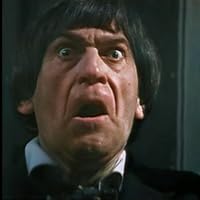
Any Second Doctor story is improved by Troughton’s performance, especially as he plays both The Doctor and he’s doppelgänger Salamander.
A disappointing entry to the range, let’s be thankful that this story currently sits every fans DVD shelf!
I mention this as Enemy of the World had mostly been missing from the archives up until 2013 and had a poorly received reputation.
Having enjoyed both the six part serial and previous Marter books, I’d had high expectations for this novel.
Maybe it’s because of the page count restrictions, but this book just felt flat and only tackled the main story beats.
With all the humour of this story was missing.
Any Second Doctor story is improved by Troughton’s performance, especially as he plays both The Doctor and he’s doppelgänger Salamander.
A disappointing entry to the range, let’s be thankful that this story currently sits every fans DVD shelf!

May 11, 2022
This is a novelization of the fourth adventure from the fifth season of Doctor Who, which was first broadcast in six episodes in December of 1967 and January of 1968. It starred the second version of The Doctor and his two companions of the time, Victoria Waterfield, daughter of a Victorian-era scientist, and Jamie McCrimmon, an 18th-century Scotch piper. The original script was written by David Whitaker, who wrote many of the shows' early serials and served as the first story editor. He was working on a novelization of his script for this one but died before it was completed, and this adaptation was done by Ian Marter, who did several of the better adaptations, not to mention acting in the show as Harry Sullivan in later seasons, a Navy doctor but not The Doctor. The Enemy of the World was a somewhat atypical story of the Second's time, as there was no monstrous or alien threat, just a megalomaniacal power-mad scientist called Salamander, who bore a remarkable resemblance to The Doctor. (Patrick Troughton played both roles on screen.) It was not one of the best episodes, owing more to Ian Fleming than to traditional science fiction, nor is it one of Marter's better adaptations. It translates the story fairly well, but we never get to know the characters in any depth. It's a fine but not particularly memoarble read.

November 5, 2023
This is one of the victims of the Target page limit of the late 70s/early 80s. Marter is brilliant for about 75% of the story; the other 25% is just a collection of scenes that have been summarised brutally and told in exposition. A shame because it is (mostly) wonderfully written.

November 10, 2009
Until five missing episodes miraculously turned up in time for the series' fiftieth anniversary, the only thing most Doctor Who fans had to judge "The Enemy of the World" on was an orphaned middle-episode that didn't really highlight the story's strengths and Ian Marter's Target adaptation. So, it shouldn't come as a surprise that once we had the complete serial back in the archives and available to view that the collective fan assessment might rise over the last half-dozen or so years.
It's hard to blame Marter for the failings of this Target novelization. Clocking in at a mere 127 pages, Marter is hard-pressed to compress six episodes. He does try nobly to do so, but in the end, it never quite works. Scenes are dropped and while the outline of the story is still there, it never quite feels as solid as the David Whitacker scripts were on-screen. There are some interesting choices of what to leave out and what to include by Marter over the course of the novel.
But it's not like Marter hasn't shown he can compress a large number of episodes into a smaller amount of pages. He will later do it with the Patrick Troughton era serial, "The Invasion." Of course, having emotionless adversaries at the heart of that one may have helped a bit.
As with all of Marter's novelizations, there is a darker streak running through this story with all the on-screen deaths being just a bit more gruesome on the printed page.
At least the audio version of this story has Patrick Troughton's son David performing the story. His interpretations of his father and the other actors in this story are spot-on and well done. I'm just glad the serial is back now so we can compare his take with what the actors did on-screen.
It's hard to blame Marter for the failings of this Target novelization. Clocking in at a mere 127 pages, Marter is hard-pressed to compress six episodes. He does try nobly to do so, but in the end, it never quite works. Scenes are dropped and while the outline of the story is still there, it never quite feels as solid as the David Whitacker scripts were on-screen. There are some interesting choices of what to leave out and what to include by Marter over the course of the novel.
But it's not like Marter hasn't shown he can compress a large number of episodes into a smaller amount of pages. He will later do it with the Patrick Troughton era serial, "The Invasion." Of course, having emotionless adversaries at the heart of that one may have helped a bit.
As with all of Marter's novelizations, there is a darker streak running through this story with all the on-screen deaths being just a bit more gruesome on the printed page.
At least the audio version of this story has Patrick Troughton's son David performing the story. His interpretations of his father and the other actors in this story are spot-on and well done. I'm just glad the serial is back now so we can compare his take with what the actors did on-screen.
June 18, 2017
A quick and fun read!

March 19, 2026
This isn’t an easy review as this book is all over the place so I don’t know where to begin.
The original story from 1967-1968 is amazing and is a nice break from the “Base Under Siege” stories that late 60s Who started doing more of and pushing the historical ones out. The Enemy of the world is a fantastic James Bond/spy thriller films with a doppelgänger and conspiracy and all that thrilling stuff!
I was excited to read the novelisation but from the beginning I felt like half of the story was cut and scenes seemed to go incredibly fast and change so quickly that i found it hard to keep up with. For example, the beginning scene when in the original TV story, The Doctor goes into the water and having a splash around before seeing the approaching hovercraft. But the Doctor in the novelisation the hovercraft is spotted almost immediately.
Another example is when The Doctor is pretending to be Salamander with Bruce Jamie and Victoria in the room and Jamie and Victoria being they are talking to Salamander and asking a lot of questions for Bruce to start questioning Salamander (sorry if I have complicated the scene) but in the novelisation as soon as Jamie and Victoria the room they almost attacking him before realising it’s The Doctor. The scene misses alot of context and moves quickly onward.
But here is where things get confusing. The scenes in the underground bunker with all the scientists and engineers that create natural disasters is incredibly well written and goes into great detail and stretched out the story and took a moment to get a full understanding of what is happening. That part blew my mind it was fantastic and almost frightening in a way! It was a brilliant read.
And the ending of the story where Salamander is in the TARDIS trying to escape and it being Victoria the one who questions “The Doctor” about touching the controls was a better here then in the original story.
Overall it’s a decent read but I’m not jumping to read again at some point soon.
The original story from 1967-1968 is amazing and is a nice break from the “Base Under Siege” stories that late 60s Who started doing more of and pushing the historical ones out. The Enemy of the world is a fantastic James Bond/spy thriller films with a doppelgänger and conspiracy and all that thrilling stuff!
I was excited to read the novelisation but from the beginning I felt like half of the story was cut and scenes seemed to go incredibly fast and change so quickly that i found it hard to keep up with. For example, the beginning scene when in the original TV story, The Doctor goes into the water and having a splash around before seeing the approaching hovercraft. But the Doctor in the novelisation the hovercraft is spotted almost immediately.
Another example is when The Doctor is pretending to be Salamander with Bruce Jamie and Victoria in the room and Jamie and Victoria being they are talking to Salamander and asking a lot of questions for Bruce to start questioning Salamander (sorry if I have complicated the scene) but in the novelisation as soon as Jamie and Victoria the room they almost attacking him before realising it’s The Doctor. The scene misses alot of context and moves quickly onward.
But here is where things get confusing. The scenes in the underground bunker with all the scientists and engineers that create natural disasters is incredibly well written and goes into great detail and stretched out the story and took a moment to get a full understanding of what is happening. That part blew my mind it was fantastic and almost frightening in a way! It was a brilliant read.
And the ending of the story where Salamander is in the TARDIS trying to escape and it being Victoria the one who questions “The Doctor” about touching the controls was a better here then in the original story.
Overall it’s a decent read but I’m not jumping to read again at some point soon.
This entire review has been hidden because of spoilers.

November 15, 2024
Based on a script by David Whitaker this is number 24 in the Target catalogue. The first cover is by Bill Donohoe, and the second by Alister Pearson. This was a mostly missing story until the 2013 Nigerian hoard was found. It has since become one of my favourite stories for it’s complexity and actors from so many other Doctor Who episodes.
The writing is as good as Ian’s other Targets, he captures all the characters extremely well, but the book feels very disjointed. It’s like he wrote the whole story and then sections of it were deleted to get the page count down.
Most of sections with the cantankerous chef are missing. That’s not a big issue as he’s not really relevant to the plot but I thought they were fun. But scenes like the one where Astrid explained about the fake decontamination machine in the bunker are more important. Particularly as a later scene then mentions her explaining about the fake machine though that scene isn’t in the book. It would be very confusing for someone who didn’t know the story. There were quite a few places where the story seemed to jump forward without explanation and missing bits. This story could really do with a more complete novelisation.
The writing is as good as Ian’s other Targets, he captures all the characters extremely well, but the book feels very disjointed. It’s like he wrote the whole story and then sections of it were deleted to get the page count down.
Most of sections with the cantankerous chef are missing. That’s not a big issue as he’s not really relevant to the plot but I thought they were fun. But scenes like the one where Astrid explained about the fake decontamination machine in the bunker are more important. Particularly as a later scene then mentions her explaining about the fake machine though that scene isn’t in the book. It would be very confusing for someone who didn’t know the story. There were quite a few places where the story seemed to jump forward without explanation and missing bits. This story could really do with a more complete novelisation.

March 21, 2023
Doctor Who and the Enemy of the World (1981) by Ian Marter is the novelisation of the fourth serial of the fifth season of Doctor Who.
The Second Doctor, Jamie and Victoria land in 2030 on an Australian beach. The world is run by Zone Commanders with Salamander presiding over all of them. Salamander looks identical to the Doctor. The Zone Commanders are being replaced by people Salamander likes. The TARDIS crew help to find out what Salamander is up to.
Complications ensue. It’s reasonably amusing. Apparently in the actual series Patrick Troughton’s performance is really quite good but this is naturally lost in the novelisation.
Salamander has a hidden underground base that he is hiding from everyone and has told the people underground that above ground is unsafe. This idea is also used in the excellent Polish film ‘Sex Mission’.
Doctor Who and the Enemy of the World is another OK Doctor Who serial. It’s all a bit bonkers.
The Second Doctor, Jamie and Victoria land in 2030 on an Australian beach. The world is run by Zone Commanders with Salamander presiding over all of them. Salamander looks identical to the Doctor. The Zone Commanders are being replaced by people Salamander likes. The TARDIS crew help to find out what Salamander is up to.
Complications ensue. It’s reasonably amusing. Apparently in the actual series Patrick Troughton’s performance is really quite good but this is naturally lost in the novelisation.
Salamander has a hidden underground base that he is hiding from everyone and has told the people underground that above ground is unsafe. This idea is also used in the excellent Polish film ‘Sex Mission’.
Doctor Who and the Enemy of the World is another OK Doctor Who serial. It’s all a bit bonkers.

April 26, 2025
Ian Marter turns Doctor Who and the Enemy of the World into a tight thriller, usually making improving scenes with his flair for tension and trademark violence, even if I miss a lot of the scenes that were cut from the adaptation (Griff's stuff, especially). This is an interesting one because half the serial was considered lost until about a dozen years ago, and therefore the Target would have how a lot of fans first experienced it. But unlike Tomb of the Cybermen, which apparently disappointed readers "in the flesh", so to speak, The Enemy of the World is as much a joy as its novelisation. It's witty in its own right, the extra scenes are great fun, and the performances surprising. That's in large part because Marter himself uses beautifully descriptive prose and isn't precious about the original dialog. Neither version exactly replaces the other. But woof, who thought this was the best cover idea for a serial about the Doctor having an evil doppelganger?
February 21, 2021
Another one between a 4 and a 5 for me, continuing a strong run of stories here. Seems a very Bond like tale really, with spies, evil dictators and betrayals aplenty. A fun idea as well with another doppelganger for the Doctor, giving Patrick Troughton some great material to work with I'd imagine, but coming through well in the story as the confusion entailed arises.
A couple of very interesting twists within the story, and a lot of one off companions that are quite well rounded and add a lot to the tale.
What does detract a little from the story though, is that for those one off companions to have as much screen time as they do, Jamie and Victoria feature a lot less, with only one or two major scenes for them really, with Jamie getting more than Victoria in this regard.
Finishes with quite a chilling ending really, with suspense right to the end, making for a great read for me.
A couple of very interesting twists within the story, and a lot of one off companions that are quite well rounded and add a lot to the tale.
What does detract a little from the story though, is that for those one off companions to have as much screen time as they do, Jamie and Victoria feature a lot less, with only one or two major scenes for them really, with Jamie getting more than Victoria in this regard.
Finishes with quite a chilling ending really, with suspense right to the end, making for a great read for me.
December 16, 2025
This was a complicated one for me to rate. I remember greatly enjoying The Enemy of the World, but the novelisation was just kind of...meh. Troughton's portrayal of both the Doctor and Salamander is one of my favourite performances in Doctor Who history, which made the just okay-ness of the book disappointing. I was able to open the book on the bus this morning and by the time I got home again I had it finished. But it just felt kind of lacklustre. I remember there being a lot of action and excitement in the episodes, but I just didn't feel that translated over into the book. Salamander felt like a side character rather than a formidable antagonist. Something felt missing, but I couldn't put my finger on what. I lean more towards 2.5 than 3 but Goodreads doesn't allow that so here we are. Unfortunate since its a story I enjoy so much, but I guess them's the brakes.
February 14, 2025
I really enjoy the imagery in this book. This portrays the second doctor, so this would have been in the late sixties. It's kind of neat how they made everything seem as futuristic as possible back then. Back in those days magnetic tape was used for computers. So the imagery of the control room would have been very accurate for its time. If you can appreciate the time period in which it's written, it really has some nice elements to it. I also like the authors use of words. People spoke with a little bit more refinement back in those days. Things seemed quite a bit more classy as well. This was a great Doctor Who story. I can almost here Patrick Troughton speaking. If you are a classic Doctor who fan, I think you will enjoy this one!

May 17, 2023
Ian Marter decided to beef up the James Bond influence on this serial when he wrote the novelization. Where Hulke tended to be talky and detailed, Whitaker leaned in on the "boys' adventure" influence, and Dicks was more faithful to the script, Marter emphasized action, making his books a bit more lively - and sometimes more violent.
I remember enjoying this one very much on TV; I bought the DVD not long after the legendary "lost episodes" were found. Patrick Troughton's dual role was haunting. Salamander himself is a lot more relevant in these days of turtleneck billionaires wielding limitless influence and the questions about how they plan to shape the future.
I remember enjoying this one very much on TV; I bought the DVD not long after the legendary "lost episodes" were found. Patrick Troughton's dual role was haunting. Salamander himself is a lot more relevant in these days of turtleneck billionaires wielding limitless influence and the questions about how they plan to shape the future.

October 16, 2018
The writing in this one was pretty flat, which was a disappointment. I can see why, with only this and one episode of the serial available, this episode didn't have a great reputation. The reality of watching the whole story made for a much, much better experience than reading the book did. We're lucky the episodes were found.

January 1, 2022
Ian Marter's a good novelisation writer, but given the relative length of the TV version and this, most of the changes seem to be cutting stuff out (including character moments and lines I quite liked from the original). Entertaining, but I don't adore this story in the first place, and I think I'll stick to the TV version rather than referring to the novelisation.

June 9, 2022
I must say, I prefer the writing style of this book than Seeds of Doom. Ian Marter really nailed everything with this story, which is really saying something, as he didn't even write the script! It's actually insane that this is a novelisation of a serial that is already 50 years old, but it doesn't seem lacklustre or out of date at all. Very good.
August 2, 2020
This is an enjoyable adaptation of the tv story. As Marter only had 127 pages to cram in 6 25 minute episodes, there's little (if any) embellishments to what was on the screen in 1967/68. However, he does quite a good job of novelising what was a lost story until a few years ago.
November 18, 2023
Not a great Ian Marter book if I’m being honest, the first chapter is absolutely incredible with its great adjectives and description but completely falls down down after that, it just becomes a boring uninteresting run around which is hard to write but is still bad

September 29, 2019
Okay, so this is another episode that I have seen. This novelization actually helped clear up a few confusing points that had puzzled me with the episodes.
April 23, 2020
As much as I generally love Ian Marter's novelisations, Enemy of the World, at 6 episodes, is perhaps a little too brief for the source material.


Read
December 15, 2024Pdf, 113 pages
Curiously I found this rereading uninvolving... The story itself is interesting, with a Doctor double as a would-be dictator, using scientist dupes to construct and operate seismic generators to create volcanic eruptions.
Curiously I found this rereading uninvolving... The story itself is interesting, with a Doctor double as a would-be dictator, using scientist dupes to construct and operate seismic generators to create volcanic eruptions.
July 4, 2016
This is a rather odd addition to the series that is known as science fiction children's adventure show.. The thrust of the story is much more political set in a future dictatorial Mexican national that wants to take over the world with his new technology, ideology, and a hope to save the world. Or there begins the dichotomy. He is a savior to some, and a threat to many more. The world powers are re-structured; as in any good 'future story' although the major events take place between Central Europe, and Australia.
I do note, that for a young persons' programme, there is a lot of death of characters, this is no different. That gives it that classical appeal, and often occurs as a result of bravery to save others, or the antagonist-or agents thereof- eliminate a threat.
Focusing the sun's rays to improve crop production; settling the constant image of famine, and having developed a way to trigger earthquakes as a means of warring against his enemies.
I found it intriguing because it is Troughton in a double role that is definitely different. Dare I say, it is unique in the 50+ years of the show. I kept thinking of a blend of Prince and the Pauper, and a banana republic. The natural disasters, and cult-like attitude toward "Salamander" from his underground camp to whom he tells lies to keep them compliant to his will., reminded me of that turbulent time when so many watched the culture shift, the rise of Jesus freaks, and the threat of nuclear annihilation.
The resisters to the Salamander's cause, and the odds they faced in defeating him, were quite dark. For a children's programme, practically Orwellian in tone.
Wonder what was going through the author's mind when it was written.
I do note, that for a young persons' programme, there is a lot of death of characters, this is no different. That gives it that classical appeal, and often occurs as a result of bravery to save others, or the antagonist-or agents thereof- eliminate a threat.
Focusing the sun's rays to improve crop production; settling the constant image of famine, and having developed a way to trigger earthquakes as a means of warring against his enemies.
I found it intriguing because it is Troughton in a double role that is definitely different. Dare I say, it is unique in the 50+ years of the show. I kept thinking of a blend of Prince and the Pauper, and a banana republic. The natural disasters, and cult-like attitude toward "Salamander" from his underground camp to whom he tells lies to keep them compliant to his will., reminded me of that turbulent time when so many watched the culture shift, the rise of Jesus freaks, and the threat of nuclear annihilation.
The resisters to the Salamander's cause, and the odds they faced in defeating him, were quite dark. For a children's programme, practically Orwellian in tone.
Wonder what was going through the author's mind when it was written.

April 13, 2013
Sometime you can have great writers on a story and it turns out bad. Most of what I can say about this book is that it is bad. I can't blame Ian Marter for it, since it was working from the original story by David Whitaker. It is hard to understand how David Whitaker came up with this story.
The concept would sound interesting someone who looks like the Doctor is trying to take over the world. The book starts off with a strong opening paragraph by Ian Marter, then it goes downhill.
The story feels like random set pieces and different stories hashed together. You have the Doctor missing from parts of it and the action being limited to a hallway and camper at times. Then out of nowhere an underground facility with people who think the world has been devastated shows up.
I read that parts of the televised story where removed from the novel. I am not sure if it would have made a difference. The only reason to read this is if you do intend to read all the Doctor Who books. If you are not planning on doing that, then skip this book.
The concept would sound interesting someone who looks like the Doctor is trying to take over the world. The book starts off with a strong opening paragraph by Ian Marter, then it goes downhill.
The story feels like random set pieces and different stories hashed together. You have the Doctor missing from parts of it and the action being limited to a hallway and camper at times. Then out of nowhere an underground facility with people who think the world has been devastated shows up.
I read that parts of the televised story where removed from the novel. I am not sure if it would have made a difference. The only reason to read this is if you do intend to read all the Doctor Who books. If you are not planning on doing that, then skip this book.
Read
October 21, 2007http://nhw.livejournal.com/763482.html[return][return]This was the first time Marter had tried to squeeze a six-episode story into 127 pages, so obviously some cuts were necessary, but the result feels very jumpy. Some lovely dialogue between Victoria and Salamander's chef has been completely cut by Marter; so too, more happily, has an unconvincing exchange about why they are guarding the prisoner in the corridor. (Slightly off-topic, but is this the only Doctor Who story with scenes set in Hungary???) Apparently a substantial chunk from the underground caverns in the last episode was cut too. The various deaths by shooting are, of course, more gory than on screen. It does have a rather striking cover though, the second best of the lot I think; for some reason this was only the sixth Second Doctor story to be published in novel form.

July 23, 2013
Sometimes an author can take a disappointing example of "Doctor Who" on television and transform it into something remarkable in prose -- just look at Eric Saward's brilliant novelization of the otherwise ludicrous "The Twin Dilemma". Unfortunately, even Ian Marter can't save "The Enemy of the World" -- a story I find intellectually fascinating, but overlong, overly cynical, and with a conclusion best defined as "sudden". Marter tries to apply a harder edge to the plot, but in the end it's a superficial polish to a story that doesn't appreciate it. Even as a boy of 10, I picked this up from the library, only to wonder afterwards "what was that"? One of the few Target novelizations I never re-visited. With its recent re-emergence on DVD, it demonstrates that it CAN work brilliantly in a visual medium...but in prose, it just lies there.

December 6, 2013
I really enjoy this one. Both novel and television episode were done in a good syle. Even if the tv series was better. Why? Because in the novel we don't get anything else besides what's on the tv. That's a shame. When you serialize you expect something more. But alas, that did not happenend.
So, Dr Who has a double and that double is a evil genius. That was interesting. You've come to see Dr Who with an charismatic personality that has power to be the master of the world. A person with unlimited timelife with the possibility to change the past can make things happenend his own way.
I enjoy that this tale is set on Australia and then Hungary. You've got a more important part from Jamie and Victoria than previous novels.
It's a nice addition and thank the fans for recovering this recording after 20 or 30 years.
So, Dr Who has a double and that double is a evil genius. That was interesting. You've come to see Dr Who with an charismatic personality that has power to be the master of the world. A person with unlimited timelife with the possibility to change the past can make things happenend his own way.
I enjoy that this tale is set on Australia and then Hungary. You've got a more important part from Jamie and Victoria than previous novels.
It's a nice addition and thank the fans for recovering this recording after 20 or 30 years.

January 10, 2014
Doctor Who and The Enemy of the World which features a double of the Second Doctor as the titular enemy of the world, Salamander, which I am sure is much more effective on screen when you can actually see him portrayed by Patrick Troughton.
The novelisation is a very quick read and is also very pacy considering the original story is six episodes long. The story is not atypical of Doctor Who and seems much more like a James Bond type spy thriller which the plot is rather more typical of.
It is also unique in being the only Doctor Who novelisation to use a swear word which wasn't in the original script, but worked in context of the situation and the characters.
I would have to say that Ian Marter did a good job in bringing this story to the page and I really want to see the story after reading this novel as it bought it all to life wonderfully.
The novelisation is a very quick read and is also very pacy considering the original story is six episodes long. The story is not atypical of Doctor Who and seems much more like a James Bond type spy thriller which the plot is rather more typical of.
It is also unique in being the only Doctor Who novelisation to use a swear word which wasn't in the original script, but worked in context of the situation and the characters.
I would have to say that Ian Marter did a good job in bringing this story to the page and I really want to see the story after reading this novel as it bought it all to life wonderfully.

December 10, 2012
This was a second doctor adventure I'd not heard of (only one episode survives). But it was great. In the 21st century an evil villan has been pretending to save the world but actually is secretly causing the disasters he's trying to save people from. He also conicidently looks rather like Patrick Troughton. It's a bit silly but a reasonable attempt at distopia with a bit of post apocalypse thrown in. Without seeing the episodes it was still enjoyable. The companions were Jamie and Victoria and I have to say Victoria seemed kinda pointless. Still it was an enjoyable story.

June 6, 2012
This Doctor Who novelisation is from the time of the second Doctor, when he was travelling with Jamie and Victoria. The enemy of the world mentioned in the title is Salamander, a man who makes his prophecies of natural disasters come true. What was really interesting about the television program is that the same actor that played the Doctor also played Salamander. In the book, you don't get to see and hear this transformation.
Displaying 1 - 30 of 36 reviews